
Last updated November 18, 2026
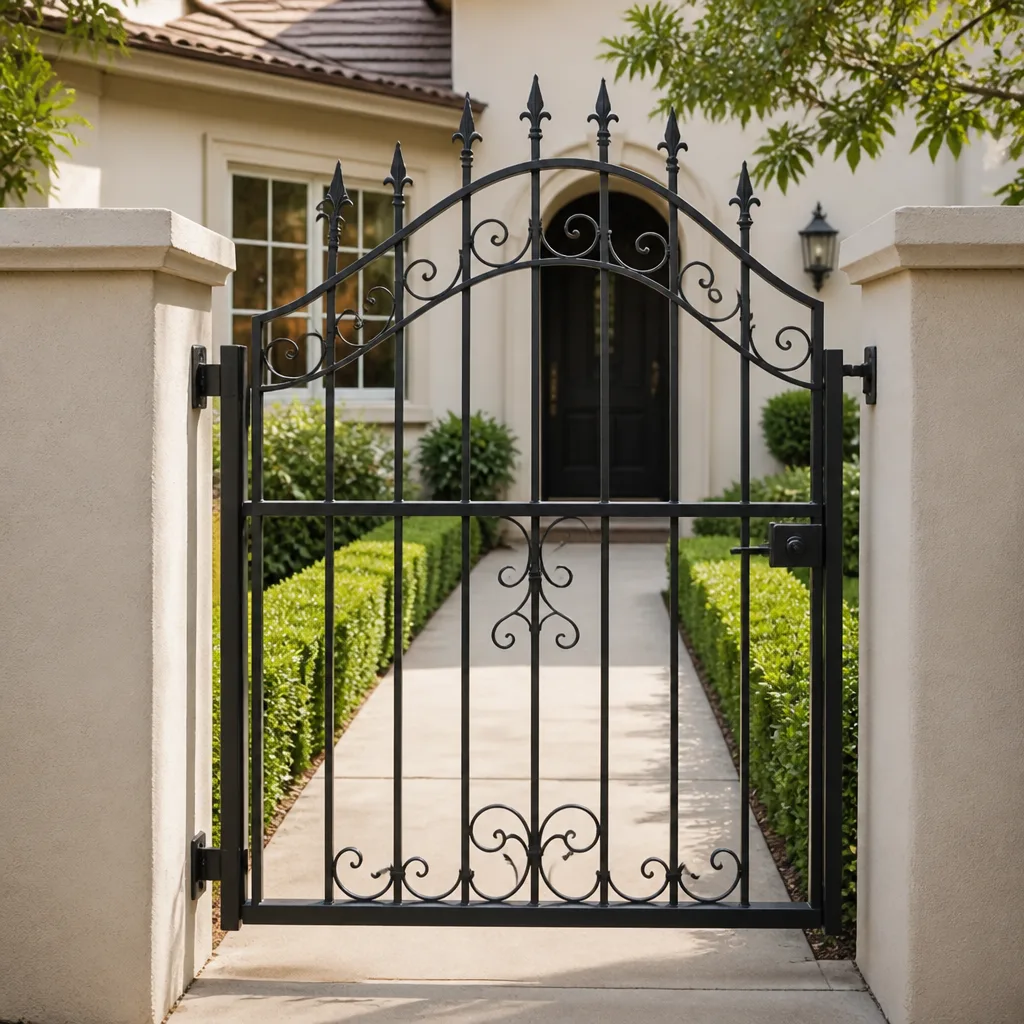 Wrought iron
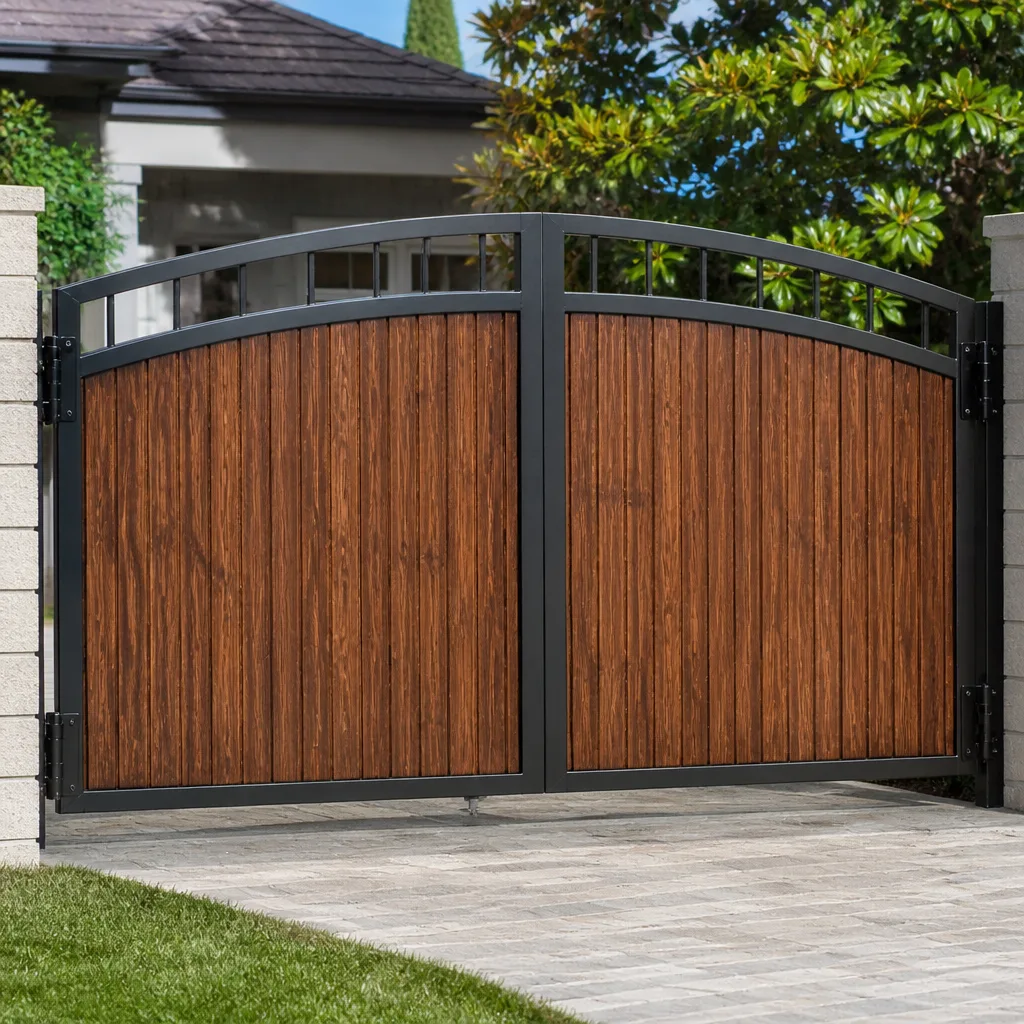 Wood & steel frame
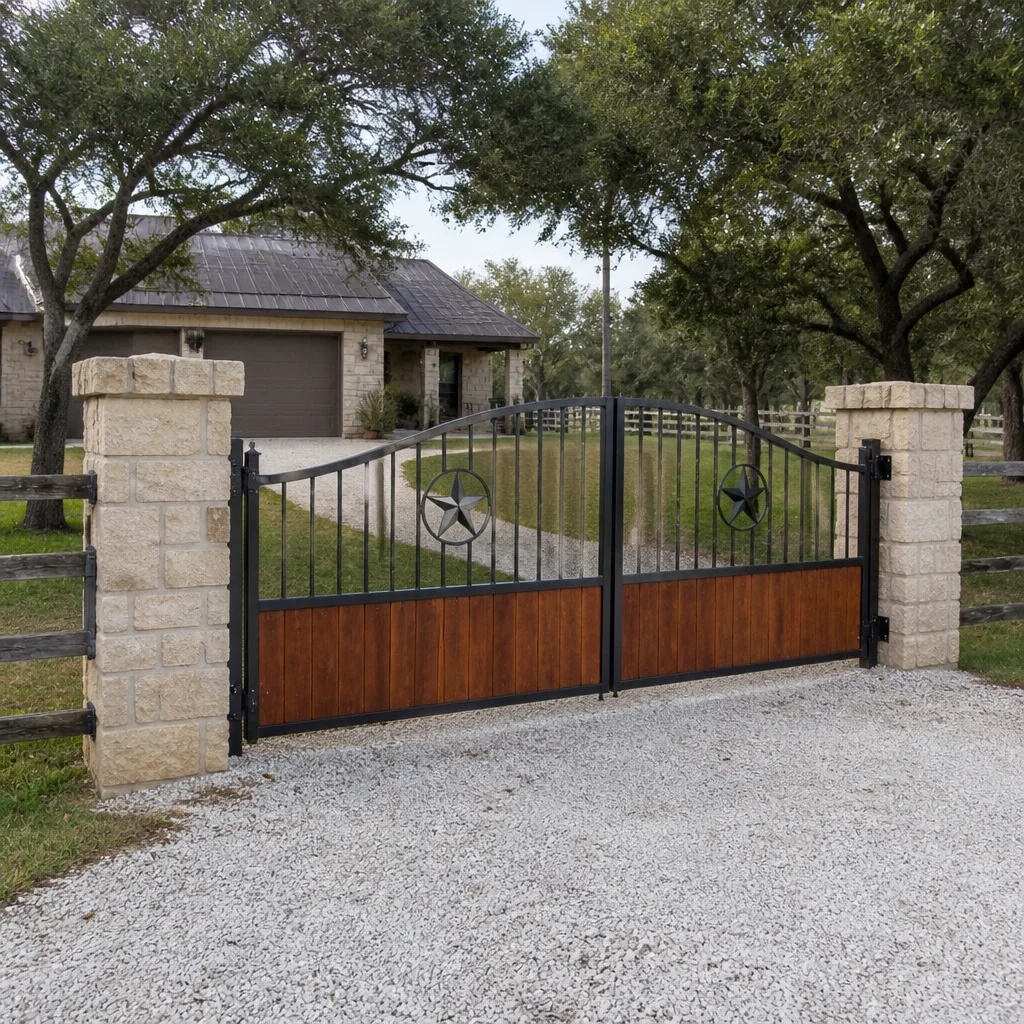 Farm & ranch
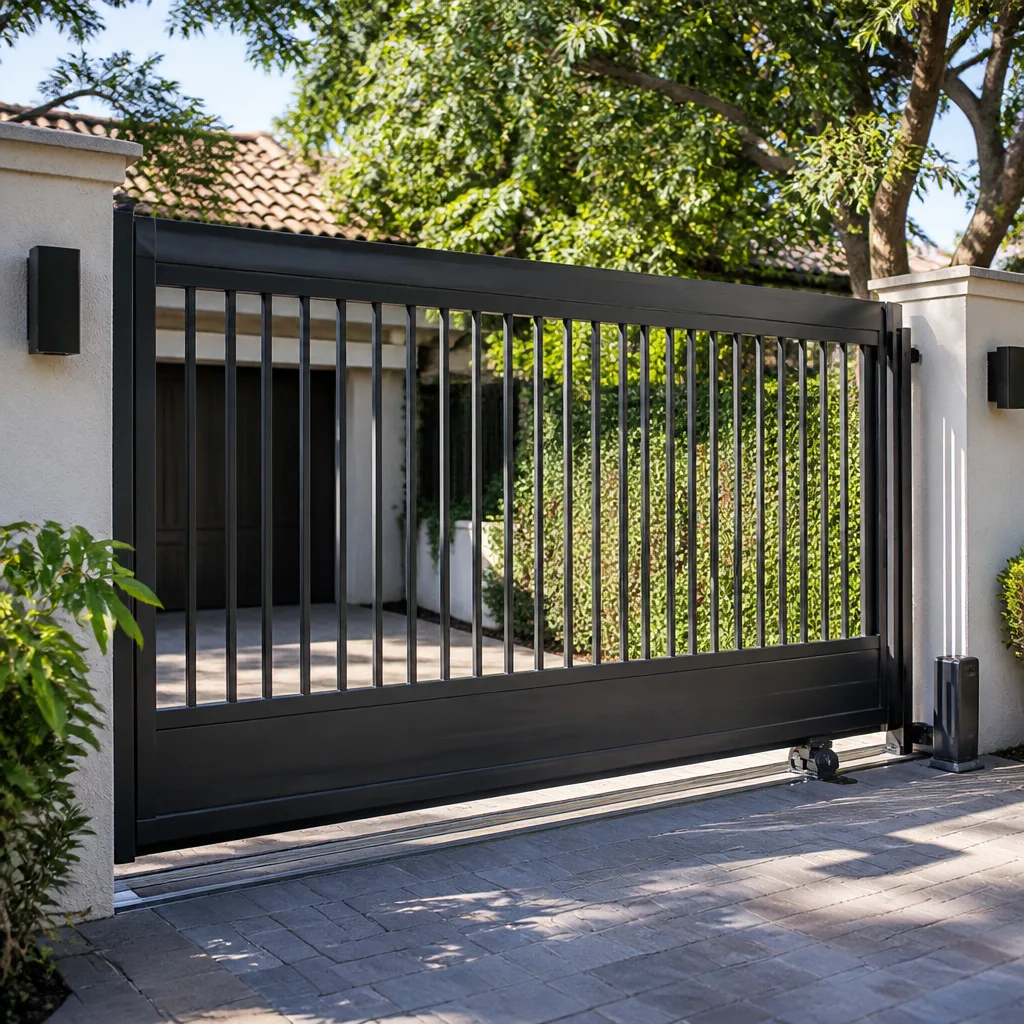 Sliding driveway gates
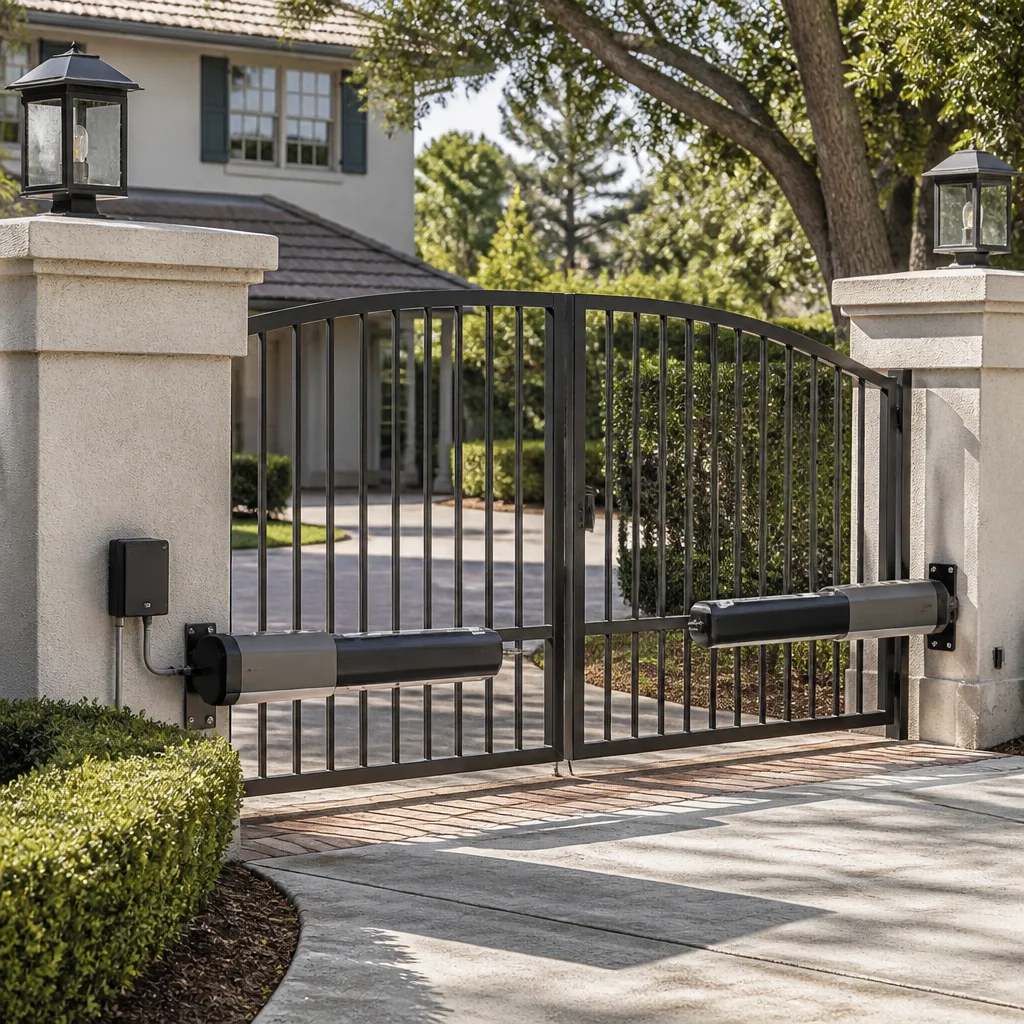 LiftMaster operators
Free on-site gate assessment - hinges, posts, and your LiftMaster or Nice gate operator checked before anything is quoted
The assessment is free and the quote is the invoice.
Get your free estimateThe Complete Guide to Gate Repair in Boulder City
The second technician always costs more than the first. Not because the job got harder, but because nobody wrote anything down the first time. We’ve seen it dozens of times in Boulder City: a homeowner pays $400 for a motor repair, the gate runs for eleven months, and then a different component fails. The next technician opens the control box, finds no wiring diagram, no limit-switch baseline, no part numbers, and spends an hour re-diagnosing a system that already had a map. Documentation isn’t paperwork. It’s the repair product. This guide explains why, and how Boulder City’s climate and housing stock shape the failures you’ll actually see.
Quick Answer
Gate repair in Boulder City typically runs $180 to $650 for common fixes like limit-switch resets, photo-eye alignment, and hinge or roller replacement, with motor and control-board work landing higher. The bigger cost variable isn’t the failure itself: it’s whether the gate has a documented service history. A gate with a wiring diagram and limit-switch baseline on file costs less to fix every time after the first. A gate without one means every technician starts from zero and bills for the rediscovery.
Styles & brands we work with
- Wrought iron
- Wood & steel frame
- Farm & ranch
- Sliding driveway gates
- LiftMaster operators
Table of Contents
- Why Documentation Is the Actual Repair Product
- How Boulder City’s Heat and Winter Nights Stress Gate Components
- What a Complete Gate Service Record Should Contain
- Working vs. Known Baseline: The Difference That Protects You
- Common Gate Types by Boulder City Neighborhood Age
- What Gate Repair Costs in Boulder City
- How to Request and Store Documentation So It Transfers
- Common Mistakes to Avoid
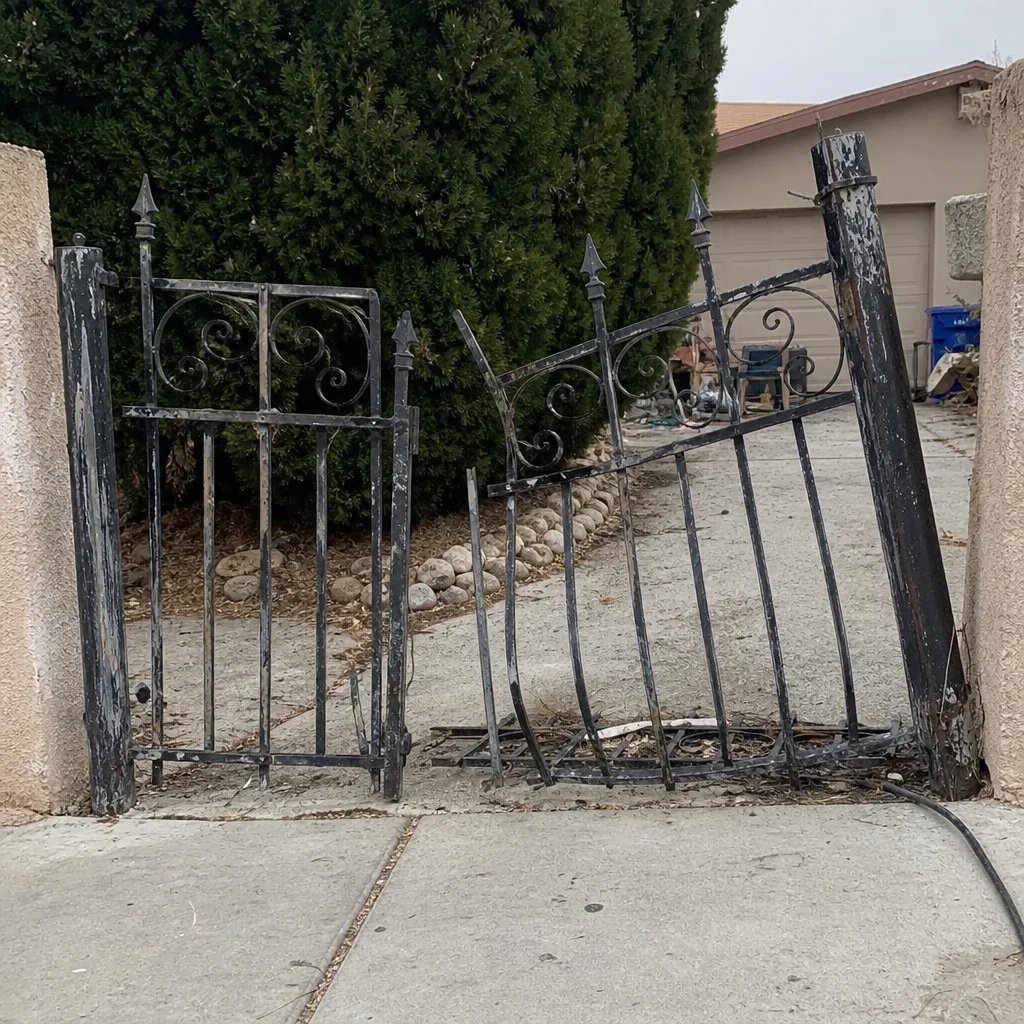 Before
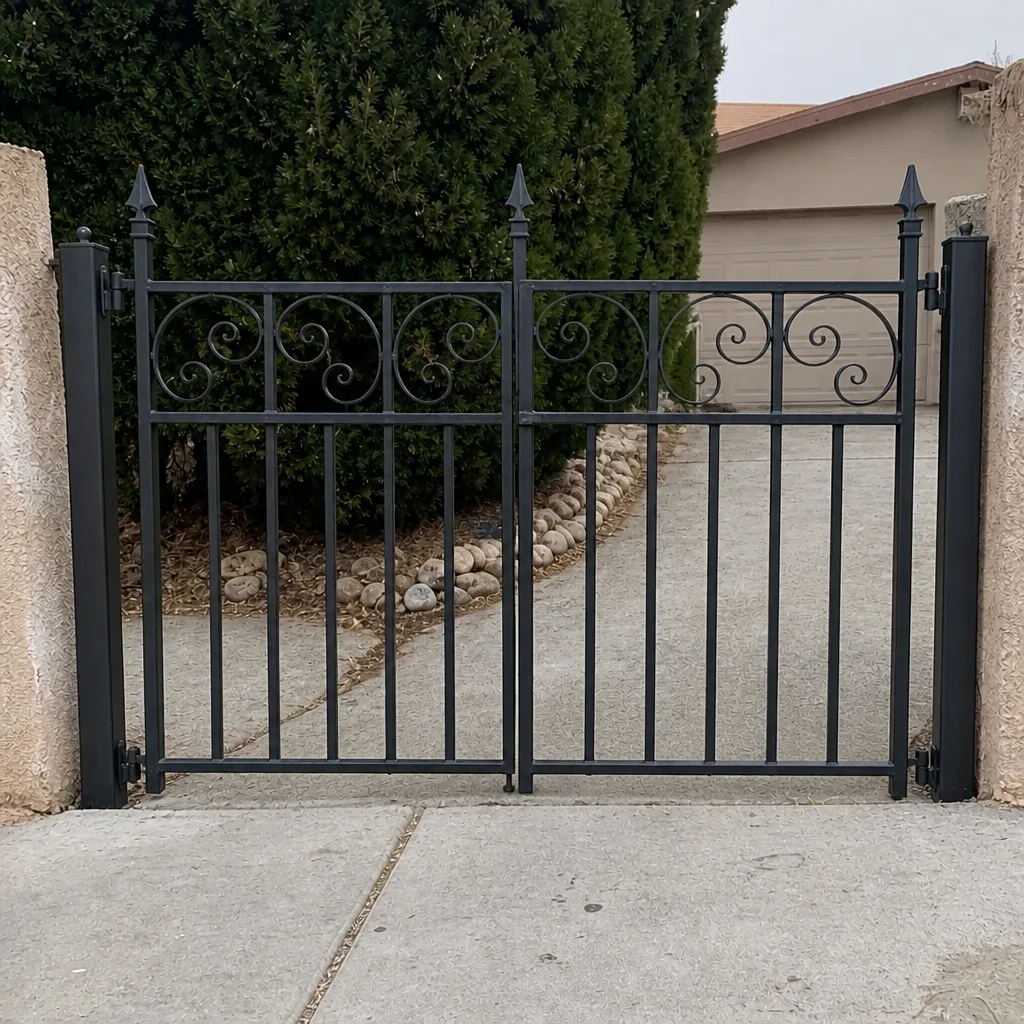 After
Why Documentation Is the Actual Repair Product
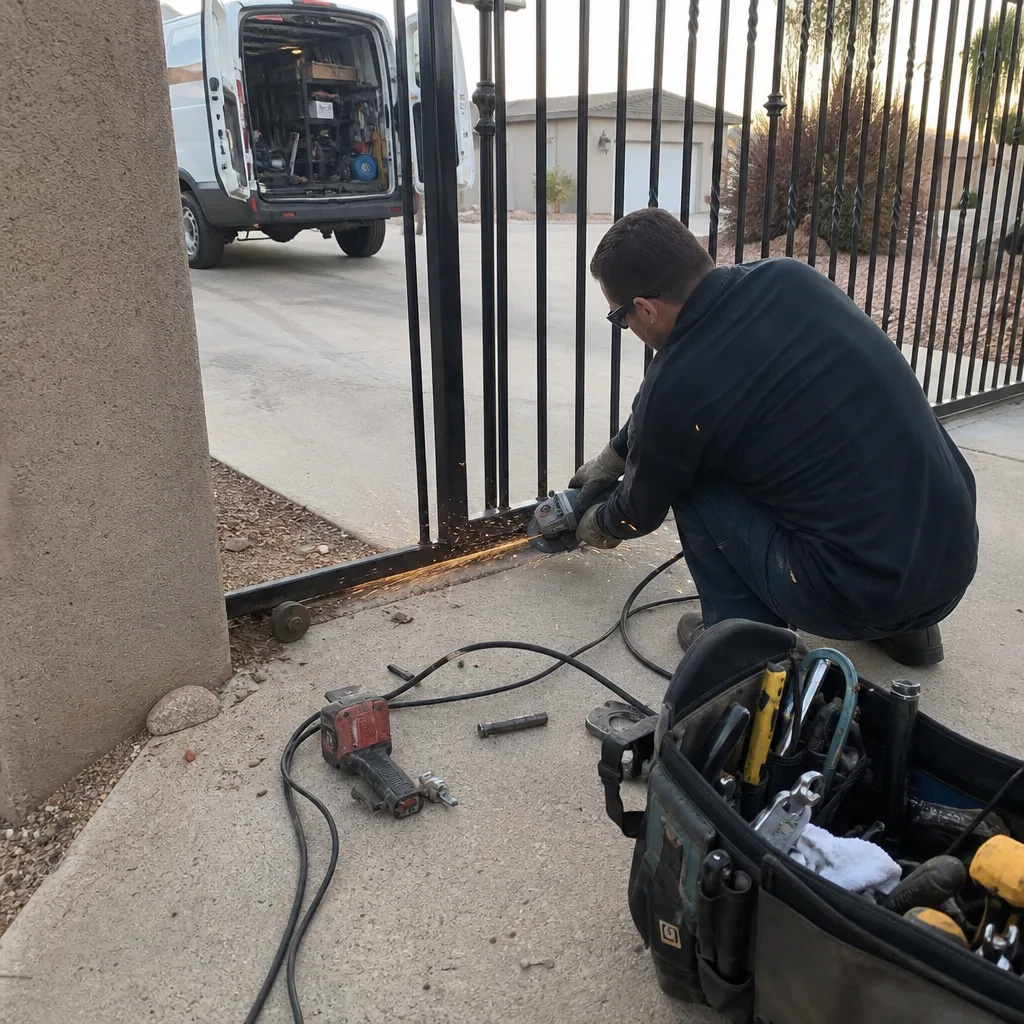
When we open a gate operator control box, the first thing we look for isn’t the fault. It’s evidence that someone was here before. A folded wiring diagram taped to the inside of the enclosure. A sharpie mark on a limit cam showing where it was set. A sticker with a part number. Those small traces cut diagnosis time dramatically, and diagnosis time is what you’re paying for.
Here’s what a typical undocumented repair looks like in practice. A homeowner in Boulder City calls because the gate reverses mid-travel. Without a baseline, the technician has to test the photo-eyes, check the limit switches, measure the motor current, inspect the control board, and verify the wiring against a guess at how the system was originally configured. That’s a two-hour visit at $95 to $145 per hour. With a documented baseline from a prior visit, the same symptom can often be traced to a single misaligned photo-eye in 20 minutes. Same failure. Very different invoice.
This is why we built our process around the Haven Standard: a written price before any work starts, and a photo record of what we found, what we set, and what we installed left with the homeowner on every visit. It’s also why every technician carries the habit of drawing wiring diagrams, the same discipline that carries over from commercial access-control work. A residential gate deserves the same paperwork a commercial gate gets. That’s the whole argument. If you want to see how that plays out on individual jobs, our Gate Repair in Boulder City page walks through the specific repairs.
How Boulder City’s Heat and Winter Nights Stress Gate Components
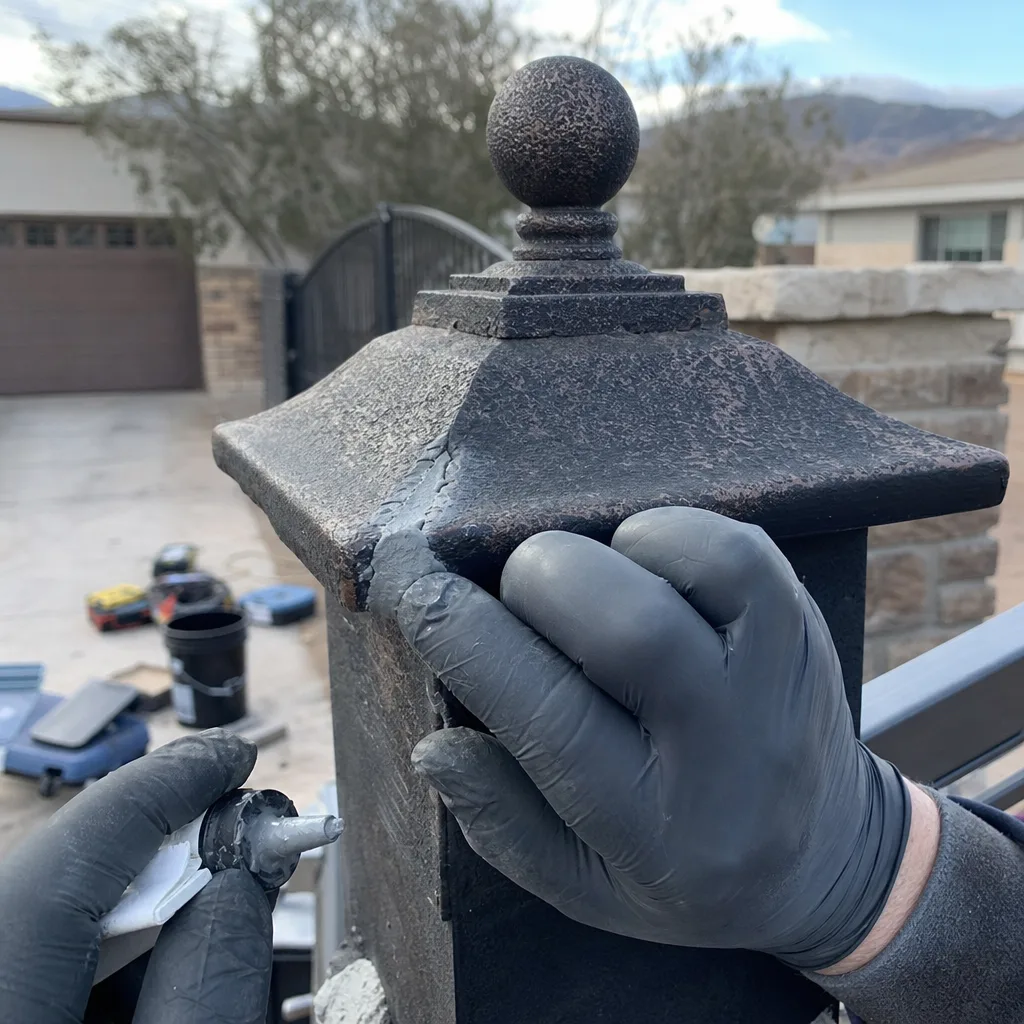
Boulder City sits in a thermal swing that gate components feel early and hard. Summer afternoons hit 110°F on a regular basis, and the desert sun bakes a metal operator housing to temperatures well above that. Then December nights drop below freezing. The gate system doesn’t just experience that swing once a year. It absorbs it every single day, spring through fall, then again in reverse each winter.
The failures follow a predictable sequence, which is good news: a technician who knows that sequence can inspect for the next stress point before it fails.
- Year 1-2: Plastic gears and nylon bushings in lighter-duty operators begin to soften and round off in the summer heat. Limit cams drift as the plastic expands and contracts. Gates start over-traveling by three to six degrees.
- Year 3-4: Grease in the operator gearbox migrates or dries, increasing motor current. Photo-eye lens covers fog and crack from UV exposure, causing intermittent reversal. Metal hinges develop surface rust, and gate posts shift slightly with soil expansion.
- Year 5+: Control board capacitors degrade faster in sustained heat. Solder joints on the board crack from thermal cycling. Battery backup units (common on DoorKing and Elite systems) reach the end of their service life and fail without warning.
What makes this manageable is the documentation. If we know the photo-eyes were replaced in March, and the operator is a 2019 unit, we can tell you the control board is on borrowed time before it fails in July. That’s a scheduled $300 repair instead of an emergency $500 weekend call in the middle of summer. In Boulder City, we’ve seen the same call three or four times in a season: an August heat wave pushing a neglected gate past the point where the motor can hold a limit.
What a Complete Gate Service Record Should Contain
A verbal summary is not a record. It’s a memory, and it fades the moment the technician drives away. A complete service record is a physical or digital folder the homeowner keeps, with four things inside. Ask for all four from any contractor, and don’t accept “we’ll note it in our system” as an answer. If it isn’t in your hands, it isn’t yours.
- Wiring diagram. A hand-drawn or photographed schematic of the low-voltage control wiring, showing terminal assignments on the operator board, photo-eye and safety-edge connections, and any keypad or access-control wiring. This is the single most valuable document in the folder.
- Limit-switch readings. The open and close limit positions recorded by cam angle or travel distance, with a note on the adjustment direction. Without this, the next technician has to re-teach both limit stops from scratch.
- Photo timestamps. Dated photos of the control box interior, the gate hinge points, the photo-eye alignment, and the operator housing before and after adjustment. Timestamps matter because they establish the baseline and prove what condition the system was in on that date.
- Part numbers. Every replaced component recorded by manufacturer part number and brand, not just description. “Replaced the board” is useless in two years. “Replaced control board, DoorKing 6050, part 2600-010, serial number noted” tells the next technician exactly what they’re working on.
Under our own Haven Standard Clause 4, every visit includes a documented photo record at no additional charge, and we leave it with the homeowner, not buried in a database they’ll never see. That single practice eliminates most of the “what was the last guy doing here” conversations that pad repair invoices.
Working vs. Known Baseline: The Difference That Protects You
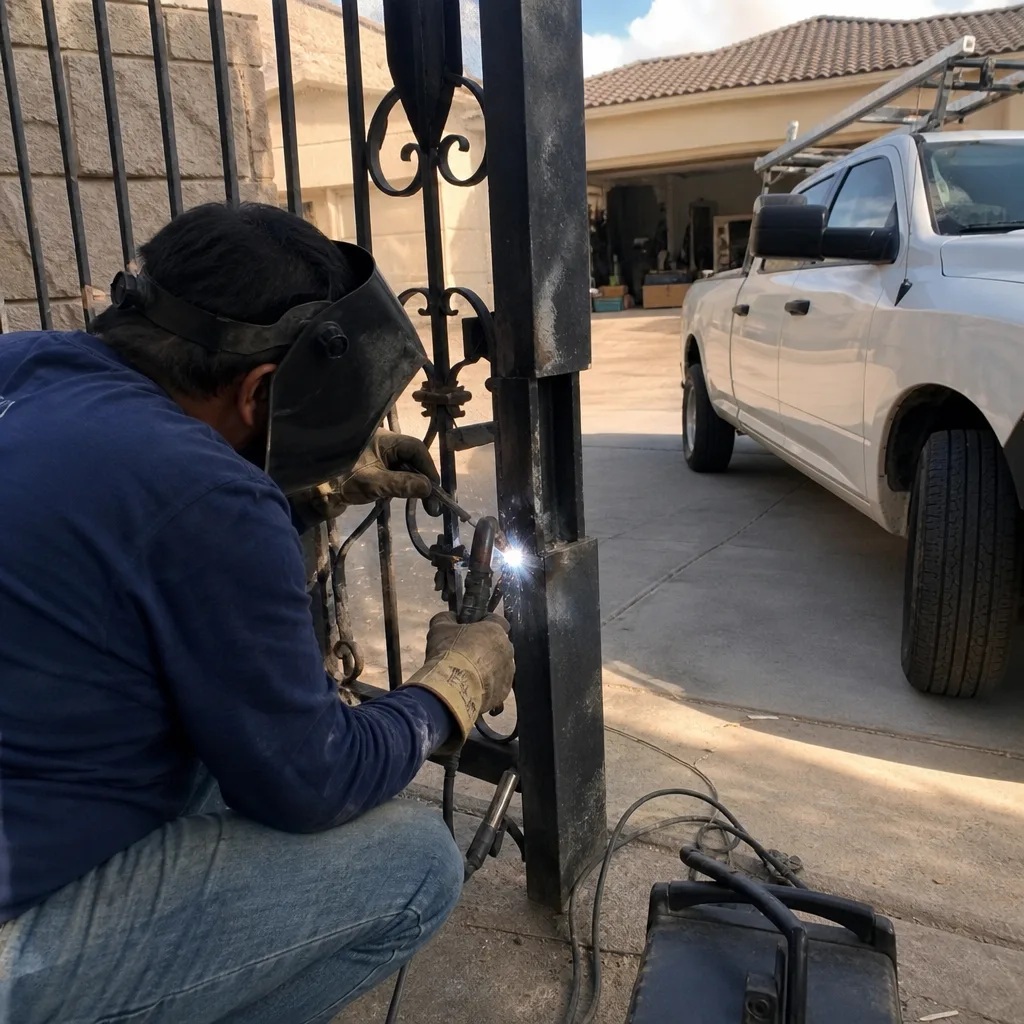
A gate that is “working” tells you one thing: it’s moving right now. A gate with a known baseline tells you something much more useful: exactly what normal looks like, which means any deviation gets caught early. Those are not the same condition, and homeowners often discover the difference at the worst possible moment.
Consider what a known baseline actually contains. The motor current draw on open and close, measured in amps. The full travel time from limit to limit. The photo-eye beam strength or alignment reading. The controller firmware revision and parameter settings. When a technician arrives with those numbers on file, diagnosis is comparison, not exploration. A gate that should draw 4.2 amps on close and is drawing 6.8 amps has a mechanical binding problem, and the technician knows it before lifting a wrench.
Without a baseline, that same gate gets a guess. The technician might replace the control board ($280 and up) when the actual issue was a dry hinge bushings ($60 in parts). We’ve been called to Boulder City gates that had already absorbed $1,200 in replacement parts before anyone measured the current draw. Every one of those invoices would have been smaller with a baseline on file. It’s the same principle behind why we photograph and document the same things we learned to document on access-control sites: the measurement is the work.
Common Gate Types by Boulder City Neighborhood Age
Boulder City’s housing stock is more varied than its size suggests, and the age of a home usually predicts the gate type and its failure pattern. When we pull up to an address, the build era tells us what to inspect first. Here’s what we’ve learned to expect across the city.
- Historic district and older downtown blocks. Many gates here are custom wrought-iron swing gates, often manual but sometimes retrofitted with a linear-arm operator. The common failures are hinge wear at the masonry posts, seasonal post movement from clay-heavy soil, and operator brackets pulling loose from older gate frames that weren’t designed for a motor. We see this pattern regularly on gates near the historic downtown core.
- 1970s and 1980s subdivisions. Sliding gates on steel track, often with older Elite or Linear operators. Track alignment drifts with ground movement, rollers flat-spot, and the original operators are frequently at end of life. Battery backup on these systems is the most overlooked failure point.
- 1990s and 2000s neighborhoods. Higher-volume swing gates with more sophisticated automation, often Ghost Controls or Mighty Mule retrofit systems installed by previous homeowners. DIY installations from this era are (in our experience) the most likely to have undocumented wiring, mismatched photo-eyes, and improvised brackets. These jobs benefit the most from a proper baseline.
- Newer builds and rural edge properties. Longer driveways with heavy-duty sliding gates, often requiring robust operators and, sometimes, commercial-grade access control. DoorKing systems turn up here. The failure pattern is more electrical than mechanical: heat-degraded control boards and long wire runs with voltage drop.
If you’re not sure which category your gate falls into, that’s fine. A technician can identify the era and system type in the first ten minutes. What matters is that the findings get written down. When a gate does need replacement rather than repair, our Gate Installation in Boulder City page covers what a full install involves, including the power run and safety edges.
What Gate Repair Costs in Boulder City
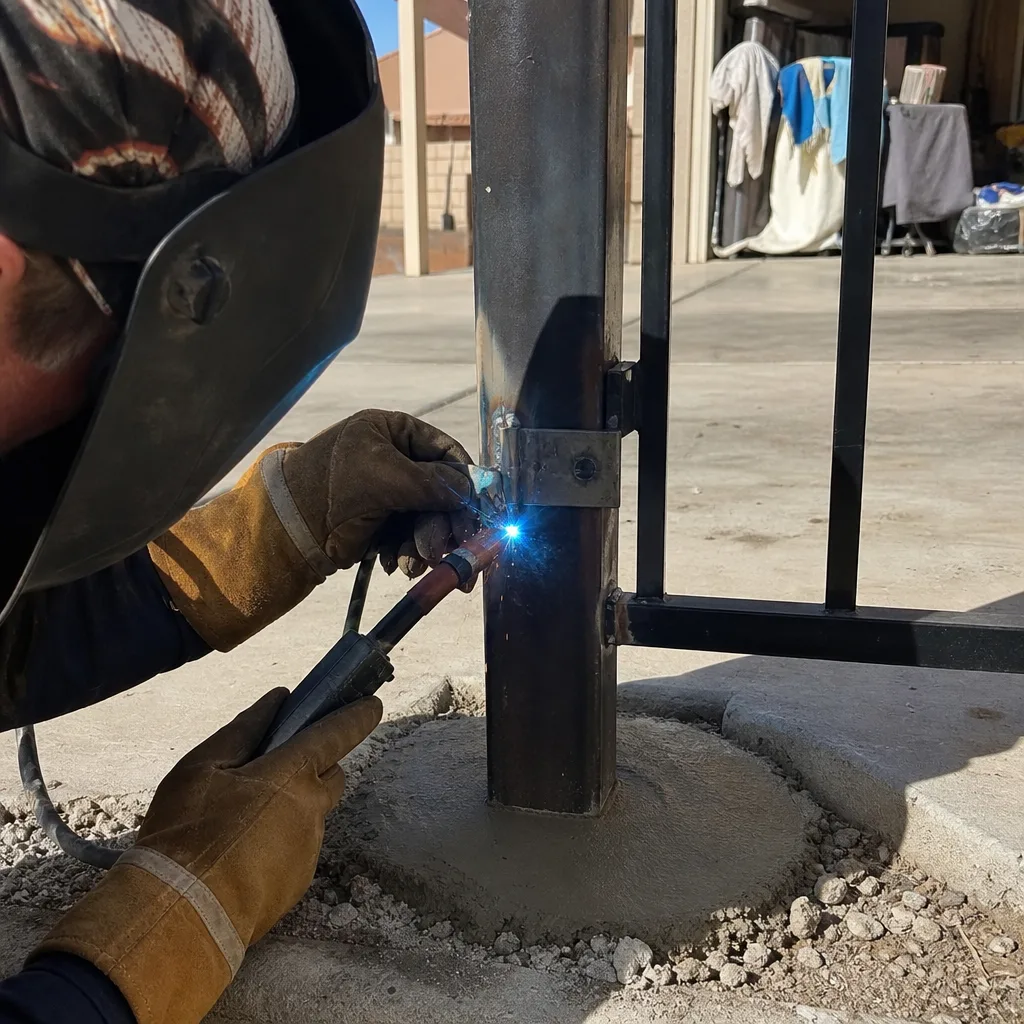
Prices vary by brand, gate size, and how much prior work is undocumented, but the ranges below are what we typically see for Boulder City residential gates. Every price is written and agreed before any work starts, so you know the number before a tool comes out of the truck.
- Photo-eye alignment or replacement: $180 to $320, depending on whether the original eye housing is salvageable or the full pair needs replacing.
- Limit-switch reset and re-baseline: $150 to $250, including the documented new limit positions.
- Hinge, roller, or guide replacement: $200 to $450, depending on the number of points and whether the gate must be dismounted.
- Control board replacement: $280 to $650 installed, parts and labor, by brand. DoorKing and Elite boards typically land at the higher end.
- Motor or operator replacement (residential swing): $850 to $2,200, depending on brand, arm type, and whether the existing bracket and wiring are reusable.
- Sliding gate track realignment: $350 to $700, including new track sections where needed.
- Safety-edge or obstacle-detection sensor service: $220 to $480, priced by gate width and sensor type.
The single biggest cost lever isn’t any of these lines. It’s whether prior work is documented. If you’ve received a written quote from another company and want a second look at whether the diagnosis matches the price, we offer a free review of the paperwork. For more on how operator-specific pricing breaks down, the Gate Motor & Opener in Boulder City page covers the automation side in detail. The repair and installation figures above are quoted, in writing, before work begins.
How to Request and Store Documentation So It Transfers
Documentation that lives only in a contractor’s system doesn’t protect you the day you sell the house. It protects the contractor’s institutional memory, not your property record. Here’s how to make sure the file stays with the gate, in five steps.
- Ask for the documentation in writing, on every service visit. Before the technician leaves, request the wiring diagram, limit readings, photo record, and part numbers. If they can’t produce them on the spot, ask for them by email within 48 hours.
- Keep a physical gate folder in the house. A simple manila folder in the garage or utility drawer works better than any app. Add each new service sheet as it arrives. Label the folder with the gate’s install date and operator brand.
- Photograph the folder and back it up. Every few months, photograph or scan the contents and store them in a cloud folder. If you ever need to reference the file from a different city, you’ll have it.
- Give a copy to your real estate agent at listing. A documented gate service history is a small but real selling point. It shows the system was maintained, and it gives the buyer a baseline for their own first technician visit.
- Ask the new owner to keep the file going. Include a note in the folder showing the last service date and the brand of the operator. A well-documented gate stays well-documented through ownership changes, and the savings compound.
This isn’t an unusual request. Any technician working on a residential gate should be prepared to hand over documentation, and if they resist, that’s a warning sign. Our technicians have up to 12 years of experience, and the paperwork habit is one of the first things we train for. If you want a baseline built for a gate that never had one, we can come out and create one from scratch.
Common Mistakes to Avoid
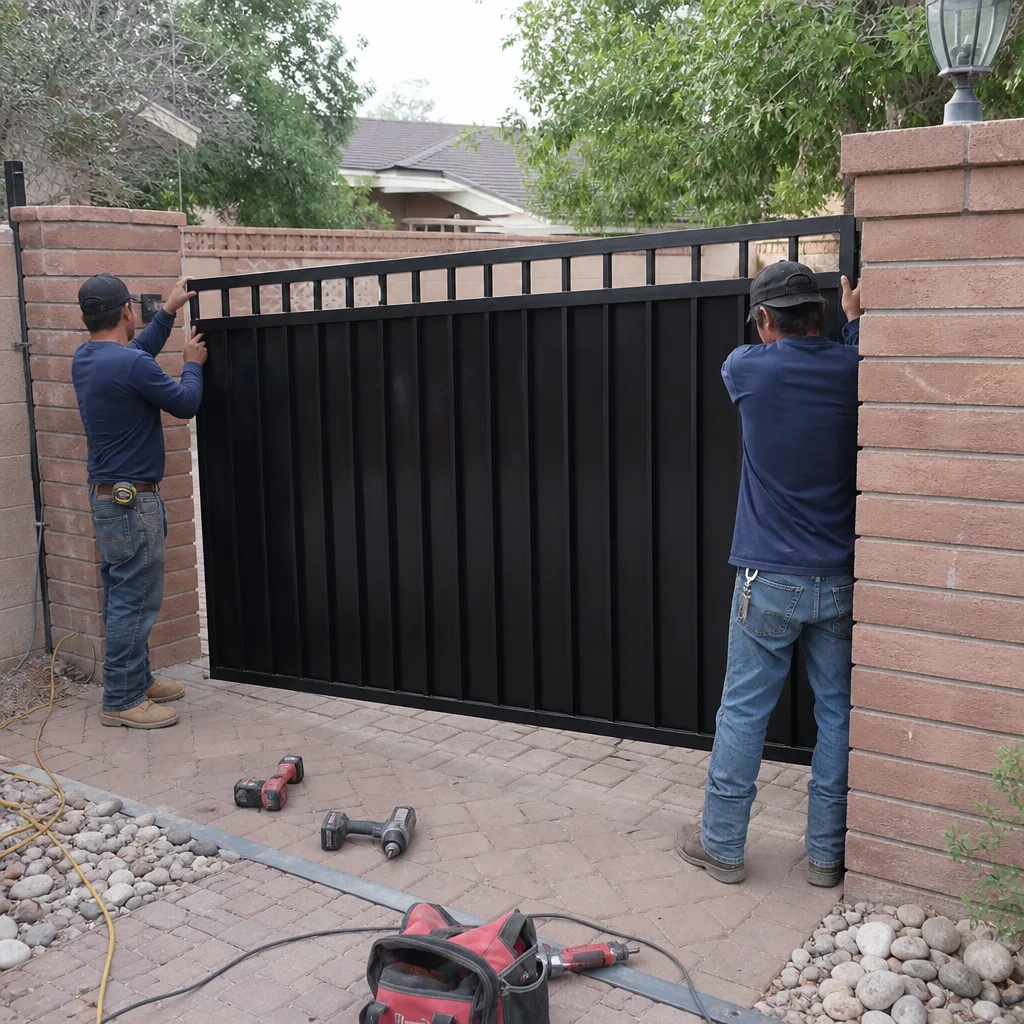
- Accepting a verbal estimate. A number spoken aloud and never written down is not a quote, it’s an intention. Get the price in writing before work starts, every time.
- Not asking for the wiring diagram after a repair. Without it, the next technician has to reverse-engineer the control wiring, which takes time and adds cost to the next invoice. This is the single most common mistake we see on Boulder City gates.
- Replacing the operator when the board is the actual fault. Heat-degraded capacitors and cracked solder joints mimic a dead motor. In our experience, a current-draw test catches this before a $2,000 mistake happens. If the motor runs and the gate doesn’t move, suspect control before the motor.
- Ignoring photo-eye misalignment after a storm. Desert wind moves the eye mounts slightly, and a two-inch drift is enough to cause intermittent reversal. It’s a $200 fix if caught early, a door-stuck-open weekend if not.
- Letting the battery backup die silently. Most modern operators have a battery that needs replacement every three to five years, and it fails without warning. In Boulder City, that failure often happens during a summer power event when the gate is the one thing you need working.
- Hiring the same company twice without comparing the second quote. A prior relationship isn’t a price guarantee. Free second-opinion reviews of written estimates are worth taking, especially when the price is higher than you expected.
See the difference
BeforeAfter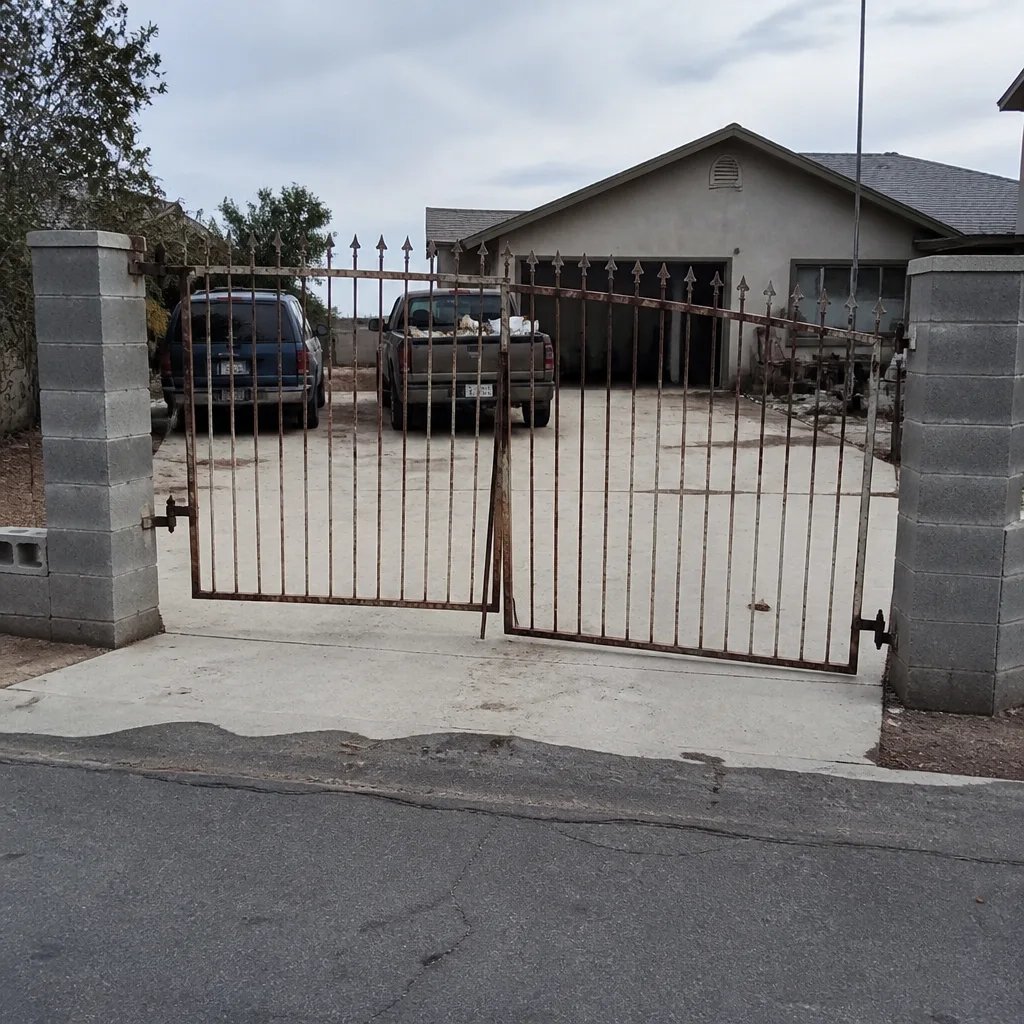 Before
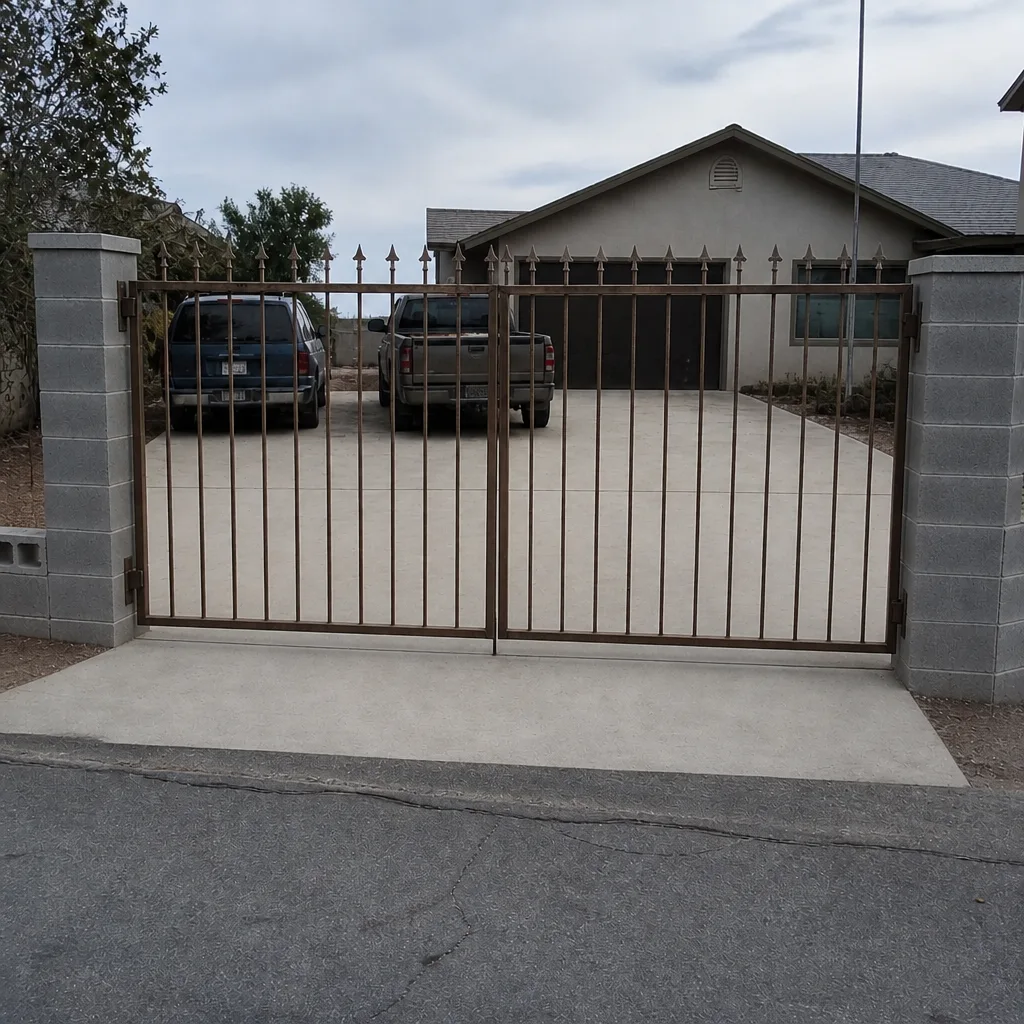 After
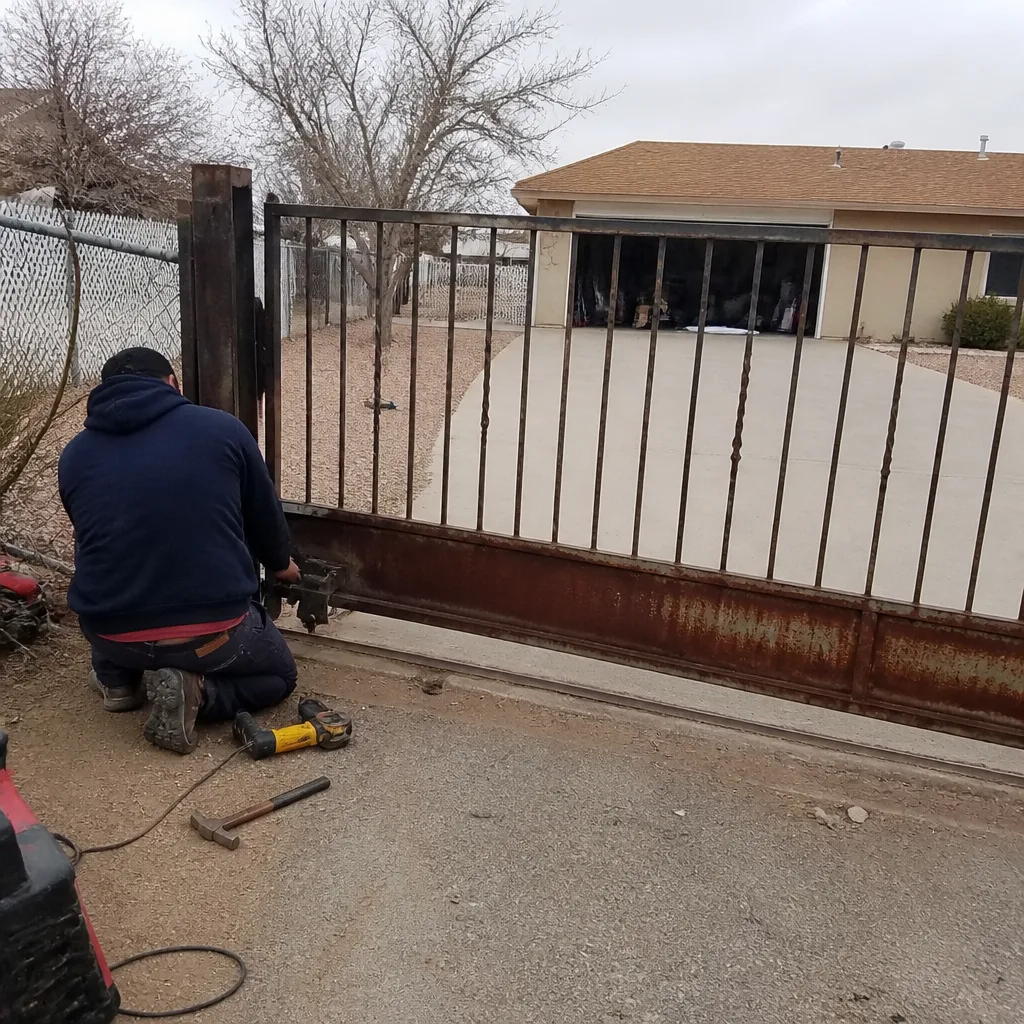 Before
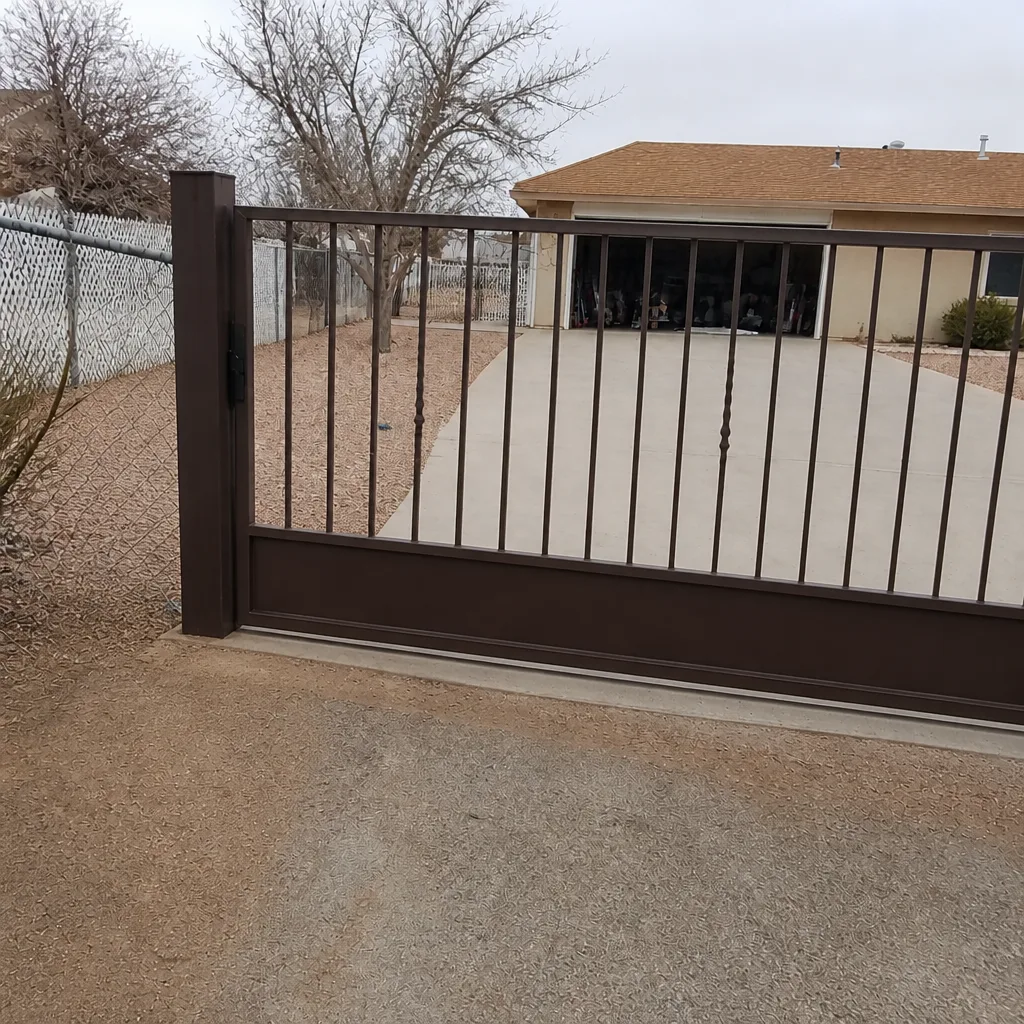 After
When to Call a Professional
Some gate issues need a technician, and it’s worth knowing which. Any time the gate involves high-voltage power at the operator, a control-board fault, or a spring-tension or counterweight system under load, call a professional. Also call when the gate reverses unpredictably, when a photo-eye or safety-edge fault has been intermittent for more than a week, when a motor is drawing enough current to trip a breaker, or when you’ve replaced a part yourself and the symptom persists. Don’t string a temporary fix on a gate with a safety device that isn’t functioning; a gate that fails to reverse is a genuine hazard to anyone in its path. Vance Gate Repair Boulder City offers free estimates in Boulder City. Call (844) 320-7587 for a written quote before any work starts.
Frequently Asked Questions
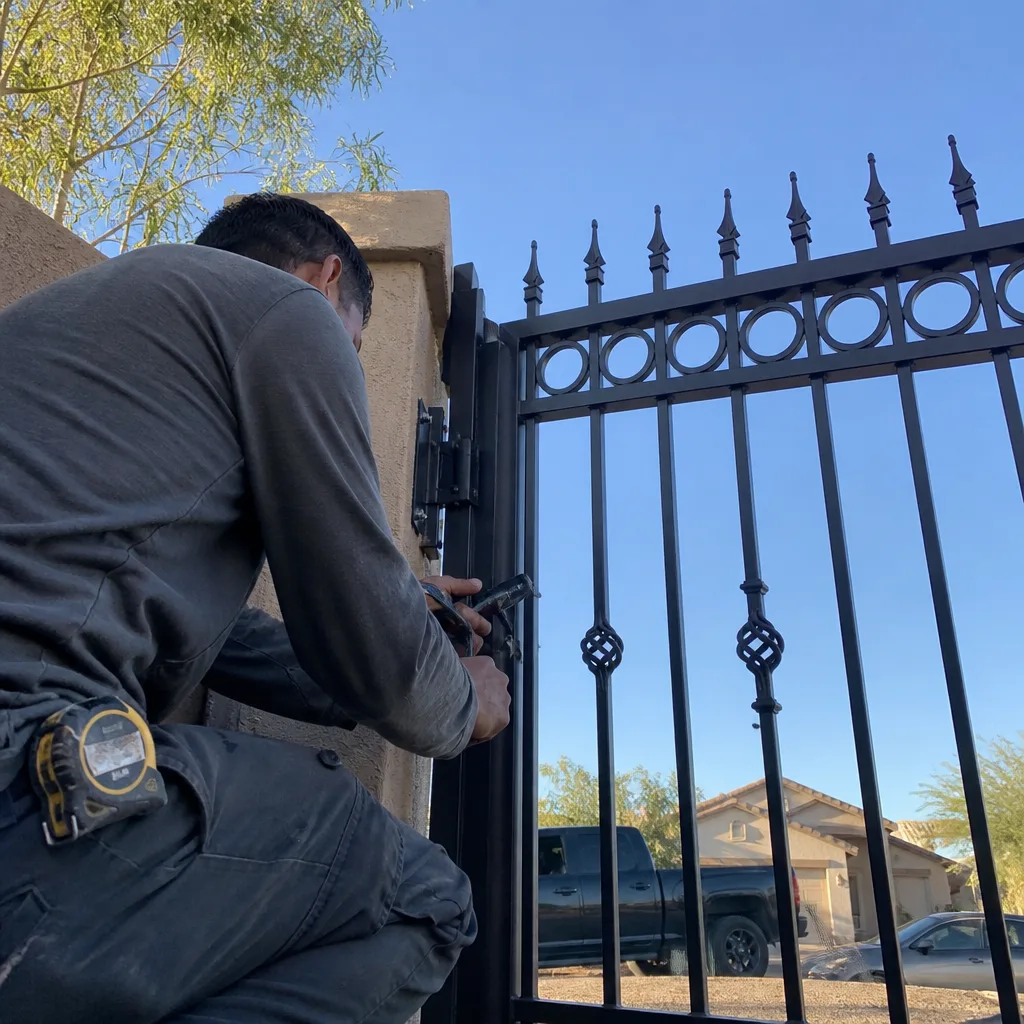
Gate repair in Boulder City typically costs $180 to $650 for common fixes like photo-eye alignment, limit-switch resets, and hinge or roller replacement, with control-board work running higher. The exact price depends on the brand, gate size, and whether prior service was documented. Prices are quoted in writing before work starts. Call (844) 320-7587 for an exact quote; estimates are free.
Same-day repair is often possible for common issues like limit-switch resets and photo-eye alignment when the parts are on hand, and a live person answers the phone any hour. Larger jobs like motor replacement or control-board work may need a parts order and a scheduled return visit. Call (844) 320-7587 to find out what your specific repair requires.
Photo-eye misalignment is the most common cause, followed by limit-switch drift as plastic components expand with the heat. A two-inch drift on an eye mount or three to six degrees of limit over-travel is often enough to trigger a reversal. A technician can confirm the cause in one visit and document the correction. Call (844) 320-7587 for a free estimate.
A complete gate service record should include a wiring diagram of the control connections, the limit-switch readings with cam positions, timestamped photos of the control box and hinge points, and part numbers for every component replaced. Without all four, the next technician has to rebuild the baseline from scratch. Request all four in writing on every service visit.
Yes, a full installation or operator replacement typically includes the low-voltage power run to the operator, the safety edges and photo-eyes required for automatic operation, and the control wiring documented for the property record. Installation work is measured and scheduled rather than same-day. Call (844) 320-7587 for a free written estimate.
Yes, we review any written estimate from another company at no cost. Bring the paperwork and we’ll check whether the diagnosis matches the proposed repair and price. This is one of the most reliable ways to avoid paying twice for the same problem. Call (844) 320-7587 to schedule the review.
The Bottom Line
Gate repairs in Boulder City cost less when the gate has a documented history. The wiring diagram, the limit-switch baseline, the photo record, and the part numbers are not auxiliary paperwork; they’re the thing that makes the next repair cheaper. Boulder City’s 110°F summers and sub-freezing winter nights stress gate components in a predictable sequence, and a technician with a baseline can plan for that sequence instead of reacting to it. Working isn’t the same as documented. Get the folder started on your gate, and take a second look at any quote before you sign it. If you’re ready to build that baseline, or want a free estimate before you commit, call (844) 320-7587 or begin at our Vance Gate Repair Boulder City home page.
Written by the team at Vance Gate Repair Boulder City.