
Last updated November 18, 2026
 Wrought iron
 Wood & steel frame
 Farm & ranch
 Sliding driveway gates
 LiftMaster operators
Free on-site gate assessment - hinges, posts, and your LiftMaster or Nice gate operator checked before anything is quoted
The assessment is free and the quote is the invoice.
Get your free estimateGate Repair Warning Signs: A Boulder City Homeowner’s Reference Guide
A gate that hesitates for half a second before it moves is showing you a symptom. Most homeowners see the hesitation, feel a small pang of worry, and then do nothing for another six months. What it costs to ignore that half-second is a number almost nobody has been given: a $40 limit-switch adjustment today, or a $900 motor and control-board replacement later, after the hesitation turns into a hard stop. This guide connects each warning sign to the component it implicates and a documented repair range, so you know whether you’re looking at a cheap fix or an expensive one. We wrote it from Boulder City, where the heat writes its own chapter into gate failure.
Quick Answer
Gate repair warning signs fall into three tiers: things you can watch for a few weeks (slow travel, cosmetic rust, a noisy roller), things that need a technician within days (a motor that resets in afternoon heat, a sagging hinge, a gate that drifts past its stop), and things that are an immediate safety problem (a photo-eye that’s been bypassed, a gate that reverses late, a swinging leaf that free-falls). The first tier is a repair; the third tier is a person getting hurt. Most gate failures in Boulder City announce themselves weeks before they strand the gate open or closed, and a photo of the symptom plus a description of the sound gets you an accurate phone estimate before anyone drives out.
Styles & brands we work with
- Wrought iron
- Wood & steel frame
- Farm & ranch
- Sliding driveway gates
- LiftMaster operators
Table of Contents
- Symptom to Component: Reading What Your Gate Is Telling You
- Which Warning Signs Are Safe to Watch and Which Are Not
- How Boulder City Heat Shows Up in Gate Behavior
- How to Photograph a Warning Sign So a Technician Can Quote You by Phone
- The Real Cost Difference Between Acting Early and Waiting for Failure
- What Common Gate Repairs Cost in Boulder City
- A Short Field Guide to Gate Sounds
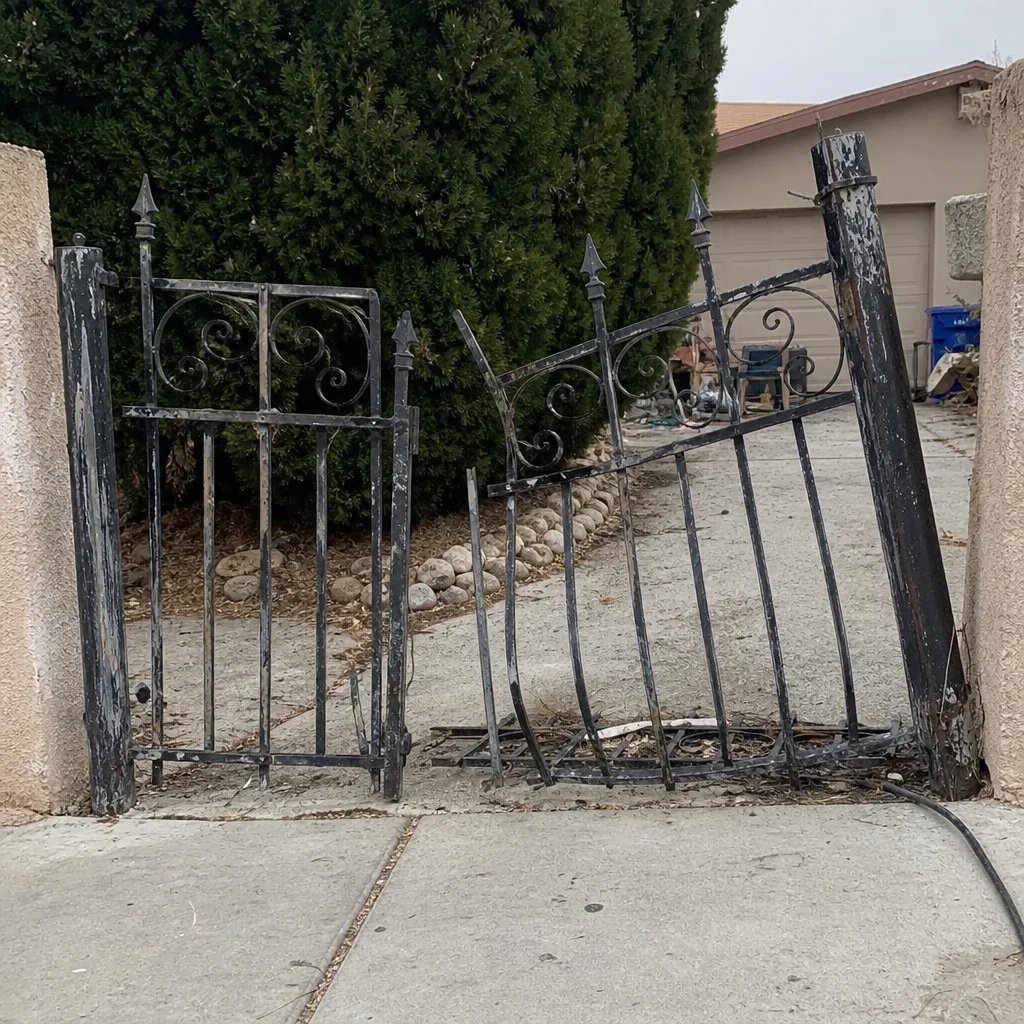 Before
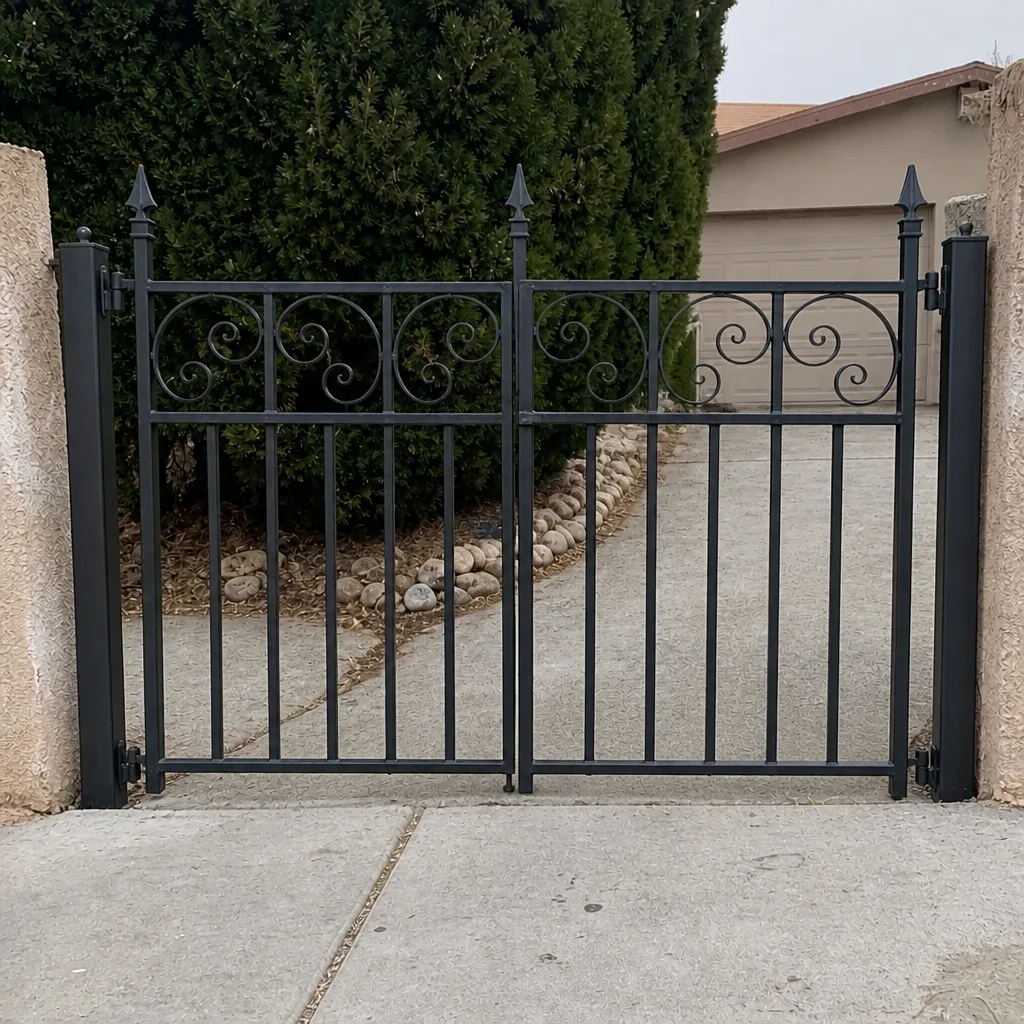 After
Symptom to Component: Reading What Your Gate Is Telling You
Every gate symptom points at a specific part. The skill of diagnosing a gate is mostly translation: sound, movement, and timing each map to a component. When we arrive on a job, the first thing we do is listen, then walk the gate through a full cycle while noting where in the travel the problem appears. That timing is often more diagnostic than the symptom itself.
Here’s the mapping we use, and the one you can use before you call anyone:
- A grinding or chewing sound at the start of travel: usually the operator gearbox, a stripped drive gear, or a slipping clutch on a swing-gate motor. On a slide gate, it’s often a worn idler or a track with gravel in it. Grinding that starts loud and gets louder is a metal-on-metal condition and needs attention before it costs you the whole motor.
- A gate that moves a few inches then reverses: almost always the safety photo-eye (the infrared beam across the driveway that tells the operator something is in the path) or the edge sensor on the leading edge. On older LiftMaster and Linear setups, it can also be a control board that lost its reversal setting after a power blip.
- A gate that stops in the same spot every time: a limit switch out of adjustment, or a magnetic or mechanical stop position that has slipped. The gate thinks it’s at full open or full close when it isn’t. This one is usually a quick reset and a photograph of the new position.
- A gate that sags on the latch side: hinge wear, a post that has settled, or a weld that’s cracked at the frame. In this corner of Nevada, settling from monsoon-season ground movement shows up as a sag more often than simple hinge wear.
- A motor that hums and does nothing: a seized gearbox, a dead capacitor, or the operator is being held by a stuck input from an access-control device (keypad, intercom, loop detector). Don’t keep cycling it; you’ll burn the motor winding.
- A motor that runs slow and hot: a binding gate, undersized operator for the weight, or a bad board. Slow-and-hot is the signature of a gate fighting itself.
If your symptom is on that list, note which one and how many cycles it takes to appear. That’s the start of a phone diagnosis that actually holds up at the truck. If you’re already past the warning-sign stage, the Gate Repair in Boulder City page covers the dispatch side.
Which Warning Signs Are Safe to Watch and Which Are Not
The hardest part of this guide is telling you which symptoms can wait. Not everything is urgent, and pretending otherwise would be a sales tactic, not a diagnosis. So split the symptoms into three tiers and check your gate against them honestly.
Tier 1: Watch for two to four weeks.
- Cosmetic rust on a hinge or roller (check back in a month; if it’s pitting, treat it).
- A slightly noisy roller on a slide gate that doesn’t affect travel.
- A gate that’s 5 to 10 percent slower in extreme heat, then back to normal at night.
- A keypad that needs a second press to arm, or one intermittent remote.
Tier 2: Book a technician within the week.
- A motor that thermal-cuts out in the afternoon and works again after dark. On a daily cycle, this one is a real bottleneck, and repeated cutouts shorten motor life fast.
- A gate that drifts past its stop position and needs a second press to latch.
- A sagging leaf, a cracked weld, or a sag visible at the latch side.
- Grinding that’s recent but not worsening.
Tier 3: Stop using the gate; call now.
- A photo-eye that’s been taped, wedged, or otherwise bypassed. The gate no longer knows whether a child or a pet is in the path.
- A gate that takes more than a second to reverse after the beam is broken, or doesn’t reverse at all.
- A swing leaf that free-falls when unlatched, or a spring that’s broken.
- Any exposed 120-volt wiring at the operator housing.
- Any gate that moves on its own (phantom opening), which points at a stuck command or a bad board.
Tier 3 is where the risk of struck pedestrian or trapped vehicle stops being theoretical. Don’t run the gate until a technician has cleared it. A gate motor and opener visit can resolve most Tier 3 conditions the same day.
How Boulder City Heat Shows Up in Gate Behavior
Boulder City summers are the single largest driver of gate symptoms we see. From May through September, midday temperatures routinely push past 100 degrees, and the gate operator housing acts like a metal oven. The effect isn’t one problem; it’s three that surface together and mimic each other.
The first is the thermal cutoff. Most residential operators have a built-in thermal protection on the motor, and on a full-sun gate, that protection trips earlier than the spec sheet says. Symptoms look like the motor “dying” for an hour and coming back to life at dusk. That’s not a dying motor; it’s an overloaded one. The fix is usually to correct the underlying drag (a binding gate, an under-spec’d operator, a gate that’s gained weight from a sagging leaf) rather than to replace the motor.
The second is board resets. Heat plus a marginal power supply will cause the control board to reset itself, and the gate forgets its limits. The gate then stops mid-travel, or drives past its stop and re-learns a new (wrong) position. This is the failure pattern that makes homeowners think they have a board problem when they have a limit switch and a heat problem.
The third is rubber and plastic failure. Photo-eye boots, edge-sensor rubber, and motor-cover gaskets crack in the desert sun. A cracked photo-eye boot lets dust in, and dust misaligns the beam by a fraction of an inch. The gate then reverses on every cycle. We’ve seen more “the gate is possessed” calls in July than any other month, and most of them trace back to a $6 rubber boot and a loose photo-eye.
None of this is unique to any one brand. We work on LiftMaster, Linear, FAAC, BFT, Ghost Controls, Viking, DoorKing, Elite, and Mighty Mule, and the heat pattern is the same across all of them. If your gate lives on one of those brands and starts acting up in the summer, price the heat into the diagnosis before you price a board.
How to Photograph a Warning Sign So a Technician Can Quote You by Phone
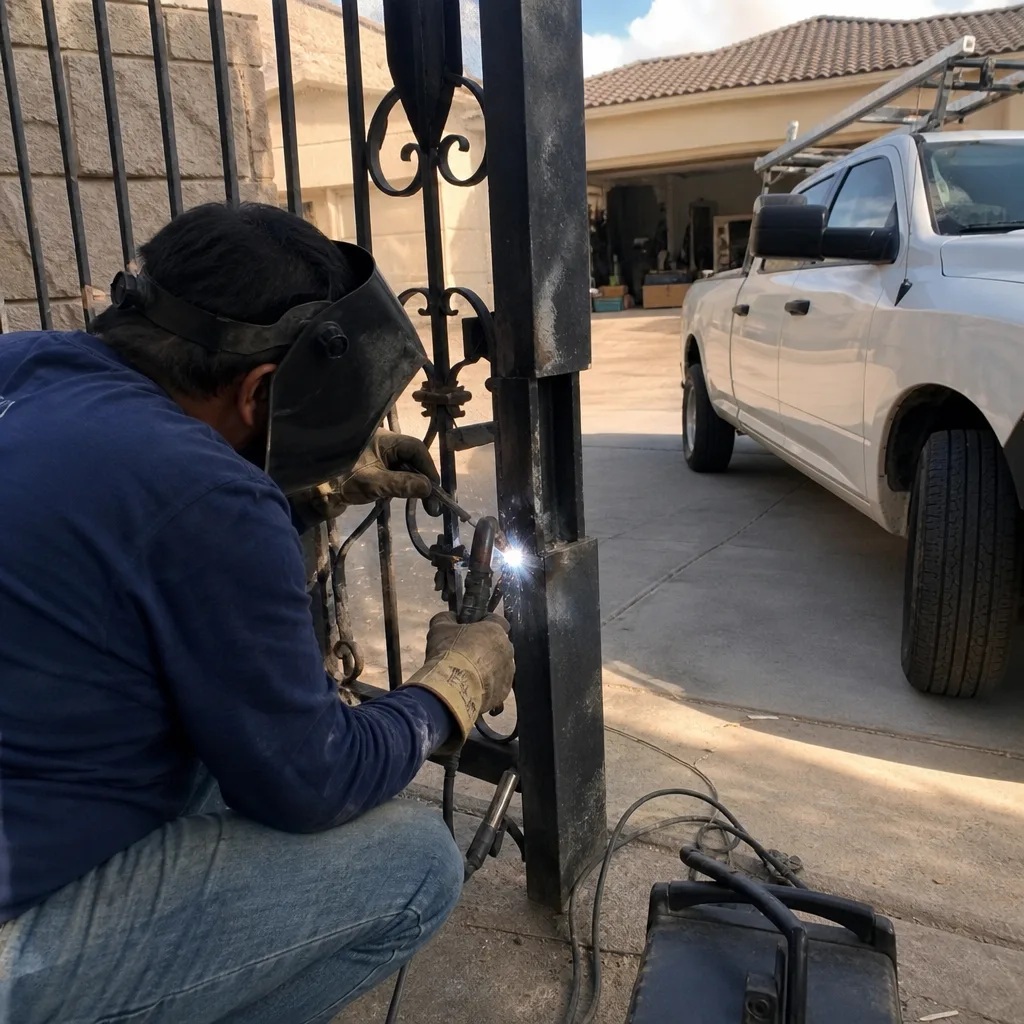
A phone estimate is only as good as the information it’s built on. Most “it’s somewhere between $200 and $900” answers happen because the tech on the phone has no photo, no model number, and no sound. The right five photos and a voice memo will get you a written range, not a shrug. Here’s the sequence in order:
- Photograph the operator housing label. That sticker has the brand, model, and serial. This one photo is worth more than any other; it lets the tech quote against the correct parts catalog instead of a guess.
- Photograph the full gate from the hinge side, standing eight feet back. This shows sag, level, and gap at the latch.
- Photograph the problem in place. If it’s a photo-eye, shoot both units head-on. If it’s a weld, shoot from two angles. If it’s a track, shoot the whole track length.
- Photograph the limit switches or stop cams (the small adjustable pieces that tell the gate where full open and full close are). This is where most “stops in the same spot” problems live.
- Photograph the power feed and the safety edge. Both are part of what a written estimate needs to account for.
Then record a 15-to-30-second voice memo of one full cycle. Stand where you can hear the operator well. Say the cycle number: “this is the third cycle this morning, and it’s the first one that reversed.” Techs can hear a slipping clutch, a dragging track, or a misaligned photo-eye in about three seconds of audio.
With those five photos and one voice memo, an accurate written estimate is usually possible without a site visit. Vance sends a photo record back to the homeowner on every job under Clause 4 of The Haven Standard, so the documentation habit runs both directions.
The Real Cost Difference Between Acting Early and Waiting for Failure
Here’s the number most homeowners have never been given. Across thousands of jobs, the pattern is consistent: acting on the first symptom costs a fraction of acting on the failure. Not a little less. Often a third to a fifth.
Three real line-item comparisons from our Boulder City work:
- Limit switch, early vs. late. A limit switch out of adjustment, caught early, is typically a reset and a photo record, in the $75 to $150 range. If the gate runs against a mis-adjusted stop for a season, it chews the drive gear or the arm bracket. That repair lands in the $350 to $600 range and takes the gate out of service for a day.
- Photo-eye, early vs. late. A misaligned photo-eye is a $75 to $150 adjustment. A photo-eye that fails and gets bypassed, letting the gate run blind, is the setup for a much more expensive incident: a board damaged by a shorted safety input ($250 to $450), plus the risk of a person or vehicle being struck.
- Motor, early vs. late. A binding gate caught early is a hinge, roller, or track repair in the $150 to $350 range. If the gate keeps running against the drag, the motor overheats through one too many Boulder City summers and the operator itself fails. A full motor and control replacement typically runs $650 to $1,400, depending on gate weight and brand.
The principle holds across the whole trade. Under The Haven Standard Clause 1, the price is written and handed to you before any work starts, so the earlier diagnosis is a lower number in writing, not a lower number promised verbally. The gate that hesitates today is asking for a small repair. The gate that’s stranded open in August is charging you for a much larger one.
What Common Gate Repairs Cost in Boulder City
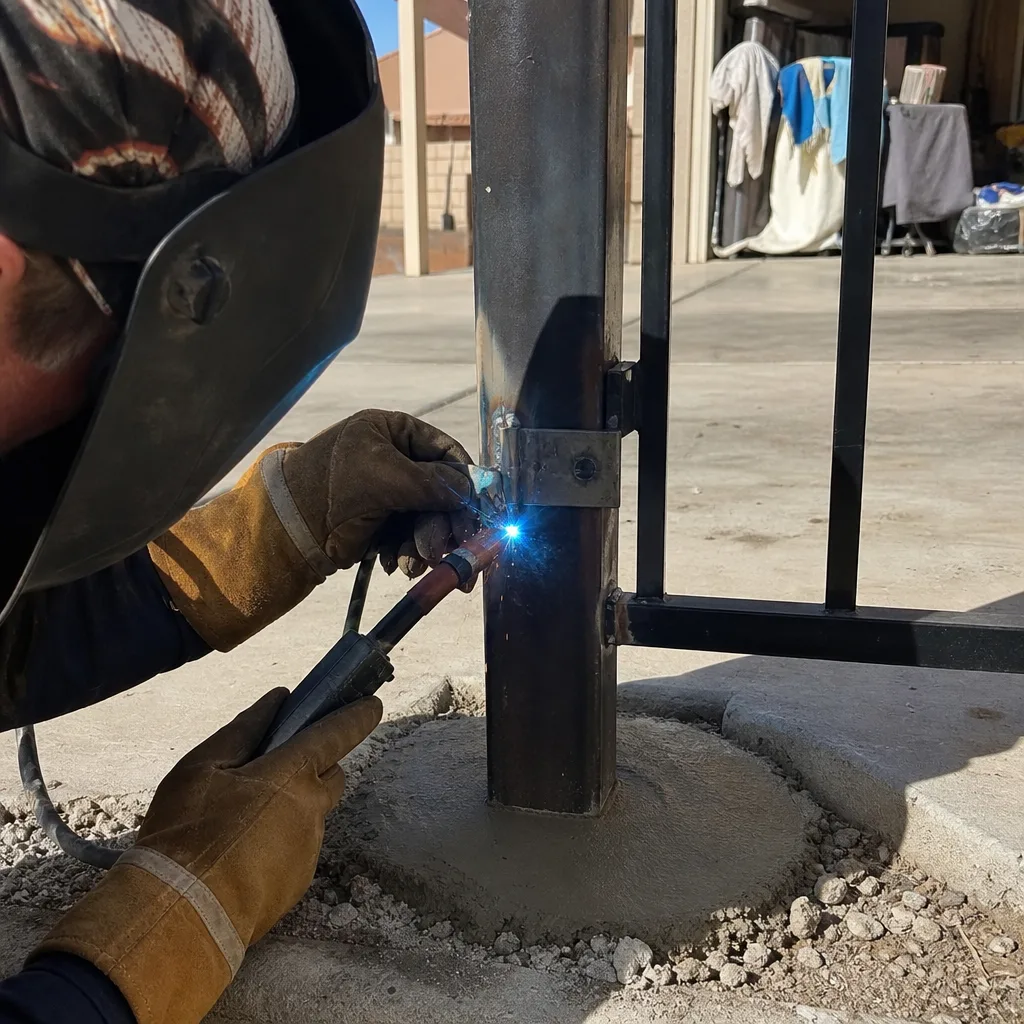
Every gate is different, and the ranges below are what we quote most often in Boulder City, not a fixed price list. A written quote for your specific gate will be tighter. What matters is that you see the number before you call, not after.
- Photo-eye adjustment or replacement: $75 to $150 (adjustment); $120 to $220 (replacement, including alignment and a cycle test).
- Limit switch reset or replacement: $75 to $150 (reset); $120 to $200 (replacement).
- Safety edge sensor replacement: $150 to $300, depending on the sensor length and brand.
- Hinge repair or replacement: $100 to $250 per hinge, more if the post has settled and needs re-shimming.
- Roller and track service (slide gate): $150 to $350.
- Control board replacement: $250 to $550, depending on operator brand and board availability.
- Full motor and operator replacement (swing or slide): $650 to $1,400, depending on the gate weight, brand, and whether the arm bracket needs replacement.
- Weld repair on the frame or post: $150 to $450.
Those ranges cover what most Boulder City homeowners actually face. If you’re at the front end of a new gate installation, the numbers look different and the work is scheduled rather than same-day. Either way, the price is written before work starts, and the technician photographs every adjustment made.
A Short Field Guide to Gate Sounds
Sound is the earliest warning sign a gate gives you, and it’s the one most homeowners tune out. Use this short list as a translation table:
- A whine on startup that wasn’t there last year: motor bearing wear or a capacitor starting to fail. Usually a repair, not a replacement.
- A crunch when the gate reaches full open or full close: the stop is being hit hard, meaning the limit is set too far past the physical stop. Fix the limit before it breaks the frame.
- A rattle on a slide gate that changes with speed: a worn roller or a loose track bolt.
- A grinding that sounds like it’s inside the housing: gearbox or drive gear. Stop cycling; gearbox metal is being shaved off every cycle.
- A rhythmic clunk on a swing gate: arm bracket or hinge play. Catch it early and it’s a hinge; catch it late and it’s a bracket and a frame.
- A click and then nothing: a relay or board command problem. Photograph the operator label and call.
Recording the sound, even on a phone, gives a technician far more to work with than a description. If you can’t tell whether your gate is in Tier 1, 2, or 3, that’s what the free estimate is for.
Common Mistakes to Avoid
- Bypassing the photo-eye to “stop the reversing.” The reversing is the gate telling you the beam is misaligned or blocked. Wedging the beam or taping the sensor is the single most common cause of struck-pedestrian incidents we see. Never bypass the beam.
- Cycling a jammed gate to “see if it fixes itself.” If the motor is humming or grinding, every cycle is one more bad cycle. Stop, photograph, call.
- Spraying WD-40 on a track or gearbox. On a slide gate it collects desert dust into a grinding paste within a week. On a gearbox it does nothing useful. Use the right lubricant for the right part, or ask.
- Quoting a repair off a verbal description alone. A photo of the operator label and the affected part turns a $200-to-$900 guess into a written range. The verbal-only estimate is the reason “the price went up” happens.
- Replacing the motor to fix a dragging gate. If the gate binds, a new motor will fail the same way the old one did. Fix the drag first, then decide whether the operator is actually worn. We’ve seen this one play out on plenty of Boulder City gates.
- Letting a sag sit through a monsoon season. A gate that sags after monsoon rain is asking for a post and frame repair. Wait through one more wet season and the post may need resetting, not re-shimming.
- Skipping the written price to “get it done today.” The whole point of a written estimate is that nothing gets added later. Get the number before the tools come out.
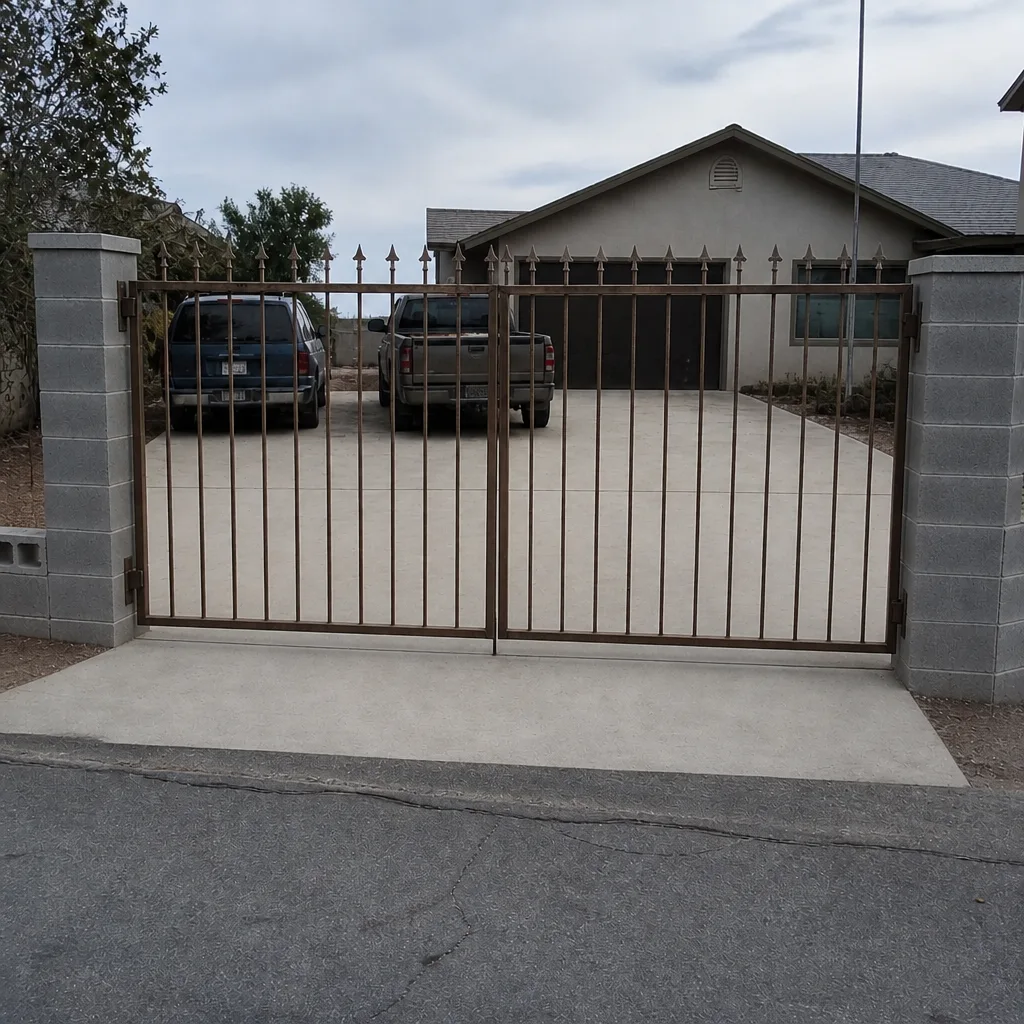
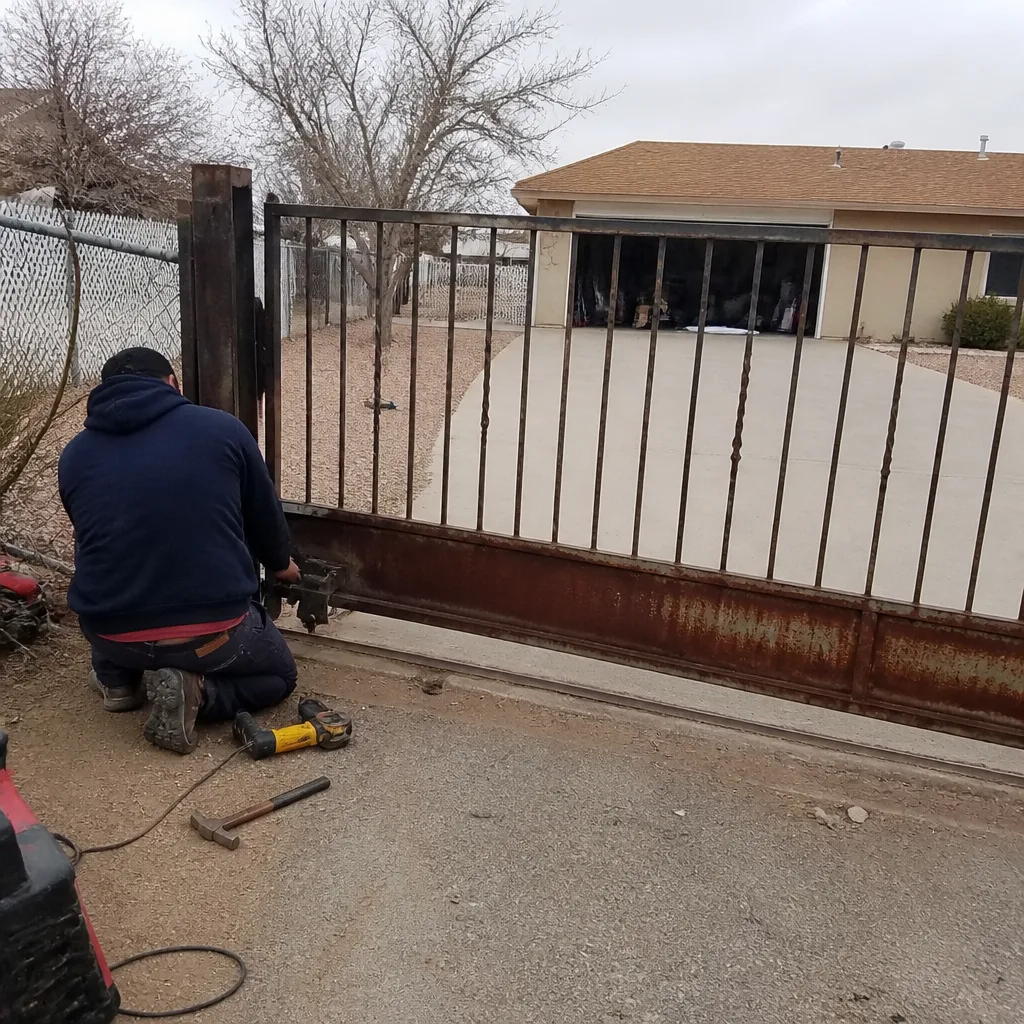
See the difference
BeforeAfter Before
 After
 Before
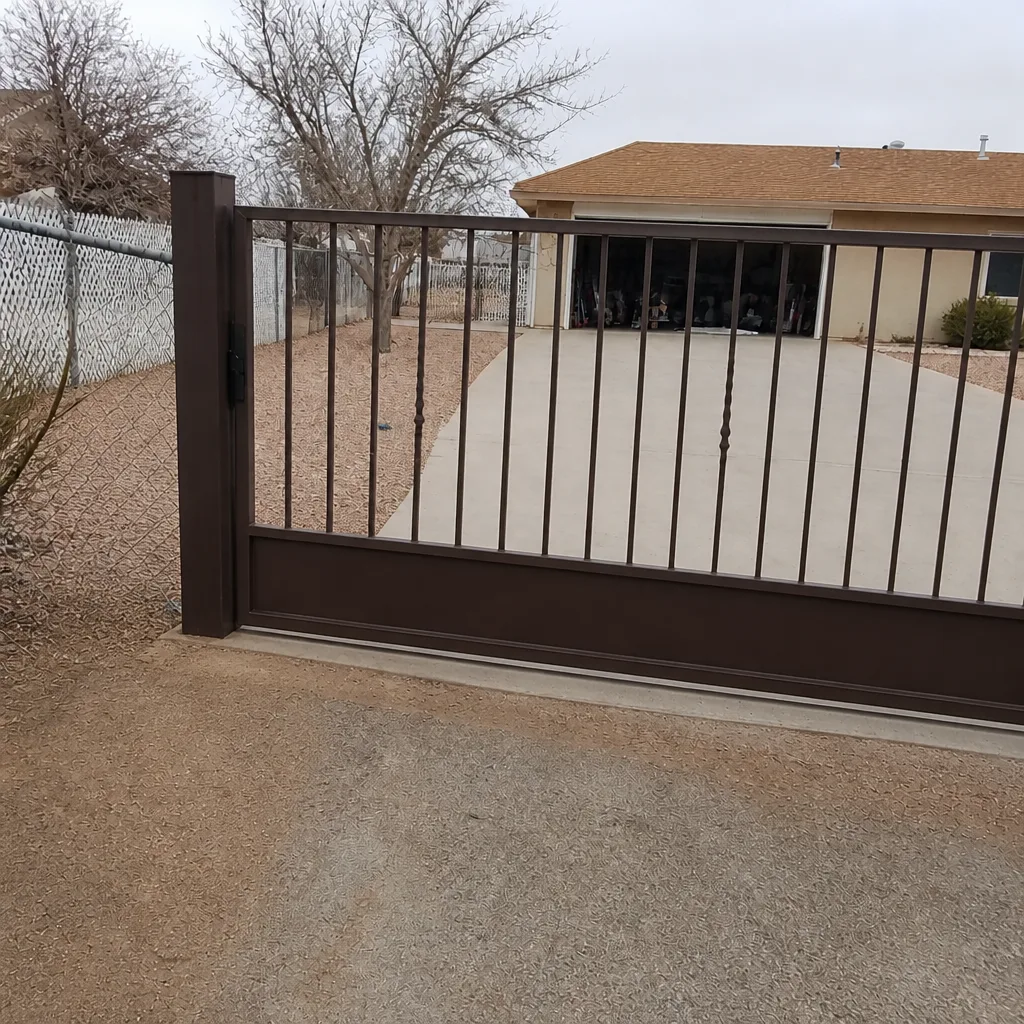 After
When to Call a Professional
Call a professional when the symptom is in Tier 2 or Tier 3 above, when you can’t identify which tier you’re in, or when the gate moves on its own, reverses unpredictably, or has a bypassed safety edge or photo-eye. Also call if the operator is on a brand you don’t recognize and you’d rather not guess at parts. Those are the cases where a phone diagnosis saves you real money, not just time.
Vance Gate Repair Boulder City offers free estimates in Boulder City. We quote in writing before any work starts, photograph every adjustment, and stand behind the repair for a full year under the 365-Day Done Right Promise. For the broader service picture, the Vance Gate Repair Boulder City home page covers the full scope. Call (844) 320-7587 for a free estimate, any hour. A live person answers the phone.
Frequently Asked Questions
The first sign is usually a hesitation of half a second to a second on startup, or a small sound that wasn’t there last season. Both point at a component that’s starting to drag or a limit that’s drifted, and either one is much cheaper to fix at that stage than after a full failure. Photograph the operator label and record one cycle, then call; the estimate tends to be accurate without a site visit.
Most individual repairs run between $75 and $350. A photo-eye adjustment is $75 to $150, a limit switch reset is $75 to $150, a hinge repair is $100 to $250, and a full motor and operator replacement typically runs $650 to $1,400. Call (844) 320-7587 for an exact written quote; estimates are free and the price is agreed before any work starts.
Yes, a gate that’s stuck or unsafe is the same-day and emergency case, and we take those calls 24 hours a day. A live person answers when you call, not a voicemail, and we’ll tell you on the phone whether it’s a same-day repair or a part that has to be ordered.
Yes, and it does so in three ways: thermal cutoffs on the motor, control-board resets that wipe the limit settings, and cracked rubber on photo-eyes and edge sensors. A gate that acts up specifically in afternoon heat and recovers at night is usually showing one of those three, not a dying motor. The repair is often under $300 when caught early.
Usually, yes, if you send five photos and a short voice memo of one cycle. The operator label, the full gate from the hinge side, the affected part, the limit switches, and the power feed and safety edge cover it. With that, most estimates are accurate to within a reasonable range, and the rest is confirmed in writing on arrival.
A written price includes the specific repair, the part numbers, and the labor, and it’s handed to you before any work starts. It doesn’t change unless we find something during the work that wasn’t visible in the photos, and if that happens we stop and re-quote before proceeding. You’ll never see an invoice larger than the written price you agreed to.
The Bottom Line
Gate repair warning signs are useful only when you can connect them to a part and a price. A half-second hesitation is a limit switch, not a dying motor. A grinding gearbox is a $350 issue now and a $1,400 motor later. A bypassed photo-eye is not a repair ticket; it’s a safety stop. If you’re in Boulder City, the summer heat makes the watch-and-wait bet more expensive than it is elsewhere, and the cheapest repair on any gate is the one you do on the first symptom. Keep the operator label photographed, the phone number handy, and the written price in front of you before anyone touches the gate.
Written by the team at Vance Gate Repair Boulder City.