
Last updated November 18, 2026
 Wrought iron
 Wood & steel frame
 Farm & ranch
 Sliding driveway gates
 LiftMaster operators
Free on-site gate assessment - hinges, posts, and your LiftMaster or Nice gate operator checked before anything is quoted
The assessment is free and the quote is the invoice.
Get your free estimateGate Repair Warning Signs Every Homeowner Should Know
Most gate failures we get called to in Boulder City didn’t happen suddenly. They announced themselves weeks earlier, in ways that are easy to measure once you know what to measure. The tell isn’t usually a bang or a squeal. It’s four extra seconds on a cycle that used to take twelve. That drift means the motor is pulling more current against rising mechanical resistance, and it points at a tired bearing, a dry hinge, or a bound roller before anything actually breaks. Watch the gate work differently, not just whether it works. This guide covers the cycle-time baseline method, what each sound maps to, the visual clues specific to desert gates, and how to log it all so a technician spends time fixing instead of guessing.
Quick Answer
The most reliable gate repair warning signs are a slower cycle time than six months ago, grinding or clicking at the same point in travel, hesitation before the gate reverses direction, controls that stop responding the first time you press them, and visible paint bubbling or rust staining at welds. Catching these early keeps a Boulder City repair small, often a bearing or limit-switch adjustment, instead of a motor replacement.
Styles & brands we work with
- Wrought iron
- Wood & steel frame
- Farm & ranch
- Sliding driveway gates
- LiftMaster operators
Table of Contents
- The Cycle-Time Baseline Method
- What Each Sound Tells You About a Failing Component
- Desert-Specific Visual Warning Signs
- Reading Your Control Board’s Warning Pattern
- How to Log Warning Signs So a Technician Can Use Them
- Why Brand Matters in a Diagnosis
- When a Warning Sign Is a Safety Concern
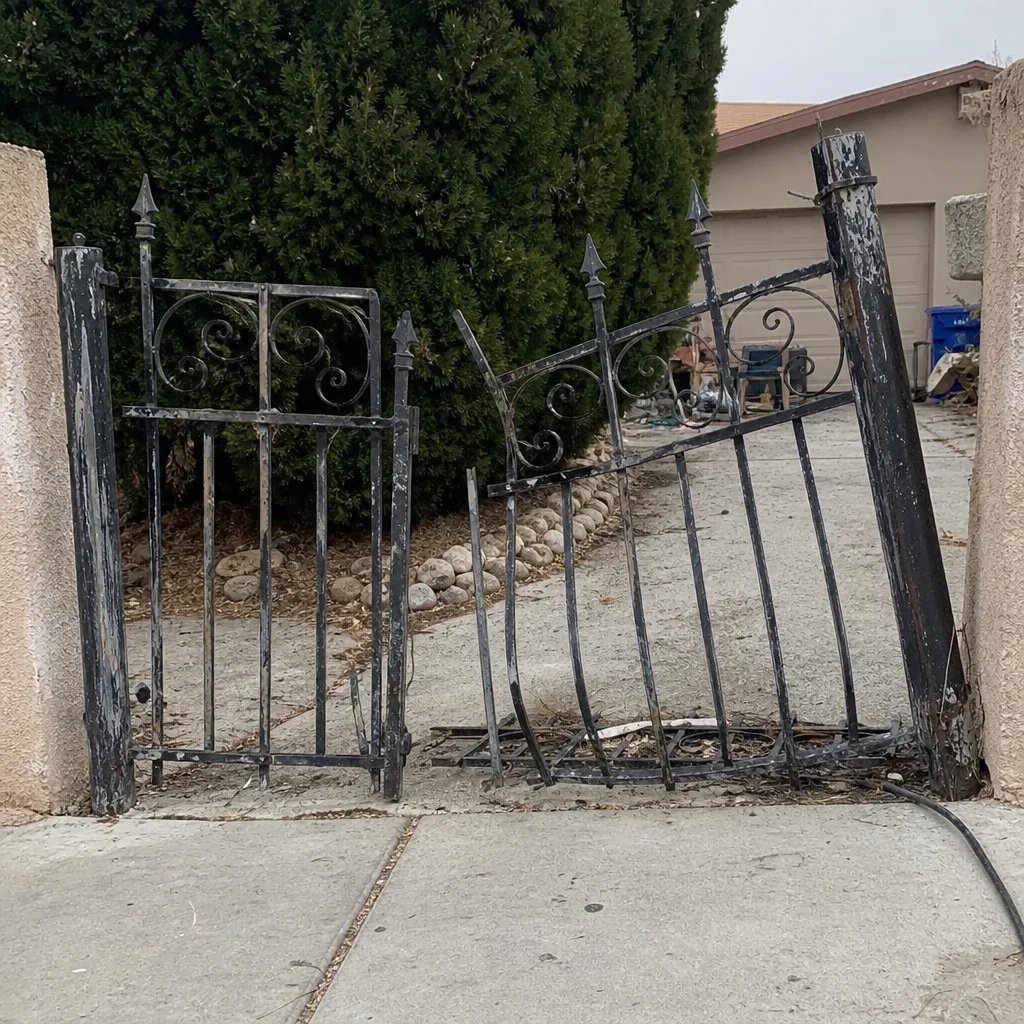 Before
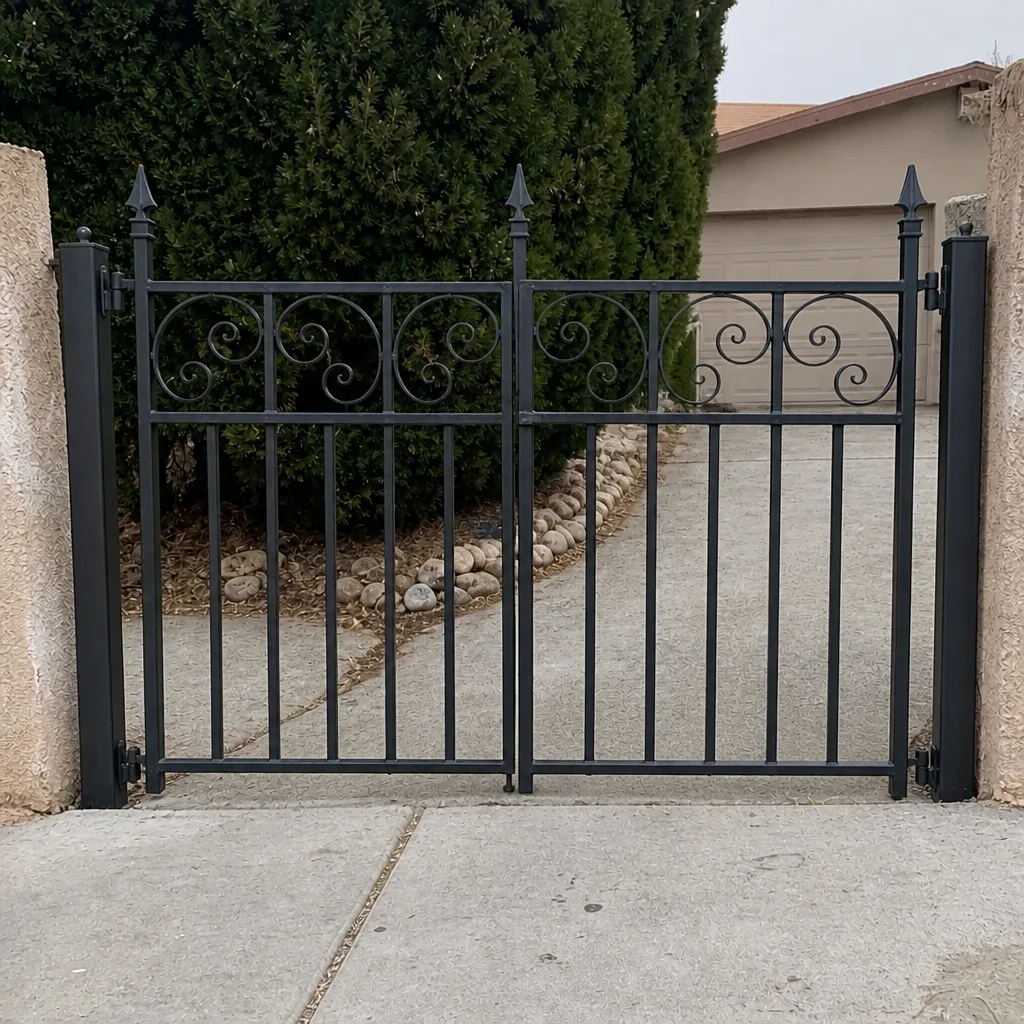 After
The Cycle-Time Baseline Method
You can’t measure deviation without a reference. The single most useful thing a homeowner can do is record how long the gate takes to open and close when it’s healthy. Do this with a phone timer: gate fully closed, trigger it, stop the clock when it hits the open limit. Repeat three times and average it. Do the same for closing. Write both numbers down with the date. That’s your baseline.
From there, check it once a month. A change of two or more seconds over a few months is a genuine signal. It’s not subjective anymore, which matters when you’re trying to explain the problem to someone on the phone. In Boulder City’s heat, we see bearings and hinge pivots dry out faster than in cooler climates, and a slowing gate is usually friction showing up in the current draw before it shows up as noise.
Two things skew a reading. Wind matters on a swing gate, so time it on a calm morning. Cold matters slightly on some operators, so compare like with like. If you keep the baseline honest, the number tells you the truth. It also tells a technician where to start, which is the whole point of gate repair in Boulder City: find the actual fault instead of replacing parts until the symptom stops.
How to Record a Cycle-Time Baseline
- Fully close the gate and confirm nothing is in the path.
- Start a phone stopwatch the instant you trigger the gate.
- Stop it when the gate reaches the full open position; record the time.
- Repeat three times and average the result.
- Repeat the whole process for the closing cycle.
- Write both averages and today’s date on a slip you keep with the homeowner packet.
- Recheck monthly, and note any increase of two seconds or more.
What Each Sound Tells You About a Failing Component
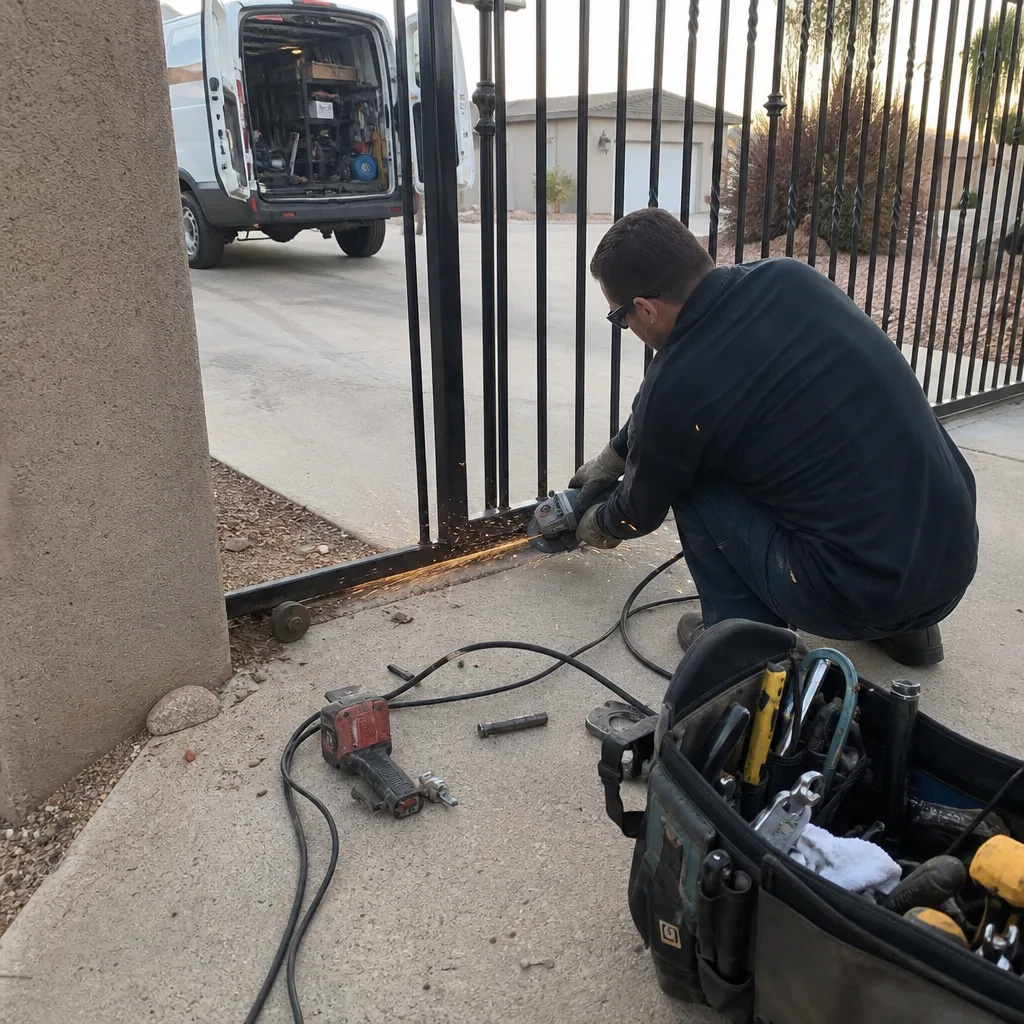
Sound is data if you listen to where it happens in the cycle. A gate that sounds the same from start to finish is usually fine. A gate that makes one specific noise at one specific point in travel is telling you exactly where the problem is. In our experience, matching the sound to the component saves hours of diagnostic time.
- Grinding, steady: usually a worn or dry bearing, or a chain with a stretched section riding a sprocket. Grinding that worsens over the whole cycle points to the operator’s drive side.
- Clicking at one point: often a limit switch tripping or a hinge binding at a specific angle. Same click every cycle is a mechanical or switch issue, not motor.
- Hesitation before reversing: a photo-eye or control board problem, or an overloaded operator fighting friction. The gate pauses, the current spikes, the board reacts.
- Buzzing but not moving: a stuck arm on a swing gate or a bound carriage on a slide gate, plus a capacitor or control fault. This is the sound of a motor working against a jammed load.
- Rattle in wind: loose brackets, worn rollers, or a gate sagging off its hinge line.
Record the sound’s location in the cycle, not just the sound itself. “Grinds for about two seconds, right after it starts opening” is more useful to a technician than “it’s loud.” That detail is the difference between a quick adjustment and a diagnostic hour.
Desert-Specific Visual Warning Signs
Most gate-care guides are written for humid climates, where rust streaks and wet-wood rot are the obvious tells. Boulder City’s climate gives you a different set, and some of the same signals mean different things here.
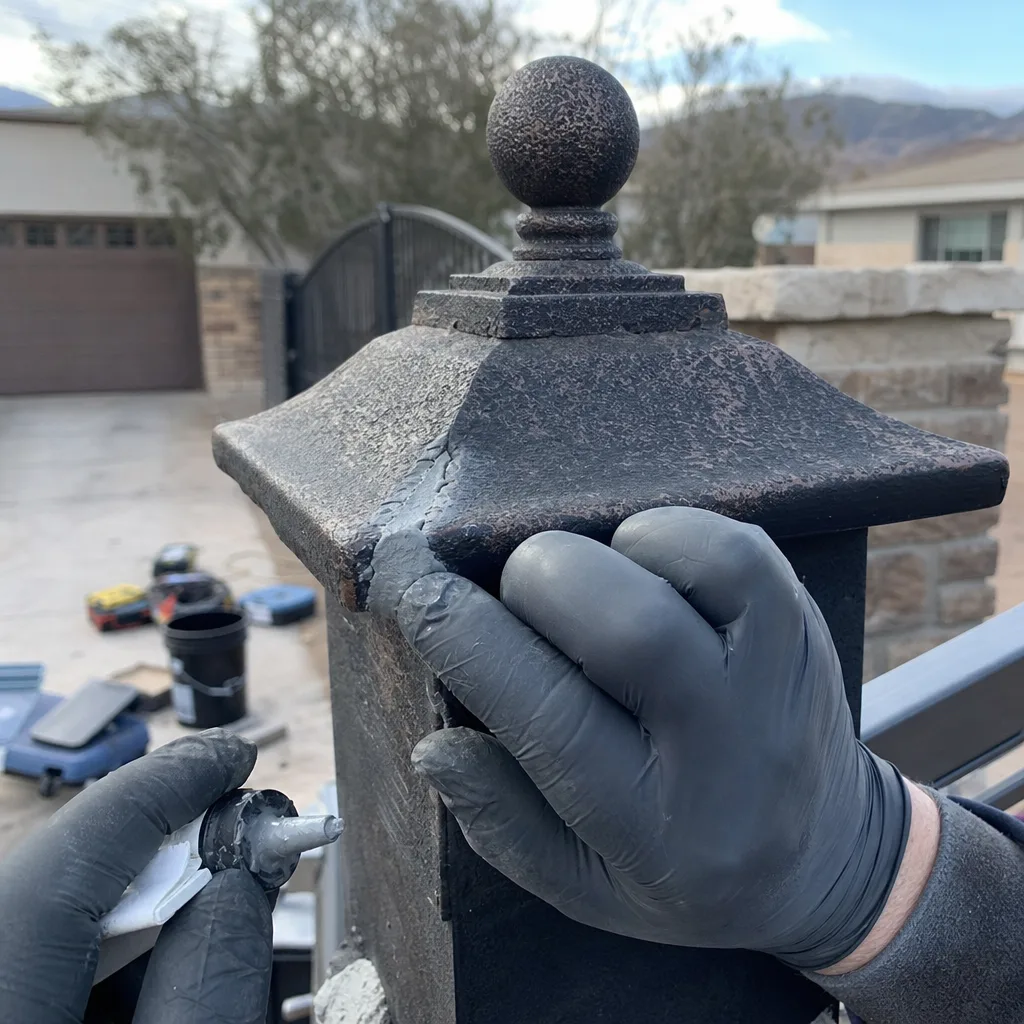
- Paint bubbling at welds: in desert heat, a weld can trap moisture and salt that lift paint from underneath. Bubbling at a joint often means the weld is beginning to fail, not just cosmetic paint work.
- White caliche staining on posts: caliche is common in the local soil, and a white crust climbing a post base is a sign of moisture and mineral rise. On steel posts it eats the coating; on masonry it’s a warning that the footing is holding water.
- UV-cracked sensor housings: the plastic around photo-eyes and control boxes goes brittle in the sun. A hairline crack on a sensor housing lets in dust and moisture, and the sensor starts failing intermittently.
- Sun-bleached or chalking finish: chalky powder on the gate’s surface is degraded coating. It’s the coating telling you it’s no longer protecting the metal.
- Dust in the track: a slide gate in Boulder City collects windblown grit in the track and on rollers. Grit produces exactly the grinding and hesitation you’d otherwise mistake for a mechanical failure.
If any of these show up, note them alongside your cycle-time numbers. A photograph of bubbling paint at a weld is worth more to a technician than a verbal description, and under the Haven Standard, every visit includes a documented photo record so the evidence trail continues. This is also the point to think about whether a worn gate is a repair or a candidate for gate installation in Boulder City, especially if the hinge line itself has moved.
Reading Your Control Board’s Warning Pattern
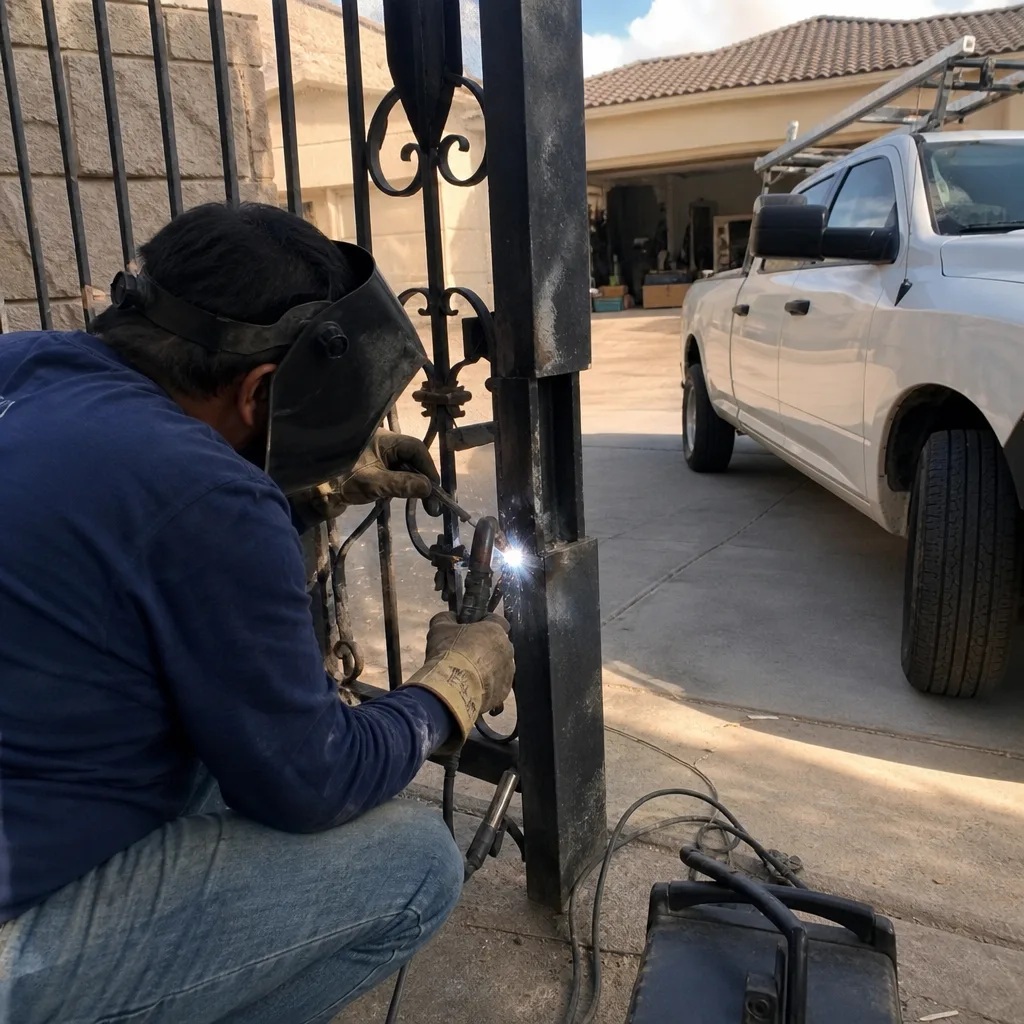
Modern operators log their own failures, and most homeowners never look. A single fault entry in a day is usually nothing: a gate reversal from a wind gust, or a momentary photo-eye block. Random, intermittent faults scattered across a week are more serious, because they suggest a loose connection, a failing sensor, or a board that’s overheating. The pattern matters more than the count.
What to note from the operator’s display or app:
- Error codes, exactly as shown, with the time you saw them.
- Whether the fault repeats at the same stage of the cycle or at random points.
- Whether the fault clears on its own or needs a manual reset.
- Any recent power interruption, storm, or manual override that could explain a one-off entry.
On units like LiftMaster or FAAC, the code on the display is specific, and it’s the fastest path to a diagnosis. On a Mighty Mule, the behavior (number of beeps, reversal pattern) carries the same information. The control board is telling you what the gate is doing wrong; the trick is to record it before it clears. If the pattern points at the operator rather than the gate, gate motor and opener service in Boulder City is where the diagnostic time goes, and it’s worth having the log handy when you call.
How to Log Warning Signs So a Technician Can Use Them
The reason diagnostics bill higher than repair is that most symptoms arrive as a story. “It’s been acting weird.” A short, factual log turns that story into a starting point, and it keeps the bill proportional to the actual problem. This is the same discipline our technicians have carried over from commercial access-control work, and it’s why a written record helps the homeowner as much as us.
Use a single notebook or note on your phone and record each entry in this order:
- Date and time you observed the sign.
- What happened, in plain numbers where you can (“took 16 seconds to open, was 12 in March”).
- Where in the cycle it happened (start of opening, mid-travel, before reversal).
- Any sound or visible clue (grind, click, bubbling paint, staining).
- Any error code shown, exactly as displayed.
- What you did about it, if anything (reset, manual override, nothing).
A few photographed examples help. When you hand this log to a technician, they can go straight to the likely fault instead of spending an hour reproducing symptoms. That’s lower cost, and it’s part of why a written record matters more than a memory. It’s also the case-file habit behind the 365-Day Done Right Promise: if the same fault returns within the year, the documentation tells us exactly what was adjusted the first time.
Why Brand Matters in a Diagnosis
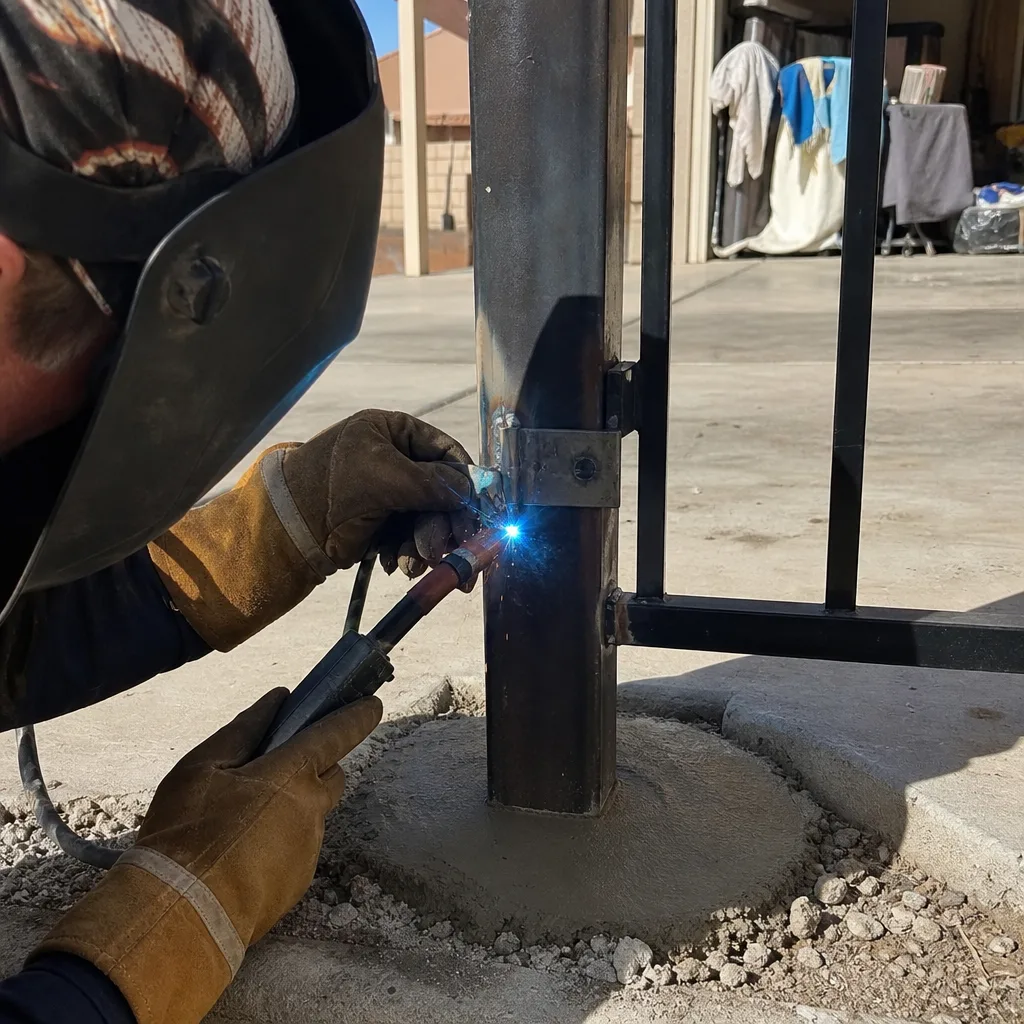
The warning signs are similar across operators, but where to look differs by brand. An Elite or LiftMaster swing operator may report a bind through its own board diagnostics, while a mechanical Mighty Mule gives you clues through sound and behavior. A FAAC gate may trip a limit switch in a way that looks like a board fault until you read the readings. Knowing the brand shortens the diagnosis, and it matters that whoever you call can work on what’s already bolted to your gate.
We service nine major automation brands, so we don’t need to steer you toward a replacement because the motor isn’t one we carry. If your log points at the operator, a technician reads the limit-switch values and photos the settings rather than swapping the whole unit on a hunch. For homeowners thinking about Vance Gate Repair in Boulder City for the first time, that brand-versatility is the practical difference between a repair and an unnecessary install. Write the brand and model number of your operator on the first page of your log. It’s one line that saves time on the first call.
When a Warning Sign Is a Safety Concern
Some warning signs aren’t a maintenance note, they’re a stop-using-the-gate signal. An automatic driveway gate is heavy, and a moving gate with a failing safety device can injure a person or a pet. A photo-eye (the infrared beam that stops the gate if something crosses its path) that’s misaligned or flickering is a safety failure, not a nuisance. A gate that reverses randomly, or that no longer reverses when it should, is a hazard you should not cycle until it’s looked at.
If you see any of the following, treat the gate as out of service and call before using it again:
- The gate fails to stop or reverse when something crosses the photo-eye path.
- The gate reverses on its own when there’s no obstruction.
- A hinge, weld, or bracket is visibly bent, cracked, or separated.
- The gate arm or carriage is loose enough to move by hand with the operator engaged.
- Any high-tension spring or cable looks stretched, kinked, or snapped.
On any gate with exposed springs or cables, don’t try to adjust or remove them yourself. Those parts store real force, and they can release it without warning. That’s a job for a trained technician. We’d rather look at your gate and tell you to keep it off than have you find out the hard way.
Common Mistakes to Avoid
- Waiting for a full stop. A gate that stops working is a symptom, not the first sign. The cycle-time drift happens weeks earlier, and catching it then usually means a smaller repair.
- Greasing everything. Slapping lubricant on a track that’s full of Boulder City grit turns dust into paste and accelerates wear. Clean first, lubricate the right points, and leave the rest alone.
- Resetting the operator to clear a fault without recording it. You erase the evidence a technician needs, and the next fault starts from zero. Write the code down before you reset.
- Assuming a slow gate needs a new motor. In most cases it’s friction: a dry bearing, a bound roller, a misaligned limit switch. A new operator on a binding gate just fails sooner.
- Ignoring UV cracking on sensor housings. A hairline crack on a photo-eye housing lets in dust and moisture, and the sensor starts failing intermittently. Replace the housing, not the whole sensor, while you can.
- Trusting a verbal diagnosis. If no one writes down what they found and what they set, the next technician starts from scratch, and you pay to rediscover the same problem. Insist on a written record.
- Treating a flashing safety device as a minor annoyance. A photo-eye that isn’t working is a genuine hazard. Stop using the gate and get it looked at.
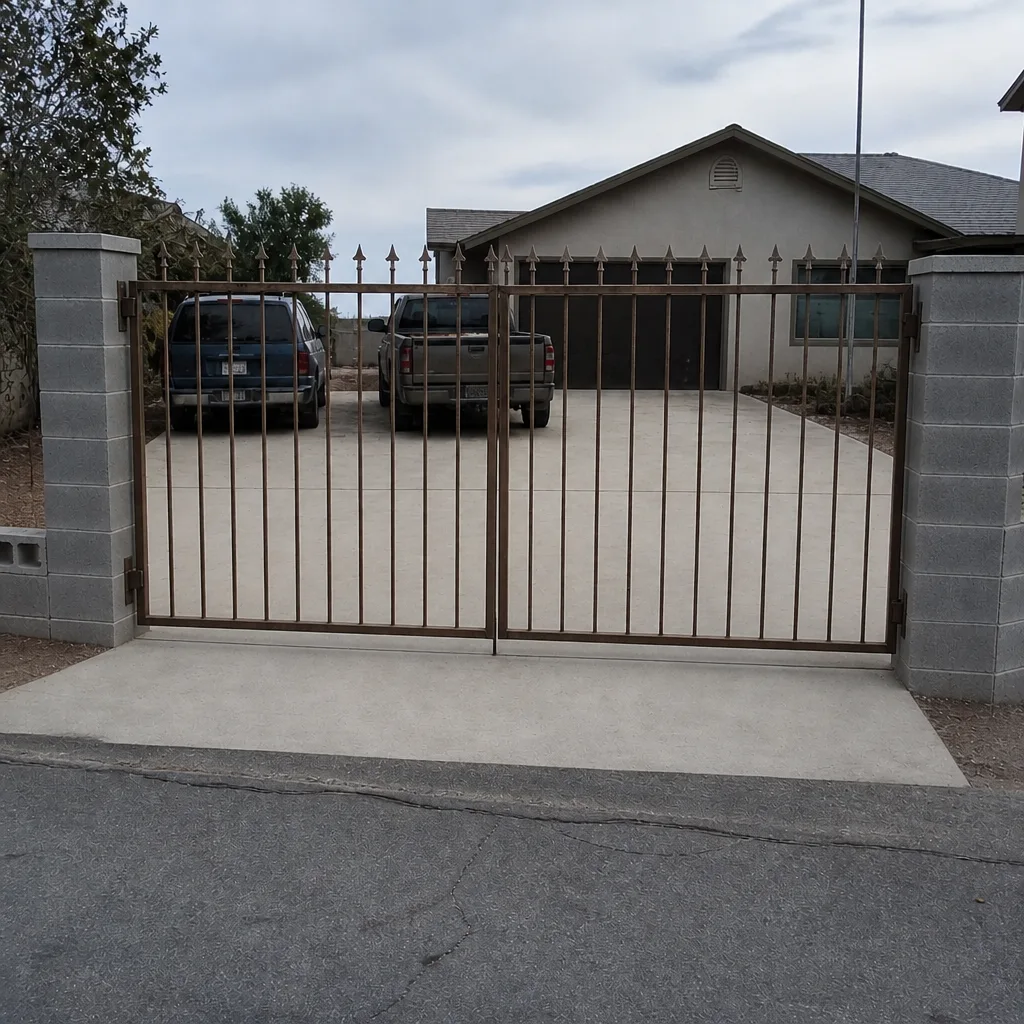
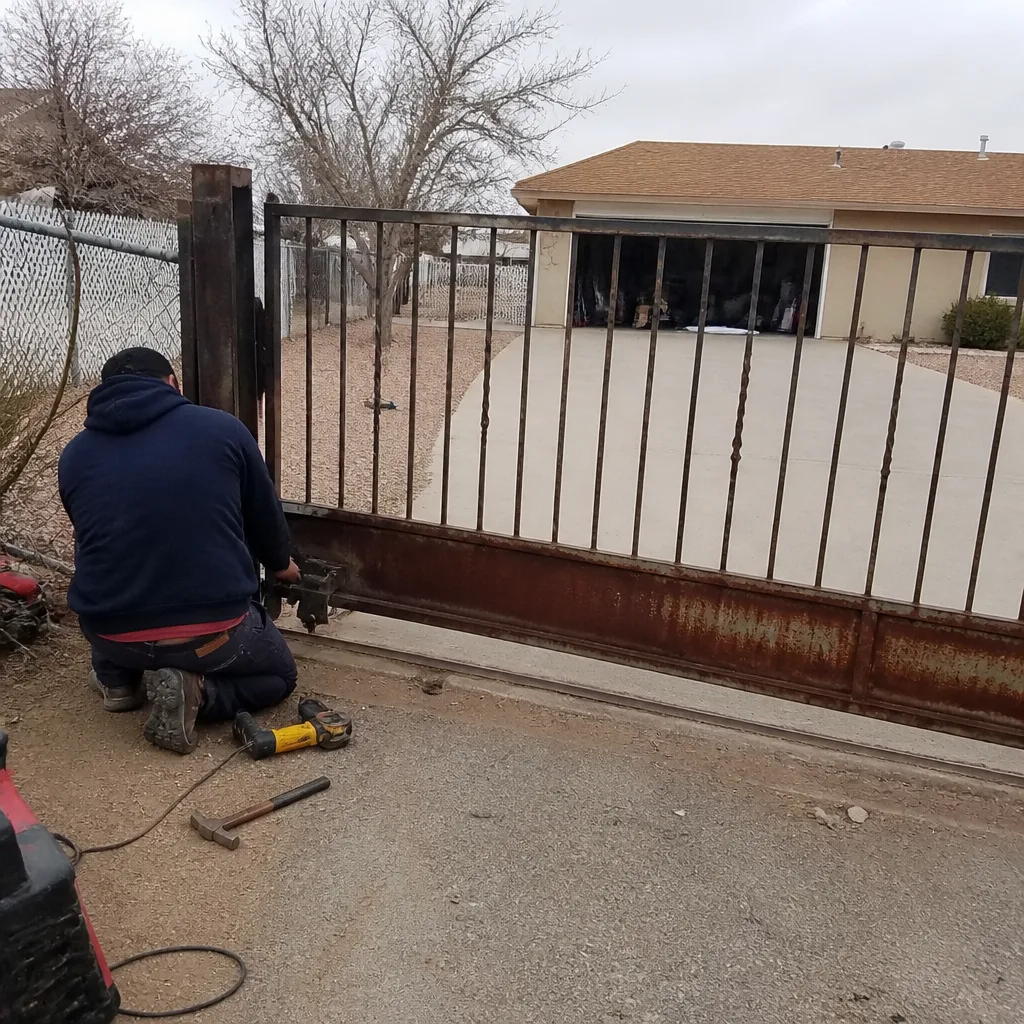
See the difference
BeforeAfter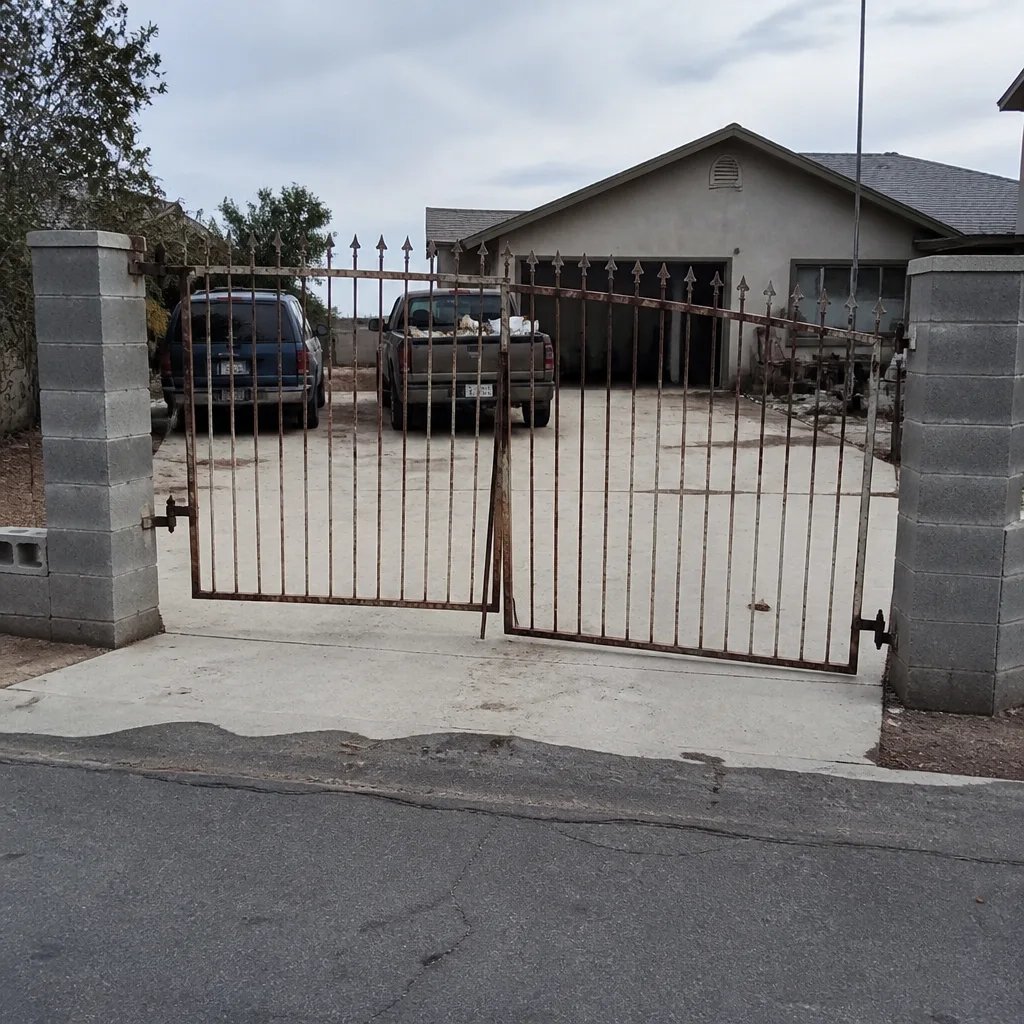 Before
 After
 Before
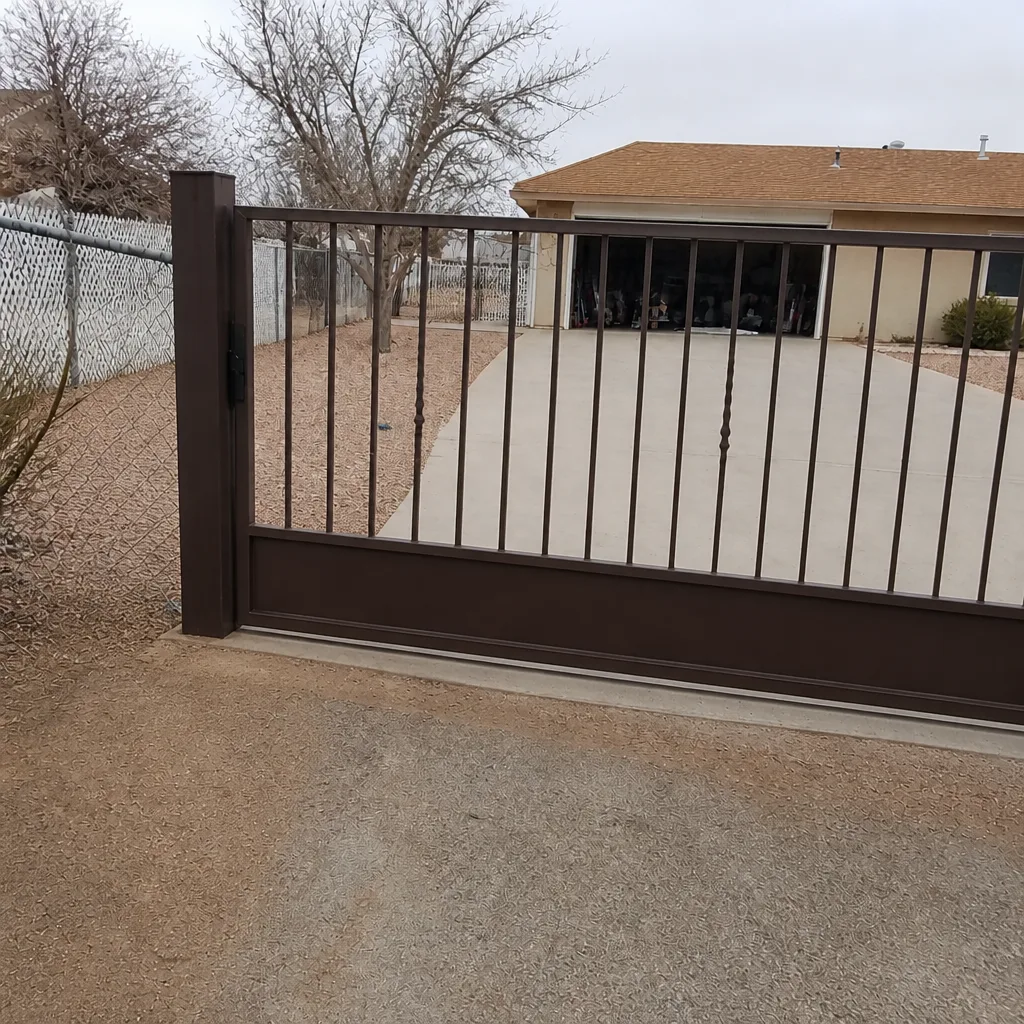 After
When to Call a Professional
Call a professional when the gate’s cycle time has drifted faster than you can explain, when a fault repeats within the same week, when you see bent or cracked hardware, or when the photo-eye stops working reliably. Call, too, if you’re not sure whether the gate is a repair or a replacement candidate, because a written opinion before you spend money is worth more than a guess after. Vance Gate Repair Boulder City offers free estimates in Boulder City, and a live person answers the phone 24 hours a day, so you’re not leaving a message and waiting. Our technicians have up to 12 years of experience, and every visit comes with a written price before work starts and a photo record when it’s done. Call (844) 320-7587 and we’ll look at what your gate is telling you.
Frequently Asked Questions
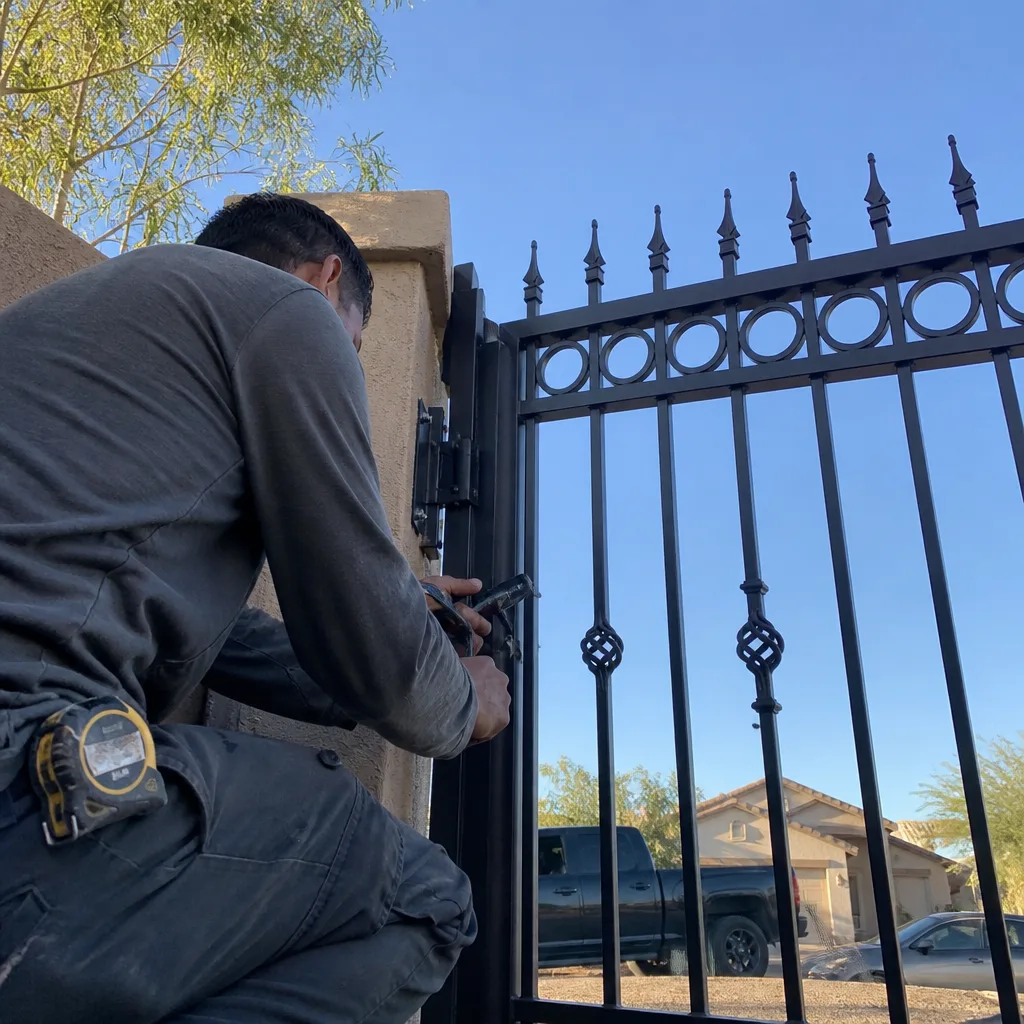
The first sign is usually a slower cycle time, not a total failure. If the gate now takes four seconds longer to open than it did six months ago, that’s an early warning of increased friction or a failing limit setting, and it’s worth getting checked before it becomes a stopped gate.
Separate the gate from the motor with the noise and the cycle. Grinding, a bind at one point in travel, or a sagging gate points at the hardware. A motor that hesitates, buzzes, or throws error codes points at the operator. A technician reads the limit-switch values to confirm which side the fault is on. Call (844) 320-7587 for a free estimate and we’ll sort it out.
A steady beep during travel is often a normal safety alert, but a change in the pattern is worth noting. If the beeps are new, or come with a hesitation, log the timing and the code and have it looked at.
In Boulder City, check for paint bubbling at welds, white caliche staining climbing the post base, and UV cracking on photo-eye and control-box housings. These are desert-specific signs that a humid-climate guide would miss, and they often show up before the gate’s behavior changes.
You can record the cycle time, note the sounds, and keep a log of error codes safely. Repairs involving high-tension springs, cables, or gate hardware that can move under force should be left to a trained technician, because those parts can release stored force without warning.
Yes. Under the Haven Standard, every job comes with a written price handed over before any work begins, plus a photo record of what was found and what was changed. Call (844) 320-7587 for a free estimate, and ask for the written quote before anything is touched.
The Bottom Line
A gate that works differently is telling you something a gate that works badly can’t. Measure the cycle time, listen for the point of travel where the sound happens, watch for the desert-specific clues in Boulder City’s sunlight and soil, and log error codes before you reset them. That record turns a vague “it’s been acting weird” into a diagnosis in minutes, which keeps a small repair small and keeps you from paying twice to rediscover the same fault. Fix the warning sign, not the failure. When you’re ready, call (844) 320-7587 for a free estimate. The written price comes before the tools come out, and the photo record leaves with you when the work is done.
Written by the team at Vance Gate Repair Boulder City.