
Last updated November 18, 2026
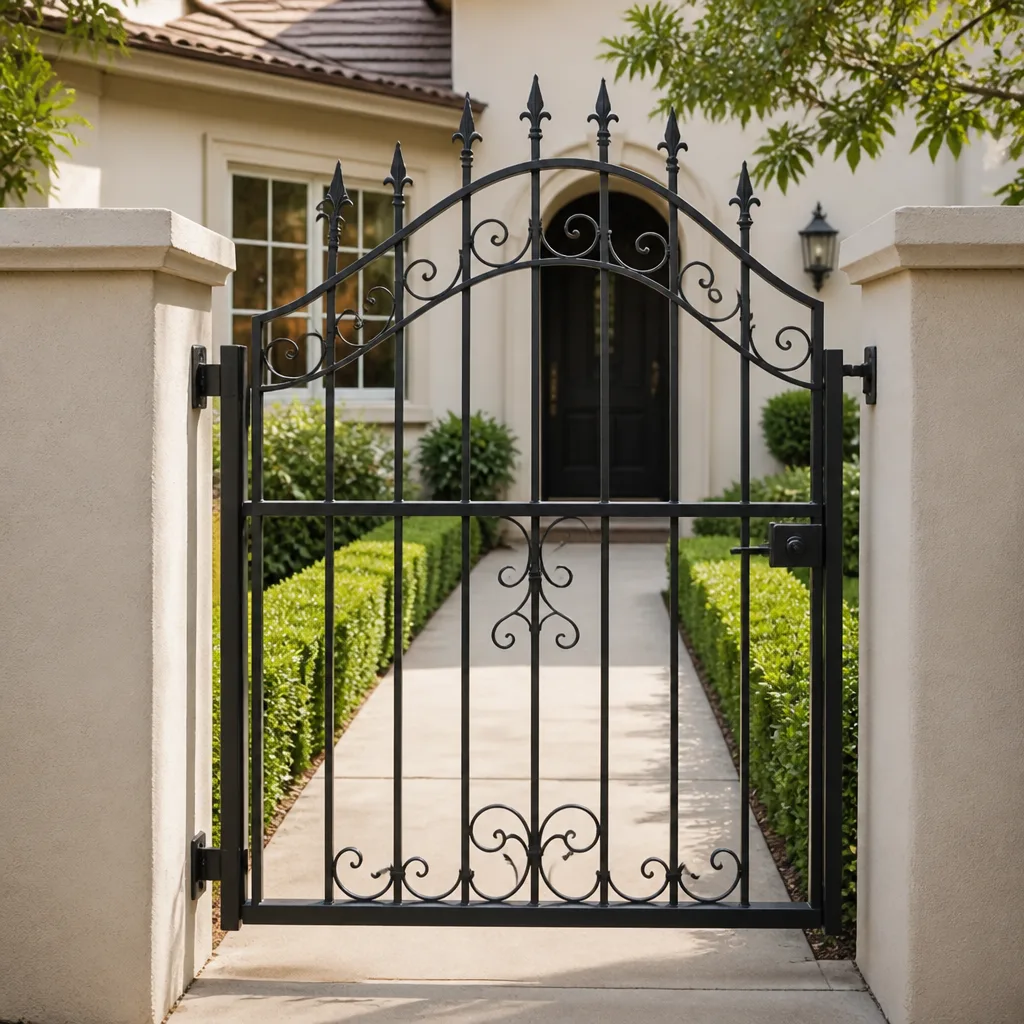 Wrought iron
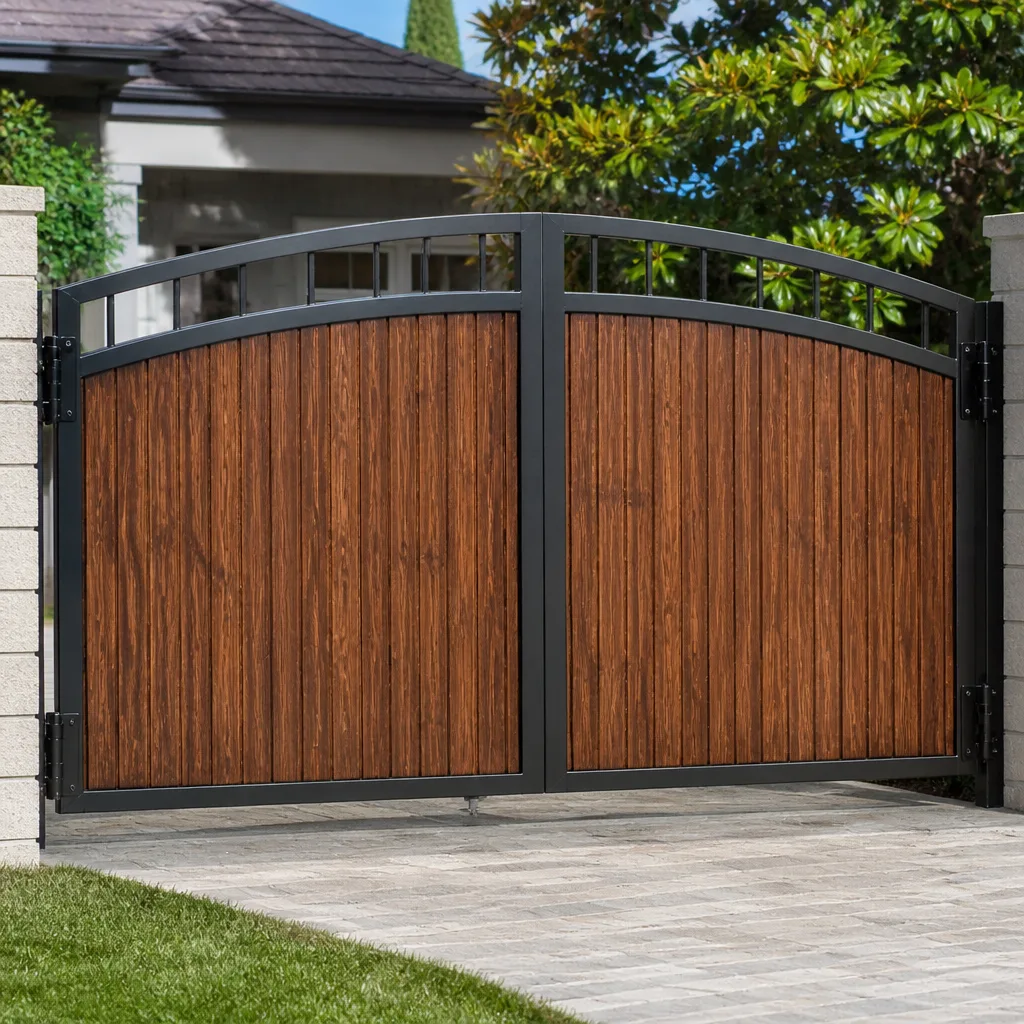 Wood & steel frame
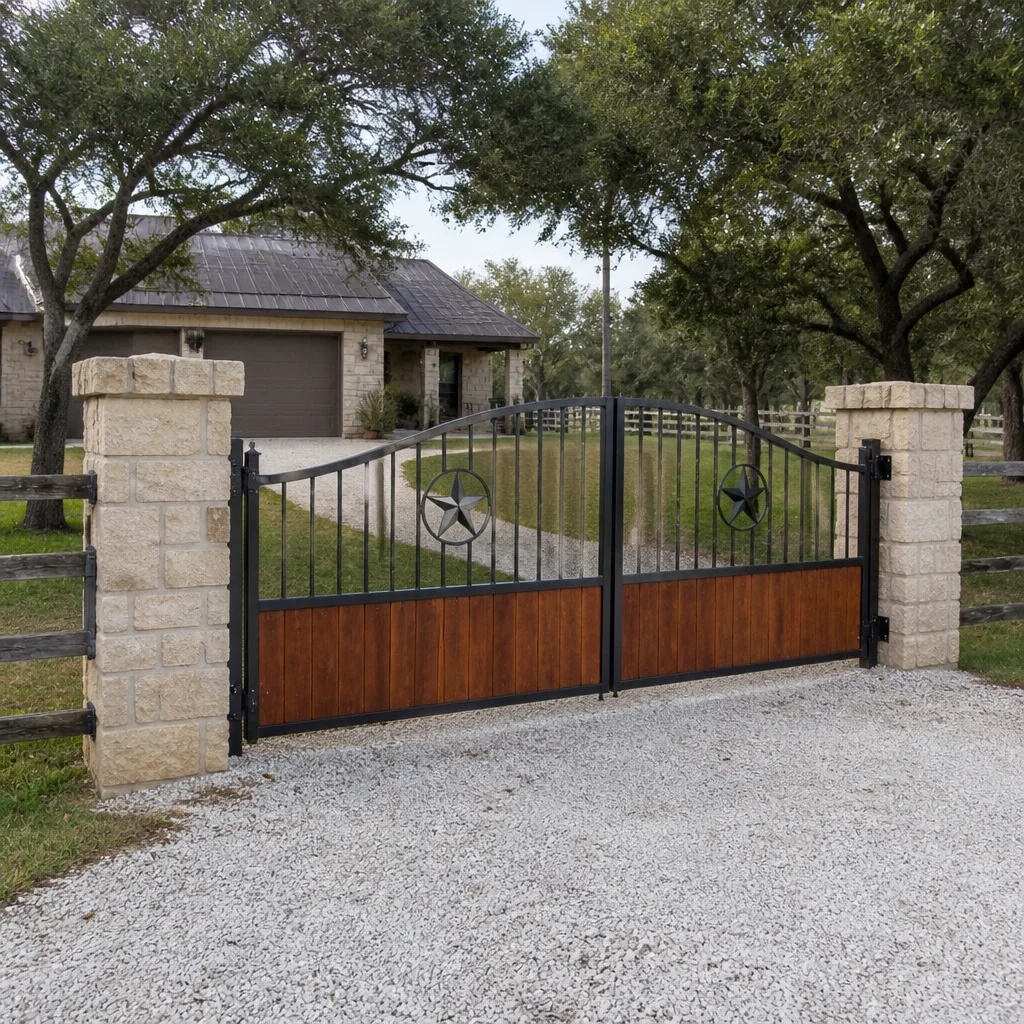 Farm & ranch
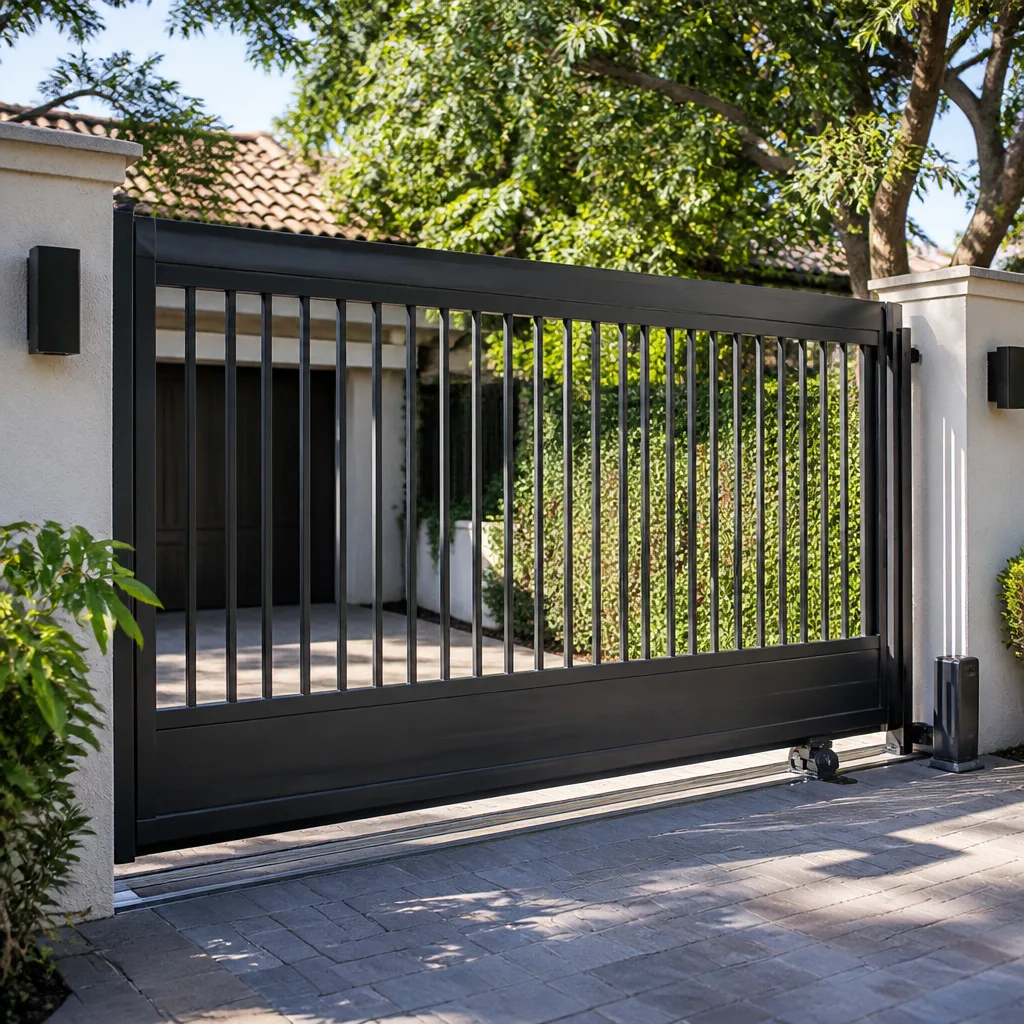 Sliding driveway gates
 LiftMaster operators
Free on-site gate assessment - hinges, posts, and your LiftMaster or Nice gate operator checked before anything is quoted
The assessment is free and the quote is the invoice.
Get your free estimateHow Long Does Gate Installation Take? Timelines and What to Expect
Most gate installation quotes name a day. The ones that blow past it were usually derailed before the gate ever arrived – by a conduit run nobody scoped, a footing depth the soil didn’t cooperate with, or a utility mark that moved the post location six inches. We’ve watched this pattern repeat on hundreds of driveways, and the honest answer is that the crew’s speed is rarely the variable. The decisions a homeowner makes about gate type, operator location, and conduit routing set the timeline long before the first shovel goes in. This guide breaks installation into four phases, shows which phase absorbs the most delay, and explains what a written scope should contain so you can audit an estimate against what actually happens. For Boulder City homeowners, two local conditions matter more than most: caliche hardpan and utility clearance windows.
Quick Answer
A residential driveway gate installation typically takes one to three days from dig to final test cycle, with the majority of single-family swing-gate jobs completing in about two days. Slide gates and jobs requiring new conduit runs or a poured concrete pad usually run two to four days. The single biggest timeline variable is site preparation, not the mechanical hang. In Boulder City, hard caliche soil and NV Energy clearance scheduling can each add a day if they weren’t scoped in the written estimate.
Styles & brands we work with
- Wrought iron
- Wood & steel frame
- Farm & ranch
- Sliding driveway gates
- LiftMaster operators
Table of Contents
- The Four Phases of a Gate Installation
- Why Swing Gates and Slide Gates Have Different Timelines
- The Two Hidden Timeline Killers in Boulder City
- What a Written Scope Should Contain So You Can Audit the Estimate
- What “Done” Actually Means: Limit Switches, Photos, and Load Testing
- Operator Choice and How It Affects the Schedule
- A Realistic Day-by-Day Walkthrough
- Setting a Realistic Schedule Before Anyone Shows Up
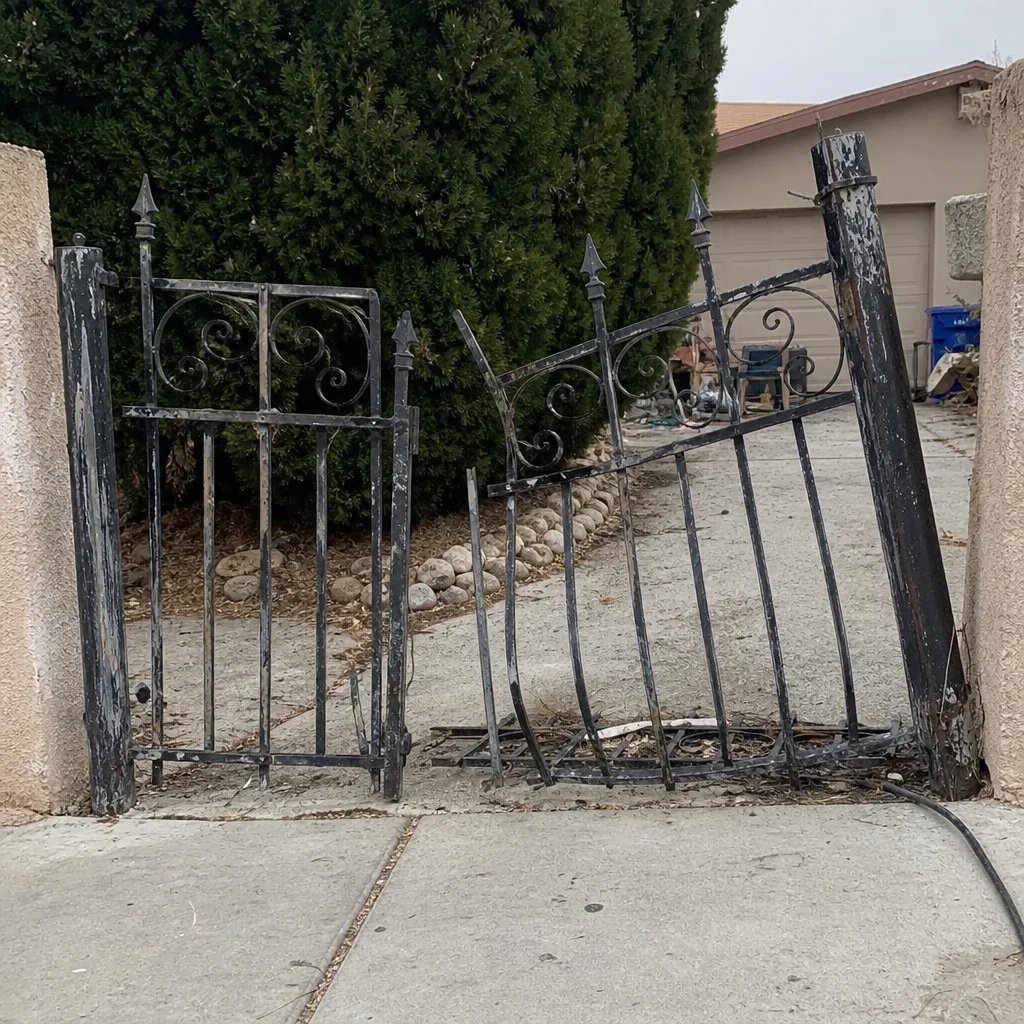 Before
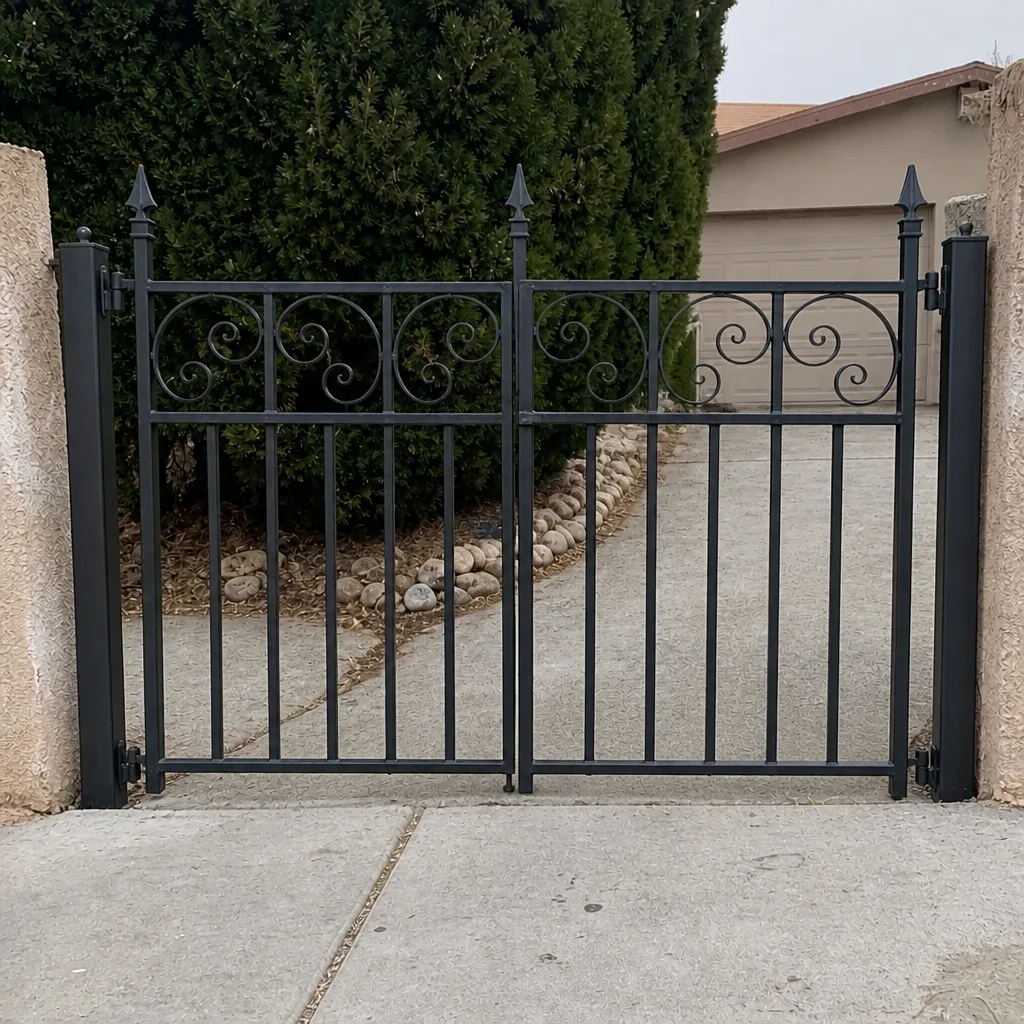 After
The Four Phases of a Gate Installation
Every installation we’ve documented moves through the same four phases. Understanding which phase absorbs variance is the key to reading your own timeline.
- Site prep – layout, utility marks, post-hole drilling, and conduit trenching. This is where 60 to 70 percent of timeline variance lives.
- Footing cure – concrete poured, posts set, and cure time. Clock-driven, not crew-driven. Standard cure before load is 24 hours minimum for post-set concrete, and we don’t hang a heavy gate on a footing that hasn’t taken.
- Mechanical hang – posts leveled, hinge plates welded or bolted, gate leaf hung and balanced, stops set. Usually a half day on a standard swing gate once the footing is ready.
- Operator wiring and commissioning – motor mounted, wiring run to the control box, limit switches set, photo-eye alignment, safety edges tested, and a full test cycle under load. Half a day on a clean job, longer if the conduit run is a retrofit.
The cure phase is fixed. Site prep and wiring are where estimates get eaten. When we look at a job that ran long, it’s almost always because one of those two phases was scoped loosely. If you want to know how a written price gets built before work starts, our Vance Gate Repair Boulder City home page walks through the Haven Standard.
Why Swing Gates and Slide Gates Have Different Timelines
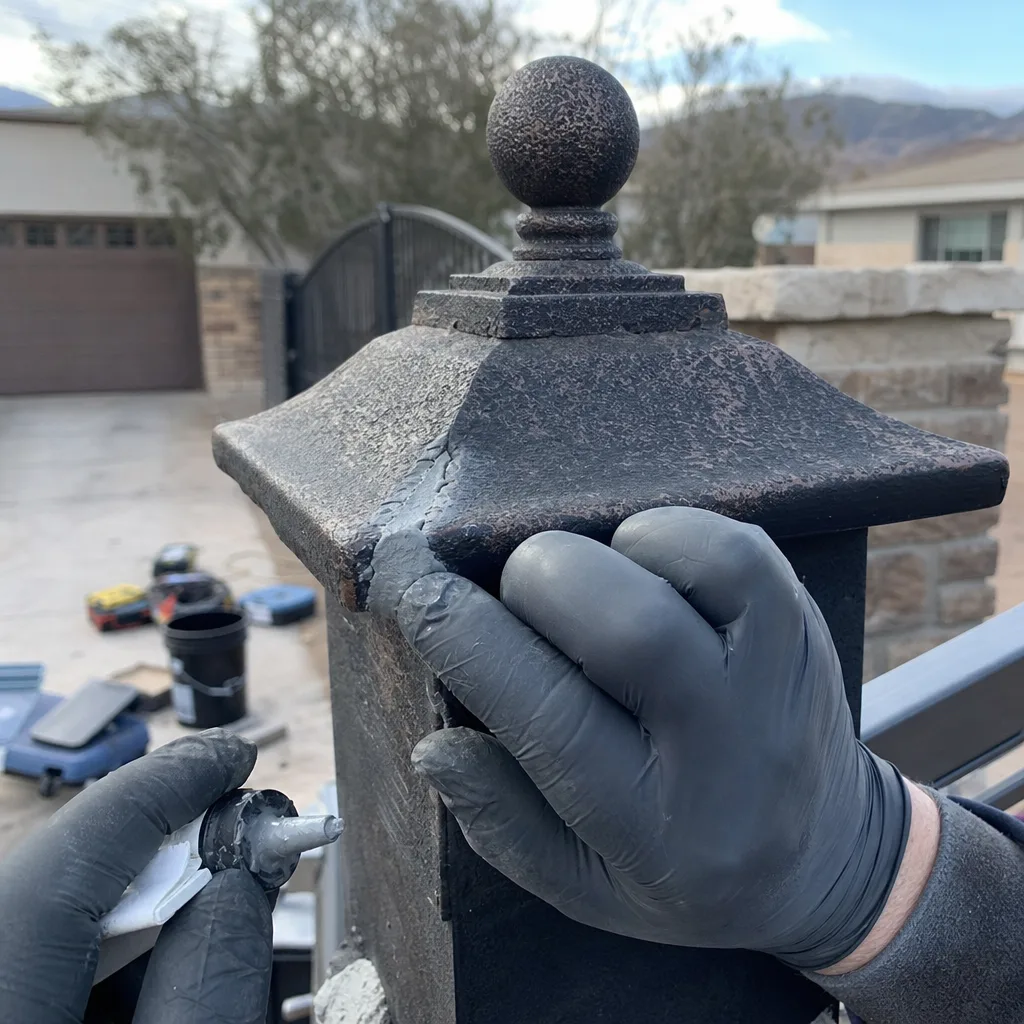
Swing and slide gates are not variations on a theme. They have structurally different installation timelines because the physical work is different from the footings up.
Swing gates
- Two hinge posts and often a latch post – usually two to three footings.
- Operator arm mounts to the gate leaf and a fixed post. Placement has to account for the arm’s swing arc and any grade change.
- Standard residential swing jobs run one to two days once posts are set.
- Grade and slope across the driveway drive the hinge offset, which can add an hour of fitting per post.
Slide gates
- The gate rolls on a track bed that has to be flat, level, and clear of the driveway for the full slide distance.
- Counterweight and rear clearance have to be verified – a slide gate needs roughly 1.5 times its leaf width in clear run behind the post.
- V-track or cantilever systems change the footing depth and often require a poured concrete pad, which adds its own cure time.
- Slide installations routinely run two to four days because the track bed prep and pad cure are separate phases.
If you’re deciding between the two, our Gate Installation in Boulder City page covers the geometry that drives the choice. The timeline difference alone is worth considering before you commit.
The Two Hidden Timeline Killers in Boulder City
Boulder City has two site conditions that will turn a two-day job into a four-day job if they weren’t priced in. Both are knowable before the crew arrives. Both show up in writing on a proper scope.
Caliche hardpan
The dominant soil in much of Boulder City is caliche – a cemented calcium carbonate layer that behaves closer to soft rock than to dirt. Standard auger drilling that takes minutes on ordinary soil can take hours per hole on caliche. If your posts sit over a hardpan layer, the footing phase alone can add a day. A quote that says “post holes included” without a note about caliche either hasn’t looked at the site or is planning to surprise you later. We’ve learned to say so in writing: augering through caliche is a site-prep line, and it belongs on the estimate.
NV Energy utility clearance windows
Before any post hole is dug within the utility easement, the utility has to mark the lines – and in some cases, clear the encroachment. NV Energy’s marking turnaround and any required clearance review adds calendar days that a homeowner can’t compress by calling the installer earlier. If your gate posts or conduit trench will cross a marked utility corridor, that clearance window is real time. Schedule the utility call first. It’s the single most-missed pre-installation step we see in Boulder City.
Add afternoon heat and wind-blown dust and the working window on a summer installation is tighter than it looks. A crew that planned a full day of augering on rock-hard caliche in 105 degrees is going to lose an hour to heat breaks. We tell homeowners upfront: April and October are the most forgiving installation months in Boulder City. When you can choose your month, choose one of those.
What a Written Scope Should Contain So You Can Audit the Estimate
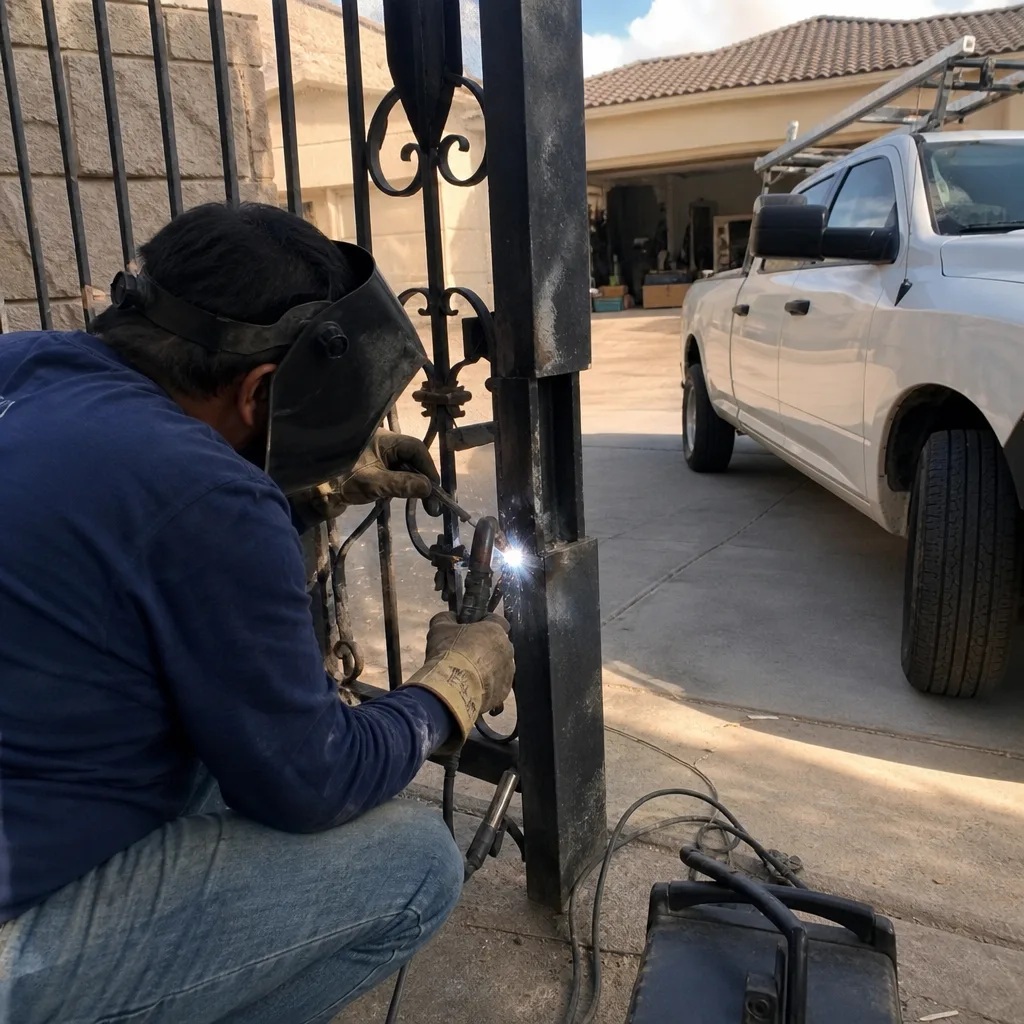
You can’t audit an elapsed schedule against a verbal estimate. Here’s what a written scope should include so you can check, on day three, whether the job is actually on track.
- Gate type and leaf dimensions – swing or slide, width, height, and weight.
- Post count and footing depth – with a note if caliche or rock is expected.
- Conduit route and length – from operator to control box to power source, in feet, plus the trench path.
- Operator model and brand – we work with Linear, Viking, Ghost Controls, DoorKing, and other major brands; the scope should name the one going in.
- Safety devices itemized – photo-eyes, safety edges, and any loop detectors, each listed separately.
- Power run responsibility – who runs the 120V circuit from the panel to the gate location. This is a real line and it belongs in writing.
- Utility clearance status – whether NV Energy marking has been requested and returned.
- Written price and cure timeline – the dollar figure, and which days are clock days versus crew days.
Under the Haven Standard, every installation gets that scope before work starts. If you’ve received a written estimate from another company, our Gate Repair in Boulder City page explains the free second-opinion review we offer – bring the paperwork and we’ll read it against the same checklist. That’s a free call and it’s the cheapest hour you’ll spend on the project.
What “Done” Actually Means: Limit Switches, Photos, and Load Testing
“Done” is not “the gate opens.” A gate that opens is a gate that has moved once. Proper commissioning is a defined sequence, and every step is documented in the record we leave behind.
- Limit switches set and photographed – the open and close limit positions are set to the actual travel, then photographed so the next technician (or a future homeowner callout) never has to guess where they were.
- Photo-eye alignment verified – the infrared beam that stops the gate if something crosses the path, aligned and confirmed to trip the reverse.
- Safety edge tested under contact – the gate reverses reliably when the safety edge is depressed.
- Load cycle complete – the gate runs through a full open and close cycle at operating load, not a bench test.
- Manual release tested – the emergency hand release works and the homeowner has been shown how to use it.
- Photo record left with the homeowner – every adjustment and every part number filed with the job record.
Commissioning is roughly two hours on a clean job and four on a job with a retrofit conduit run. If your installer skips the load cycle or the photo record, the job wasn’t finished – it was paused. That documentation habit carried over from commercial access-control work starting in 2014 and it’s what we mean by Clause 4 (Evidence on every job) of the Haven Standard. Our Gate Motor & Opener in Boulder City page explains what proper commissioning looks like on the operator side.
Operator Choice and How It Affects the Schedule
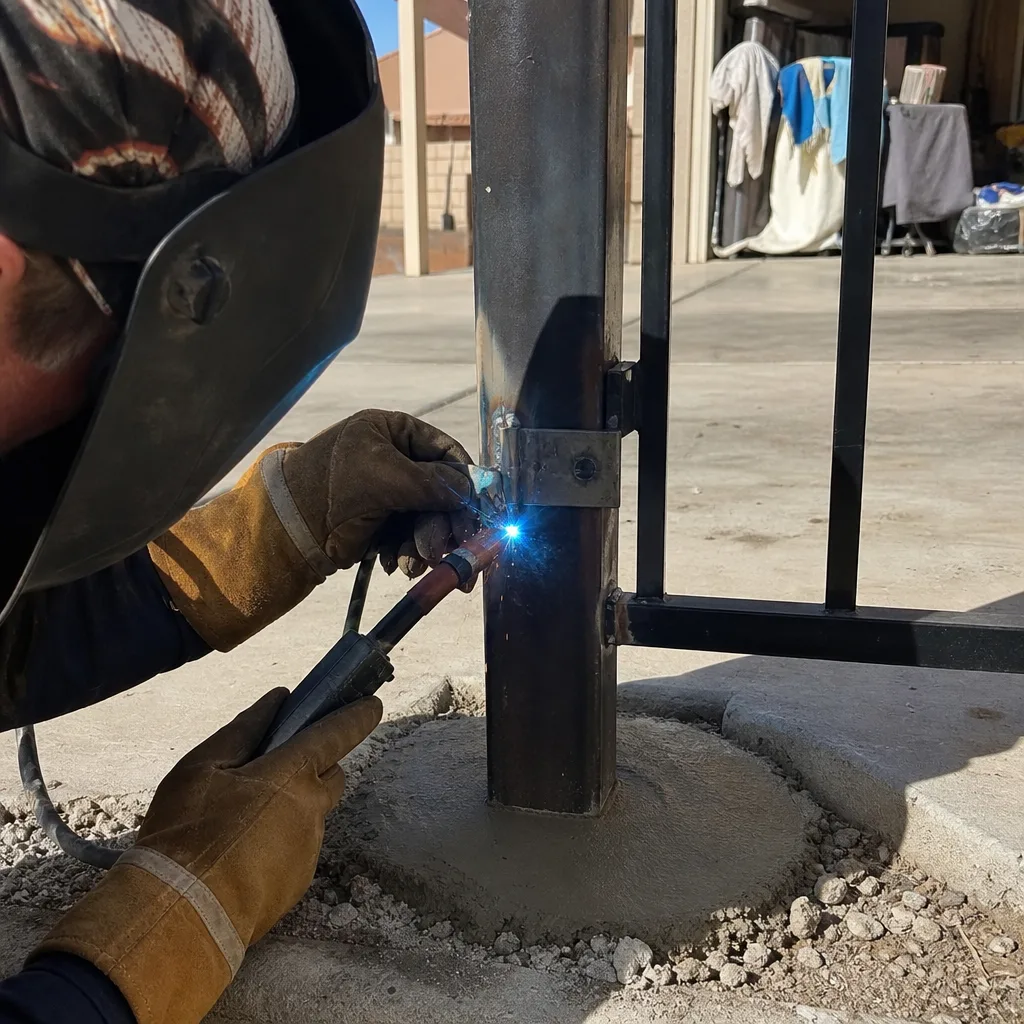
The operator is the last piece to go in but it affects the timeline long before it arrives on site. Mounting location, arm type, and control-box placement all have to be decided at the site-prep phase or the wiring phase gets longer.
- Swing-arm operators (Ghost Controls, Linear, FAAC among them) mount to a fixed post and the gate leaf. Arm position has to clear the swing arc and any obstacle – a car parked inside the arc is a real planning concern, not a theoretical one.
- Slide operators mount behind the gate and need a flat run and a control-box location that isn’t in the weather.
- Access-control-equipped gates – keypads, intercoms, loop detectors – add wiring and a commissioning step. DoorKing keypads, for instance, are usually a half day of additional commissioning when they’re part of the build.
The operator choice doesn’t usually change the day count by more than one, but it changes which day gets longer. If the operator is on the property already – a retrofit – we service it rather than steer toward replacement; Vance works with nine major brands and a repairable operator stays repairable.
A Realistic Day-by-Day Walkthrough
For a typical single-family swing-gate installation in Boulder City with an existing power source near the gate, here’s what a two-to-three-day schedule looks like in practice.
Day 1 – Site prep and footings
Utility marks confirmed in hand. Layout marked with paint and posted. Post holes augered – caliche time runs long here when present. Conduit trench dug if the run is new. Concrete poured, posts set, leveled, and braced. Day ends with posts curing.
Day 2 – Hang and hang-check
After the 24-hour minimum cure, hinge plates go on, gate leaf is hung and balanced, stops are set. Operator arm is mounted and mechanically aligned. Limit switches roughed in. If the site has real slope, this day can run into Day 3.
Day 3 – Commissioning and handoff
Wiring terminated at the control box. Safety devices installed and tested. Full load cycle complete. Photo record documented. Homeowner walked through the manual release and the record package handed over.
Slide gates insert a pad cure and a track-bed prep step, which is why the same job in slide format is a three-to-four-day job. Same crew. Same gate weight. Different physical sequence.
Setting a Realistic Schedule Before Anyone Shows Up
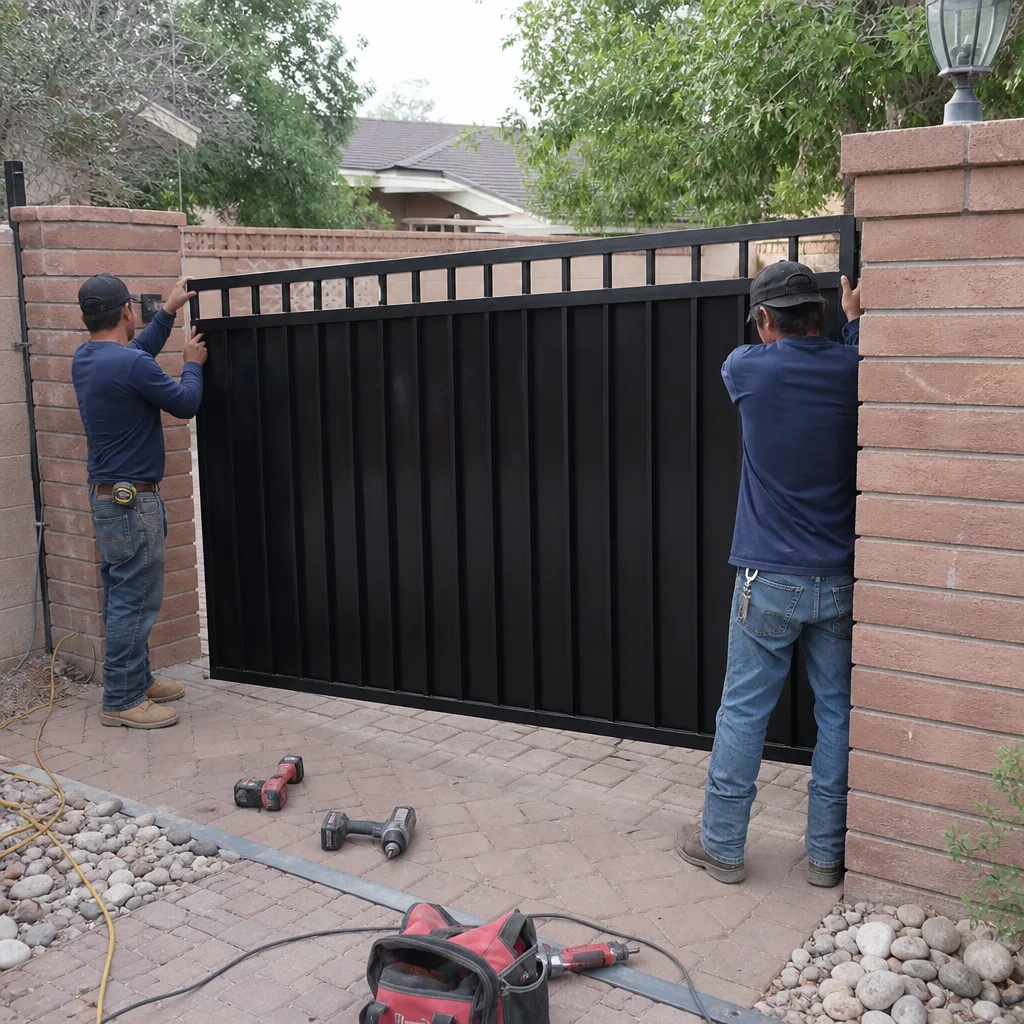
You can shorten the timeline before the crew arrives by making three decisions early.
- Request NV Energy marking as early as possible. It’s a calendar item, not a same-day task. Get it in motion the week you start soliciting bids.
- Decide on the operator and its location before the site-prep quote. Where the operator sits drives where the conduit goes, and the conduit is what a retrofit has to drill through concrete to add.
- Confirm the power run owner in writing. If the 120V circuit from the panel to the gate isn’t already installed, that’s an electrician’s line item and it has its own schedule. A gate installer can’t legally run the panel circuit in most cases, and “call us for a quote” on that line is a red flag on the scope.
Do those three things and the installation itself is a one-to-three-day event with few surprises. Skip them and you’re looking at a two-week project with two idle days in the middle.
Common Mistakes to Avoid
- Assuming post holes and conduit are included. Many estimates exclude site prep, and on caliche soil that’s the biggest single expense. Get it in writing, itemized.
- Booking the install before requesting utility marking. In Boulder City, the NV Energy clearance window adds real days. Request marking before you sign the install agreement.
- Leaving the power run unresolved. A gate with the operator wired to the wrong panel location or with no 120V circuit at all is not a finished gate. Confirm the responsibility line on the scope.
- Choosing a slide gate over a swing gate without checking the slide run clearance. A slide gate needs about 1.5 times its width in clear travel behind the post. We’ve seen gates delivered before the run was verified, and the delivery sat on the driveway.
- Accepting “gate opens” as proof of completion. The commissioning sequence – limits, photo-eyes, safety edge, load cycle – is the actual handoff. Ask to see the photo record.
- Skipping the final test under load. A gate that cycles at the factory bench but hesitates on a sloped driveway in Boulder City is not done. The load cycle is the last step for a reason.
- Choosing a July install date without accounting for heat breaks. Crews working caliche in 100-plus degrees lose hours to safety breaks. April and October are the most forgiving months in Boulder City.
See the difference
BeforeAfter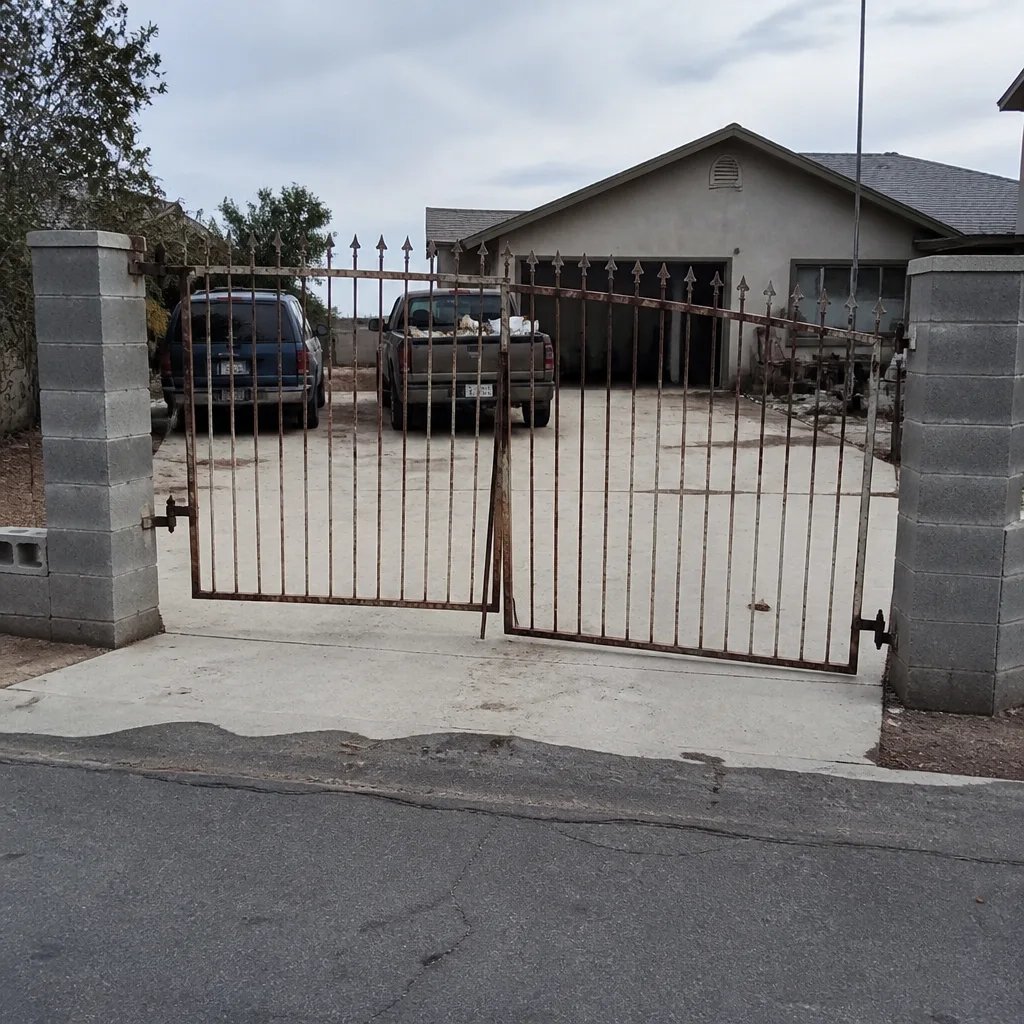 Before
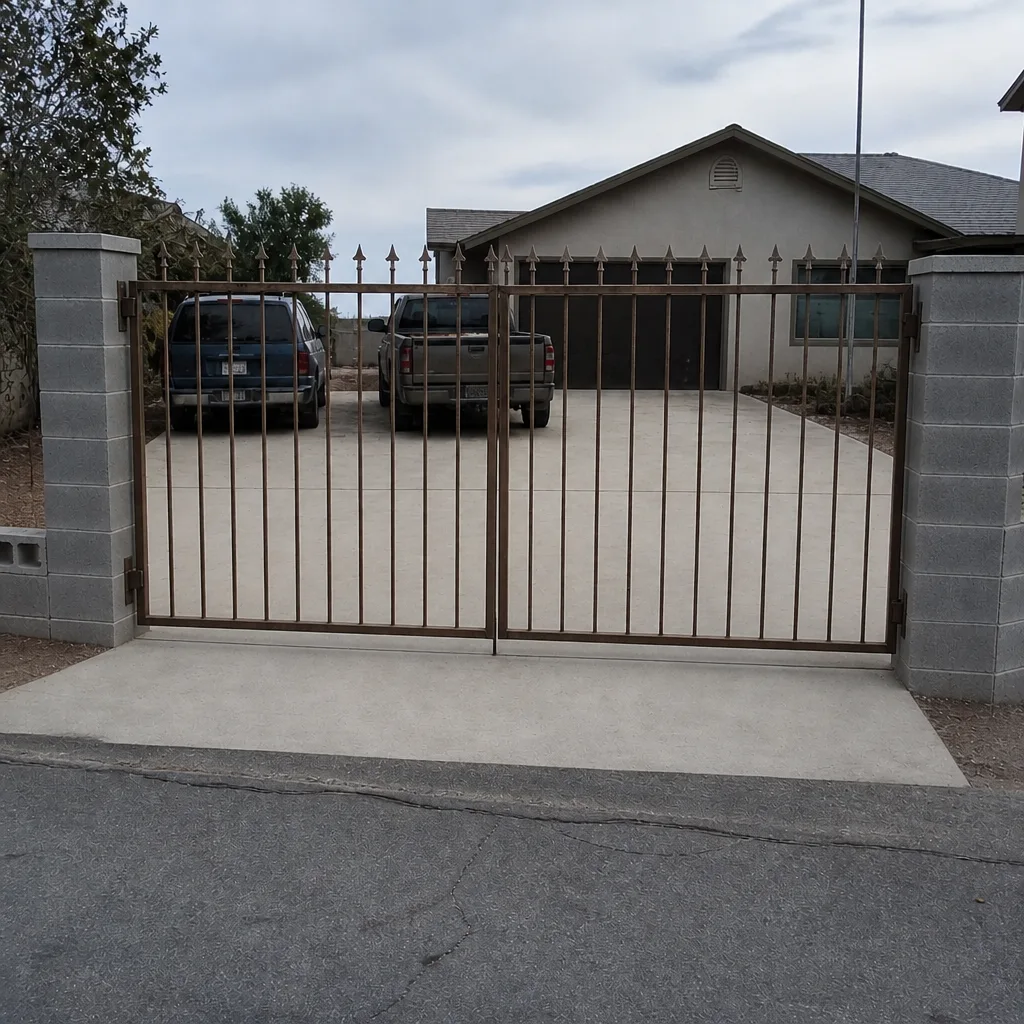 After
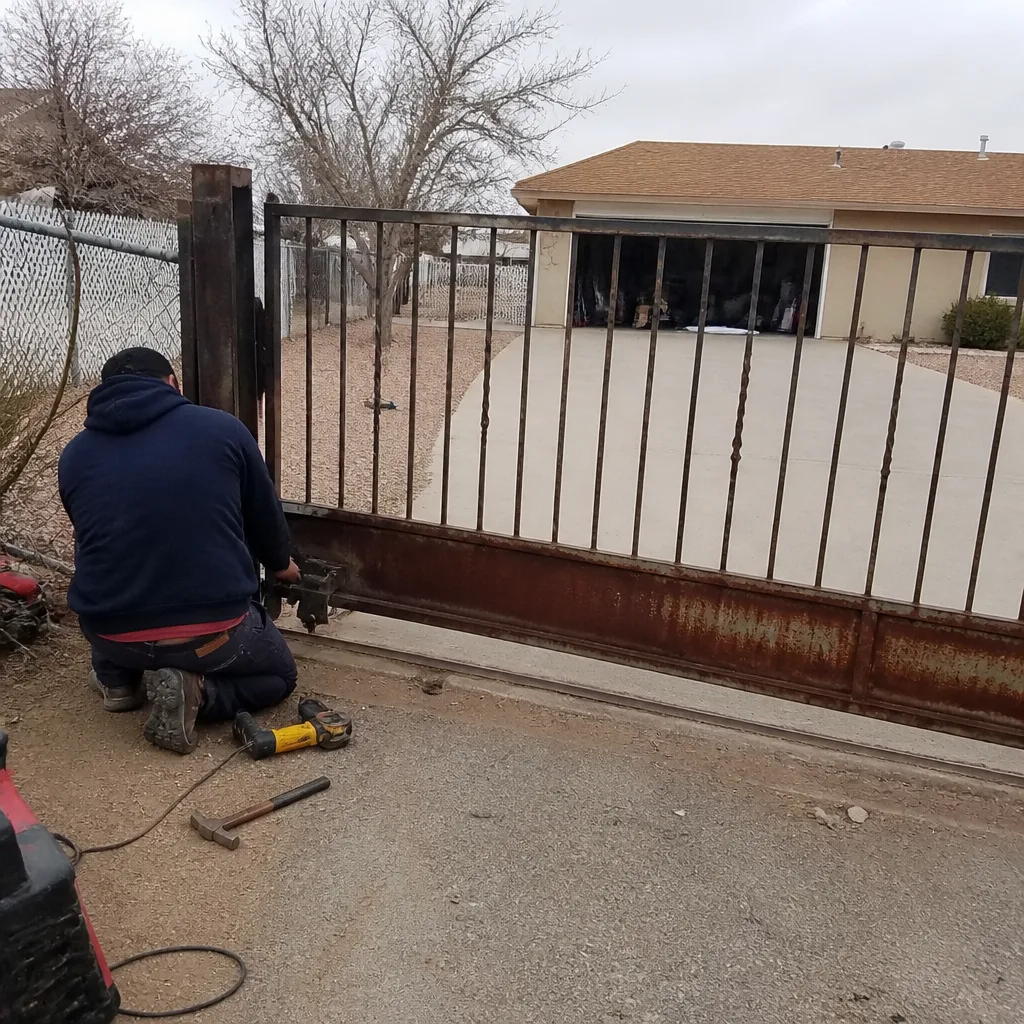 Before
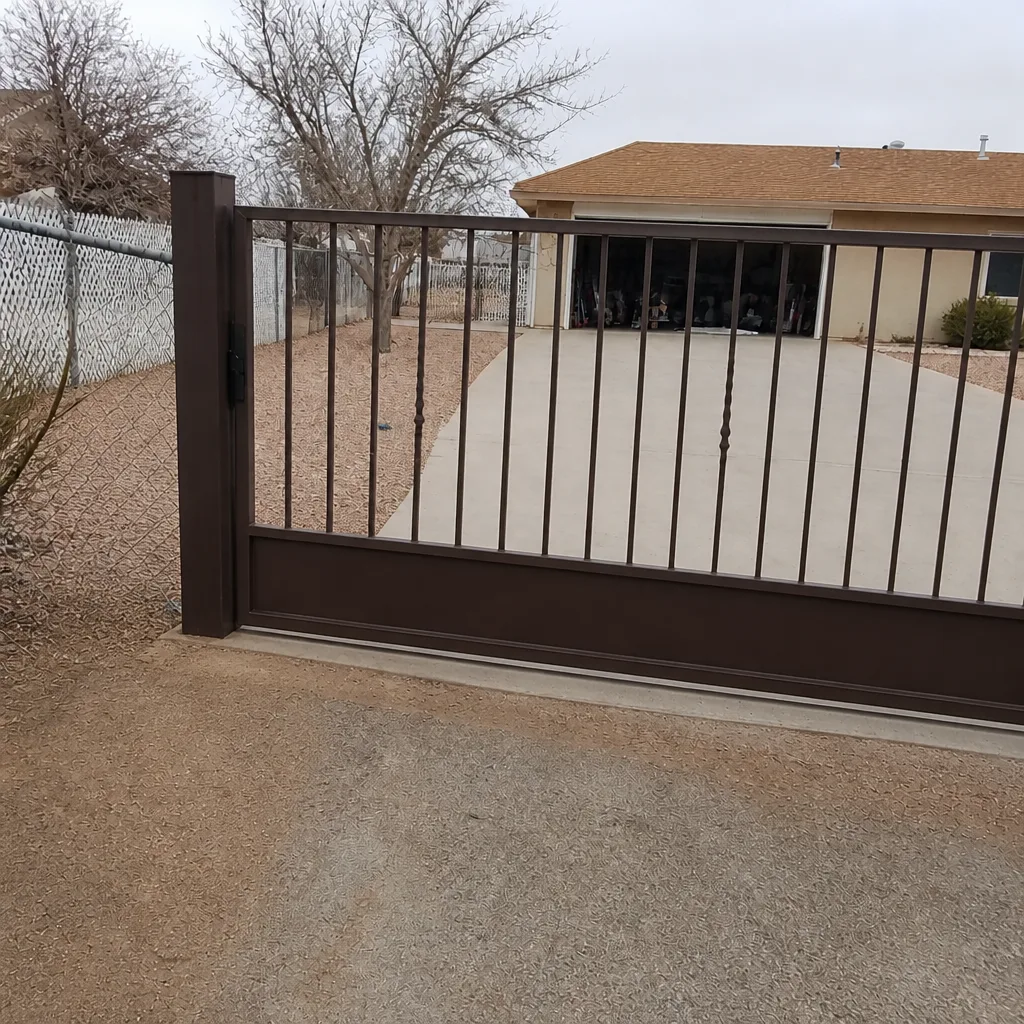 After
When to Call a Professional
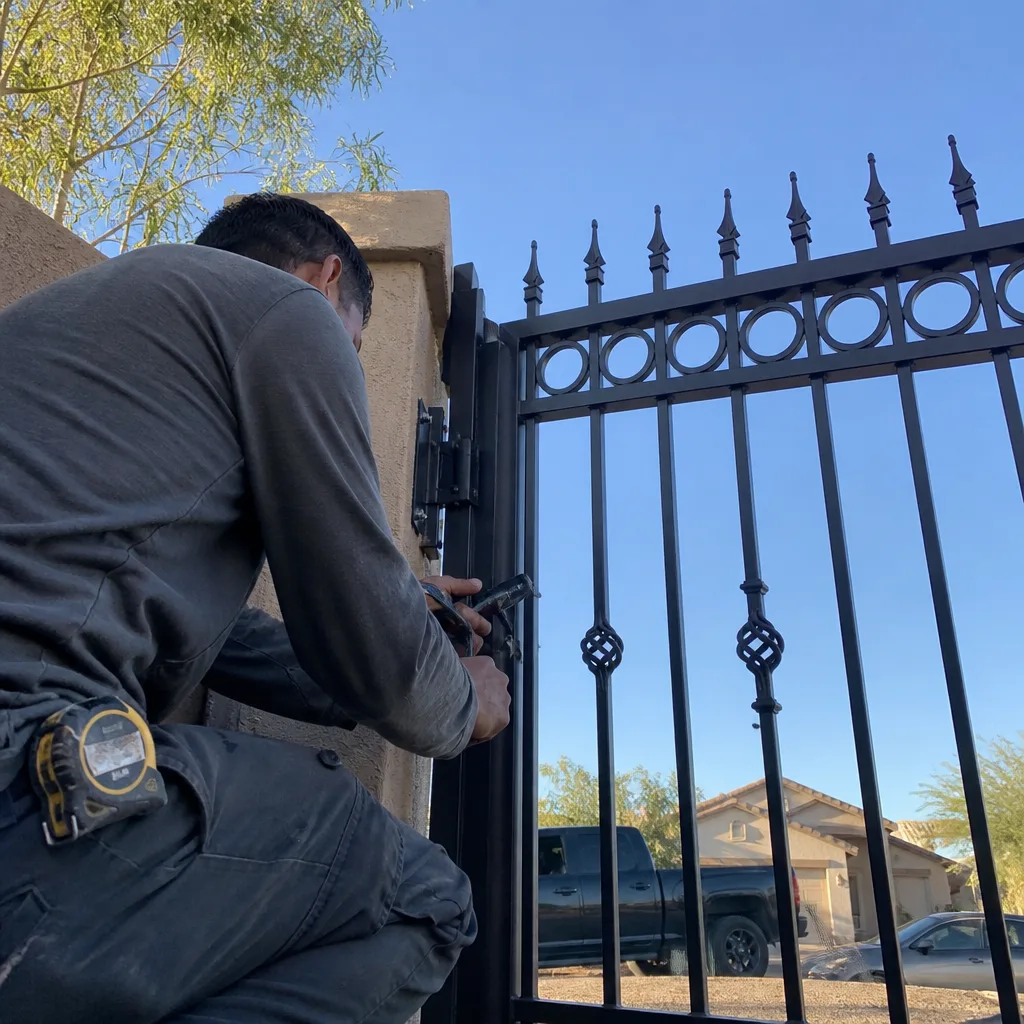
Reach out before you sign anything if any of these describe your job: you’re on caliche and the estimate doesn’t mention site prep; the driveway slopes and the operator location hasn’t been discussed; the power run isn’t itemized; the operator brand on the quote is one we can repair rather than replace and someone is pushing you toward a full swap; or you received a written estimate and you want a second read on it. Vance Gate Repair Boulder City offers free estimates in Boulder City – call (844) 320-7587 and a live person will answer at any hour. Bring any written estimate from another company and we’ll review it at no cost. Every job carries the Haven Standard – a written price before any work begins, a documented photo record on every visit, and the 365-Day Done Right Promise covering all completed work.
Frequently Asked Questions
Most single-family swing-gate installations in Boulder City run one to three days from dig to final test cycle, with two days being typical. Slide gates and jobs that need a new conduit run or a poured pad usually run two to four days. Caliche soil and utility marking are the two conditions most likely to push the job toward the top of that range. Call (844) 320-7587 for an exact quote – estimates are free.
It can, yes. Post holes that take minutes on ordinary soil can take hours each in caliche, and a standard swing-gate job has two to three footings. A proper written scope lists augering through caliche as a separate line so the timeline is honest before work starts. If your estimate doesn’t mention site conditions at all, call (844) 320-7587 and we’ll read it against our checklist at no cost.
We handle the safety devices – photo-eyes, safety edges, and loop detectors – on every job, itemized on the written scope. The 120V circuit from the electrical panel to the gate location is typically an electrician’s line, and we’ll confirm in writing who is responsible for it before work starts. That’s a Haven Standard requirement on every installation.
A full installation includes site prep and footings, a mechanical hang with the gate balanced and stops set, an operator mounted and wired, limit switches set and photographed, safety devices tested, a full load cycle under operating load, and a documented photo record handed to the homeowner at the end of the visit. If any of those steps is missing, the job isn’t finished. Call (844) 320-7587 for a written scope on your specific gate – estimates are free.
Yes. We work with nine major automation brands, including Linear, Viking, Ghost Controls, and DoorKing, and we service the operator already on your property rather than steering toward a replacement. If the existing motor is serviceable, the installation scope will note that and the timeline reflects a proof-out rather than a full new install. Call (844) 320-7587 to have us look at what’s on site.
April and October are the most forgiving months in Boulder City. Summer heat forces safety breaks that slow the footing phase on caliche, and the wind in spring can shut down a fine-detail installation like limit-switch setting. If your schedule allows you to pick a month, pick one of those two. Call (844) 320-7587 to check current lead times and get a written price.
The Bottom Line
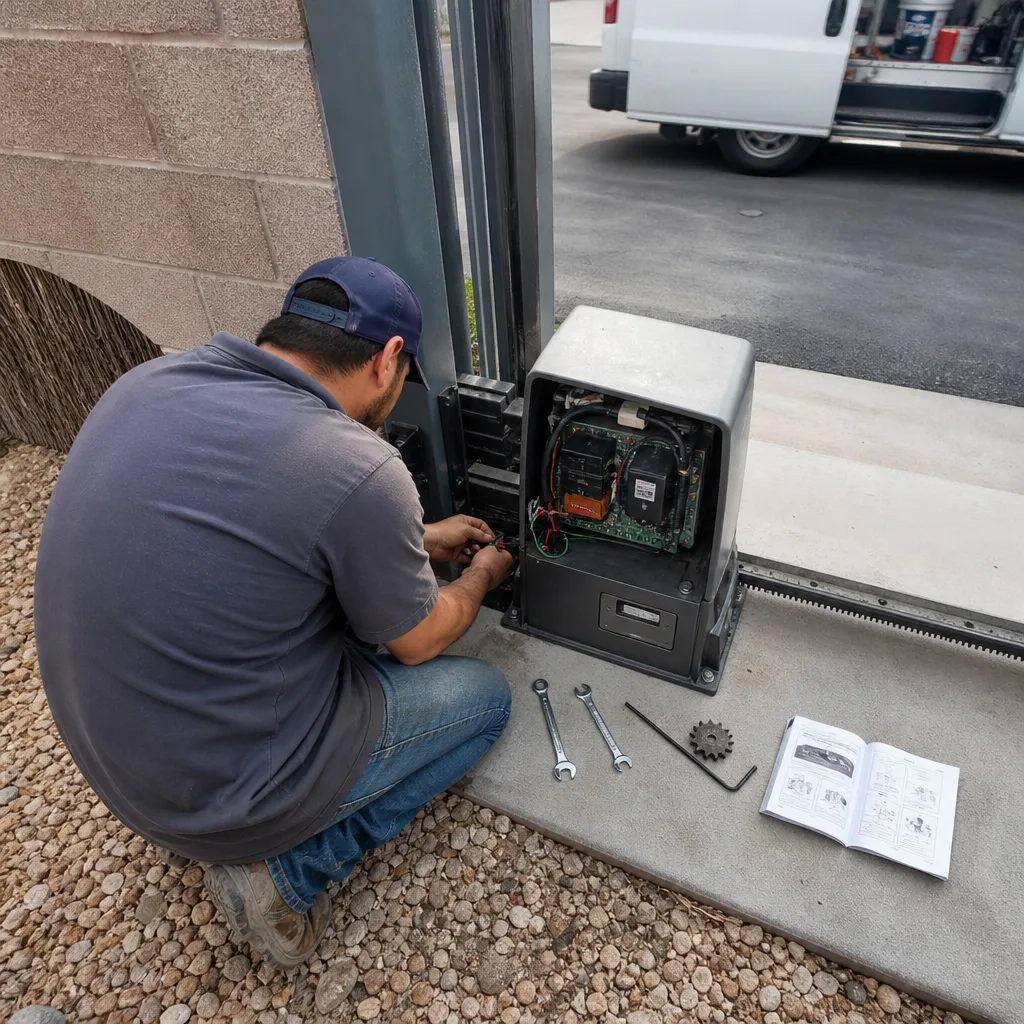
Installation timelines are set before the first post is dug. Site prep and conduit routing are the two phases where schedules break, and both are knowable before the crew arrives. For Boulder City homeowners, caliche hardpan and the NV Energy utility clearance window are the two local variables that matter most. A written scope that itemizes site prep, conduit length, safety devices, and power-run responsibility is the single best tool you have for auditing the estimate against elapsed time. “Done” means commissioned, photographed, and tested under load – not “the gate opens.”
Ready to get a written price before anyone picks up a tool? Call (844) 320-7587 for a free estimate. A live person answers at any hour.
Written by the team at Vance Gate Repair Boulder City.