
Last updated November 18, 2026
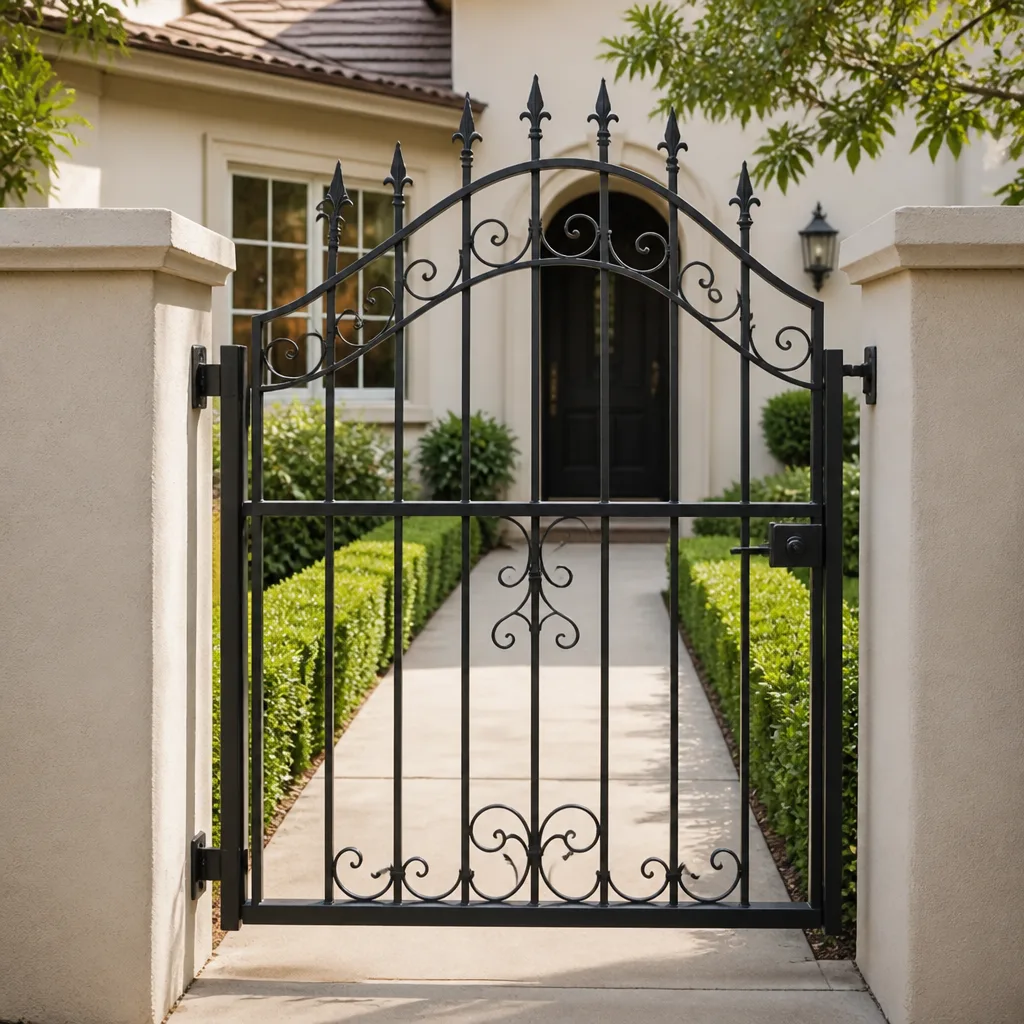 Wrought iron
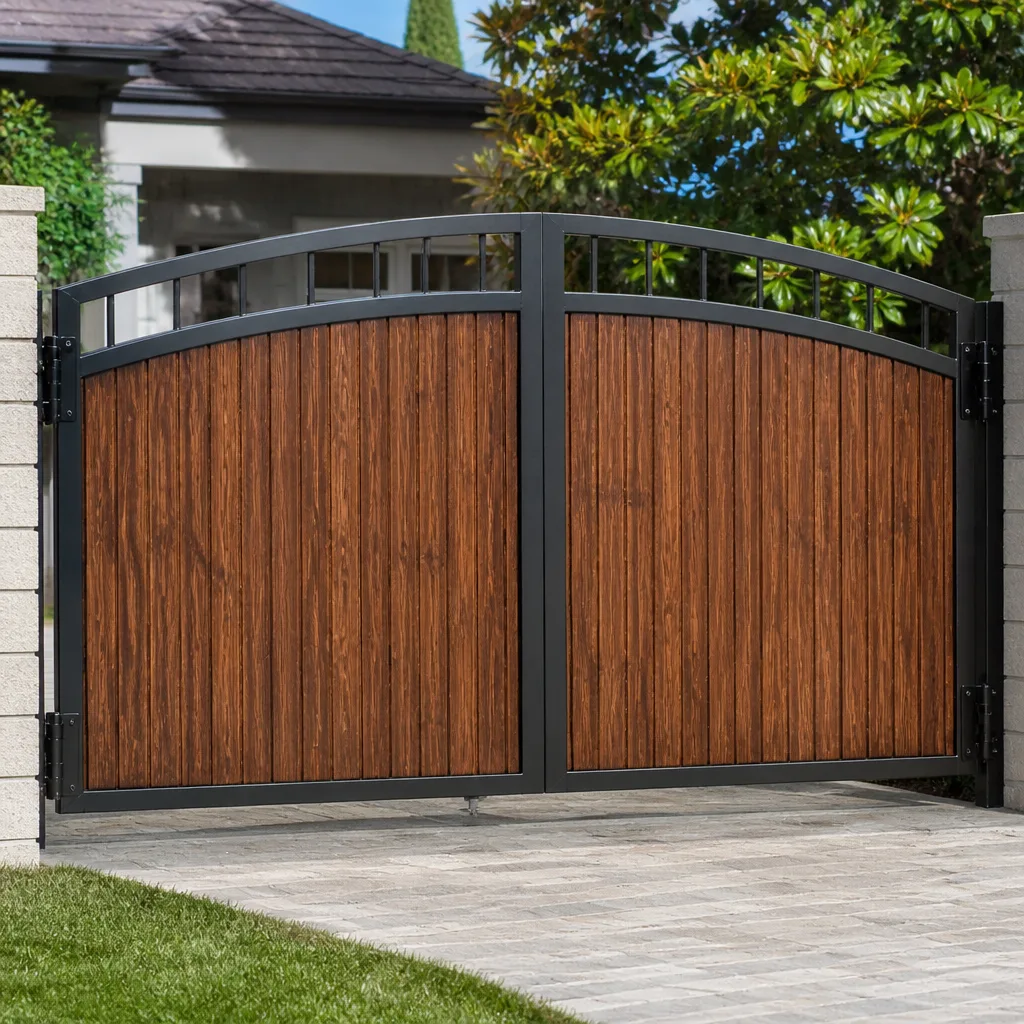 Wood & steel frame
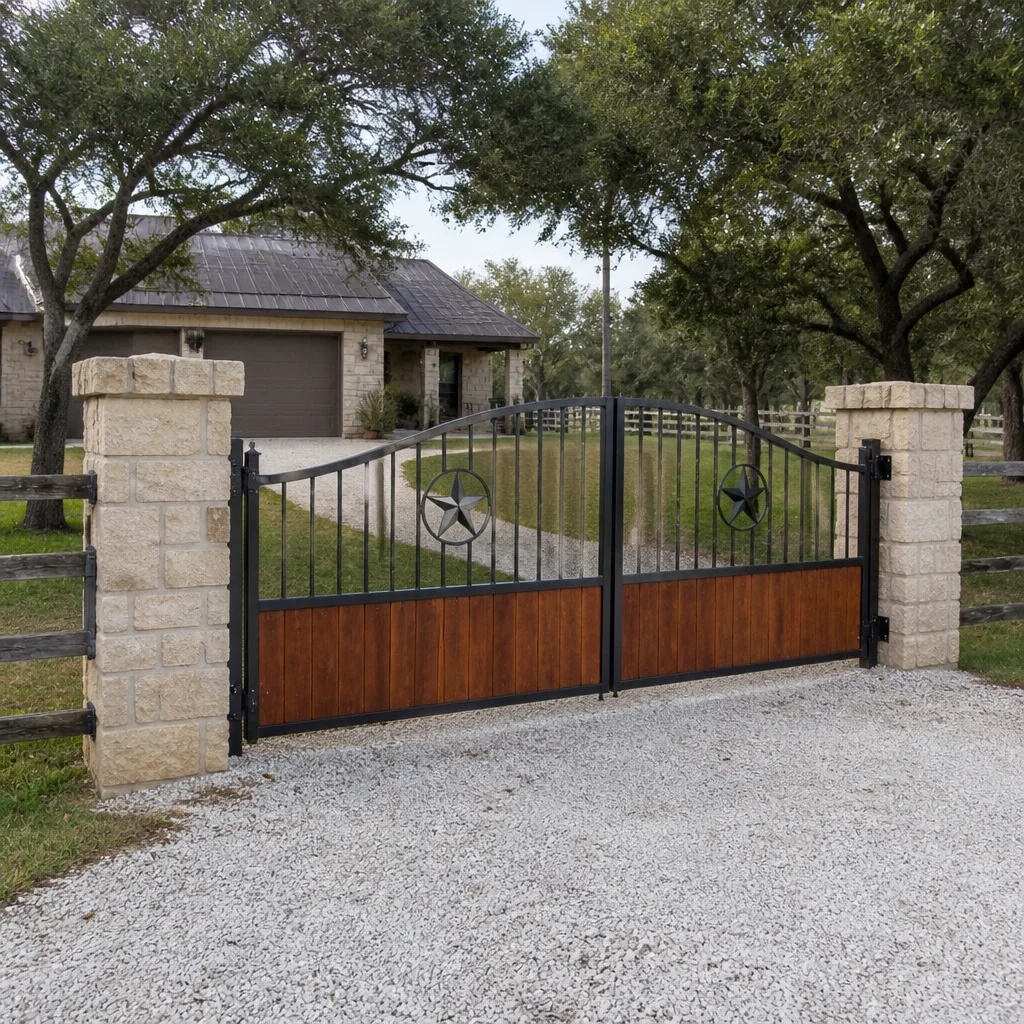 Farm & ranch
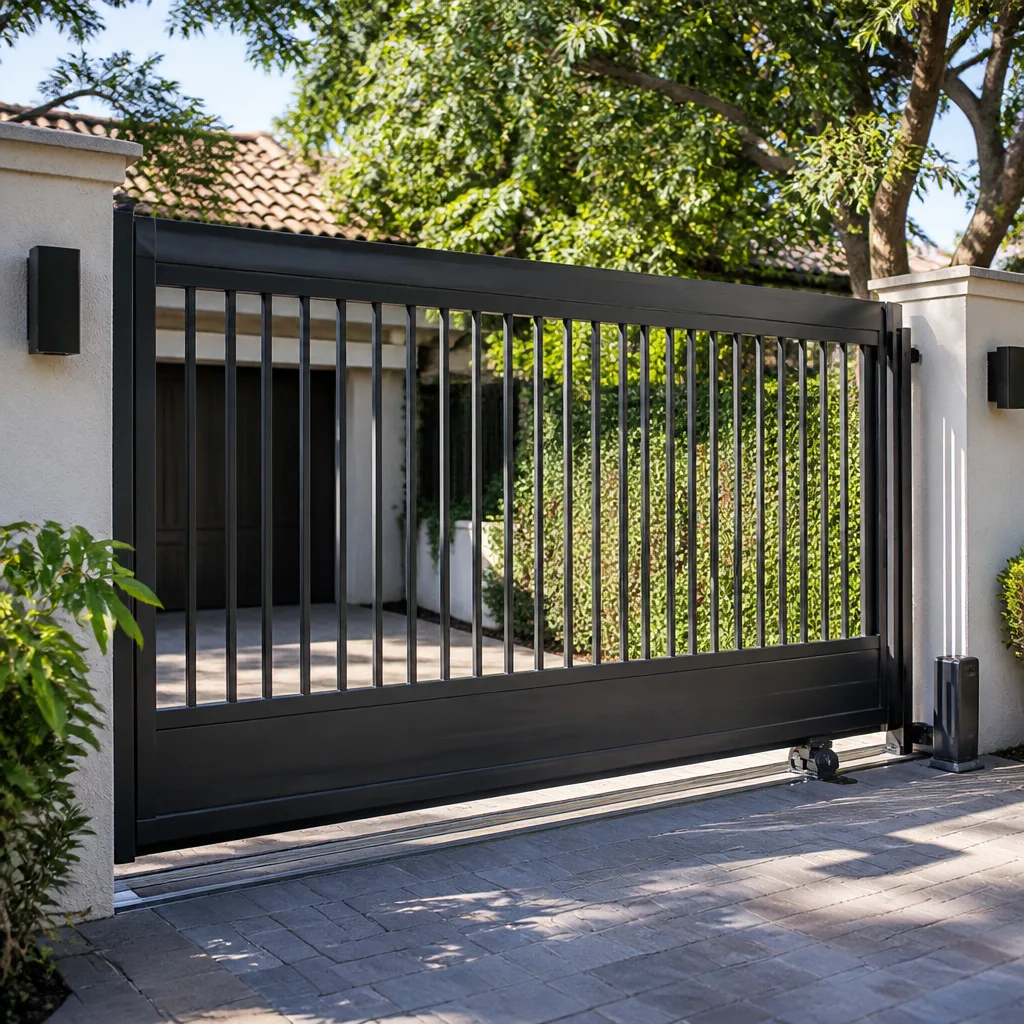 Sliding driveway gates
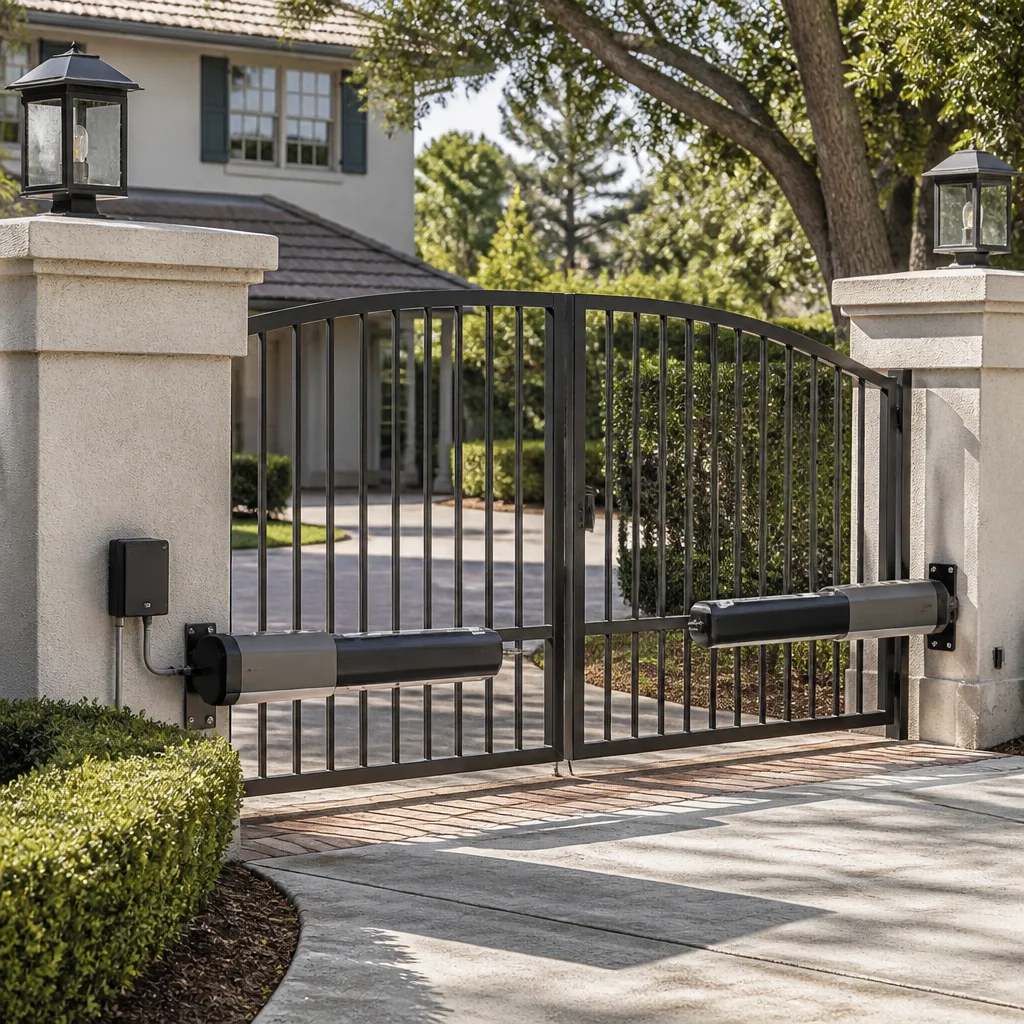 LiftMaster operators
Free on-site gate assessment - hinges, posts, and your LiftMaster or Nice gate operator checked before anything is quoted
The assessment is free and the quote is the invoice.
Get your free estimateThe Complete Gate Motor & Opener Guide for Boulder City Homeowners
Boulder City averages around 70 days above 100°F each year. Most residential gate operators are rated for duty cycles tested at 77°F. That gap is not a footnote. It is the reason so many operators in this zip code fail in July rather than January, and it is the reason a buyer’s guide written for a temperate suburb will quietly steer you toward the wrong motor. What follows is the guide we wish every Boulder City homeowner had before they spent money: how duty cycle ratings actually work against real desert usage, how each operator type handles heat and dust, what the HOAs around here tend to require, and what a proper written record at job close really buys you. No filler, no brand cheerleading.
Quick Answer
The right gate operator for a Boulder City home is chosen by duty cycle headroom, heat dissipation, and dust resistance, not by price or brand name alone. In practice that means sizing up one duty class above the spec-sheet recommendation to cover the summer heat penalty, favoring operator types with sealed enclosures and generous cooling fins for dusty desert lots, and confirming your HOA’s aesthetic and access rules before any motor is ordered. A written scope and wiring diagram at close matters as much as the motor itself.
Styles & brands we work with
- Wrought iron
- Wood & steel frame
- Farm & ranch
- Sliding driveway gates
- LiftMaster operators
Table of Contents
- Duty cycle ratings vs. real Boulder City summers
- Operator types compared through heat and dust
- HOA requirements in Boulder City developments
- What a proper wiring diagram left at close lets you do
- Solar-powered operators: when they work, when they don’t
- Reading a motor spec sheet like a technician
- A maintenance rhythm for desert gate motors
- Common mistakes to avoid
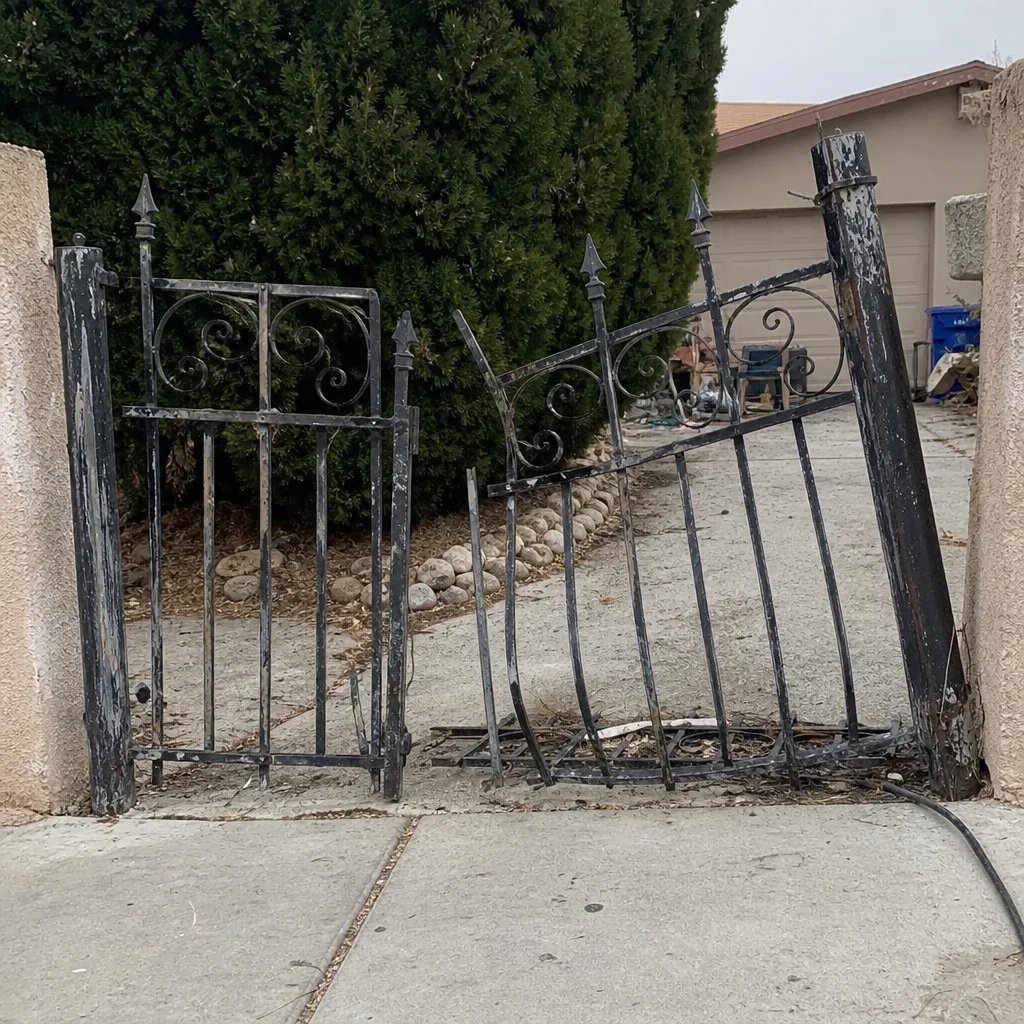 Before
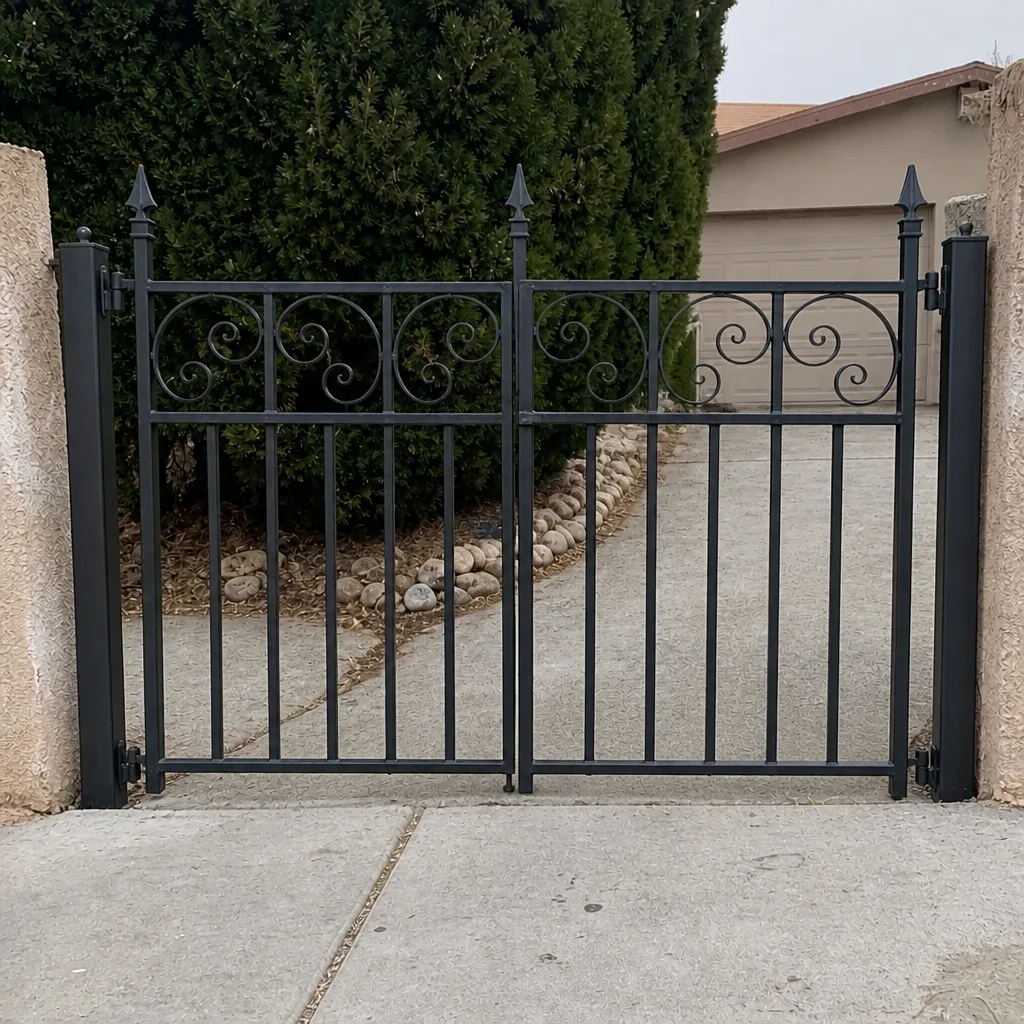 After
Duty Cycle Ratings vs. Real Boulder City Summers
A duty cycle rating tells you how often a motor can cycle within a given hour before it needs to cool down. The spec sheet assumes a mild ambient temperature, usually around 77°F, and a modest number of cycles per day. Neither assumption survives a Boulder City July. When ambient air is 108°F, the motor’s internal components run hotter than the test bench ever simulated, and thermal cutoff trips earlier. A motor rated for 10 cycles per hour at 77°F may realistically manage half that on a 110°F afternoon without tripping its overheat protection.
This is not a defect. It is physics, and it is predictable. The practical consequence is that a homeowner in Boulder City who runs a marginal operator on a busy driveway will hit thermal shutdown in the hottest weeks of the year, not because the motor is broken but because it was never sized for the climate.
Read a duty cycle rating against your actual usage pattern, not the idealized one. A working rule:
- Count the real daily cycles: how many times does the gate open and close on a typical weekday? Add the school run, deliveries, and a gardener.
- Multiply by your peak-hour concentration. Most homes cluster cycles into morning and evening windows, which is worse for heat than evenly spread use.
- Add a heat derate. In our experience, plan for roughly 30 to 40 percent less usable capacity in the hottest months than the spec sheet implies.
- Size up one duty class if your daily count lands anywhere near the rating’s ceiling. Headroom is cheaper than a mid-summer replacement.
That derating step is the one most buyers skip, and it is the specific reason operators in this climate fail in the heat of summer rather than in the mild months. For a repair on a motor that has already tripped out, our Gate Motor & Opener in Boulder City service page covers the diagnostics.
Operator Types Compared Through Heat and Dust
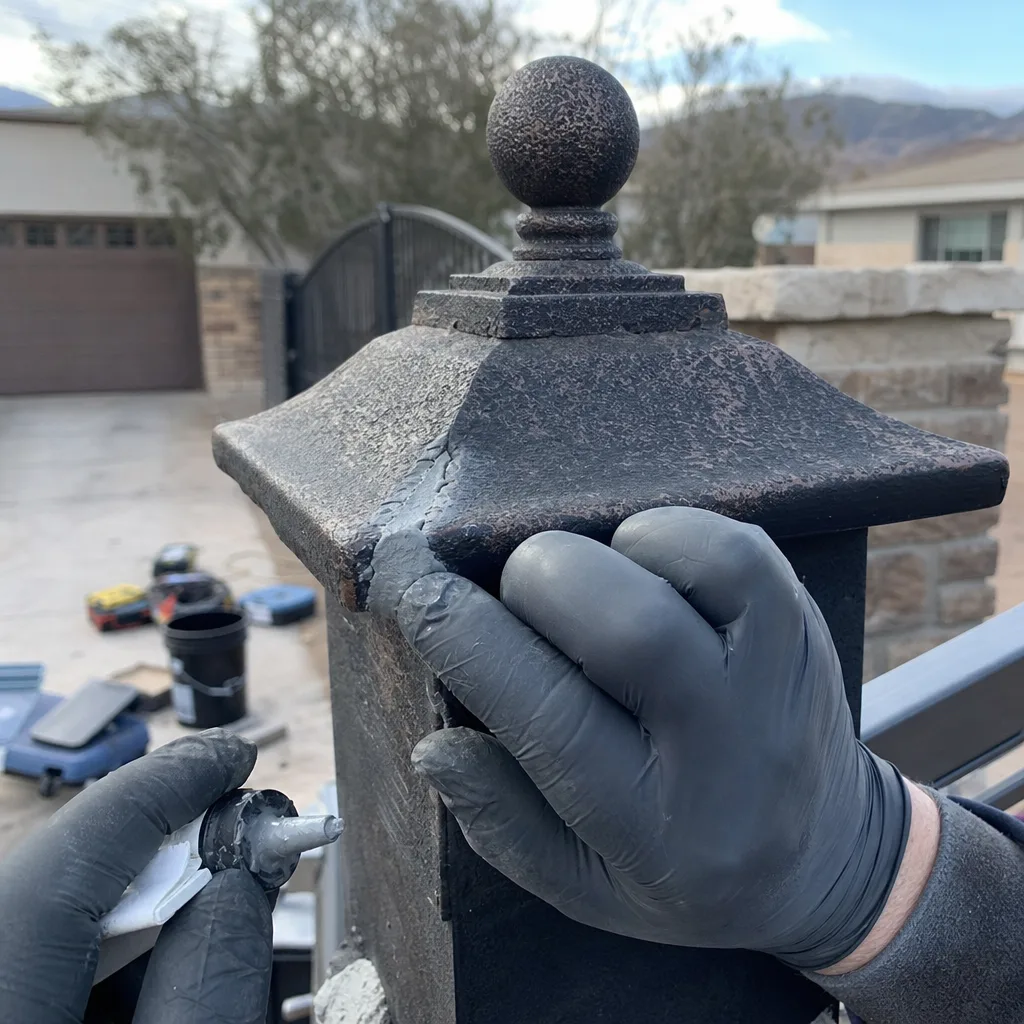
Four operator families dominate residential driveways. Generic guides compare them on price and installation effort. Here we compare them on the two forces that actually shorten motor life in Boulder City: heat dissipation and dust ingress.
Linear actuator (ram) operators
A piston arm mounts to the gate and the post. The motor housing sits exposed, which is good for shedding heat because air moves across the cylinder, but the exposed rod seal is a dust magnet. On a desert lot with fine grit blowing, that seal needs periodic cleaning or grit works into the rod and chews the piston. Good heat behavior, moderate dust vulnerability.
Articulated arm operators
The arm folds and swings with the gate leaf. The gearbox is usually well-sealed, which handles dust better than a ram, but the housing is compact and holds heat. On a high-cycle driveway in July, an articulated arm can run warm. If you choose one, favor a model with visible cooling fins and mount it where afternoon sun doesn’t hammer the enclosure.
Underground operators
The motor sits in a buried housing beneath the gate. Buried ground stays cooler than air, which is a genuine advantage in extreme heat, but underground enclosures are also where dust and moisture collect after a monsoon. Drainage and a sealed lid matter more than the motor’s spec sheet here. When they’re installed and drained correctly, underground units handle both heat and dust well.
Jackshaft operators
Jackshaft motors mount on the wall or post and drive the gate through a shaft, common on sliding gates. They’re typically the easiest to shield from direct sun, which helps thermal performance, and their sealed enclosures resist dust. Their weakness is that the shaft and track still need debris clearance, so the surrounding gate hardware has to be kept clean.
In our experience across Boulder City driveways, the winning combination is a sealed enclosure for dust plus a mounting position out of the worst afternoon sun for heat. The operator type sets the ceiling; the installation position decides whether you reach it.
HOA Requirements in Boulder City Developments
Boulder City’s residential stock includes a meaningful share of planned developments and HOA-governed neighborhoods, and HOA rules shape motor choice far more than most buyer’s guides admit. Three requirements come up repeatedly:
- Low-profile aesthetics. Many associations restrict visible motor housings or require the operator to be screened from the street. That pushes homeowners toward underground operators or a jackshaft tucked behind the gate post, and away from a big exposed ram on a front-facing gate.
- Guest and delivery access. Gated communities here need a reliable way to let visitors, contractors, and package drivers in without the homeowner walking out every time. That means intercom integration, keypad codes, or remote guest access, all of which depend on the operator supporting the right access hardware. For the access side specifically, see our Gate Installation in Boulder City page.
- Community access-system compatibility. If your street or enclave ties into a shared entry system, the operator has to interface with it cleanly. Getting that interface right starts with reading the voltage and circuit load before anything is touched.
A motor that’s perfect on paper can be disqualified by an HOA screening rule or an access-integration gap. Confirm the aesthetic and access requirements first, then size the operator. Doing it in that order saves the cost of returning a motor that never should have been ordered.
What a Proper Wiring Diagram Left at Close Lets You Do
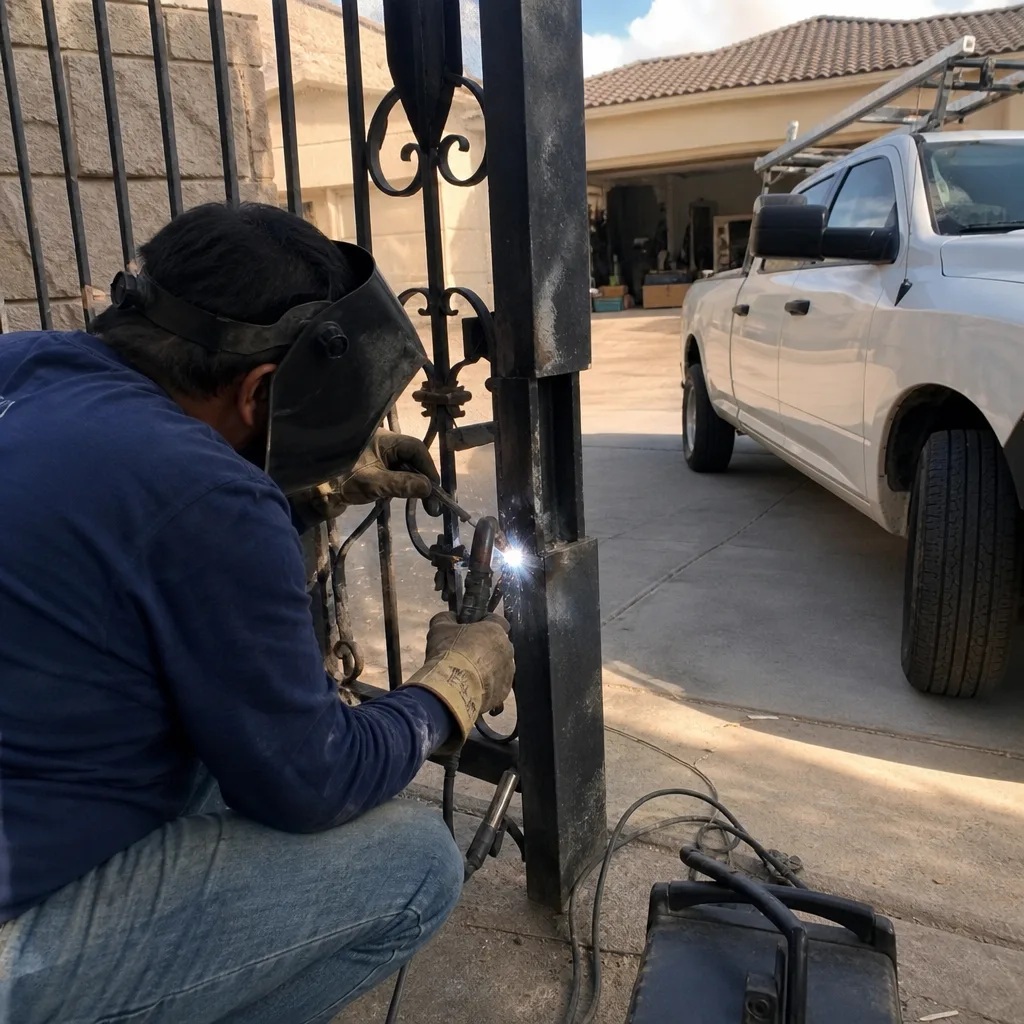
This is where documentation earns its keep, and it is the part most installations leave behind. A wiring diagram left at job close, along with a photographed record of the connections and panel, gives the next person three concrete abilities:
- Confirm existing voltage and circuit load before touching anything. The next technician, or you, can see exactly what the operator was fed and how much headroom the circuit has. No guessing, no probing hot leads to find out.
- Trace a fault without disassembly. When a gate stops responding, the diagram and photos show which terminals control the limit switch, the safety photo-eye, and the access hardware, so the fault gets isolated in minutes rather than hours.
- Avoid paying twice for the same discovery. If a future service call starts from a documented baseline instead of a blank slate, nobody re-diagnoses a problem that was already solved and recorded.
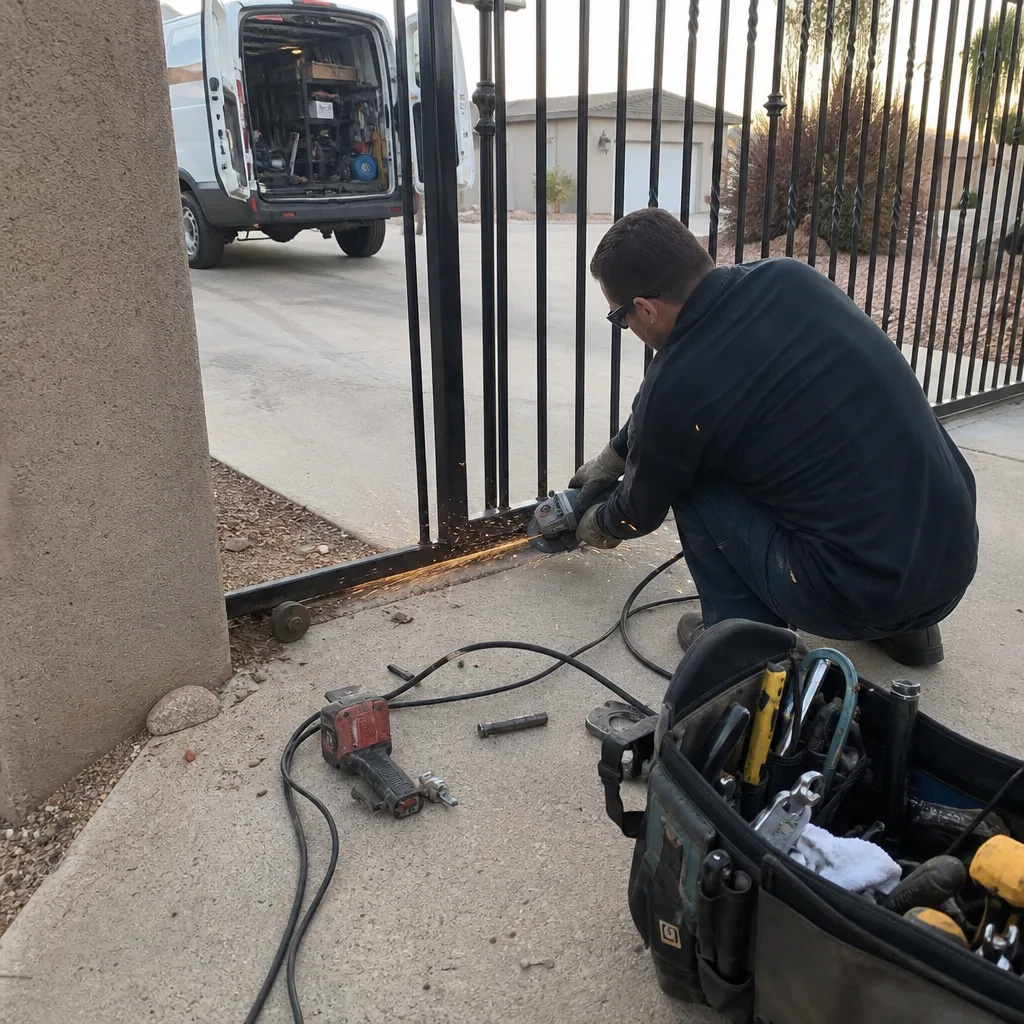
This is a habit we carried over from commercial access-control work, where every panel change gets documented because the next person’s safety depends on it. Residential gates deserve the same treatment. When we leave a Boulder City job, the homeowner gets a photo log of what was found, what was set, and what was installed, plus the wiring reference. That record is the difference between a gate that’s easy to maintain and one that costs you the same diagnostic fee every couple of years. For repairs that depend on that baseline, our Gate Repair in Boulder City page explains how we document a service visit.
Solar-Powered Operators: When They Work, When They Don’t
Boulder City has abundant sun, which makes solar operators tempting for gates far from a power source. The honest answer is that solar is viable for low-cycle gates and a poor trade for anything high-cycle, and the deciding math is battery capacity, not panel wattage.
A solar operator has to store enough energy overnight and through cloudy stretches to run its cycles. Panel output in strong sun looks generous. Battery bank capacity is what actually limits you, and it does not scale with the sunshine. A gate that cycles a few times a day on a rural lot with a good southern exposure can run happily on solar. A busy driveway with dozens of daily cycles, especially concentrated into evening windows after the sun is down, will drain a battery bank faster than the panel can refill it, and you’ll be charging or replacing batteries on a schedule that erases the savings.
Boulder City’s long sun hours help during the day. They don’t help at 9 p.m. when the gate has to open. If your cycle count is low and the power run is genuinely impractical, solar can be the right call. If you’re anywhere near high-cycle use, a hardwired operator with a properly documented circuit is the more reliable path. We’re glad to talk through both for your specific gate and usage.
Reading a Motor Spec Sheet Like a Technician
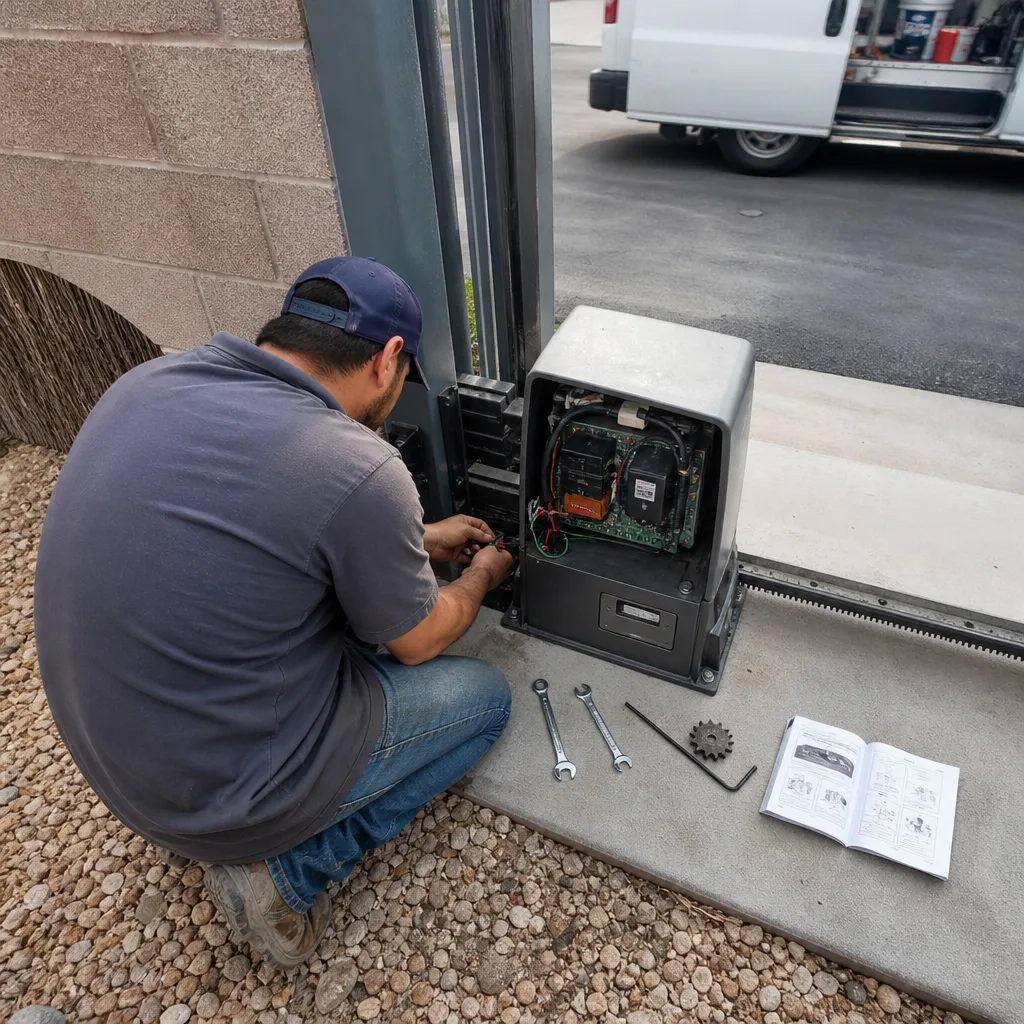
When you’re comparing operators, four lines on the spec sheet matter most for a desert climate, and the brand name matters less than whether the unit handles those four:
- Duty cycle and its test temperature. Note what temperature the rating assumes. If it’s 77°F, derate for summer.
- Ingress protection (IP) rating. A higher IP number means better dust and water sealing. For a dusty desert lot, that matters.
- Operating temperature range. Check that the maximum is comfortably above your hottest days with margin to spare.
- Enclosure and mounting notes. Sealed housings and shade-friendly mounting positions handle heat and dust better.
We work on nine major automation brands, including LiftMaster, FAAC, BFT, and Linear, so we’re not going to steer you toward one logo. The right unit is the one whose four lines fit your gate, your cycle count, and your HOA. If you already have a motor on the property, we’d rather work with it than push a replacement; a brand-agnostic approach means the diagnosis comes before any sales conversation. Start from our Vance Gate Repair Boulder City home page if you’re new to us.
A Maintenance Rhythm for Desert Gate Motors
Dust and heat do slow, cumulative damage. A simple rhythm keeps an operator alive through many summers:
- Monthly: clear grit from the rod seal or arm joints, and check the photo-eye alignment (the infrared beam that stops the gate if something crosses the path).
- Seasonally: wipe down the enclosure and confirm the mounting hasn’t shifted, which can throw the limit switch off.
- Before summer: test thermal behavior on a warm afternoon and listen for strain. If the gate has started tripping out, that’s the time to address it, not in the middle of a July heat wave.
- Annually: review the wiring diagram and photo record from the last service so you know the baseline hasn’t drifted.
None of that is heavy work, but it’s the difference between a motor that lasts and one that fails on the hottest day of the year.
Common Mistakes to Avoid
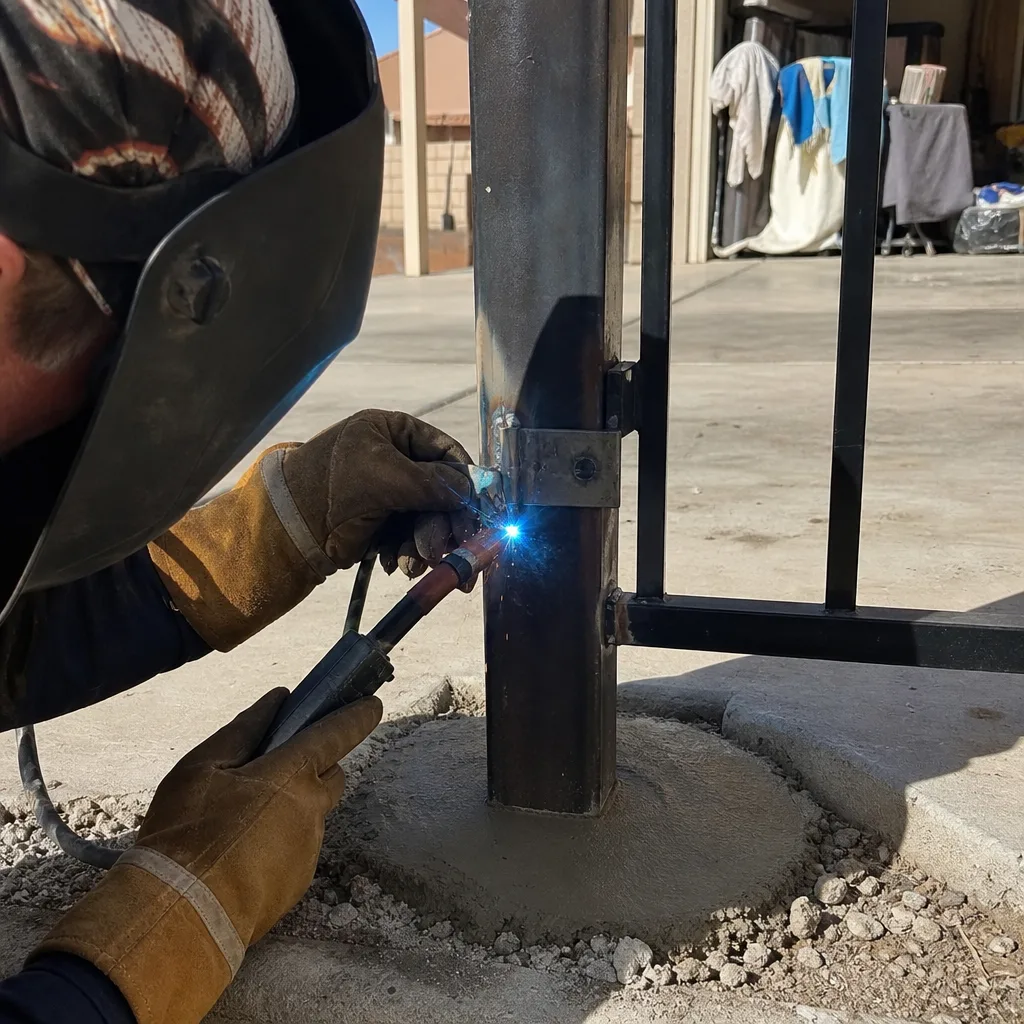
- Buying on the spec-sheet duty cycle without derating for heat. A rating tested at 77°F overstates what a Boulder City motor can do in a 110°F July. Size up one class and you avoid a predictable mid-summer failure.
- Choosing an exposed ram without planning for dust. The piston seal is a grit trap on a desert lot. If you go with a linear actuator, commit to cleaning that seal or the motor wears out early.
- Ordering the motor before checking the HOA. A screening or low-profile rule can disqualify the operator you picked. Confirm the aesthetic requirement first.
- Skipping the documentation at close. Without a wiring diagram and photos, the next technician starts from zero and you pay to rediscover what was already known.
- Going solar on a high-cycle gate. Panel output looks fine in the sun; battery capacity is the real limit, and evening cycles drain it.
- Mounting in full afternoon sun. Even a well-rated operator runs hotter when the enclosure bakes. Shade the housing where the HOA allows it.
- Ignoring a photo-eye misalignment. A beam knocked two inches off by wind or a bumped post causes intermittent stops that look like motor faults but aren’t.
See the difference
BeforeAfter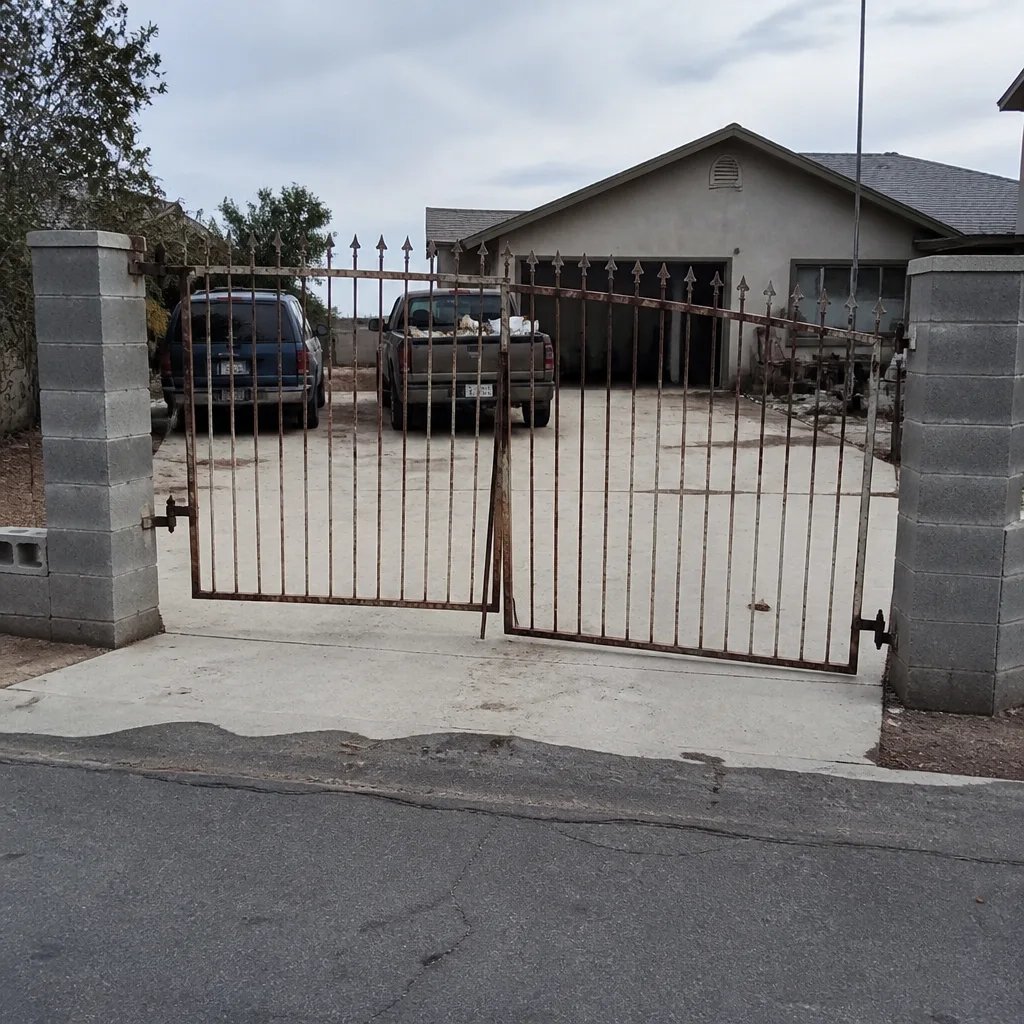 Before
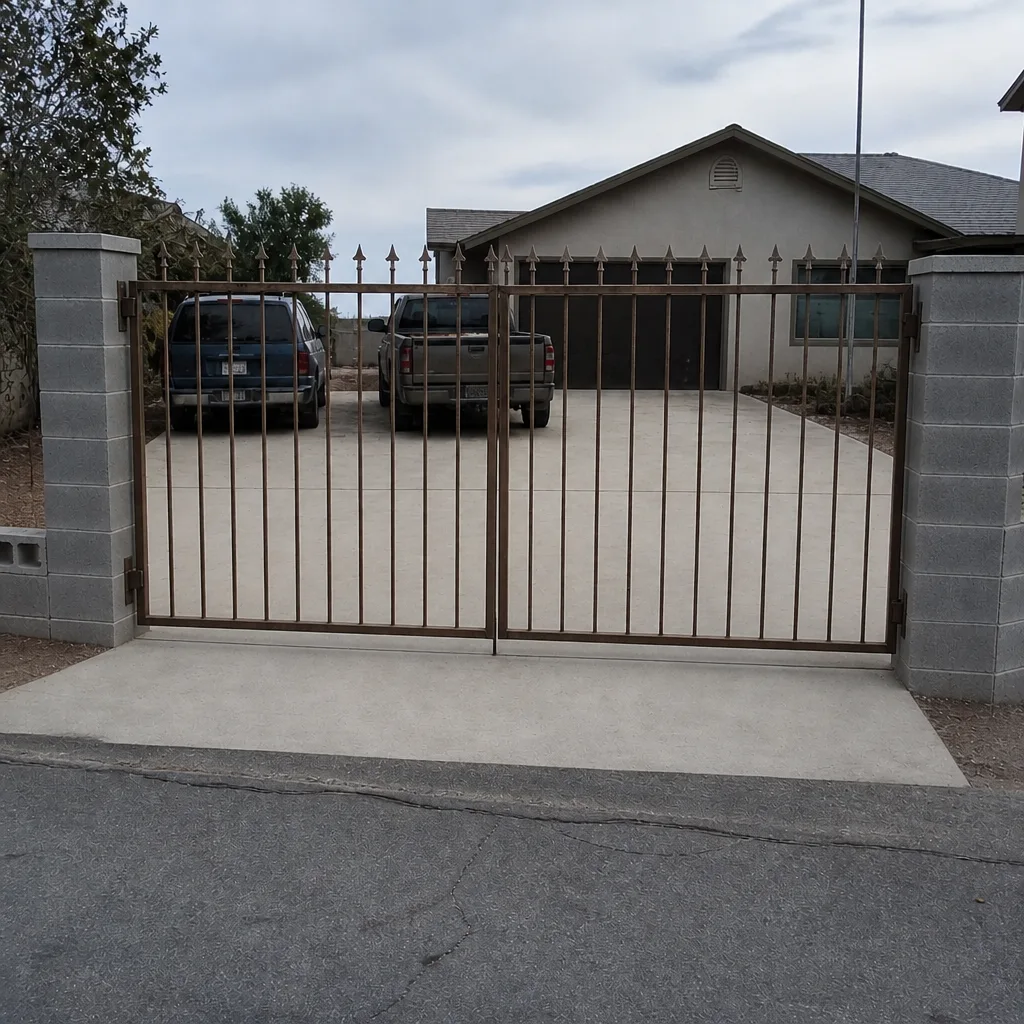 After
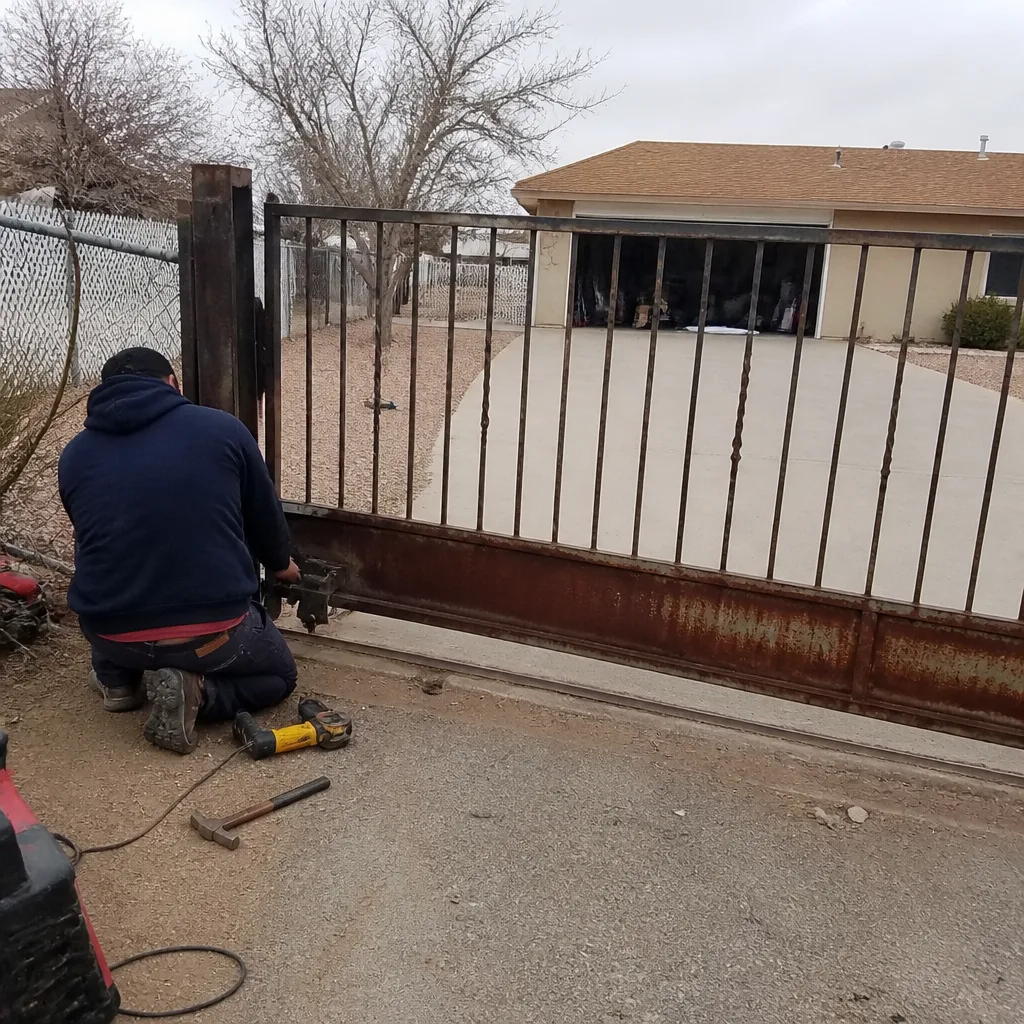 Before
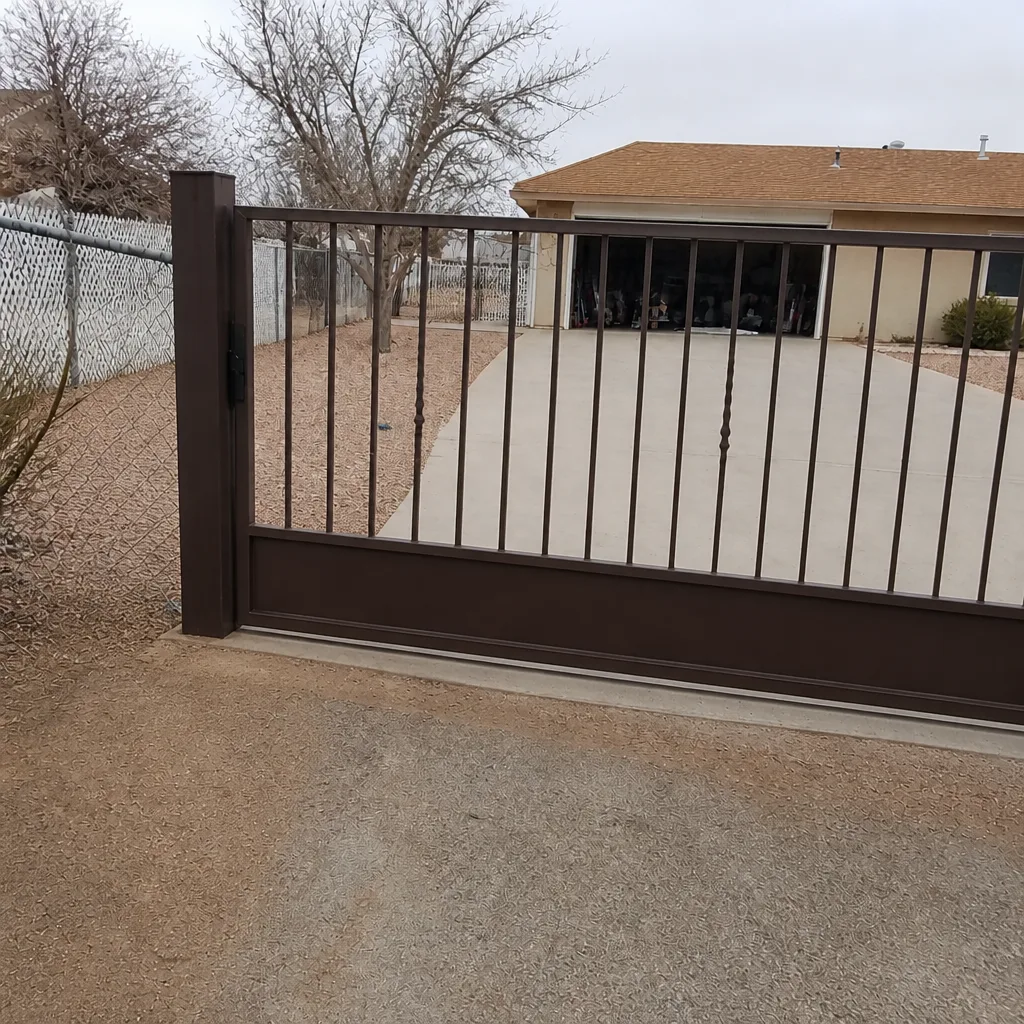 After
When to Call a Professional
Some of this is homeowner-checkable: clearing grit, checking photo-eye alignment, confirming your HOA’s rules. But certain situations call for a trained technician, and a few are genuinely dangerous. Gate operators run on line voltage and store energy in capacitors, and gate hardware under tension can move with force. Do not open an operator enclosure or probe wiring yourself. Call a professional when the gate trips its thermal protection repeatedly, when the motor strains or stalls, when the photo-eye can’t be brought back into alignment, when the access hardware stops responding, when you’re sizing a new operator and want the duty cycle and circuit load confirmed in writing, or when a motor needs replacement and the wiring isn’t documented. Vance Gate Repair Boulder City offers free estimates in Boulder City and prices the work in writing before anything starts. Call (844) 320-7587.
Frequently Asked Questions
Size one duty class above what the spec sheet recommends for your cycle count, because summer heat reduces usable capacity by roughly 30 to 40 percent. Count your real daily cycles, including clustered morning and evening use, then confirm the operator’s dust sealing and temperature range fit a desert lot. Call (844) 320-7587 for an exact recommendation, with the price written before any work begins.
Most operators are rated at around 77°F, but Boulder City sees roughly 70 days above 100°F, so motors run past their thermal limits and trip out. It’s predictable physics, not bad luck. Right-sizing and shading the enclosure prevents it. If your motor is already tripping out, call (844) 320-7587 for a free estimate.
Often yes, especially in planned developments and gated communities where low-profile or screened housings are required. Confirm the aesthetic rule and any community access-system requirements before ordering. We’ll review the scope in writing so you know exactly what’s being installed. Call (844) 320-7587 and we’ll walk through it at no cost.
Solar works well for low-cycle gates far from power, but it’s a poor trade for high-cycle driveways because battery capacity, not panel wattage, limits you through the night. If your gate cycles a lot after dark, a hardwired operator is more reliable. Call (844) 320-7587 to talk through your specific usage.
It lets the next technician, or you, confirm the existing voltage and circuit load before anything is touched and trace a fault without disassembly. That documentation means nobody re-diagnoses a problem that was already solved. Every visit from us includes a photo record and written scope. Call (844) 320-7587.
We work on nine major brands, including LiftMaster, FAAC, BFT, and Linear, and repair comes before replacement whenever it’s the right call. A brand-agnostic diagnosis means the decision follows what we actually find. Call (844) 320-7587 for a free estimate and a written price before any work starts.
The Bottom Line
Choosing a gate operator for a Boulder City home comes down to reading the real conditions: summer heat that shrinks duty cycle headroom, desert dust that punishes exposed seals, and HOA rules that govern both aesthetics and guest access. Size up a duty class, favor sealed enclosures and shaded mounting, say no to solar on high-cycle gates, and insist on documentation at close so the wiring and settings are on record. That combination is what makes a gate last through many summers instead of failing the first July it meets. The motor matters, but the written record matters just as much.
If you’d like a straight answer on your specific gate and usage, call Vance Gate Repair Boulder City at (844) 320-7587 for a free estimate. We’ll name what we find, name what it costs, and leave the documentation behind, all under a written price delivered before any work begins.
Written by the team at Vance Gate Repair Boulder City.