
Last updated November 18, 2026
 Wrought iron
 Wood & steel frame
 Farm & ranch
 Sliding driveway gates
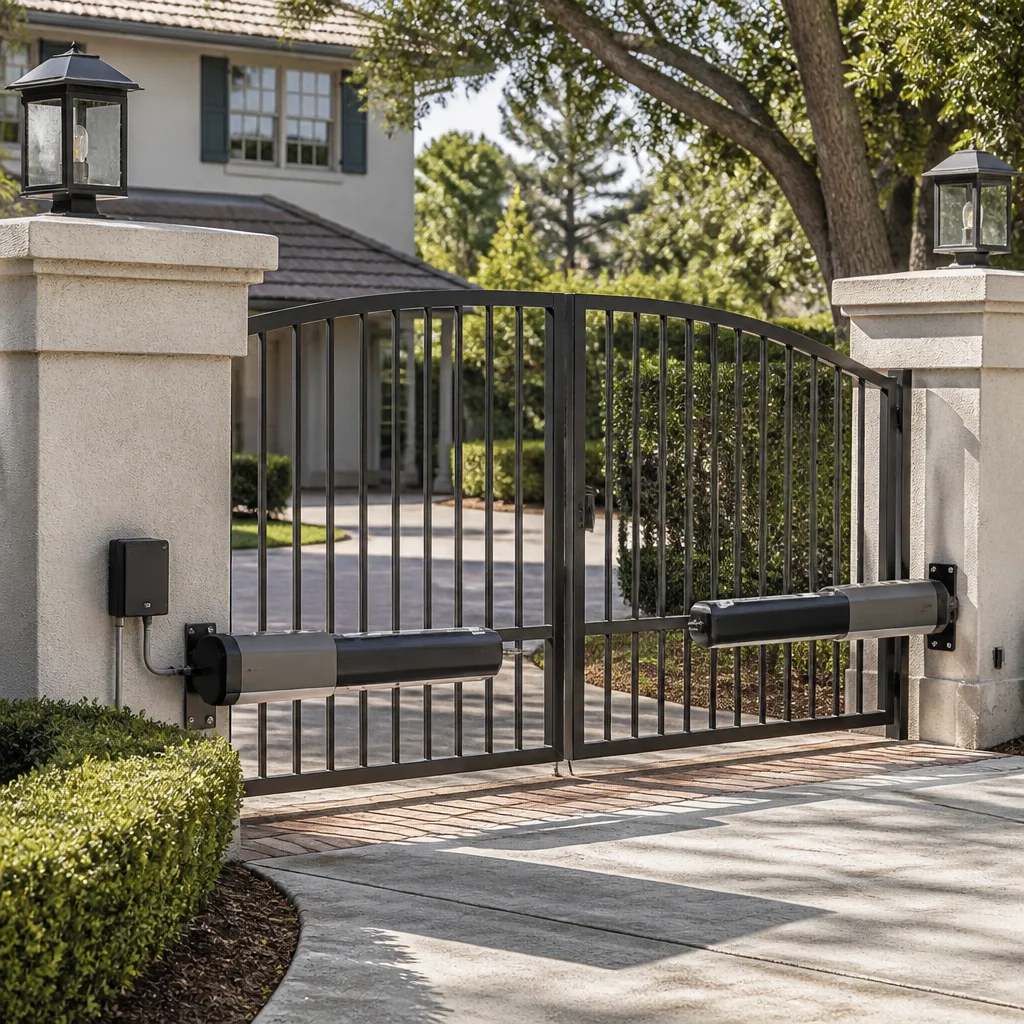 LiftMaster operators
Free on-site gate assessment - hinges, posts, and your LiftMaster or Nice gate operator checked before anything is quoted
The assessment is free and the quote is the invoice.
Get your free estimateHow Long Does Gate Motor & Opener Take? Timelines and What to Expect
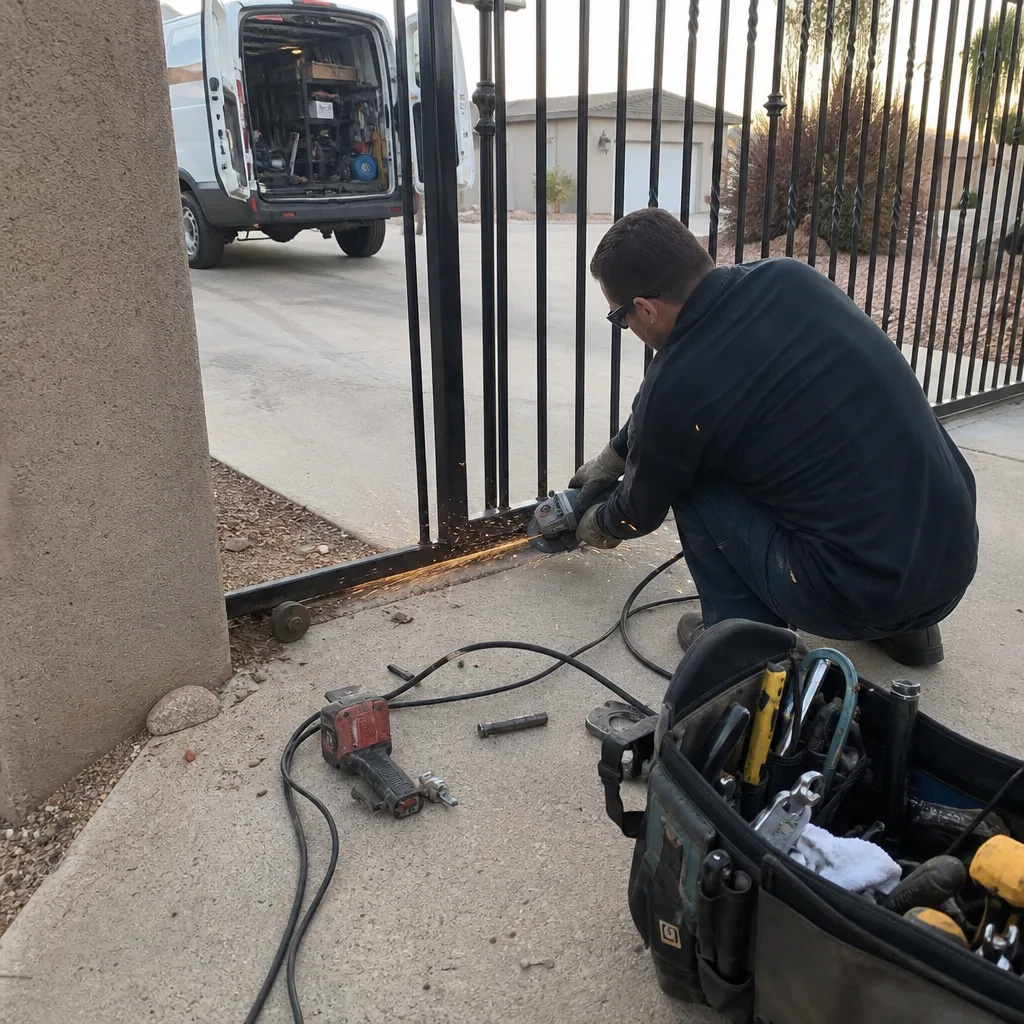
The operator swap that gets quoted as a half-day job becomes a full day when the technician opens the conduit and finds three wire splices, no junction box, and a ground wire connected to the gate post instead of an earth ground. That isn’t unusual. It’s what undocumented prior work looks like. Most homeowners in Boulder City who ask how long a gate motor or opener takes are really asking a different question: what’s already hiding in my driveway? This guide separates the timeline into the two scenarios that actually exist, lists what a technician checks before quoting a firm time, and explains what the end of the job should look like before anyone drives away.
Quick Answer
A gate motor or opener installation takes about 2 to 3 hours on a clean, documented retrofit with intact conduit and an existing control board. On an undocumented system with damaged conduit, spliced wiring, or a bad ground, plan for 6 to 8 hours, sometimes across two visits. A brand-new operator with no existing infrastructure is more predictable at 4 to 6 hours, because nothing left behind can surprise anyone.
Styles & brands we work with
- Wrought iron
- Wood & steel frame
- Farm & ranch
- Sliding driveway gates
- LiftMaster operators
Table of Contents
- The Two Timelines: Documented vs. Undocumented
- The Five Checks Before Anyone Quotes a Firm Time
- Why New Operator Installation Is More Predictable (and Longer)
- What the Last Hour Should Look Like
- The Boulder City Heat Factor
- Retrofit vs. New Build: Side-by-Side Timelines
- How to Schedule Around the Real Timeline
- What This Means for Cost
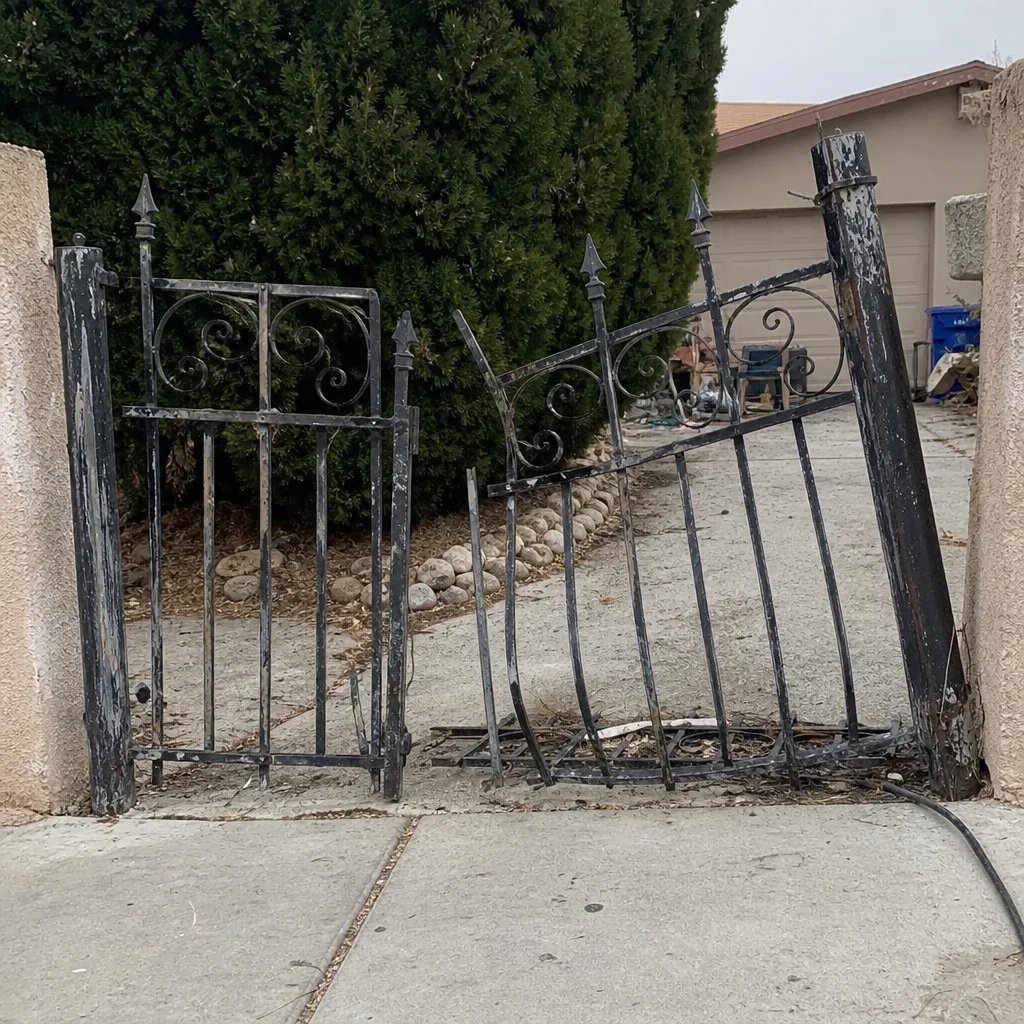 Before
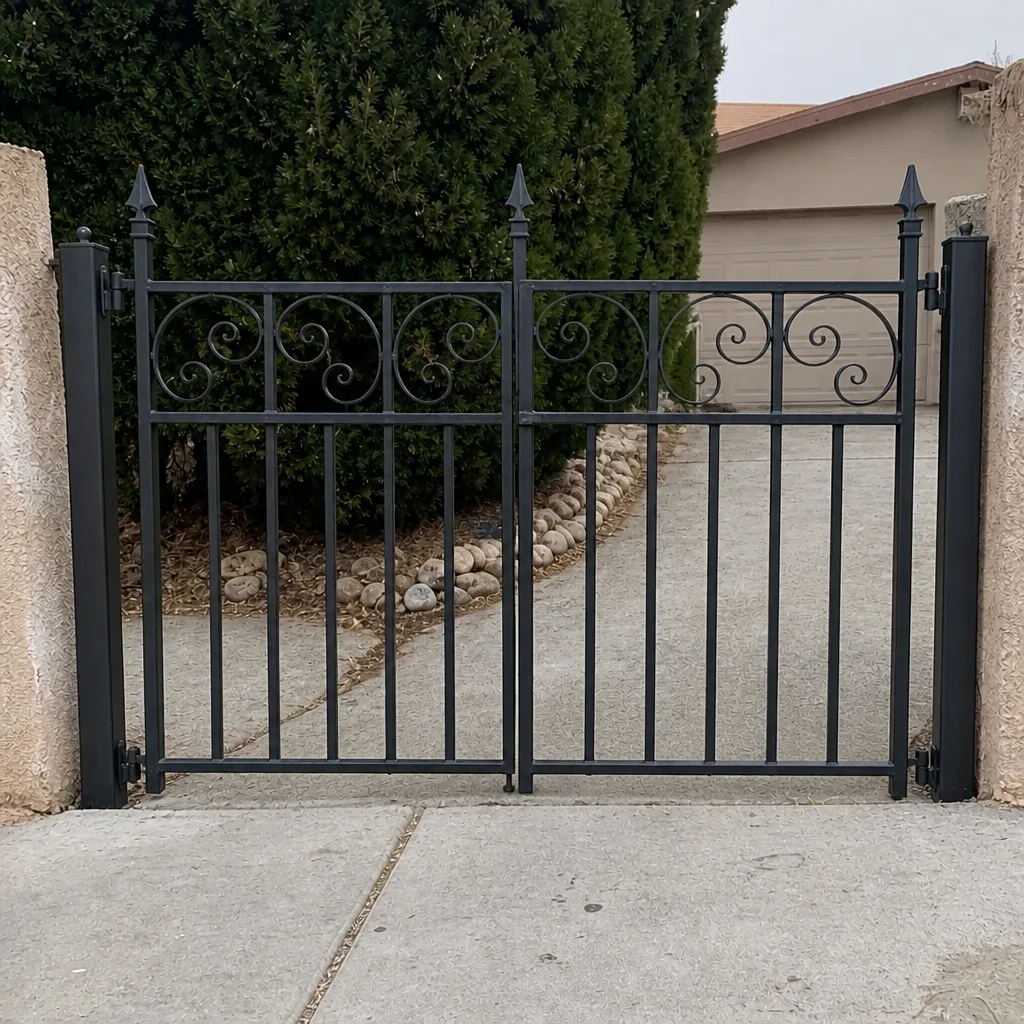 After
The Two Timelines: Documented vs. Undocumented
Here’s the honest split, and it’s the reason a generic “how long does installation take” answer isn’t much use. The operator itself is a known quantity. We’ve worked on LiftMaster, FAAC, BFT, Linear, Viking, Ghost Controls, DoorKing, Elite, and Mighty Mule motors, and any of them install in about the same window once the site is ready. What varies is the site.
Documented systems have a junction box at the gate, conduit that runs clean from the panel to the operator, a control board that’s already compatible with the replacement, and a limit-switch position someone wrote down. We can confirm all of that in about 20 minutes, then install in 2 to 3 hours total including test cycles.
Undocumented systems are the other story. Typical findings on a retrofit:
- Conduit that collapses when the wire is pulled, forcing a re-run through dirt or under a slab
- Splices inside the conduit (never code-compliant) that have been wet for years
- No junction box, so the wire nut connection sits exposed in a post
- A ground wire run to the gate post and called “grounded,” with no actual earth ground
- A control board from a brand that’s no longer made, requiring an adapter or a full board swap
Each of those adds 1 to 3 hours. Stack three of them and a 2-hour retrofit becomes a full-day job. That’s the scenario a lot of Boulder City hillside properties fall into, because gate power is often an afterthought run off a landscape circuit. When we quote a retrofit, the written price names which scenario we believe we’re in and why. If you want to see how we scope the work itself, our Gate Motor & Opener in Boulder City page walks through the service.
The Five Checks Before Anyone Quotes a Firm Time
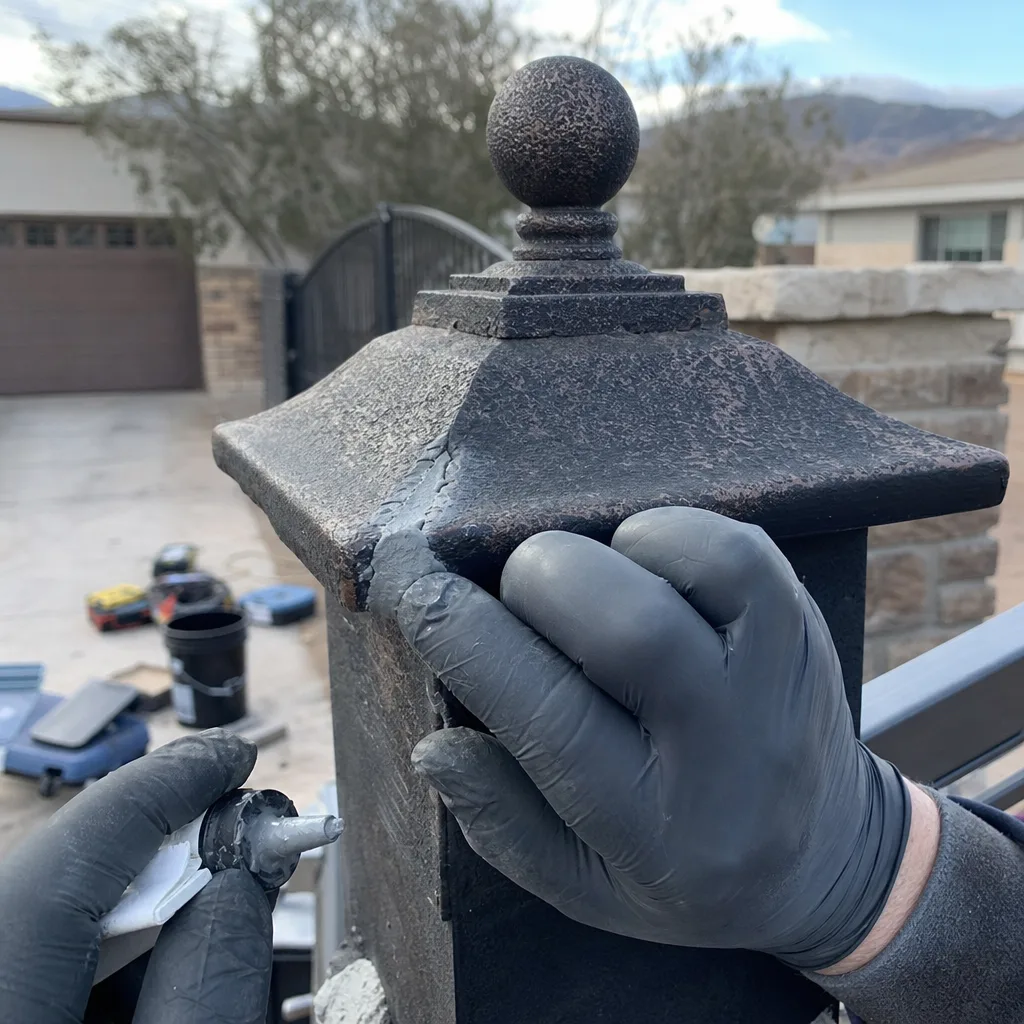
No honest quote assigns a hard number of hours before these five things are checked. A phone estimate can give a range, but the firm time comes after a technician walks the site. Here’s what gets checked, and why each one moves the clock.
- Supply voltage. An operator wants a steady 120V at the gate, not a 95V line voltage on a long run from the house. If voltage sags under load, the motor strains, and the fix is a heavier wire gauge or a dedicated circuit, which adds an electrician’s half-day.
- Conduit integrity. We pull the wire and feel for resistance. If it won’t move, the conduit is crushed or full of water, and a re-run starts at 2 hours for a short trench.
- Ground quality. A ground to the gate post protects nothing. Proper earth ground at the panel is a 15-minute check and a 1 to 2 hour fix when it’s wrong.
- Control board compatibility. Not every replacement operator talks to an existing board. DoorKing and Elite boards, in particular, require a matching receiver or a swap.
- Existing limit-switch positions. If nobody documented where the open and close limits were set, we set them fresh. That’s the test cycles at the end and they take real time to get right.
Under The Haven Standard, those findings go in writing before any tool comes out. If a check reveals a problem the original quote didn’t account for, you get an updated written price and you approve it. That’s how the price stays honest. If you’re curious what a documented repair visit looks like, our Gate Repair in Boulder City page shows the records we leave.
Why New Operator Installation Is More Predictable (and Longer)
New installation sounds like it should be faster. It isn’t, but it’s more predictable, and that predictability is worth something.
On a new operator with no existing infrastructure, the timeline runs 4 to 6 hours, sometimes more, because everything is built from scratch: trenching for conduit, setting the operator pad or arm brackets, pulling new wire, mounting the operator and arms, wiring the control board, and running a full set of test cycles. There’s no old system to surprise the installer. Every step is on the schedule because every step is planned.
On a retrofit, the operator swap itself is quick, but the site assessment is the variable. That’s exactly the same logic that applies to a driveway gate built from nothing: our Gate Installation in Boulder City page lays out the sequence. New build takes longer in absolute terms but runs on a schedule. Retrofit can be fast, or it can expose a problem that wasn’t findable until the wire came out of the conduit.
What we tell homeowners: if the quote for an operator swap is a flat 2 hours with no site check, either the installer knows something you don’t, or the quote isn’t real. A written quote that names both scenarios is the only one worth signing.
What the Last Hour Should Look Like
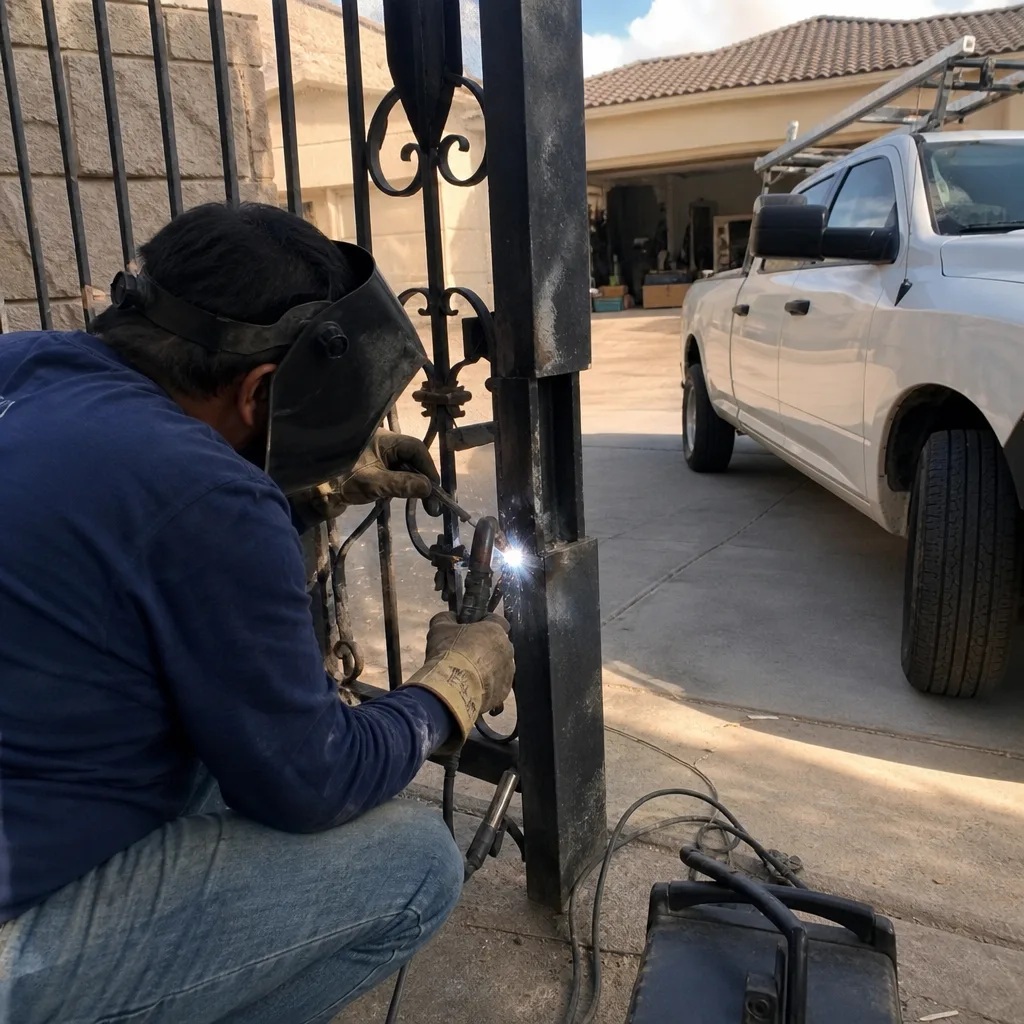
The end of the job isn’t “it works, we’re done.” A proper close takes about 45 minutes and produces a record you’ll rely on later. Here’s what should happen before any truck leaves the property.
- Test cycles. At least 10 full open-close cycles to confirm the limits hold and the operator doesn’t drift. Three cycles isn’t enough; a limit set slightly tight will fail on cycle 8.
- Limit-switch documentation. The exact open and close positions, written down, so no future technician has to guess where they were set.
- Photo set. Before, during, and after shots of the operator, the conduit entry, the wiring, and the ground. A future tech sees what was there when we left.
- Wiring diagram. The control board wiring indexed by terminal, so the next person to open the box knows what goes where.
That documentation is the difference between a one-hour service call next time and a full day re-discovering the same problem. We carry the habit into every visit because it’s how commercial access-control work is documented, and it holds up on a residential gate just as well. Before we leave, you get a photo log of every adjustment and a written record of the part number installed. Nothing is left to memory.
The Boulder City Heat Factor
Boulder City summer afternoons push past 100°F with regularity, and that changes how the job gets scheduled. Two parts of the work are heat-sensitive: outdoor wiring connections and any concrete or pad work, and both are worth planning around.
Concrete poured for an operator pad on a hot afternoon cures too fast to finish cleanly and can crack. Outdoor wire connections made in direct sun are more likely to fail early, and there’s a real safety reason to work early: an operator wiring task in 105°F heat is not the time for a rushed connection at a live control board. We schedule outdoor work in the early morning, from first light to about 11 a.m., and save indoor work (control board swaps, remote programming, documentation) for the afternoon heat.
If you’re considering an operator swap in June, July, or August, tell the person scheduling it that you want the wire pulls and pad work before noon. A company scheduling in Boulder City should be able to do that without a fuss. That’s a local scheduling courtesy, not a sales pitch. If the answer is “we only do afternoons this week,” that’s worth knowing before you book.
Retrofit vs. New Build: Side-by-Side Timelines
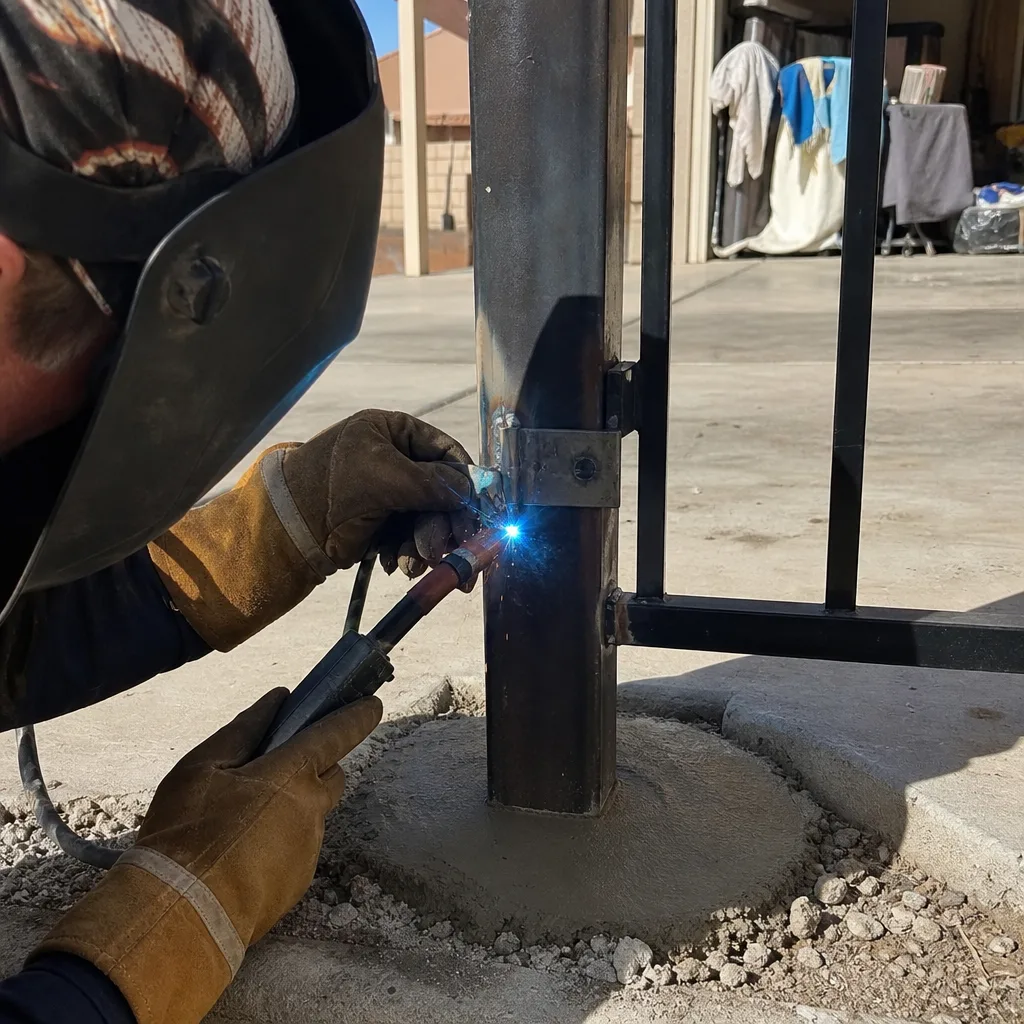
The clearest way to see the difference is head to head. Times below are for a typical single residential driveway gate.
- Documented retrofit: 2 to 3 hours total. 20-minute assessment, 1.5 hours operator install, 45-minute close with test cycles and documentation.
- Undocumented retrofit: 6 to 8 hours, often split across two visits. 45-minute assessment, plus conduit re-run (2 to 3 hours), plus ground fix (1 hour), plus operator install and close.
- New operator, no infrastructure: 4 to 6 hours, one day. Trench, conduit, pad, wiring, mount, test.
- Operator swap on same brand and board: 1.5 to 2 hours. The fastest case, when the existing board accepts the new operator without issue.
Those ranges assume no hidden damage under a slab and no electrical permit work. If a dedicated circuit is required, add an electrician’s day. Our Vance Gate Repair Boulder City home page lists what’s included on every visit, and it’s the same standard across all of these scenarios.
How to Schedule Around the Real Timeline
The most useful thing you can do before booking is gather what the previous installer left. Even partial records shorten the assessment. Here’s the order we’d suggest.
- Find the operator’s model plate. It’s usually on the motor housing or under the cover. That single photo confirms board compatibility in minutes.
- Locate the breaker or circuit the gate is on. Note whether it’s a dedicated circuit or shared with landscape lighting.
- Check the ground. If you can’t trace it to an earth ground at the panel, tell the scheduler; that moves the job from Scenario A to Scenario B.
- Take a photo of the conduit run from the house to the gate. A crushed section or a visible splice changes the quote.
With those four things in hand, a written price can often be issued before the visit. Without them, the first 20 to 45 minutes of the visit are assessment. On a 90°F-plus day in Boulder City, a morning slot with the assessment already done is worth scheduling. It’s also how you avoid the “we’ll need to come back” call, which rarely happens on a job with complete pre-visit information.
What This Means for Cost
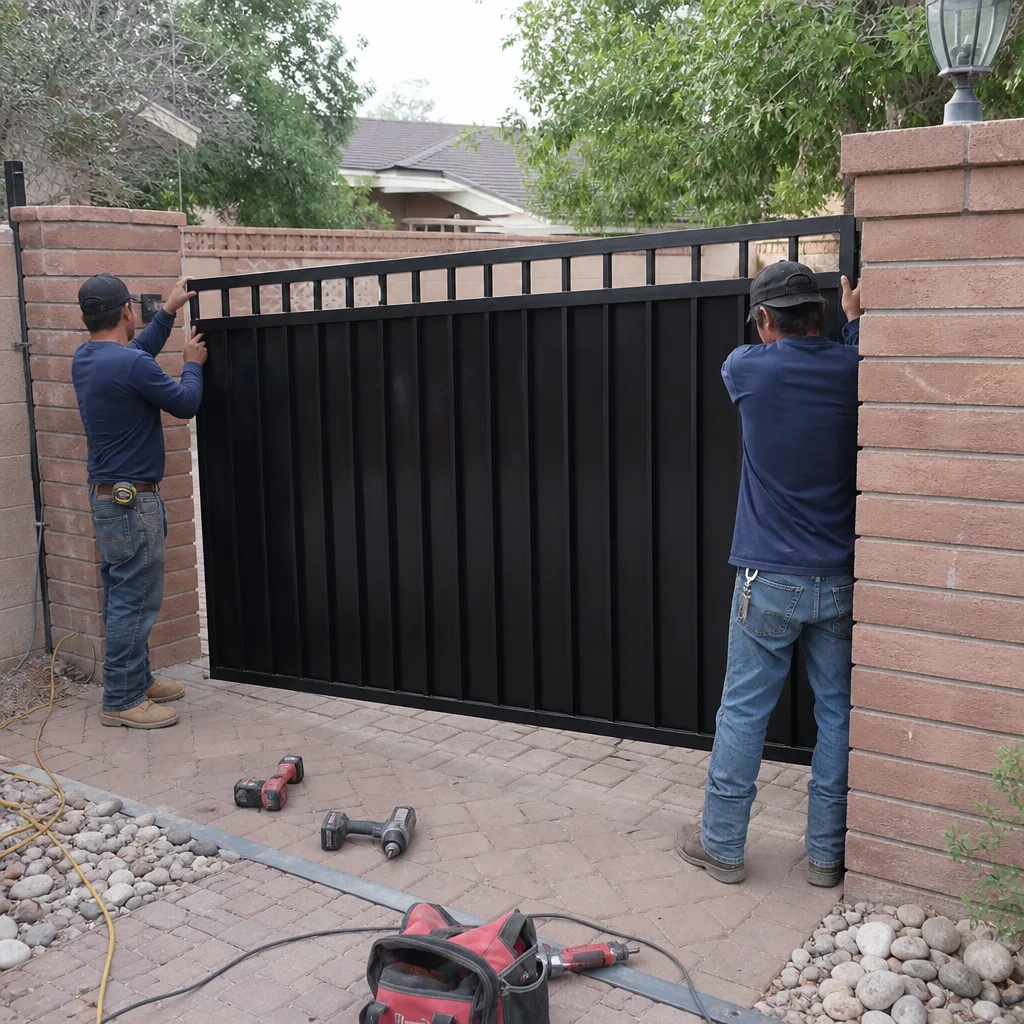
Timeline and price are connected. A documented retrofit hovering around 2 to 3 hours costs less than an undocumented one at 6 to 8, but the documented job also costs what the written quote says before any work starts, because the scope is clear. Under Clause 1 of the Haven Standard, the flat price is written and handed over before the first tool comes out. No surprise invoice at the end. If a site check turns up a problem the first quote didn’t see, that’s a new written price for you to approve, not a line item added to the bill.
Most swing-gate motor replacements run between the price in the low hundreds and the price in the high hundreds, depending on the brand and whether the arm bracket and conduit are intact. A re-run adds considerably. That’s the honest version of a range, and it’s why a written quote that names the scenario beats a phone estimate every time.
Common Mistakes to Avoid
- Accepting a phone quote with no site check. A 2-hour estimate on a system nobody has opened is a guess, and it’s usually a guess that becomes a revision on the day. The site check is the quote.
- Ignoring the ground wire. A ground connected to the gate post isn’t a ground. It’s the single most common defect we find, and it’s cheap to fix when found early and expensive when it isn’t.
- Skipping documentation. If the last tech left no photo set and no wiring diagram, the next job starts from zero. That’s on the last company, but you pay for it.
- Replacing the operator when the board is fine. A board-compatibility check takes minutes. Swapping a whole operator because the receiver doesn’t match is a costly shortcut.
- Scheduling wire pulls for 2 p.m. in July. In Boulder City, that’s the worst hour of the day for outdoor electrical work and the highest risk of a failed connection.
- Paying the invoice before the photo record is in hand. The record should arrive with the invoice, every time, at no charge.
- Assuming a brand you’ve never heard of means a replacement. Viking and Ghost Controls systems are common on residential gates and worth repairing before replacing.
See the difference
BeforeAfter Before
 After
 Before
 After
When to Call a Professional
Call a professional if the gate moves unevenly, stops mid-travel, or the operator hums but doesn’t move. Those are limit-switch or voltage symptoms, and a homeowner shouldn’t open a control board or touch a 120V gate circuit. Same for any sign of heat at the wiring or a burnt smell near the operator. If the remote works only from three feet away, that’s a receiver problem, not a battery, and it’s a quick diagnostic. If the gate is a new installation with no existing conduit run, the work needs planning, permits where required, and a written scope. Never try to run line voltage to a gate yourself; the risk of shock is real and the code requirements for outdoor wiring are specific. Vance Gate Repair Boulder City offers free estimates in Boulder City, and a live person answers the phone around the clock. Call (844) 320-7587 to book an assessment.
Frequently Asked Questions
Plan for 2 to 3 hours on a documented retrofit, 6 to 8 hours on an undocumented system, and 4 to 6 hours for a new installation with no existing infrastructure. The single biggest variable is what the previous installer left behind in the conduit and the ground. Call (844) 320-7587 for an assessment before you book anything.
No, and no honest gate company can. A phone estimate gives a range, but the firm time comes after the five site checks (voltage, conduit, ground, board compatibility, limit positions). We’ll give you the written price and the hours once those are done, and the user can approve before work starts. Call (844) 320-7587 to schedule the check.
Because the wire and conduit get opened and the site tells the truth. Common findings in Boulder City include crushed conduit, splices inside the conduit, and a ground connected to a post instead of earth. Each of those adds 1 to 3 hours of re-run and correction, and stacking three of them turns a 2-hour swap into a day. Call (844) 320-7587 for a site assessment.
You need to be there for the written price and to approve it before work starts, and again at the close so you receive the photo record. Much of the actual work happens outside the house. If your schedule is tight, ask about an early morning slot, which also gets the wire work out of the afternoon heat. Call (844) 320-7587 to arrange a time.
You get a photo log of every adjustment, a written record of the part numbers installed, the limit-switch positions, and a wiring diagram. That record is part of the visit under the Haven Standard, at no extra charge, and it makes future service faster. Call (844) 320-7587 if the last company didn’t leave one for you.
Yes. Boulder City summers push concrete and outdoor wiring work out of the afternoon, so outdoor tasks get scheduled early and indoor board work shifts later. A morning slot shortens the day and avoids failed connections made in extreme heat. Call (844) 320-7587 to book a morning visit.
The Bottom Line
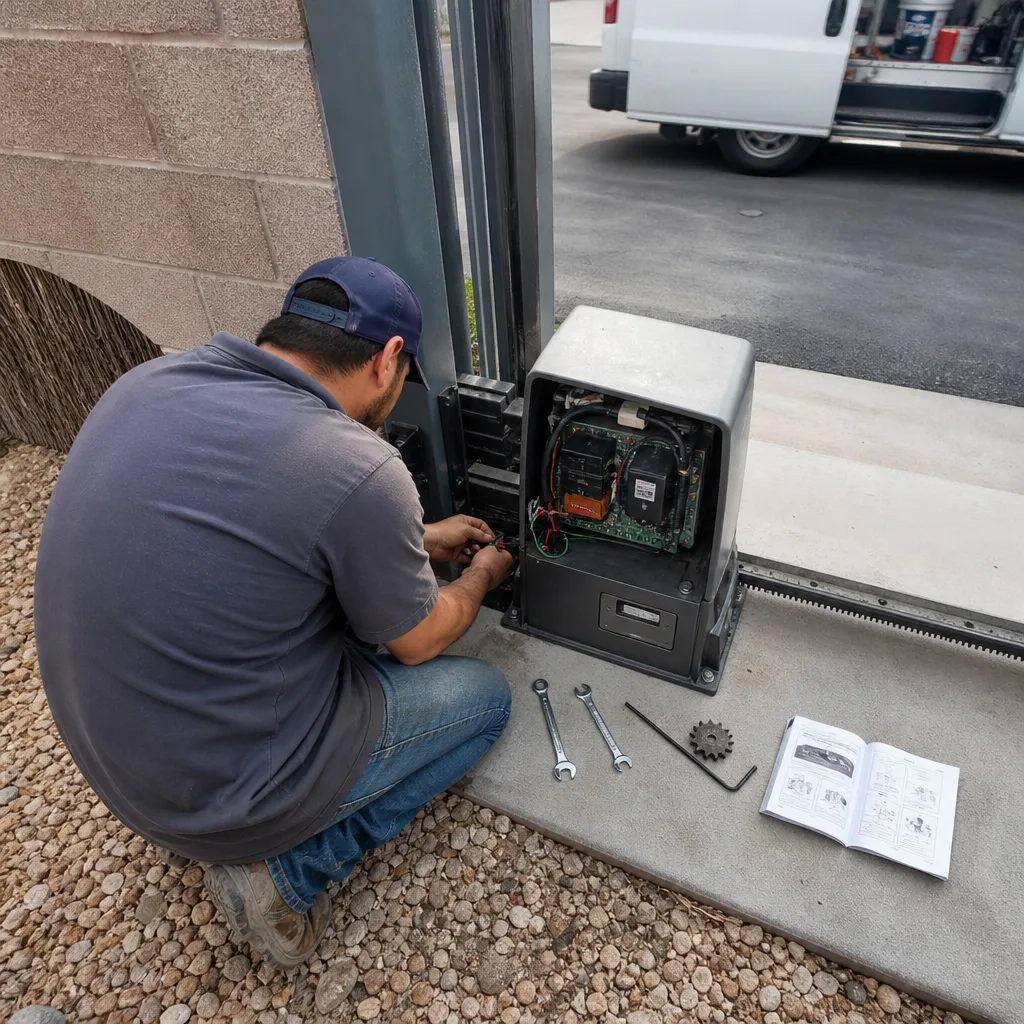
The operator is the known part. The site is the variable. A clean, documented retrofit runs 2 to 3 hours; an undocumented one runs a full day, and the honest quote names which one you’re in before anyone picks up a tool. New installation is longer in absolute terms at 4 to 6 hours, but predictable because nothing hidden can change the plan. Get the five site checks done, get the firm time in writing with the price, and expect a photo record and wiring diagram at the close. In Boulder City, book the outdoor work early and let the heat set the schedule. That’s the whole timeline.
Vance Gate Repair Boulder City brings the written price, the site check, and the documented record to every job, including a free second opinion on any written estimate you already have. Call (844) 320-7587 for a free estimate and a firm schedule.
Written by the team at Vance Gate Repair Boulder City.