
Last updated November 18, 2026
 Wrought iron
 Wood & steel frame
 Farm & ranch
 Sliding driveway gates
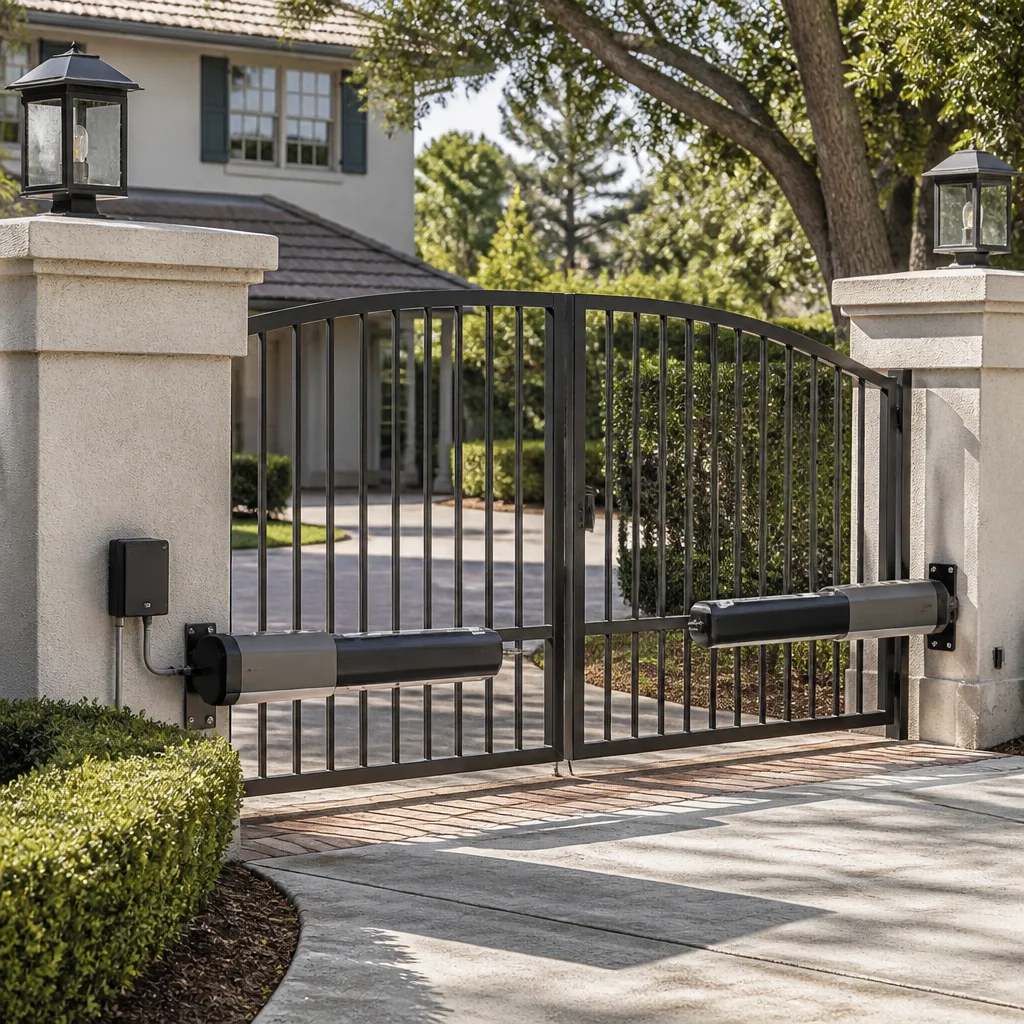 LiftMaster operators
Free on-site gate assessment - hinges, posts, and your LiftMaster or Nice gate operator checked before anything is quoted
The assessment is free and the quote is the invoice.
Get your free estimateHow Long Does Gate Access Control Take? Timelines and What to Expect
A job quoted at two hours can run six if the previous installer left no wiring diagram behind. We’ve walked onto properties in Boulder City where the control box held a tangle of unlabeled conductors, a loop detector with no tag, and a keypad wired to a color code that matched nothing in the manufacturer’s literature. The homeowner had paid once for that invisibility. They were about to pay again, because the second technician had to reverse-engineer a system nobody documented. This guide gives you realistic timelines for common access-control work, explains where the hours actually go, and shows how a documented system cuts diagnostic time on nearly every service call.
Quick Answer
Most residential gate access control work takes 1 to 3 hours for a single device swap like a keypad or loop detector, and 3 to 5 hours for a full control board replacement. Full commissioning of a new system, meaning programming, testing, and safety verification, adds another 1 to 3 hours on top of install time. The biggest variable is not the part: it’s whether the existing system was documented by whoever touched it last.
Styles & brands we work with
- Wrought iron
- Wood & steel frame
- Farm & ranch
- Sliding driveway gates
- LiftMaster operators
Table of Contents
- Install Time vs. Commissioning Time: Where Jobs Actually Run Over
- Realistic Timelines for Common Access Control Jobs
- How Documentation Cuts Diagnostic Time by 30 to 60 Minutes
- What “Site Conditions” Means in Boulder City
- What Your Existing System Tells Us Before We Arrive
- Questions to Ask Before You Accept a Timeline
- Brand Differences That Affect Schedule
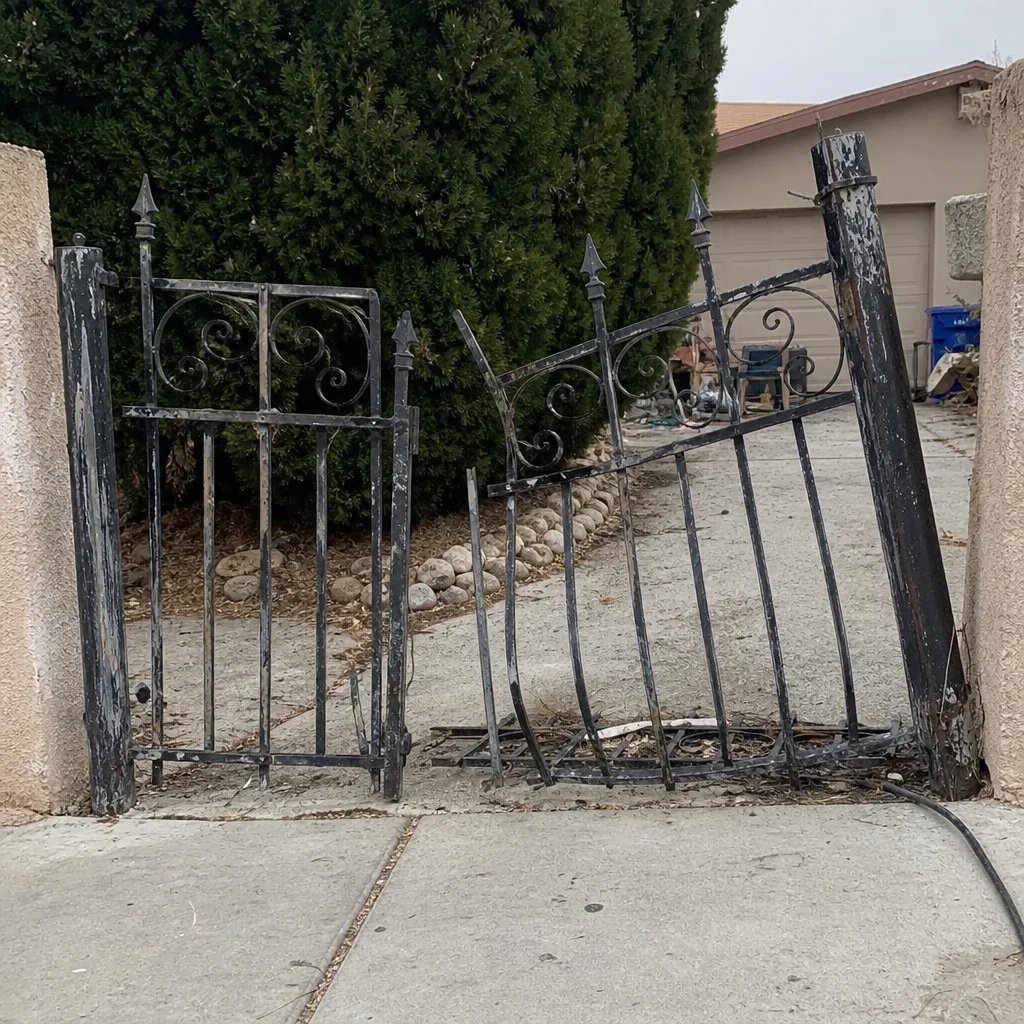 Before
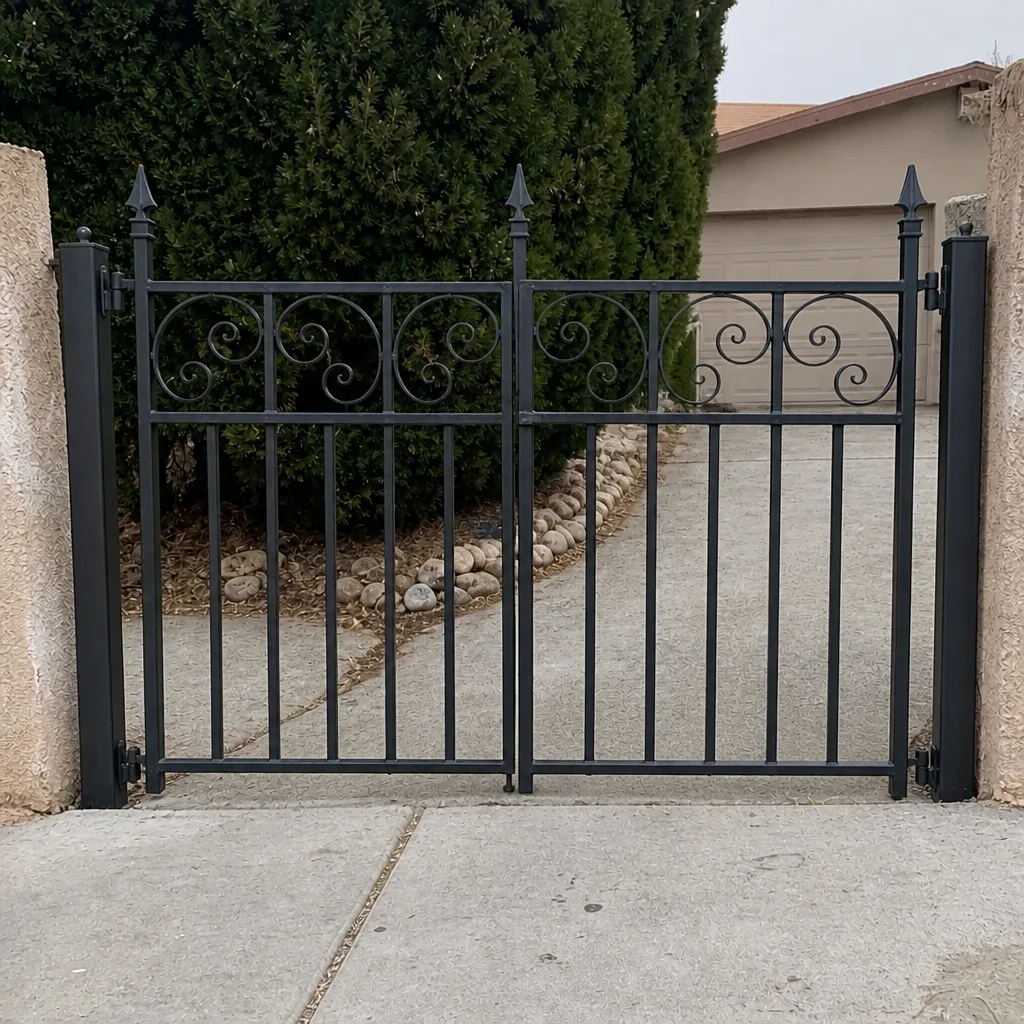 After
Install Time vs. Commissioning Time: Where Jobs Actually Run Over
Two clocks run on every access control job, and most estimates only quote one of them. Install time is the physical work: mounting the device, pulling wire, landing conductors on terminals. Commissioning is everything after that, and it’s where a “two-hour job” quietly becomes a five-hour one.
Commissioning includes reading the limits, setting the entry and exit delays, matching the keypad code format to the controller, testing every safety edge and photo-eye, and confirming the gate reverses on obstruction as it should. On a DoorKing controller with a vehicle loop, that means verifying the detector holds the gate open long enough for a truck-length vehicle to clear, not just a sedan. On a LiftMaster operator, it means confirming the radio receiver recognizes the new transmitter and doesn’t ghost-trigger from a neighbor’s remote.
Here’s the honest split on a typical residential job:
- Keypad replacement: 30 – 45 minutes install, 20 – 40 minutes commissioning depending on how many codes get programmed.
- Loop detector swap: 45 – 75 minutes install (conduit and saw-cut dependent), 20 – 30 minutes commissioning.
- Control board replacement: 90 minutes to 2 hours install, 60 – 90 minutes commissioning if the board is a direct swap, substantially longer if the old board was undocumented.
When we quote a job in Boulder City, the commissioning block is written into the scope on the page. That way nobody is surprised when the second hour belongs to programming and testing rather than soldering.
Realistic Timelines for Common Access Control Jobs
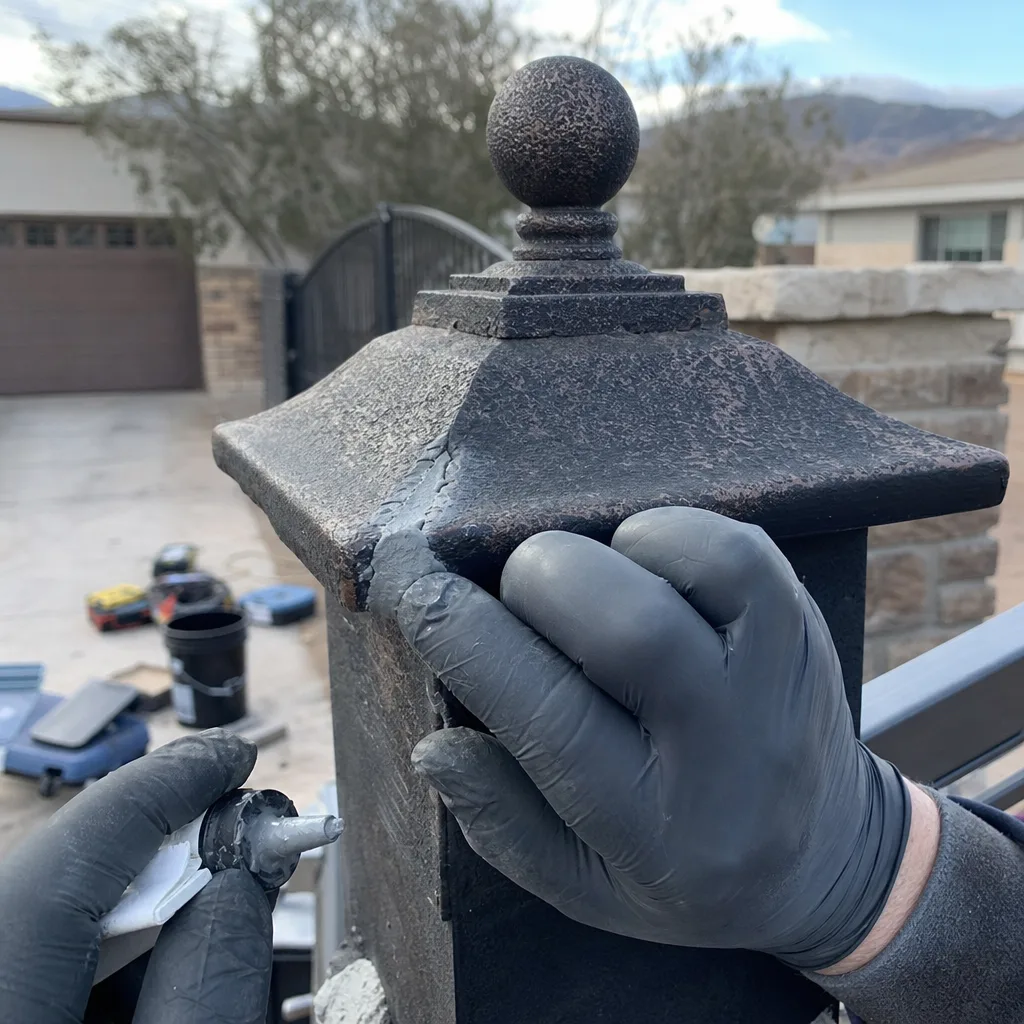
Below are the ranges we see on residential properties, with what moves a job to the long end of each band. These are working numbers from the field, not brochure promises. Under Vance Gate Repair Boulder City home service, every one of these jobs gets a written price before a tool comes out of the case.
New Keypad Install
One to three hours. A fresh-run keypad on an existing low-voltage circuit takes about an hour of physical work; if the wire has to be routed through new conduit or buried to a post that doesn’t exist yet, add another hour. Programming multiple user codes, a temporary contractor code, and the anti-passback settings adds 20 to 40 minutes. A Mighty Mule keypad and a commercial DoorKing unit program very differently, so brand matters here.
Loop Detector Replacement
Two to four hours if the saw-cut and conduit already exist; four to six hours if we’re cutting new slots in the driveway. The loop itself is a coil of wire in a saw cut, filled with sealant. The work is fast. The cure time on the sealant is the part that holds the schedule, and in Boulder City heat, the sealant skins over faster than most installers plan for, which can actually shorten the job if it’s timed right.
Full Control Board Swap
Three to five hours on a documented system. Five to eight hours if the previous board was unlabeled and the conductors have to be traced one at a time with a meter. This is the job where documentation changes the number the most, and it’s also where Gate Repair in Boulder City tends to get called after another company has already been out once without leaving a record.
Full Access Control System Install
One to three days for a new system on a property that has no existing control infrastructure: controller, keypad or card reader, loop or photo-eye, and any intercom. Two days is common for a single-entry residential gate. The difference between one day and three usually comes down to conduit runs and whether the power source is already at the gate post.
How Documentation Cuts Diagnostic Time by 30 to 60 Minutes
Here is the single largest variable in access-control scheduling, and almost nobody quotes it: whether the last technician left a record. A documented system is one where the wiring diagram, the terminal assignments, the limit-switch readings, and photos of the controller face are all in the homeowner’s hands and in the company’s job file. When we show up to a documented system, we’re diagnosing a known baseline. When we show up to an undocumented one, we’re diagnosing a stranger.
The math is straightforward. On a typical service call:
- Documented system: 10 to 15 minutes to read the previous record, match terminals to the diagram, and confirm the fault against the baseline. Most diagnostic time is spent confirming rather than discovering.
- Undocumented system: 40 to 70 minutes to trace unlabeled conductors, identify which loop serves entry versus exit, and confirm what the last limit-switch setting actually was. Every guess gets verified with a meter.
That gap is where the 30 – 60 minute savings lives. On a board swap, it compounds: the undocumented board takes longer to remove because nobody labeled which conductor went to which terminal, and it takes longer to set the new board because there’s no reference reading. Under Haven Standard Clause 4 (Evidence on every job), every Vance visit includes a documented photo record at no additional charge: what we found, what we adjusted, what we replaced, and the part number installed. That record is left with you and filed in the job record, so the next technician, whether it’s us or anyone else, starts from a known baseline instead of a blank page.
This is the same habit that carried over from commercial access-control sites in the early days of the company. On a commercial site, a missing diagram costs a whole crew a half-day. On a residential gate, it costs you the diagnostic hour and the repeat visit. Documentation is the cheapest insurance in this trade, and it’s the one thing most installers skip.
What “Site Conditions” Means in Boulder City
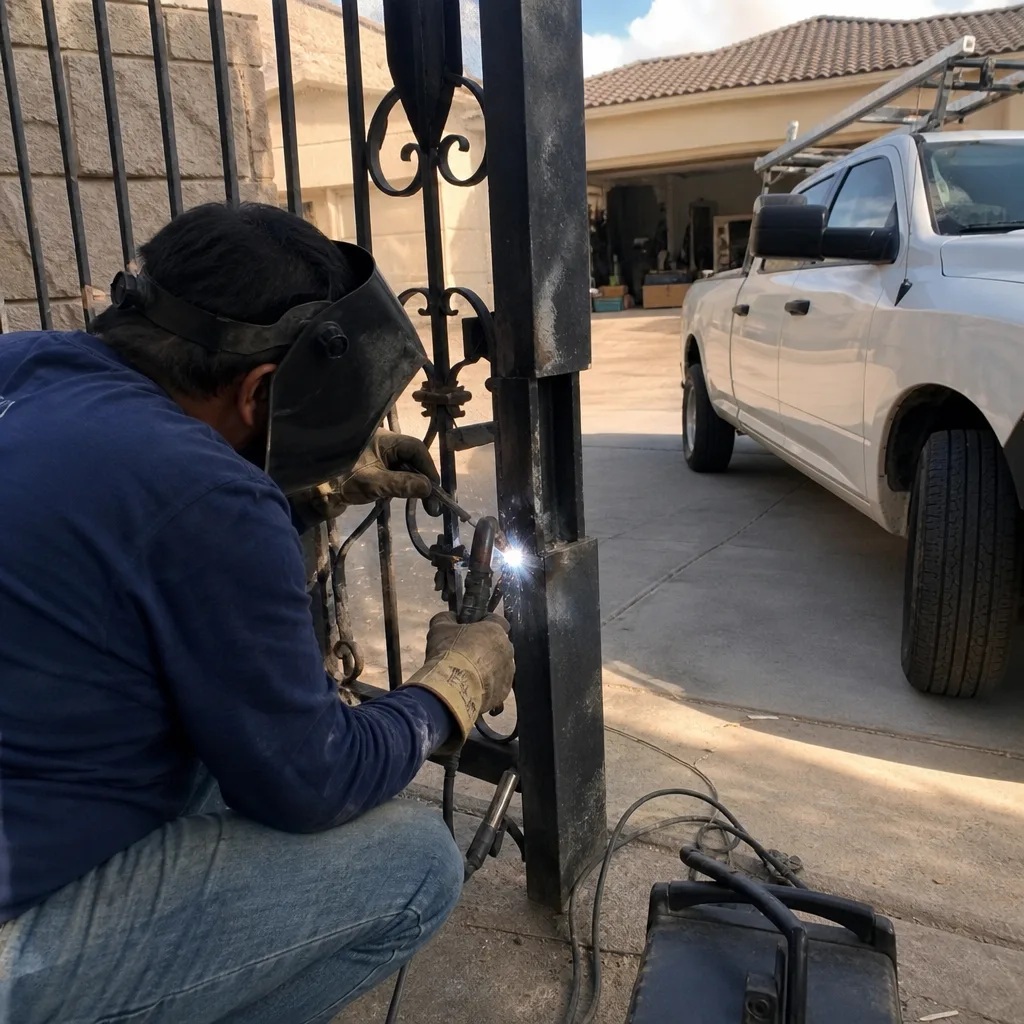
“Site conditions” is a phrase that gets used to pad estimates, but it also means real things. In Boulder City, three of them matter more than anywhere else we work.
- Caliche soil. This is the cemented layer of calcium carbonate that lives a foot or two under a lot of Boulder City ground. Running conduit for a loop detector or a keypad power feed through caliche is not a shovel job; it’s a demo-hammer job. A conduit run that takes 20 minutes in soft soil can take 90 minutes in caliche, and that time belongs in the quote, not in the surprise column.
- Sun exposure on control boxes. A control box mounted on a west-facing wall in Boulder City sees summer surface temperatures high enough to cook a cheap enclosure and shorten the life of the electronics inside. We mount and shade boxes with that in mind, and when we replace one, the photo record notes the mounting and sun exposure so the next tech knows why the old box failed.
- Dust and wind. The same wind that makes Boulder City a lovely place to live pushes fine dust into photo-eyes and keypads. That affects schedule in a subtle way: we budget time to clean and reseat the optics on every visit, because a “failed” photo-eye is often just a fuzzy lens.
None of these are reasons to dread the job. They’re reasons to have them named on the written scope. When a Boulder City estimate is written without any mention of soil, sun, or dust, it’s a sign the technician is pricing off a template, not off your property.
What Your Existing System Tells Us Before We Arrive
A lot of the schedule gets set before a technician ever steps onto the property, based on what you can tell us about the system that’s already there. Here’s what helps:
- The brand on the controller face. DoorKing, LiftMaster, FAAC, BFT, Linear, Viking, Ghost Controls, Elite, and Mighty Mule all program differently, and each one has its own quirks. Knowing the brand upfront lets us bring the right documentation and the right replacement part, which eliminates a return trip.
- Whether a wiring diagram exists. If the previous installer left one taped inside the box, that alone can save 30 to 60 minutes. If not, we treat the job as undocumented and price the diagnostic honestly.
- How the gate is currently triggered. Keypad, remote, loop, intercom, or some combination. Each trigger adds its own commissioning block, and knowing the combination tells us how much total commissioning to quote.
- Photos of the controller interior. If you can get a clear photo of the terminal block, we can often tell you what you’re looking at before the visit. That’s a free second opinion in the literal sense, and it’s the kind of thing Gate Installation in Boulder City customers use to compare quotes.
- Whether the power run has ever been touched. A gate with a long-standing power feed and no history of electrical issues is a faster job than one where a previous owner spliced into a circuit that was never meant to serve a gate.
Questions to Ask Before You Accept a Timeline
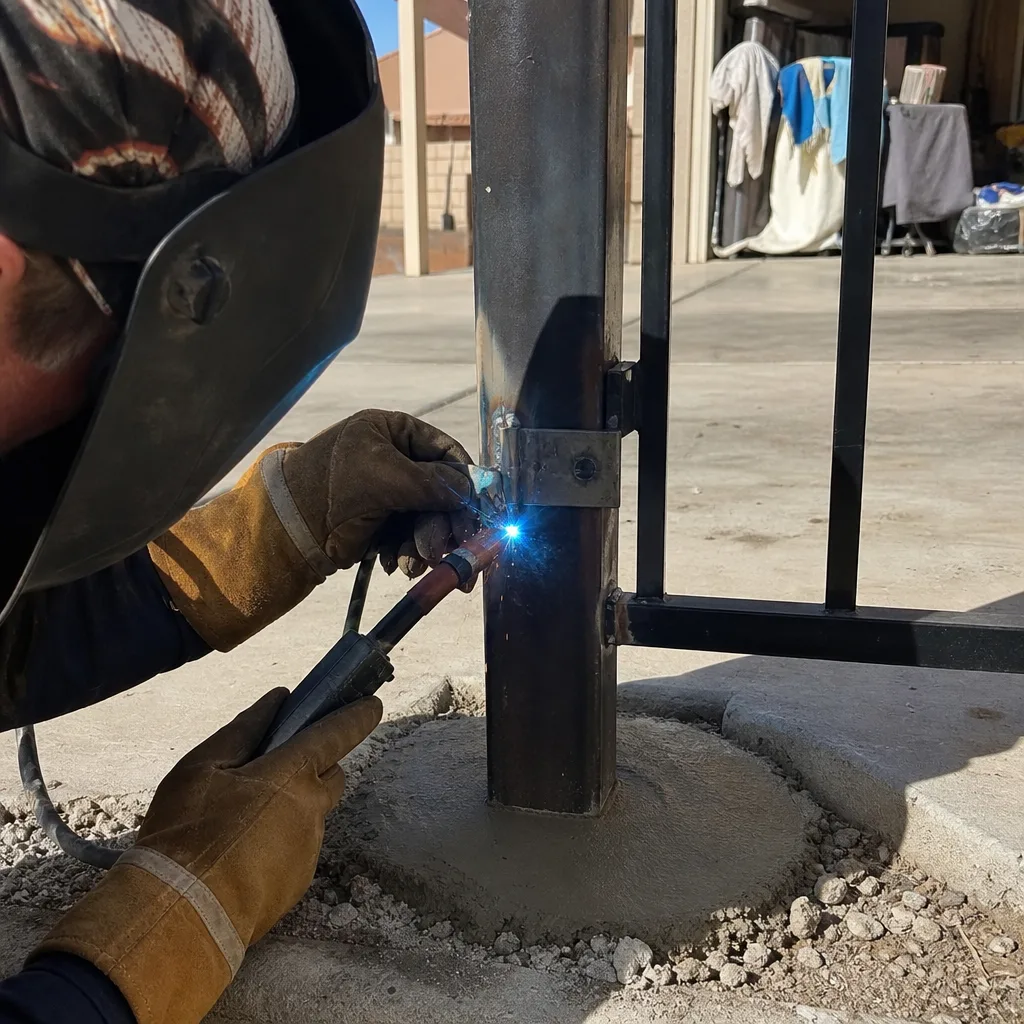
Any technician who has actually done the work can answer these in one sentence. Someone padding a number for unknowns usually can’t. Ask:
- “Is the commissioning time in this estimate, or is it a separate line?” If it’s not in the estimate, it will be on the invoice.
- “Have you allowed time for tracing an undocumented controller?” A technician who says “we’ll figure it out on the day” is pricing the easy case and hoping. Ask what the price does if the tracing runs long.
- “What’s the calibration step at the end, and is it written down?” Limits, delays, force settings, and photo-eye alignment all have to be set and recorded. Ask to see the calibration record format before the job starts.
- “What’s in the written scope if the board is not a direct swap?” A documented company names this contingency upfront. An undocumented one discovers it and charges for it.
- “Will I get the part number and photo record when you leave?” Under the Haven Standard, yes. If the answer is no, you’re buying a future diagnostic hour on your next call.
Those five questions alone will separate a written quote from a verbal one faster than any review. Gate Motor & Opener in Boulder City service runs on the same principle: the price is written and handed over before any work starts, and the record is left with the homeowner when we leave.
Brand Differences That Affect Schedule
Brand doesn’t change the job as much as people assume, but it does change the programming block, and that’s where schedules drift. A few notes from what we actually see:
- DoorKing controllers run a lot of commercial and larger residential gates. They program thoroughly and they reward a technician who knows the menu structure. A board swap on a DoorKing is a commissioning-heavy job, not an install-heavy one.
- LiftMaster operators are common on residential swing and slide gates, and their radio and keypad pairing is usually the fast part. The safety-edge check is where the time goes, and it should be.
- Elite and Mighty Mule units vary more by model year than by brand. Knowing the year matters as much as the brand name for estimating programming time.
Because we work on nine major automation brands, we’re not steering you toward a replacement so the quote fits a part we stock. If the existing operator can be repaired, the timeline reflects a repair. Replacement is a separate conversation, priced separately, and scheduled rather than rushed. There’s no same-day promise on an install, because a promised measure and a written price beat a fast guess every time.
Common Mistakes to Avoid
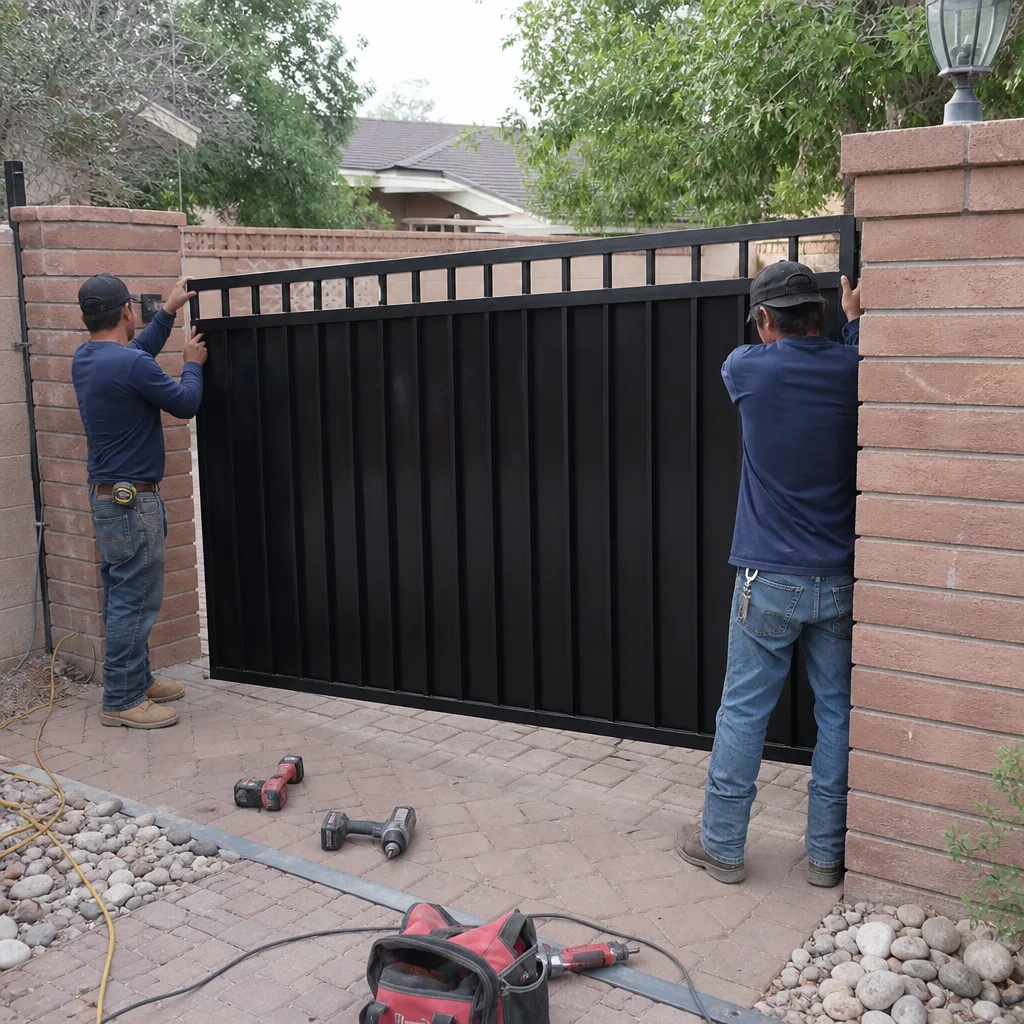
- Accepting a verbal estimate. A verbal number is a guess with a confident face. Ask for the written price before the technician starts, and check that it includes commissioning.
- Not asking for the part number. If the invoice says “control board” without a part number, you can’t compare it against anything later. Every Vance job leaves the part number in writing.
- Assuming a “two-hour job” is two hours. Two hours is install time on a documented system. Commissioning is separate, and any honest estimate names both.
- Skipping the calibration record. A gate that reverses on obstruction is calibrated correctly. If no one set the force and limits and wrote them down, the gate is one sensor drift away from a call-back.
- Letting an installer leave the box unlabeled. Unlabeled conductors are the single biggest cause of future diagnostic time, and it costs nothing to label them on the day. Ask that the diagram be left in the box.
- Ignoring caliche in the estimate. In Boulder City, a conduit run through caliche is a different job than one through loose soil. A written scope that names the soil is a written scope that was actually written for your property.
- Booking a same-day install. New access control systems get measured, ordered, and scheduled. A company promising a same-day full install is either guessing or skipping steps.
See the difference
BeforeAfter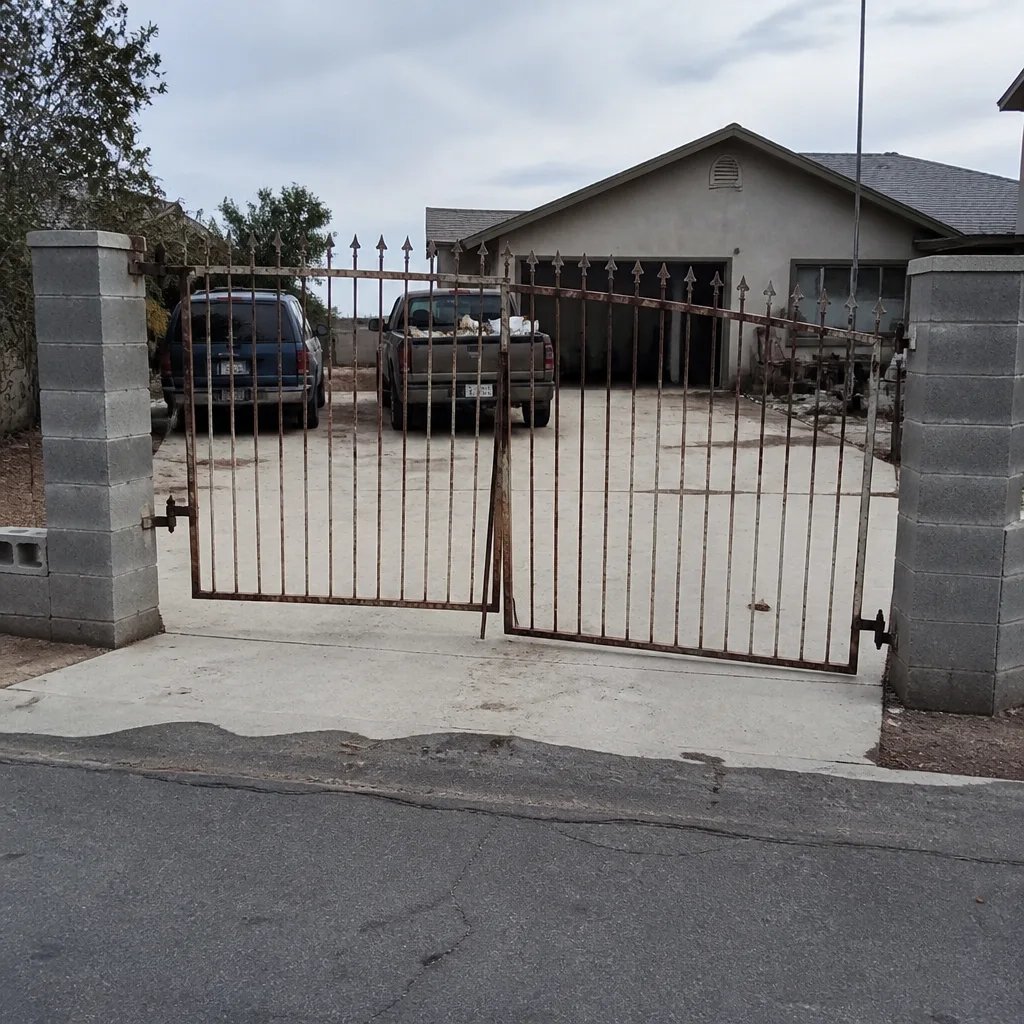 Before
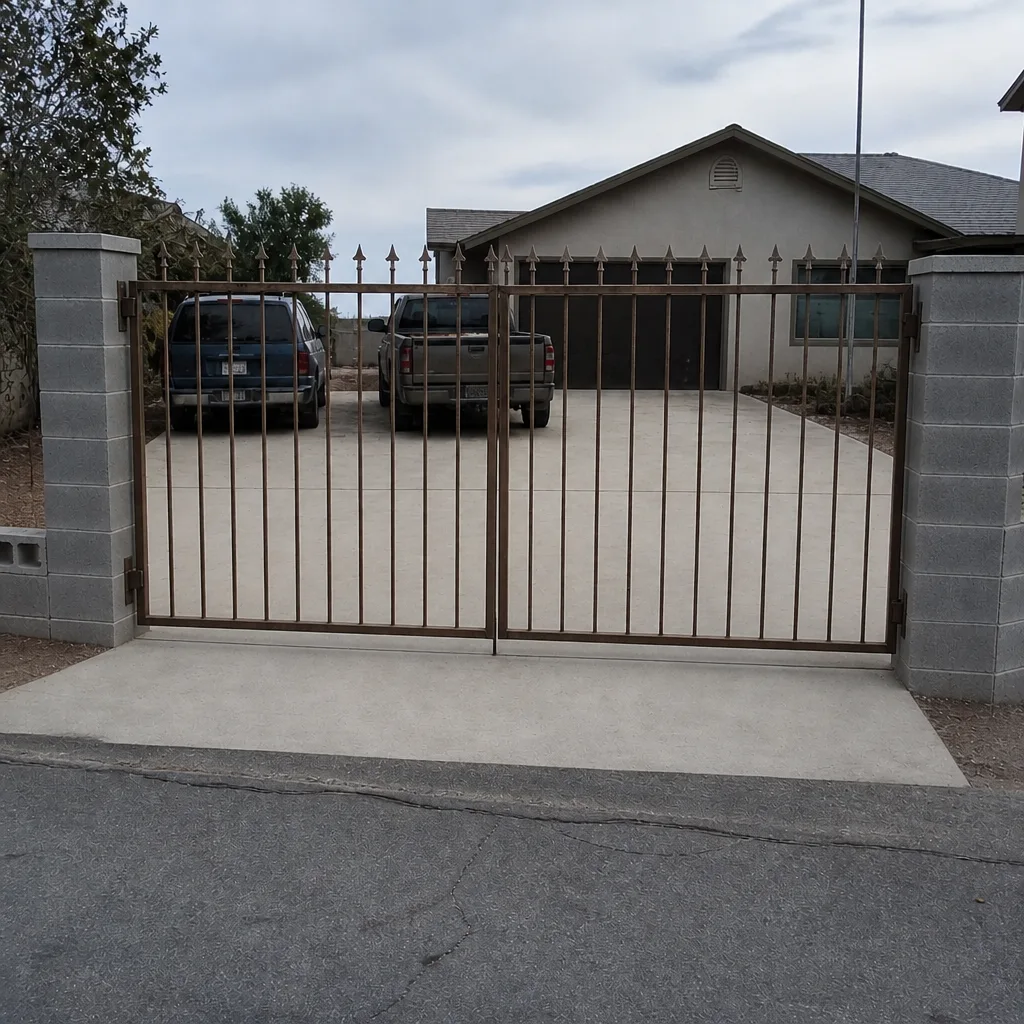 After
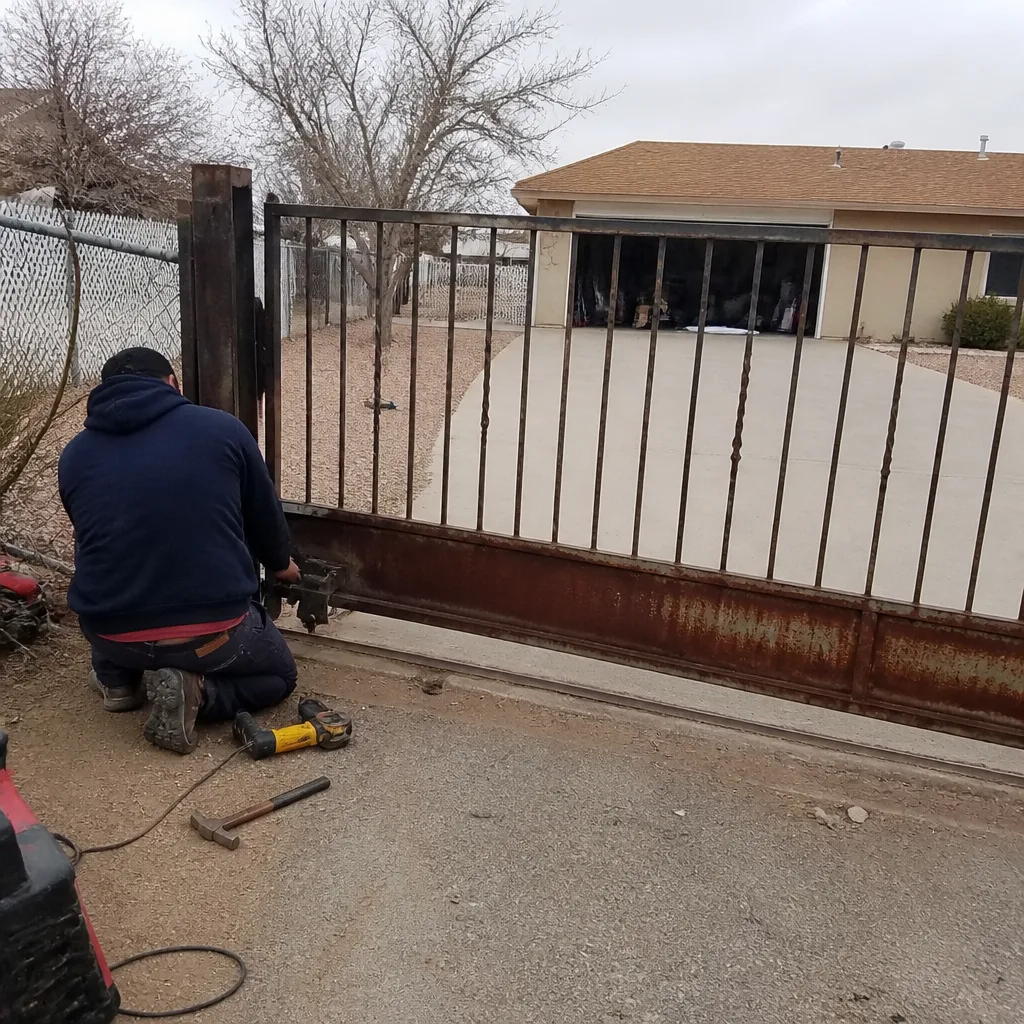 Before
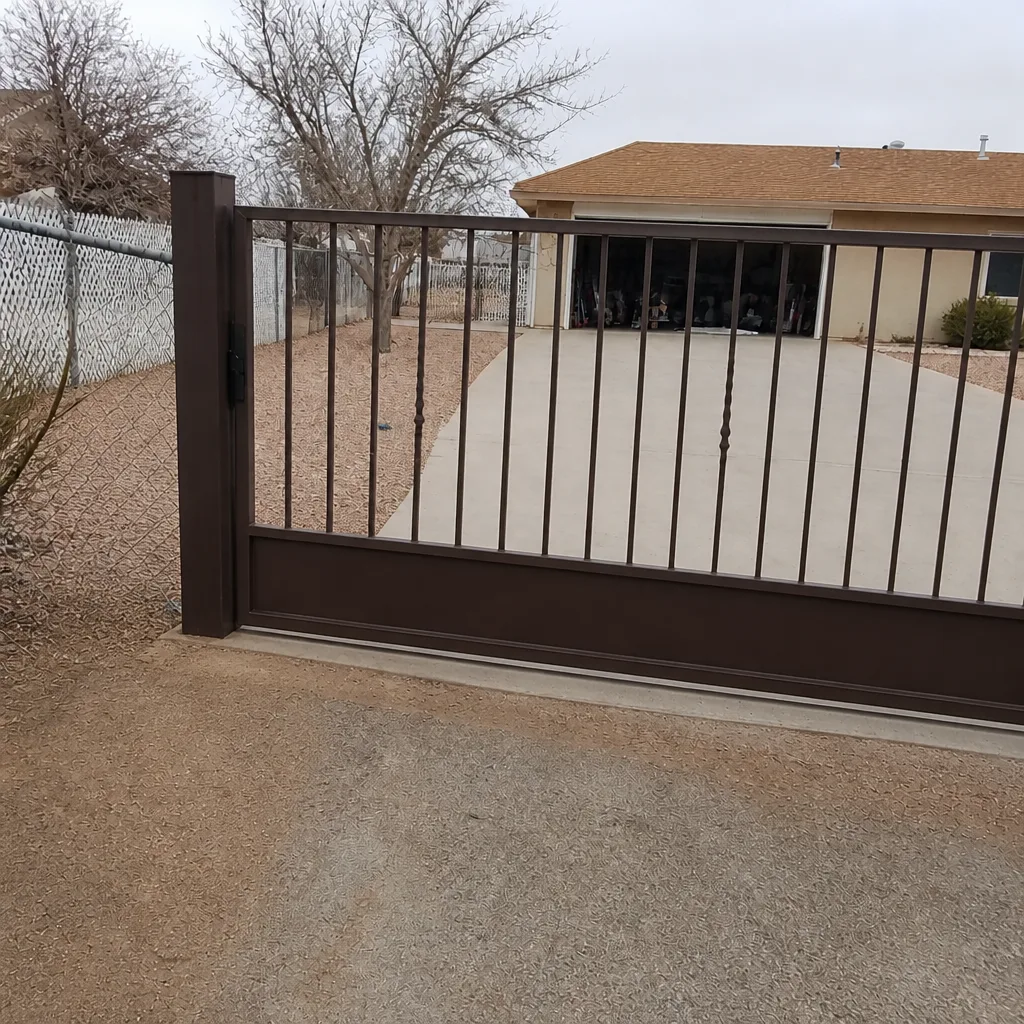 After
When to Call a Professional
Access control work touches low-voltage wiring, but the safety edges and photo-eyes protect against a moving gate with real weight behind it. If your gate reverses on obstruction, that’s a calibration job for a trained technician, not a homeowner project. Call us if the keypad no longer accepts your code, if the gate stops reversing when something crosses the path, if the loop detector keeps the gate open when no vehicle is present, or if you’ve had a technician out twice and the same fault keeps returning. We also offer a free second opinion on any written estimate from another company: bring the paperwork and we’ll review it at no cost. Vance Gate Repair Boulder City offers free estimates in Boulder City – call (844) 320-7587. A live person answers the phone at any hour, every day. Every visit includes a documented photo record and the written price before any work starts.
Frequently Asked Questions
A single-device replacement like a keypad or loop detector typically takes 1 to 3 hours, and a full control board swap takes 3 to 5 hours. Full new-system installation runs 1 to 3 days depending on conduit and power runs. Call (844) 320-7587 for an exact quote for your gate.
The most common reason is an undocumented existing system that has to be traced conductor by conductor. Caliche soil and sun exposure on the control box also add time on Boulder City properties. A written scope that names those contingencies is how you avoid the surprise. Call (844) 320-7587 for a quote that accounts for them.
Repair calls can often be handled the same day, and the phone is answered around the clock to take them. New system installations are measured, ordered, and scheduled, not dispatched same-day. Call (844) 320-7587 to get a written price and a real timeline.
Commissioning covers programming the controller, setting travel limits and delay times, aligning the photo-eye, verifying safety-edge response, and confirming the gate reverses on obstruction. It runs 1 to 3 hours on a new system and it’s the step that protects the gate from a call-back. Every Vance visit leaves a calibration record in writing.
No. Under Haven Standard Clause 4, every visit includes a documented photo record and the part number installed, at no additional charge. The record is left with you and filed in the job record. Call (844) 320-7587 for a quote that includes it.
Yes. Bring the written estimate and we’ll review it at no cost, including whether the commissioning block and the site conditions are priced honestly. That review is a good way to see whether a number was written for your gate or copied from a template. Call (844) 320-7587 to set it up.
The Bottom Line
Access control timelines are less about the part and more about the record. A keypad swap is an hour of work and twenty minutes of programming. A control board swap is three hours if the previous technician left a diagram and five to eight if they didn’t. In Boulder City, caliche soil, west-facing sun, and wind-borne dust all add real time, and any honest written scope names them on the page. The single habit that collapses a timeline is documentation: a wiring diagram, limit readings, and photos left behind on every visit. That’s the Haven Standard, and it’s why we quote the commissioning block instead of hoping you won’t notice it on the invoice.
Written by the team at Vance Gate Repair Boulder City.