
Last updated November 18, 2026
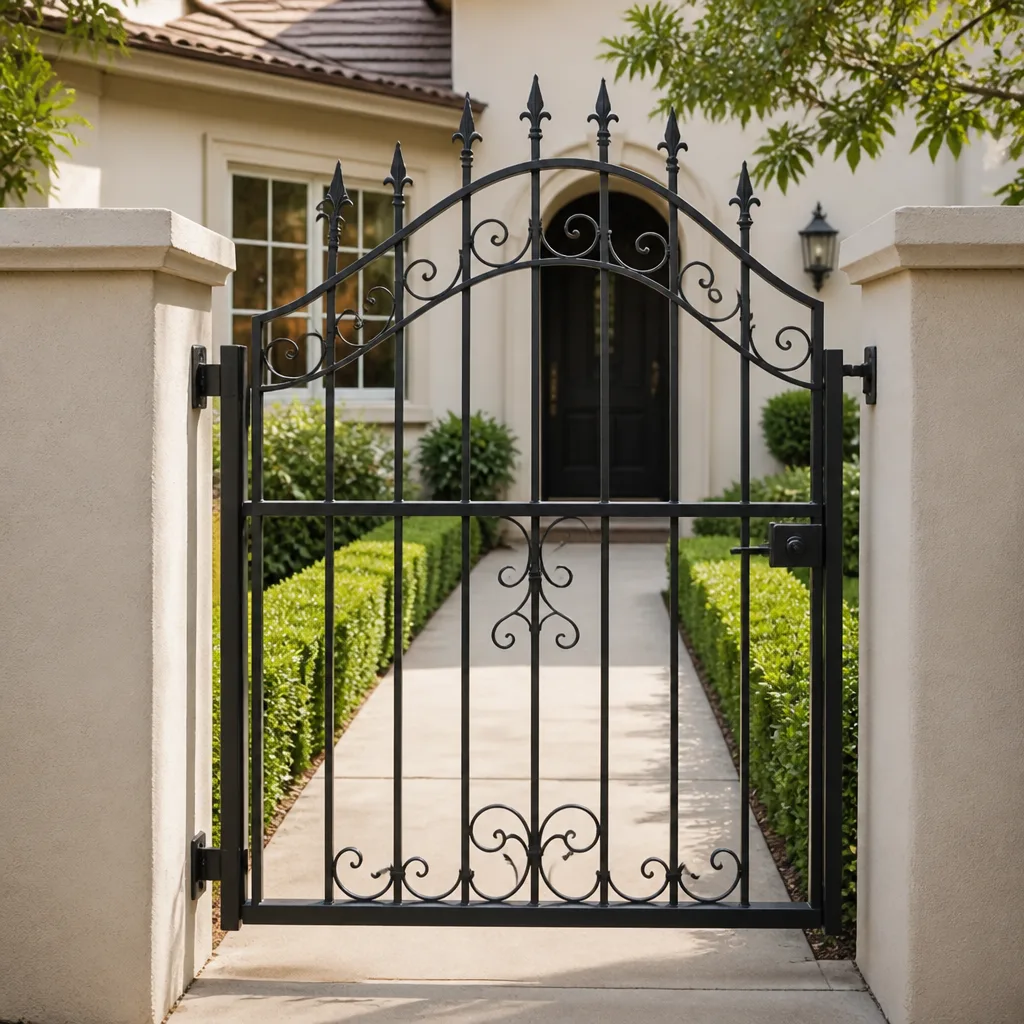 Wrought iron
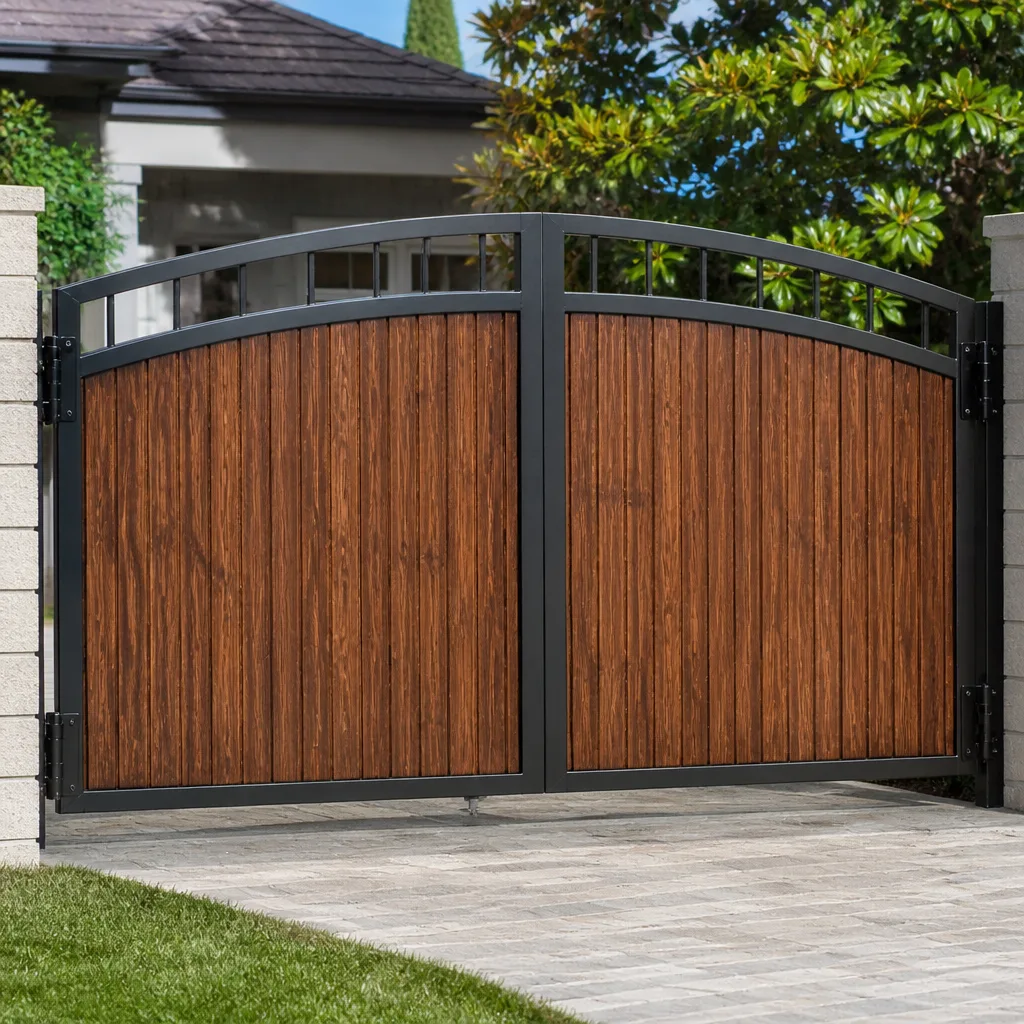 Wood & steel frame
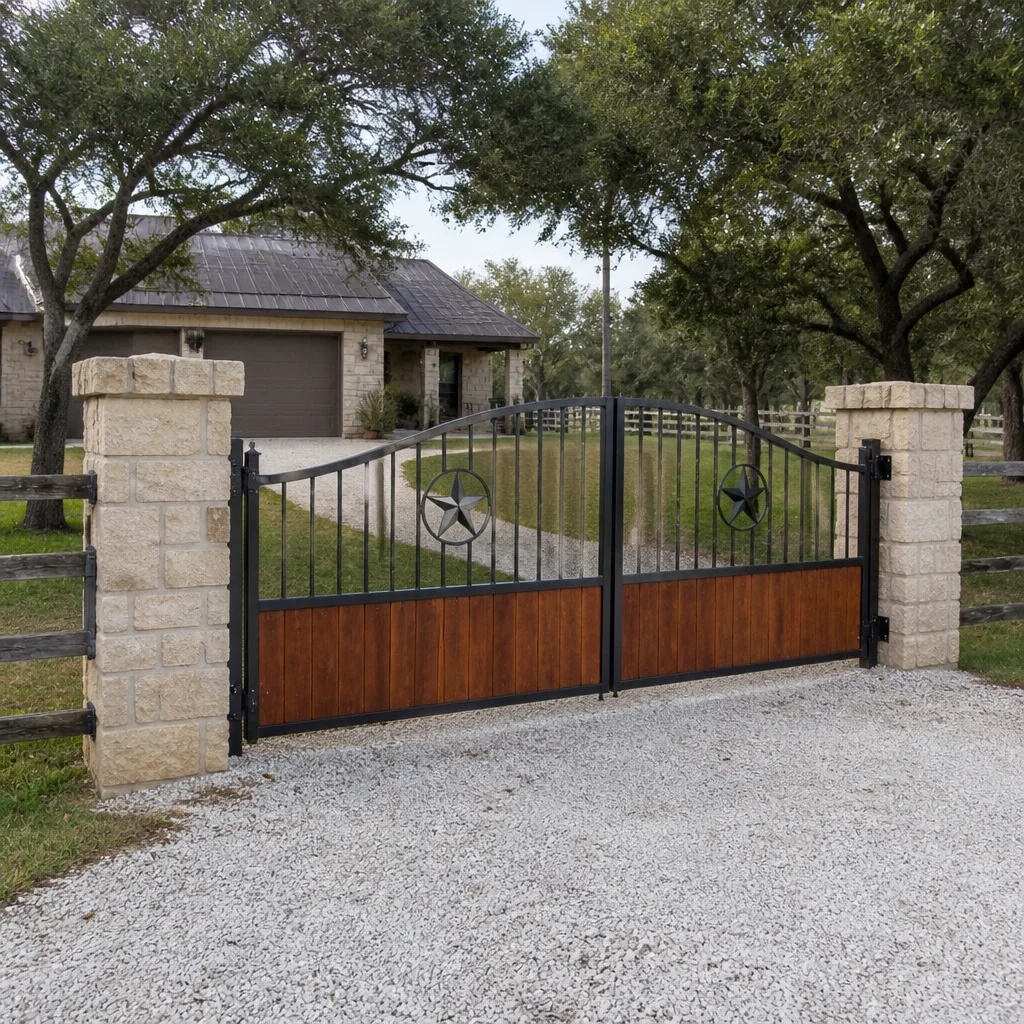 Farm & ranch
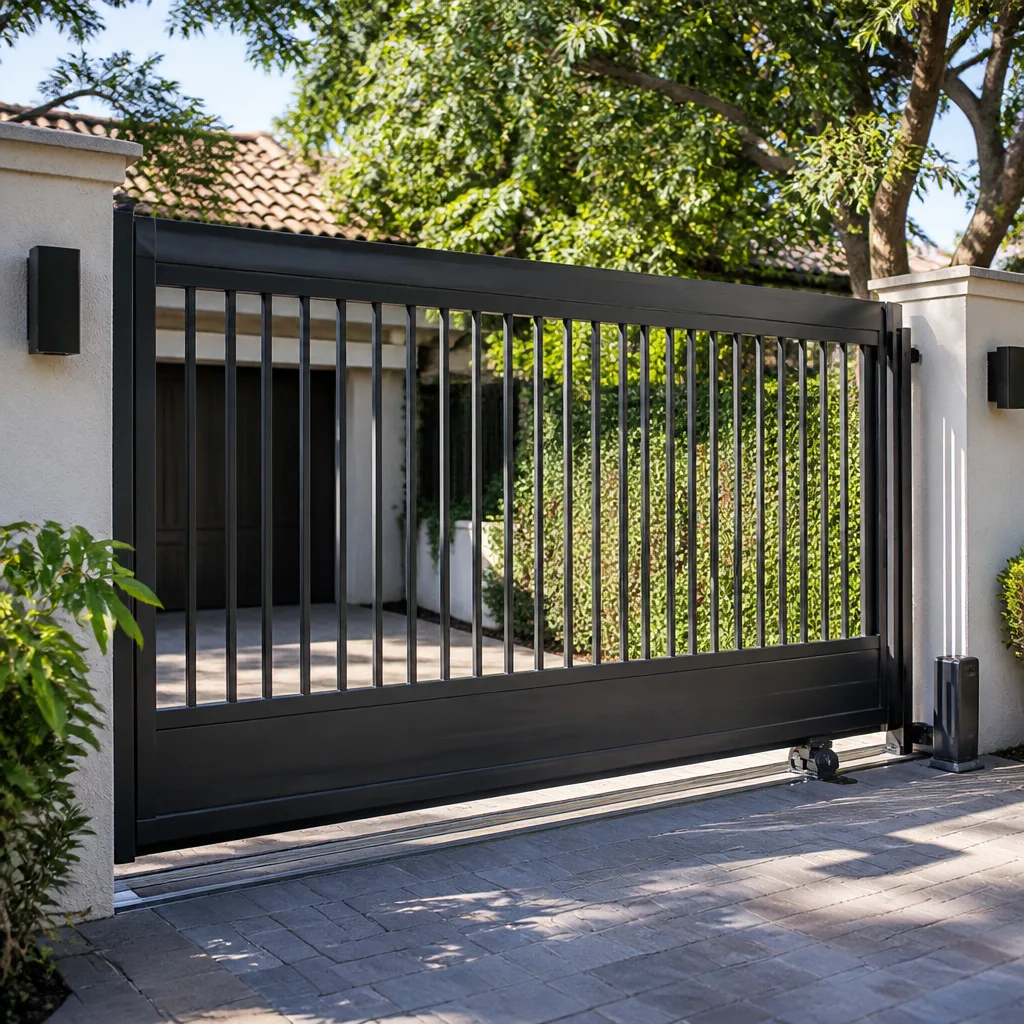 Sliding driveway gates
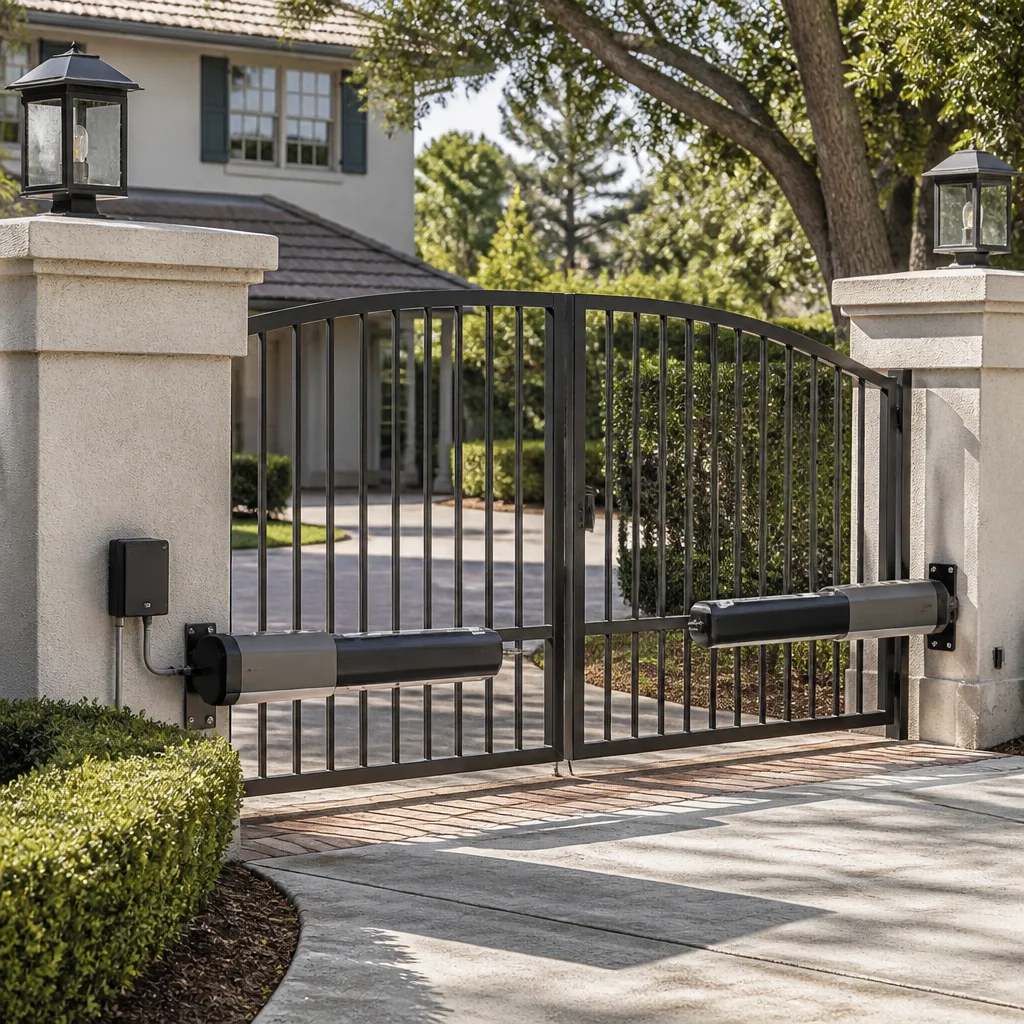 LiftMaster operators
Free on-site gate assessment - hinges, posts, and your LiftMaster or Nice gate operator checked before anything is quoted
The assessment is free and the quote is the invoice.
Get your free estimateThe Complete Gate Parts & Welding Guide for Boulder City Homeowners
Galvanic corrosion in Boulder City’s alkaline caliche soil can compromise a buried post weld in under four years. That timeline catches homeowners off guard, mostly because the gates they bought were spec’d for coastal salt air or northern freeze-thaw cycles, not for soil with a pH that sits high and stays there. Boulder City adds a UV index that punishes coatings and a humidity level that hides rust until it’s structural. This guide covers what actually fails here, in what order, why decorative welds and structural welds look identical until one lets go, and what paperwork you should walk away with after any parts or welding job.
Quick Answer
In Boulder City, gate parts fail fastest at three points: buried post welds attacked by alkaline soil, hinge and pivot hardware dried out by low humidity and blasted by UV, and coated fasteners that rust from the inside out. Structural welds should be documented with inspection photos and material specs, and you should expect a written price before work starts. Most replacement part orders in this market run one to three weeks depending on brand and whether the part is stocked regionally.
Styles & brands we work with
- Wrought iron
- Wood & steel frame
- Farm & ranch
- Sliding driveway gates
- LiftMaster operators
Table of Contents
- Why Boulder City Soil and Sun Change What Parts You Should Buy
- Which Gate Components Fail First Here, and What Failure Looks Like
- Decorative Welds vs. Structural Welds: Telling Them Apart
- What Documentation to Request After Parts or Welding Work
- Local Supply and Lead-Time Realities for Replacement Parts
- Hardware Selection: Fasteners, Hinges, and Coatings That Survive Here
- How to Plan a Repair Around Parts Availability
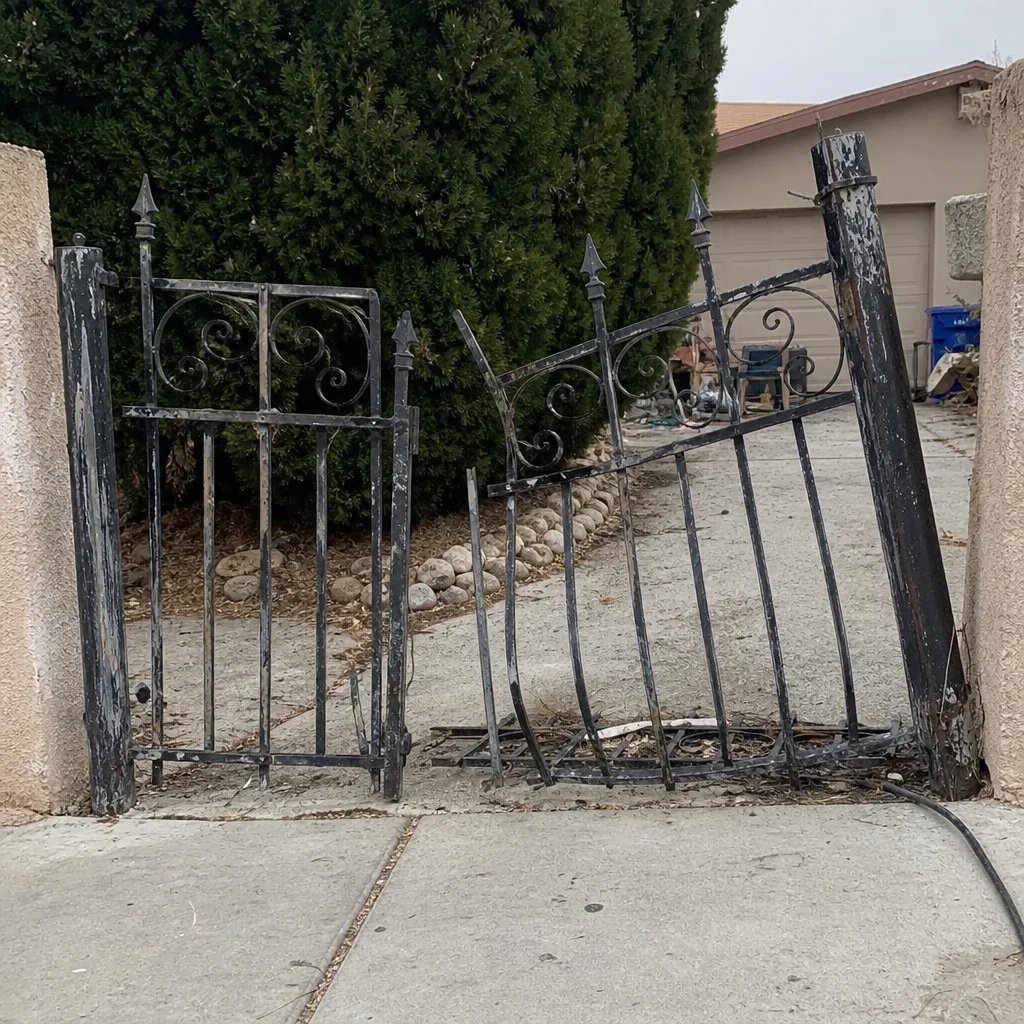 Before
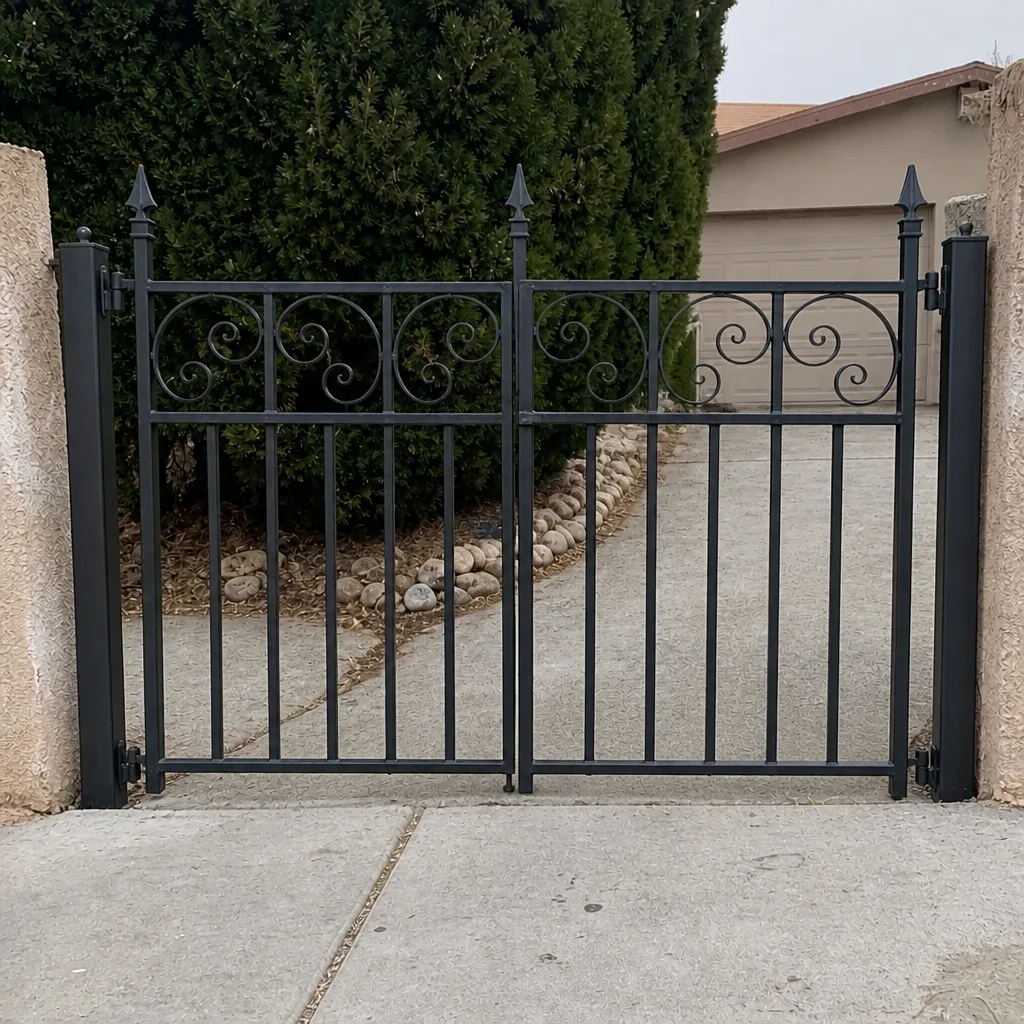 After
Why Boulder City Soil and Sun Change What Parts You Should Buy
Boulder City sits on caliche, a calcium-carbonate hardpan that forms when carbonate minerals cement soil particles together. It’s alkaline, it holds moisture against metal far longer than loose desert sand, and it’s dense enough that water pools on its surface rather than draining away. For a steel gate post set in concrete, that means the bottom six inches of the post live in a wet, high-pH environment. Galvanized coatings designed to shrug off coastal salt spray can still lose the fight against alkaline attack, because the chemistry is different. Salt drives chloride corrosion; caliche drives a reaction that eats zinc and leaves steel exposed.
The sun matters too. Boulder City’s UV index routinely climbs into the extreme range through summer, and that radiation degrades powder coats, painted finishes, and plastic hardware components faster than most national spec sheets assume. A powder-coated hinge pin that would last a decade in Seattle can get chalky and brittle here in three or four years.
What this means for parts selection:
- Buried posts benefit from a bituminous coating or a sleeve at the concrete line, not just factory galvanizing.
- Exposed hardware should be stainless (316-grade where budget allows), not zinc-plated.
- Plastic components on operators, from limit-switch cams to photo-eye housings, should be UV-stabilized; asking for the spec is fair, and we regularly check it for Boulder City customers replacing a failed gate motor & opener in Boulder City.
- Operator enclosures should be rated for direct sun exposure, since shade is a luxury most Boulder City driveways don’t offer.
None of this is exotic. It’s just that a generic parts list built for a national market doesn’t account for caliche, and Boulder City has a lot of it.
Which Gate Components Fail First Here, and What Failure Looks Like
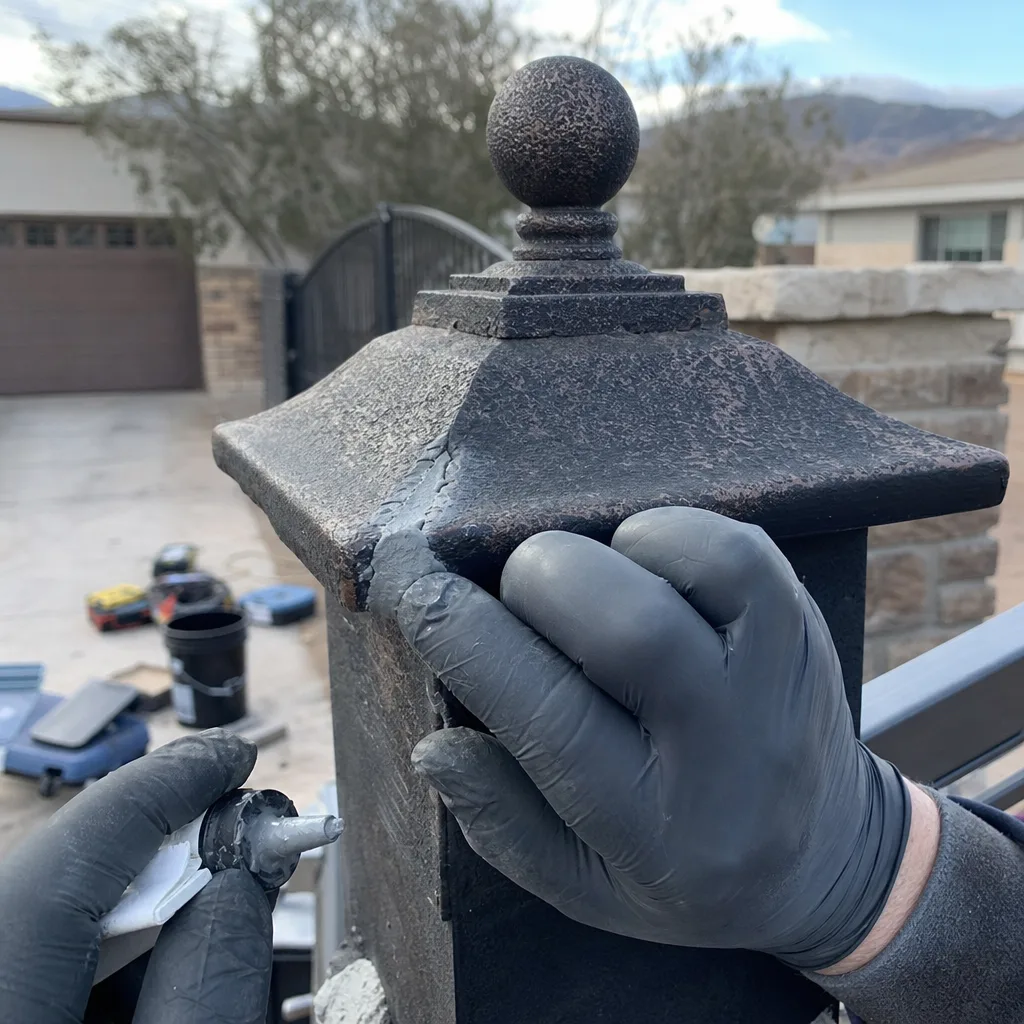
In our experience across Boulder City, failures follow a predictable order. Knowing the sequence helps you catch a $40 problem before it becomes a $900 one.
- Buried post welds (years 3-6). The visible signature is a hairline rust bloom at the concrete line, often with a small amount of soil pushed outward as corrosion product expands. A gate that was rock-solid starts showing a slight wobble at the hinge post before anything visible cracks.
- Hinge and pivot pins (years 4-7). These dry out, and the grease channels clog with grit blown in by spring winds. You’ll hear a grind or a squeal in the first six inches of swing, and you may see rust streaks running down the gate frame.
- Fasteners and bolts (years 5-8). Zinc-plated bolts fail from inside the head outward. A bolt can look fine and snap when a technician puts a wrench on it, which is one reason we photograph fastener conditions before touching them.
- Operator components (years 6-10). Limit switches drift, photo-eyes (the infrared safety beam that stops the gate if something crosses the path) misalign, and control boards suffer UV-cracked housings. LiftMaster and FAAC units are common in Boulder City, and both show this pattern.
- Finish coatings (years 3-5). Powder coat chalks, then fails at weld seams first, because weld scale and coating don’t bond as tightly as the surrounding steel.
The important detail is that all five failures look cosmetic early. The rust bloom, the faint grind, the chalky hinge: by the time a homeowner in Boulder City calls us, the repair has usually moved one category up in cost. When we assess a gate, we’re checking all five in sequence, and the gate repair in Boulder City visit always includes photos of each stage so the homeowner sees what we saw.
Decorative Welds vs. Structural Welds: Telling Them Apart
Here’s the uncomfortable truth: you can’t reliably tell a structural weld from a decorative one by looking at it from the outside. A decorative weld, sometimes called a “caulk weld” in the trade, is a cosmetic bead laid over a joint that carries no structural load, or worse, a bead ground smooth and painted to look continuous when the actual penetration is shallow. A structural weld has full penetration, appropriate filler material for the base metal, and a bead profile a trained eye reads for undercut, porosity, and spatter.
The failure mode is sudden. A decorative weld on a hinge plate can hold for years because the load is small, then crack all at once when a gate gets a good gust or somebody leans on it. That’s why “it held for six years” isn’t evidence the weld was right.
What a homeowner can actually check:
- Ask for the weld process and filler spec. For a typical mild-steel driveway gate, that’s usually GMAW (MIG) with an ER70S-6 filler. If a fabricator can’t tell you, that’s a signal.
- Look for grinding over the entire bead. Some cleanup is normal; wholesale grinding that erases the bead profile can hide undercut or poor fusion.
- Check for rust at the weld seam. A weld that rusts before the surrounding steel is a weld that trapped slag or porosity.
- Watch for paint over fresh rust. It happens more than it should.
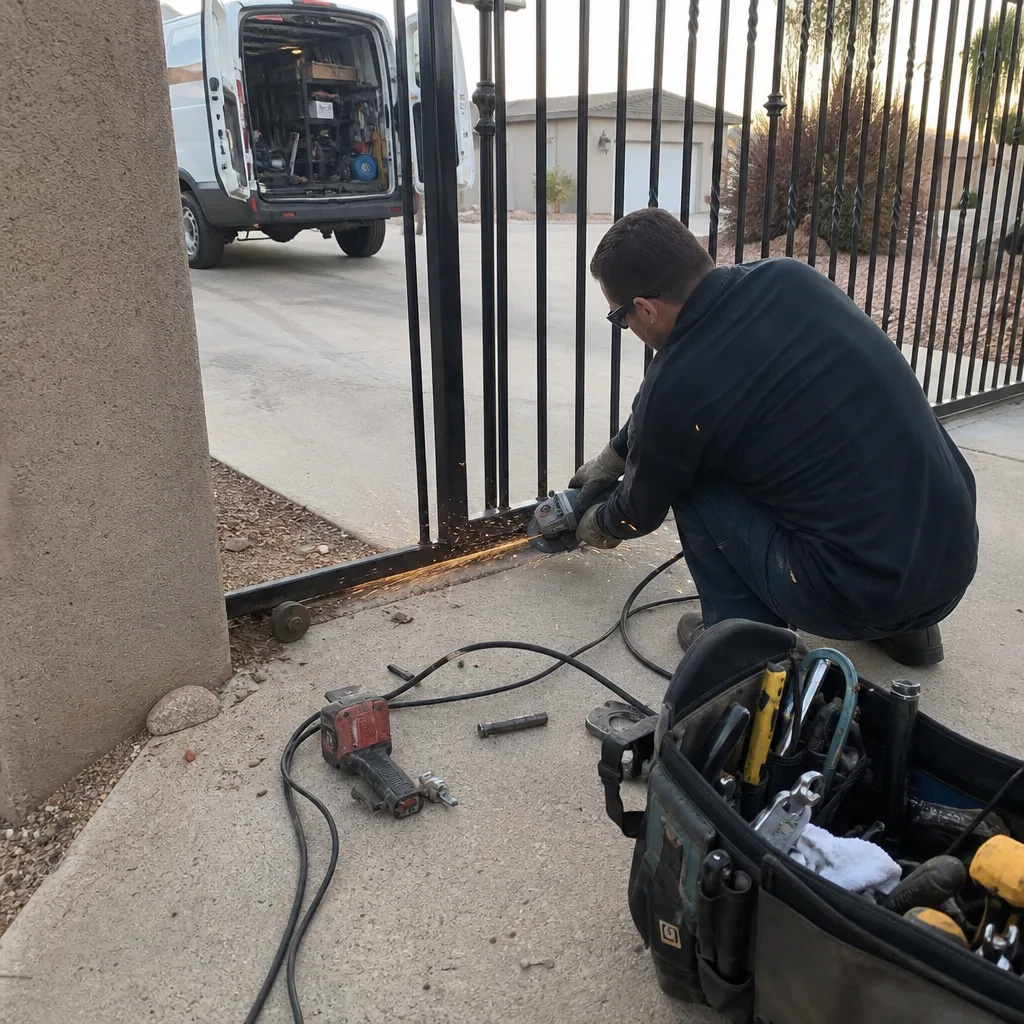
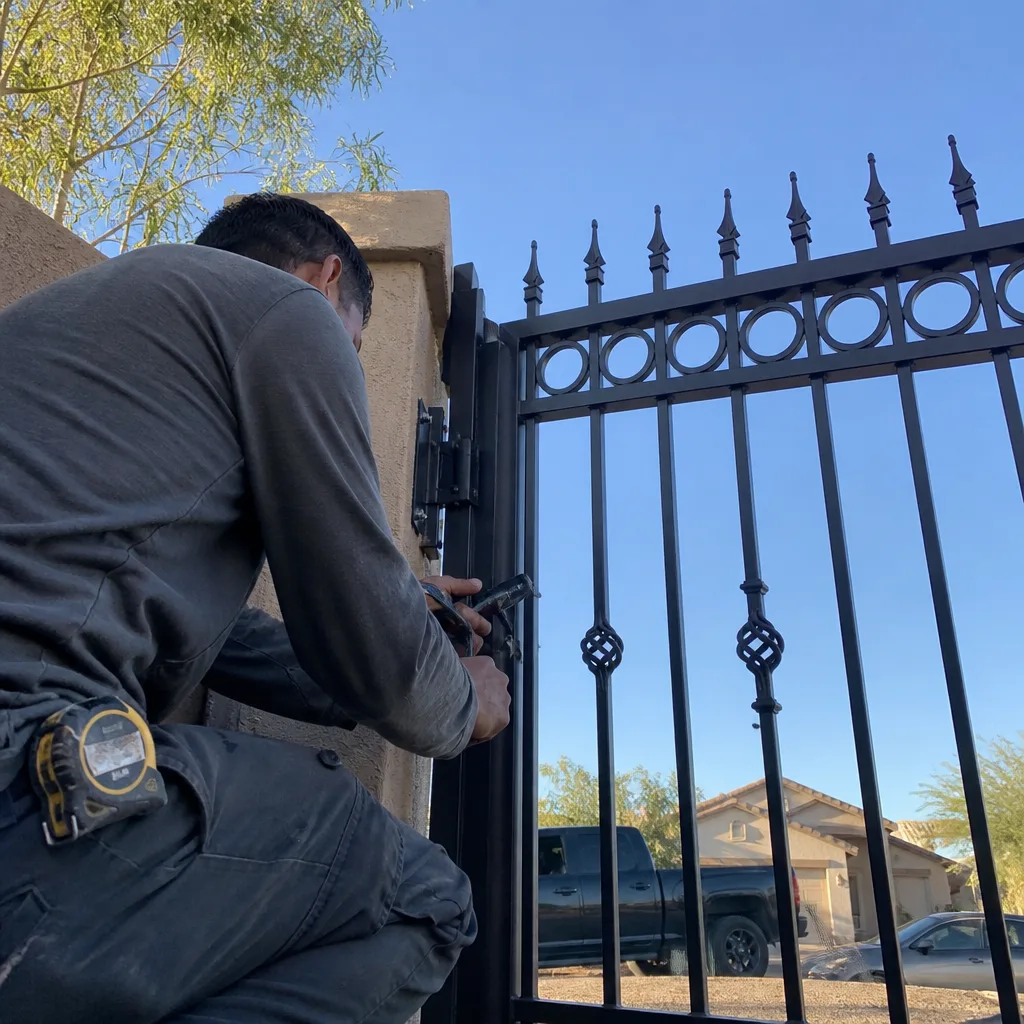
For repairs in Boulder City, we photograph the joint before and after, and the photo record goes to the homeowner and into the job file. Under the Haven Standard, every visit includes that documented photo record at no additional charge. If a weld is structural and carries hinge or post load, we recommend a professional assessment rather than an on-site “touch-up” weld, because a cosmetic fix over a failing structural joint doesn’t buy much time.
What Documentation to Request After Parts or Welding Work
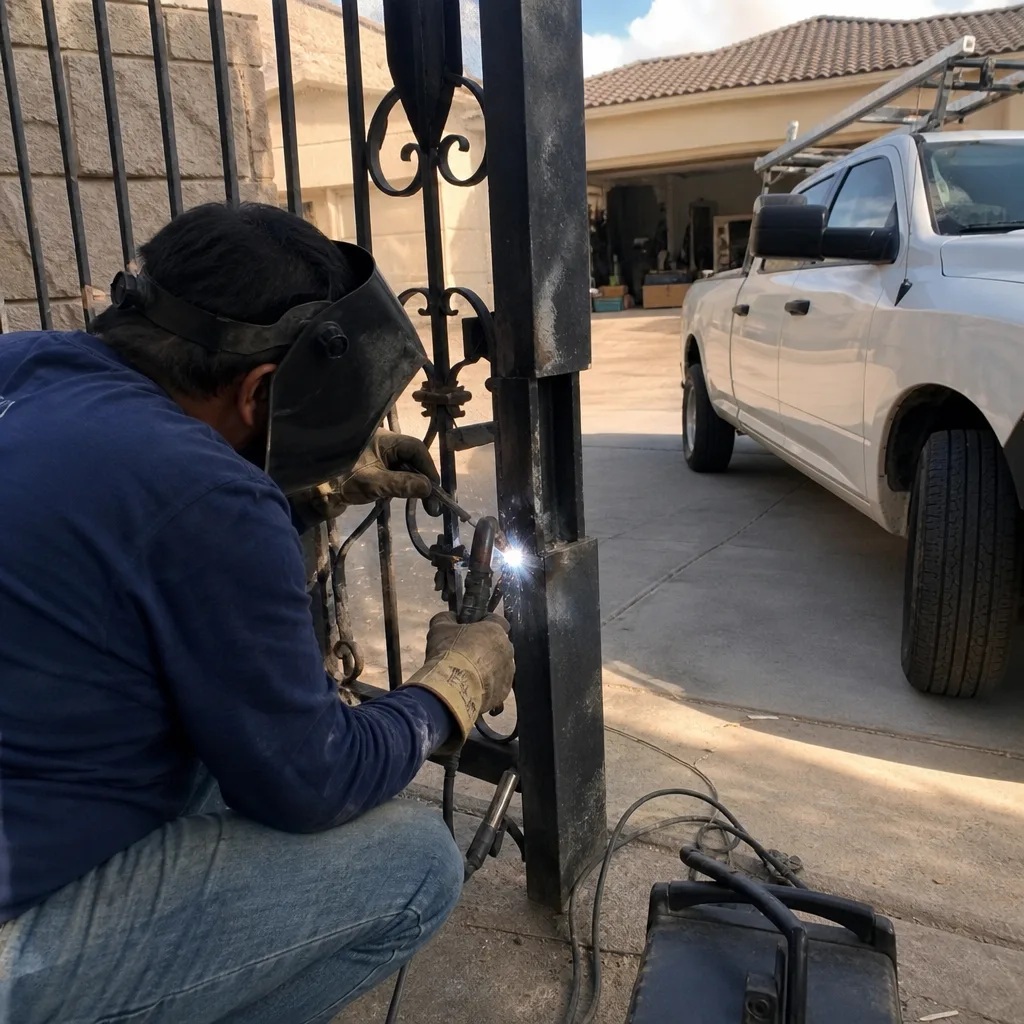
This is the section most guides skip, and it’s the one that saves Boulder City homeowners the most money over the life of a gate. Your gate is a machine with a service history, and if that history lives only in someone’s memory, the next technician starts from zero and you pay to rediscover a problem that was already solved once.
Ask for the following before the technician leaves:
- Material or heat numbers where applicable. For structural welding, the filler or base material should be traceable. On small repairs this may be more detail than you need, but for any post or hinge re-weld, ask.
- Welding inspection photos. Close-up images of the joint before cleanup and after, with a sense of scale (a tape measure or the technician’s glove in frame is enough).
- Hardware specs. Part numbers, grade (e.g., Grade 8 or 316 stainless), and torque values for any fastener replaced.
- Operator settings. If a motor or control board was touched, request the limit-switch positions, the obstruction-sensing force setting, and a wiring photo. This is the part we care most about, because a limit switch set 12 degrees past travel is invisible to the next technician unless it’s documented.
- A written record of what was found, what was adjusted, and what was replaced. This is Clause 4 of the Haven Standard, and on any Vance Gate Repair visit it’s included.
If a company can’t produce any of this, that’s useful information. It’s also why we offer a free second opinion on any written estimate from another company. Bring the paperwork to a gate installation in Boulder City or repair review, and we’ll read it at no cost.
Local Supply and Lead-Time Realities for Replacement Parts
Boulder City is not a major distribution hub, and that affects repair planning more than most homeowners expect. Common items like standard hinge pins, fasteners, and photo-eyes are usually available through regional suppliers within a few business days. Less common items move slower.
- Stocked regionally (1-4 business days): standard stainless hinge hardware, common photo-eye kits, battery backups, and off-the-shelf remote controls.
- Ordered from distributor (1-3 weeks): brand-specific control boards for LiftMaster and FAAC units, motor arms, and operator-specific limit-switch assemblies.
- Custom or fabricated (2-6 weeks): gate frames, custom hinge plates, and any part that has to be welded or machined to fit an existing gate.
The practical implication for Boulder City homeowners is that a repair should be planned around the part, not the other way around. If a gate is still swinging but grinding, ordering the hinge pin now and booking the repair when it arrives is usually cheaper than waiting for a full failure and paying for a same-week fabrication. We keep the written price in front of the customer throughout, because the scope doesn’t change just because the lead time does. When the part is on hand, the actual repair is often a one-visit job.
For a gate that’s down entirely, a temporary brace or manual release may be part of the plan while the part is in transit. That’s a conversation worth having early, before a gate is stuck open and the driveway is unsafe.
Hardware Selection: Fasteners, Hinges, and Coatings That Survive Here
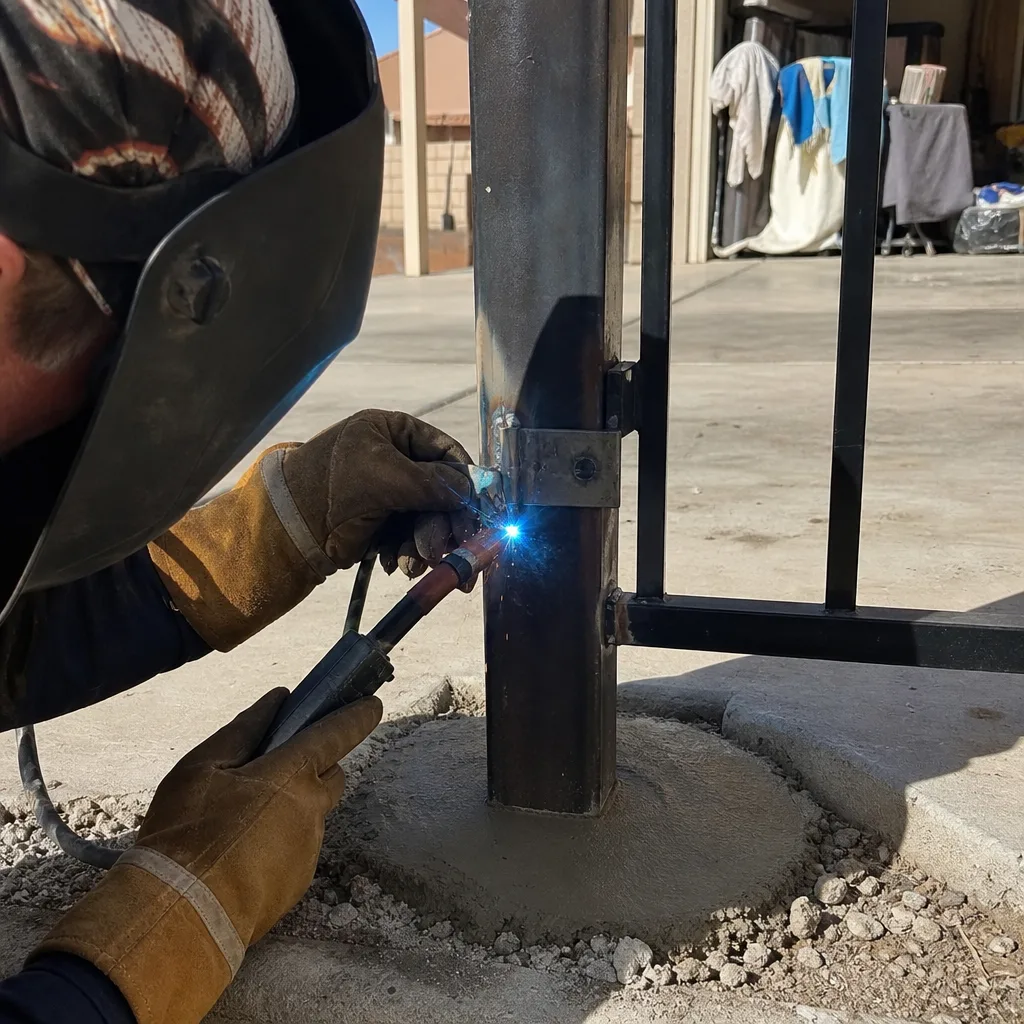
A quick reference for what to actually buy in Boulder City, based on what we see holding up and what we see failing:
- Fasteners: 316 stainless for exposed hardware. Grade 8 zinc-plated is acceptable indoors; outdoors, expect it to fail from the head outward.
- Hinge pins: stainless with a sealed bearing where the design allows, and grease that stays put in dry heat.
- Coatings: powder coat is fine on frames if it’s applied over properly cleaned steel; weld seams need attention before coating, not after.
- Post protection: a bituminous sleeve or coating at the concrete line, plus drainage so water doesn’t pool on caliche.
- Operator enclosures: UV-stabilized housings; a Mighty Mule or Ghost Controls unit in full sun will show its age faster than one under a shade structure, and asking for the UV spec is fair.
None of this is exotic hardware. It’s the right hardware for alkaline soil and relentless sun, which is the standard for a Boulder City driveway gate.
How to Plan a Repair Around Parts Availability
Here’s the sequence we walk homeowners through, and it works whether you’re doing the work yourself or hiring it out:
- Identify the failure with evidence. Photograph the rust bloom, the grind point, the wobbly hinge.
- Order the part before scheduling the repair. Get a written confirmation of the part number and expected arrival date.
- Decide on temporary stabilization. Manual release for an operator, a brace for a failed hinge.
- Book the repair for after the part arrives. Confirm the written price before the visit.
- Collect the documentation. Photos, part numbers, any operator settings changed.
Rushing step two is the most common way a cheap repair becomes an expensive one. The Vance Gate Repair Boulder City home page lays out the rest of the service scope if you want to see how this fits into a broader gate maintenance plan.
Common Mistakes to Avoid
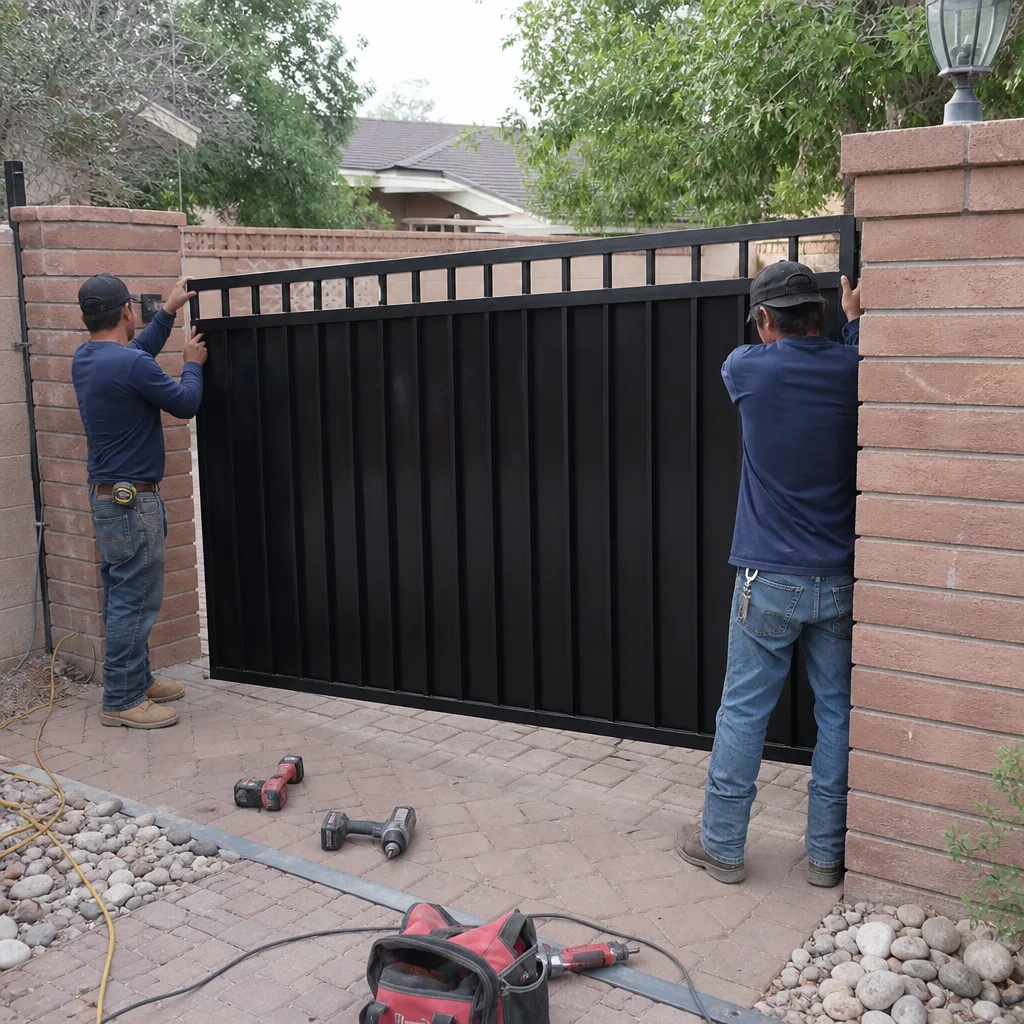
- Assuming coastal-spec parts work here. Salt-rated hardware is not caliche-rated hardware, and Boulder City soil chemistry is different enough that a “marine grade” fastener can still fail at the concrete line within a few years.
- Painting over rust instead of removing it. In low humidity, rust looks dry and stable, but paint traps moisture against the metal and accelerates pitting underneath.
- Judging a weld by how smooth it looks. A ground-and-painted bead tells you almost nothing about penetration. Ask for the process and filler spec.
- Ignoring a small hinge grind. In Boulder City, a grind that appears in spring usually means dried grease and grit, and it’s a $40 fix at that stage.
- Ordering the part after booking the repair. This is the biggest cause of a second visit charge.
- Skipping documentation. If the last technician didn’t leave a photo record, the next repair starts at square one, and you pay for the rediscovery.
- Assuming all powder coat is equal. A cheap coating that chalks and cracks in two summers is not protecting the steel underneath.
See the difference
BeforeAfter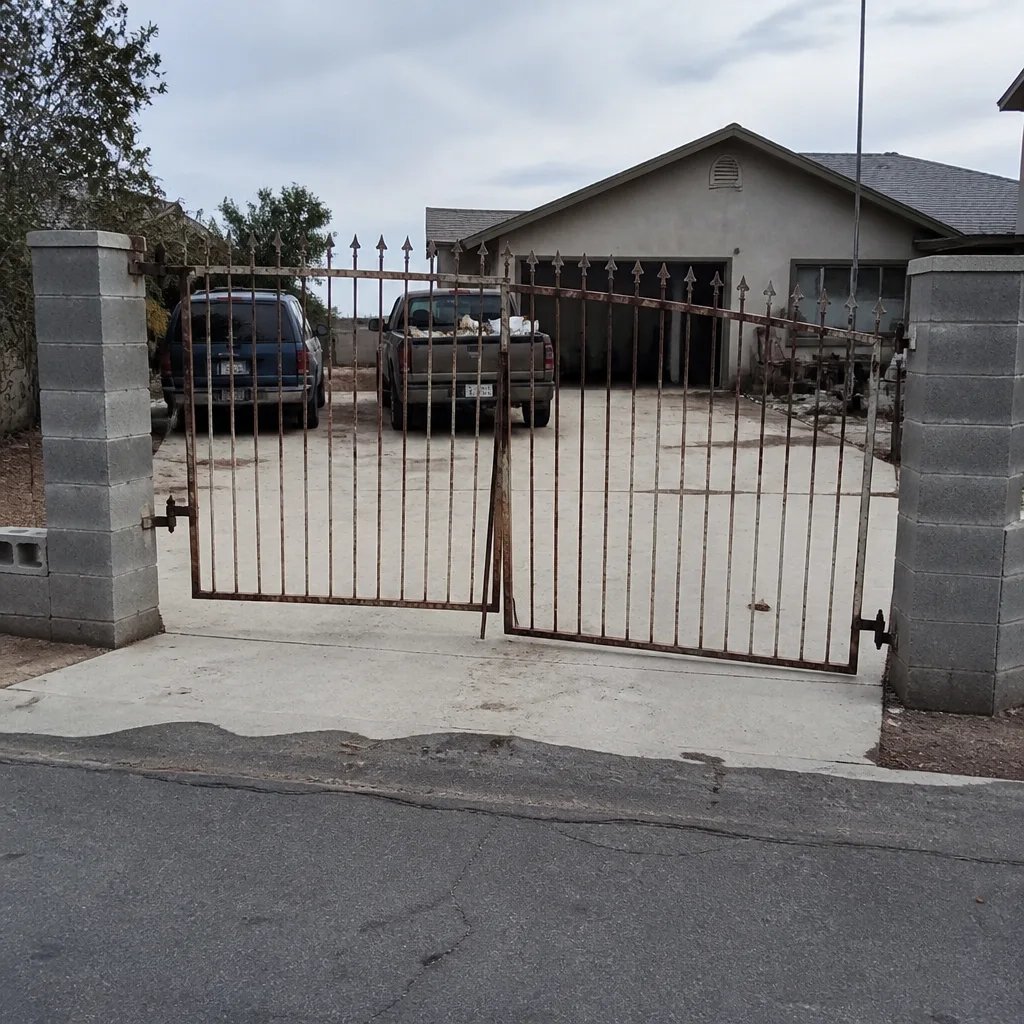 Before
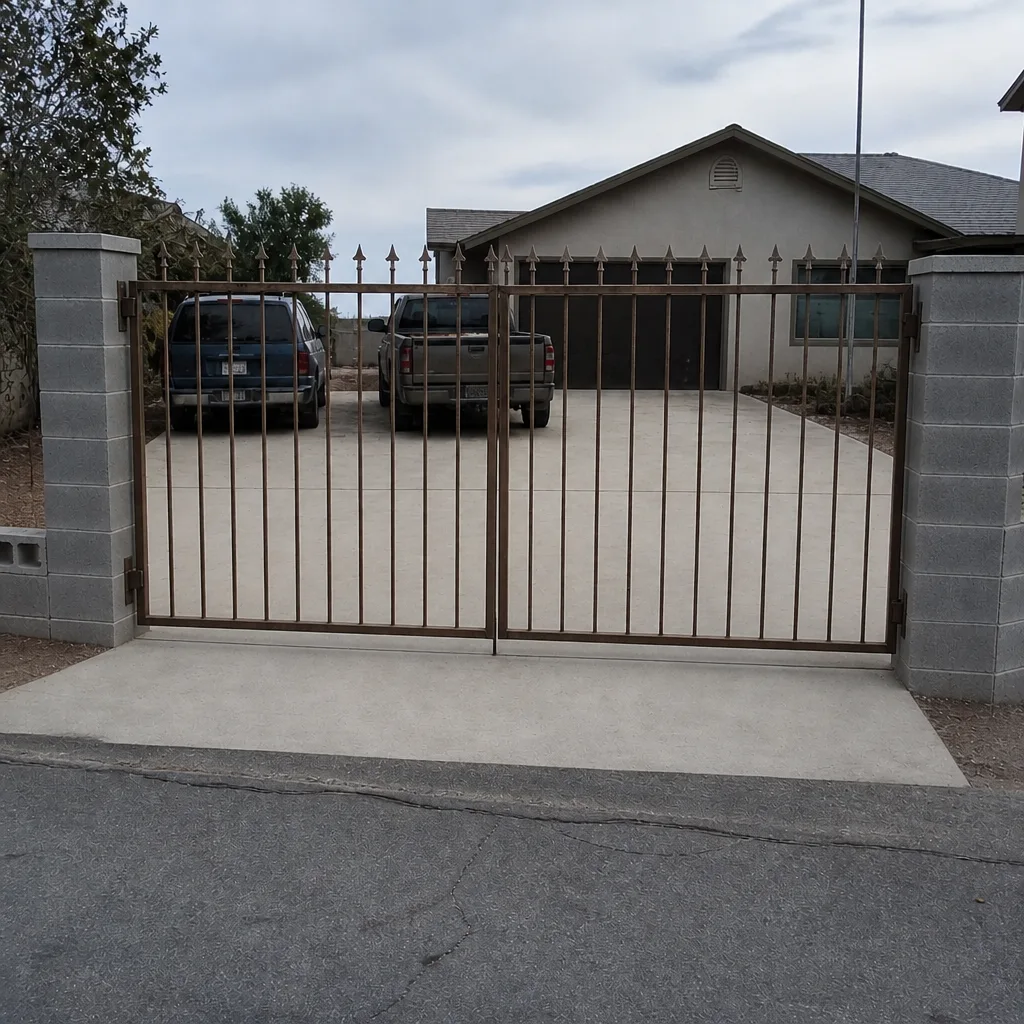 After
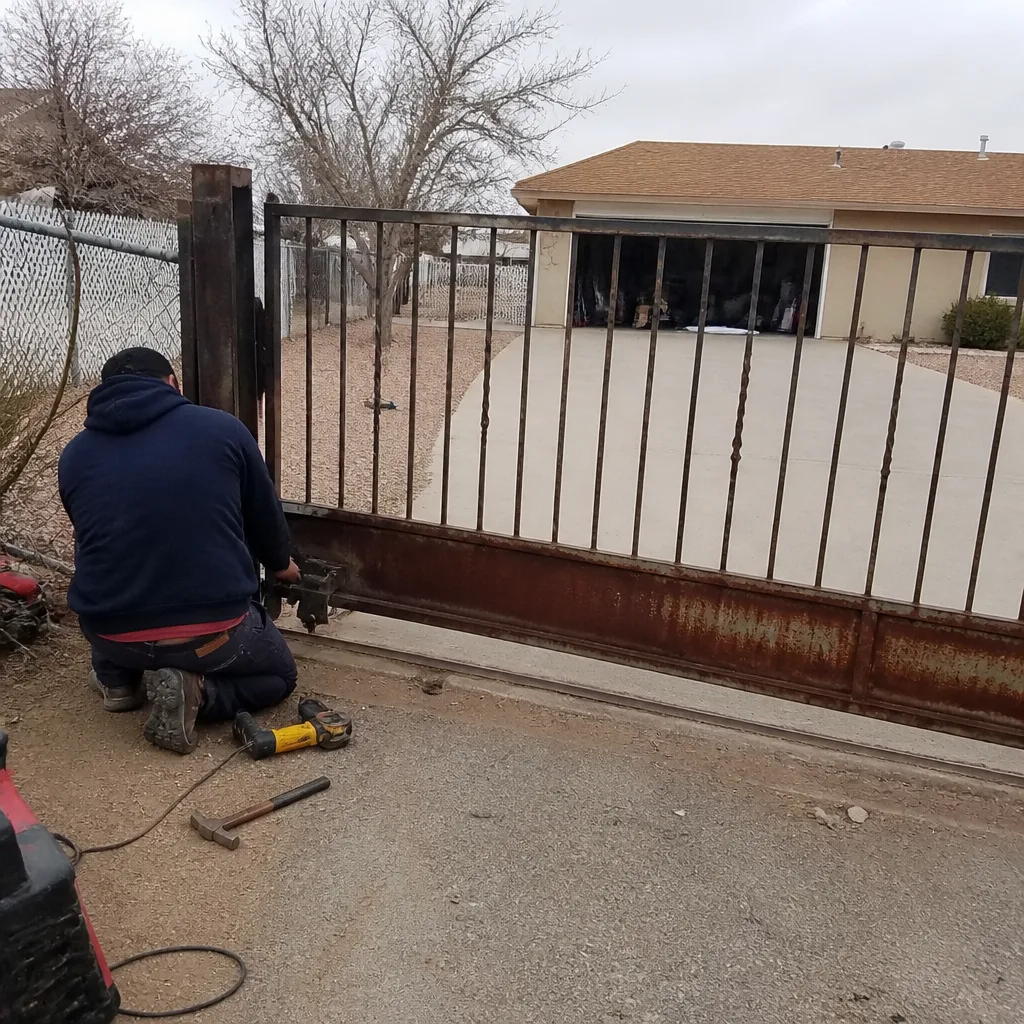 Before
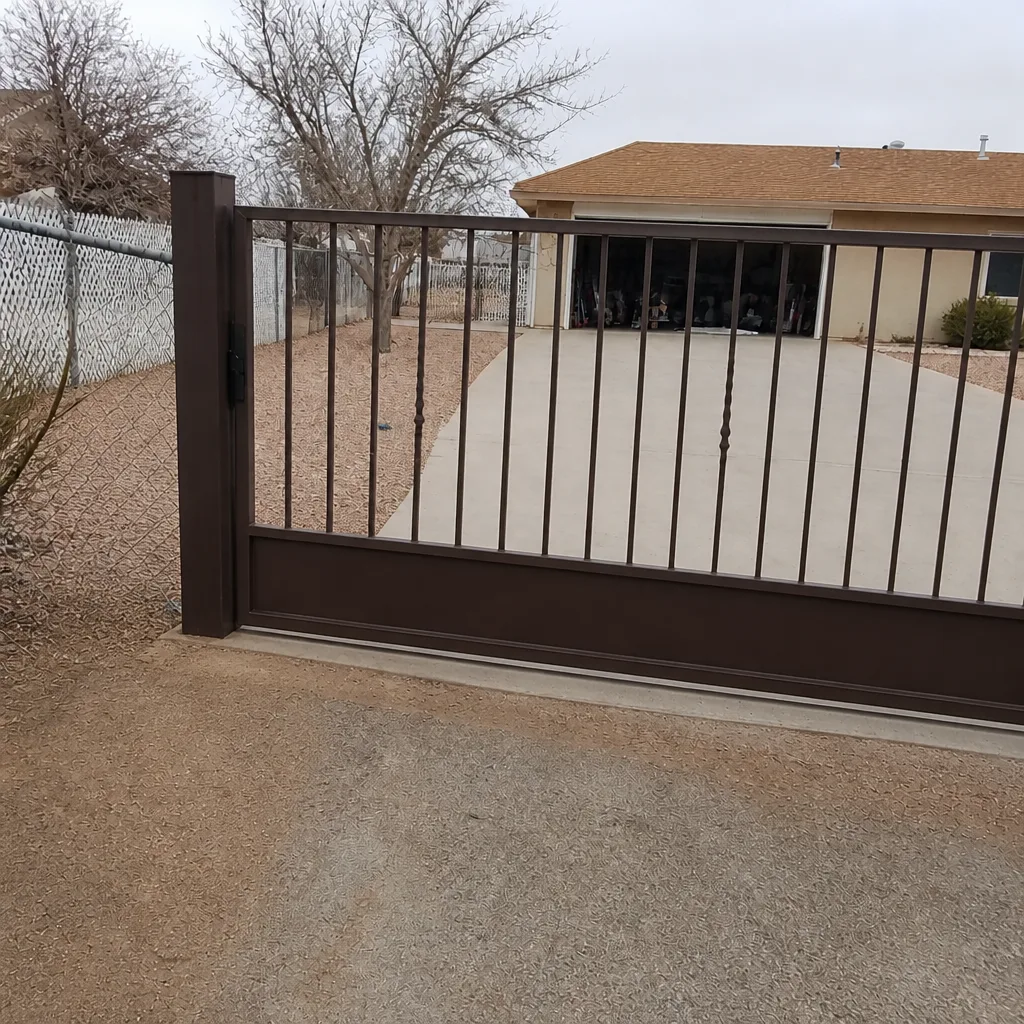 After
When to Call a Professional
Call a professional when the failure is structural: a post that wobbles at the concrete line, a weld that’s cracked on a hinge plate, or a gate that’s dropped enough to drag on the ground. Call when the operator needs a limit switch reset and you don’t have documentation of the current positions. Call when you’re not sure whether a weld is structural or decorative, because this is exactly the judgment call that’s expensive to get wrong. For genuinely dangerous work – anything involving high-tension springs or cables, gas lines, electrical panel work, or height work – stay out of it and bring in a trained professional. Gate repair in Boulder City often looks simple and isn’t. Vance Gate Repair Boulder City offers free estimates in Boulder City: call (844) 320-7587 for a written price before any work starts.
Frequently Asked Questions
Expect buried post welds to show stress in three to six years, hinge and pivot hardware in four to seven, and fasteners in five to eight. UV-exposed plastic components on operators tend to fail sooner, sometimes inside five years. Stainless hardware, bituminous post protection, and UV-stabilized operator housings stretch those timelines.
Not reliably from the outside. A decorative weld can be ground and painted to look identical to a structural one, and both can hold for years before one fails. Ask for the welding process and filler spec, request inspection photos, and watch for rust at the weld seam. Call (844) 320-7587 for a free second opinion on any weld assessment.
Ask for material or heat numbers where applicable, welding inspection photos, hardware part numbers and grades, and any operator settings that changed. You should also get a written record of what was found, adjusted, and replaced. On any Vance Gate Repair job, that documentation is included under the Haven Standard, and it’s the single best protection against paying twice for the same repair.
Common hardware usually arrives in one to four business days from regional suppliers. Brand-specific control boards and motor arms, including LiftMaster and FAAC units, typically run one to three weeks. Custom fabrication takes longer, often two to six weeks. Ordering before you schedule the repair is what keeps the visit to a single trip.
Yes, for any exposed hardware. Zinc-plated bolts fail from the inside out in this climate, and a bolt that looks fine can snap when a wrench touches it. Grade 8 zinc-plated is fine where it’s shielded from weather; 316 stainless is the right call for anything that sees sun and soil.
It can be. Salt-air specs target chloride corrosion, but Boulder City’s alkaline caliche soil and extreme UV create a different failure profile, and a coastal-spec coating can still lose to high-pH soil. If your gate was bought for a coastal market, have the buried posts and finish coatings checked early. Call (844) 320-7587 for a free estimate.
The Bottom Line
Boulder City’s alkaline caliche, extreme UV, and low humidity produce a corrosion and fatigue profile that generic gate parts guides ignore. Buried post welds and hinge hardware fail first, decorative welds can look identical to structural ones until they don’t, and parts lead times mean you should order before you schedule. Ask for weld specs, part numbers, operator settings, and photos on every job, and never judge a weld by how smooth it looks. Vance Gate Repair Boulder City writes the price before work starts and documents every visit. Call (844) 320-7587 for a free estimate.
Written by the team at Vance Gate Repair Boulder City.