
Last updated November 18, 2026
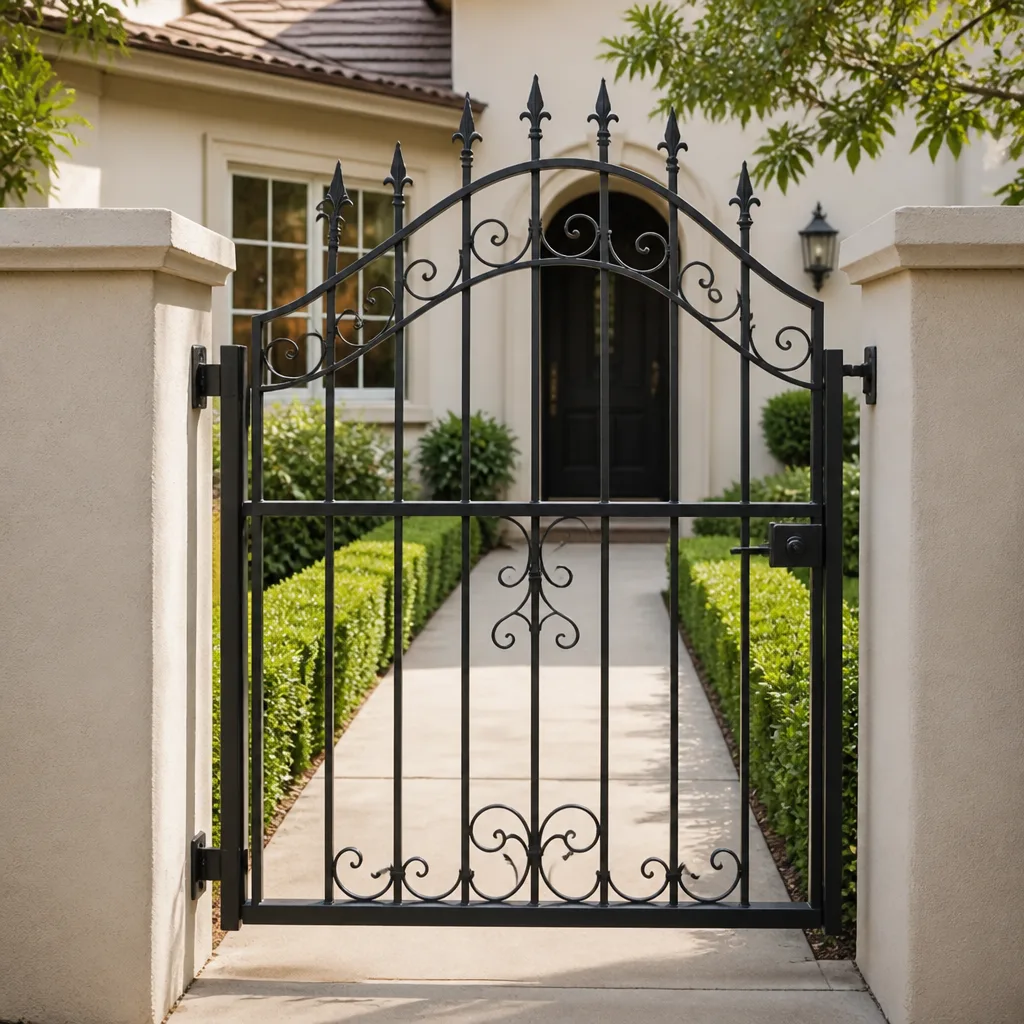 Wrought iron
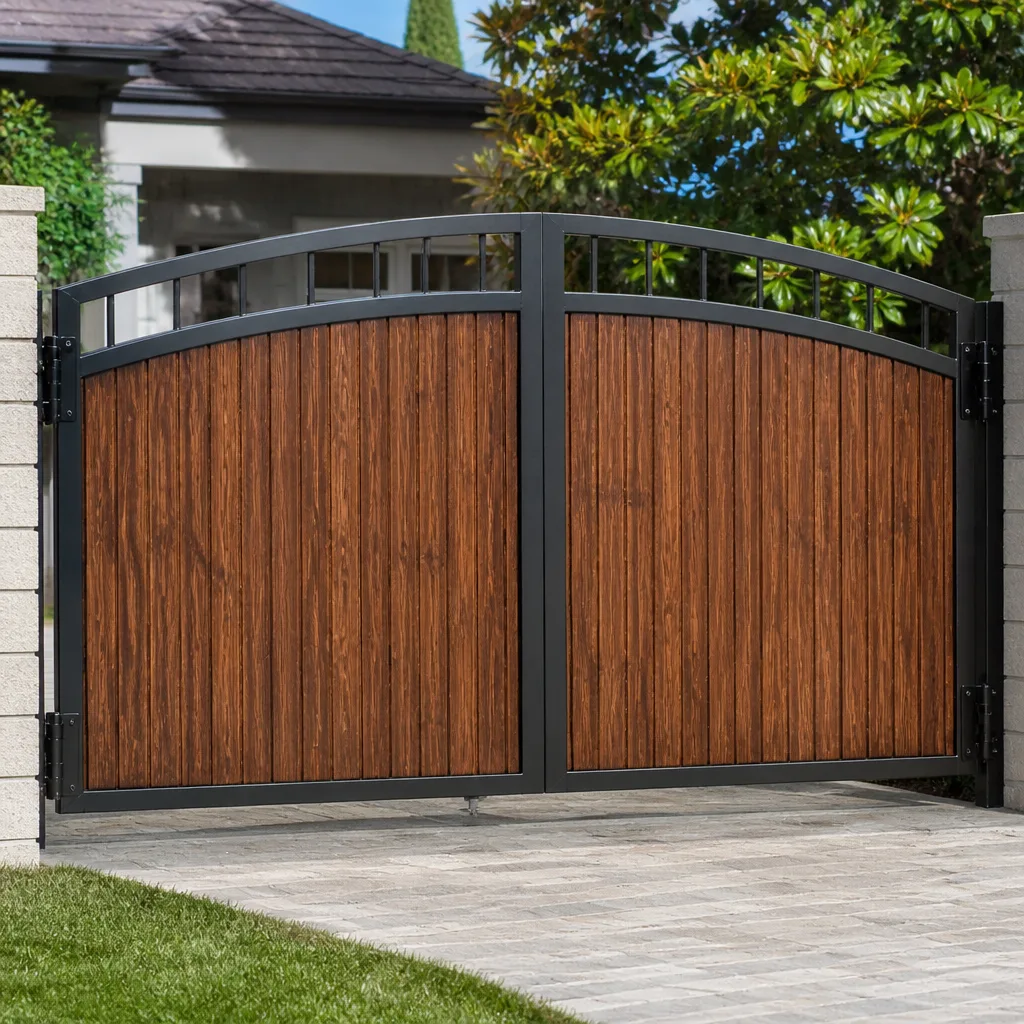 Wood & steel frame
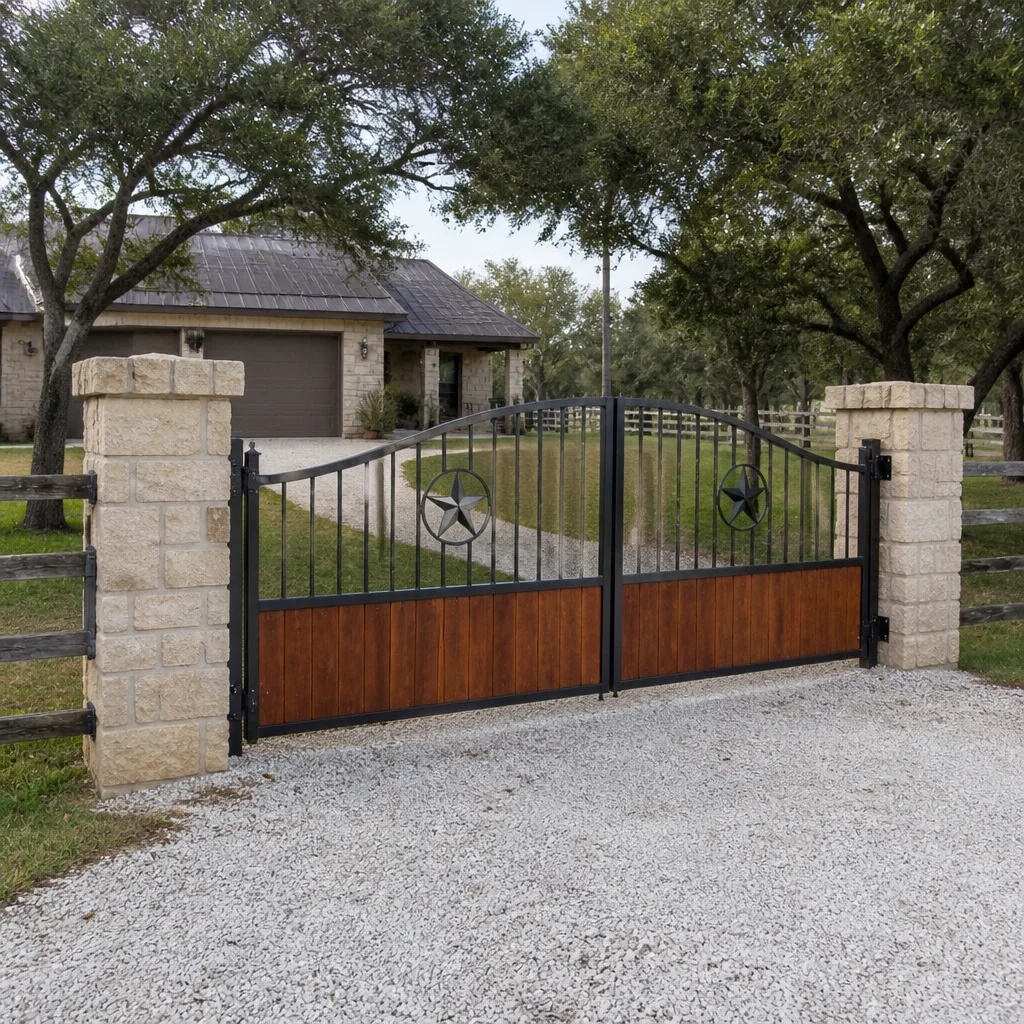 Farm & ranch
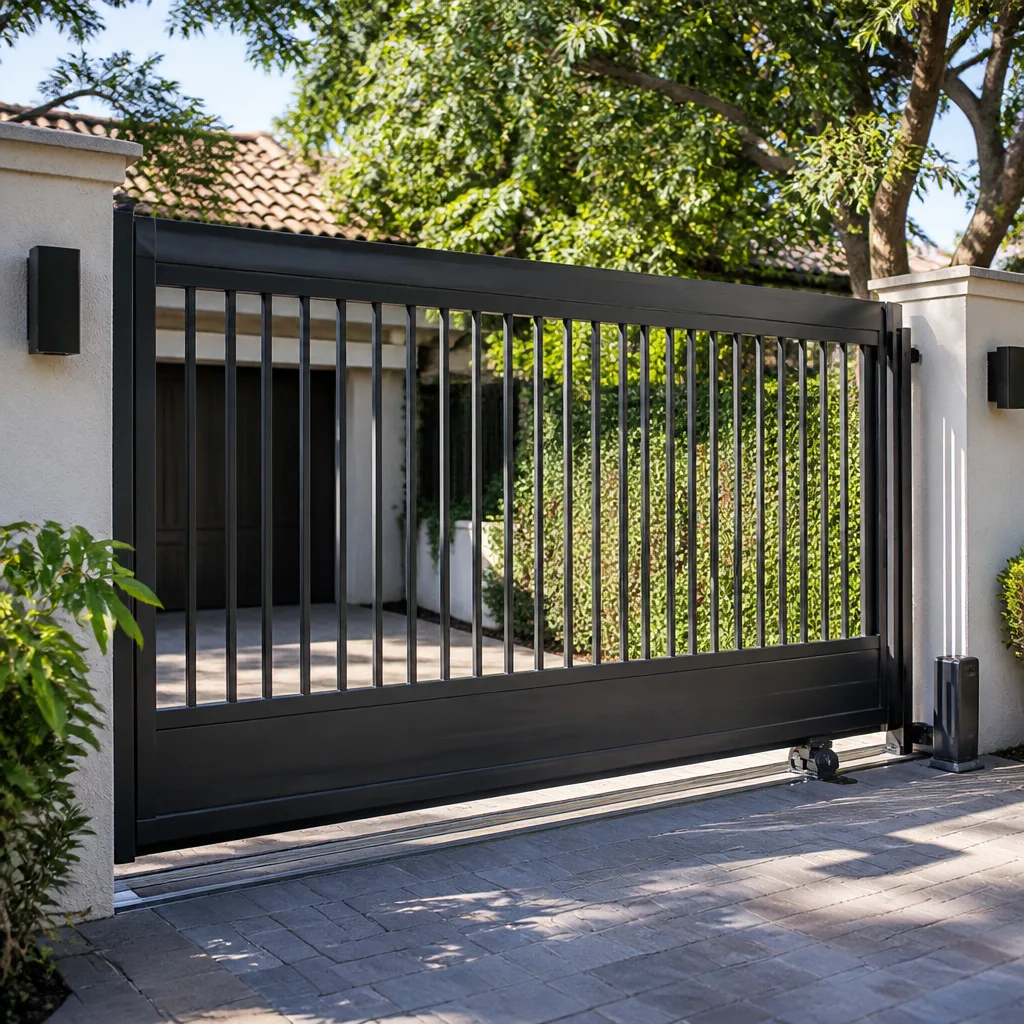 Sliding driveway gates
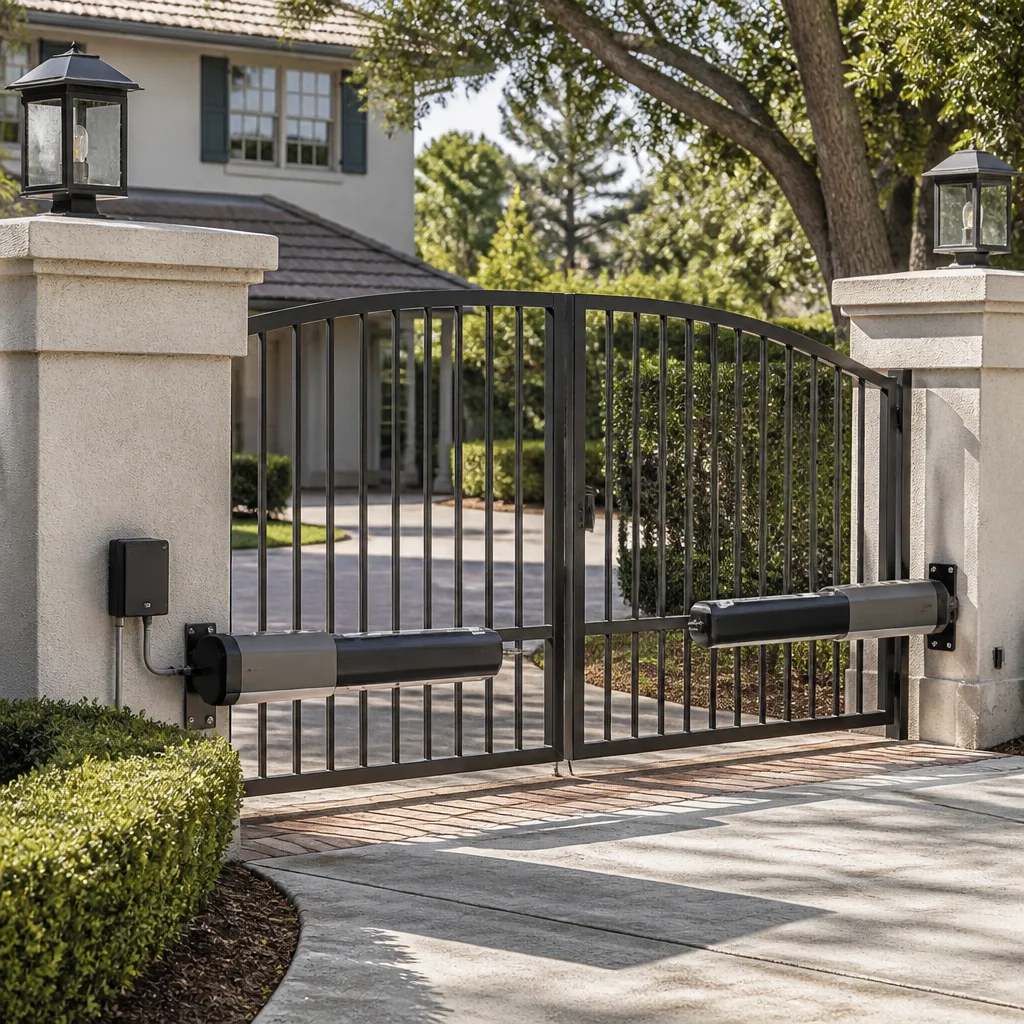 LiftMaster operators
Free on-site gate assessment - hinges, posts, and your LiftMaster or Nice gate operator checked before anything is quoted
The assessment is free and the quote is the invoice.
Get your free estimateThe Complete Gate Installation Guide for Boulder City Homeowners
Boulder City sits in one of the highest sustained wind corridors in southern Nevada. The pressure differential between Lake Mead and the surrounding basin pushes air through the Historic District and across the hillside lots above Nevada Way with a consistency that a gate operator sized for a standard Henderson residential driveway simply wasn’t built to absorb. In our experience, an undersized operator on an exposed Boulder City lot is mechanically overloaded within two years – not from a manufacturing defect, but from a sizing decision nobody made at the drawing stage. This guide covers what has to be decided before the first post is set: permits, wind-load math, easements, conduit, and the documentation package that determines whether a future technician can service the gate or has to start from scratch.
Quick Answer
Gate installation in Boulder City requires a building permit when the project involves a new structural post, masonry, or a gate over a certain height with an operator, and an electrical permit for the low-voltage run to the operator; wind-load calculation specific to the lake corridor should drive the torque rating of the operator you choose. Before any post is set, the plat map needs to be read for easements and a 1-inch conduit should be run for future access-control upgrades. A complete documentation package – wiring diagrams, photos, and limit-switch readings – should be captured on day one.
Styles & brands we work with
- Wrought iron
- Wood & steel frame
- Farm & ranch
- Sliding driveway gates
- LiftMaster operators
Table of Contents
- What Permits Does a Gate Installation Need in Boulder City?
- How Wind Load Along the Lake Corridor Changes Operator Selection
- Reading a Boulder City Plat Before You Place a Post
- Conduit Sizing: The $80 Decision That Saves $1,200 Later
- The Post-Installation Documentation Package
- Choosing Between DoorKing, LiftMaster, and Other Automation Brands
- What a Realistic Installation Timeline Looks Like
- What Gate Installation Costs in Boulder City
- Common Mistakes to Avoid
- When to Call a Professional
- Frequently Asked Questions
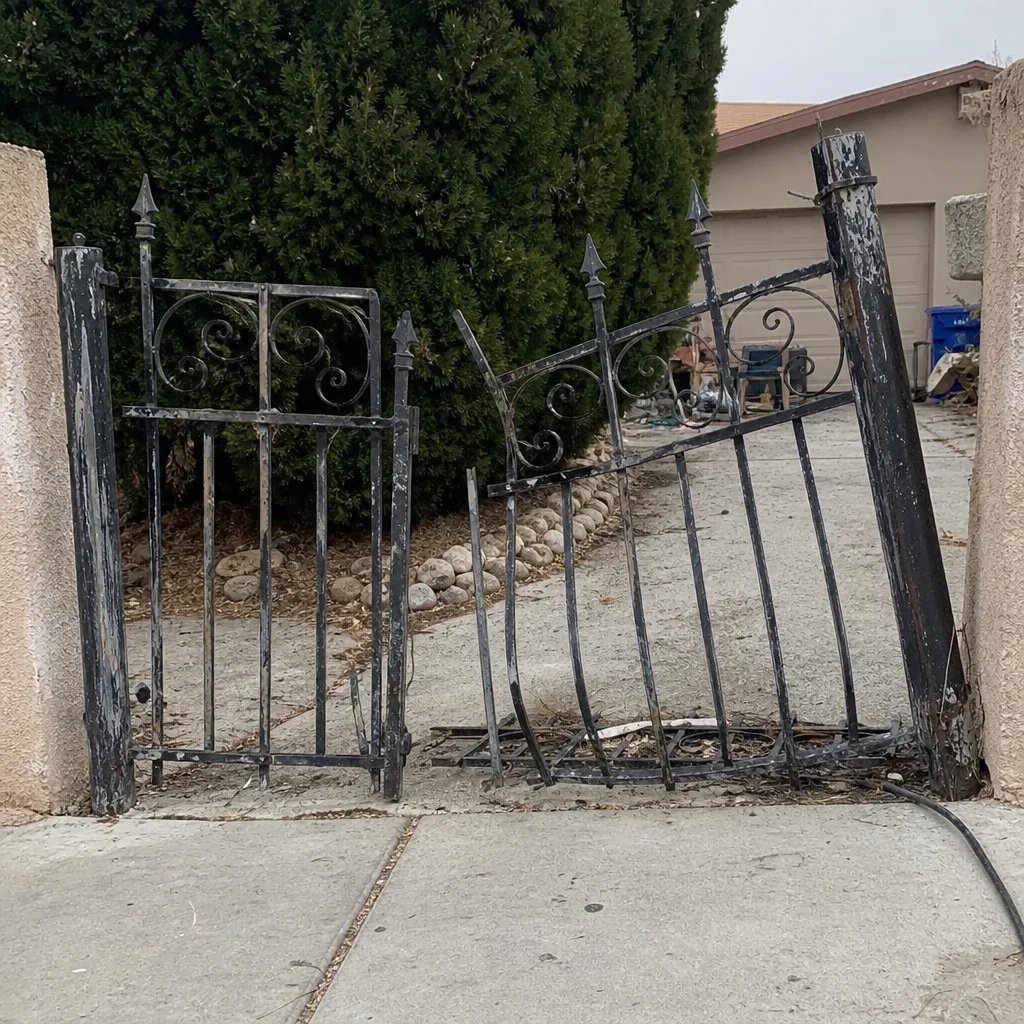 Before
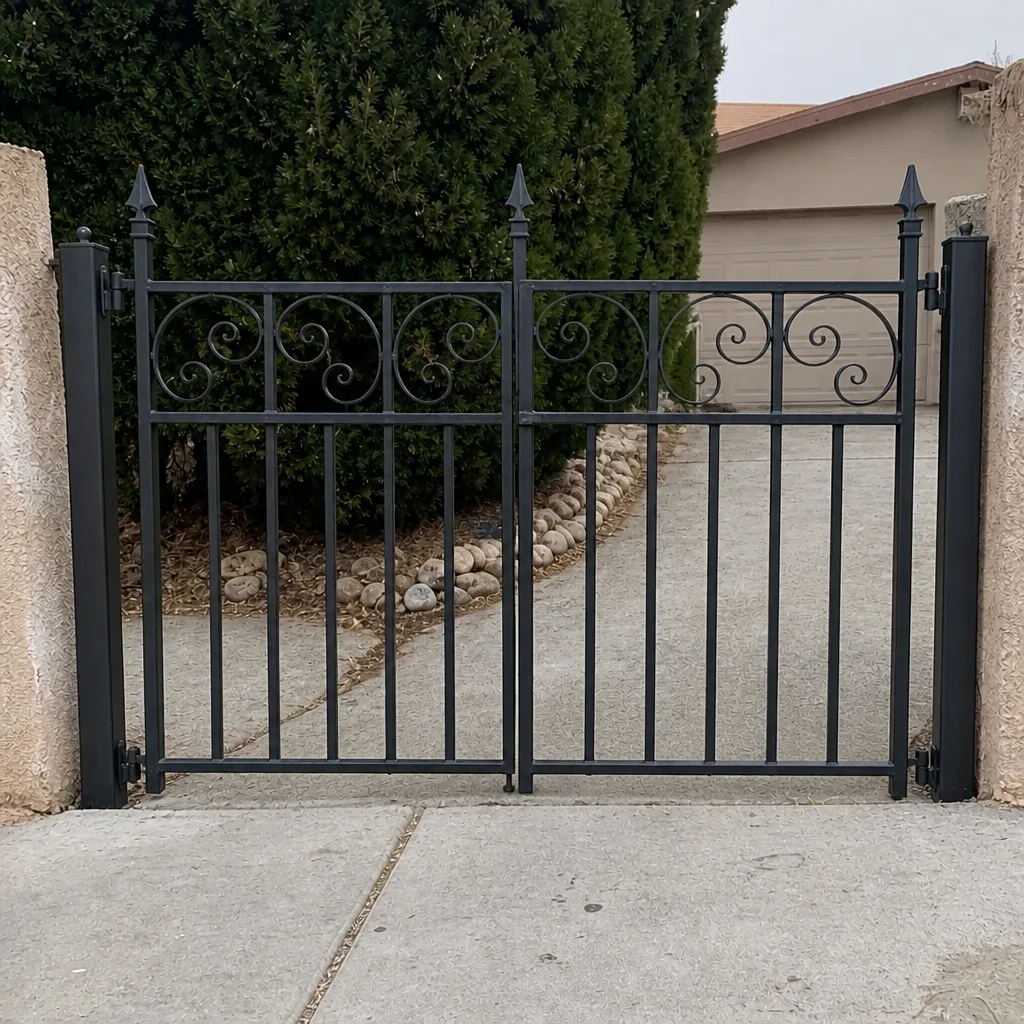 After
What Permits Does a Gate Installation Need in Boulder City?
Most Boulder City gate installations that involve a new structural post, a masonry pier, or a swing gate over roughly six feet in height with an operator require a building permit from the city’s building department. A separate electrical permit covers the 120-volt circuit run to the operator’s transformer, even when the operator itself runs on low voltage. Homeowners routinely assume the electrician’s permit covers the gate; it doesn’t, and the inspection that catches the omission happens at final walkthrough.
The permit applies whether you’re installing an automatic driveway gate on a hillside lot off Buchanan Boulevard or a pedestrian gate on a Historic District property. What changes is the plan review depth: Historic District projects sometimes trigger an additional design review because the visibility of the gate from the street falls under the district’s exterior alteration standards.
Two permit-related steps get missed more than any other:
- Pull the electrical permit before the trench is backfilled. Inspectors need to see the conduit depth and the wire gauge before the dirt goes back in. If the trench is filled first, the run gets re-excavated.
- Request the inspection sequence in writing when you pull the permit. Boulder City inspectors handle rough electrical and final structural as separate visits. Knowing the order avoids a gate that sits finished but un-passed for two extra weeks.
One plumbing-of-the-process note: the building department’s counter can tell you which forms apply once you describe the project. Bring the plat map and the operator spec sheet with you. Both come up in the first five minutes.
How Wind Load Along the Lake Corridor Changes Operator Selection
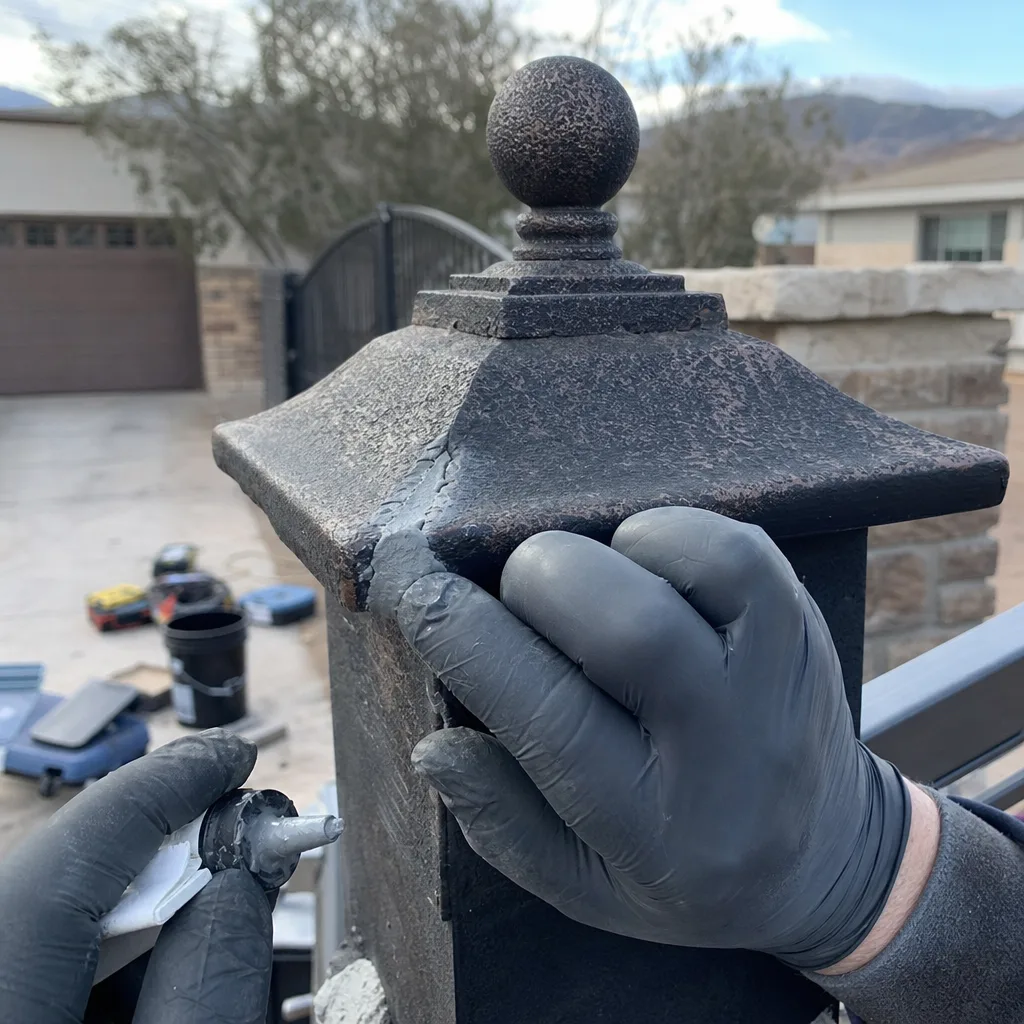
The wind that funnels between Lake Mead and the Eldorado Valley is not a seasonal nuisance. It’s a sustained mechanical load on every gate surface in Boulder City, and it’s the single most common reason an operator fails early on an exposed lot. A gate acts as a sail. The larger the gate leaf and the more open the surrounding terrain, the more torque the operator has to generate to start the gate moving from a standstill – and the more torque it has to resist on the way back to close.
Wind-load calculation for a residential gate involves three inputs: gate leaf area in square feet, the design wind pressure for the site’s exposure category, and the operator’s rated starting torque. The operators that work well in sheltered Henderson subdivisions are often marginal on a Boulder City hillside lot. We’ve seen DoorKing and LiftMaster operators that should have delivered a decade of service fail inside eighteen months because the leaf area was never measured against the site’s actual wind exposure.
What this means in practice:
- Measure the gate leaf, not just the opening. A 14-foot opening with an ornamental iron gate leaf can present 30 square feet of sail area; a solid wood gate of the same width presents more than double that.
- Ask for the operator’s torque rating in the spec sheet, in inch-pounds or newton-meters. If a quote doesn’t state it, the sizing hasn’t been calculated.
- Consider a heavier-duty operator even on a pedestrian gate if the gate faces open terrain. The cost difference at installation is a few hundred dollars; the cost difference at year two is a full motor replacement.
The Elite and Mighty Mule lines both offer residential operators rated for higher wind exposure, and either can be the right answer depending on the gate the site will carry. The point isn’t the brand. The point is that the sizing calculation gets done before the operator is ordered.
Reading a Boulder City Plat Before You Place a Post
The most expensive gate installation mistake in Boulder City isn’t a mechanical failure. It’s a post set inside a public utility easement, discovered during a property survey two years later when the utility needs to dig. The gate comes out, the post comes out, and the homeowner pays twice for the same installation.
Before any post is placed, the plat map for the parcel needs to be read for easements that cross the driveway. The plat is a recorded document, available from the county assessor’s office or through the city’s public works department. It shows utility easements, drainage easements, and any recorded setbacks – and it shows them in a form that no amount of looking at the property from the street can replace.
The steps we recommend before a post goes in the ground:
- Request the recorded plat for the parcel from the county assessor or the city’s public works office.
- Identify every easement that touches the driveway corridor and mark the boundary on the ground with a temporary stake.
- Set the post at least 12 inches outside the easement line unless the utility grants a written encroachment agreement.
- Photograph the marked easement boundary before excavation so the placement decision is documented.
The city’s public works office can also tell you whether the parcel has any recorded drainage easements that aren’t visible on the plat – a common issue on the sloped lots above the Historic District where runoff channels cross private property. This is the kind of check that takes an hour and saves a five-figure retrofit.
Conduit Sizing: The $80 Decision That Saves $1,200 Later
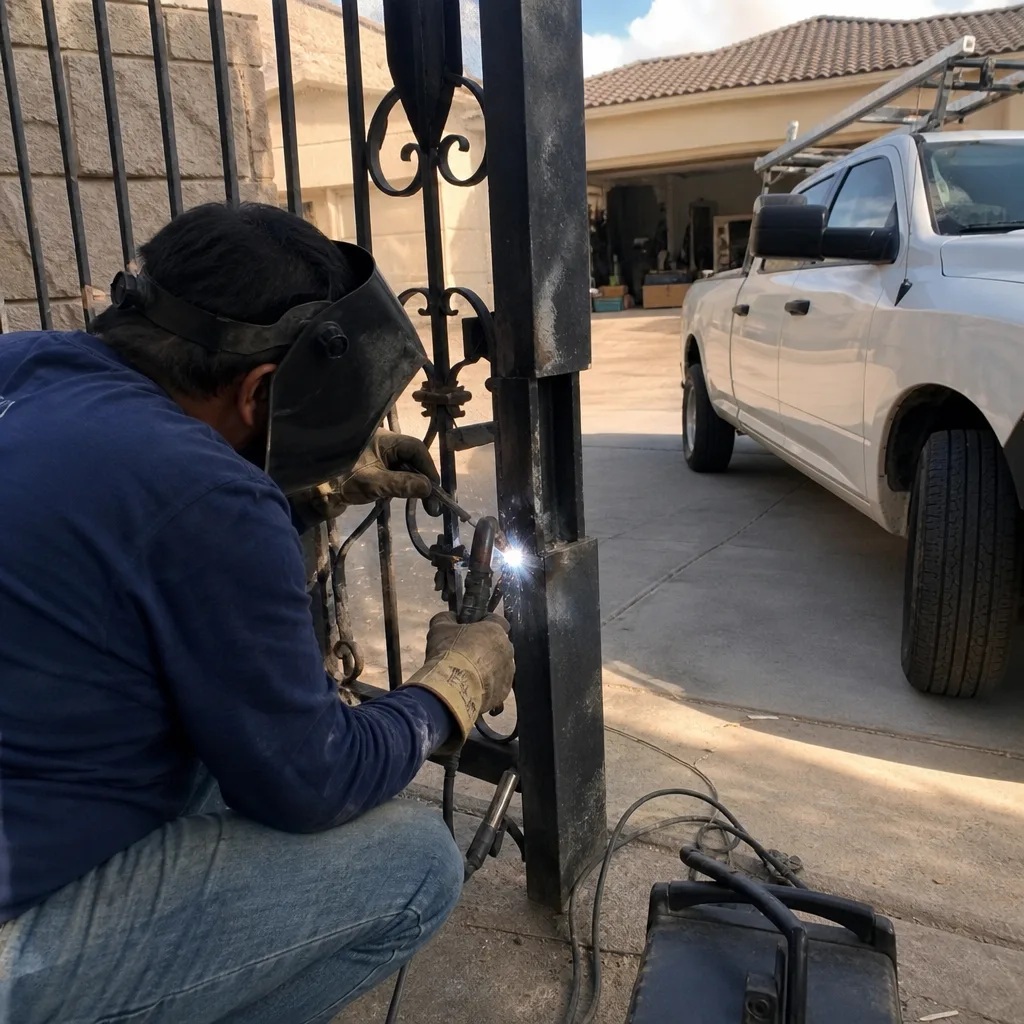
Running a 1-inch PVC conduit from the house to the gate operator location during construction costs roughly $80 in materials. Retrofitting that same conduit after the driveway is paved, the landscaping is in, and the gate is finished costs around $1,200 – because the driveway has to be cut or drilled, the landscaping has to be disturbed, and the crew has to work around a gate that’s already installed.
What goes inside that 1-inch conduit is what determines whether the gate can accept access-control upgrades later. A single 1-inch conduit can carry:
- The low-voltage power run to the operator.
- A twisted-pair control cable for a keypad, intercom, or card reader.
- A spare pull string so a second cable can be added without re-trenching.
The access-control upgrade path deserves advance thought. A homeowner who installs a LiftMaster operator today and wants a DoorKing keypad entry system in two years needs a control cable path to the operator housing. If the conduit was sized at half an inch, only the power run fits; the control cable has to be run exposed or through a new trench.
Every gate installation we perform runs at least one 1-inch conduit with a pull string, even when the homeowner has no immediate plans for access control. The cost at installation is negligible. The cost at retrofit is not.
The Post-Installation Documentation Package
What gets captured on installation day determines how quickly any future repair can be diagnosed. The gates that are easiest to service five years later are the ones that came with a written record of how they were set up on day one.
A complete installation documentation package includes:
- A wiring diagram showing how the operator’s control terminals were connected, including any accessory devices (photo-eyes, keypads, safety edges).
- Photographs of the operator internals before the cover goes back on, at the limit-switch adjustments, and at the photo-eye alignment.
- A written limit-switch reading in degrees or counts, at both open and close positions, so future adjustments start from a known baseline.
- The part numbers installed – operator model, photo-eye model, any accessory hardware – in a written record the homeowner keeps.
- The amp draw reading at startup so a future technician can compare.
This is what we mean by commercial-grade documentation on a residential gate. On a commercial access-control job, the wiring diagram and the limit-switch readings are non-negotiable; without them, the next technician on site has to reverse-engineer the installation. There’s no reason a residential installation in Boulder City should get less. The homeowner gets a photo log and a written record, and the file stays with the job.
Choosing Between DoorKing, LiftMaster, and Other Automation Brands
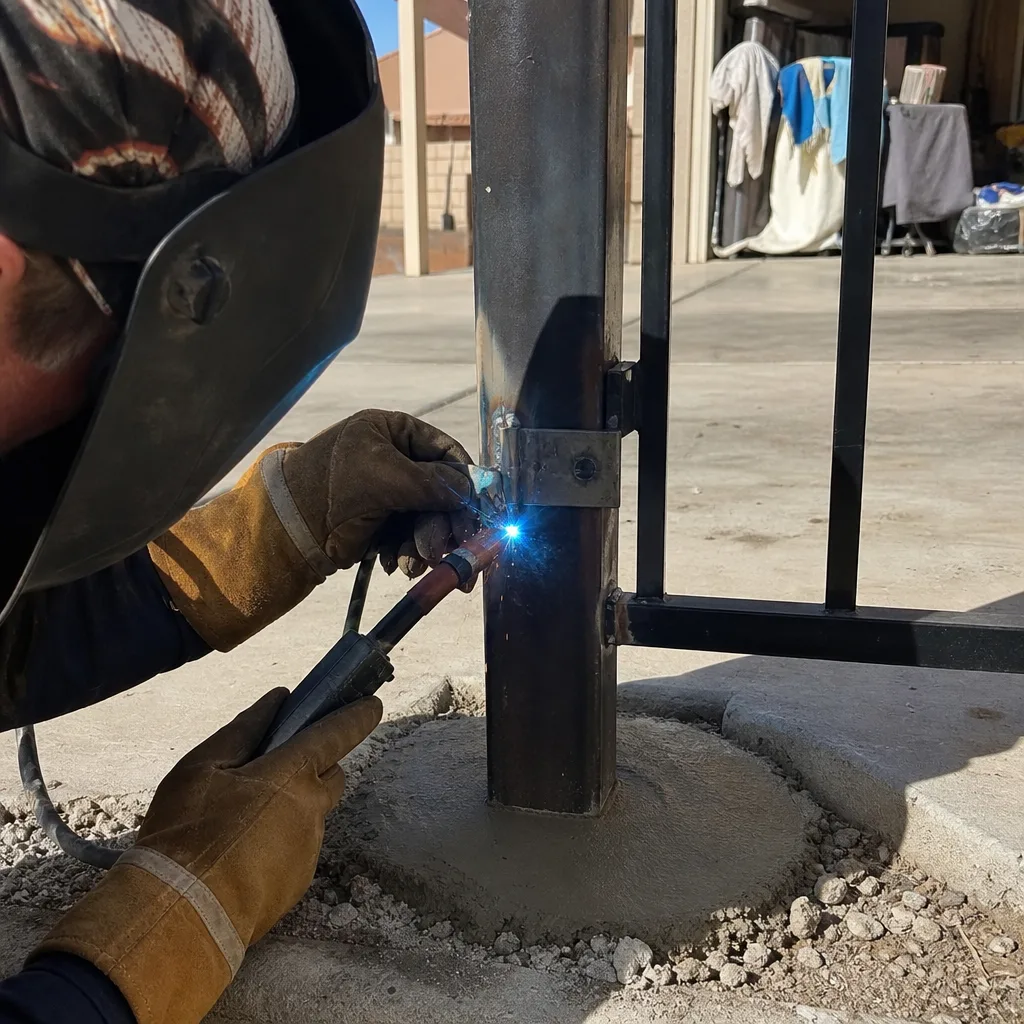
The right operator brand depends on the gate, the site, and what the homeowner expects the gate to do. We service nine major automation brands – LiftMaster, FAAC, BFT, Linear, Viking, Ghost Controls, DoorKing, Elite, and Mighty Mule – and we don’t have a house brand we steer toward. That’s intentional. The right answer is the one that fits the site.
Some general guidelines that hold up across brands:
- DoorKing excels on gates where telephony or entry-system integration is part of the plan – the door-phone and keypad systems are part of a mature access-control ecosystem.
- LiftMaster has deep residential familiarity, wide parts availability, and a broad accessory line for photo-eyes and safety edges.
- Elite and Mighty Mule offer solid residential options, particularly on pedestrian gates and lighter swing gates where a full commercial operator would be overkill.
- FAAC and BFT serve well on heavier swing gates and where the operator is European-built hydraulic.
What matters more than brand selection is operator sizing against the actual gate leaf and the actual wind exposure. A well-sized Mighty Mule will outlast an undersized LiftMaster every time on an exposed Boulder City lot. If you have a written estimate from another company and want a second opinion on the sizing before you commit, we review it at no cost.
What a Realistic Installation Timeline Looks Like
Gate installation is scheduled work, not same-day work. A realistic Boulder City timeline from first estimate to finished gate usually looks like this:
- Week 1: Site visit, measurements, plat review, and wind-load calculation. A written price is delivered before any work is scheduled.
- Week 2-3: Permit application and plan review. Building department turnaround drives most of the wait.
- Week 3-4: Operator and gate hardware ordered. Lead times vary by brand and configuration.
- Week 4-6: Excavation, conduit, post setting. Concrete cure time follows.
- Week 6-8: Gate mounting, operator installation, electrical connection, and final adjustments.
- Final step: Inspection, documentation package handoff, and homeowner walkthrough.
The overall window is often six to eight weeks on a residential project with a straightforward permit review. Unpermitted additions, easement conflicts, or an operator brand on backorder extend that. Asking a gate company to “get it done this week” on a new installation is the tell that permit and sizing steps will get skipped. If you need a gate fixed, that’s a different conversation covered in our gate repair guide for Boulder City.
What Gate Installation Costs in Boulder City
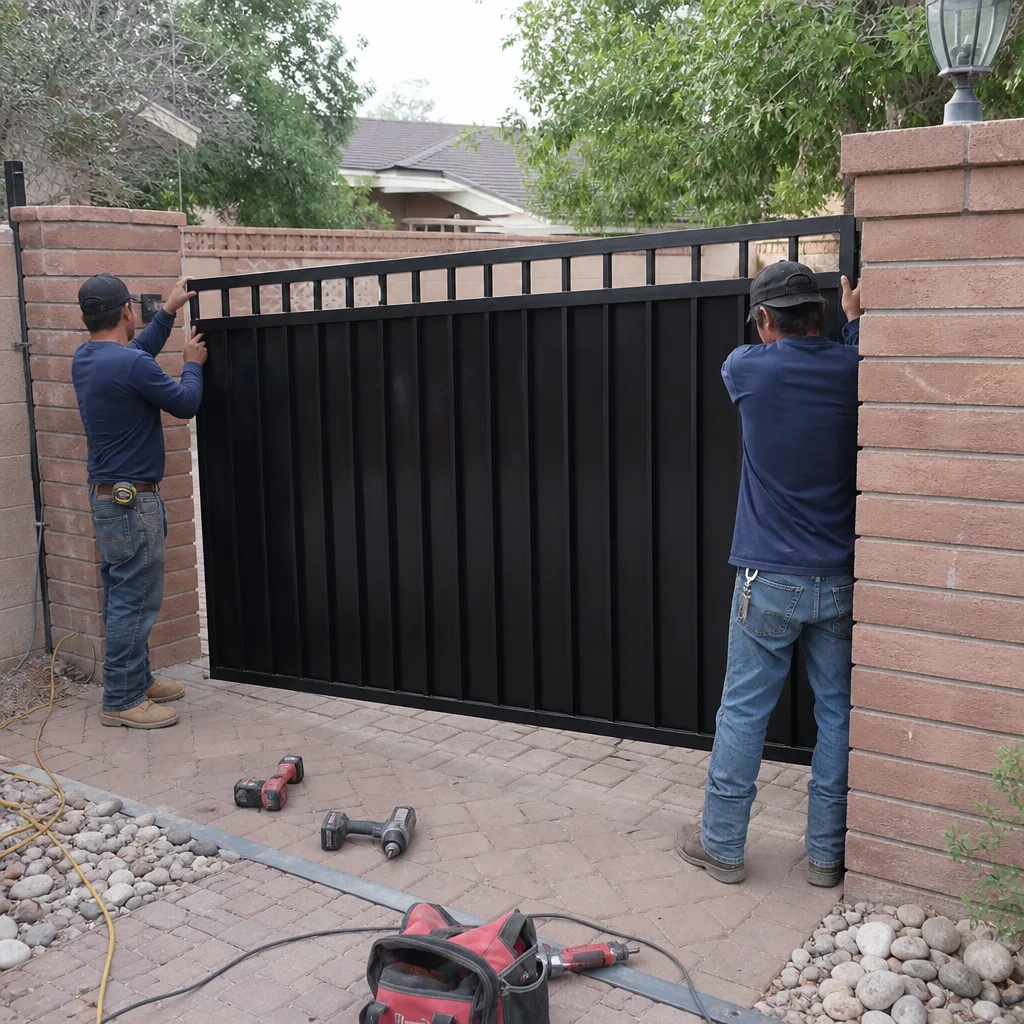
Material and labor costs for a full residential gate installation in Boulder City vary widely with gate style, operator brand, and site conditions. The ranges below are typical for the local market. Every project gets a written price before any work is scheduled; these are ranges, not quotes.
- Basic swing-gate operator installation (operator, photo-eyes, low-voltage run, no gate fabrication): $1,800-$2,800.
- Operator and gate fabrication together (new swing gate leaf, posts, operator, electrical, safety edges): $5,500-$9,500.
- Sliding gate operator installation (track, operator, safety edges, low-voltage run): $3,200-$5,800.
- Access-control add-on (keypad or card reader plus control wiring through existing conduit): $650-$1,400.
- Conduit retrofit where none exists (trenching, conduit, wire, restoration): $1,000-$1,800.
- Permit fees: vary by project scope; city of Boulder City publishes its fee schedule.
Width, gate weight, and wind-load requirements push these ranges higher on exposed Boulder City lots. A 16-foot ornamental iron gate on a hillside property with full wind exposure needs a heavier-duty operator than the same gate on a sheltered lot in the Historic District, and the labor and hardware both scale with it.
Every figure above is what gets written down before work starts. If a quote doesn’t include a written price, a written scope, and a stated inspection responsibility, it isn’t a quote – it’s a conversation. For a full breakdown of services, see gate installation in Boulder City.
Common Mistakes to Avoid
- Sizing the operator to the opening width, not the gate leaf. A 14-foot opening can carry gates presenting wildly different sail areas. Wind load has to be calculated against the actual leaf, not the opening dimension on the plan.
- Skipping the plat review. Boulder City parcels with utility easements crossing the driveway will force a post relocation and a reinstallation if the plat is not checked first.
- Running half-inch conduit. The $80 savings at installation produces a $1,200 retrofit when access control gets added, and often locks the homeowner out of upgrades entirely.
- Assuming the electrician’s permit covers the gate. It doesn’t. Building and electrical permits are separate, and the inspection sequence has to be planned.
- Accepting a verbal estimate. A written scope and written price exist so the job can be compared and the invoice can be matched against the quote. Verbal estimates leave nothing to compare.
- Ignoring the photo-eye alignment at installation day. A photo-eye (the infrared beam that stops the gate if something crosses the path) set two inches off center works fine for six months and then fails unpredictably. It should be aligned and photographed on day one.
- Skipping the documentation handoff. A gate installed without a wiring diagram, limit-switch reading, and part-number record costs the next technician (or the next homeowner) a diagnostic hour on the first service call.
When to Call a Professional
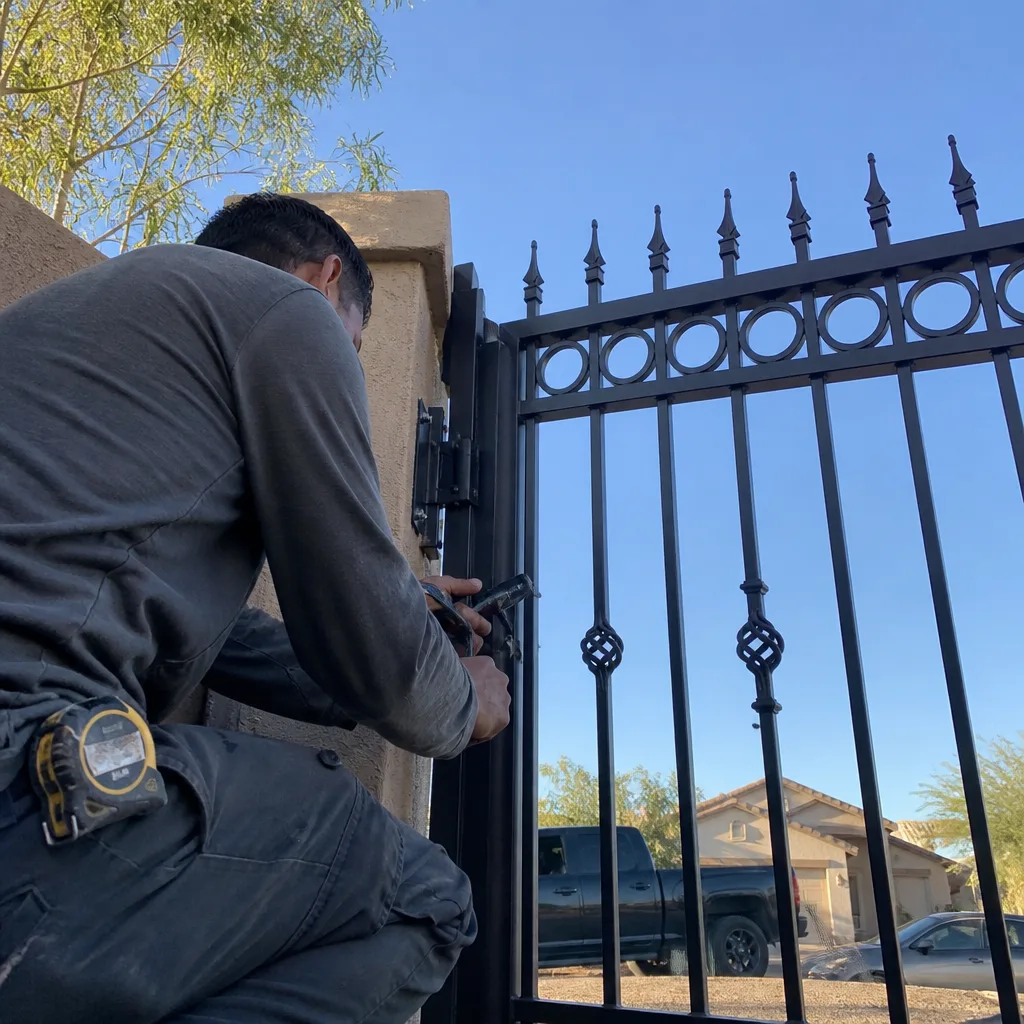
A gate installation is a job for a trained professional whenever the project involves an operator, high-tension springs, or structural post work – which is most installations. The gate operator involves a 120-volt electrical run, the spring or counterbalance system on a swing gate holds stored mechanical energy that can cause serious injury if it releases under load, and the safety edges and photo-eyes are what protect a child or pet from a closing gate. None of that is a weekend DIY project. Two specific triggers to call in a professional immediately: any gate where the operator will be tied to household power, and any gate where a post will be set within a utility easement. We’ve seen both go wrong enough times to know the retrofit cost always exceeds the original professional installation cost.
For a complete picture of the service offerings behind this guide, start at Vance Gate Repair Boulder City home. Vance Gate Repair Boulder City offers free written estimates in Boulder City – call (844) 320-7587.
Frequently Asked Questions
Most gate installations with a new structural post, masonry pier, or an operator on a gate over roughly six feet in height require a building permit from Boulder City’s building department, and a separate electrical permit covers the 120-volt circuit run to the operator. Historic District projects may also trigger design review. Call (844) 320-7587 for a free estimate that includes a written scope of the permit responsibilities on your property.
Boulder City sits in one of the highest sustained wind corridors in southern Nevada, so operators sized for standard Henderson residential use can be mechanically overloaded within two years on an exposed Boulder City lot. Wind load has to be calculated from actual gate leaf area and site exposure, and the operator torque rating has to exceed that calculated load. If you have a written estimate from another company, we’ll review the sizing at no cost.
Typical residential installation costs in Boulder City range from about $1,800 to $2,800 for an operator-only installation, and from about $5,500 to $9,500 for a full operator and gate fabrication together, depending on gate style, operator brand, and site exposure. Every project gets a written price before any work is scheduled. Call (844) 320-7587 for an exact quote on your property – estimates are free.
A realistic timeline from first estimate to finished gate in Boulder City is six to eight weeks, driven mostly by permit review and operator lead times. New installation is scheduled, measured, and ordered work – it is not a same-day service. We’ll give you a calendar with your written price so you know what to expect at each stage.
A 1-inch PVC conduit run during construction costs roughly $80 in materials, while retrofitting the same conduit after the driveway is paved and landscaped costs around $1,200 – and often requires cutting or drilling the driveway. Half-inch conduit only fits the power run, which locks out access-control upgrades later. Every gate installation we perform runs at least one 1-inch conduit with a pull string, even when there are no current plans for access control.
A complete installation package includes a wiring diagram, photographs of the operator internals and photo-eye alignment, written limit-switch readings at open and close positions, installed part numbers, and the amp draw reading at startup. That record is what makes future repairs diagnostic instead of exploratory. Call (844) 320-7587 for a free estimate and we’ll walk through what gets handed to you at the end of the job.
See the difference
BeforeAfter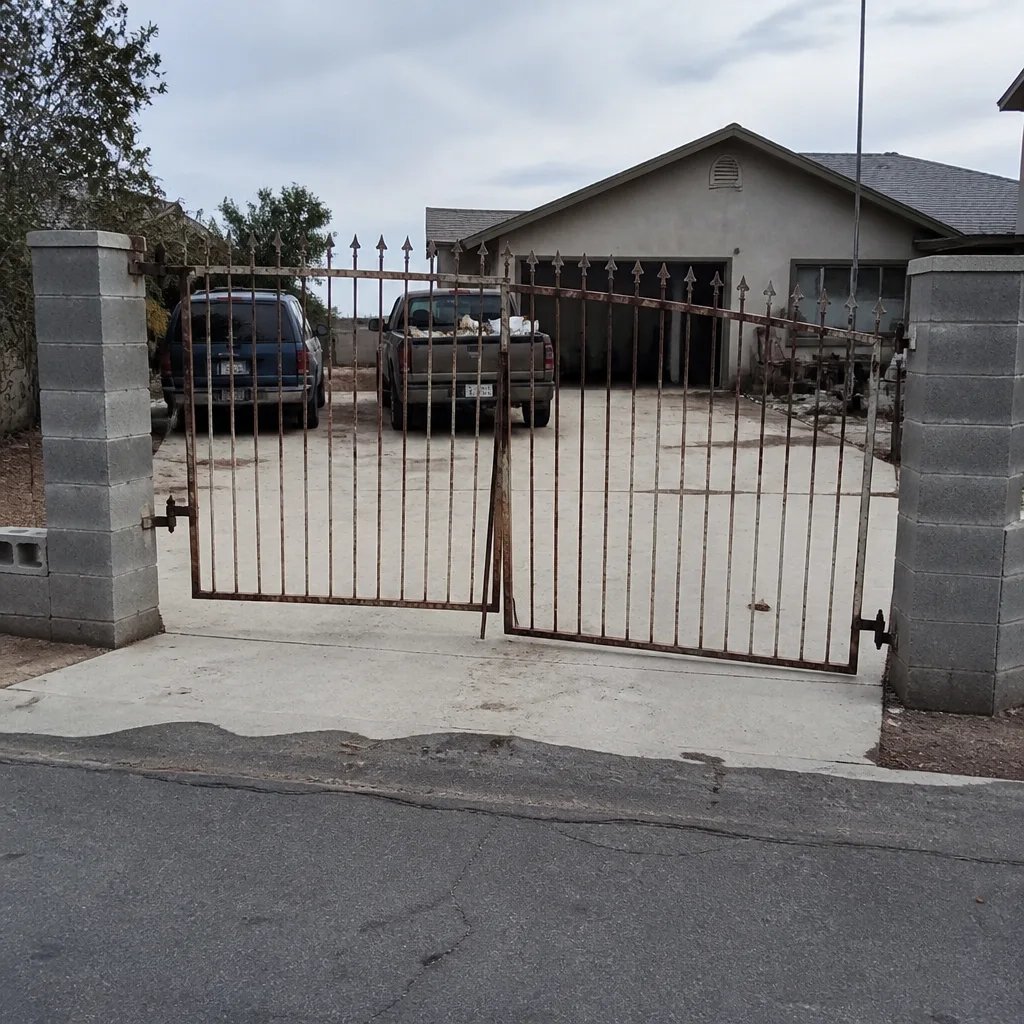 Before
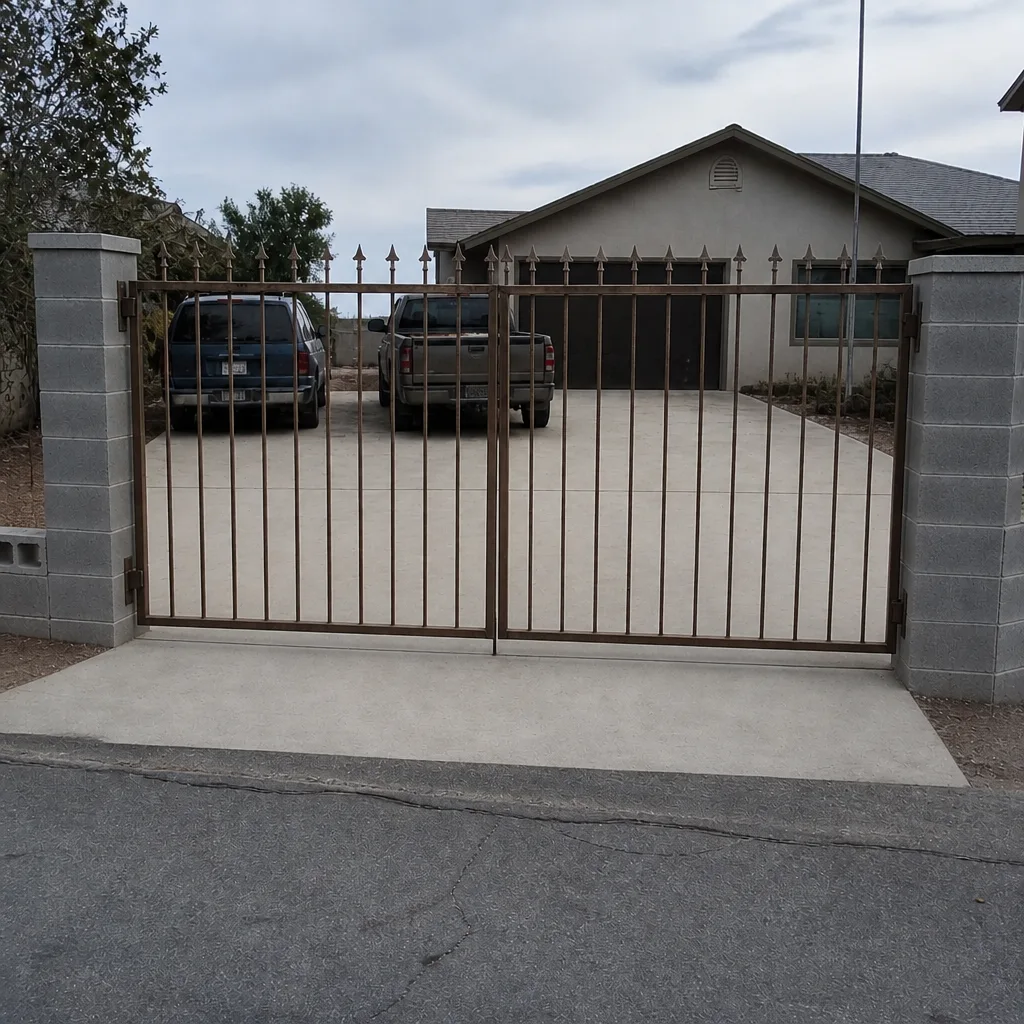 After
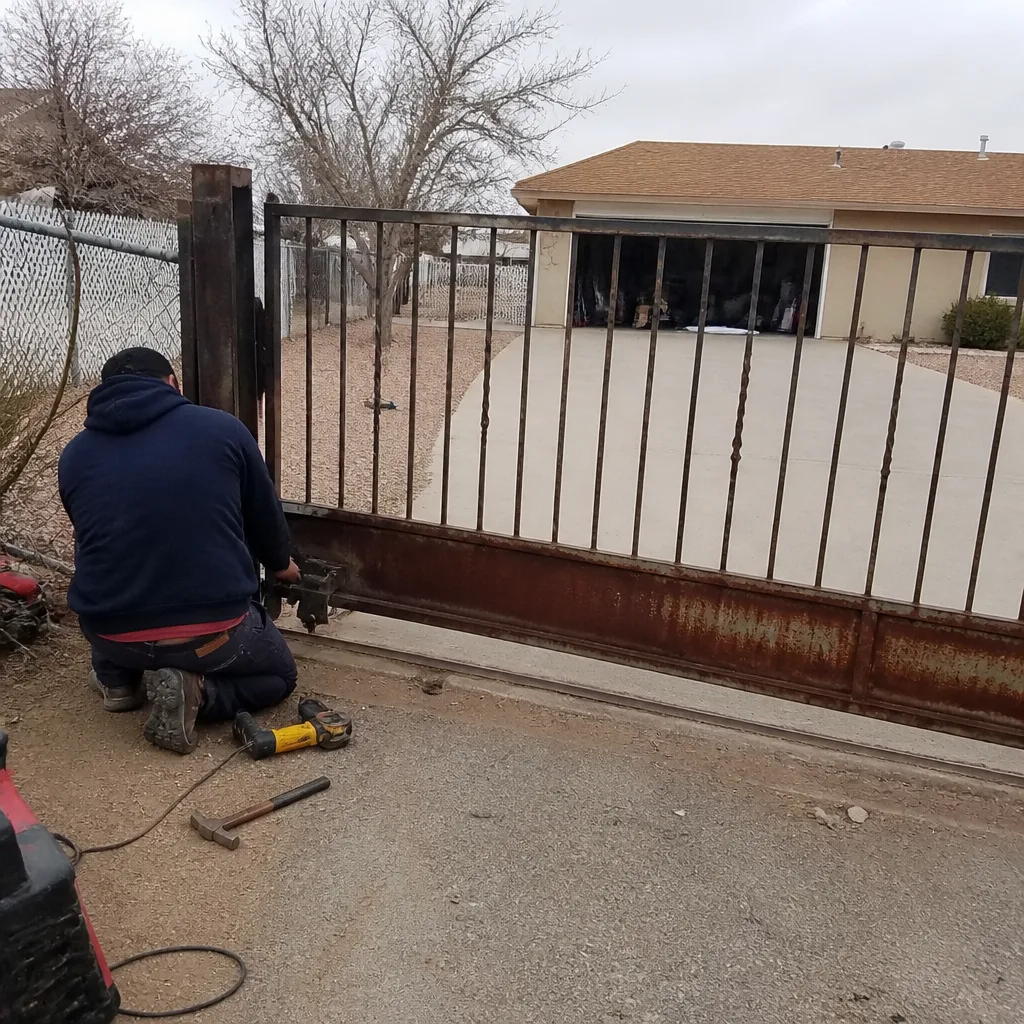 Before
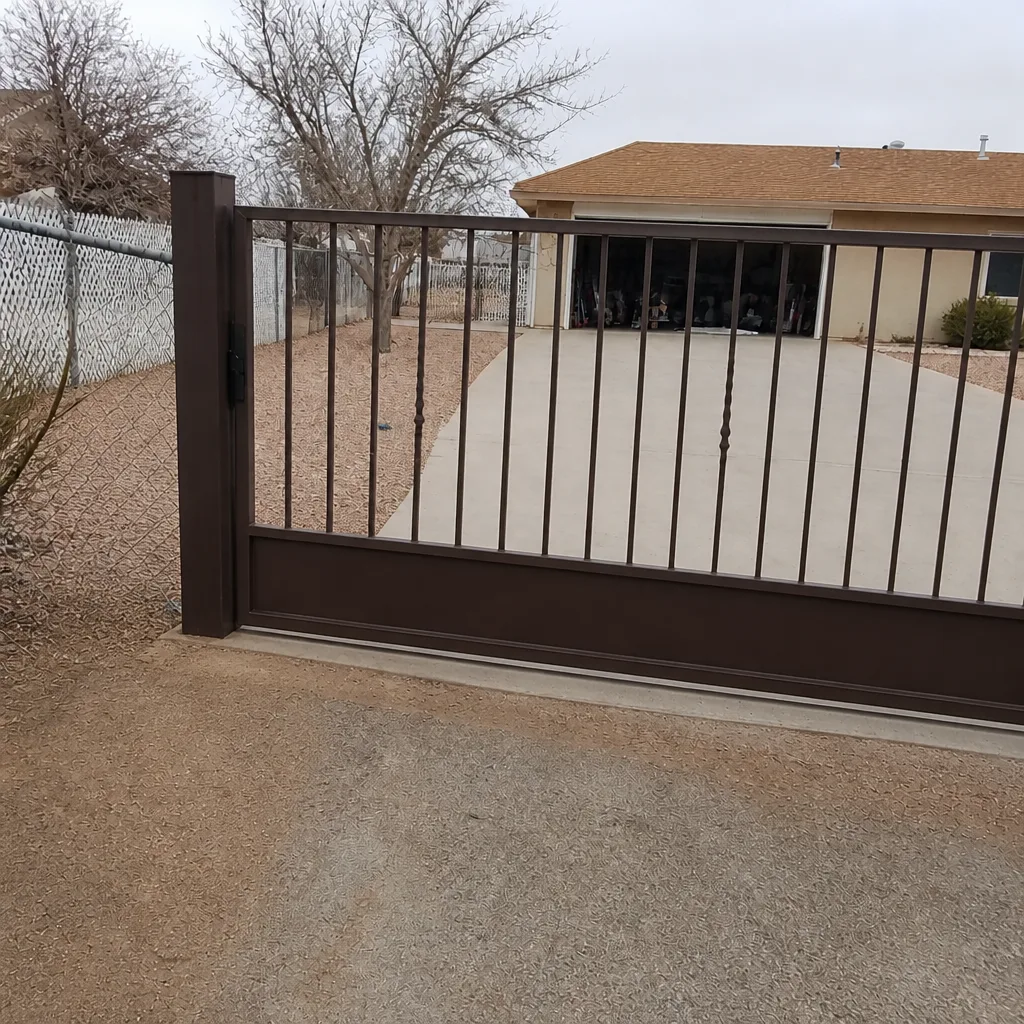 After
The Bottom Line
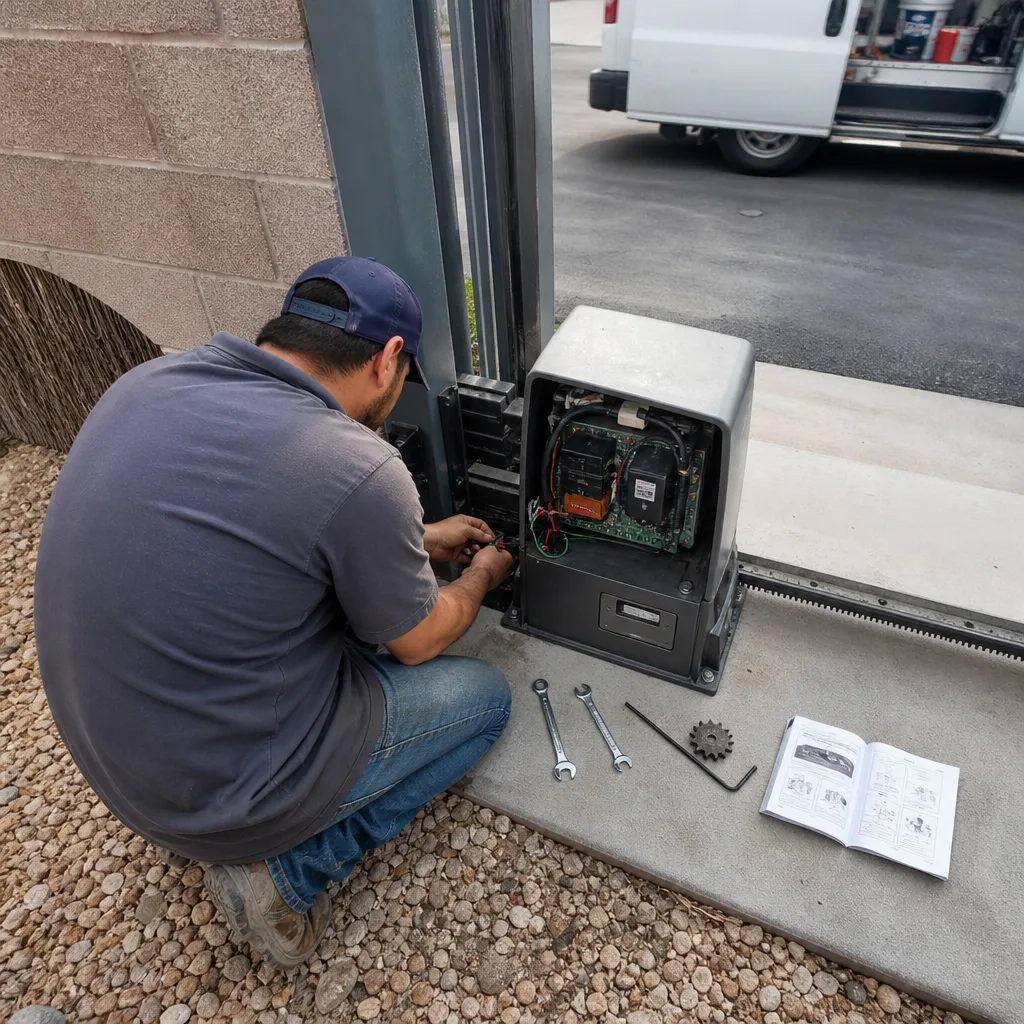
Most gate installations in Boulder City don’t fail from bad hardware. They fail from decisions made before the first post is set: an operator sized to opening width instead of gate leaf, a post placed inside a utility easement that was never read, a conduit run too small to accept the access-control system the homeowner wants in two years. The fixes for those three mistakes cost a few hundred dollars at the drawing stage and thousands to retrofit. Permits, wind-load calculation, plat review, and conduit sizing are the four checks that determine whether a Boulder City gate installation survives a decade or comes apart in year two. Get all four right, get the documentation package in hand at handoff, and the gate takes care of itself. When a motor does need service, see gate motor and opener service in Boulder City.
Contact
If you’re weighing a gate installation in Boulder City – a new driveway gate, a pedestrian gate, an operator retrofit, or an access-control upgrade – call us at (844) 320-7587 for a free estimate. We’ll walk the site, read the plat, run the wind-load calculation, and put the scope and the price in writing before any work is scheduled. A live person answers the phone, day or night. Every estimate includes a written scope, a written price, and the 365-Day Done Right Promise on the work we do.
Written by the team at Vance Gate Repair Boulder City.