
Last updated November 18, 2026
 Wrought iron
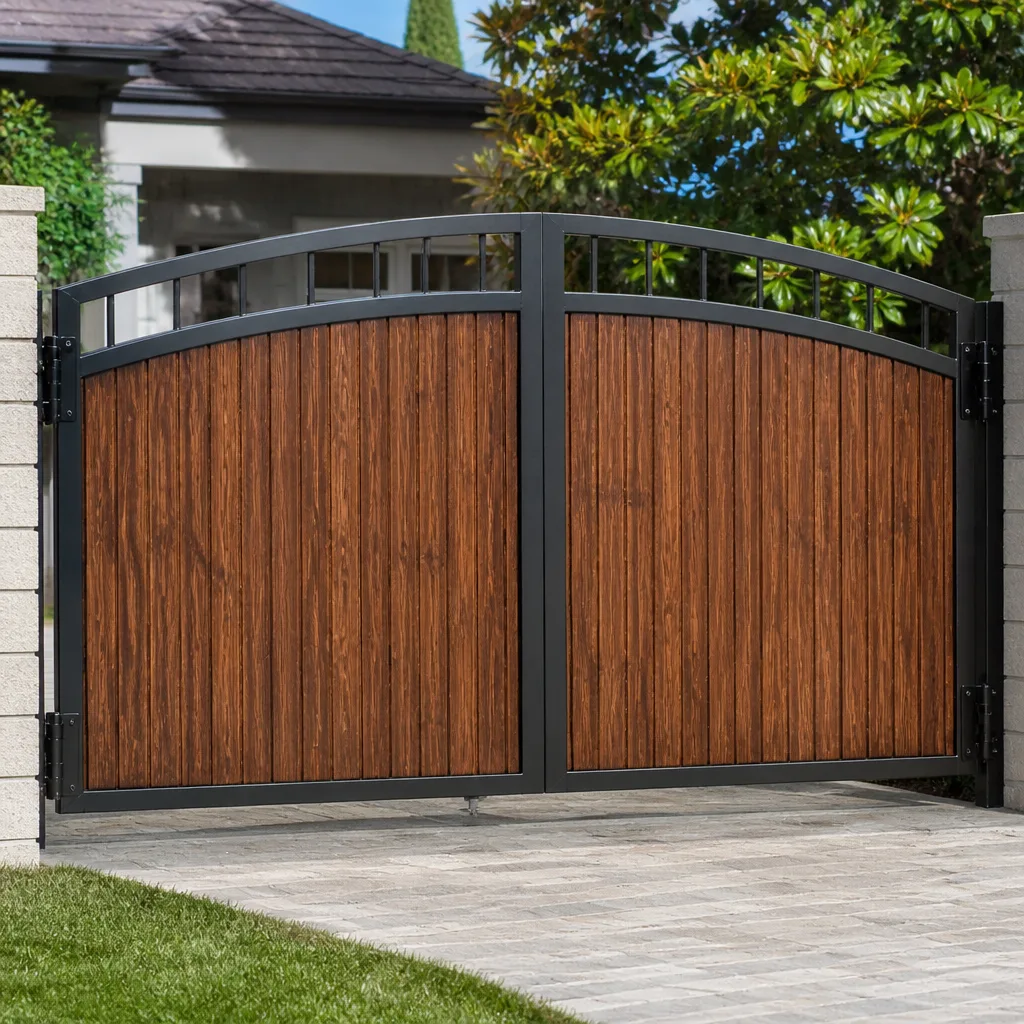 Wood & steel frame
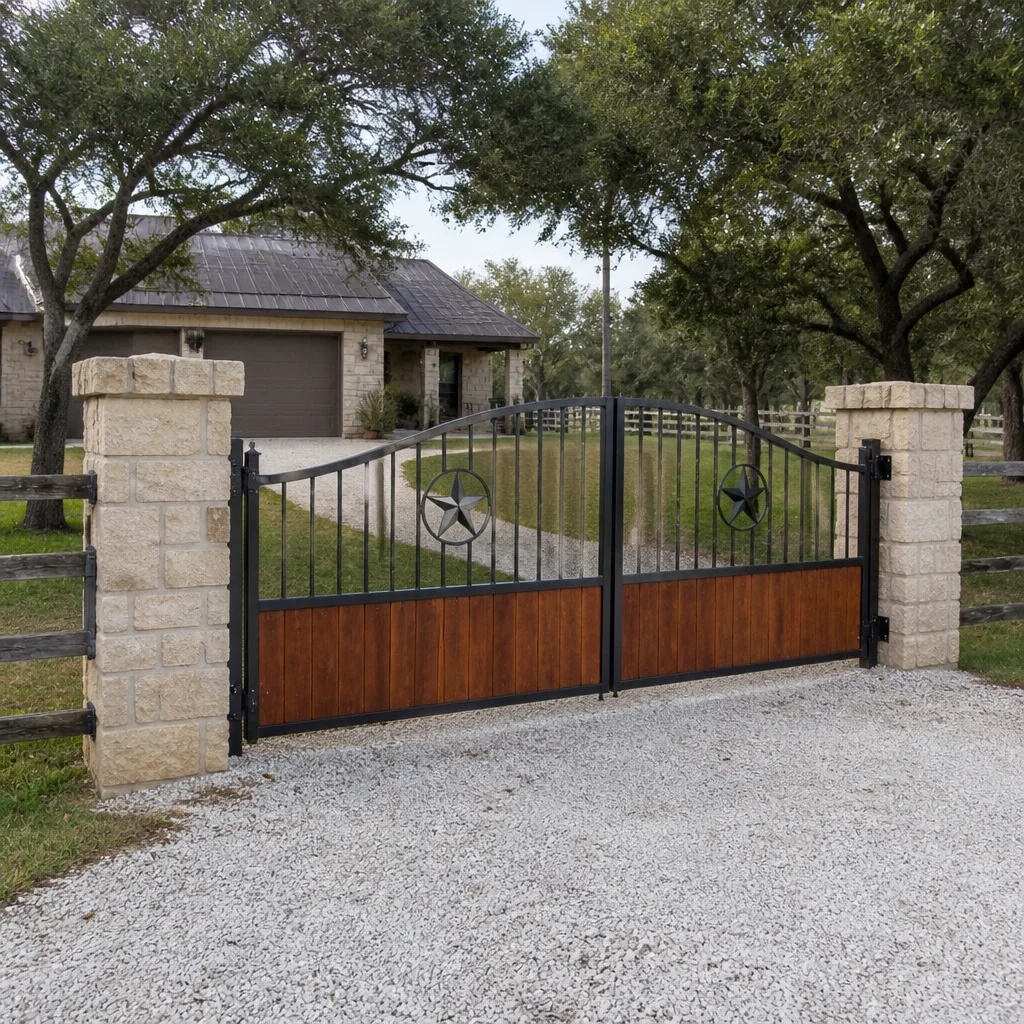 Farm & ranch
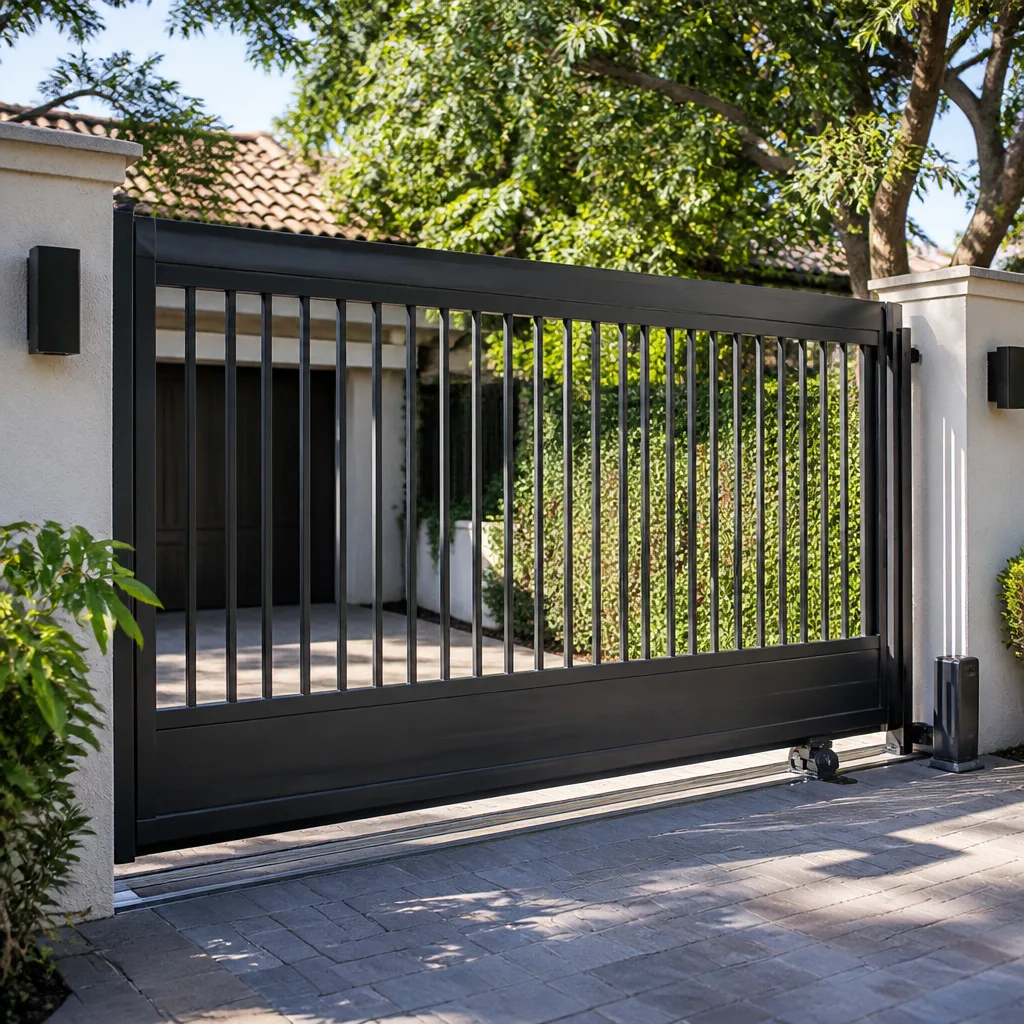 Sliding driveway gates
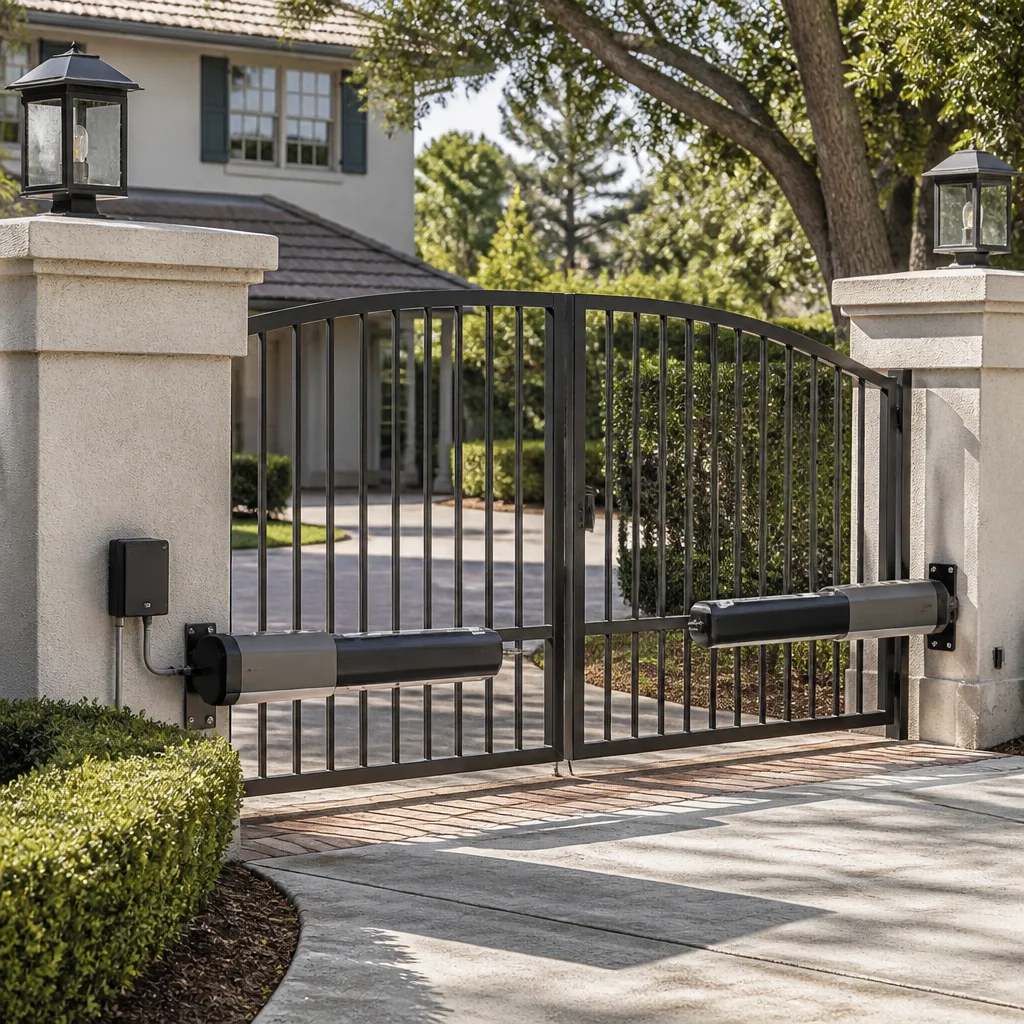 LiftMaster operators
Free on-site gate assessment - hinges, posts, and your LiftMaster or Nice gate operator checked before anything is quoted
The assessment is free and the quote is the invoice.
Get your free estimateGate Installation Maintenance Schedule: What to Do and When
Gate operators have a break-in period that most installation guides leave out. Over the first 500 cycles, every mechanical connection on a new gate gets stressed and stressed again – hinge bolts work loose, the concrete footing finishes curing, and limit switches drift toward wherever the gate arm finally settles. A technician check at that 500-cycle mark catches the small adjustments that head off premature wear, while the 12-month calendar anniversary catches them too late. Timing the first year by cycles rather than by months is the single biggest edge a new gate owner has, and it’s the part of a maintenance schedule nobody hands you at the walkthrough. This guide sets out that first-year timeline step by step, shows you how to read a cycle counter on a FAAC or BFT control board, covers what Boulder City’s sun and monsoon weather do to a fresh install, and lists the records that keep a manufacturer warranty intact.
Quick Answer
A gate installation maintenance schedule runs on two clocks, not one. The first is cycle-based: check the entire gate at roughly 500 cycles, inspect the concrete footings near 90 days, verify limit switches around 6 months, and log a full baseline set of readings at 12 months. The second is calendar-based: annual service from year two onward. Following only the annual clock on a new gate is the most common mistake we see in Boulder City, because the adjustments that matter most happen inside that first year.
Styles & brands we work with
- Wrought iron
- Wood & steel frame
- Farm & ranch
- Sliding driveway gates
- LiftMaster operators
Table of Contents
- Why the First Year Runs on Cycles, Not Months
- The First-Year Maintenance Timeline
- How to Read the Cycle Counter on Your Operator
- Desert-Specific First-Year Checklist for Boulder City
- What Records Keep Your Warranty Valid
- Moving from New-Install to Mature-System Maintenance
- The Ongoing Annual Schedule After Year One
- Common Mistakes to Avoid
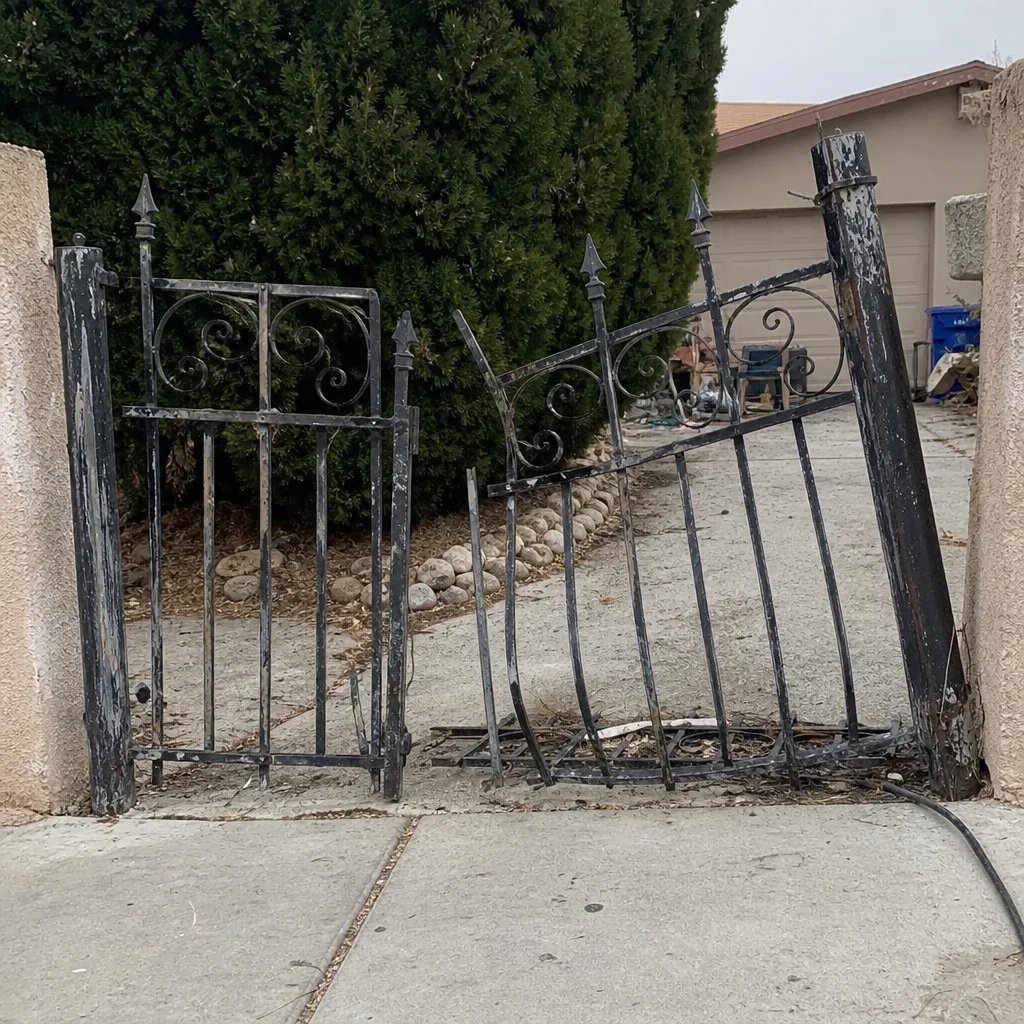 Before
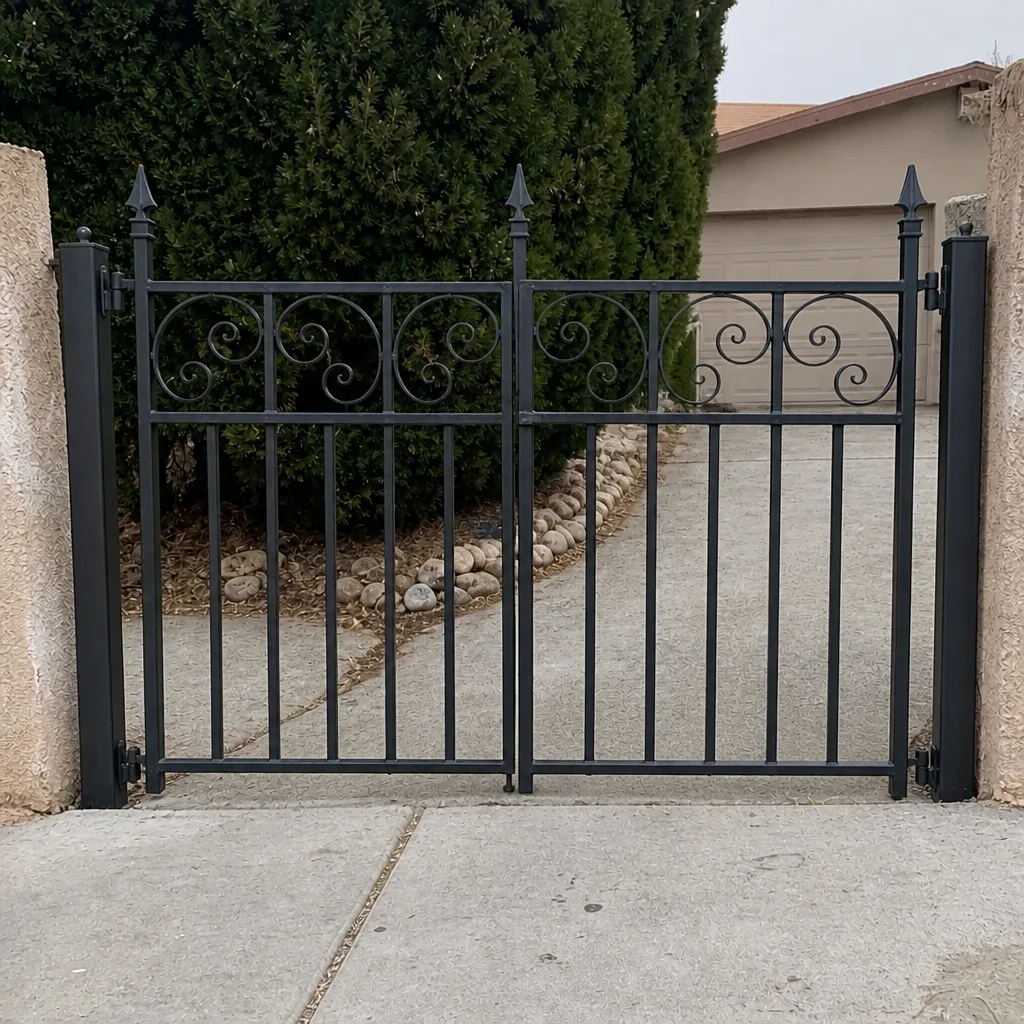 After
Why the First Year Runs on Cycles, Not Months
A new gate assembly is not settled metal. Fresh concrete is still curing under the hinge posts, the operator arm is finding its working arc, and friction surfaces are wearing into their final fit. All of this movement happens in the first 500 to 1,000 cycles, and how a technician responds to it in that window determines how long the whole system holds up.
A cycle count tells you more than a date does. A household that opens the gate six times a day will cross 500 cycles in under three months. A vacation property in Boulder City might take eight months to get there. If your schedule is calendar-based, the light-use gate gets serviced too late and the heavy-use gate gets serviced too early. If it’s cycle-based, both gates get attention at the right mechanical moment.
In our experience, the parts that drift first on a new installation are:
- Limit switches. These tell the operator where the gate should stop. They shift a few degrees as the arm settles, and a gate that pushes slightly past travel puts strain on the motor every cycle.
- Hinge and post bolts. They loosen as the concrete finishes curing. A loose hinge changes the gate’s plane and loads the operator unevenly.
- The operator arm bracket. Small movement in the bracket throws off the entire geometry of the arm’s travel.
- Rollers and guides. New rollers bed in quickly. If they were greased on installation without being checked at 500 cycles, you won’t see the wear until it’s severe.
None of these are dramatic failures. Each one, unchecked, becomes one. If you’re already noticing an operational problem rather than a maintenance question, see our Gate Repair in Boulder City page for what a diagnostic visit covers.
The First-Year Maintenance Timeline
Here are the milestones, in order. These are distinct from ongoing annual service and should be treated as their own schedule.
- 500-cycle check (roughly 2 to 4 months in). A technician inspects hinges, bolts, the arm bracket, and the travel arc, then re-sets the limit switches to their settled position. This is the most important single visit of a gate’s life.
- 90-day concrete settlement inspection. The footing is inspected for cracks, post plumb is verified with a level, and any hinge-post movement is documented. In dry-climate markets this step comes up more often than builders expect.
- 6-month limit-switch verification. A second travel check, with a photographed reading on each switch. On a new install, the switches typically shift again between firm 500-cycle and 6-month checks.
- 9-month safety-device test. Photo-eyes, safety edges, and any reversing function get physically tested and documented, not just powered on.
- 12-month baseline and transition. The last step before the gate becomes a “mature system.” A complete set of readings is logged and archived as your permanent baseline.
The 90-day and 6-month checks can often be combined on a lighter-use gate. The 500-cycle and 12-month readings should never be combined – they measure different things. If you’re not yet at installation and want to plan the schedule before the gate goes in, Gate Installation in Boulder City covers what a proper installation should include.
How to Read the Cycle Counter on Your Operator
Most modern operators count cycles on the control board. Here’s how to find the number on the brands we work with most often in Boulder City, since the exact menu path varies. If you’re not sure which operator is on your gate, look at the label on the motor housing – it will name the brand.
FAAC operators
FAAC boards typically show cycle count through the programming menu, usually labeled as a total-cycle or “CY” reading. You push the program button to step through menu items until you reach it. Many of these boards retain the count through a power loss, which is why the number is reliable for warranty purposes.
BFT operators
BFT boards store a running cycle total and often show it alongside the diagnostic submenu. You may need to log in with a PIN if the installer set one. Read the number, note the date, and photograph the display – the photo is what a warranty claim asks for.
Linear and Viking operators
These brands vary more by model, but the logic is the same: menu access, a total-cycle field, and often a separate count of the current maintenance interval. Write down both.
If the operator has no cycle counter (some older units don’t), track cycles yourself for the first month: count the openings per day for a week, average it, and multiply by 30. That gets you close enough to hit the 500-cycle mark. Our Gate Motor & Opener in Boulder City page covers what brands we service and what a proper operator inspection includes. Every visit we make leaves a photo record of the counter reading, so the next technician has it.
Desert-Specific First-Year Checklist for Boulder City
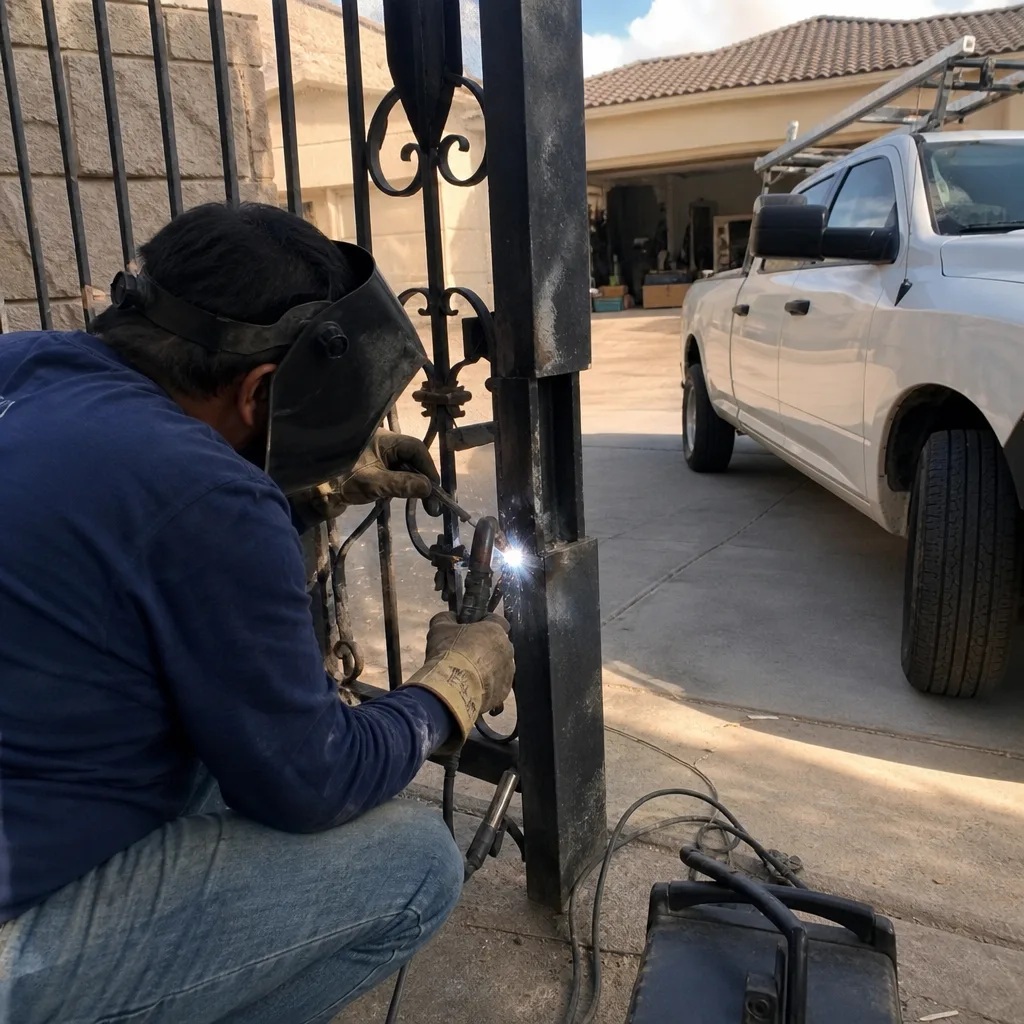
The first-year schedule is the same everywhere. The things that attack a new gate installation are not. In Boulder City, three forces go after a fresh gate harder than anything in the installation manual says: sun, caliche, and monsoon debris.
UV-exposed wiring inspection
Sun is the first one. The desert here will degrade any flexible wiring, safety-edge cable, or photo-eye lead that’s exposed to direct afternoon light. On a new installation, exposed conduit runs and service loops are the weak points. At the 90-day and 12-month checks, a technician should inspect every exposed wiring section for cracked insulation and confirm the conduit is still sealed at both ends.
Caliche and post plumb
Caliche is the calcium-carbonate hardpan that sits under much of this area. It does not expand evenly with moisture the way ordinary soil does – it swells in chunks and pulls back in droughts. On a fresh gate install, the footing and hinge post can shift when caliche below them responds to the first wet season. This is why the 90-day concrete settlement inspection matters more here than it does in most places. A post that’s off plumb by a quarter-inch at 90 days is telling you something that will get worse. The technician documents the reading – a number, not a guess.
Monsoon debris in the operator housing
The summer monsoon season throws fine grit and plant debris at every operator housing on the property. In the first year, some of that grit works into the operator and settles on the gears and drive screw. Opening the cover and clearing it at the 6-month check is the difference between a clean gear train and one that’s grinding by year three. Every visit we make leaves photos of what was cleared and what was left behind.
One local note: gates that face full west in Boulder City bake harder than gates under shade. If yours does, plan the UV inspection earlier – the 90-day check catches what a later one would find already cracked.
What Records Keep Your Warranty Valid
Most manufacturer warranties on gate operators are conditional. They cover defects, but only if the operator was installed and maintained according to the manual’s schedule. The warranty does not usually say “call us if it breaks” – it says “maintain it and keep records.” Here’s what most operator warranties expect you to hold onto:
- Cycle-count readings from each scheduled service – the manufacturer wants to know the operator wasn’t run past its rated duty cycle.
- Dated service records showing the check happened when the schedule called for it.
- Serial and model numbers on the operator, the board, and the safety devices, recorded at installation.
- Photo records of limit-switch settings and safety-device positions, which prove the gate wasn’t misadjusted after a service visit.
- The original written price and scope from the installer, so the work done is traceable.
A warranty claim that arrives without these records often gets denied on the grounds that the maintenance wasn’t followed – no matter how legitimate the failure was. Our habit of leaving a documented photo record on every visit exists partly for this reason. Under the Haven Standard, a written price goes to you before any work starts, and a photo log with the part numbers and adjustments goes to you before we leave. If a warranty claim ever comes up, you have the evidence in a folder. That’s true for the first year and every year after.
Moving from New-Install to Mature-System Maintenance
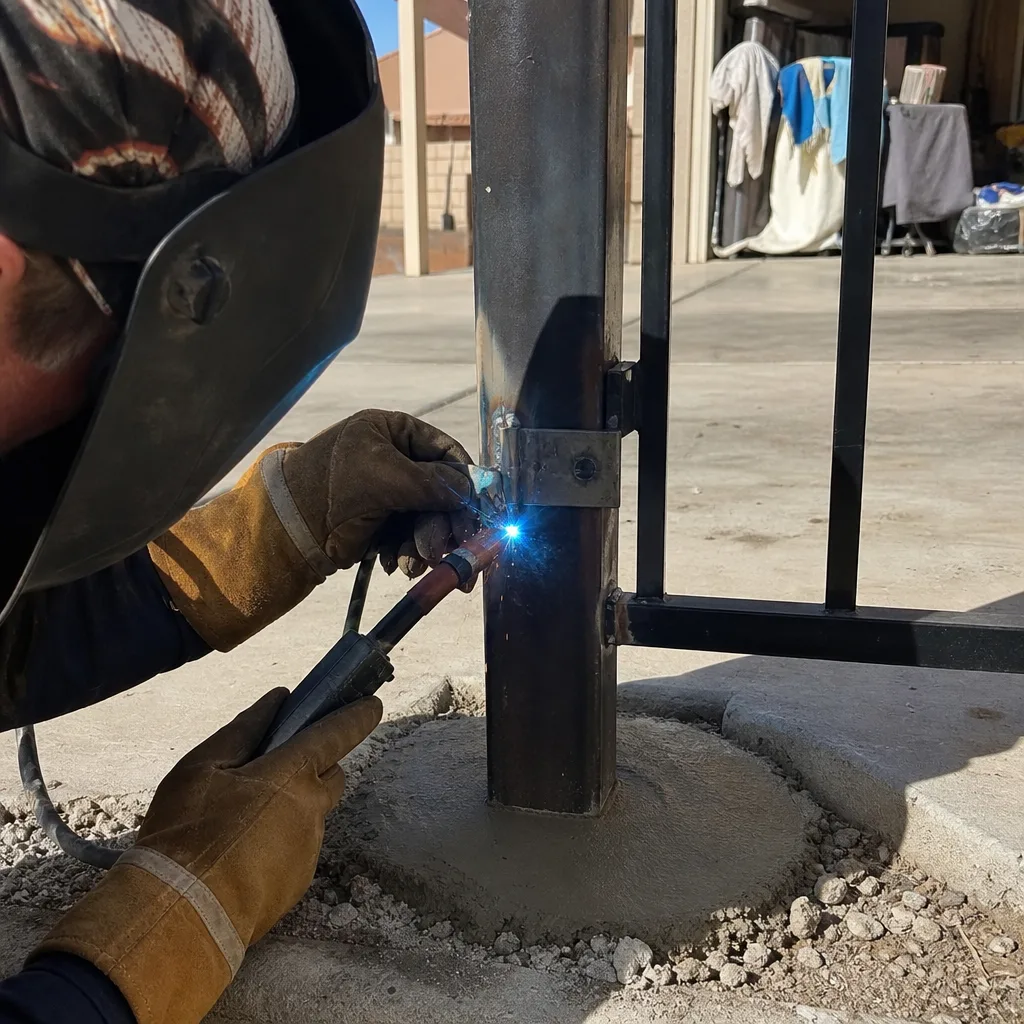
At 12 months, a gate stops being new. The operator arm has found its working arc, the concrete has fully cured, and the limit switches have settled. What the gate needs from here on is different, and the handoff from “new” to “mature” happens with one document: a baseline reading.
At the 12-month mark, a technician logs the following readings and archives them as the permanent baseline for the gate:
- Limit-switch readings (the exact travel position on each end of the gate).
- Cycle total at that date – the starting point for future comparisons.
- Post plumb readings on each hinge post.
- Photo-eye alignment with a photographed position.
- Safety-edge function test with the outcome recorded.
- Operator amperage draw on the opening and closing stroke – the single best early-warning number for motor health.
- Part numbers and serials on the operator, board, and safety devices.
Those seven numbers are your gate’s fingerprint at healthy. When the gate starts acting up two years later, comparing the amperage draw and limit-switch readings against that baseline tells a technician exactly where the problem started, instead of requiring a full diagnostic from scratch – which is the fastest way for a homeowner to pay twice to rediscover the same thing.
The Ongoing Annual Schedule After Year One
From year two onward, a gate settles into an annual rhythm. Here’s what a full annual service should cover, and what we actually do on each visit:
- Cycle-count read and logged. Compare against the baseline and against last year’s total – the rate matters more than the raw number.
- Limit switches verified and photographed. Any drift is re-set and the new position logged.
- All hinges, bolts, and brackets checked for tightness. Any loose connection is torqued and its reading recorded.
- Safety devices physically tested. Photo-eyes tripped, safety edges pressed, reversing function confirmed.
- Operator housing cleaned and inspected. Debris cleared, gears and drive screw inspected, exposed wiring checked.
- Post plumb re-verified. Any change from the baseline is written down.
- Lubrication applied only where the manual calls for it. Over-greasing fresh rollers is its own problem.
Heavy-use gates – say, a driveway gate on a busy Boulder City property with several vehicles and daily visitors – get a mid-year check too. Light-use gates on vacation properties can usually run a clean annual. When in doubt, the cycle total tells you. Over 3,000 cycles a year, add the mid-year.
Common Mistakes to Avoid
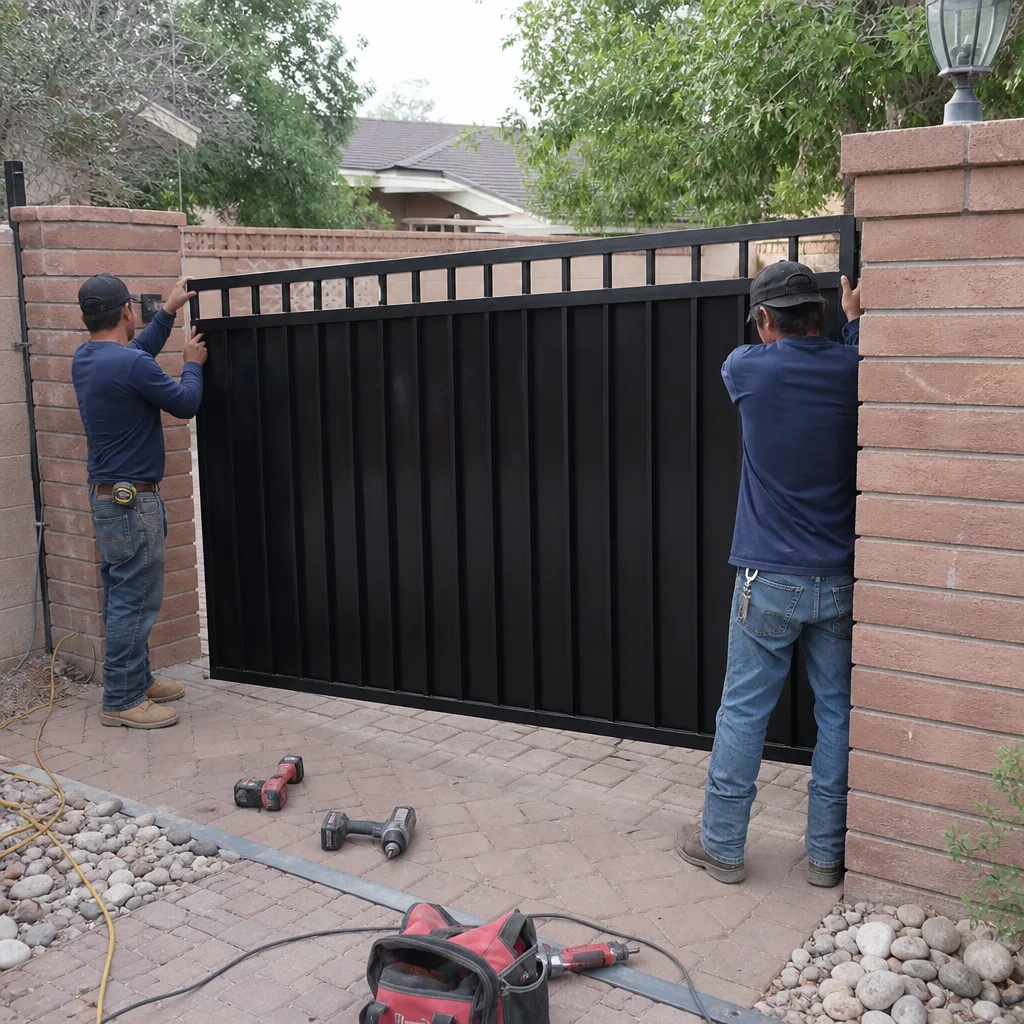
- Servicing a new gate on the 12-month anniversary only. The adjustments that matter most happen in the first 500 cycles. By 12 months, a drift you didn’t catch has already caused wear.
- Greasing everything on principle. Some new rollers and guides are designed to run dry. Over-greasing in a desert environment attracts grit, which acts like sandpaper. Follow the manual’s lubrication chart, not the habit.
- Skipping the 90-day concrete check because “the gate still works.” A post that’s off plumb by a fraction of an inch at 90 days is a much larger problem at year three, and caliche under a Boulder City footing makes that shift more likely.
- Trusting a verbal service record. If it isn’t written down and dated, the manufacturer will treat it as not done. A photo of the counter reading and a written note is what a warranty claim asks for.
- Treating safety devices as set-and-forget. Photo-eyes drift. A safety edge can fail electrically without any visible sign. Physical testing at every service is the difference between a device that works and one that only looks like it does.
- Letting monsoon season pass without opening the operator housing. One summer of grit in the housing is a small cleanup. Two summers of it is grinding gears.
- Not writing down the cycle count on the day a problem starts. The first number you record when something goes wrong is the second-most useful number you’ll ever have. The baseline is the first.
See the difference
BeforeAfter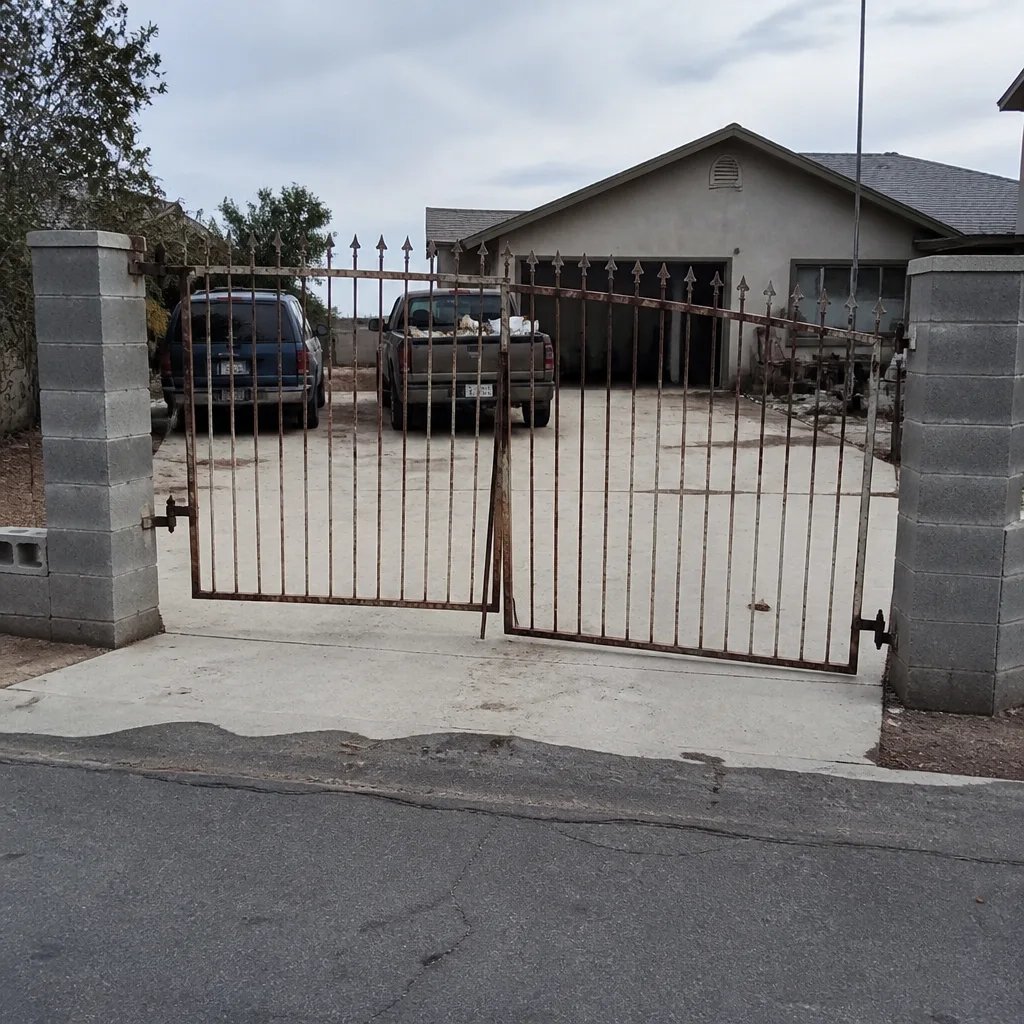 Before
 After
 Before
 After
When to Call a Professional
Call a professional when the calendar or the cycle count says it’s time, and also whenever you see the gate behave differently than it did last month. A gate that opens a little slower, stops a little short, or reverses on its own is telling you something – and a scheduled maintenance visit is far cheaper than a motor replacement. High-tension springs, articulating arms under load, and any gate that operates on a slope should not be adjusted by the homeowner; the stored energy in a spring under tension or an arm mid-travel can cause serious injury if it lets go. Metal springs and moving arms are trained-professional territory. Whether your gate is a FAAC or a BFT, an annual reading-and-documentation visit is what keeps it honest. Vance Gate Repair Boulder City offers free estimates in Boulder City – call (844) 320-7587.
Frequently Asked Questions
A new gate should get a technician visit at roughly 500 cycles, then again at 90 days (concrete settlement), 6 months (limit-switch verification), and 12 months (baseline and transition). The 500-cycle check is the most important visit of a gate’s life because it catches the drift that a 12-month anniversary schedule would miss entirely. Call (844) 320-7587 to schedule the first-year timeline – estimates are free.
On most FAAC boards, the cycle count is in the programming menu under a total-cycle reading, and on BFT boards it’s often in the diagnostic submenu. Step through the menu with the program button and photograph the display when you find it. If you’re not sure how to get into the menu on your specific model, a technician can read it and write the number into your record in a few minutes. Call (844) 320-7587 and we’ll walk you through it.
Yes, and the 90-day concrete inspection is where you see it. Caliche is the hardpan layer under much of the area, and it swells and pulls back in chunks rather than evenly. On a fresh install, the first wet season can shift a footing slightly and throw a hinge post off plumb. A reading and a photograph at 90 days catches it before it becomes a real repair. Call (844) 320-7587 for a first-year inspection.
It may not. Most operator warranties are conditional on maintenance being followed and documented. Cycle-count readings, dated service records, serial numbers, and photo records of limit-switch and safety-device settings are the documentation a claim asks for. If the schedule wasn’t followed, a legitimate defect can still be denied. Call (844) 320-7587 to have a documented service visit added to the record before a claim ever comes up.
Keep limit-switch travel positions, cycle total, post plumb readings, photo-eye alignment, the safety-edge function outcome, operator amperage draw on both strokes, and the part and serial numbers on the operator, board, and safety devices. Together these are the gate’s healthy baseline. When something acts up in year three, comparing against these numbers tells the technician where the problem started without a full diagnostic. Call (844) 320-7587 to have a baseline reading logged.
Mostly, but two seasons add work. The summer monsoon throws grit into the operator housing, so the housing needs clearing after it, and the strong UV light here cracks exposed wiring faster than in milder climates. An annual service in spring, before the worst of the heat, catches the winter’s drift and leaves the gate set for summer. Call (844) 320-7587 to book a spring service visit.
The Bottom Line
A gate maintenance schedule has two clocks: cycles in the first year, calendar after that. The 500-cycle check, the 90-day concrete inspection, the 6-month limit verification, and the 12-month baseline are the four milestones a new gate needs, and none of them is optional in a place like Boulder City, where sun, caliche, and monsoon grit all do their work fast. Log the readings at 12 months, keep the records a warranty claim will ask for, and the gate’s second decade will look a lot like its first. The team at Vance Gate Repair Boulder City writes the price before the work starts, photographs what it found, and leaves it with you. Call (844) 320-7587 for a free estimate on a first-year maintenance visit or a full annual service.
Written by the team at Vance Gate Repair Boulder City.