
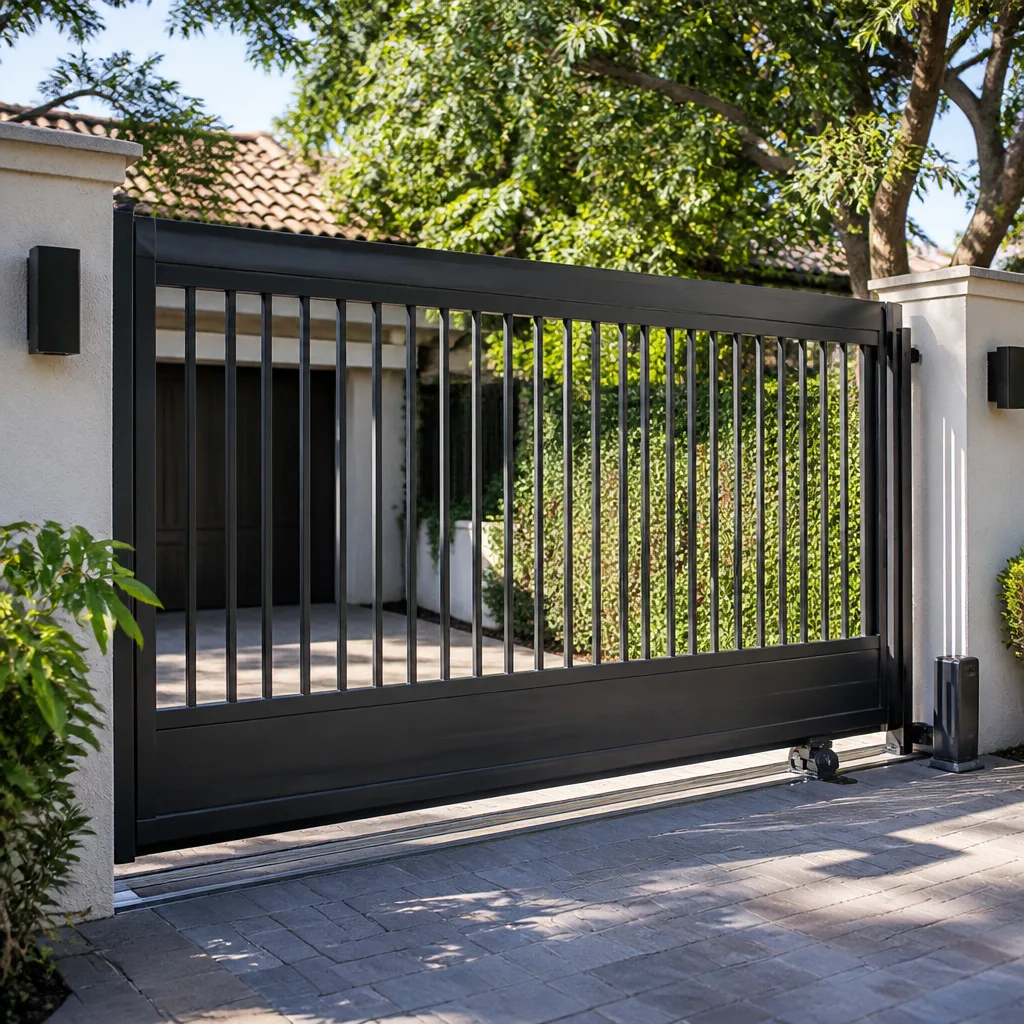
 Sliding driveway gates
 Wrought iron
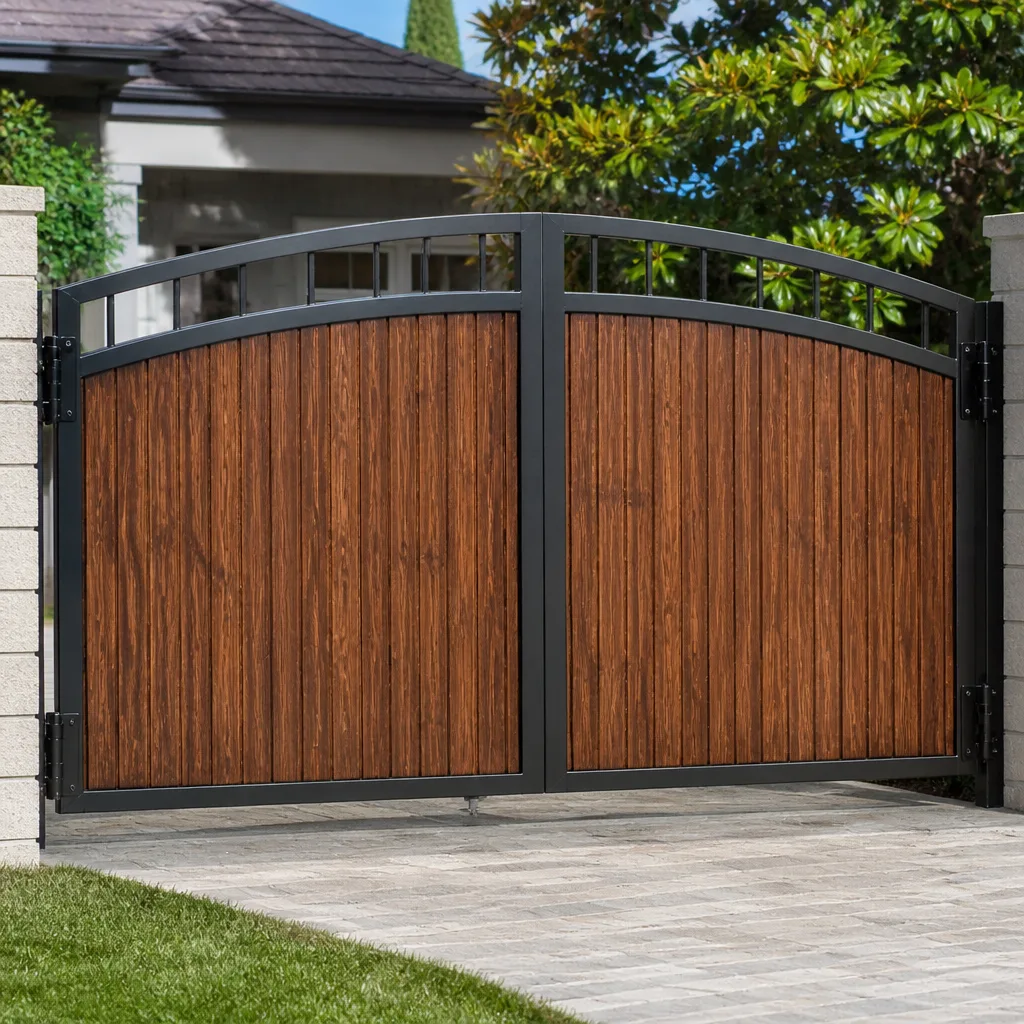 Wood & steel frame
 Farm & ranch
 LiftMaster operators
Free on-site gate assessment - hinges, posts, and your LiftMaster or Nice gate operator checked before anything is quoted
The assessment is free and the quote is the invoice.
Get your free estimateStyles & brands we work with
- Wrought iron
- Wood & steel frame
- Farm & ranch
- Sliding driveway gates
- LiftMaster operators
See the difference
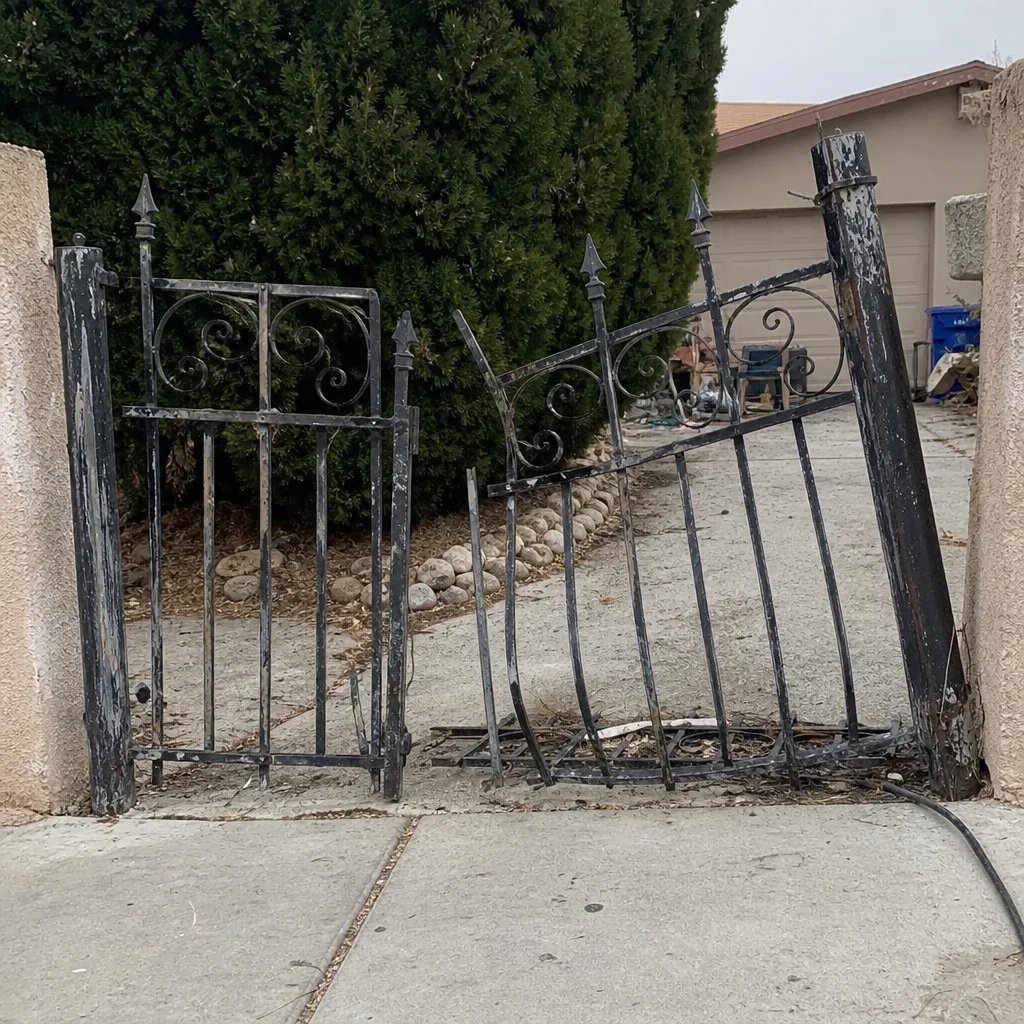 Before
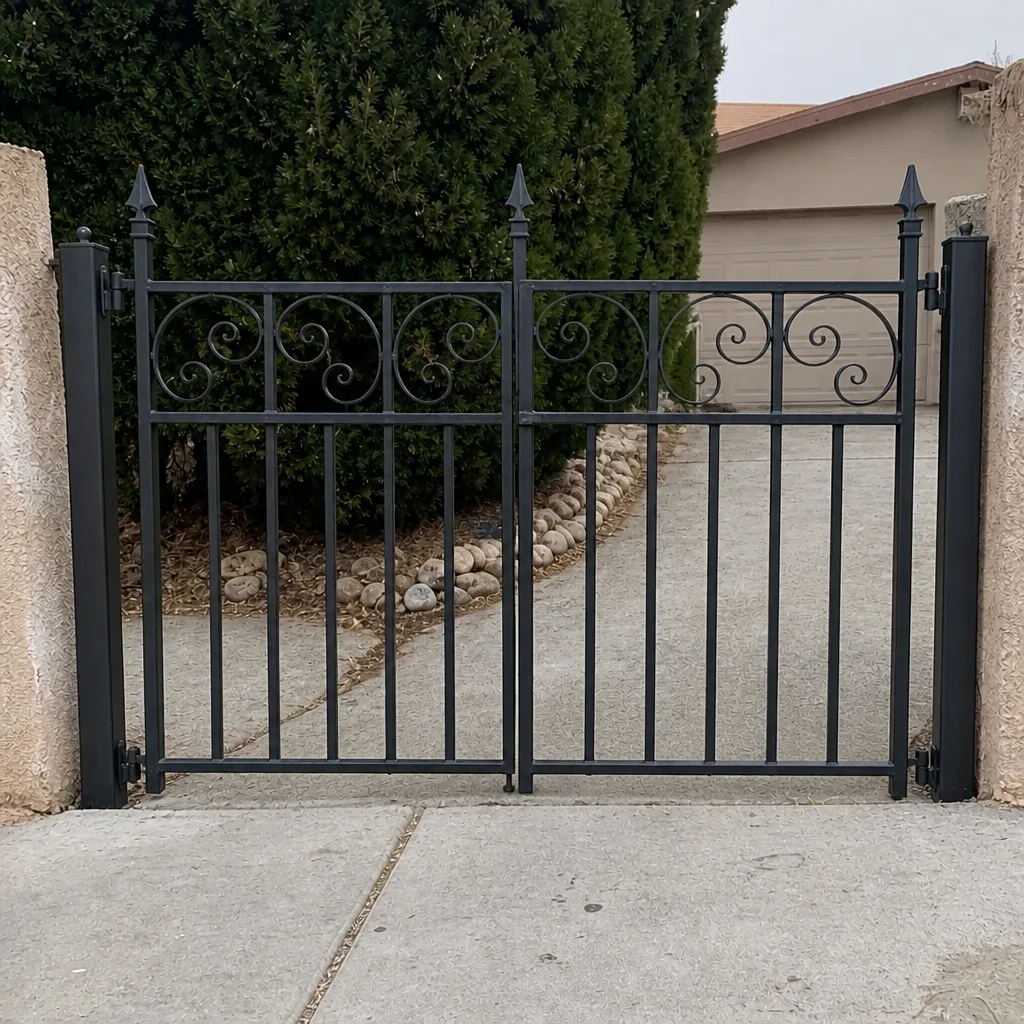 After
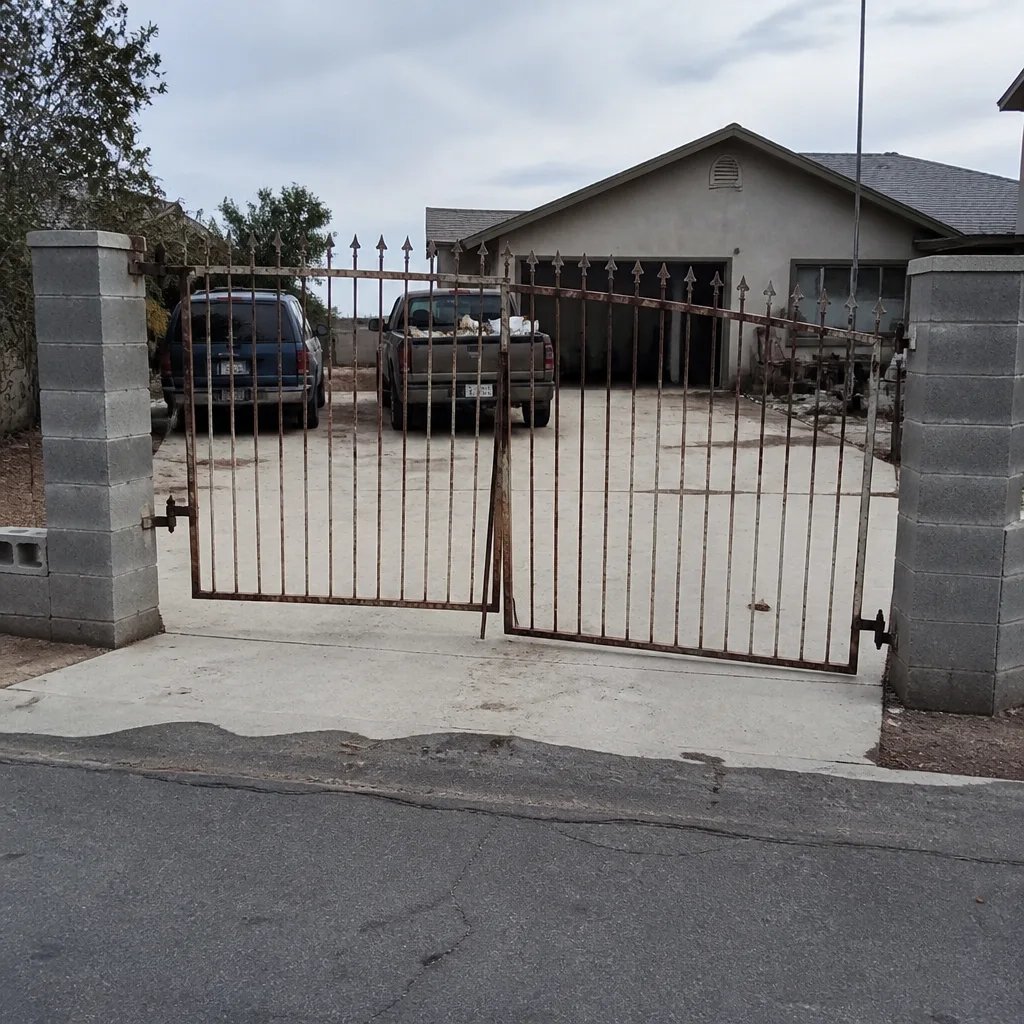 Before
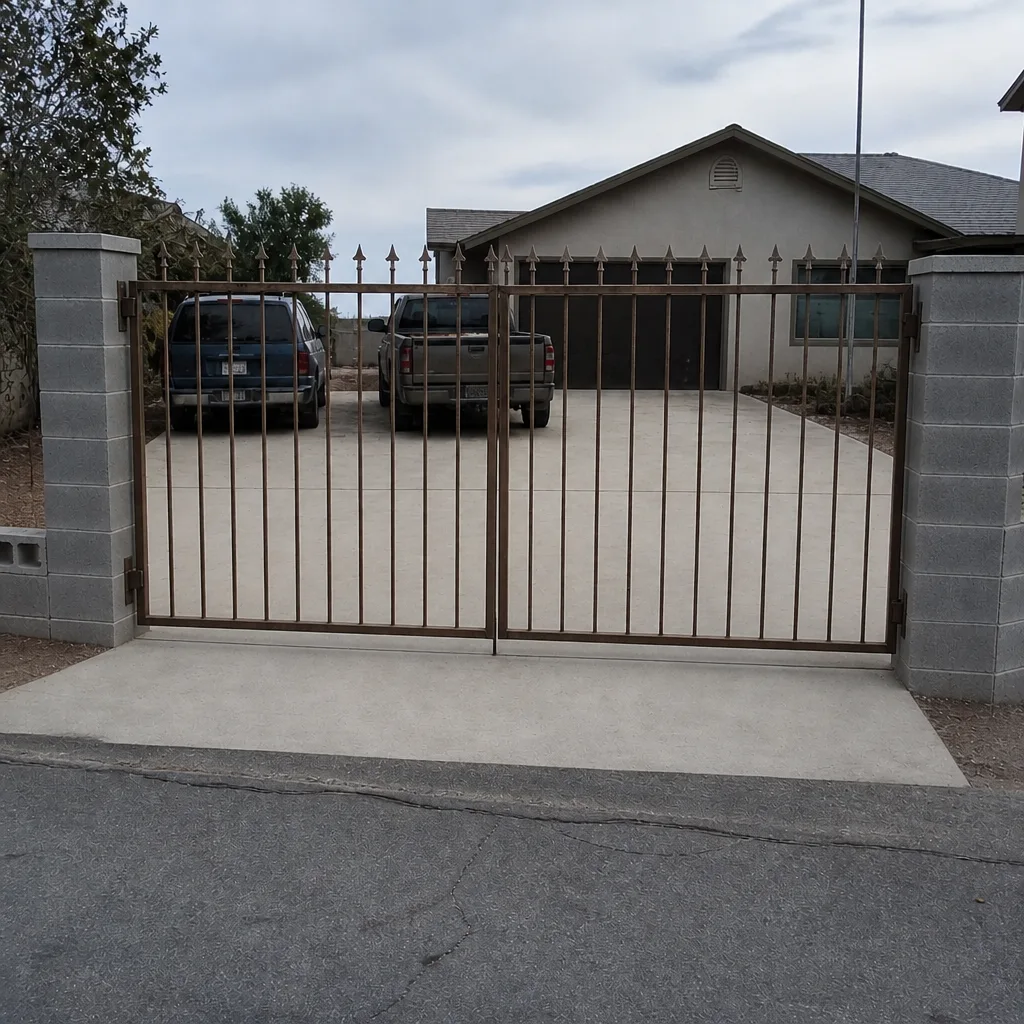 After
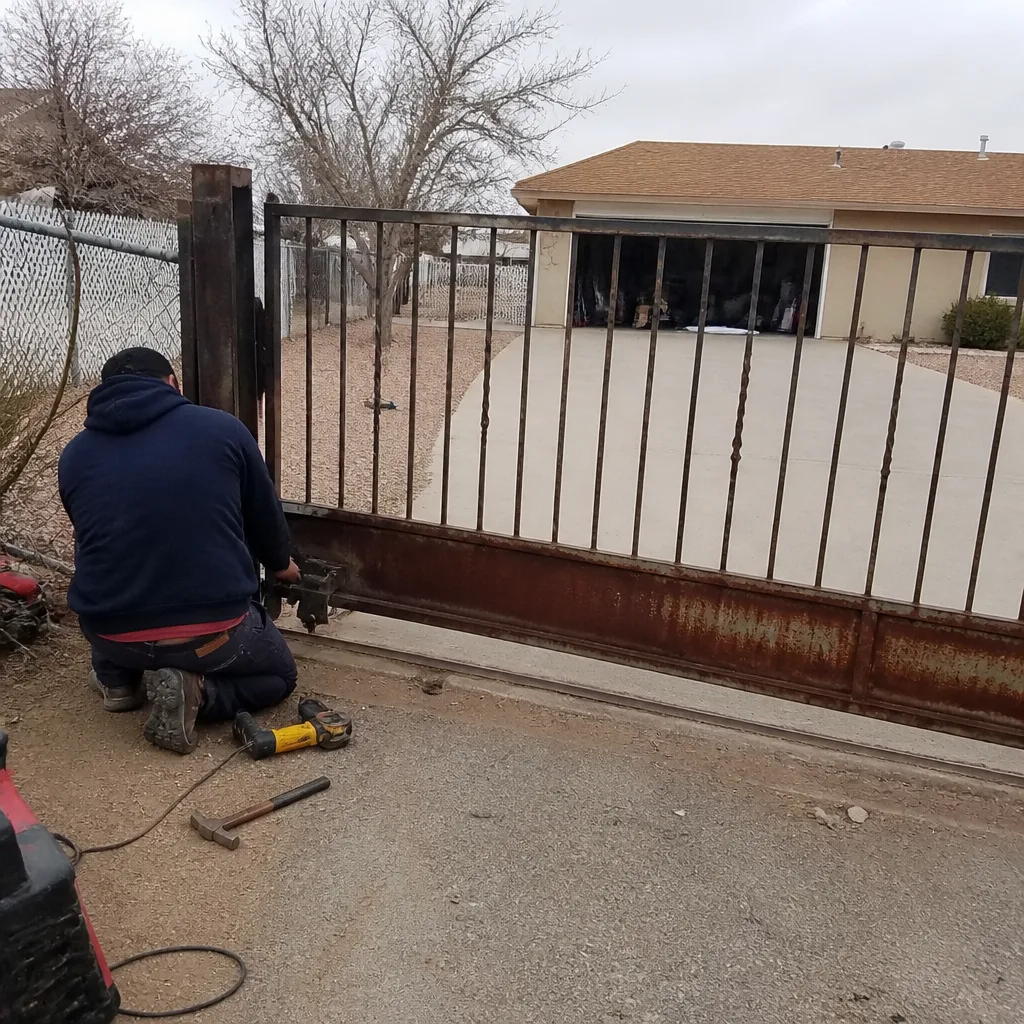 Before
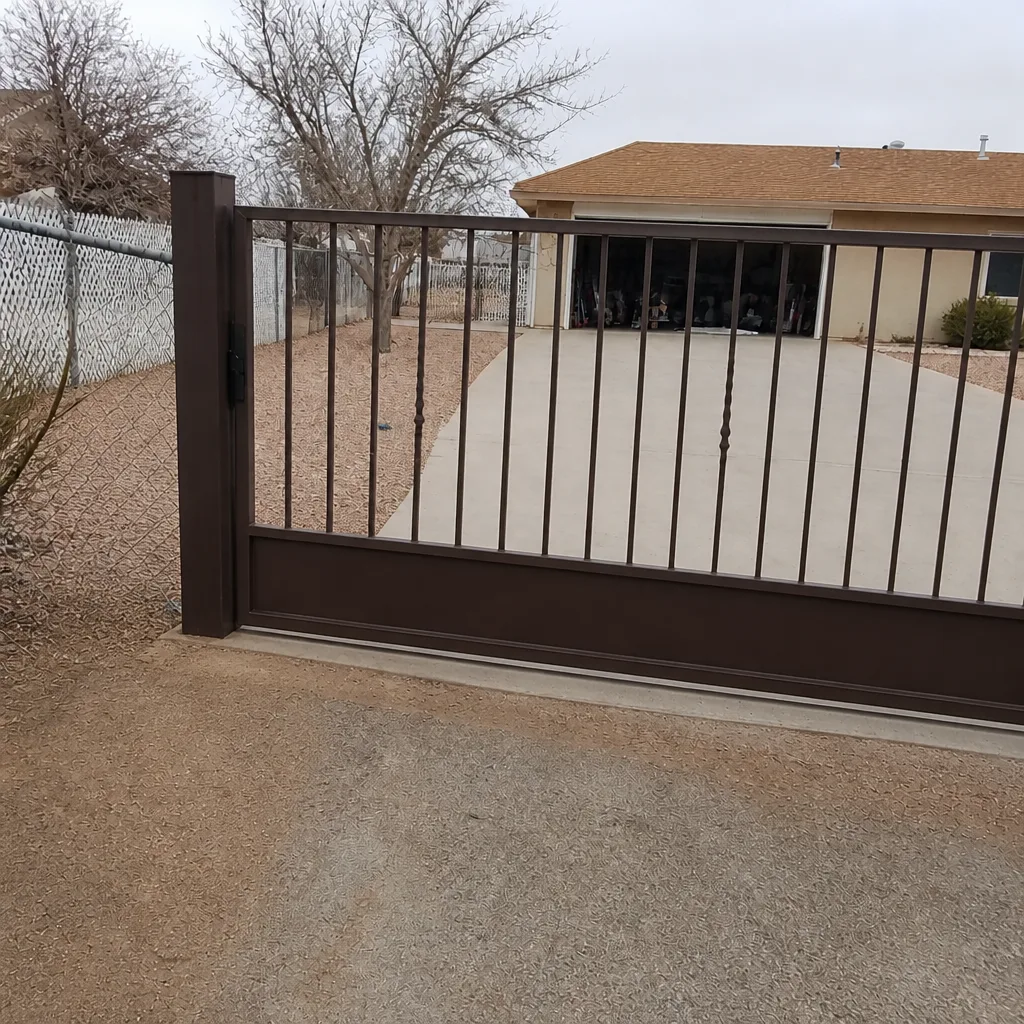 After
If you’re lubricating a driveway gate in Boulder City with ordinary oil, stop. Desert grit bonds to wet lubricant and the 110°F summer cures it into a gum that seizes the pivot you were trying to protect. Dry graphite on exposed iron, monthly photo-eye cleaning, and a wind-season bolt check in early spring are the three habits that keep a Boulder City gate moving through July.
That’s the short version. What follows is the maintenance list we actually work from, with the numbers and monthly rhythms that fit the Mojave instead of the advice columns written for damp climates. If something on your gate is already stiff, dragging, or tripping the motor, call (844) 320-7587 and we’ll tell you what we’d check first.
Why generic gate maintenance advice fails in Boulder City
Most maintenance checklists on the internet were written somewhere with humidity, soft winters, and rainfall. Boulder City is the opposite: an average summer day tops 105°F, sustained 30-40 mph winds sweep off the McCullough Range in spring, and the housing stock runs toward small 1930s-1950s bungalows and federal workers’ cottages with original wrought-iron pedestrian gates and wooden garage doors. Older, narrower, custom-fabricated gates behave differently from the standardized hardware you see in newer subdivisions.
So the standard advice to “oil the hinges” actively backfires here. Petroleum-based lubricant attracts the desert grit that blows up off the Eldorado Valley, then polymerizes in the heat and locks the joint. On a 1940s iron gate in the historic district around Nevada Way and Avenue B, that means a hand-forged strap hinge that moved freely in March is frozen solid by October.
The fix isn’t more oil. It’s the right dry lubricant applied on a schedule, plus a few checks timed to the wind and the sun rather than to a generic “seasonal” calendar.
The Boulder City maintenance lists that actually work
Hinges and pivots: dry graphite, not oil
For exposed iron pivots and strap hinges, use dry graphite lubricant. It stays dry, doesn’t collect grit, and doesn’t turn sticky when the temperature climbs. Apply it to the pivot surfaces and work the gate back and forth a few times so it reaches the bearing area. On the vintage hardware common in the historic core, that difference matters most: the strap hinges here are hand-forged and don’t take a standard replacement, so keeping the originals moving is cheaper than sourcing a match.
If a pivot is already gummed from a summer of oil, graphite won’t cut through it. The old lubricant has to come off first. That’s a job where a technician with the right solvent and a brass brush does in twenty minutes what a homeowner fights with for an hour, and it’s the point where a Gate Repair visit usually pays for itself.
Wind season: the pre-April bolt and stop check
Spring wind is the single biggest cause of gate damage we see in Boulder City, and it’s predictable, which means it’s preventable. Before the winds arrive in April, do these three checks:
- Pivot bolts and weld points. Walk the frame and tighten every pivot bolt. Look at the weld points where the frame meets the posts; a hairline crack that’s invisible in March becomes a snapped weld in a 40 mph gust.
- Mechanical gate stop. The stop is the physical bumper that keeps the gate from swinging past its limit. If it’s loose, the gate slams into its travel end and the motor takes the load instead of the stop. Check that it’s solid and hasn’t shifted.
- Motor torque limit. This is the setting most homeowners don’t know exists. It controls how much force the motor applies before it gives up and reverses. Set too high, and a gust-pushed gate keeps driving and bends the arm. Set correctly, the motor trips and the gate survives. It’s a torque adjustment on the control board, and getting it right is worth a technician’s time if you’re not sure how to read the setting.
Photo eyes: monthly cleaning, not annual
The photo eye is the infrared beam across the gate opening that stops the gate if something crosses its path. In direct Mojave sun, the lenses collect dust and a UV haze far faster than in cooler, wetter climates. A fogged or dust-coated lens scatters the beam, and the gate reads it as an obstruction: it stops, reverses, or refuses to close. Homeowners often assume the control board has failed when the real problem is a dirty lens.
Clean both lenses monthly with a soft cloth and a little water. Don’t use a solvent that can cloud the plastic. If the gate still gives false obstruction signals after a clean, that’s when the alignment angle and the wiring deserve a look, and that’s a call-in job.
Wooden gates: check the top rail each spring
The original wooden gates in Boulder City’s bungalow stock take a specific beating: 105°F dry heat for months, then sudden monsoon humidity. That cycle makes wood check and warp, and it happens at the top rail first. When the top rail bows, it pulls the latch side out of plumb, and a gate that won’t latch is usually a gate whose top rail moved, not a failed latch.
Each spring, sight down the top rail from the hinge side. If it’s straight, you’re fine. If it’s bowing, address it before it pulls the whole frame out of square, because a re-hang costs far more than a top-rail adjustment.
What a documented maintenance visit leaves you with
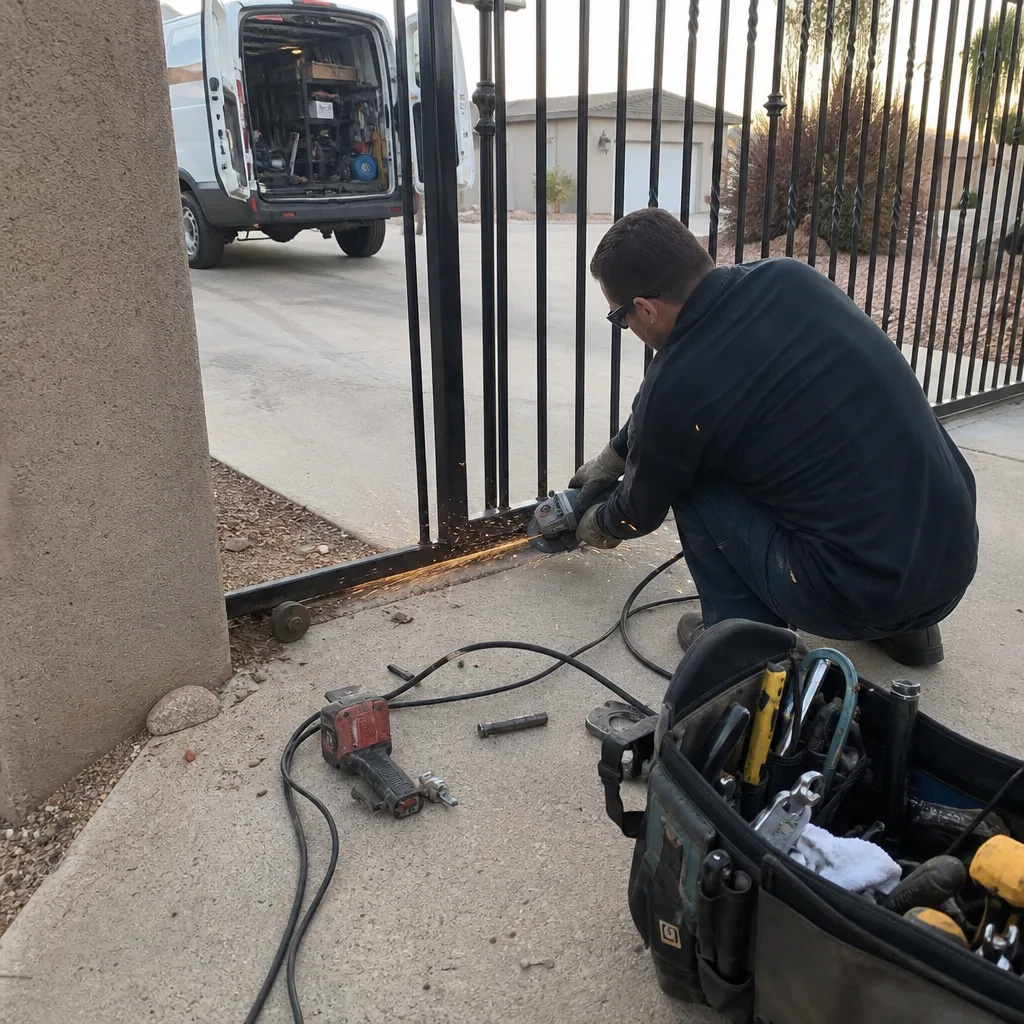
This is where maintenance habits and a company’s habits overlap. A maintenance visit from a technician who documents the work gives you a year-over-year record of your gate’s condition, not just a sticker on the frame. What we record on every visit:
- Hinge clearance measurements, so you can see whether a pivot is wearing.
- Limit-switch readings, so a drift in travel shows up as a number instead of a surprise.
- Photo-eye alignment angles, so a slow misalignment is caught before it becomes a fault code.
- Hardware torque specs, so nothing gets over- or under-tightened over time.
Each of those measurements is photographed. The photos and the readings go into the job record and a copy goes to you. That matters because motors and control boards on gates here are rarely cosmetic swaps: most are still running a LiftMaster, Viking, or Elite unit that’s years old, and knowing the baseline settings saves the next technician from guessing. Our technicians have up to 12 years of experience reading these systems, and every job under the Haven Standard includes documentation as a baseline, not an add-on.
| Maintenance task | Frequency in Boulder City | What it prevents |
|---|---|---|
| Dry-graphite hinge/pivot lube | Every 3-4 months | Seized pivots from sun-cured oil and grit |
| Pre-April bolt, weld, and stop check | Once, before wind season | Gust damage to the arm and frame |
| Photo-eye lens cleaning | Monthly | False obstruction signals mistaken for board faults |
| Wood top-rail straightness | Each spring | Latch-side misalignment and a full re-hang |
| Documented measurement record | Each service visit | Repeat diagnosis and guesswork down the road |
BeforeAfterWhen to do it yourself and when to call
Lubricating an exposed pivot, wiping a photo-eye lens, and sighting a top rail are homeowner tasks. Tightening a pivot bolt is too. But anything involving the motor’s torque setting, the control-board wiring, or an actual structural weld belongs with a technician, and a gate that’s already dragging, tripping its motor, or hanging off its posts needs a look before the next wind event, not after.
A free second opinion on another company’s written estimate is available if you’ve already had one. Bring the paperwork and we’ll review it at no cost, which is useful when you’re weighing a repair against a replacement you may not need.
If you’d rather have it looked at, Vance Gate Repair Boulder City offers a no-pressure assessment in Boulder City – call (844) 320-7587.
FAQs
How often should I lubricate my driveway gate hinges in Boulder City?
Every three to four months, using dry graphite rather than oil. Oil attracts desert grit and turns gummy in 105°F-plus heat, so it does more harm than good on exposed iron pivots and strap hinges.
Why does my gate keep reversing or refusing to close when nothing is in the way?
A dirty photo-eye lens is the most common cause, especially in direct desert sun where dust and UV haze build up fast. Clean both lenses monthly and try again before assuming the control board has failed.
Can I set my gate motor’s torque limit myself?
You can, but it’s easy to get wrong, and it’s the setting that protects the arm from wind damage. The control board has a torque adjustment that needs to trip before a gust-pushed gate bends the arm, and it’s worth having a technician verify the setting at least once, then check it each spring before the winds arrive.
It’s cheaper to repair the gate or replace it?
Repair, in most cases. The older, custom-fabricated gates common in Boulder City’s historic core often can’t be replaced with an off-the-shelf match anyway, so re-fitting and repairing is usually both cheaper and the only way to keep the streetscape consistent.
Contact
If you’d rather have it looked at, Vance Gate Repair Boulder City offers a no-pressure assessment in Boulder City – call (844) 320-7587 for a free estimate.
Written by the team at Vance Gate Repair Boulder City, serving Boulder City, NV.