
Last updated November 18, 2026
 Wrought iron
 Wood & steel frame
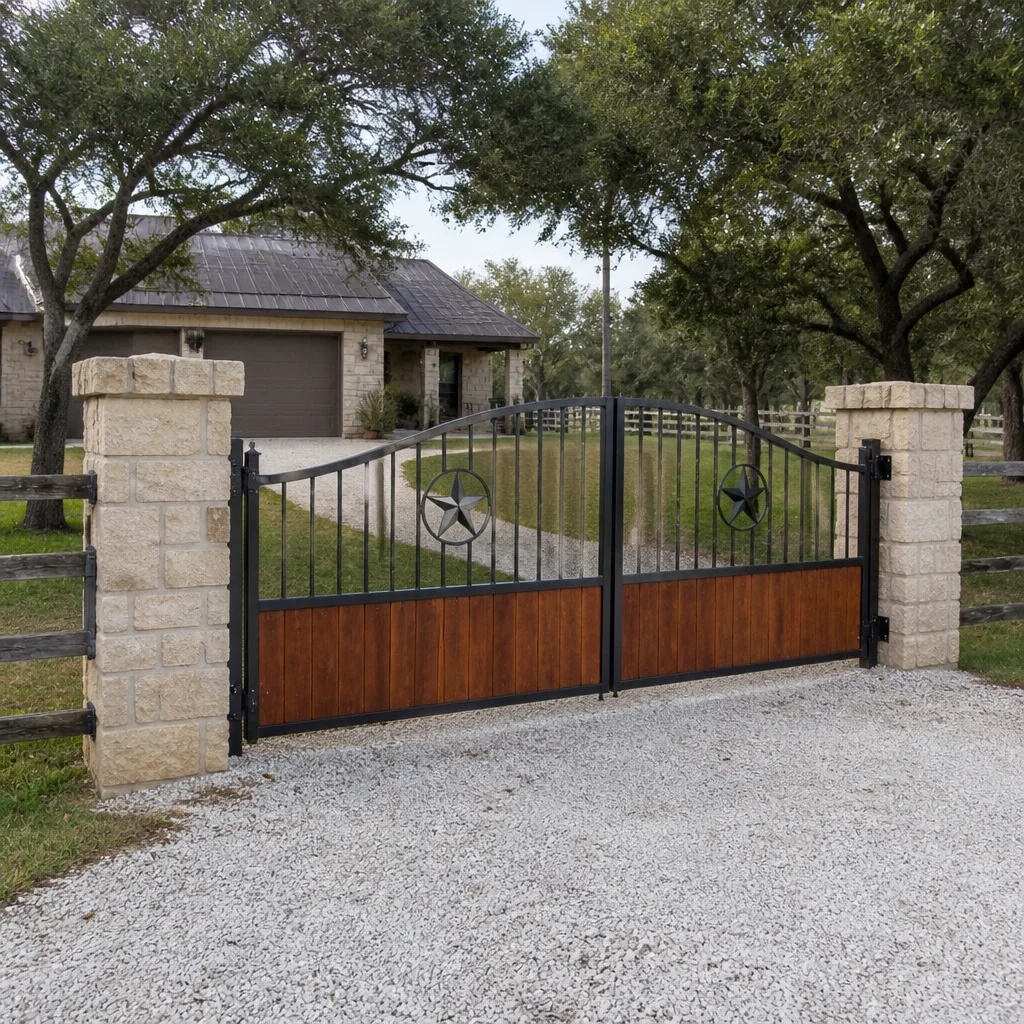 Farm & ranch
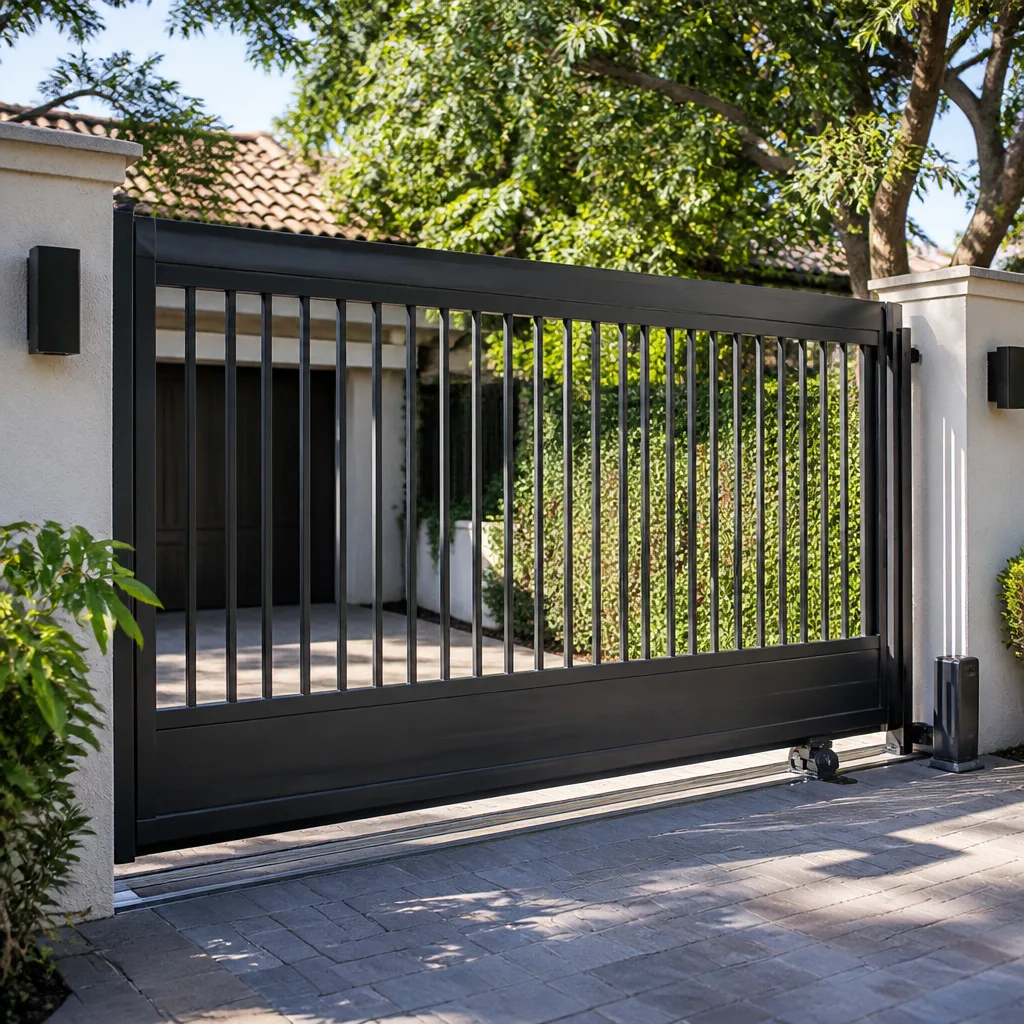 Sliding driveway gates
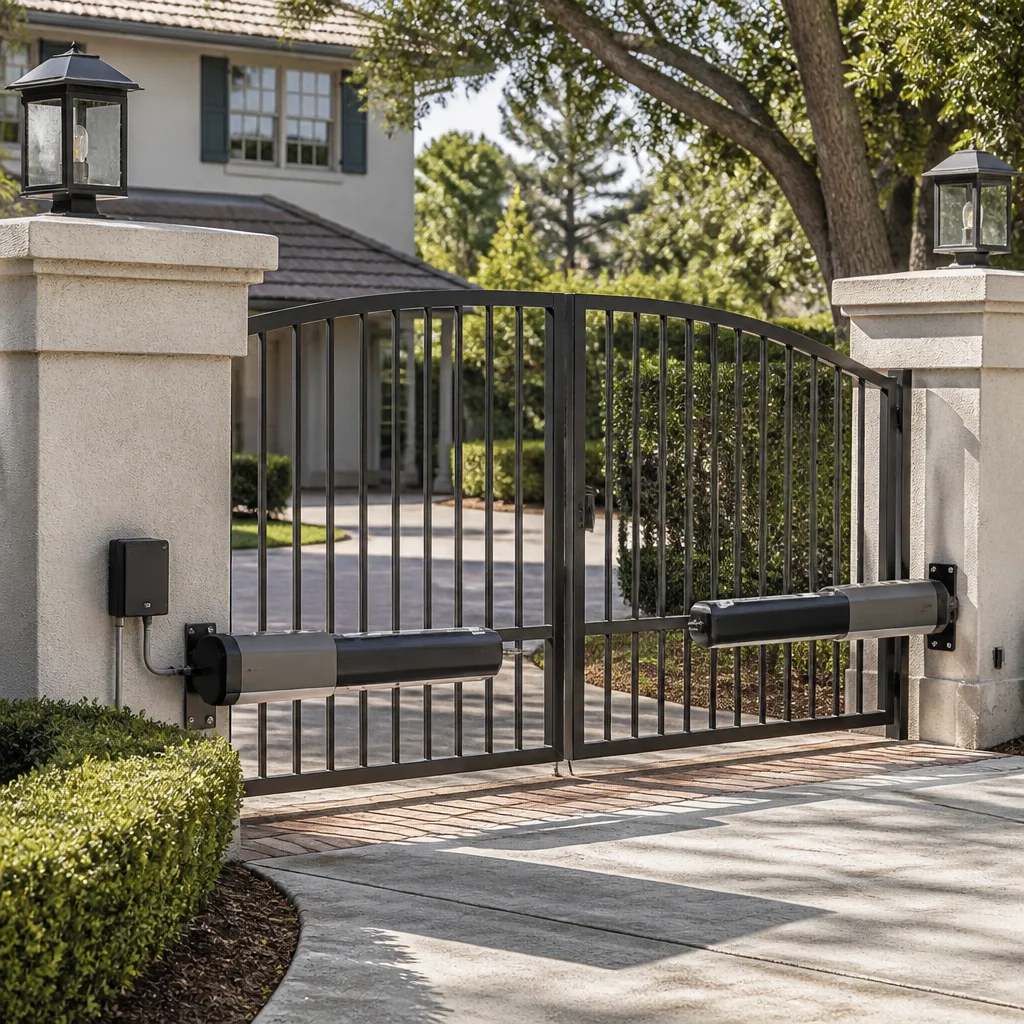 LiftMaster operators
Free on-site gate assessment - hinges, posts, and your LiftMaster or Nice gate operator checked before anything is quoted
The assessment is free and the quote is the invoice.
Get your free estimateDIY vs Professional Gate Installation: What’s Safe to Do Yourself
Here’s the counterintuitive part: most people who get in trouble building their own driveway gate in Boulder City don’t get hurt. They get flagged. Nevada requires a licensed electrical contractor for any new 120V circuit run to a gate operator, and that rule applies whether you dug the post holes yourself or not. The mechanical work can be a genuinely sound weekend project for a careful homeowner with the right tools. The moment the job needs a new electrical circuit, the whole installation inherits permit and licensing exposure that a home inspector will find years later. This guide lays out exactly where that line sits, what a split-scope project looks like, and what documentation to produce so a future buyer never has to ask what was done here.
Quick Answer
You can safely handle site layout, post setting, panel hanging, and manual latch hardware yourself if you’re mechanically capable and check local permit rules first. You should not run a new 120V circuit to a gate operator, connect the motor wiring, or commission the opener unless you’re a licensed electrician in Nevada. Hire a professional for the electrical scope and, ideally, for the final operator install and testing.
Styles & brands we work with
- Wrought iron
- Wood & steel frame
- Farm & ranch
- Sliding driveway gates
- LiftMaster operators
Table of Contents
- The Permit Line: What Nevada Law Actually Requires
- The Property-Sale Risk Nobody Talks About
- What a Skilled Homeowner Can Safely Do
- The Electrical Stop Line (And Why It Matters)
- How to Structure a Split-Scope Installation
- Documentation to Protect Your Resale Value
- Common Mistakes to Avoid
- When to Call a Professional
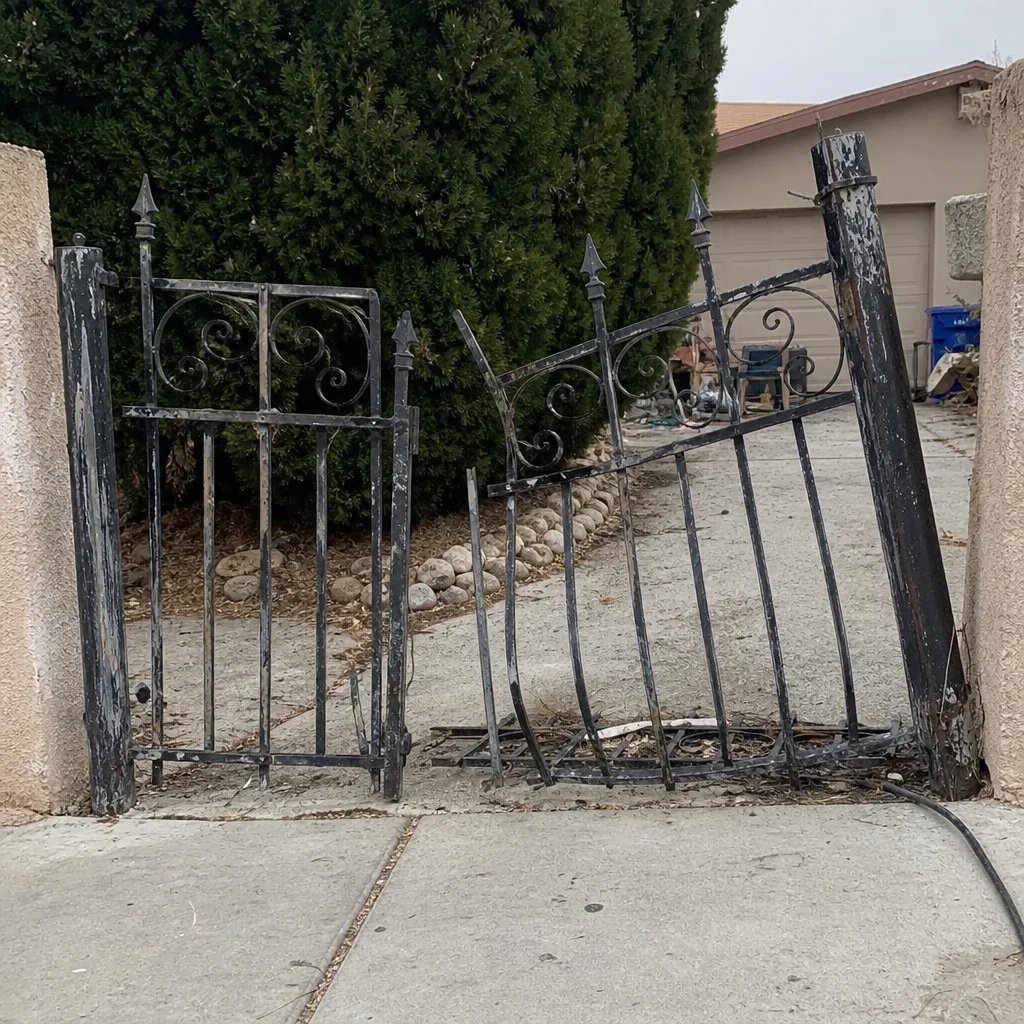 Before
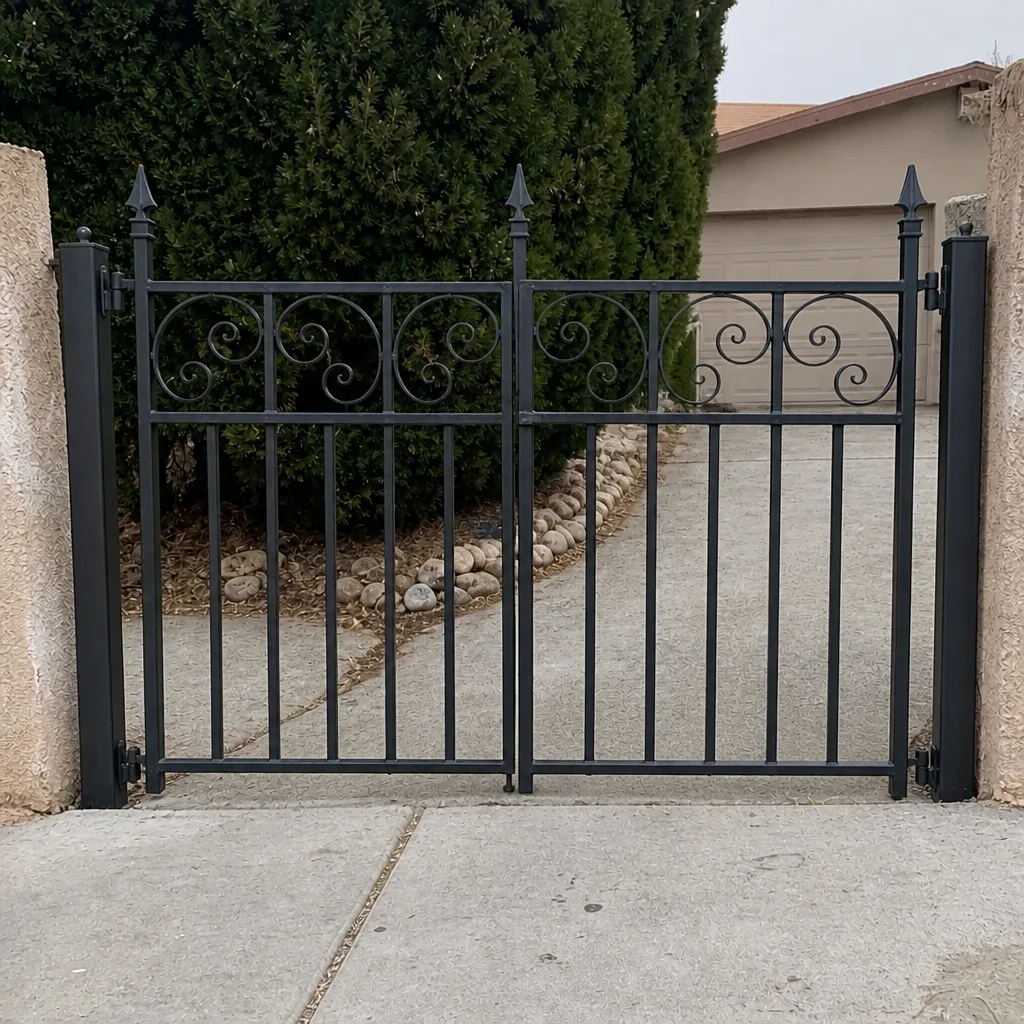 After
The Permit Line: What Nevada Law Actually Requires
Nevada Revised Statutes 624 governs contractor licensing in the state, and the part homeowners usually misunderstand is a category distinction, not a “licensed person required, all jobs, everywhere” rule. Certain categories of work are legally reserved for licensed contractors. Others are open to property owners working on their own owner-occupied home. The distinction matters enormously for gate installation, because a single project typically spans both categories at once.
Here’s the breakdown in plain terms:
- Site layout and excavation – generally allowed for a homeowner on their own property, subject to local permit and utility-locate requirements.
- Post setting and concrete work – typically permissible for a homeowner, but the depth and diameter have to match the gate’s wind-load and weight calculations, which most people underestimate.
- Gate panel assembly and hanging – considered finish carpentry and framing on the homeowner’s own property in most circumstances.
- Manual latches, hinges, and drop bolts – the kind of mechanical hardware you’d install on a barn door. Fine for a homeowner.
- New 120V circuit and electrical disconnect – requires a licensed electrical contractor in Nevada. No exemption for owner-builders on this one.
- Low-voltage control wiring to the operator – depends on the operator and local inspector; many jurisdictions treat it as part of the electrical scope. Assume it needs the electrician.
If you read that list and think “so the electrical is the only part I truly can’t touch,” you’ve understood it correctly. That one piece is where DIY gate installation in Boulder City either stays a clean project or becomes one that follows the property for years.
The Property-Sale Risk Nobody Talks About
The moment an unpermitted 120V circuit to a gate operator gets noticed is almost never during installation. It’s during a home inspection, years later, usually two weeks before a closing date. A standard inspector following a checklist will photograph the operator location, note that no permit is on file for the circuit, and flag it on the report. At that point, the buyer has leverage and the seller has a deadline.
What remediation usually costs when this surfaces during a sale:
- Licensed electrician to assess and either permit-and-retrofit or remove the circuit: the largest cost, and the one that goes up under time pressure.
- Possible re-inspection fee from the county building department for the after-the-fact permit.
- Any repairs the inspector requires to bring the install into code – conduit, bonding, GFCI protection, disconnect location – which are the exact items a quick DIY run tends to miss.
- Closing-delay costs if the buyer’s lender won’t fund until the electrical is cleared.
In our experience, homeowners rarely think about this when they’re standing in the driveway with a borrowed auger. They’re thinking about getting the gate up before the weekend. But the electrical run is the one component that keeps its paperwork attached to the property long after the gate itself has been repainted twice. If you are preparing a home in Boulder City for sale or planning to sell in the next few years, the electrical scope is not where you save money.
What a Skilled Homeowner Can Safely Do
Boulder City’s older residential lots often have short, straight driveway runs and modest gate widths compared to newer metro subdivisions. That makes a single-swing or dual-swing gate on an existing wall or post line a genuinely realistic homeowner project – provided you stop at the electrical scope and do the civil work to proper depth and hardware standards. The work that stays within a homeowner’s reach includes:
- Site survey and layout. Mark the hinge and latch post locations, confirm the gate swings clear of any slope change or curb, and call 811 before you dig. Whether the gate needs a 4-inch or 6-inch embedment depends on gate weight and local wind exposure – not on what the last YouTube video did.
- Post setting. Metal posts run to code-required depth in concrete with the base plate square to the swing arc. Wood posts need to sit above grade by at least an inch so they don’t wick moisture – an easy miss in a dry climate like Boulder City’s, where monsoon-season soakings have a way of exposing a badly set footer.
- Panel hanging and alignment. Square the frame to the post, set the hinge height so the gate clears the ground by 2 to 3 inches, and check the swing arc for scraping. Any gate wider than 12 feet or heavier than about 250 pounds is a two-person job with lifting equipment, not a weekend handyman project.
- Manual latch and hold-open hardware. Drop bolts, spring latches, and gate closers all install and adjust by hand. These are precisely the parts that make a gate feel finished.
- Finishing and corrosion protection. Prime any cut metal, seal any wood, and touch up welds or seams before the gate sees weather.
None of that requires a contractor license on your own property, and all of it is worth doing carefully because it determines whether your eventual operator installs cleanly or fights itself for years.
The Electrical Stop Line (And Why It Matters)
This is the stopping point, and it’s firm. Anything involving a new 120V circuit, the disconnect, the conduit run from the house panel to the operator, and the control wiring that supplies the motor belongs in the hands of a licensed electrician in Nevada. That is true even when the homeowner has done the mechanical work, and even when the operator itself is a low-draw unit.
Three things consumers typically miss at this step:
- The disconnect requirement. Most gate operators require a visible means of disconnect within sight of the motor – not at the panel back at the house. If you have the electrician shorten that, an inspector will require re-work.
- Low-voltage is not automatically “safe to DIY.” Many jurisdictions fold operator control wiring into the electrical permit and require the licensed electrician to terminate it. Assume the electrician owns the whole path from panel to motor terminal.
- The operator manual is not the code. Every operator brand we service – LiftMaster, FAAC, BFT, Linear, and the rest – publishes its own wiring diagram, but it does not replace the electrical code or the permit. Treat the manual as the manufacturer’s instructions, not the jurisdiction’s requirement.
One more safety point, and it’s the one that gets underestimated most often: gate operators carry enough force to seriously injure a person or a pet. Pleated safety edges and photo-eyes aren’t optional upgrades – they are required safety devices on automatic gates, and they only function correctly when installed, tested, and documented by someone who knows what to look for. If any part of the install touches the electrical circuit or commissioning of the operator, that is the part to hand off.
How to Structure a Split-Scope Installation
The cleanest way to run a partial DIY gate installation in Boulder City is to split the project into three sequential scopes, each owned by a different party. If you document the handoffs, you end up with a permitted, safe install and you’ve done the work that plays to a homeowner’s strengths. Here is the sequence:
- Homeowner scope (civil work). Layout, excavation, 811 utility locate, post setting, panel hanging, and manual hardware. Finish this before any electrical is scheduled, and take photos of the post footings before pouring concrete – you’ll want those later.
- Licensed electrician scope (electrical). New 120V circuit from the panel to the operator location, conduit, disconnect, and the permit. Get the permit number in writing the day it’s pulled. This is not a job for the installer or a favor from a friend.
- Installer scope (operator and commissioning). Gate operator mounting, safety edges, photo-eye alignment, control wiring termination at the motor, and full cycle testing. This is the step that gets skipped when a homeowner tries to shortcut the electrical – and it’s exactly the step that determines whether the gate closes reliably for the next decade.
The reason we like this structure is practical. A homeowner who does the civil work usually keeps the gate weight and geometry tight, and the operator install goes faster. A homeowner who hires out the entire project gets the same result with less work. The mistake is doing the first two scopes and trying to skip the third – or, worse, combining all three into one unsupervised weekend.
Documentation to Protect Your Resale Value
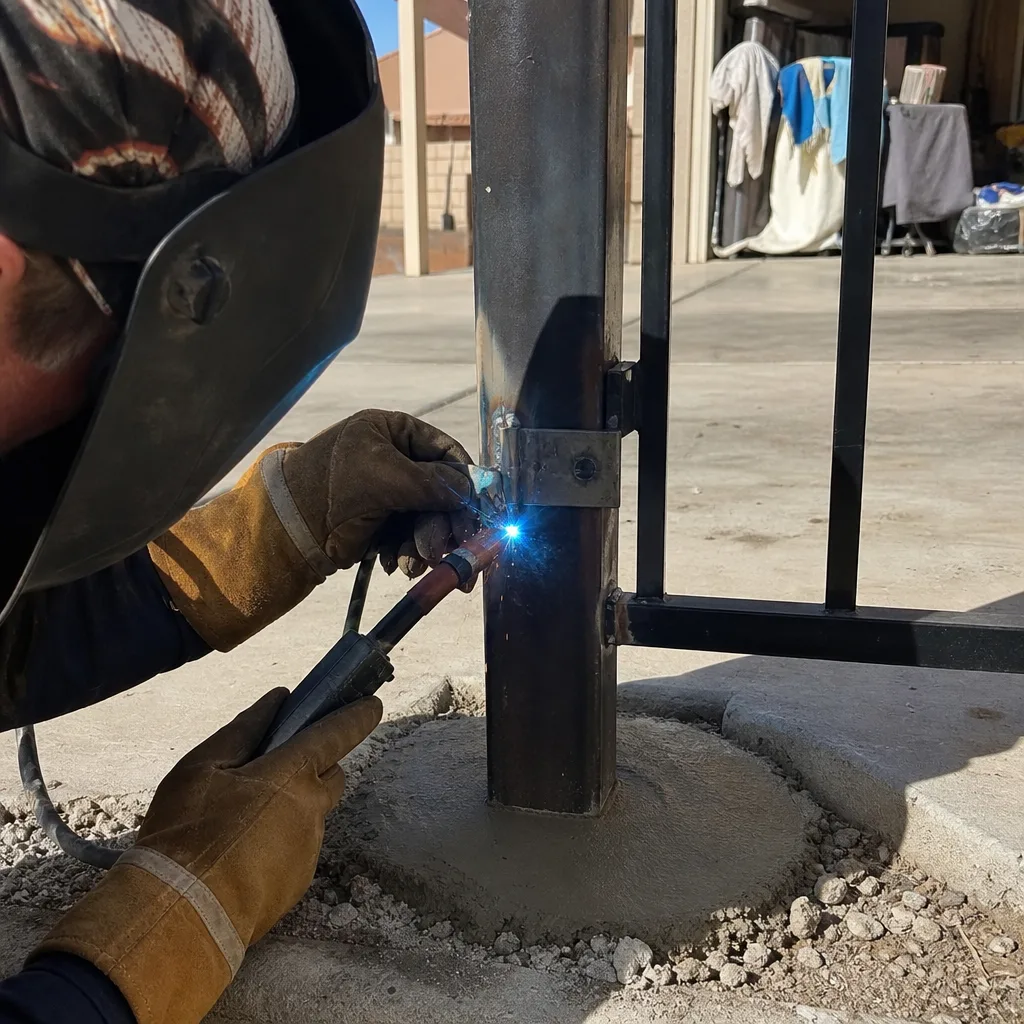
Every gate install ends with a stack of evidence whether or not anyone collects it. The homeowner who collects it has a property record that saves time and money years down the line. If you’ve done any part of a gate installation yourself in Boulder City, produce and keep the following:
- Photos of the post footings before the concrete pour, with a tape measure visible for scale.
- The electrical permit number and the electrician’s license number, filed with the closing documents alongside your other permit records.
- The operator model, serial number, and manufacturer wiring diagram as installed, not as boxed.
- A photo of the safety-edge and photo-eye mounting positions with the alignment check noted – the exact evidence a cautious buyer’s inspector will want to see.
- The signed-off permit inspection card from the county once the electrical work passes.
This is the same documentation habit we run on every visit at Vance Gate Repair Boulder City, formalized under The Haven Standard: written scope, written price, and a photo record on the way out. A homeowner who keeps those records gives any future service technician a running start – and no licensed pro should ever have to guess what was done when the last installer didn’t leave a note. If you’re weighing the full professional install against a split project, our page on Gate Installation in Boulder City lays out what the professional scope actually covers, and our overview at the Vance Gate Repair Boulder City home page gives you the full map of services.
Common Mistakes to Avoid
- Running the electrical yourself because “it’s just a gate motor.” It’s a 120V circuit fed from your home’s panel, and if it isn’t permitted, the inspector at sale time will find it. Nevada doesn’t carve out an exemption for owner-builders on this.
- Sizing the posts for the gate you started with. Homeowners routinely upgrade from a 12-foot wood gate to a 14-foot steel gate two years later and find the posts aren’t rated for the new load. Set posts for the gate you’ll want in five years, not the one going up today.
- Skipping the 811 call. It’s free, and Boulder City lots can carry older utility runs closer to the surface than newer builds. A damaged irrigation main is the best-case outcome of a skipped locate.
- Ignoring planning-district rules. Some Boulder City neighborhoods have height and design review requirements for street-facing gate work. Confirm before you hang a panel you can’t legally keep.
- Testing the operator by hand with the safety edges disconnected. This is where people get hurt. Safety edges must be live and tested before the gate is cycled under power.
- Assuming the manual overrides the code. The manufacturer’s manual tells you how to install their motor; it does not tell you what your jurisdiction requires. These are separate documents.
- Not keeping a record. A gate with no paperwork becomes a mystery every time it needs service, and a mystery costs more to fix.
When to Call a Professional
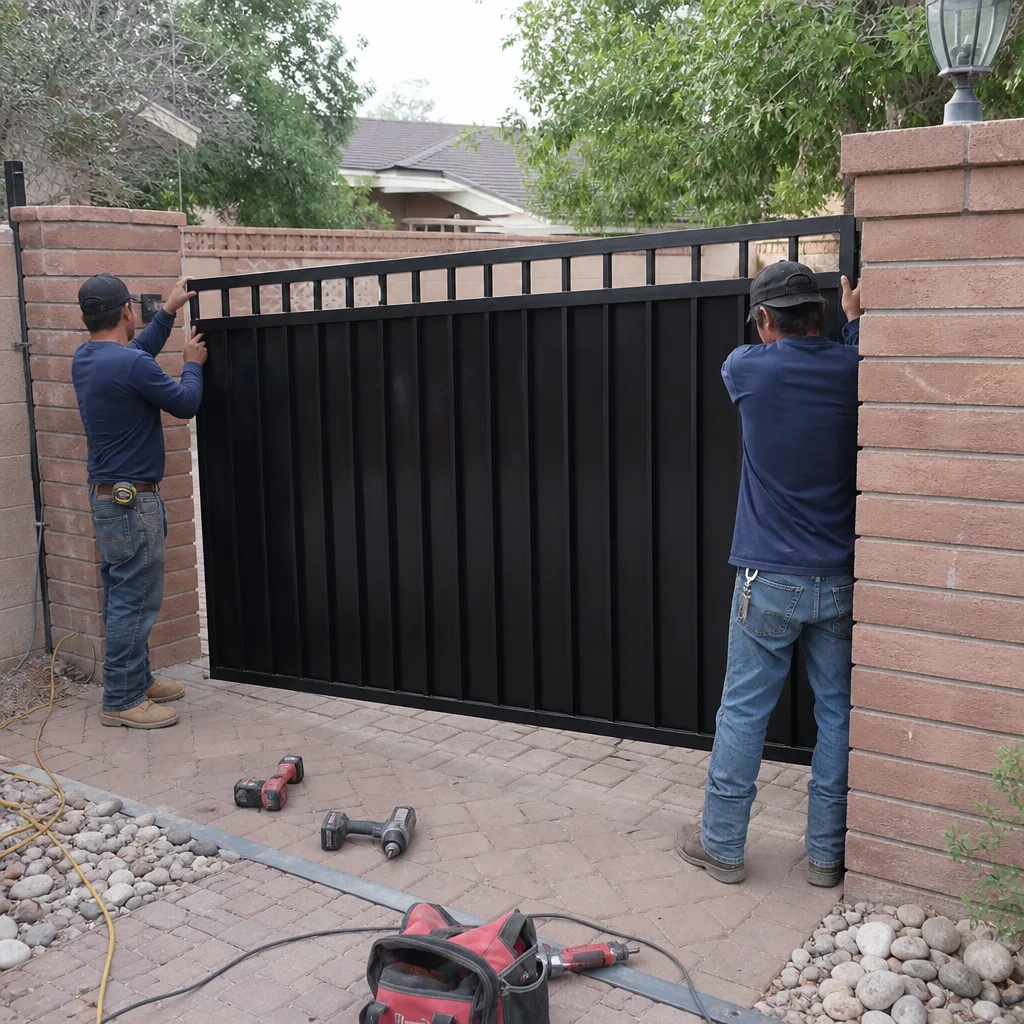
Bring in a licensed professional for any part of the installation that crosses into a new electrical circuit, for operator commissioning and safety-device testing, and for any gate heavier than a two-person lift. Call us when you’ve done the mechanical work and want the operator set up to spec; when you’re mid-project and discover the electrical scope is deeper than expected; or when you want a written quote for the full professional install so you can compare it against the split-scope number. Vance Gate Repair Boulder City offers free estimates across Boulder City and a free second opinion on any written estimate from another company – bring the paperwork and we will review it at no charge. Call (844) 320-7587 for a free estimate.
See the difference
BeforeAfter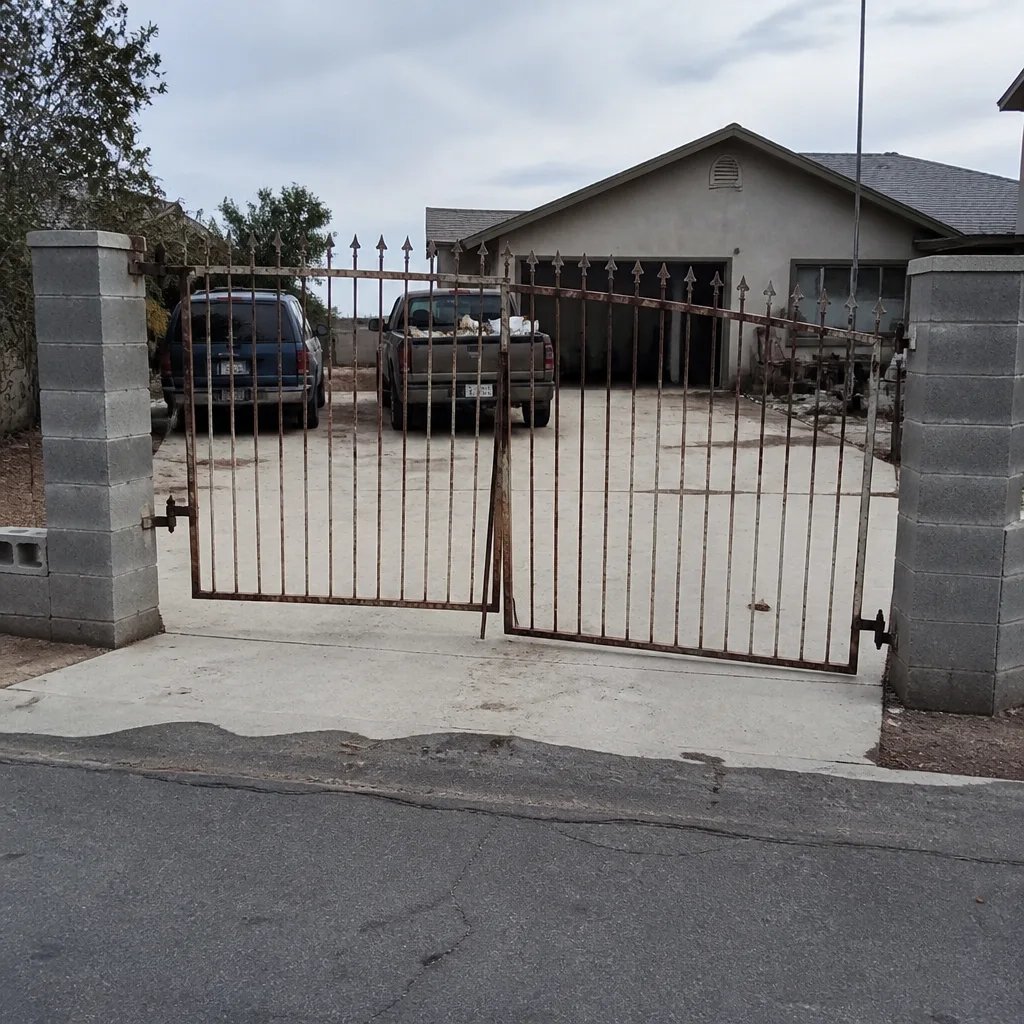 Before
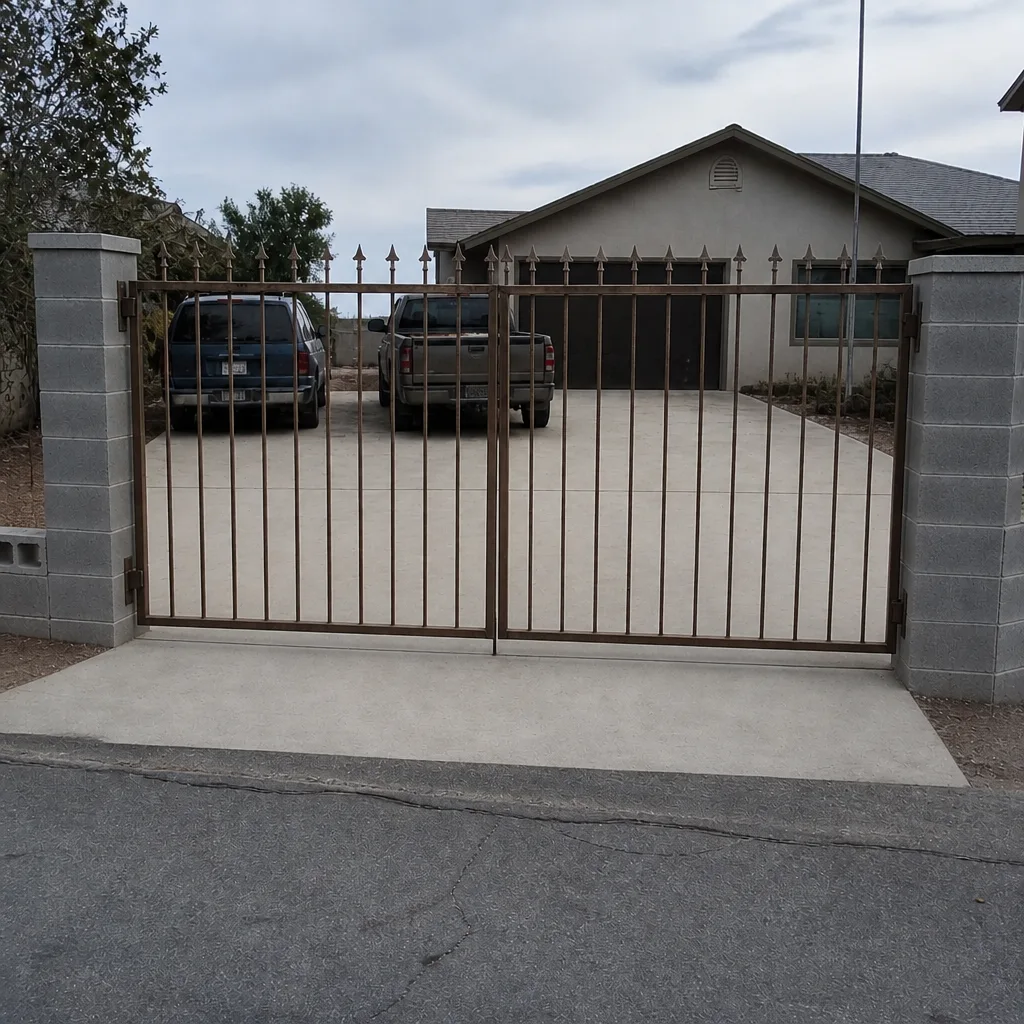 After
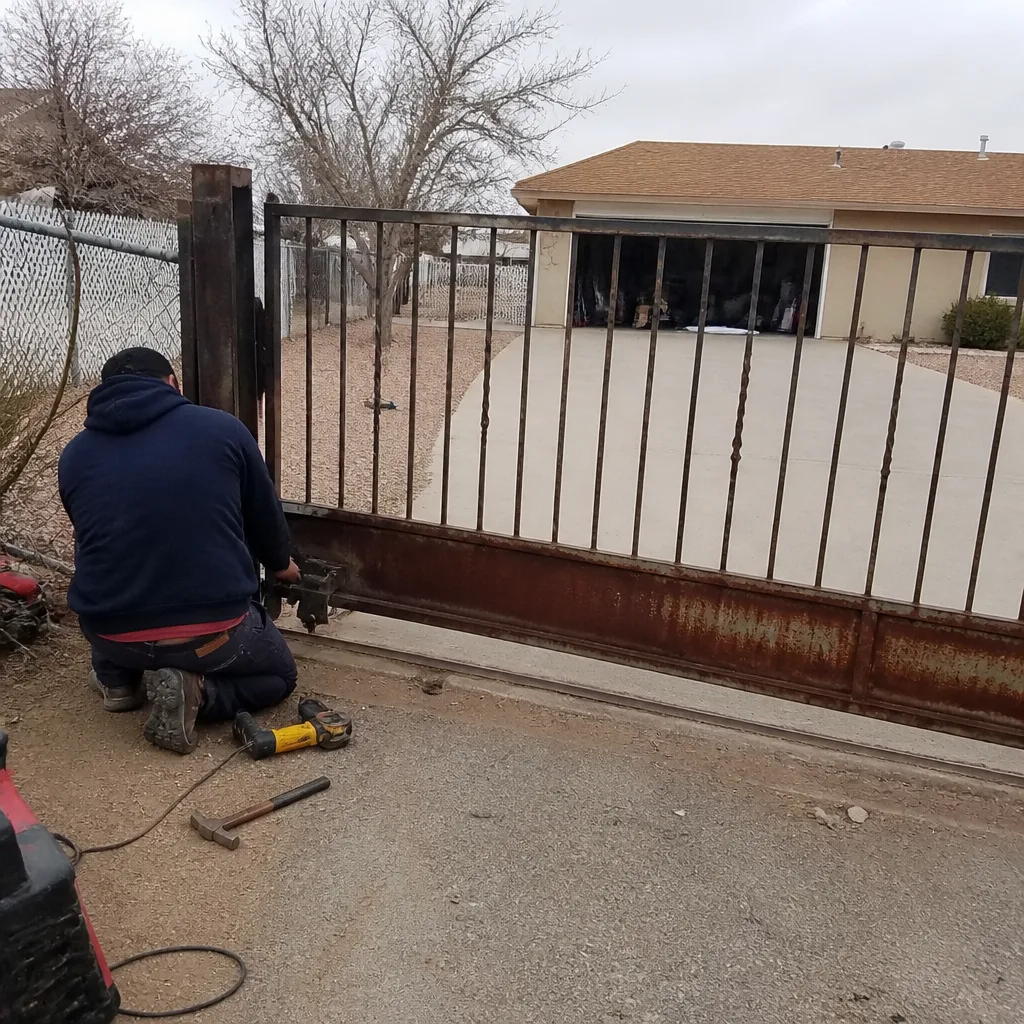 Before
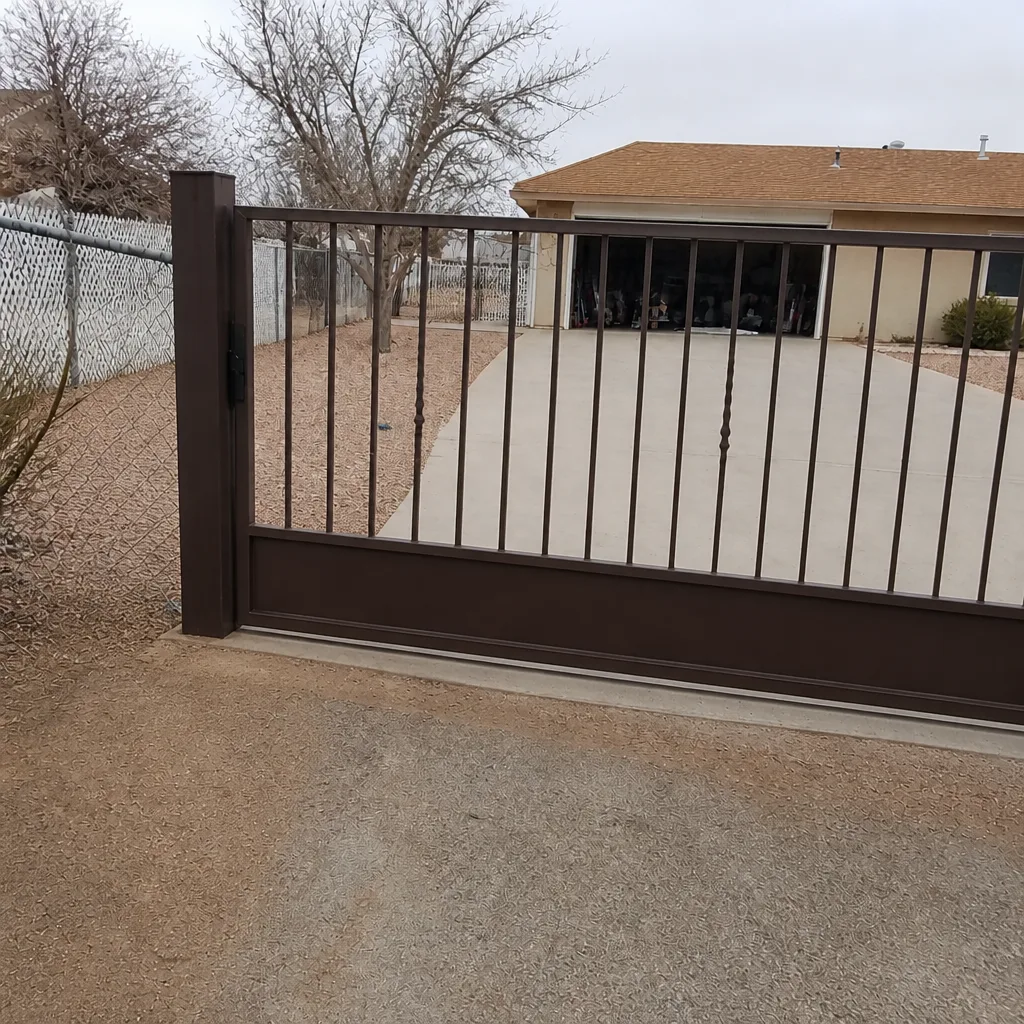 After
Frequently Asked Questions
Yes, for the mechanical scope on your own owner-occupied property, provided you follow local permit and planning rules. The 120V electrical circuit to a gate operator must be run by a licensed Nevada electrical contractor regardless of who did the mechanical installation.
Yes. Any new 120V circuit in Nevada requires a permit and a licensed electrical contractor, and the same is true in Boulder City. Skipping the permit creates a record problem that will surface at home inspection during a sale and cost more to fix than to do correctly in the first place.
Stop at the electrical scope and the operator commissioning. Post setting, panel hanging, and manual hardware are all homeowner work when done on your own property. The disconnect, conduit run, control wiring termination, and safety-edge testing belong to licensed professionals.
Yes, and this is the cleanest split for a mechanically capable homeowner. Sequence the work as civil (you), electrical (licensed electrician with permit), then operator commissioning (gate installer). Document each handoff with photos and permit numbers.
It can, and it often does. An inspector flags an unpermitted 120V run during the buyer’s inspection, and remediation costs – plus possible closing delays – usually land on the seller. Keeping the permit number on file with the closing documents protects the sale.
Keep footing photos, the electrical permit number, the electrician’s license number, the operator model and serial number, safety-edge and photo-eye mounting photos, and the signed inspection card. Under Clause 4 of our Haven Standard, our technicians leave a documented photo record on every visit for the same reason: no future pro should have to guess. Call (844) 320-7587 if you want your records reviewed – estimates are free.
The Bottom Line
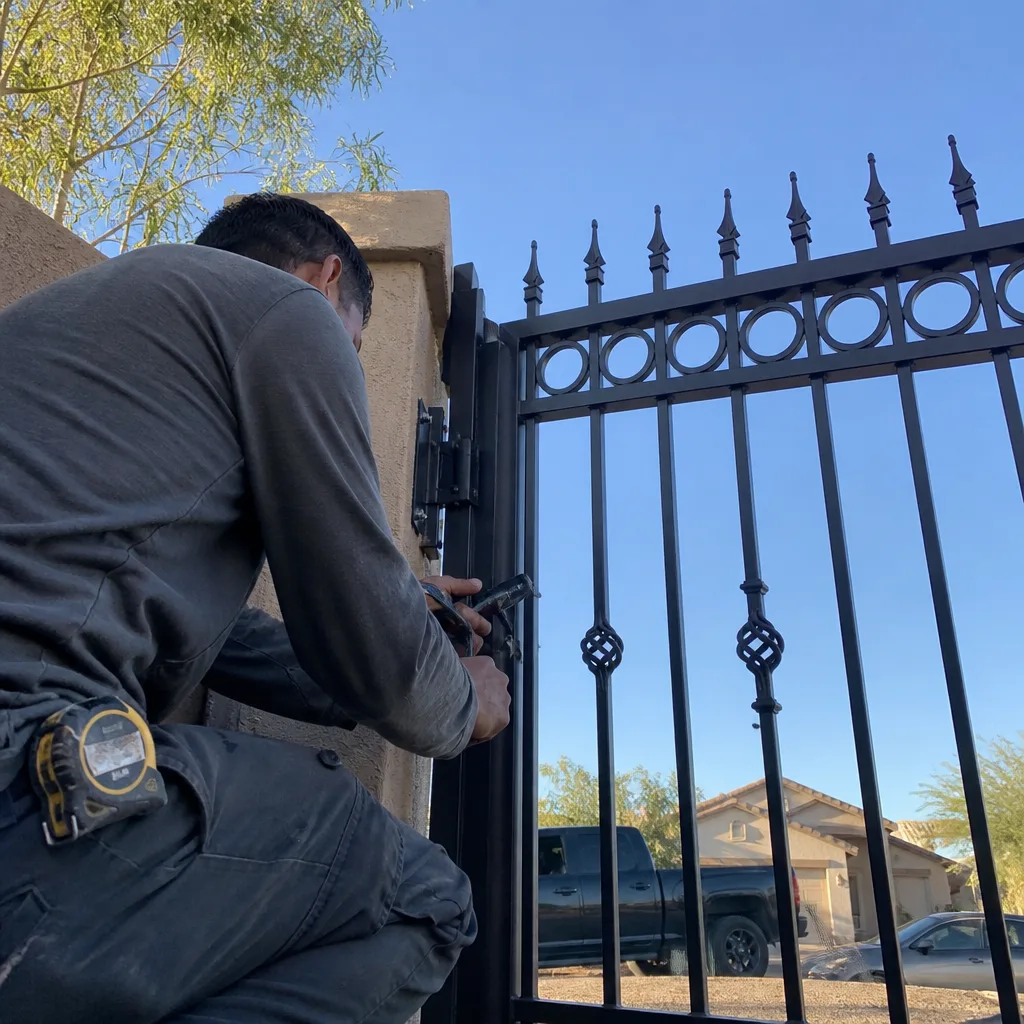
DIY gate installation is binary in a way DIY gate repair isn’t. You can competently handle the civil work, panel hanging, and manual hardware on your own Boulder City property. The moment the job needs a new 120V circuit, a licensed Nevada electrical contractor is required, and skipping that step puts a permit problem onto the property that follows the gate through every future sale. The split-scope alternative – homeowner on civil, electrician on the circuit, installer on operator commissioning – gives you a permitted, documented, safely operating gate with the mechanical work still in your hands. For the operator side of the project or for a review of any quote you’ve received, the team on our Gate Motor & Opener in Boulder City page can walk through the sequencing, and our Gate Repair in Boulder City team is a live call away if a partial install needs rescuing. Call (844) 320-7587 for a free estimate – a live person answers 24 hours a day, and a written price is in your hands before any work begins.
Written by the team at Vance Gate Repair Boulder City.