
Last updated November 18, 2026
 Wrought iron
 Wood & steel frame
 Farm & ranch
 Sliding driveway gates
 LiftMaster operators
Free on-site gate assessment - hinges, posts, and your LiftMaster or Nice gate operator checked before anything is quoted
The assessment is free and the quote is the invoice.
Get your free estimateDIY vs Professional Gate Motor & Opener: What’s Safe to Do Yourself
A homeowner with a socket set and an afternoon can physically bolt a gate operator to a post. The real question isn’t whether you can turn the bolts. It’s what happens in five years when you sell the house, the buyer’s inspector walks the property, and they find line-voltage electrical work at the gate post with no permit, no wiring diagram, and no record of who did it. That finding becomes part of the property record, and it becomes your problem. This guide sorts the genuinely safe homeowner tasks from the ones that change your liability, explains where the risk threshold actually sits in a gate operator, and covers what permitted work looks like in Boulder City. We’ll also show you the documentation gap that DIY installs leave behind, and what it costs the next technician to reconstruct.
Quick Answer
Battery replacement, remote programming, limit-switch fine-tuning, and lubrication are genuinely safe for a prepared homeowner. Anything involving the 120V line-voltage supply, the transformer, the conduit run, or the control-board wiring should go to a licensed technician, because that’s the junction where an undocumented install becomes a liability at resale. Most residential operators can be installed by a capable DIYer, but very few DIY installs are documented well enough to protect the homeowner later.
Styles & brands we work with
- Wrought iron
- Wood & steel frame
- Farm & ranch
- Sliding driveway gates
- LiftMaster operators
Table of Contents
- What’s Genuinely Safe to Do Yourself
- Where the Line-Voltage to Low-Voltage Handoff Happens
- The Documentation Gap in DIY Installs
- The Boulder City Permit Question
- The Limit-Switch Mistake That Costs You 18 Months Later
- When DIY Actually Saves You Money
- What Brand Warranties Actually Cover
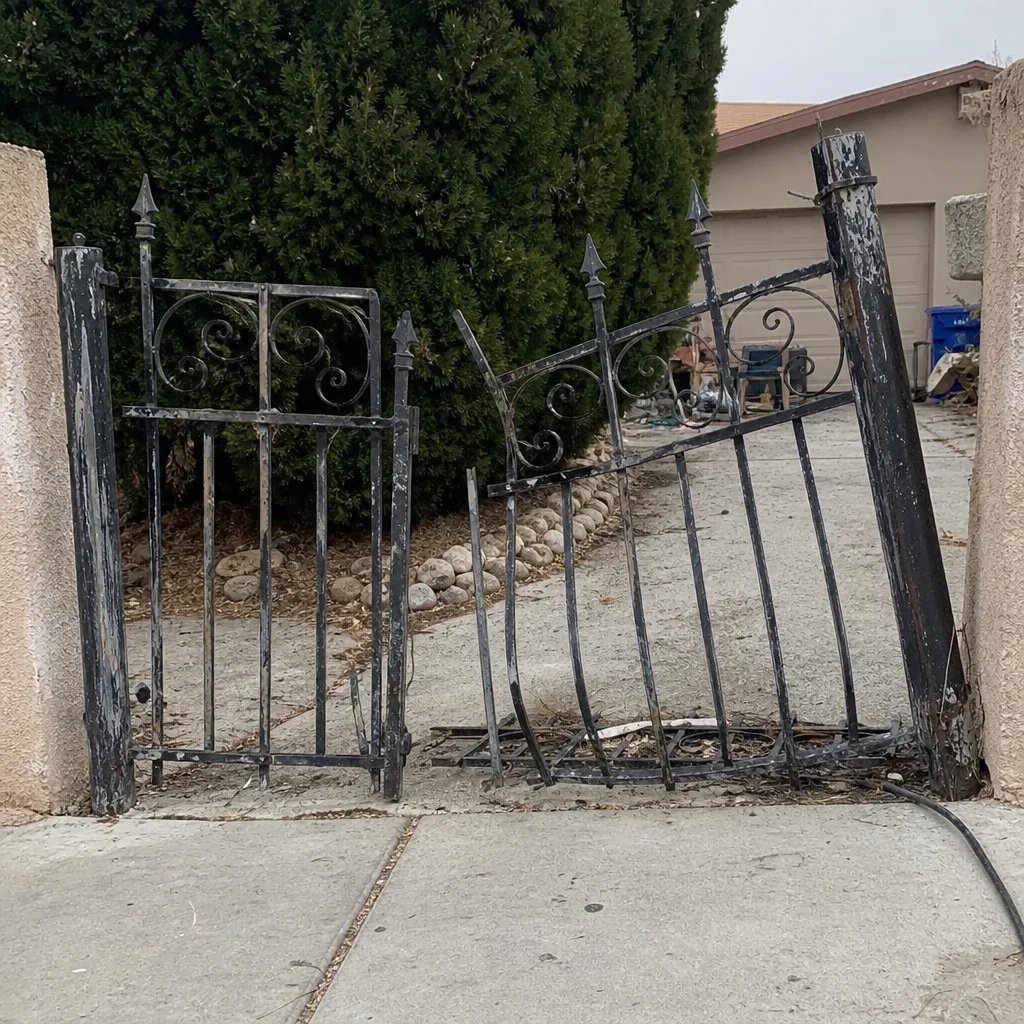 Before
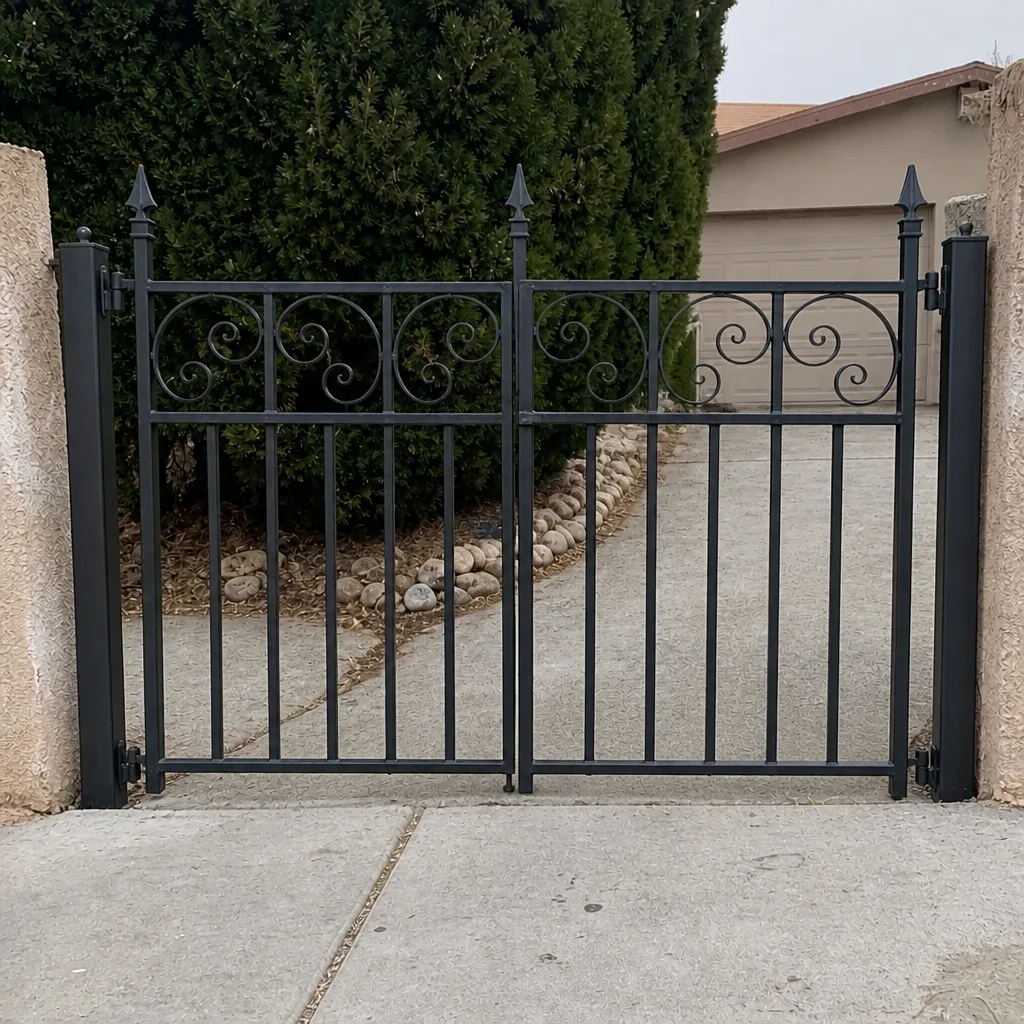 After
What’s Genuinely Safe to Do Yourself
Four tasks are worth doing yourself, and none of them bring you near the electrical supply. These are the jobs we routinely walk homeowners through over the phone when they call because a gate isn’t behaving and they’d rather fix it than book a visit.
- Battery replacement in the operator or the control board. Most residential operators use a backup battery that lives inside the housing. Kill power at the breaker, unplug the battery connector, swap the pack, reconnect. Fifteen minutes. No wiring is touched, no voltage is live. If the gate won’t cycle during a power outage, this is the first thing to check.
- Remote programming. Pairing a new remote to an existing receiver is a five-minute job that requires nothing more than the manual and the learn button on the board. LiftMaster and FAAC both publish the procedure online. If you can pair a Bluetooth speaker, you can pair a gate remote.
- Limit-switch fine-tuning. When the gate stops two inches short of fully open, or reverses a foot before it should, the limit switches are drifting. Adjusting them is safe as long as the gate is on a low-voltage control circuit and the arm isn’t under tension. The catch: we photograph the new position on every visit because a limit set 12 degrees past travel is a motor overload waiting to happen. Write down your setting before you touch it.
- Lubrication. A dry hinge on a swing gate and a dry roller on a slide gate both translate into motor strain. White lithium grease on the operator arm pivot, silicone spray on the tracks, twice a year. Ten minutes. This alone prevents more premature motor failures than any other homeowner action.
Anything past this list moves into territory where a mistake doesn’t just break a part. It creates a record. That’s the shift we’ll walk through next.
Where the Line-Voltage to Low-Voltage Handoff Happens
Every residential gate operator has a specific point where the 120V house supply meets the low-voltage control circuit. It’s the transformer on the control board. On a typical LiftMaster or Elite swing-gate operator, the supply comes in through a dedicated circuit, lands in a junction box near the gate post, runs through conduit to the operator housing, and terminates at the transformer primary. The transformer steps 120V down to 24V (or 12V, depending on the brand) to power the control board, the limit switches, the photo-eye, and the safety edges.
That handoff point is the threshold. The 24V side is safe to work on. The 120V side is not, and it’s governed by electrical code for a reason.
- Line-voltage side: the dedicated circuit at the panel, the conduit run, the junction box, the transformer primary terminals. This is licensed electrical work in most jurisdictions. It requires a permit in many, and it requires a documented inspection when the work is complete.
- Low-voltage side: the control board terminals, the limit-switch wiring, the photo-eye pair, the safety-edge loop, the receiver. This is where homeowners can reasonably work. It’s also where the bulk of diagnostic time actually lives, which is why DIY installs often fail here and succeed on the electrical run.
Most DIY installs we see go the other direction. The homeowner is comfortable with the low-voltage wiring because it looks like speaker cable. The 120V line work gets done by a friend who “knows electrical” and left no permit, no inspection sticker, no diagram. That combination is the one that creates the resale problem in the opening hook.
For a full picture of what a professionally scoped Gate Motor & Opener in Boulder City installation covers, including the electrical handoff, our team documents every step.
The Documentation Gap in DIY Installs
When our technicians work on a gate, we leave a photo record. What we found, what we adjusted, what we replaced. A written record of the part number is filed with the job. If another technician shows up in eighteen months to replace a failed operator, they open the record and see the limit-switch setting, the voltage at the board, and the conduit routing without asking a single question.
A DIY install typically leaves none of that. Here’s what a technician has to reconstruct on a DIY-installed operator, and what that labor costs the next owner:
- No wiring diagram. The homeowner sketched it on a sticky note, lost it, or never made one. The technician traces every wire to identify which terminal is what. Thirty to sixty minutes of billable diagnosis.
- No photos of the conduit run. The conduit goes underground from the house to the gate post. Nobody knows where it enters, what depth it sits at, or whether it’s a straight or elbow run. If there’s ever a fault, the technician digs blind or runs a new conduit. That’s an excavation job, not a repair job.
- No record of the voltage at the board. The transformer output drifts. A board that was set up on a 24.2V reading may be running on 22.8V two years later, which causes erratic limit-switch behavior. Without the baseline, the technician doesn’t know whether the drift caused the fault or is just a symptom.
- No record of the install date and part numbers. Warranty claims on Mighty Mule and LiftMaster both require the install date and the model number. Lost records mean lost coverage, and that can cost $150 to $350 on a motor replacement.
The documentation isn’t decoration. It’s the difference between a fifteen-minute service call and a two-hour diagnostic at hourly rates. That’s the under-discussed cost of DIY that doesn’t show up in the weekend project budget.
The Boulder City Permit Question
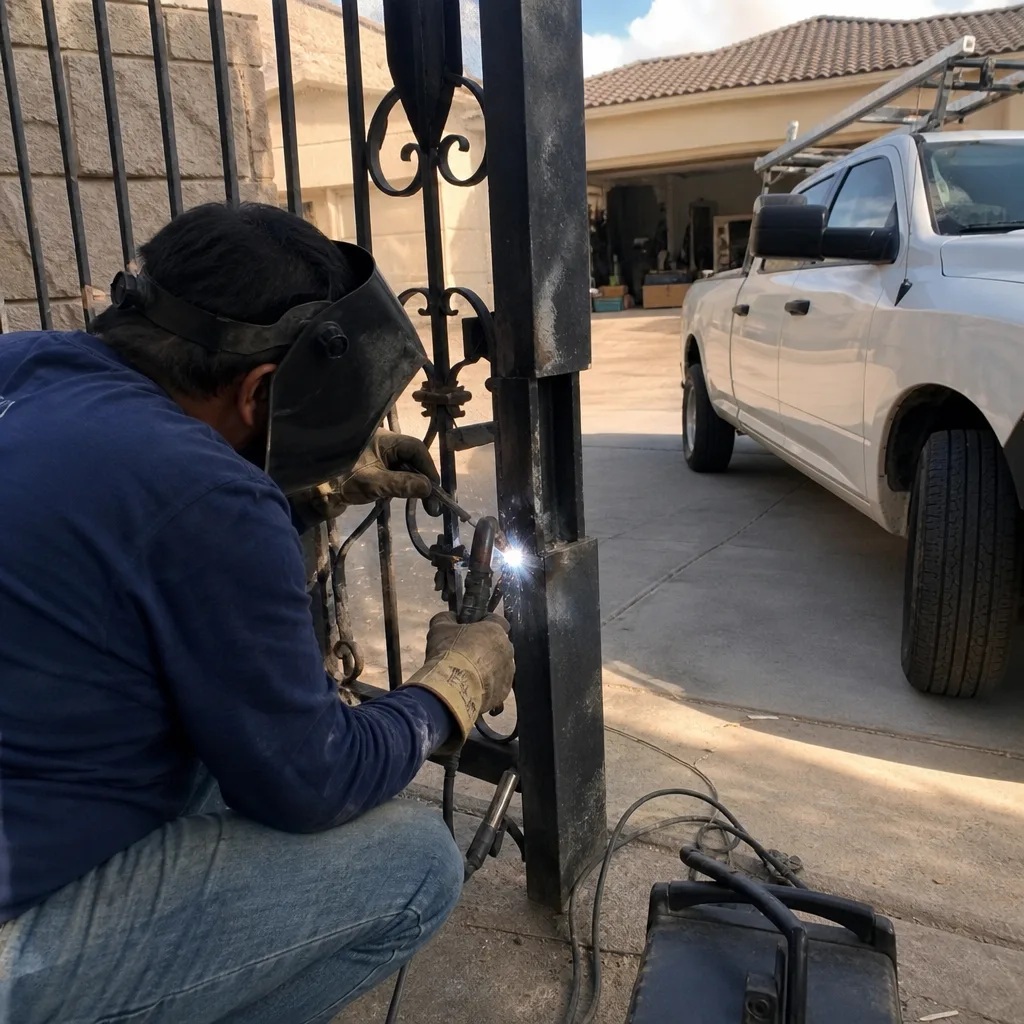
We get asked whether a gate operator install needs a permit in Boulder City more than almost any other question on the subject, and the honest answer is: it depends on the scope, and you should verify with the city before you start, not after.
Generally speaking, work that involves a new dedicated 120V circuit run from the panel to the gate post is treated as electrical work and typically requires a permit and an inspection in Boulder City and the surrounding Clark County area. Work that replaces an existing operator on an existing circuit, with no change to the electrical supply, often doesn’t require a permit, though some jurisdictions still want a low-voltage permit filed for the installation itself. The safest approach is to call the city’s building department with the specifics of your install and ask them directly. Fifteen minutes on the phone.
What unpermitted work means at resale, and this is the part that DIY installers consistently underestimate:
- Disclosure. Nevada requires sellers to disclose known unpermitted work on the property disclosure form. If you installed the operator yourself without a permit and the buyer’s inspector flags the electrical work, you’re either disclosing it or exposing yourself to a claim.
- Buyer’s inspector findings. Home inspectors flag unpermitted electrical at a gate post more often than homeowners expect. The follow-up is either the seller pays to permit and inspect the work retroactively, or the seller credits the buyer at closing.
- Retroactive permitting costs. Getting unpermitted work signed off after the fact is costlier than doing it correctly the first time. It involves inspection fees, correction work if anything fails the inspection, and additional time.
- Insurance exposure. If the unpermitted electrical run causes a fire or an injury, the homeowner’s insurance carrier can dispute the claim on the grounds of non-permitted work. That’s a policy question, but it’s a real one.
None of this is a scare tactic. It’s the ordinary sequence we see when a gate becomes part of a home sale in Boulder City. The cost of permitting upfront is far smaller than the cost of reconstructing the record at closing.
The Limit-Switch Mistake That Costs You 18 Months Later
A limit switch tells the operator when to stop. On a swing gate it sits near the arm pivot. On a slide gate it’s inside the housing. When it’s set correctly, the gate hits fully open or fully closed and the motor shuts off. When it’s set slightly wrong, the gate stops a few degrees short. Everything looks fine. The homeowner is happy with the install. Six months later they’re calling us because the motor is “getting weak.”
Here’s what’s happening inside. When the limit switch is set past the intended travel, the motor continues to push against the gate for a half-second to a full second after the gate has already reached its end of travel. Not enough to trip a breaker. Not enough to make noise. Enough to draw overload current for a brief moment every single cycle. On a gate that cycles ten times a day, that’s 3,650 short overloads a year. The motor windings run hotter than they should. The gearbox wears faster. The capacitors degrade. By month eighteen, the motor is genuinely failing, and the homeowner has no idea why.
The fix at the install stage is a five-minute job. Resetting the limit switch to the actual end-of-travel point, running the gate ten cycles, and photographing the new setting. The fix at month eighteen is a motor replacement. That’s the trade.
We’ve seen the same failure pattern in Boulder City on gates that cycle more than average, particularly homes near the historic district where driveways are steep and gates run longer cycles. If your gate is behaving oddly or cycling short, our Gate Repair in Boulder City team can check the limit setting and photograph it for your record. It’s the diagnostic we run first.
When DIY Actually Saves You Money
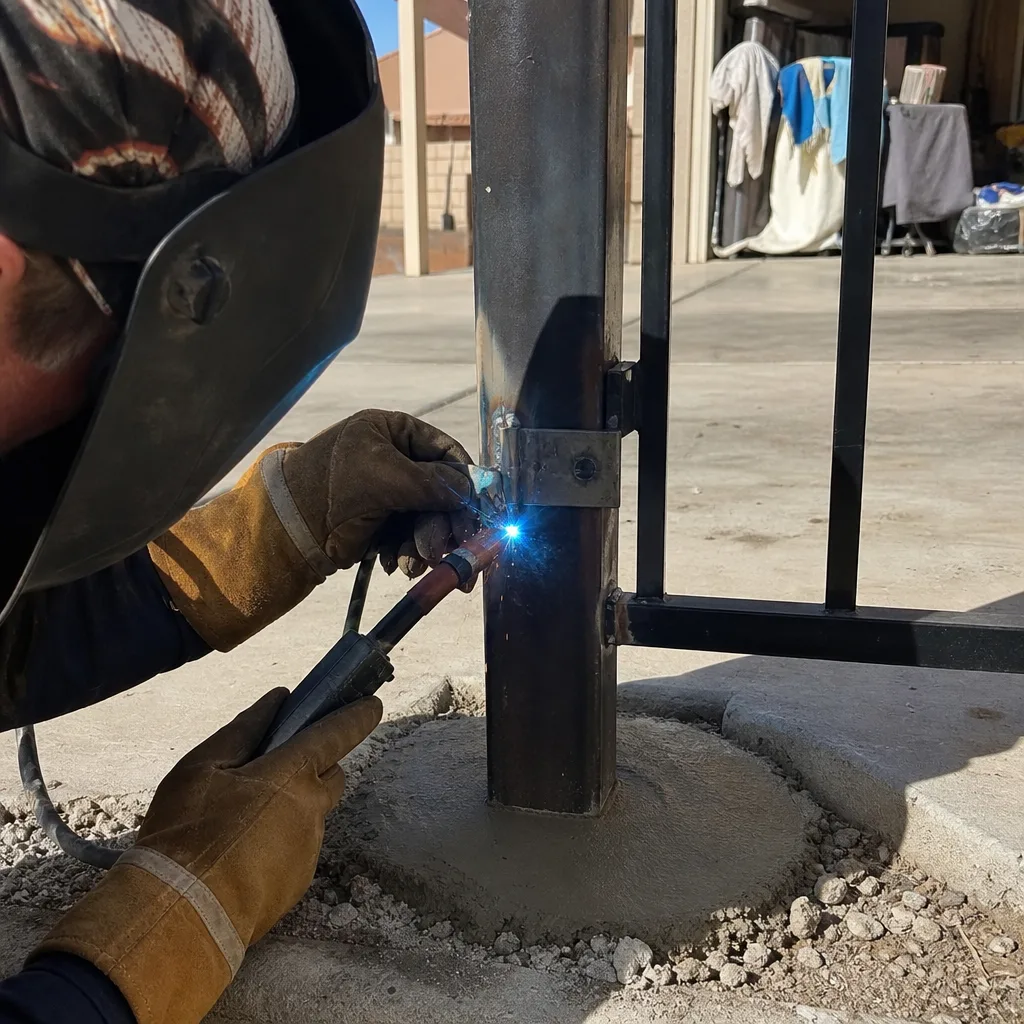
DIY genuinely saves money on the front end for a narrow set of scenarios. It costs more on the back end for a broader set. Here’s how to tell which side of that line your situation falls on.
- DIY wins: replacing a backup battery, programming a new remote, resetting a limit switch that drifted, lubrication, replacing a photo-eye that failed (as long as the low-voltage wiring is straightforward and documented). These are the tasks where a prepared homeowner saves the service call and the labor mark-up.
- DIY loses: a new install on a circuit that doesn’t exist, any work that requires running new conduit from the panel, installing a brand the homeowner hasn’t worked with before (Ghost Controls and FAAC both have install quirks), any situation where the existing operator failed with a symptom that could indicate a deeper electrical fault.
- DIY fails at resale: any install where the homeowner didn’t pull a permit for the electrical run, didn’t photo-document the conduit path, didn’t record the part numbers, and didn’t leave a limiter setting that will make sense to the next technician. That’s the majority of the DIY installs we see. The money saved at install gets paid back at closing.
There’s a specific number we can point to. When we’re called to diagnose a DIY install where the limit switch was set wrong from day one, the motor replacement typically runs $340 to $650 depending on the brand and whether the arm bracket is intact. The five-minute limit-switch reset at install would have prevented it. We’ve documented this pattern more than once on Boulder City gates.
For homes that want the operator installed correctly the first time, with the electrical side permitted and the documentation left on the property, that’s what our Gate Installation in Boulder City service is built to deliver. If you’re still deciding whether your existing setup needs an operator replacement or a repair, a Vance Gate Repair Boulder City home team member can help sort that over the phone before you spend anything.
What Brand Warranties Actually Cover
Brand warranties on gate operators are narrower than most homeowners assume, and DIY installs void more of the coverage than is usually understood. LiftMaster’s residential operator warranty, for example, typically covers defects in materials and workmanship but excludes damage from improper installation, incorrect voltage supply, and unpermitted electrical work. Elite runs a similar structure. FAAC and Mighty Mule both have exclusions that hinge on whether the install was performed to their published specification, which is a written document a contractor is expected to follow and document.
What this means in practice: if the operator fails under warranty and you installed it yourself, the manufacturer’s claims department is going to ask for the install documentation. If you don’t have it, they deny the claim. That’s $180 to $450 out of pocket on a part that would have been covered. The documentation requirement isn’t a technicality. It’s how the warranty is enforced.
Under our Haven Standard Clause 4, every visit includes a documented photo record at no additional charge. That record is what makes a warranty claim on a Mighty Mule or Elite operator actually work. We keep it in the job file, and the homeowner gets a copy before the technician leaves.
Common Mistakes to Avoid
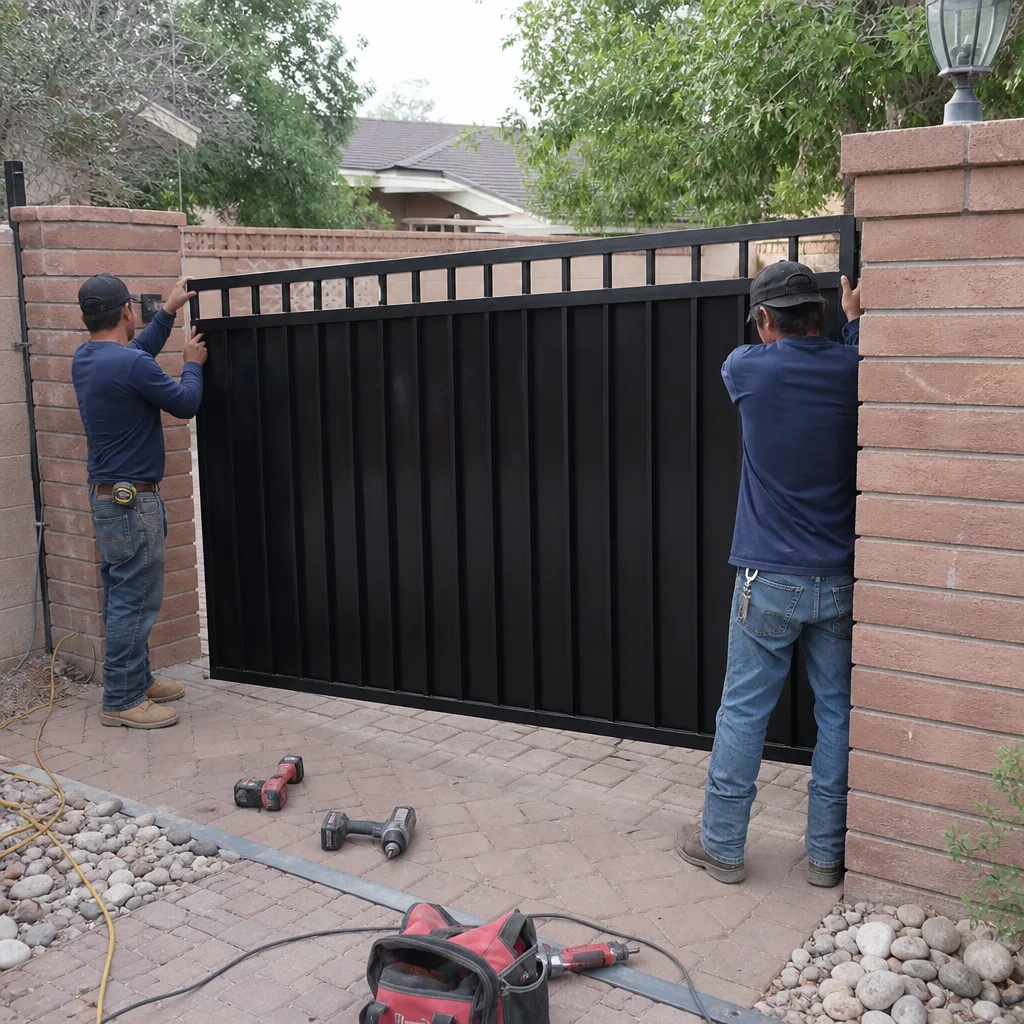
- Running line-voltage wire without a permit. The electrical run to the gate post is the part that follows you to closing. Verify with the Boulder City building department before you start, not after.
- Skipping the photo record on a DIY install. If you install an operator yourself, photograph the conduit path, the panel connection, the board wiring, and the limit-switch setting. Save them to a folder you’ll still have in five years.
- Setting the limit switch to the “it looks close enough” position. The gate should stop at actual end of travel, not two degrees short. Ten cycles of testing catches the drift before it becomes motor overload.
- Ignoring the photo-eye alignment. A misaligned safety edge or photo-eye will make the gate reverse unpredictably and look like a motor fault. Both are a two-inch adjustment most of the time.
- Mixing voltages on the same terminal block. We see this on DIY installs more than anything else. 24V and 120V wiring that shares a junction box without proper separation is both a code issue and a genuine shock hazard.
- Installing a brand you haven’t worked with before to save a hundred dollars. Ghost Controls and FAAC both have install requirements that differ from LiftMaster and Linear. The learning curve eats the savings.
- Letting the buyer’s inspector find the install first. Nevada disclosure rules mean unpermitted gate electrical work becomes a closing issue. Documenting the install upfront is cheaper than documenting it under pressure.
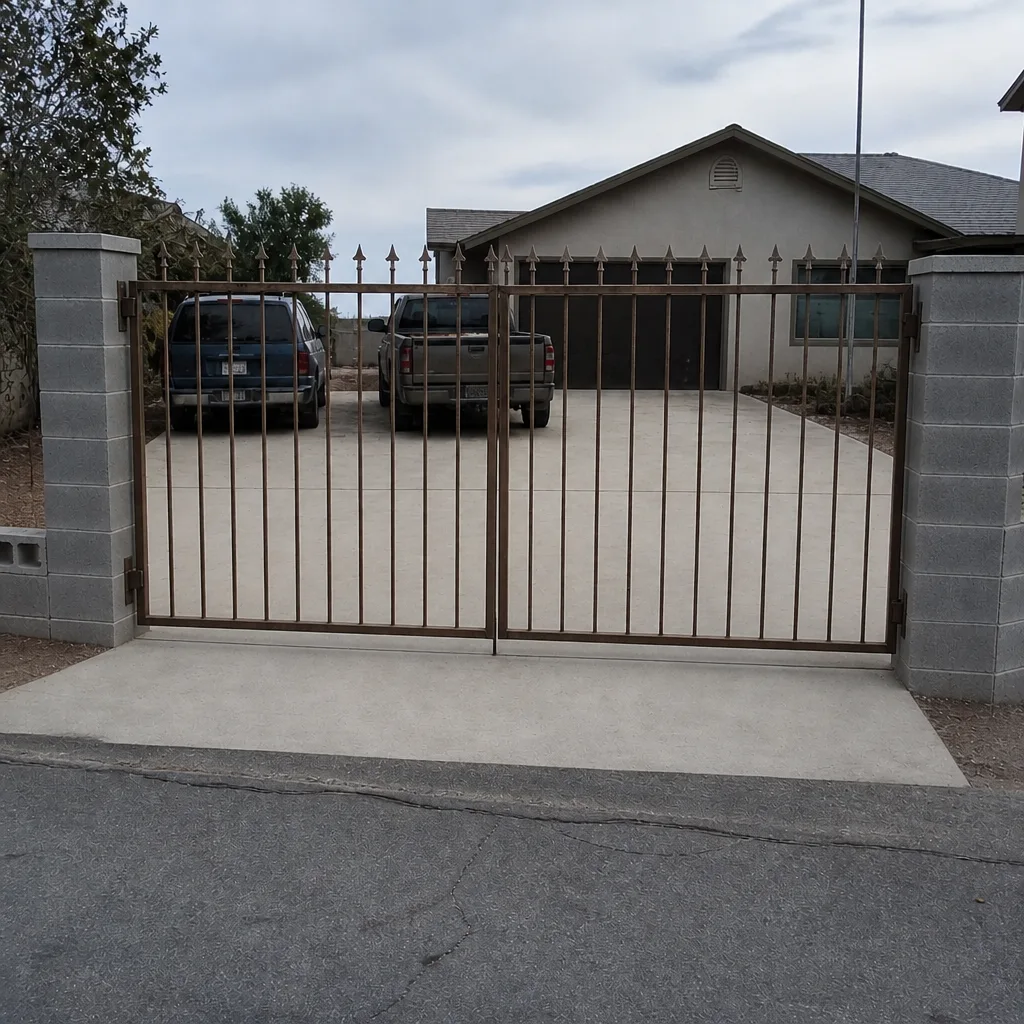
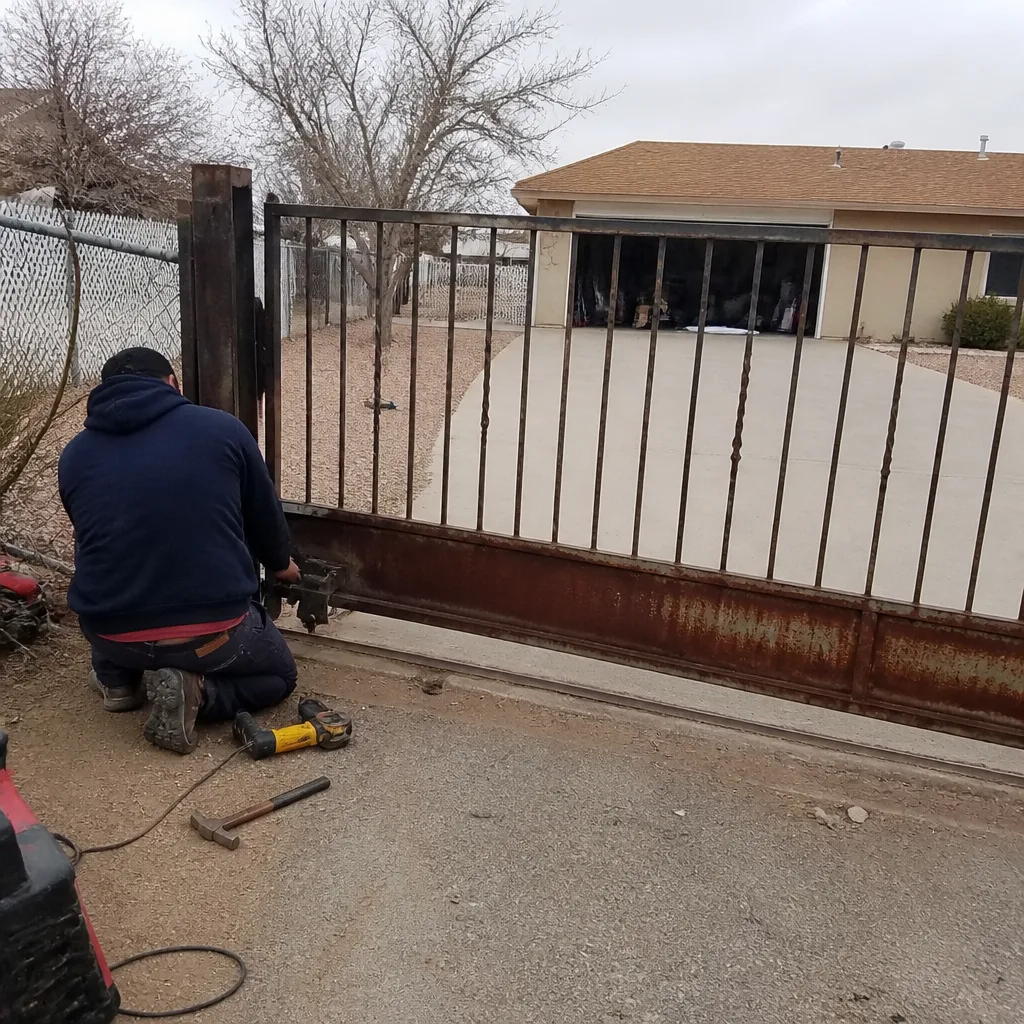
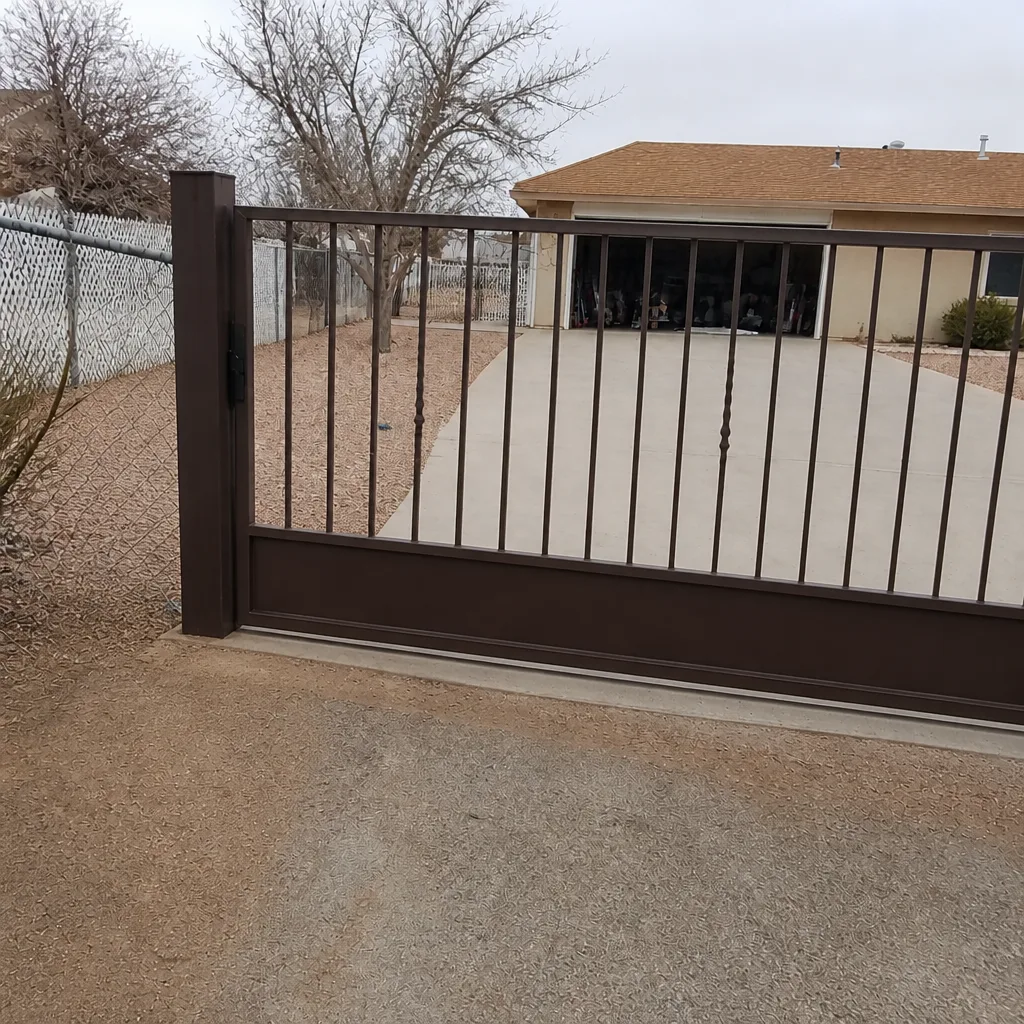
See the difference
BeforeAfter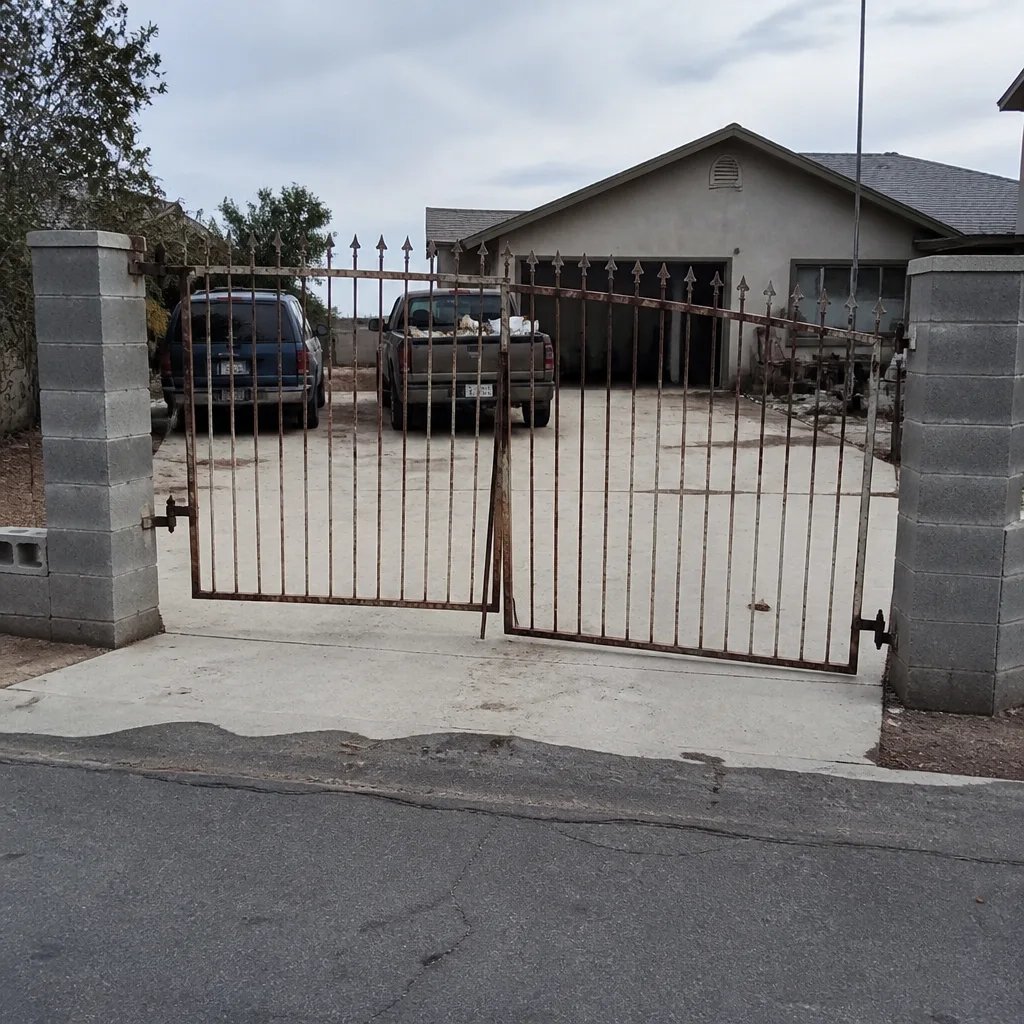 Before
 After
 Before
 After
When to Call a Professional
Call a professional for anything involving the 120V supply, the transformer, the conduit run, or the panel connection. Call for a new install where a dedicated circuit doesn’t already exist at the gate post. Call if the existing operator failed with a symptom that points to an electrical fault, because diagnosing that requires opening up the supply side. And call if you’re in the middle of a home sale and the buyer’s inspector has flagged the gate electrical work, because reconstructing that record under deadline is a different job than rebuilding it calmly.
Vance Gate Repair Boulder City offers free estimates in Boulder City. Our technicians have up to 12 years of experience across nine major automation brands, and every visit leaves a written scope, a written price under Clause 1, and a photo record on file. Call (844) 320-7587. A live person answers 24 hours a day.
Frequently Asked Questions
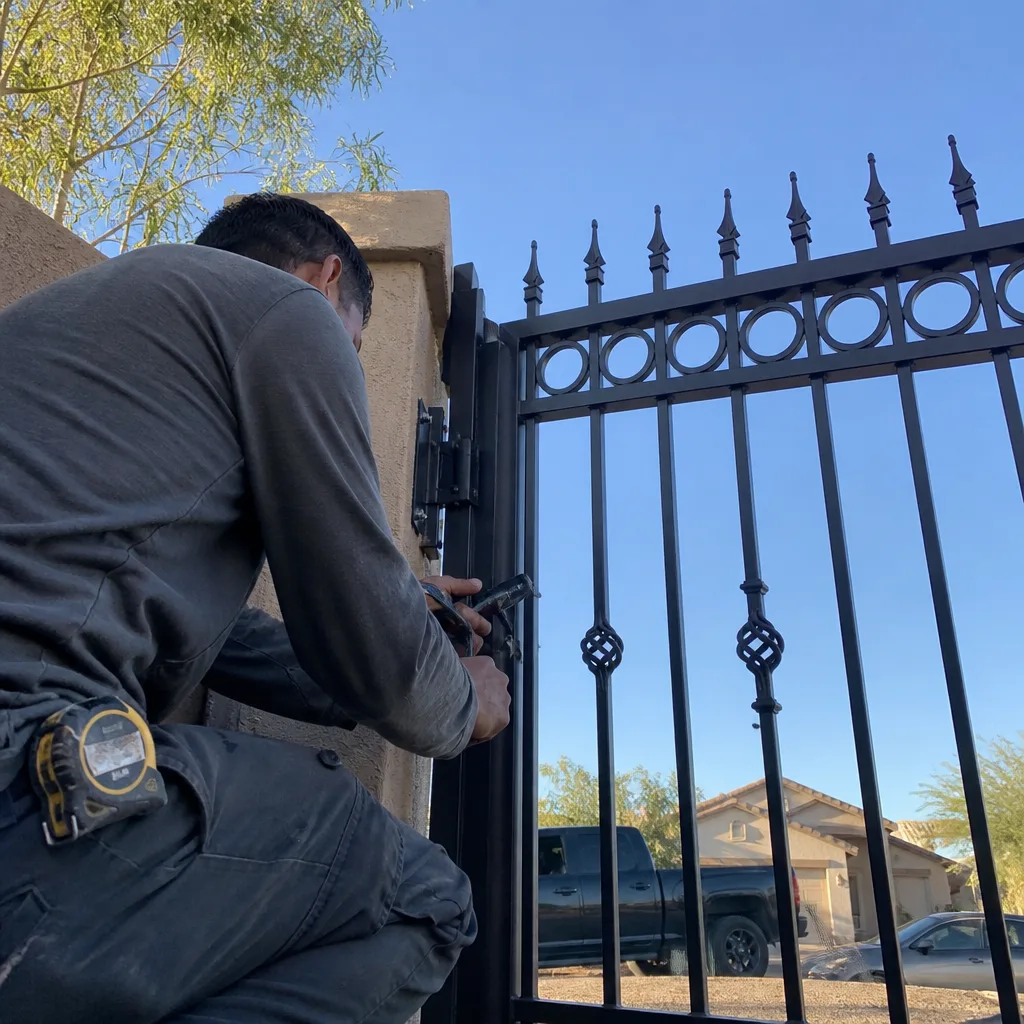
Physically, yes. A capable homeowner can install most residential gate operators. The bigger question is whether the electrical work is permitted, whether the limit switch gets set correctly, and whether the install leaves documentation the next owner and technician can work from. In our experience, the install itself usually goes fine and the documentation is where DIY installs fail.
If the install involves a new 120V circuit from the panel to the gate post, it typically requires an electrical permit and inspection. Replacement on an existing circuit often doesn’t, though some jurisdictions still want a low-voltage permit filed. Call the Boulder City building department with the specifics of your install to confirm before you start. Fifteen minutes on the phone prevents a real problem at resale.
Yes, as long as you’re working on the low-voltage control side with power to the operator shut off at the breaker. The limit switch is a low-voltage component. What’s not safe is adjusting the limit switch without noting the previous position, because a setting past end-of-travel causes motor overload over time. Write down or photograph the setting before you touch it.
Nevada requires disclosure of known unpermitted work, and a buyer’s inspector routinely flags unpermitted electrical at a gate post. The usual outcomes are the seller paying to permit and inspect the work retroactively, or the seller crediting the buyer at closing. Both cost more than doing the install correctly the first time. Home insurance claims after an electrical fault can also be disputed if the work was unpermitted.
On LiftMaster, Elite, FAAC, and Mighty Mule residential operators, yes, if the install wasn’t performed to the manufacturer’s written specification and doesn’t have documentation to prove it. Warranty claims require the install records. Without them, the claim gets denied and you’re paying for the part out of pocket, typically $180 to $450 depending on the operator.
Most swing-gate motor replacements run $340 to $650 depending on the brand and whether the arm bracket is intact. Slide-gate operators are often at the higher end. The typical cause we see after a DIY install is an improperly set limit switch that’s been overloading the motor for 12 to 18 months. Call (844) 320-7587 for a free estimate. The written price comes before any work starts.
The Bottom Line
Battery replacement, remote programming, limit-switch fine-tuning, and lubrication are fair game for a prepared homeowner. Everything from the 120V supply forward should be permitted and documented by a licensed technician, because that’s the junction where an install becomes a liability instead of an asset. The savings on DIY look real in the first six months. They get clawed back at eighteen months on motor overload, and again at resale on unpermitted work. Documentation isn’t a nice-to-have. It’s the record of what was found, what was set, what was installed, and it’s what the next technician, the next inspector, and the next buyer will judge the install by. That’s the standard we hold ourselves to on every visit.
If you’re weighing DIY against a professional install on a Boulder City gate, call Vance Gate Repair Boulder City at (844) 320-7587 for a free estimate. We’ll quote in writing before any work starts, photograph every adjustment, and leave the documentation on file so the next technician doesn’t have to guess.
Written by the team at Vance Gate Repair Boulder City.