
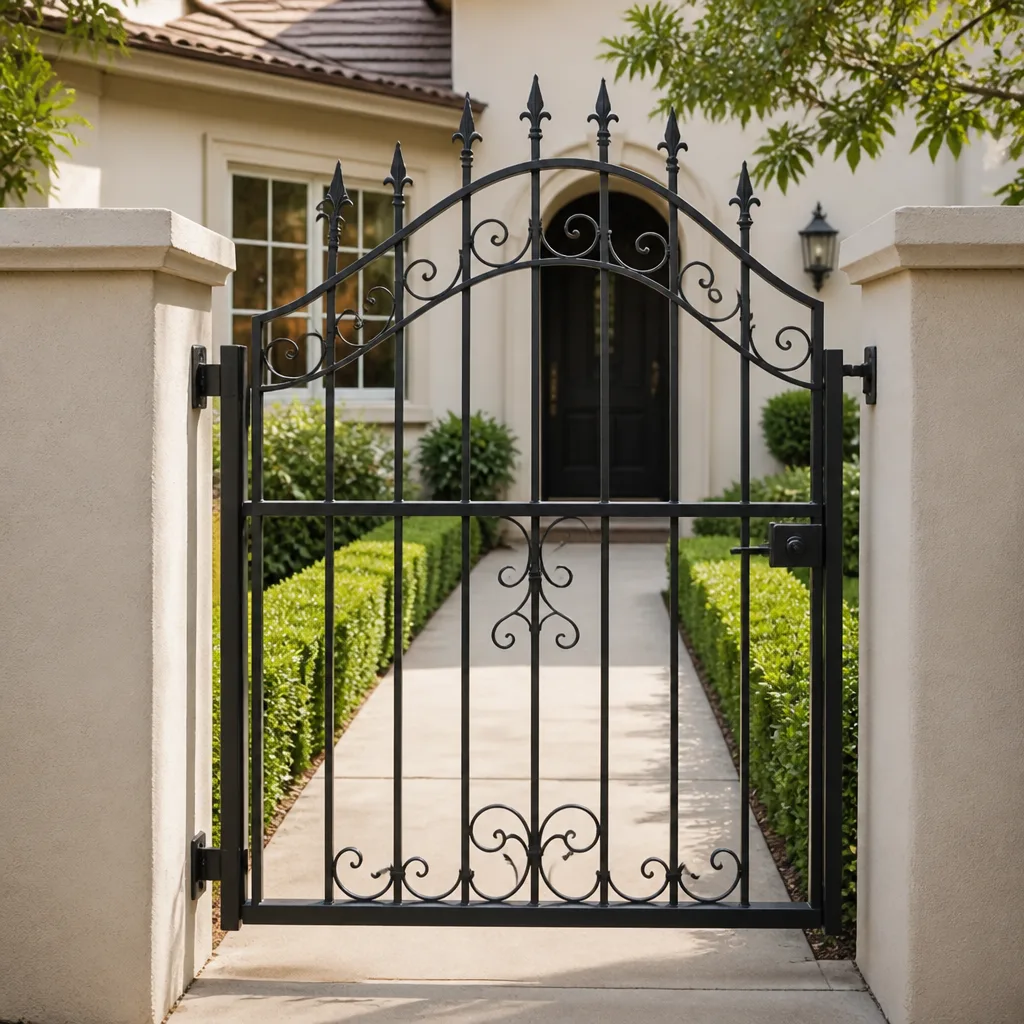
 Wrought iron
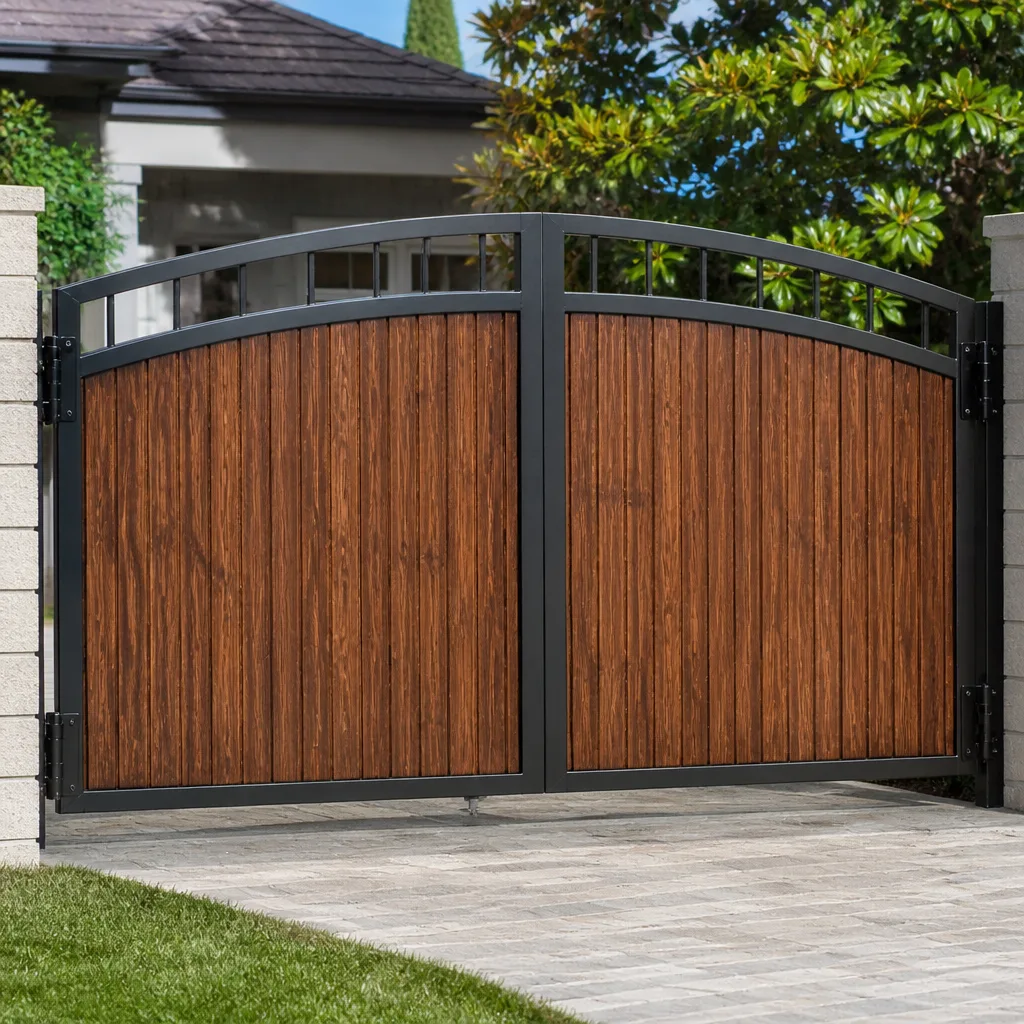 Wood & steel frame
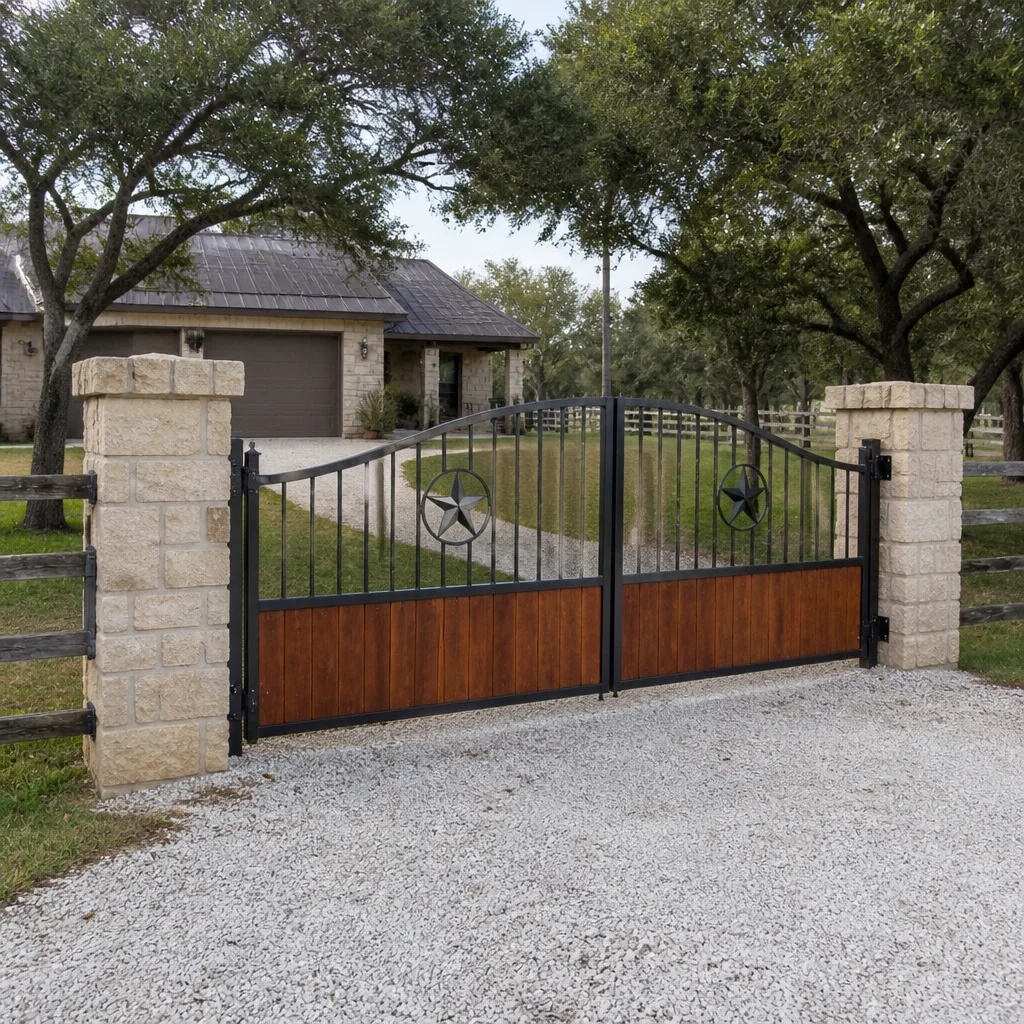 Farm & ranch
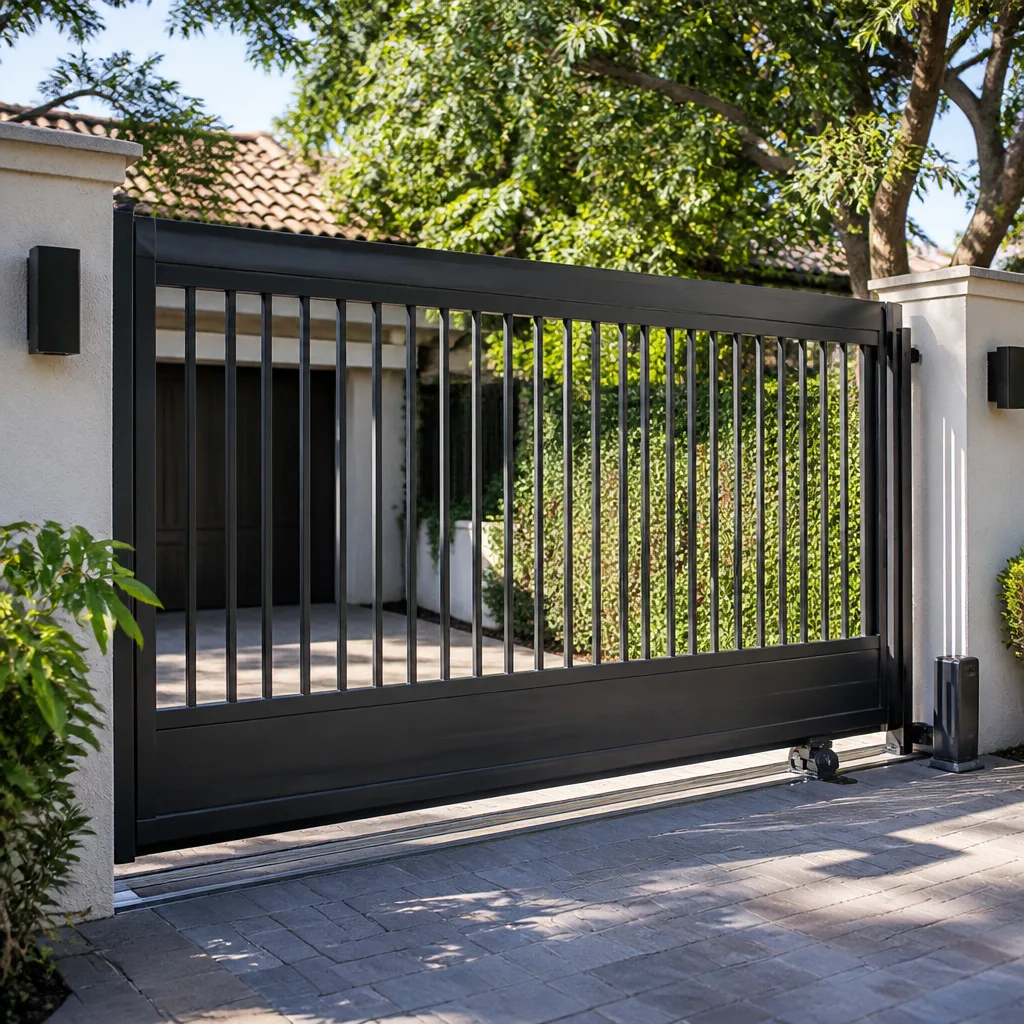 Sliding driveway gates
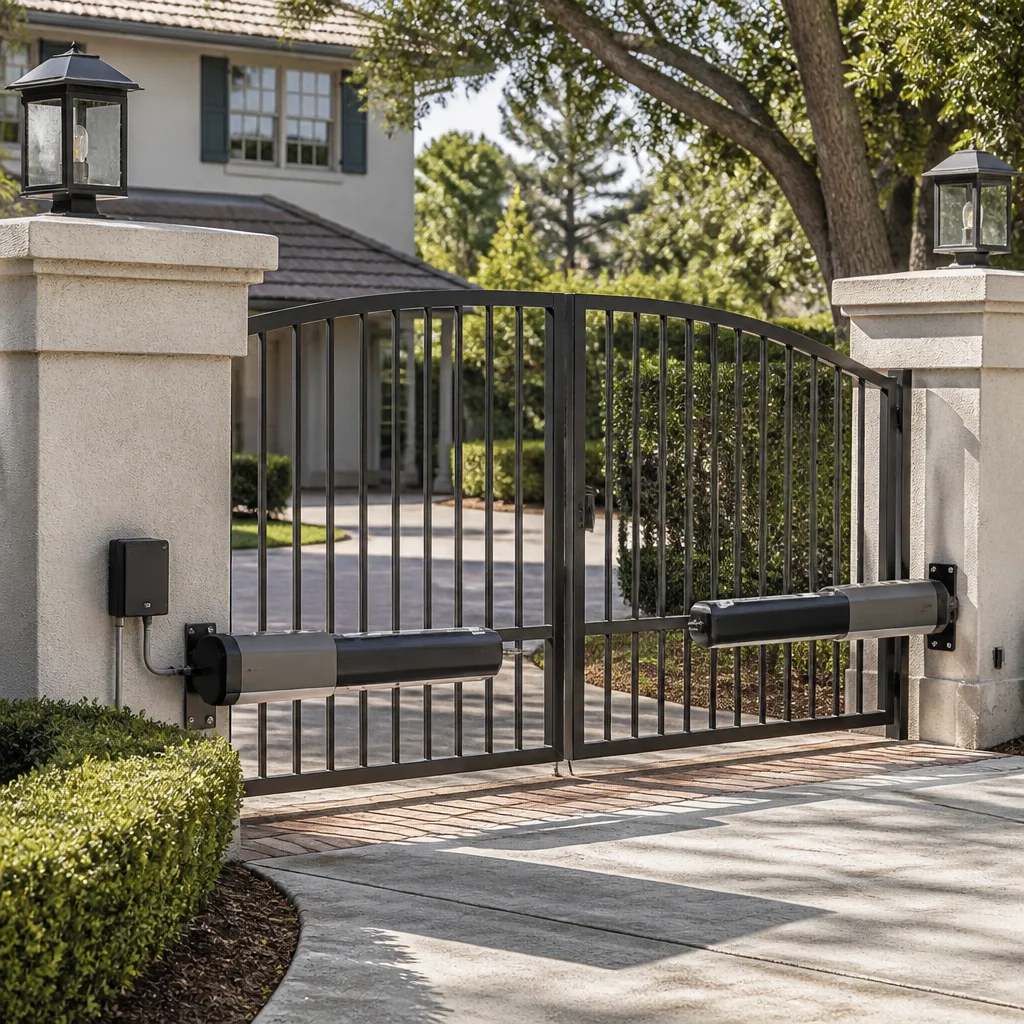 LiftMaster operators
Free on-site gate assessment - hinges, posts, and your LiftMaster or Nice gate operator checked before anything is quoted
The assessment is free and the quote is the invoice.
Get your free estimateStyles & brands we work with
- Wrought iron
- Wood & steel frame
- Farm & ranch
- Sliding driveway gates
- LiftMaster operators
See the difference
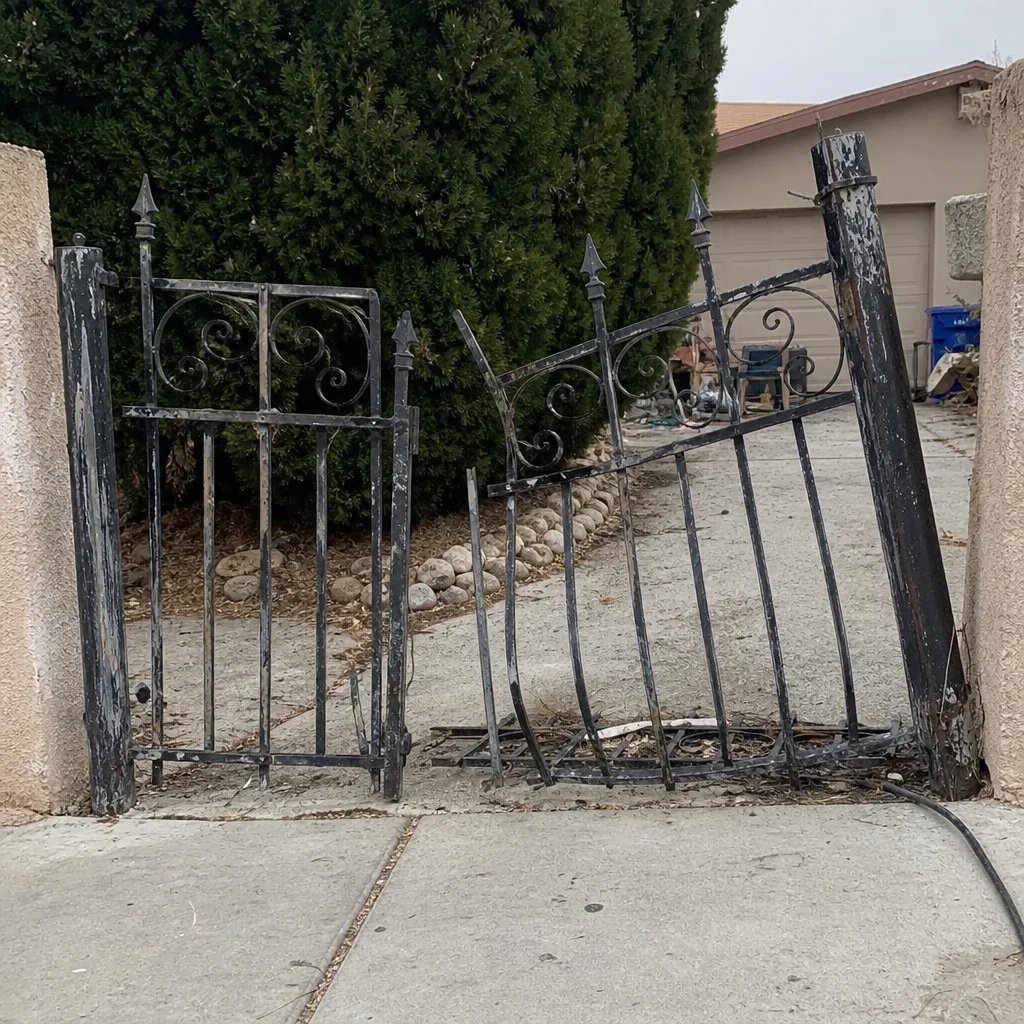 Before
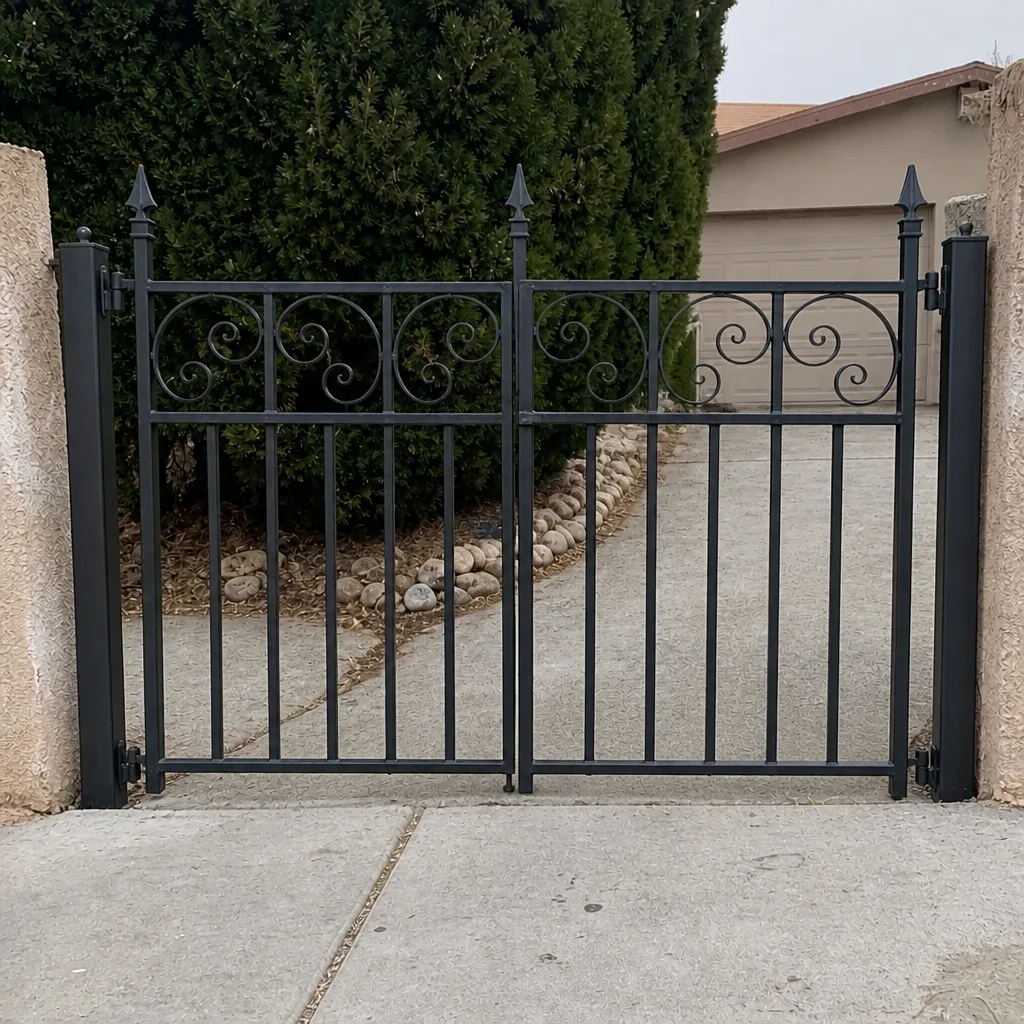 After
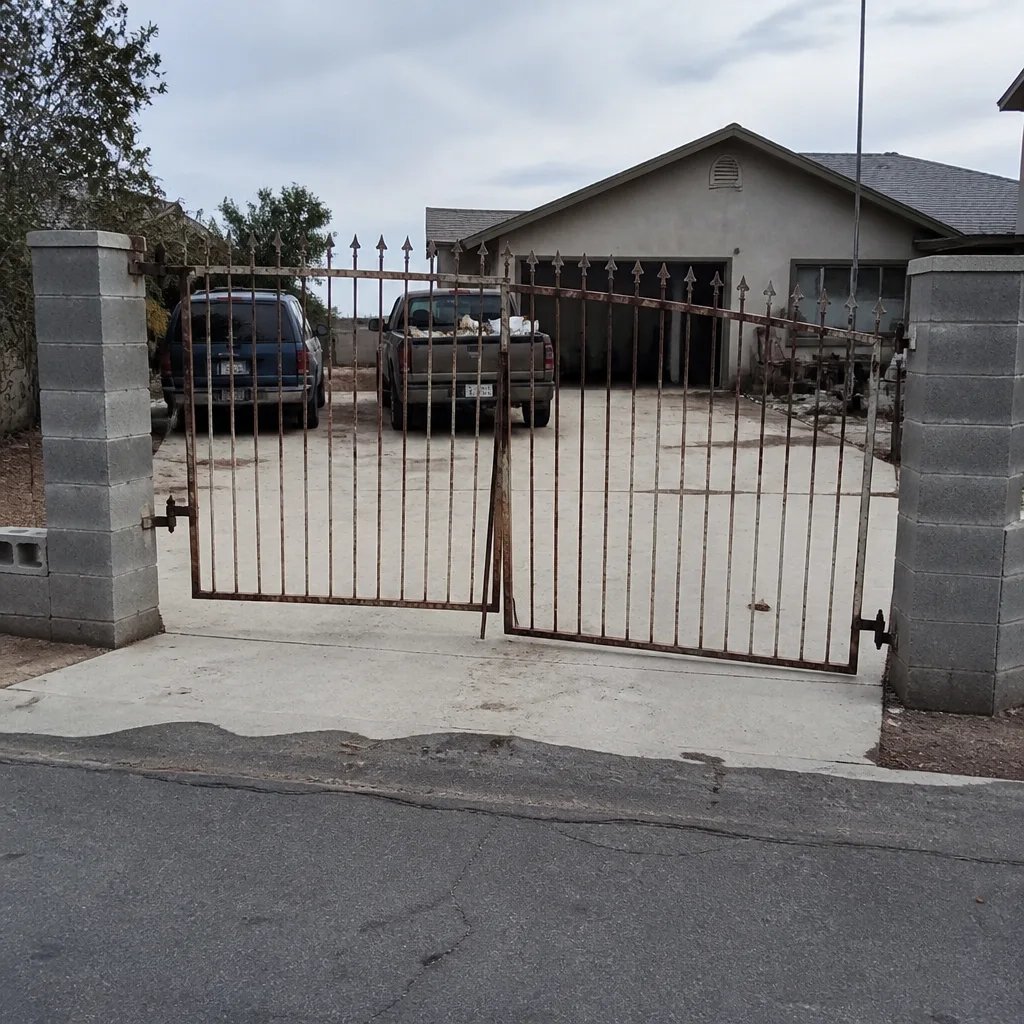 Before
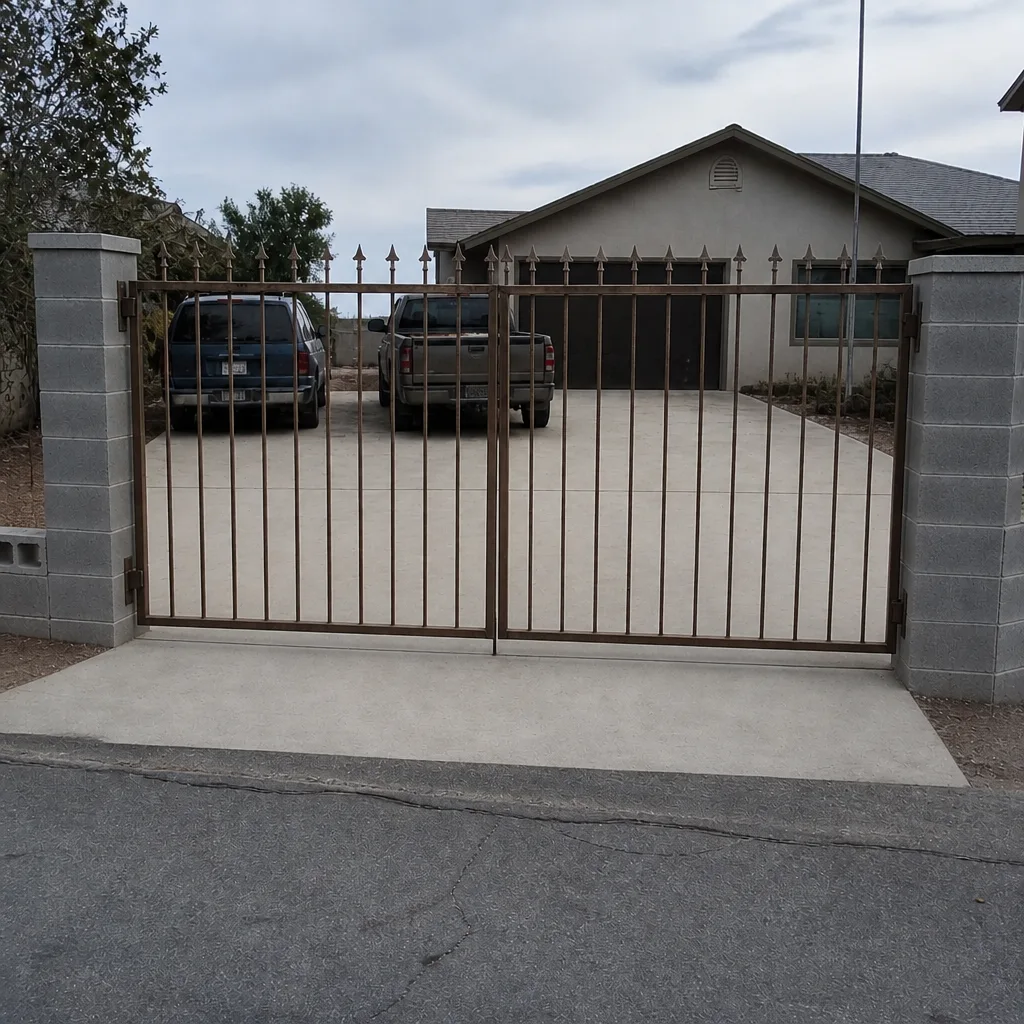 After
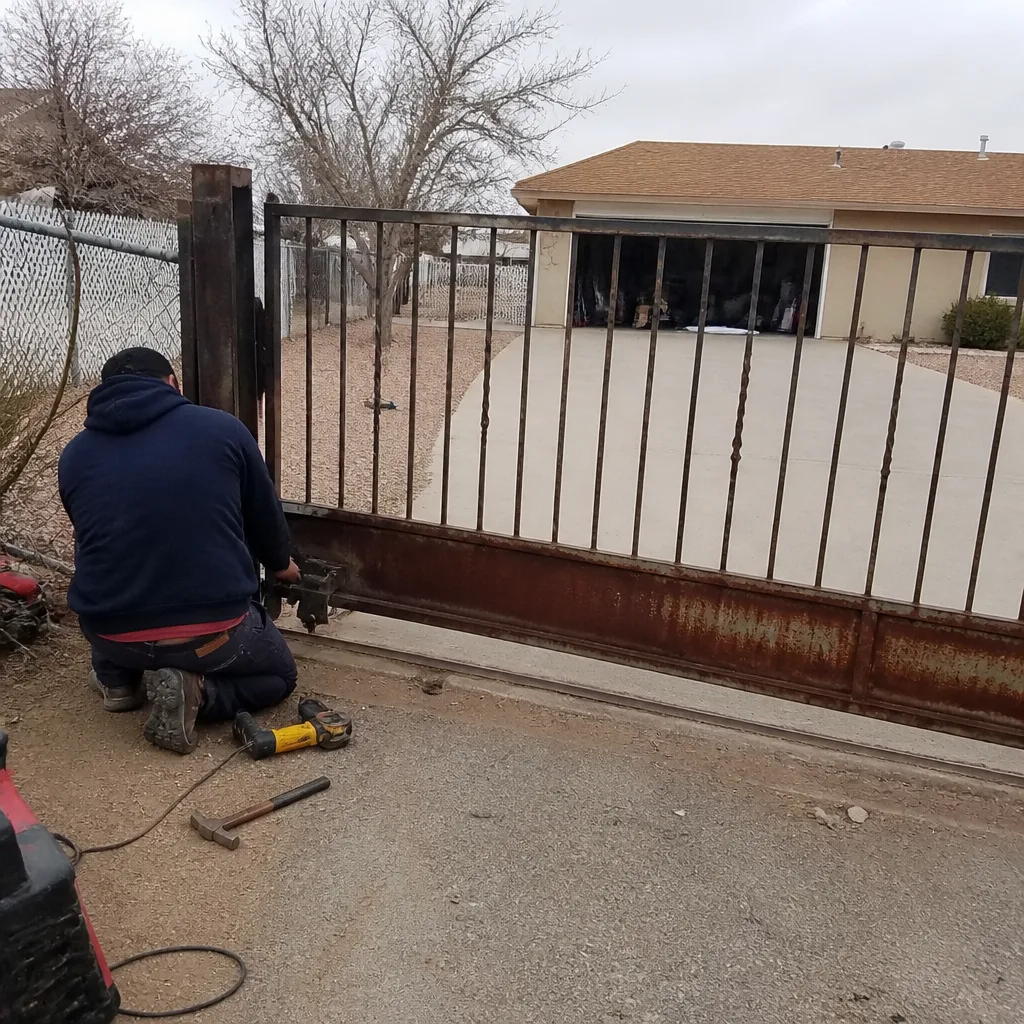 Before
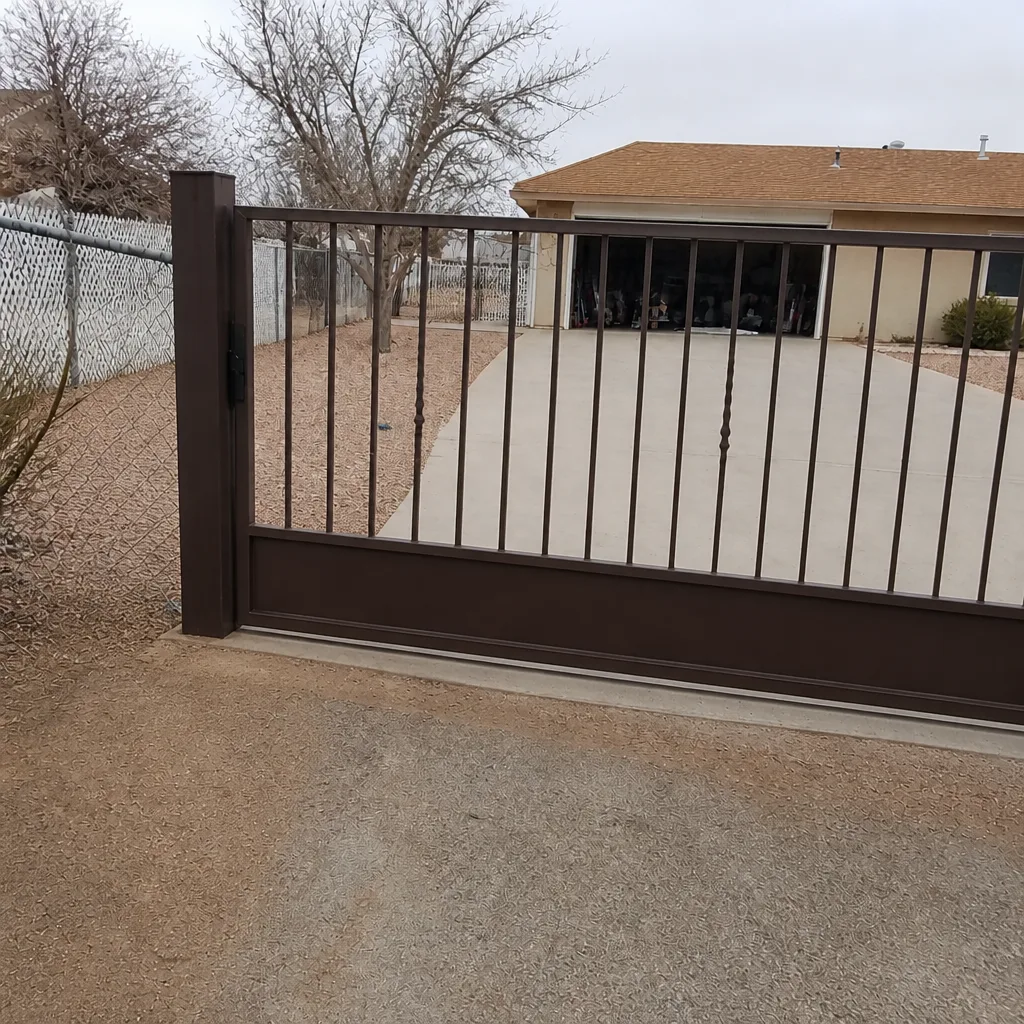 After
How does an automatic gate opener work in Boulder City, NV?
An automatic gate opener works by turning a small electric motor into controlled gate movement: the motor drives the gate, a control board decides when to start and stop it, and limit switches tell the board exactly where “fully open” and “fully closed” are. Safety sensors (photo-eyes and safety edges) interrupt travel if something crosses the path, and a backup battery keeps the system working when power drops. On a 1940s iron swing gate in Boulder City, that same basic system fights constraints a sliding gate never sees: gate weight, hinge condition, and the power supply feeding it. If your gate is stalling, reversing, or ignoring the remote, call (844) 320-7587 and we’ll walk the system with you.
Key takeaways
- Every opener is motor + control board + limit switches + safety inputs + power supply, whatever the brand.
- Boulder City’s older, narrower, often custom-welded gates change how those parts have to be tuned.
- Limit-switch settings drift as heat and wind work on hinges and plastic components, so the board’s calibration is the first thing we check.
- You get a written price before work starts and a photo record of every adjustment when we leave.
The three opener types you’ll actually find in Boulder City
Generic explainers describe one opener as if it were all openers. In Boulder City, the type on your property is dictated by the lot, the gate, and the decade the house was built.
Articulated swing arm (most common here)
On the small bungalow lots in the historic core, the articulated swing arm is the workhorse. A folding arm pivots as it pushes, so it can swing a gate through a tight arc without needing a long linear track. The mechanical principle is straightforward: the motor turns a gearbox, the gearbox drives the arm, and the arm opens and closes the gate through a hinged joint. What matters is the hinge. If the original strap hinges on a 1930s iron gate have seized, the arm has to overcome that resistance, and the control board reads that extra resistance as an obstacle. We regularly find swing arms stalling not because the motor failed but because a hinge had gone dry. The fix isn’t a new opener; it’s freeing the hinge and rechecking torque.
Underground actuator (on the newer east-side ranch homes)
Some of the newer ranch properties on Boulder City’s east side run an underground actuator, where the motor housing sits below grade in a protective box and the gate pivots on an above-ground spindle. This setup is quieter and cleaner to look at, but it introduces a different failure point: the underground box fills with grit and water, and the electrical connections inside corrode faster than a surface-mounted system. When an underground actuator gets sluggish, the cause is usually inside the box, not the motor.
Sliding rack-and-pinion
On properties with room for a lateral slide, a rack-and-pinion opener runs a toothed rack along the gate and a pinion gear on the motor. The board counts pinion rotations to track gate position. A slide needs flat, level ground, which is why it shows up less in the tighter historic-district lots. When we quote a Gate Motor & Opener in Boulder City, the first question we answer on paper is which of these three you have.
The control board is the brain, and the limit switches are its memory
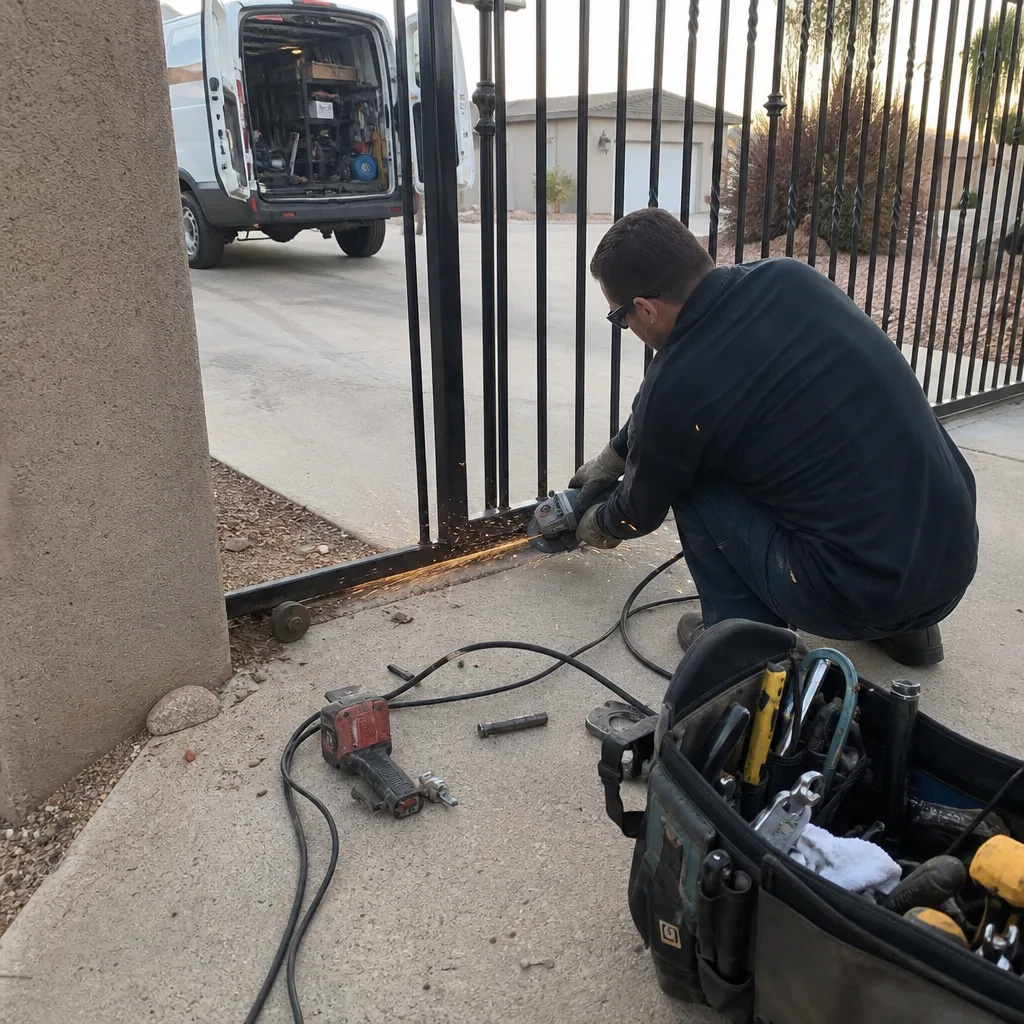
The control board runs the show. It reads inputs (your remote, keypad, or loop detector), decides direction and speed, and manages motor torque. Two limits sit inside that logic: the open limit and the close limit, which tell the board where travel should stop. When these drift, the gate either stops short or slams into its stop and reverses.
In Boulder City, this matters more than a generic explainer lets on. Summer highs top 105°F here, and sustained 30-40 mph spring winds off the McCullough Range come with it. Heat thermally expands plastic components and the gate’s own metal, and wind loads lever the gate against its hinges. A limit switch set perfectly in March can be 8-10 degrees off by July. That’s why we read and record limit-switch positions on every visit instead of assuming last year’s setting still holds.
What the board is actually doing, step by step
- Receive a command. A remote or keypad signal reaches the receiver on the board.
- Check safety inputs. The board confirms the photo-eye beam is intact and no safety edge is tripped before it moves.
- Drive the motor. Power goes to the motor, and the board watches torque draw to sense an obstruction.
- Read limits. The board stops travel at the open or close limit it’s been set to.
- Log the position. On systems we service, that calibrated state gets written down and photographed for the record.
BeforeAfterPower supply: the part monsoon season exposes
The power chain runs from an AC transformer to the control board to the motor, and on most residential systems there’s a backup battery in the middle of that chain. When a monsoon microburst knocks out grid power, the battery is what lets the gate keep moving. The trouble is UV exposure. In Boulder City’s sun, a backup battery ages faster than the national average, and a homeowner who hasn’t had one swapped in a while finds out during the one storm that matters. We check battery health as a standing item, and the fix is a written price before anyone touches it.
Why the brand on your gate changes what a technician can do
All nine of the brands we service run the same core functions, but they implement them differently. LiftMaster often uses a magnetic limit system for position sensing; FAAC leans on an electronic encoder that counts rotations. DoorKing, Elite, Mighty Mule, and the rest each have their own board logic and adjustment method. A technician who knows only one brand guesses at the settings on the other eight. Knowing the brand means the limit switches get set by the method the board expects. It’s why we work on whatever motor is already on your property instead of steering you toward a replacement.
The documentation angle
Every visit ends with something most gate companies don’t leave behind: a wiring diagram and a written record of the limit-switch readings for that specific gate. Not a generic schematic, but a snapshot of how your system was calibrated on that day. Under the Haven Standard, every job includes that photo record at no charge. If a future technician ever needs to know how your gate was set, the answer is already in the file. That’s the difference between a documented record and a guess.
Common local scenarios we see
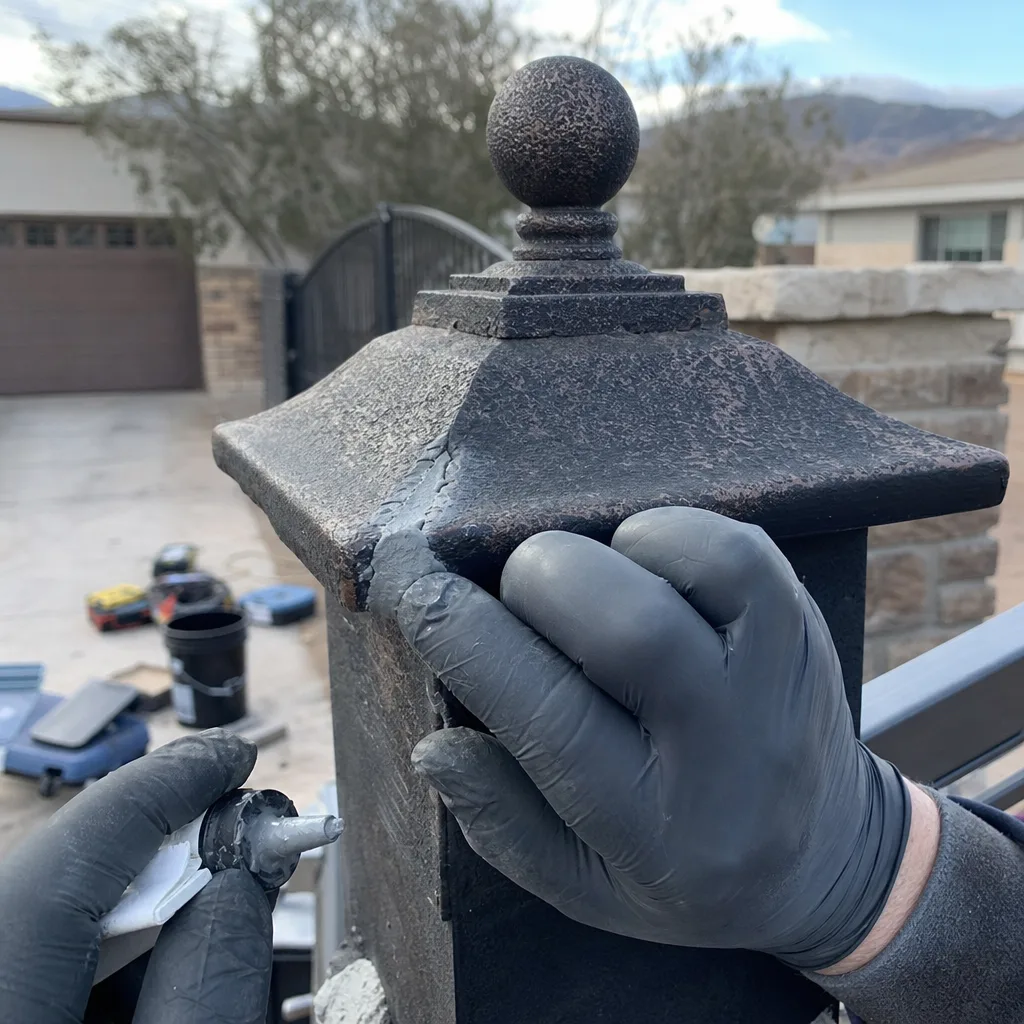
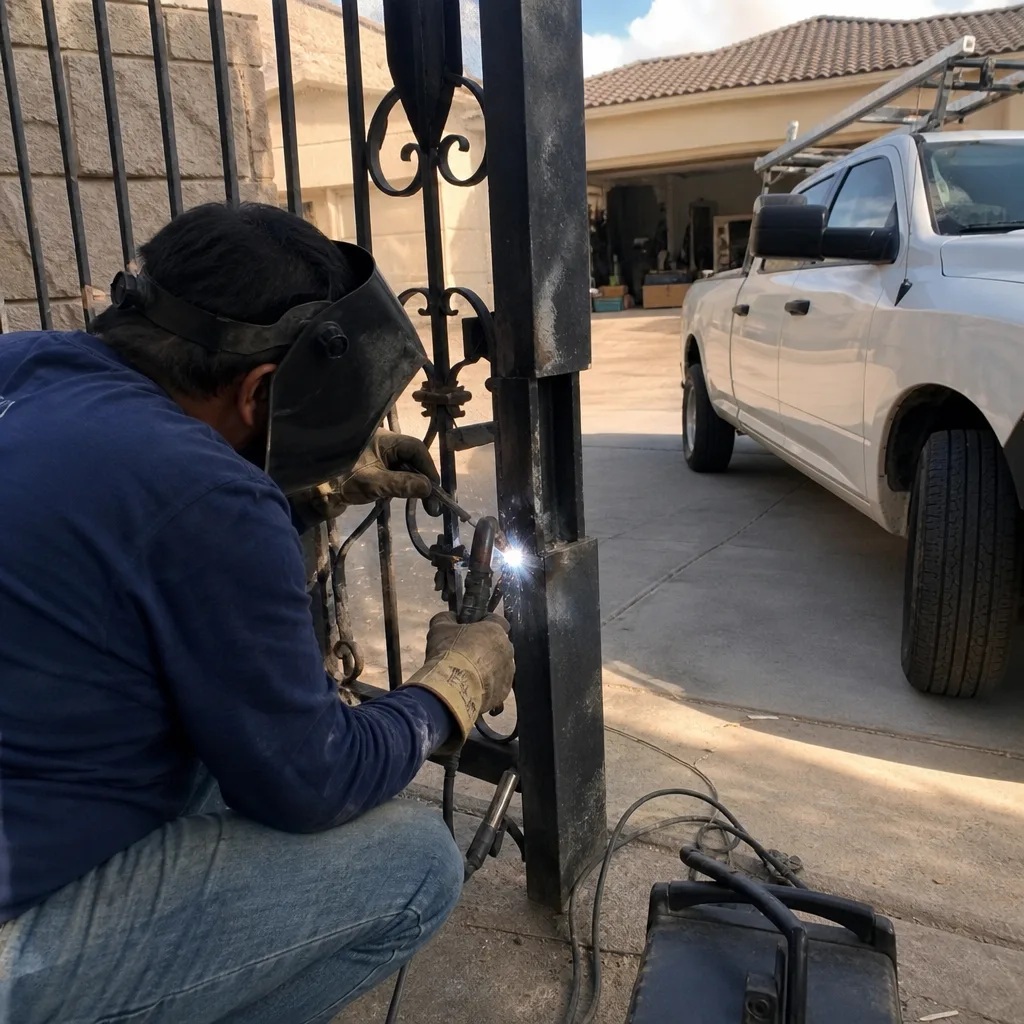
Boulder City’s 1930s federal-planned layout and historic-district rules mean almost every residential lot is still bounded by an actual fence and gate, and the front-yard rules forbid visible solid walls and require consistent setbacks. Gate work here is part fence repair, part streetscape matching. In the historic district around Nevada Way and Avenue B, that often means original hand-forged strap hinges that have seized from desert grit and sun-baked grease. We keep vintage-style hinges on hand and use dry graphite rather than oil, since oil turns to gum in the 110°F summers. When a lightweight metal gate gets bent by a gust, it’s a welding and fitting job, not a drop-in swap. And with the older, narrower, often custom-fabricated gates here, the work is on-site fitting, not a boxed kit.
FAQs
Limit switches tell the control board where “fully open” and “fully closed” are, and the board cuts motor power when the gate reaches those points. In Boulder City’s heat, those settings drift as plastic and metal expand, so they should be checked and reset, not assumed.
A reversing gate is usually signaling an obstruction or a misread limit: a misaligned photo-eye, a seized hinge the board reads as resistance, or a limit switch that’s off. It means the system is working as designed, but something needs adjusting. Call (844) 320-7587 and we’ll diagnose it.
Yes, if you want the gate to work when the grid drops. Monsoon microbursts here knock out power, and the backup battery is what keeps the gate moving. UV exposure shortens battery life here, so we check it on every visit.
Most likely, yes. We service nine major automation brands, so the odds are strong that whatever motor you have, we can work on it without steering you toward a new one. A call to (844) 320-7587 gets you a straight answer.
If you’d rather have it looked at, Vance Gate Repair Boulder City offers a no-pressure assessment anywhere in Boulder City. You get a written price before any work starts, a photo record when we leave, and the 365-Day Done Right Promise behind every repair. Call (844) 320-7587 for a free estimate.
Written by the team at Vance Gate Repair Boulder City, serving Boulder City, NV.