
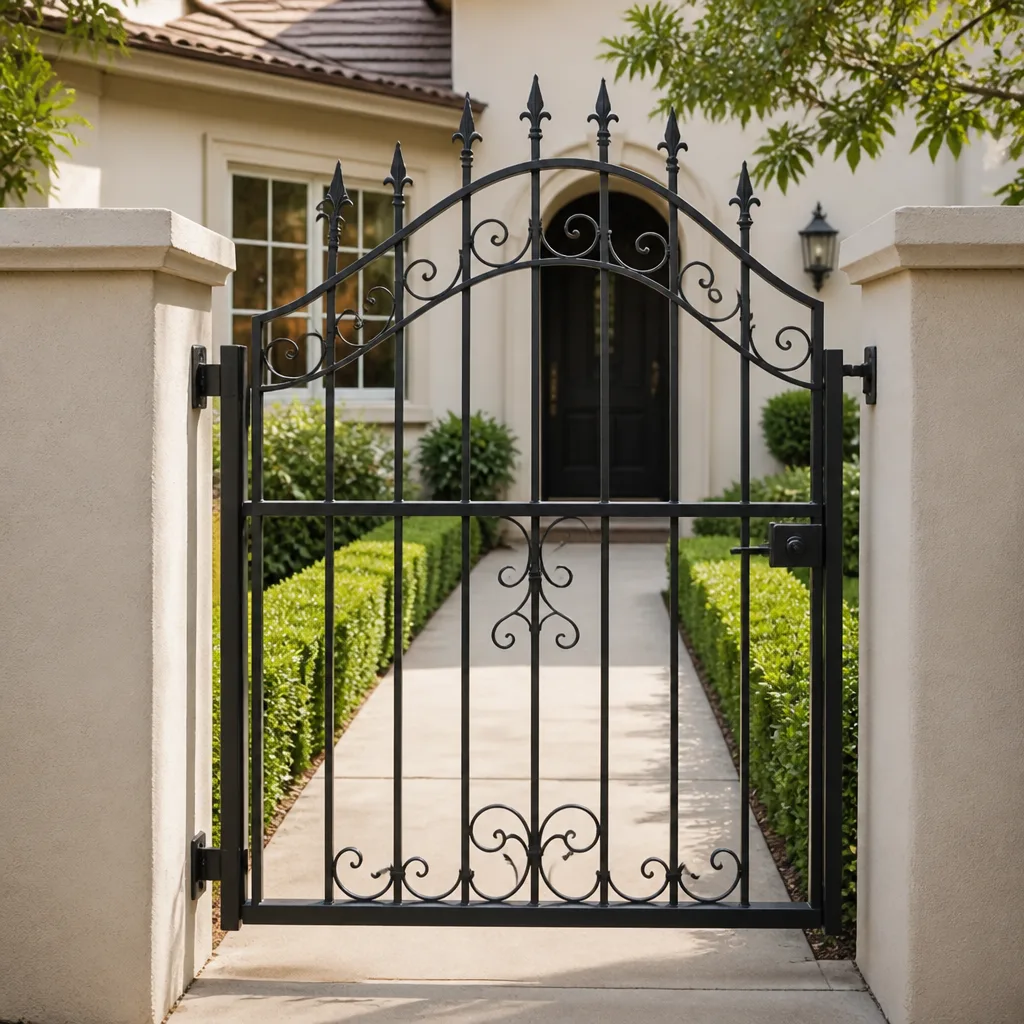
 Wrought iron
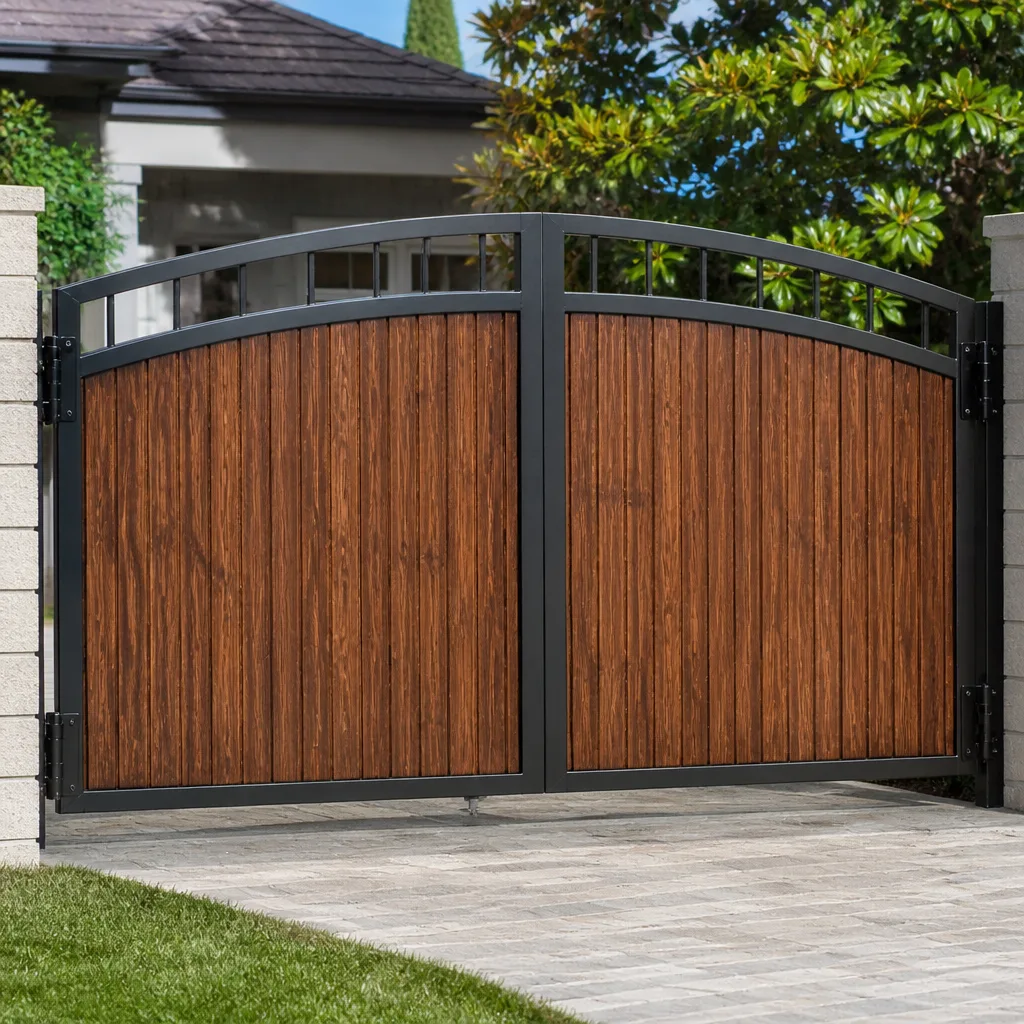 Wood & steel frame
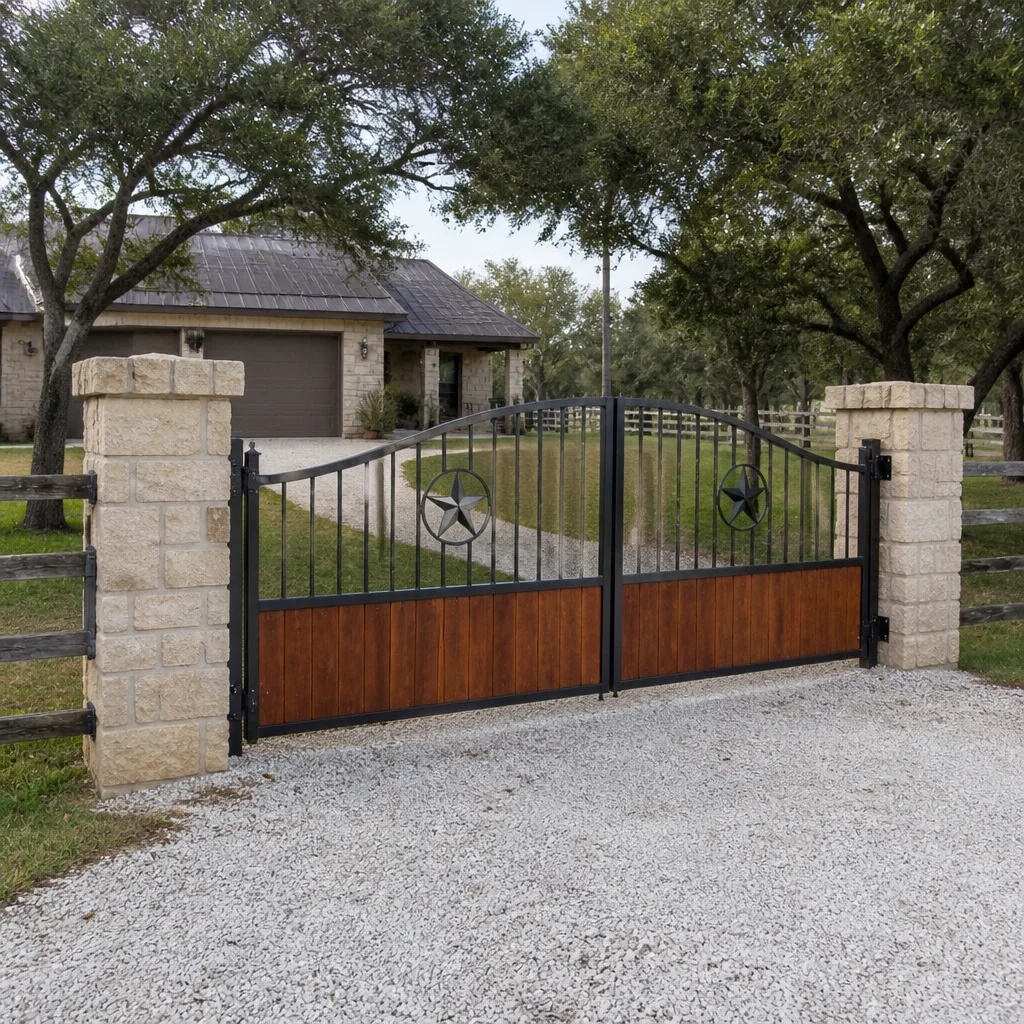 Farm & ranch
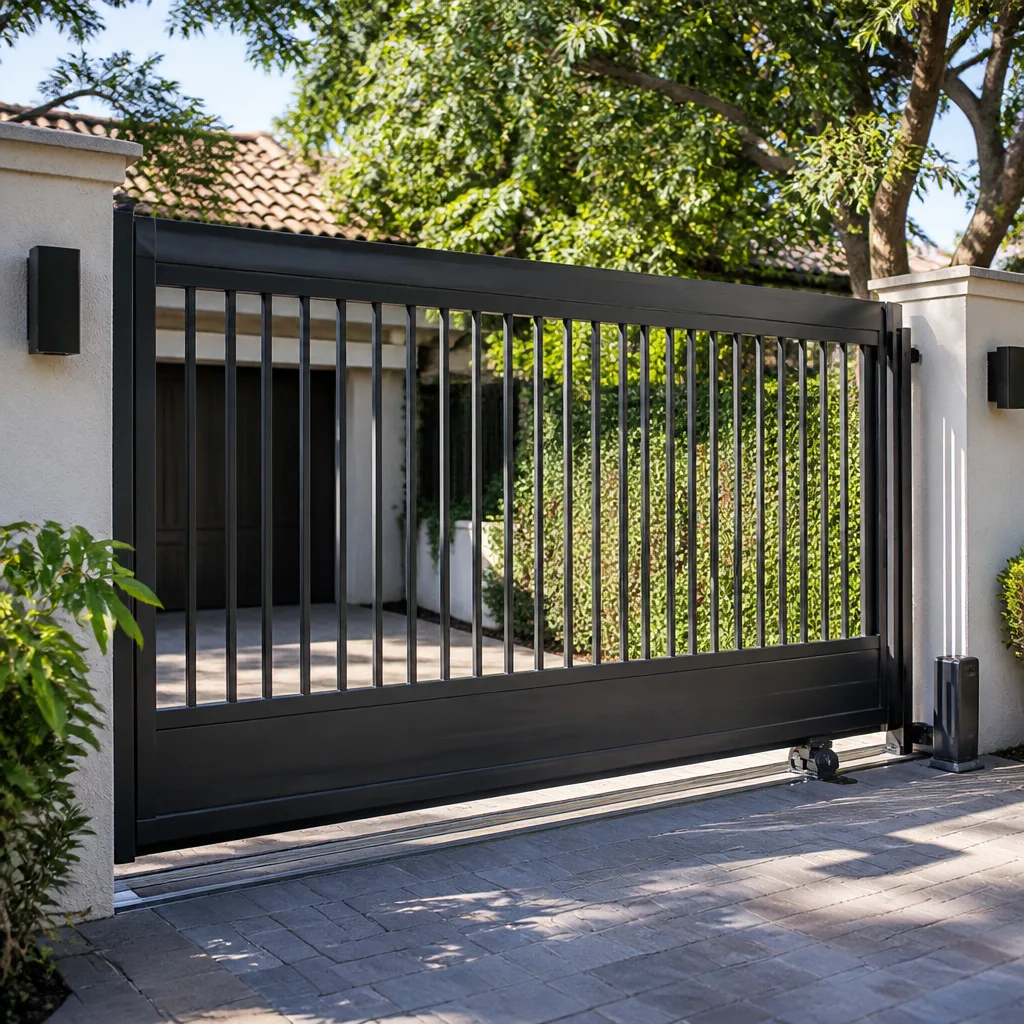 Sliding driveway gates
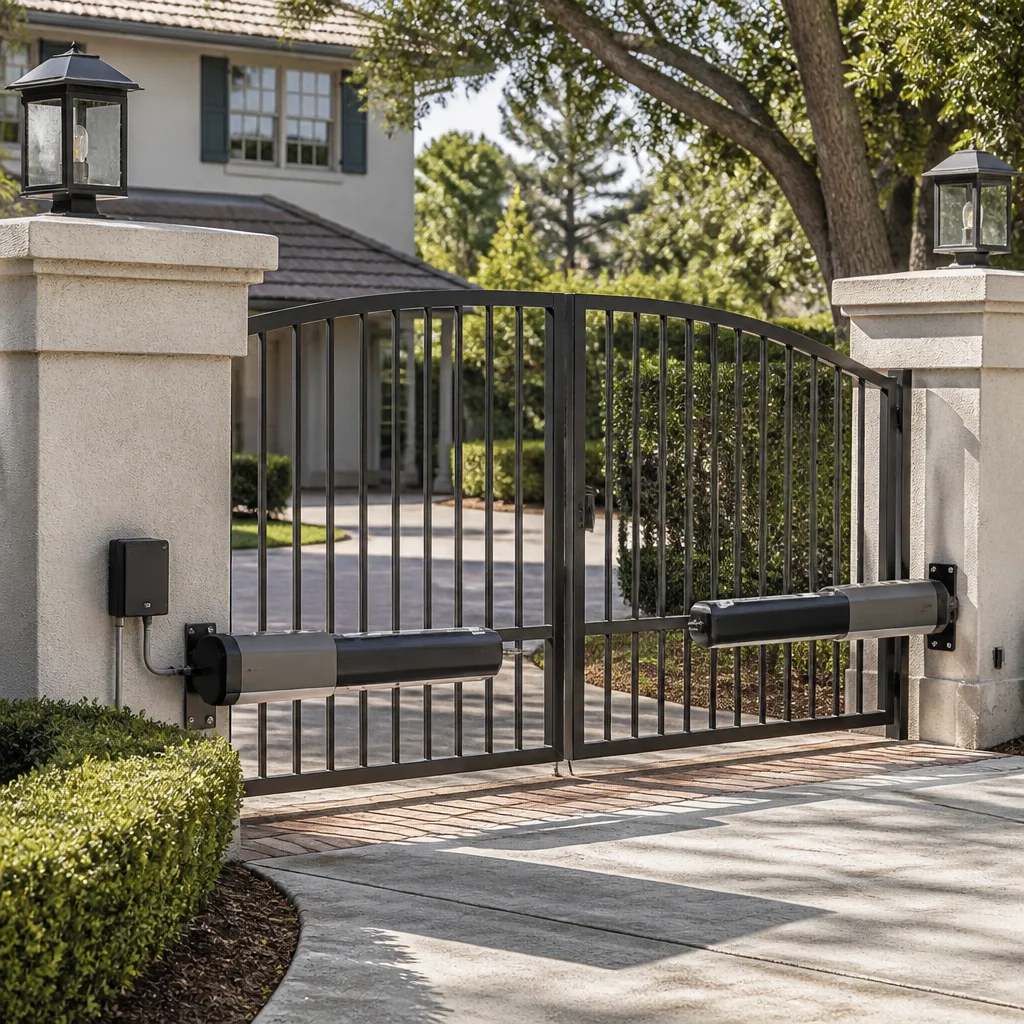 LiftMaster operators
Free on-site gate assessment - hinges, posts, and your LiftMaster or Nice gate operator checked before anything is quoted
The assessment is free and the quote is the invoice.
Get your free estimateStyles & brands we work with
- Wrought iron
- Wood & steel frame
- Farm & ranch
- Sliding driveway gates
- LiftMaster operators
See the difference
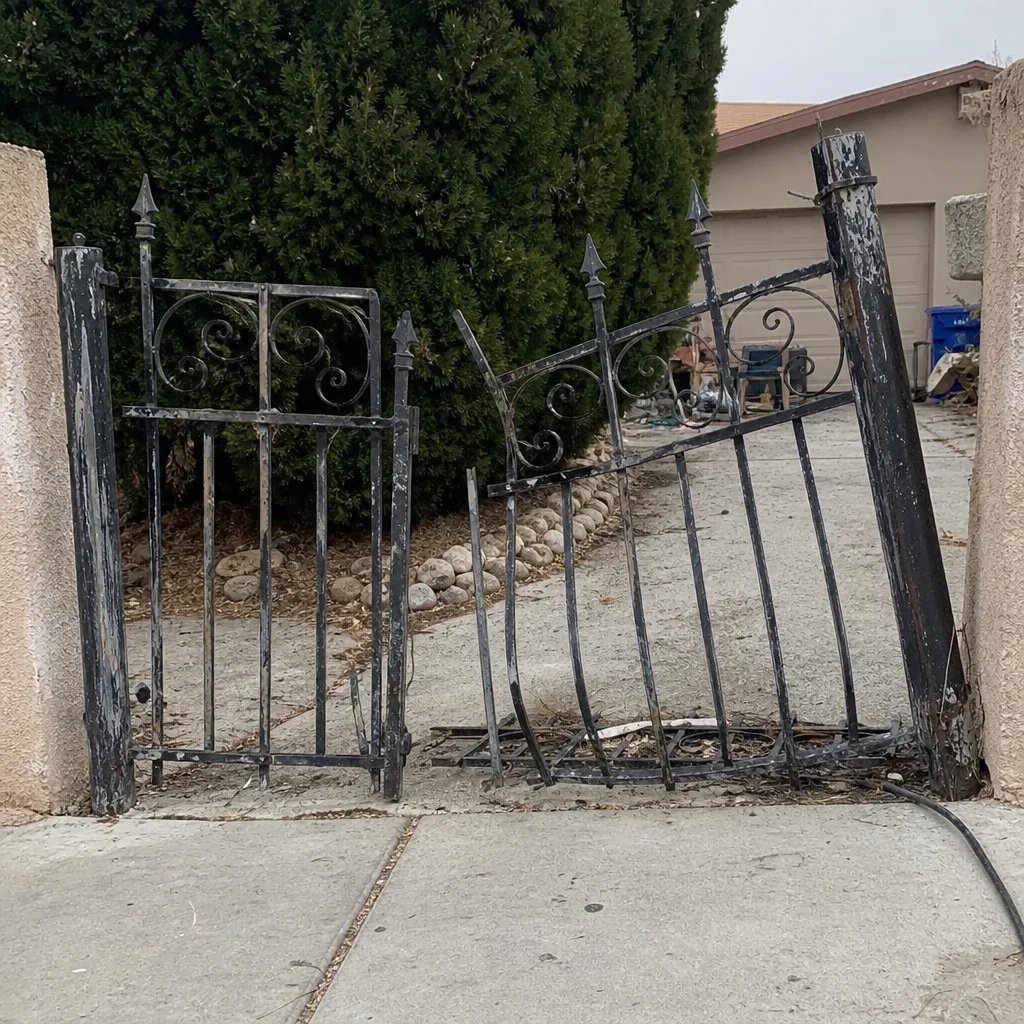 Before
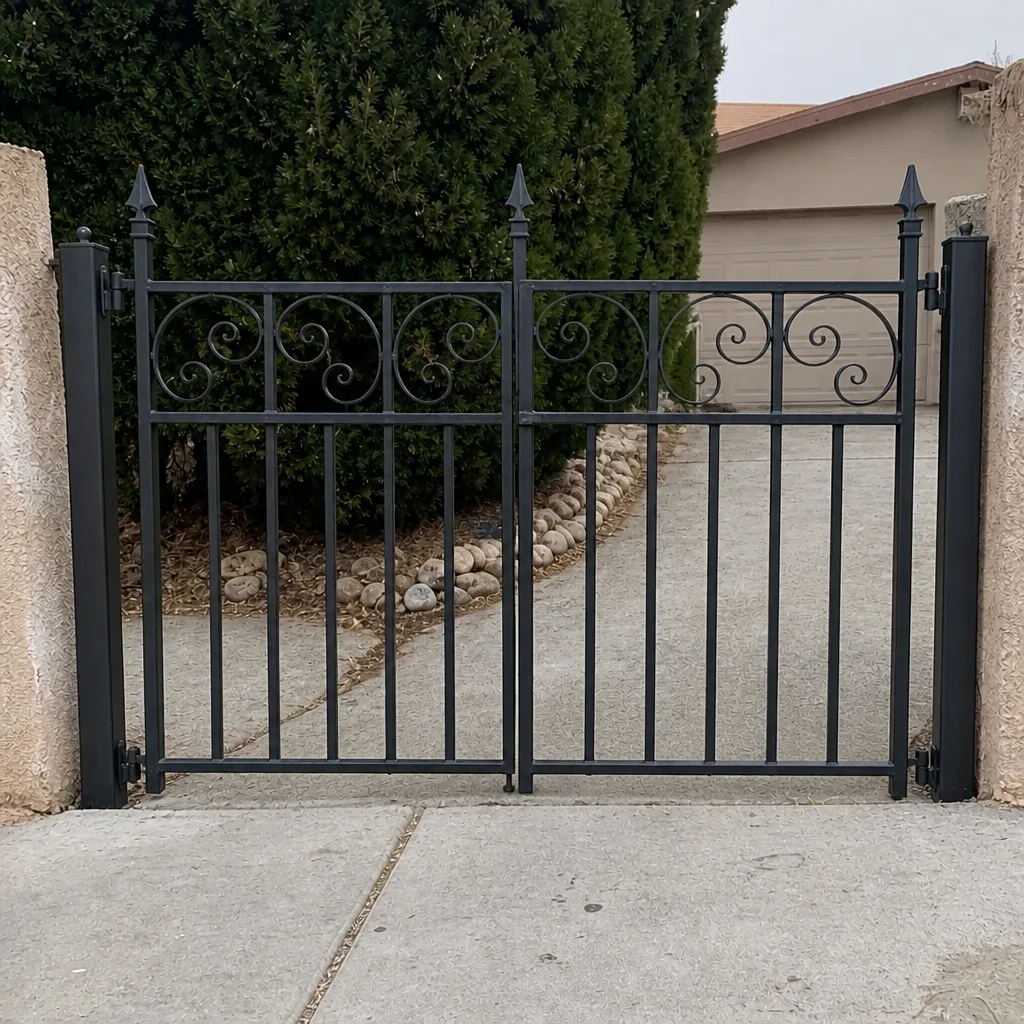 After
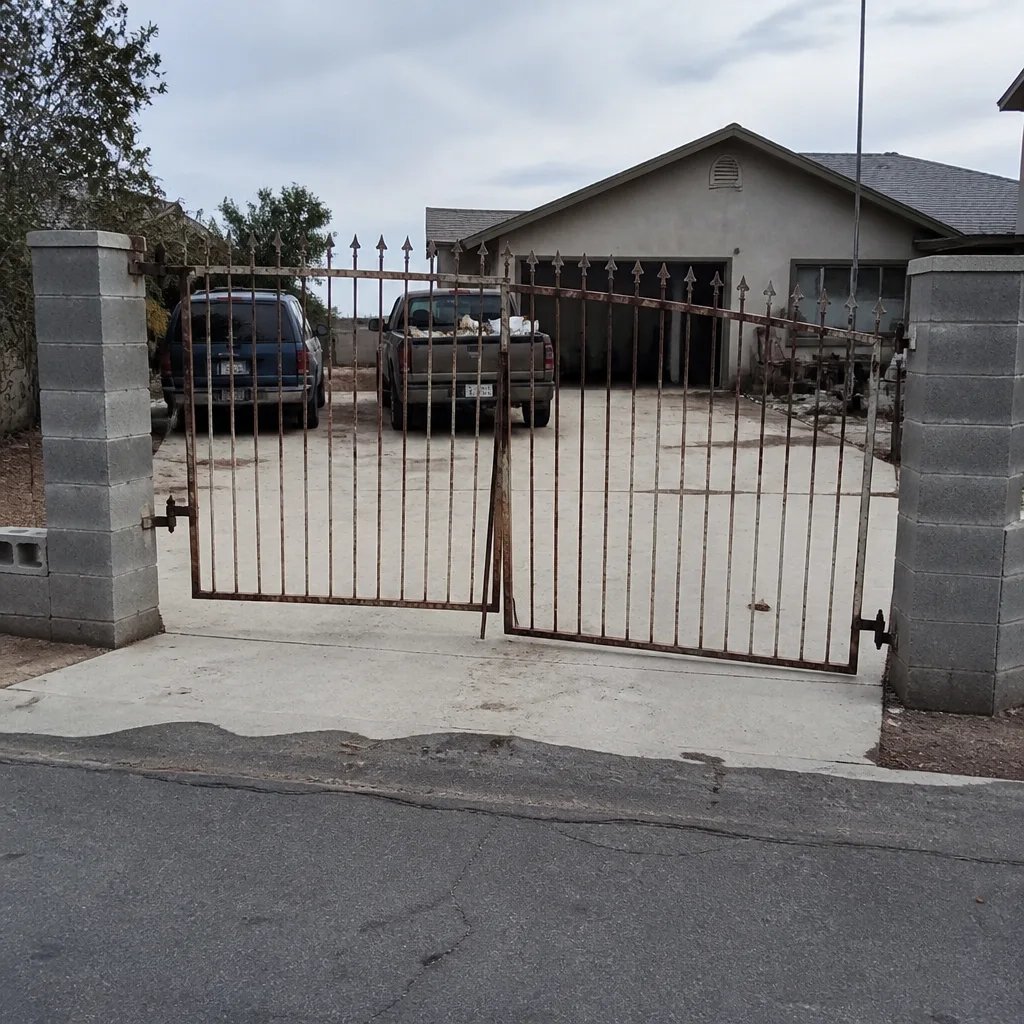 Before
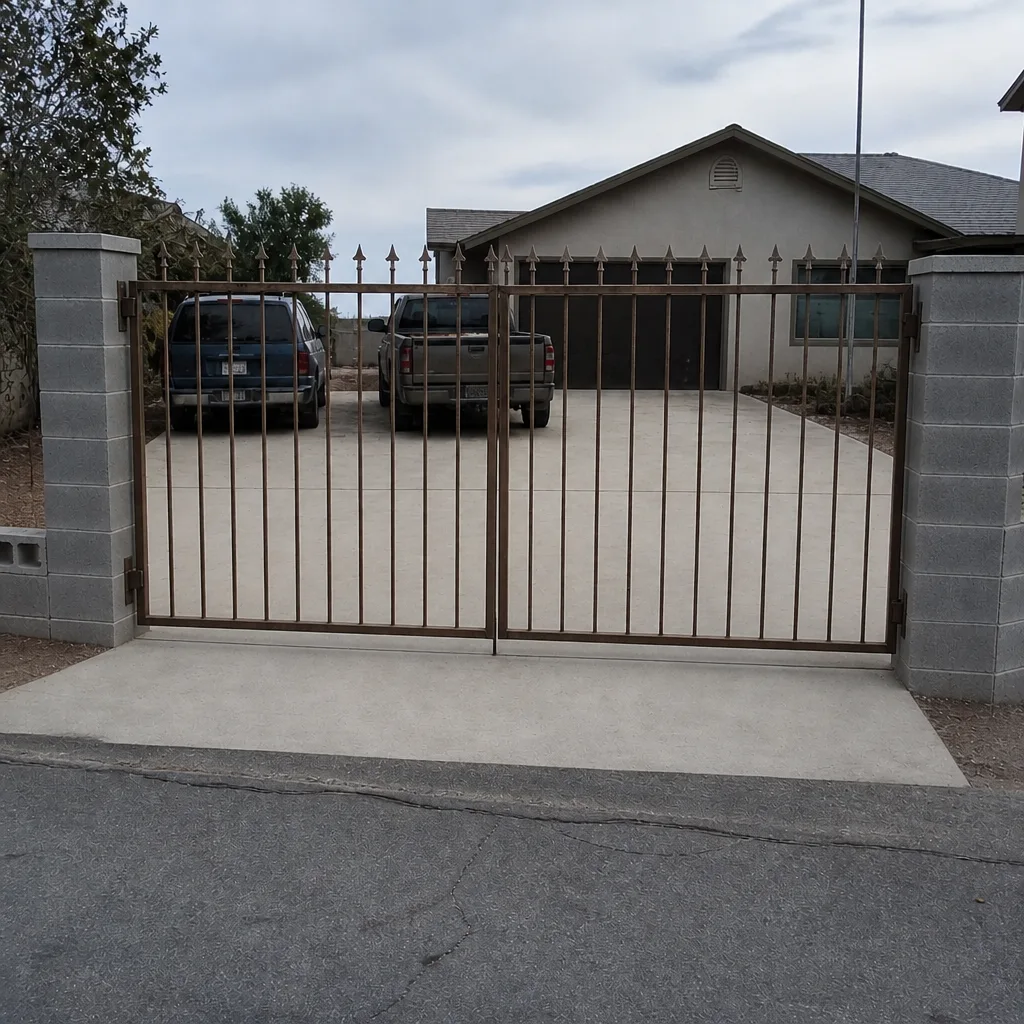 After
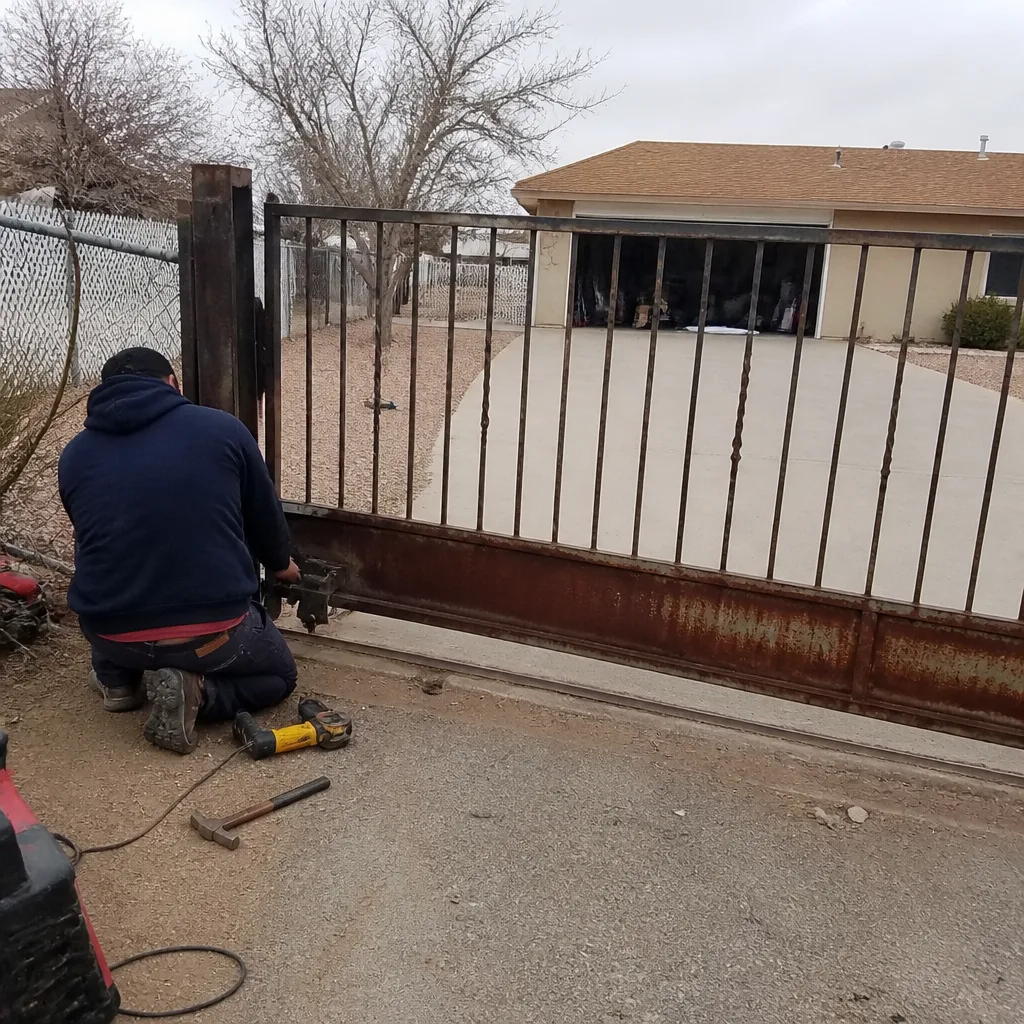 Before
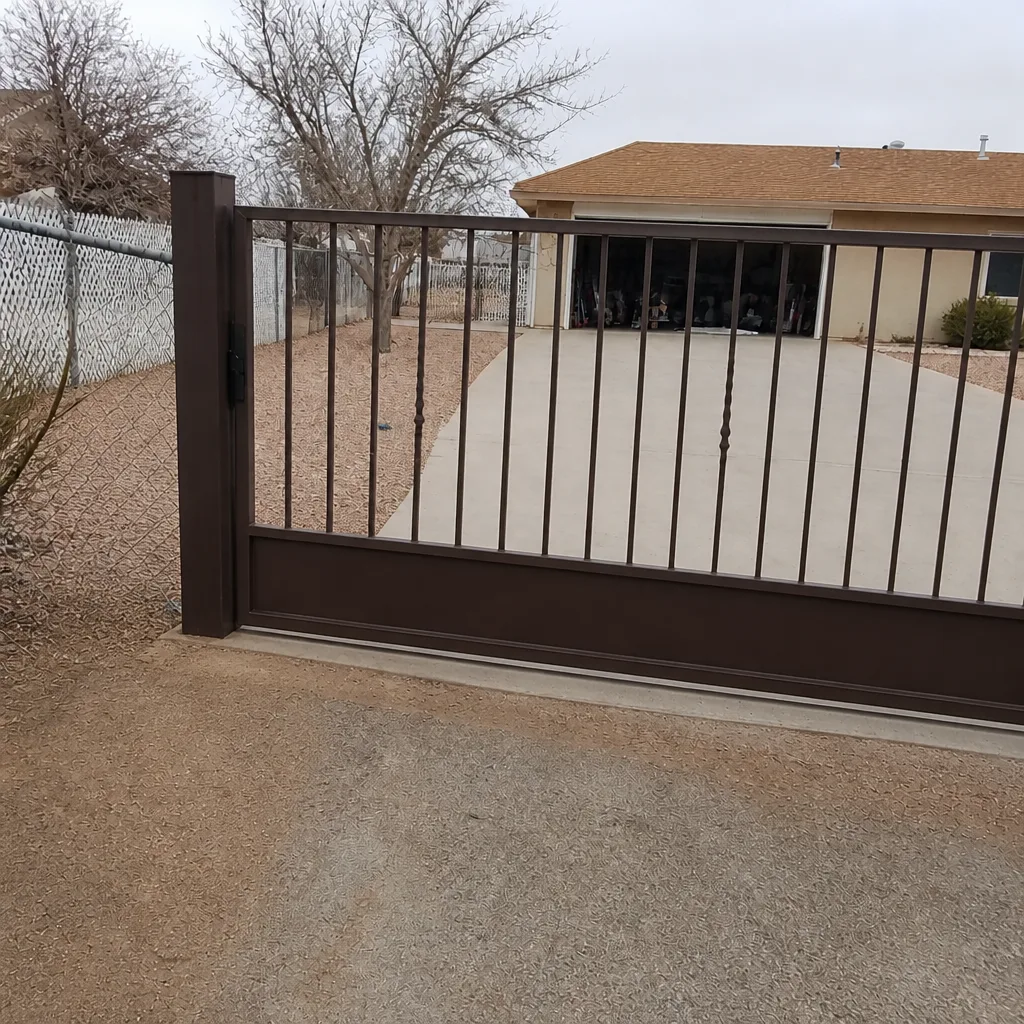 After
Solar Gate Opener vs Electric in Boulder City, NV: Which One Actually Holds Up
Choose wired electric (with battery backup) unless your gate sits far from any power source and cycles fewer than about six times a day. That’s the honest short version. Boulder City averages over 290 sunny days a year, which makes solar gate openers sound like an obvious fit, and for a low-use pedestrian gate on a property with no nearby outlet, solar is a fine answer. But the part the product listings skip is this: a panel that charges fine in March can’t keep up with a 15-open-per-day driveway gate in July, when the operator itself is drawing more current to push through heat-expanded hinges. If you’re weighing the decision right now, call (844) 320-7587 and we’ll tell you which side of that line your gate falls on.
Key Takeaways
- Most residential solar gate kits are sized for 4-6 cycles per day. A busy household blows past that.
- Panel output drops roughly 0.3-0.5% per degree Celsius above 25°C test conditions. A 70°C panel surface on a Boulder City roof in July is normal, not extreme.
- Mojave dust on a horizontal or low-angle panel quietly cuts output, and no product manual puts panel cleaning on a schedule.
- For high-cycle gates, or east-side ranch homes where a conduit run to the house is short, hardwired AC with battery backup is more reliable and cheaper across five years.
Why Boulder City Is a Hard Test for Solar Gate Operators
This town sits at the mouth of the Eldorado Valley, where summer highs routinely top 105°F and spring brings sustained 30-40 mph winds. That combination hits solar gate systems from two directions at once. The heat makes the operator work harder (hinges seize, wood gates warp and bind, the motor draws more current per cycle), and the same heat cuts the panel’s real output below its rated spec.
Then there’s the grit. Wind events across the McCullough Range lift fine Mojave dust that settles on any panel mounted horizontally or at a shallow angle. A dirty panel doesn’t fail outright. It just delivers less, cycle after cycle, until the battery never quite recovers between uses.
Boulder City’s housing stock adds its own wrinkle. The historic core is full of 1930s-1950s single-story bungalows and federal workers’ cottages, many with original wrought-iron pedestrian gates and custom-fabricated hardware that no standardized kit fits. Out on the east-side ranch homes, lots are larger and gates are often heavier and wider, which means more torque demanded per cycle. Neither situation rewards an undersized solar setup.
The Solar Sizing Problem Nobody Puts on the Box
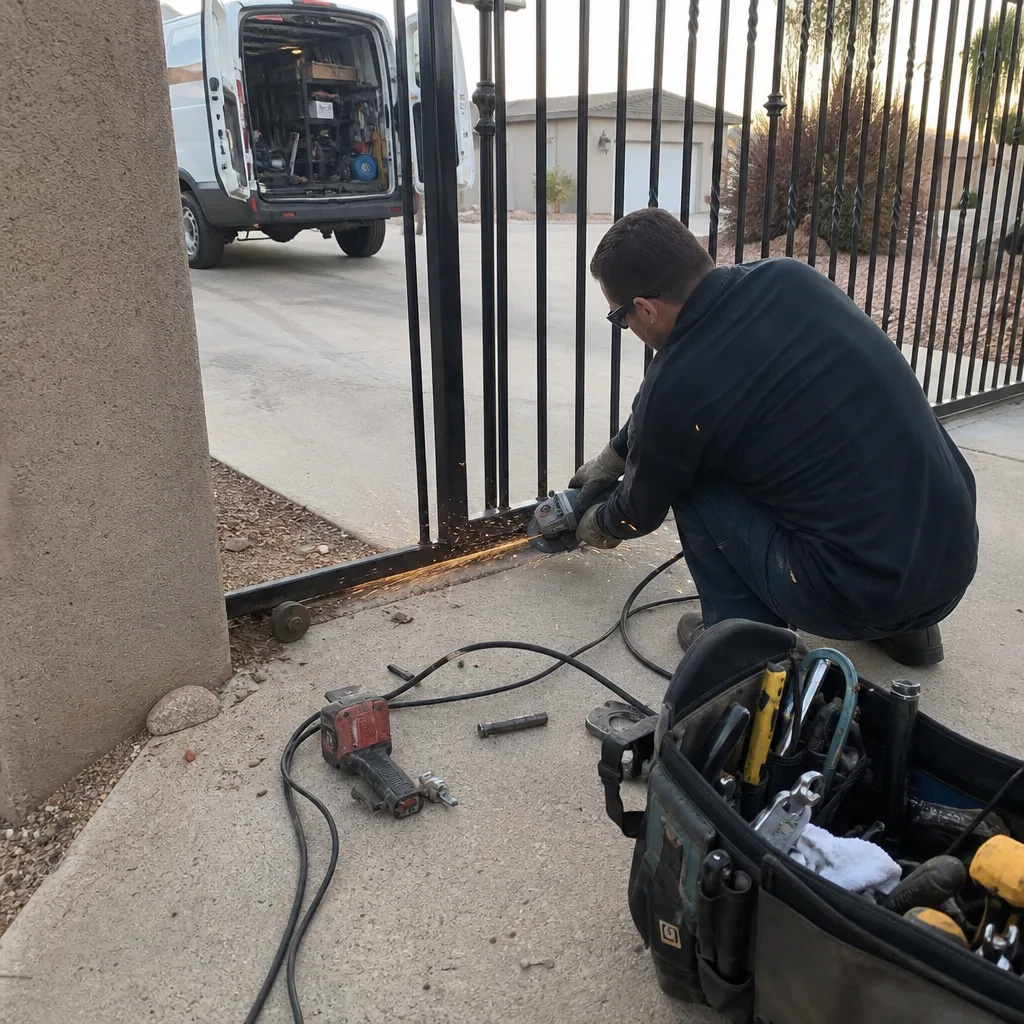
Here’s the number that matters most. Most residential solar gate kits are built around 4-6 cycles per day. A household with kids, deliveries, a dog that needs letting out, and a car that comes and goes twice a day can easily hit 12-15 cycles. When your gate cycles that often, the battery slides into deficit across consecutive hot days faster than the panel can climb back out. The symptom isn’t a dead gate. It’s erratic behavior: the gate stops halfway, reverses for no reason, or won’t open on the third try in the afternoon. Homeowners often blame the motor when the real problem is a power budget that never penciled out.
The heat math makes it worse. Photovoltaic panels lose roughly 0.3-0.5% of output for every degree Celsius above 25°C standard test conditions. A panel surface sitting at 70°C on a Boulder City summer afternoon is not unusual. Run that number and your “20-watt” panel is delivering meaningfully less than its label when you need it most.
BeforeAfterSolar vs Wired Electric: A Side-by-Side
| Factor | Solar | Wired Electric + Battery Backup |
|---|---|---|
| Best fit | Low-cycle gates (under ~6/day), no nearby power | High-cycle gates, short conduit run to house |
| Reliability in July heat | Drops with panel temp and dust | Steady; battery carries outages |
| Maintenance | Panel cleaning, battery replacement every few years | Minimal |
| 5-year cost on a busy gate | Higher once you upsize the panel and battery | Lower upfront wiring pays back over time |
| Install complexity | Panel placement, sun angle, mounting | Trench and conduit to a power source |
Where solar wins cleanly: a pedestrian gate or a lightly used driveway gate on a property where running conduit would mean trenching across a long driveway or tearing into historic-district landscaping. On the east side of Boulder City, where ranch homes often have a short, simple run to an exterior outlet or subpanel, a hardwired setup with a battery backup is simply the more dependable choice, and over five years it costs less than a solar system sized large enough to actually carry the load.
How We Work the Decision (and What You Get in Writing)
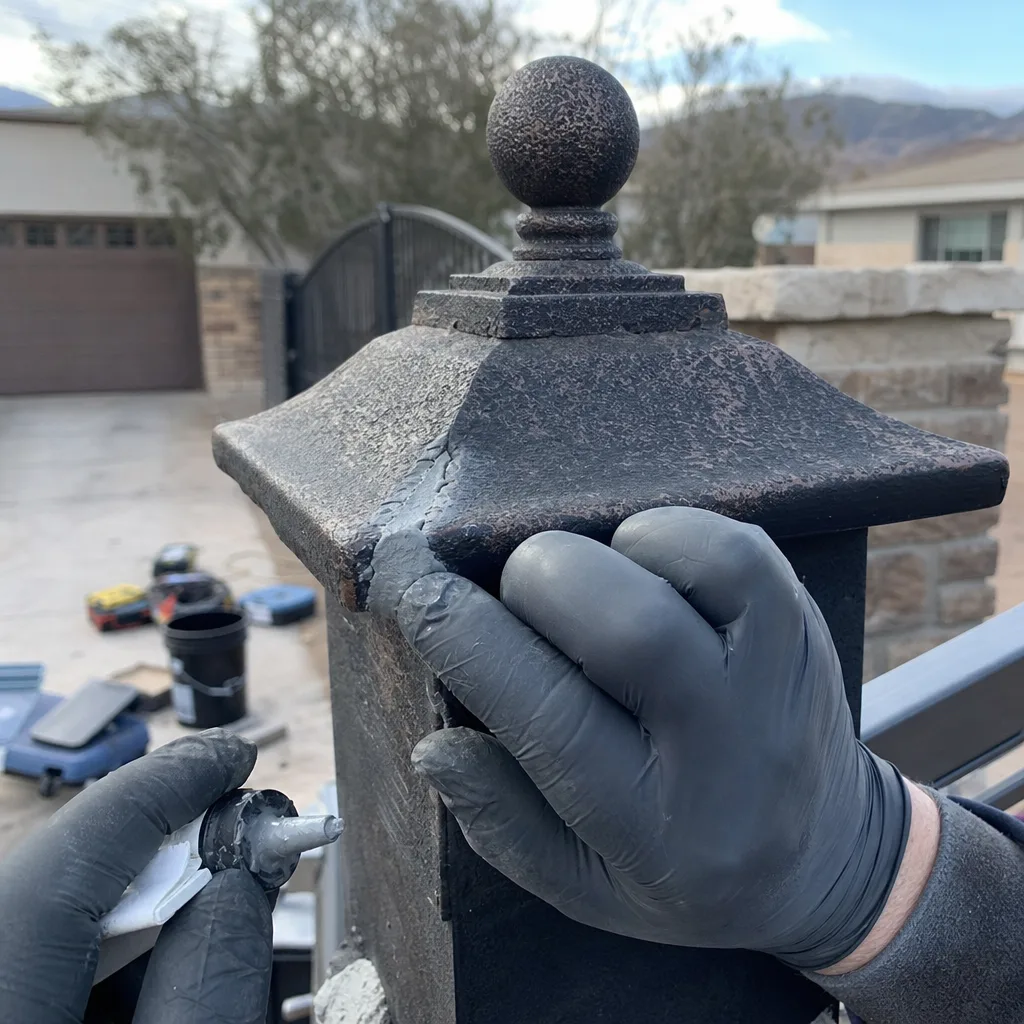
The right power source depends on your real cycle count, the gate’s weight and hinge condition, and how far the nearest power sits. That’s not something anyone can judge from a photo or a phone description alone. It needs eyes on the site.
- Site walk and cycle count. We ask how often the gate actually opens on a busy day and note the gate’s width, weight and hinge condition.
- Power-source assessment. We measure the distance to the nearest viable power and check sun exposure and panel-mounting options if solar is on the table.
- Written recommendation in the scope. Before any work starts, the power-source call is written down. If a solar kit is undersized for your site’s real load, that assessment is in the scope so you decide with the full picture, not after a failed install.
- Repair first, replace only when needed. If the existing motor on your property is a Ghost Controls, Mighty Mule, Elite or DoorKing unit, we work with what’s there rather than steering you toward a replacement.
Every job follows The Haven Standard: a written price before work begins (Clause 1), a photo record on every visit, and the 365-Day Done Right Promise covering completed work for a full year at no additional charge. Our technicians have up to 12 years of experience, and since 2014 we’ve completed over 22,000 gates with a written price attached to every one. When we work on the Gate Motor & Opener, you get the same photographic record of what was found, what was set, and what was installed.
A word on safety: gate operators combine live electrical connections, a battery bank that can deliver serious current, and high-tension hardware that can injure a hand badly if it releases under load. If you’re dealing with a system that’s already wired in, don’t open the control box or disconnect a battery yourself. That’s a job for a trained technician, and it’s part of why we photograph the wiring on every visit.
What to Look For Before You Buy Either One
When you’re comparing a solar gate opener against a wired electric setup, ask these questions before anything gets ordered:
- What’s your real daily cycle count? Count a busy Saturday honestly. That number decides everything else.
- How old are the hinges and latches? Seized or worn hardware doubles the current a motor draws per cycle, which punishes a solar system hardest.
- How hot does the mounting surface get? A panel baking on a west-facing roof or a metal gate post runs hotter than a shaded one, and output follows.
- How long is the conduit run to power? A short trench to the house often costs less than oversizing a solar system.
- Will a written scope spell out the power-source call? If a company won’t put its solar-vs-electric recommendation in writing before work starts, you’re making the decision blind.
If you’re curious how a given brand behaves in this climate, our Gate Motor & Opener in Boulder City page covers how each of the nine major brands we service (LiftMaster, FAAC, BFT, Linear, Viking, Ghost Controls, DoorKing, Elite and Mighty Mule) handles desert heat. Already holding a written estimate from another company? We’ll review it at no cost as a free second opinion.
FAQs
Only if your gate cycles fewer than about six times a day and there’s no reasonable way to run power to it. For a lightly used pedestrian gate or a gate far from any outlet, solar is a good fit. For a busy driveway gate with kids, deliveries and daily use, a solar kit sized for 4-6 cycles will fall into a battery deficit across consecutive hot days and behave erratically. Call (844) 320-7587 and we’ll help you count the cycles that actually matter before you decide.
It depends on the conduit run and whether the existing operator can be reused, but the wiring and power work is often the smaller line item compared with a solar system upsized to handle a high-cycle load. The only honest way to price it is a site walk that measures the distance to power and checks the gate’s hinge condition. Estimates are free and written in dollars before any work begins, so call (844) 320-7587 to schedule one.
Because the panel loses real output as it heats up and collects dust, while the operator draws more current to push heat-expanded hinges through their travel. A panel at 70°C on a Boulder City summer afternoon delivers well below its rated spec, and a battery that never fully recovers between cycles starts showing it as erratic stopping or reversing. It’s rarely a dead motor; it’s a power budget that never balanced. A diagnosis tells you which. Call (844) 320-7587.
Yes, when it’s paired with a battery backup. A hardwired AC setup with a backup battery carries the gate through outages while staying reliable day to day in the heat, which is exactly why we recommend it for high-cycle gates. We can check whether your current operator is backup-capable during a free assessment. Call (844) 320-7587 to set one up.
If you’d rather have it looked at, Vance Gate Repair Boulder City offers a no-pressure assessment in Boulder City. We’ll count the real cycles, measure the run to power, and hand you the solar-vs-electric call in writing before anything gets ordered. Call (844) 320-7587 for a free estimate, or start from our home page.
Written by the team at Vance Gate Repair Boulder City, serving Boulder City, NV.