
 Wrought iron
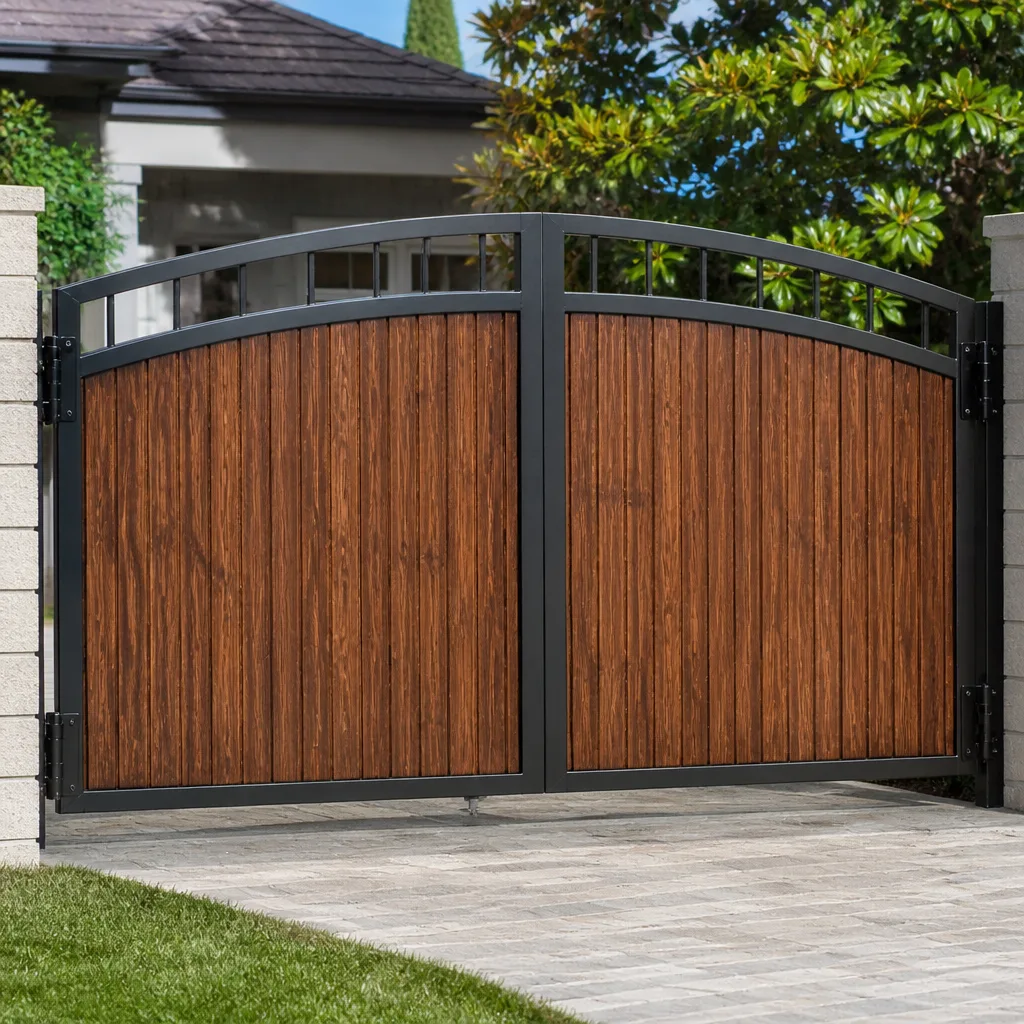 Wood & steel frame
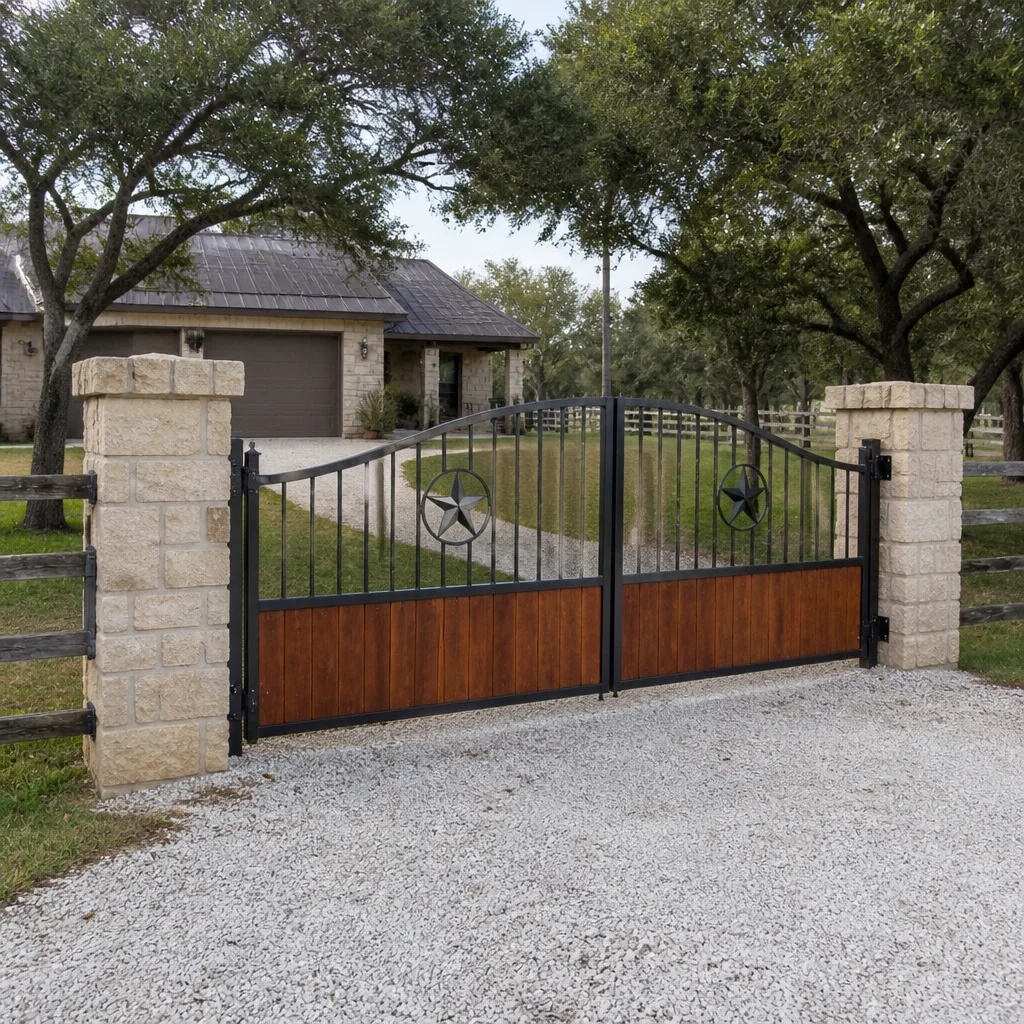 Farm & ranch
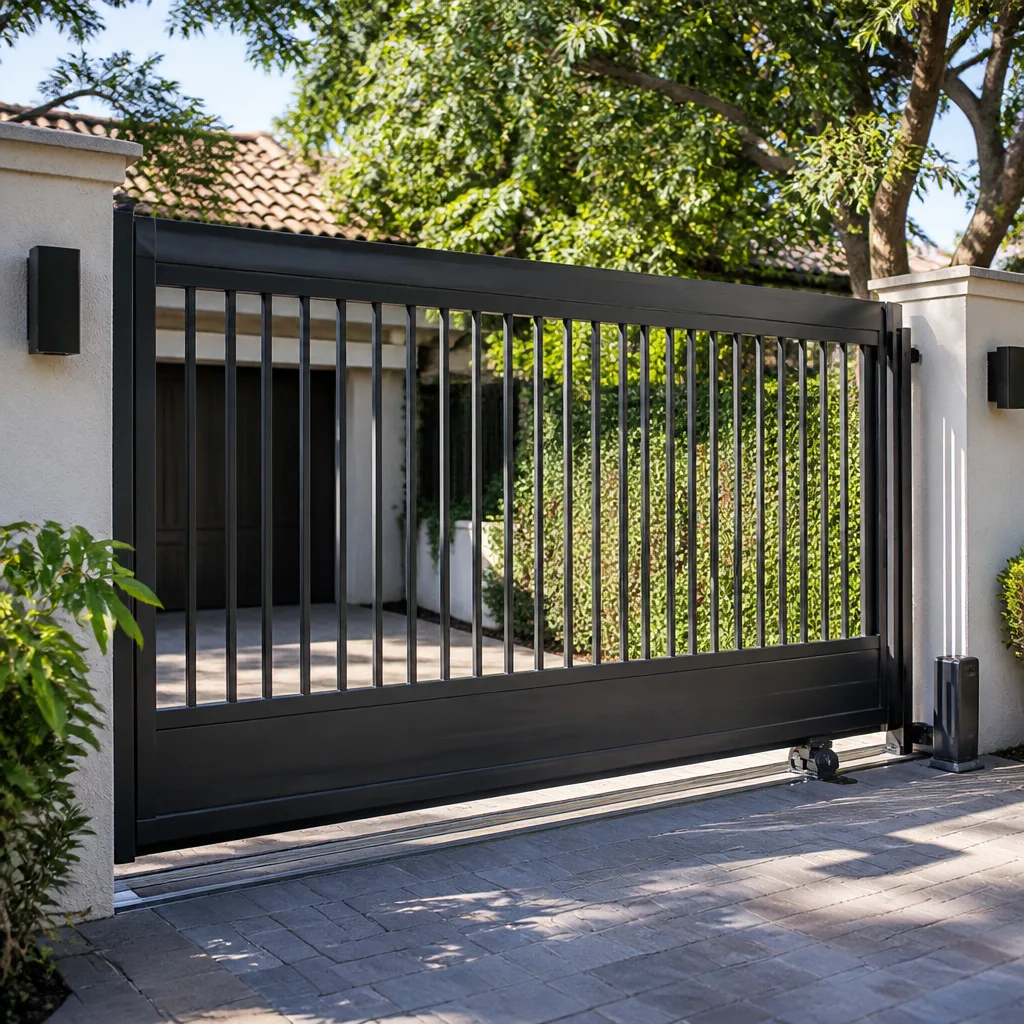 Sliding driveway gates
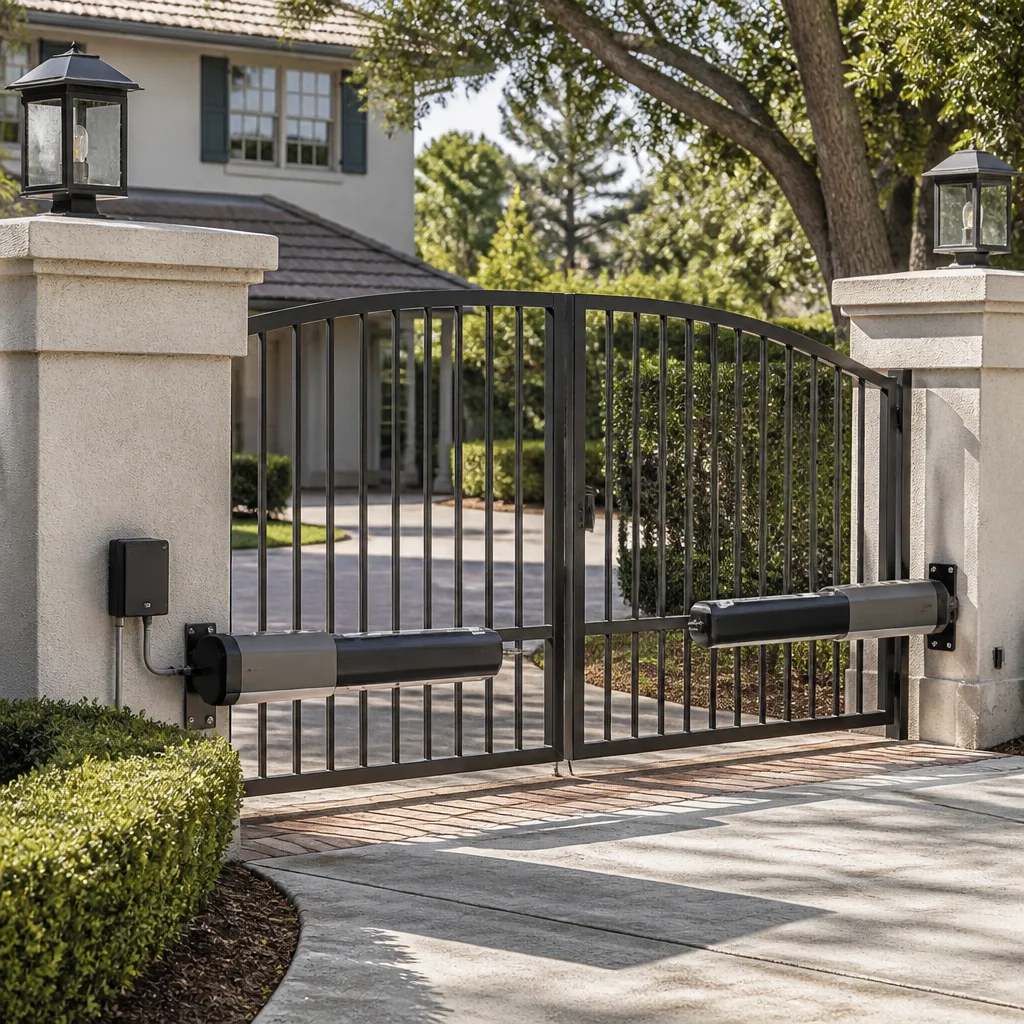 LiftMaster operators
Free on-site gate assessment - hinges, posts, and your LiftMaster or Nice gate operator checked before anything is quoted
The assessment is free and the quote is the invoice.
Get your free estimateStyles & brands we work with
- Wrought iron
- Wood & steel frame
- Farm & ranch
- Sliding driveway gates
- LiftMaster operators
See the difference
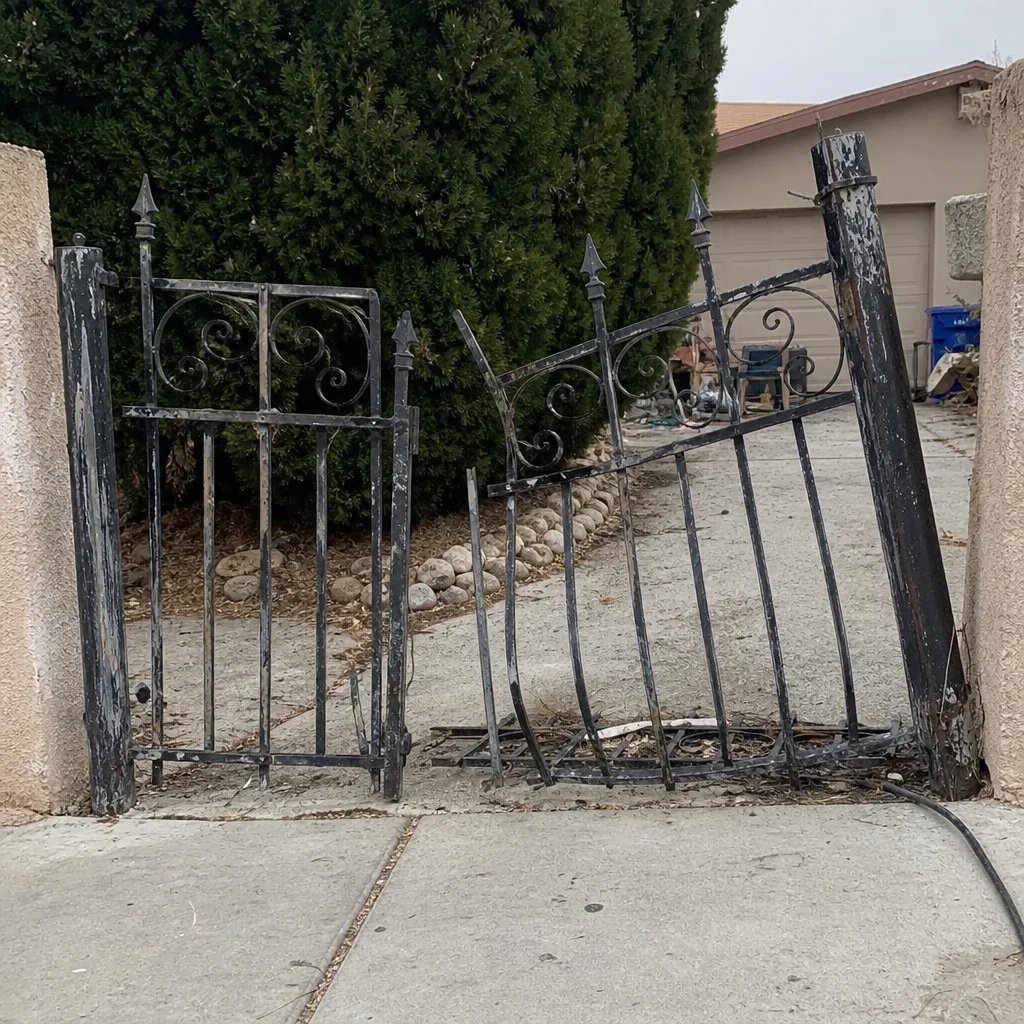 Before
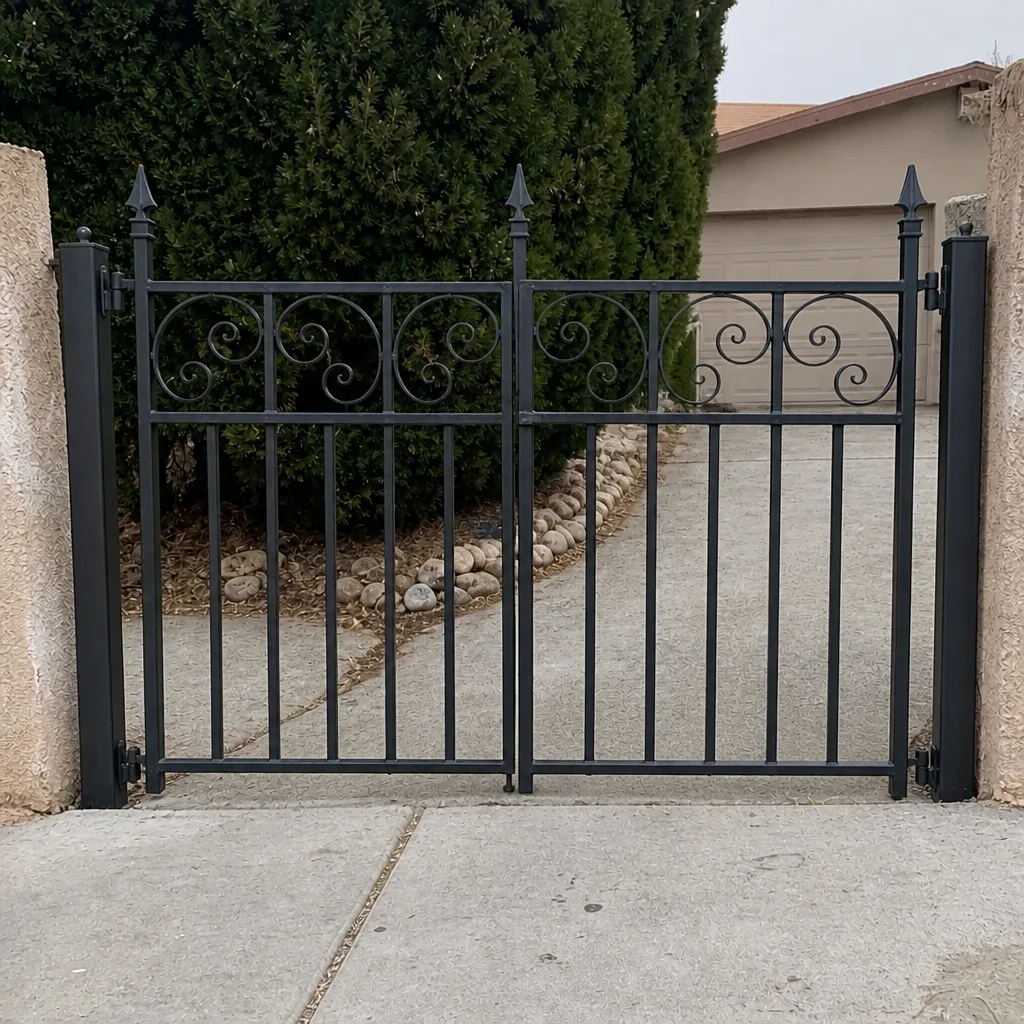 After
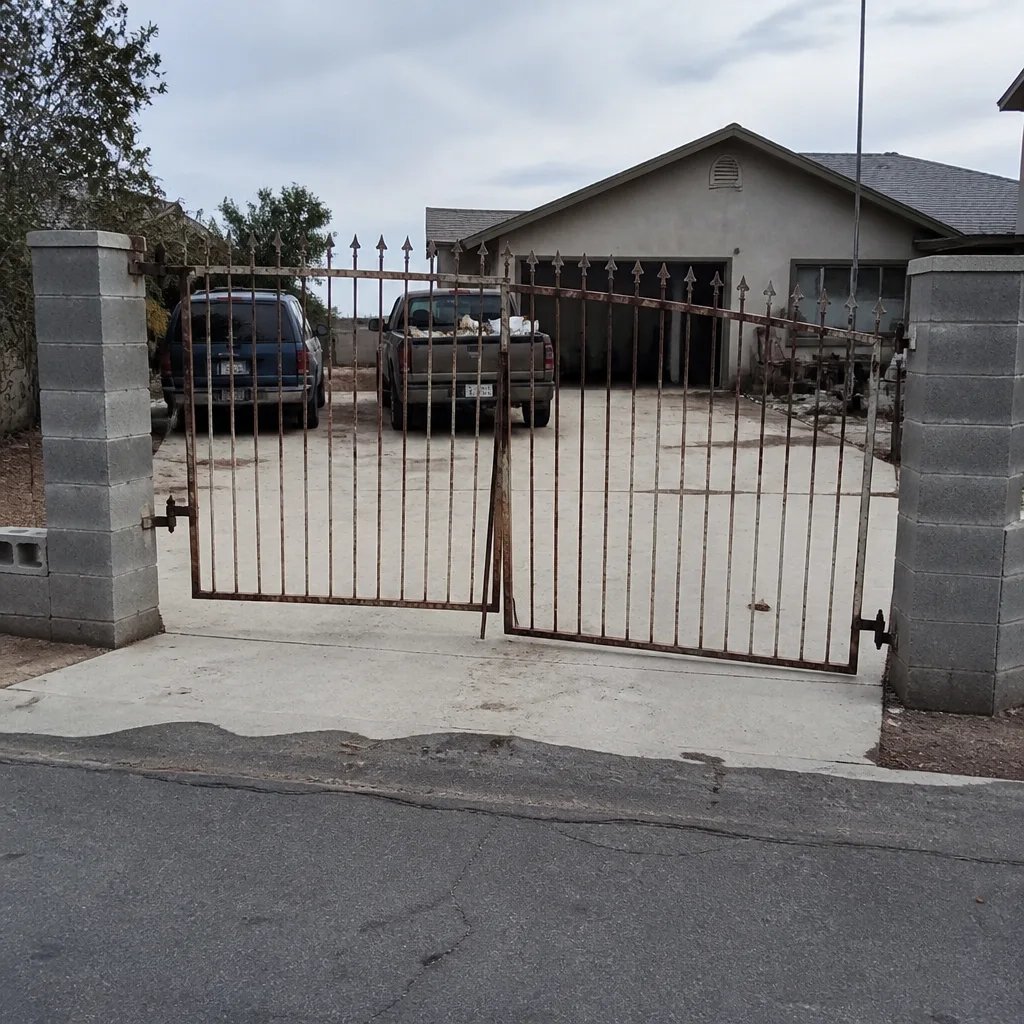 Before
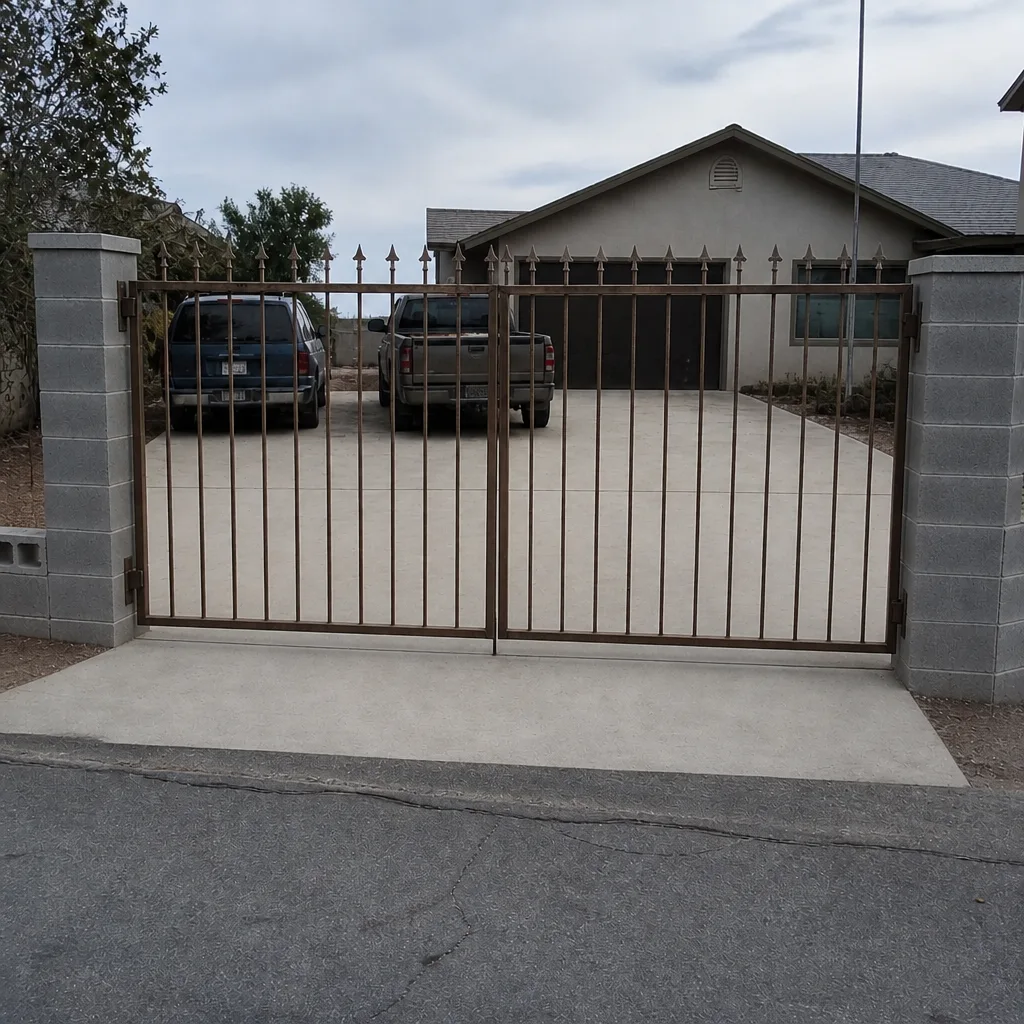 After
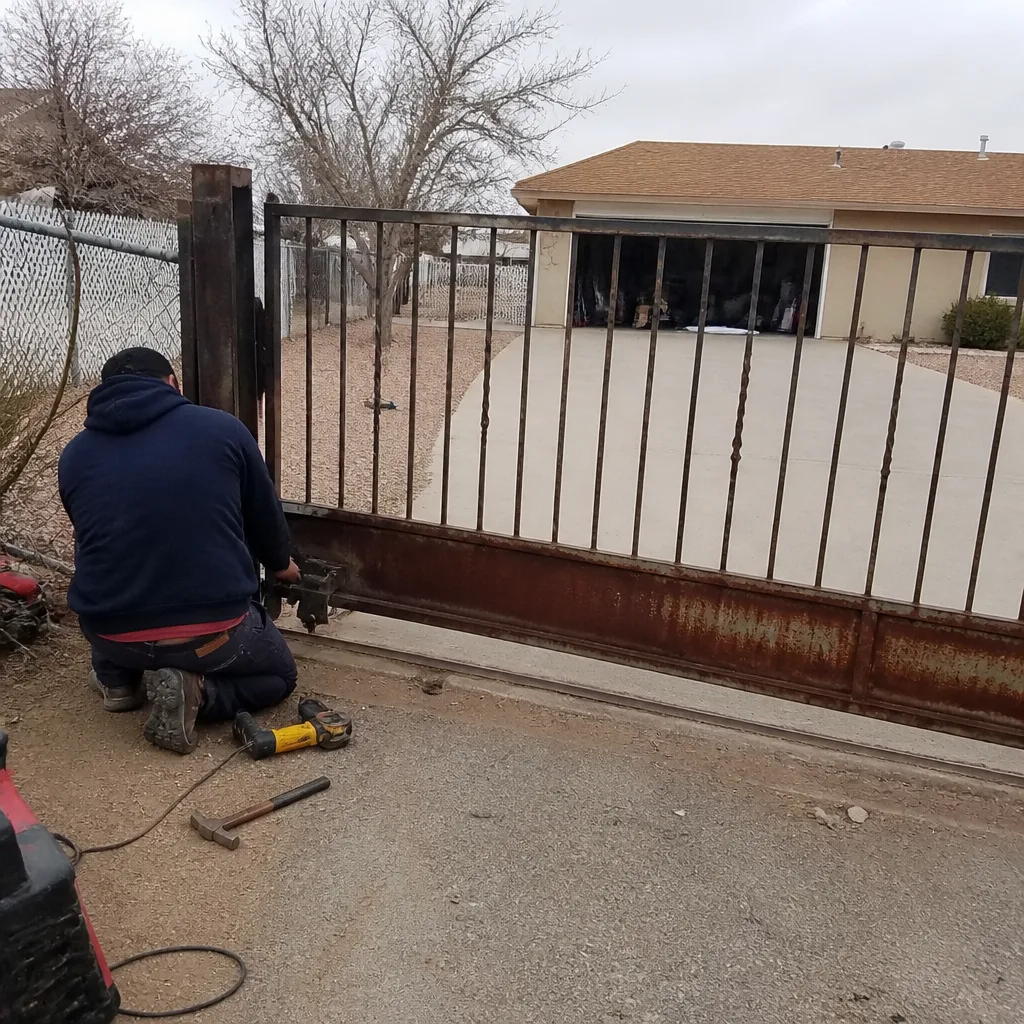 Before
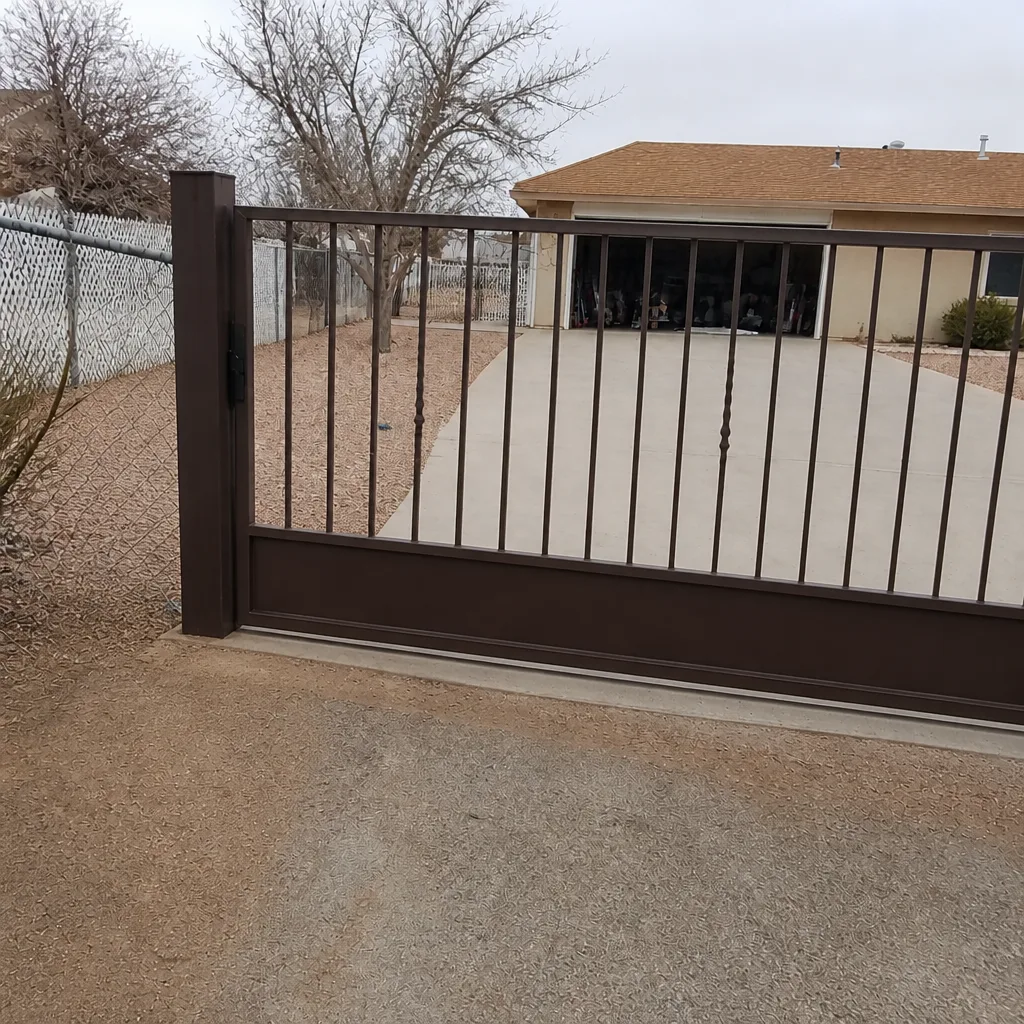 After
Here’s the short answer: on most residential operators you reset the gate by cutting power at the breaker for a full 30 seconds, re-engaging the manual release, and then running the limit-switch re-initialization cycle your control board calls for. In Boulder City, though, a reset that holds and a reset that just delays the next fault look identical for the first few hours. A gate reset in July in Boulder City buys you about four hours if the thermal cutout is tripping on a hot motor, so read the board’s error code and note it before you clear anything.
Why the 30-second wait matters, and why a reset can lie to you
Boulder City sits at the mouth of the Eldorado Valley, where summer highs routinely top 105°F and spring winds run 30-40 mph for days at a stretch. Motor capacitors and control boards behave differently in that heat than they do in a climate-controlled showroom. That’s the frame for everything below.
A reset is not a repair. It’s a clear of the fault memory so the board can try again. Whether the gate then runs clean for a year or re-faults before dinner depends entirely on what tripped it in the first place.
Isolate power at the breaker, wait a full 30 seconds, then restore it. The control board holds a capacitor that keeps the logic alive for several seconds after the breaker opens, and a shorter off-cycle leaves the fault memory half-cleared. If you rush it, the board can come back holding the same code and you’ll blame the gate. That 30-second habit is the single most common reason a “failed” reset works on a second try.
What to look for: a fault that clears, versus one that will come back
We service nine automation brands – LiftMaster, FAAC, BFT, Linear, Viking, Ghost Controls, DoorKing, Elite, and Mighty Mule – and the boards differ, but the fault logic doesn’t. The question that actually matters isn’t “which button do I press.” It’s “will this hold?”
A fault that clears permanently comes from something that isn’t happening anymore:
- A one-time obstruction (a branch, a kid’s ball, a trash can in the photo-eye’s path)
- A utility power surge or a brief brownout that scrambled the board
- Someone opened the manual release and forgot to re-engage it cleanly
- An animal triggering a safety input once
A fault that will return comes from something still present in the hardware:
- A thermal cutout tripping because the motor is genuinely running too hot – usually a binding hinge, a warped gate, or a motor sized too small for the gate
- A limit switch set past the gate’s actual travel, so the board keeps commanding travel it can’t find
- A photo-eye misaligned by even a couple of inches, which throws the safety input the moment the sun angle shifts
- Loose battery terminals, or a backup battery old enough to be sagging under load
The tell is timing. If the gate faults again within hours, especially on a hot afternoon, you have a return-fault. Resetting it a second time just tells you the same thing with more confidence.
The wind fault that Boulder City gate owners blame on the motor
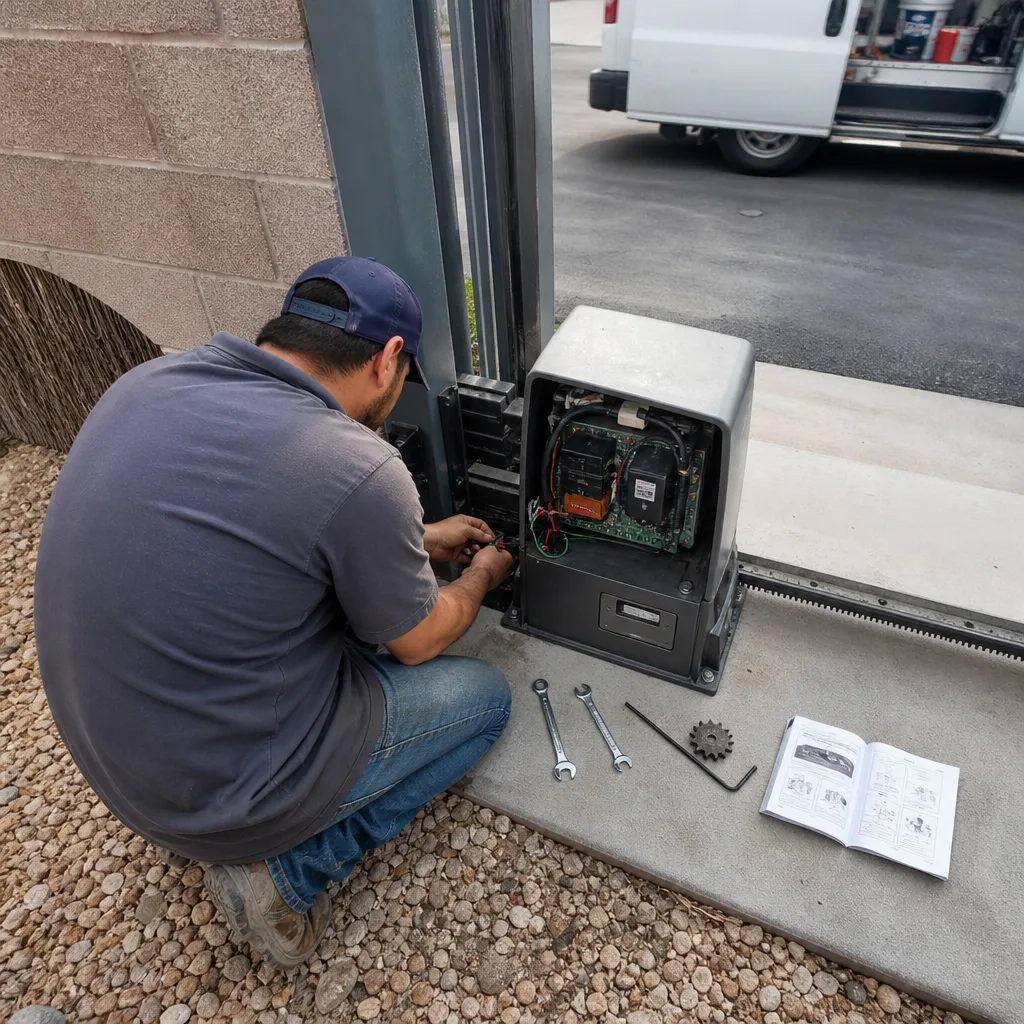
Here’s one that shows up in Boulder City more than almost anywhere we work. A spring gust off the McCullough Range pushes a swing gate past its mechanical stop. The motor feels the sudden over-torque, throws a fault, and the gate stops where it was. The homeowner comes out a minute later, resets it, and it runs perfectly – until the next windy day, when it does exactly the same thing.
The reset cleared the symptom. The cause is that mechanical stop sitting a few degrees too far out, so the gate can overtravel enough to load the motor past its threshold. Next gust day and you’re back out there. This is the single most common “it keeps faulting and I don’t know why” pattern we see, and it isn’t the motor’s fault.
If you’ve reset a swing gate more than once on a breezy week and the fault kept coming back on the windiest days, don’t buy a new motor. Have the mechanical stop adjusted. That’s a written scope and a set of photographs, not a motor swap.
BeforeAfterWhy we photograph the error code before we clear it
Resetting without documentation is how a small fault turns into a mystery. If the fault code and the motor’s condition at the time of reset aren’t noted, the next technician who arrives has no baseline – they can’t tell whether the gate faulted once from a gust or has been tripping every afternoon for a month.
That’s why every Vance visit includes photographing the control board’s error code display before we clear anything, then again after the reset. It’s a habit carried over from commercial access-control work, and it means no future technician has to rediscover the same problem and you don’t pay twice for the same diagnosis. You get a photo log of what was found, what was adjusted, and what was replaced before we leave.
Can you reset your automatic gate yourself, or do you need a technician in Boulder City?
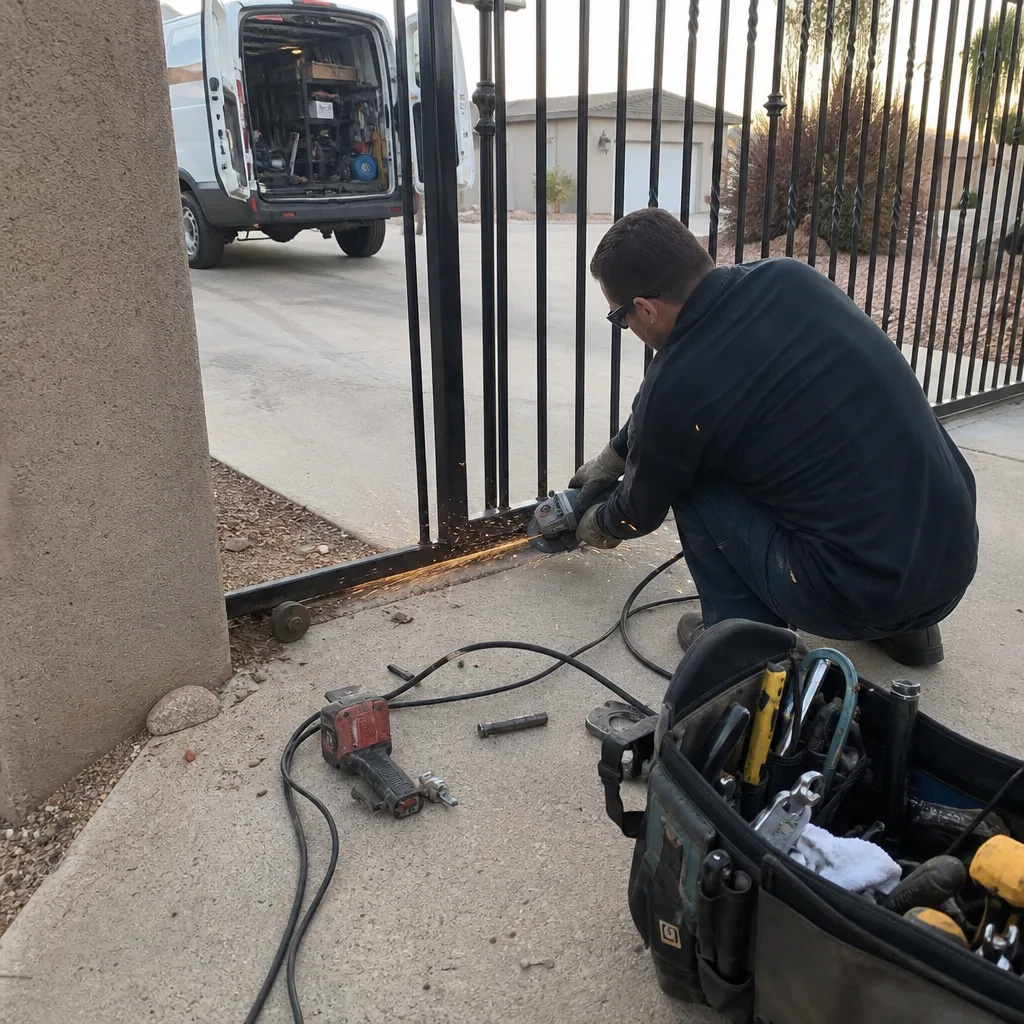
Most weekend obstruction clears and one-time power-surge faults are things a careful homeowner can handle. If the gate runs clean and stays running clean, you’re done. The threshold that matters is frequency: if a gate needs more than two resets in a week during summer, the fault is diagnostic, not procedural. The reset is masking a wiring or component failure that will get worse, and a written diagnostic visit costs far less than an emergency call after full failure – the gate stuck open on a Sunday with the house behind it.
Here’s the honest rule of thumb for your own reset:
- Isolate power at the breaker and wait a full 30 seconds.
- Note the error code before you clear it, if your board shows one.
- Release and re-engage the manual release lever, making sure it seats fully.
- Restore power and run the limit-switch re-initialization cycle for your brand (usually a short run in each direction, then a full open/close).
- Time the reset. Write down the date and time. If the gate faults again within a few hours, stop resetting and call.
When the gate trips a thermal cutout on a hot afternoon, don’t reset and walk away. Let the motor cool, check whether the hinges are binding or the gate has warped in the heat (common with older wooden driveway gates in Boulder City), and treat a repeating thermal trip as diagnostic. Those motors are high-voltage components, and opening the control box on a live system to chase wiring is not a homeowner job. Leave that to a trained technician.
For a full picture of the motor and opener work behind these faults, see our Gate Motor & Opener page. If your gate is in a historic district and has the older ironwork that’s still common here, the Gate Motor & Opener in Boulder City page covers brand-specific reset quirks, and you can start from our home page for the full service menu.
FAQs about resetting an automatic gate in Boulder City
Because the reset cleared the fault but not its cause – usually a motor running too hot (a thermal cutout), a limit switch set past the gate’s real travel, or a photo-eye knocked slightly out of line. On a 105°F afternoon in Boulder City, a thermally tripping motor will fault again within hours of a reset. Call (844) 320-7587 for a written diagnostic – we’ll tell you what’s actually tripping it.
More than two resets in a week is the threshold we use. A one-time obstruction or a power surge clears and stays cleared; a return fault keeps coming back. If you’re past two resets in a week, especially in summer, stop resetting and get a written diagnostic before the gate fails entirely. A planned visit costs less than an emergency call.
The sequence is similar across brands – power cycle, re-engage the manual release, re-run the limit initialization – but the specific button sequence for a Mighty Mule board differs from a LiftMaster, FAAC or BFT. We service all nine brands, so we can walk you through your exact model’s reset over the phone, and if it doesn’t hold we’ll send a technician with the right parts.
Resetting at the breaker is safe. Opening the control box to check wiring, capacitors or the board itself is not – those are high-voltage components and a live system will bite. Do the breaker-side reset and the manual release; leave anything inside the box to a trained technician.
If you’d rather have it looked at, Vance Gate Repair Boulder City offers a no-pressure assessment in Boulder City – call (844) 320-7587 for a free estimate. Every job gets a written price before any work starts and a photo record when the technician leaves.
Written by the team at Vance Gate Repair Boulder City, serving Boulder City, NV.