
Last updated November 18, 2026
 Wrought iron
 Wood & steel frame
 Farm & ranch
 Sliding driveway gates
 LiftMaster operators
Free on-site gate assessment - hinges, posts, and your LiftMaster or Nice gate operator checked before anything is quoted
The assessment is free and the quote is the invoice.
Get your free estimateGate Access Control Warning Signs Every Homeowner Should Know
A gate that opens 10% slower than it did last spring isn’t aging gracefully. It’s telling you the motor capacitor is failing, and you have roughly six weeks before it stops mid-travel and leaves you with a dead driveway. We’ve documented thousands of access-control failures at Vance Gate Repair, and the pattern holds with uncomfortable consistency: the expensive ones all had a warning sign two to six weeks out. The homeowner saw it, dismissed it, and had no reference point to call it a pattern. This guide changes that. You’ll learn to read your gate’s behavior against its own history, log what you see, and recognize the signs that mean stop-and-call. We’ll use Boulder City examples because desert heat writes its own rules.
Quick Answer
The most urgent gate access control warning signs are behavioral changes only visible through a time-series comparison: slower travel, partial open or close cycles, and inconsistent loop triggers. Intermittent failures are more urgent than consistent ones because they almost always point to a component on the edge of thermal breakdown, not a stable worn part. Three signs demand same-day action: a gate that reverses without obstruction, a burning smell near the control board, and a gate you can move by hand with the operator engaged.
Styles & brands we work with
- Wrought iron
- Wood & steel frame
- Farm & ranch
- Sliding driveway gates
- LiftMaster operators
Table of Contents
- Behavioral Signs You Can Only Catch by Comparing to Last Month
- Auditory and Visual Signals Most Homeowners Dismiss
- Why Intermittent Failures Are More Dangerous Than Consistent Ones
- How Desert Heat Changes the Failure Curve
- How to Log What You Observe So a Technician Can Use It
- The Three Signs That Mean Stop Using the Gate Today
- What Different Motor Brands Do When They’re Failing
- What a Proper Warning-Sign Inspection Covers
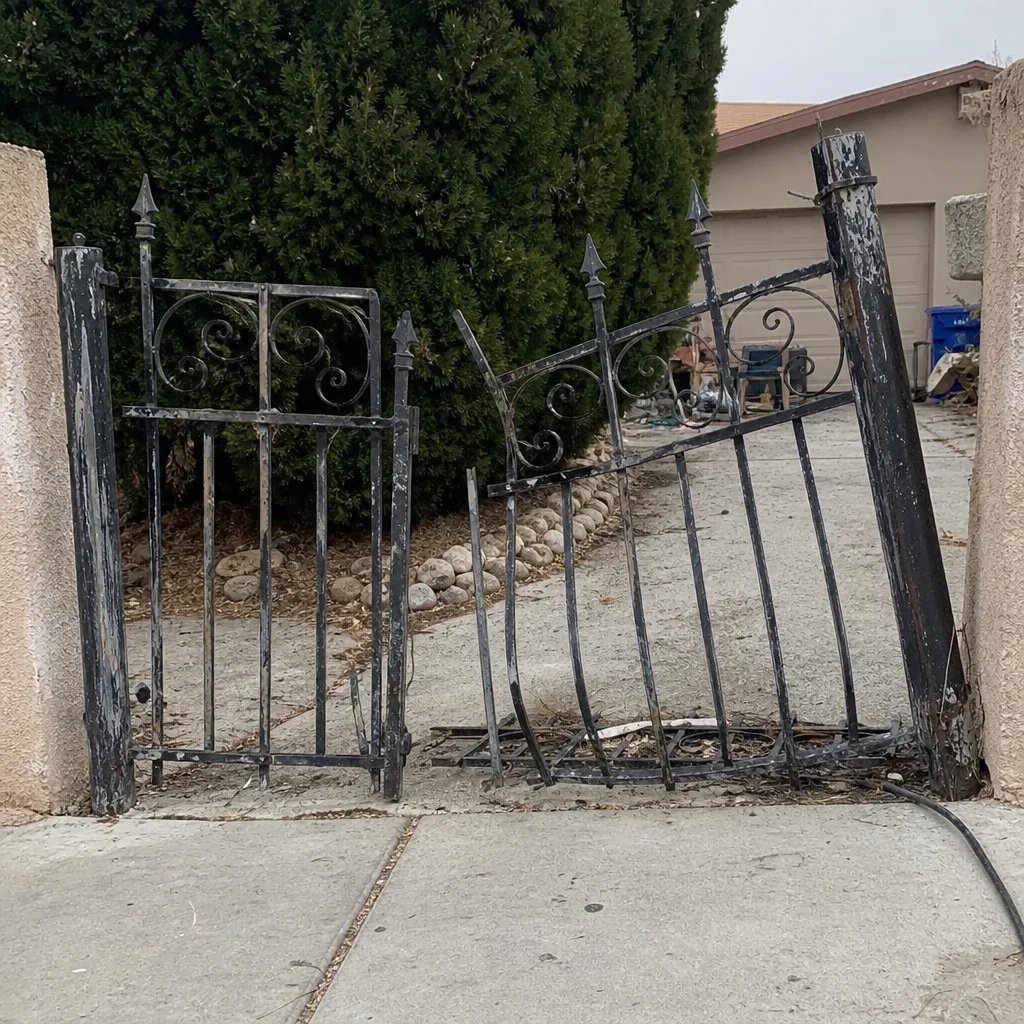 Before
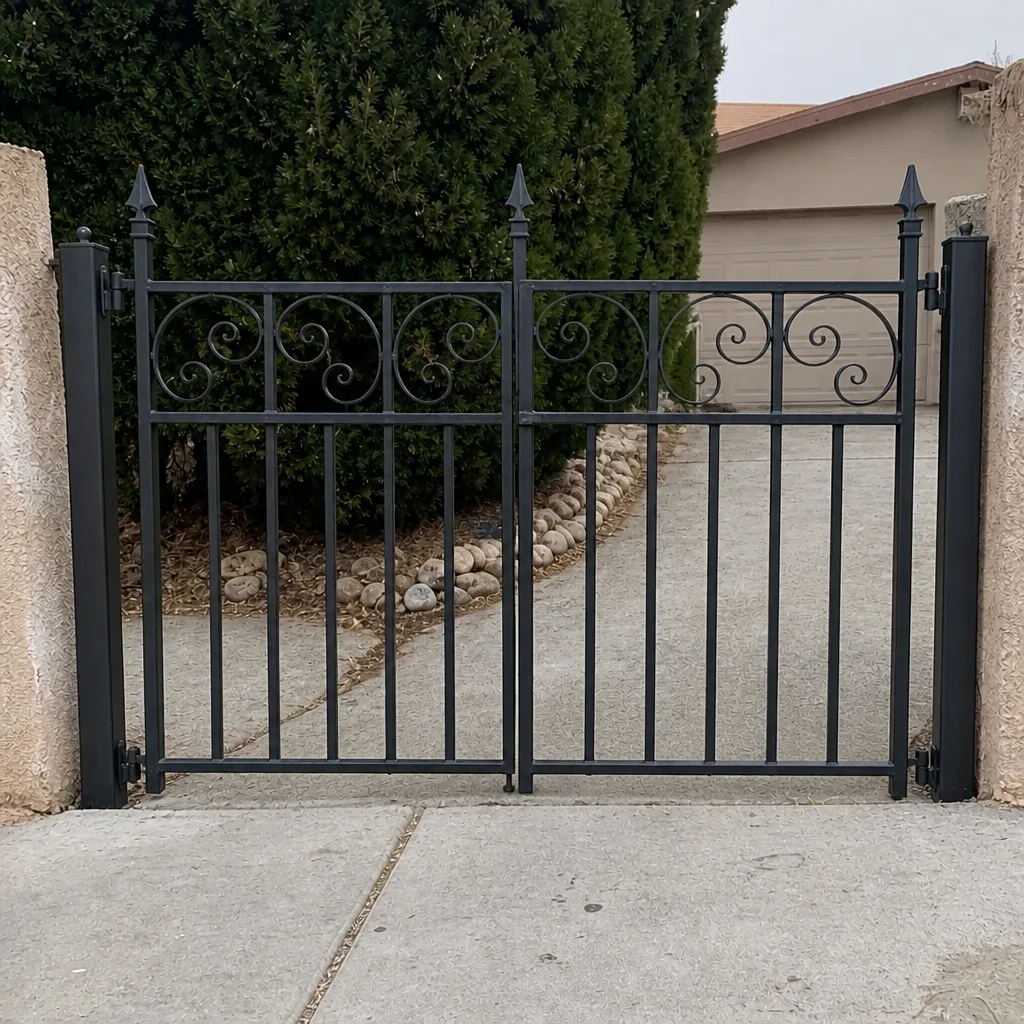 After
Behavioral Signs You Can Only Catch by Comparing to Last Month
Here’s the problem with every “warning signs” list you’ve ever read: they compare your gate to normal. That’s useless. Normal for your FAAC isn’t normal for your neighbor’s Linear. Normal in January isn’t normal in July. The signs that actually matter require you to compare your gate today against your gate last spring, or last month, or last week. Those are the ones that precede failures.
We ask every caller four questions that map to this time-series comparison, and the answers tell us more than any single observation at the gate:
- Response lag. When you press the remote or keypad, does the gate pause before it moves? Count the seconds. If it’s two where it used to be immediate, that pause is the operator processing a signal it used to accept instantly. A growing lag points to a capacitor losing capacitance or a control board straining under voltage sag.
- Partial open or close. Does the gate complete travel every time, or does it occasionally stop just short, then finish on the second command? A gate that falls 6 inches short of full close is often a limit switch drifting or a photo-eye (the infrared beam that stops the gate if something crosses the path) losing alignment by an inch or two.
- Inconsistent loop triggers. If you have a driveway loop (the buried sensor that detects your car), does it fire every time? Miss once a week? Twice a day? A loop that works 95% of the time is a loop detector board drifting, and it will degrade further, not self-correct.
- Cycle count relative to use. A gate you open six times a day wears differently than one you open thirty times a day. If your habits haven’t changed but the gate’s behavior has, the wear is internal.
In Boulder City, we regularly see spring failures that started as a two-second lag back in late February, when temperatures first pushed past 85°F. The gate wasn’t broken. It was telling you. The homeowners who caught it spent $150 on a capacitor. The ones who waited spent $400 on a board and motor.
Auditory and Visual Signals Most Homeowners Dismiss
Your gate makes sounds you’ve stopped hearing. That’s not a flaw in your attention. It’s habituation. The fix is to listen deliberately, once a month, with your hand on the gate post so you feel the vibration, not just hear it. Here’s what changes before failure.
Relay Click Pattern Changes
Every operator has relay switches that click as they route power. A healthy board clicks once at the start of a cycle, once at the end, and possibly once at a mid-travel limit. A failing board clicks more, or clicks in a different rhythm, or clicks without the gate moving. If you hear a double-click where there used to be a single, the relay is chattering. That’s contact wear, and it precedes a stuck relay that pins the gate open or closed.
Indicator Light Flicker
The LED on your control board or keypad is a diagnostic output. A steady light means the board is receiving clean power. A flickering light, or one that dims when the gate starts moving, means voltage is sagging under load. On many BFT and Viking boards, that flicker appears two to four weeks before the board refuses to accept commands at all.
The Heat Smell
Walk past your control box after the gate has run several cycles on a hot afternoon. If you smell something like hot plastic or a faint electrical scorch, stop and call. That smell is a component running hotter than its design allows, and in Boulder City summer heat, it accelerates fast. Don’t open the box. Don’t spray anything into it. Just note the smell, the time, and the ambient temperature, and call us.
Visual Signs Worth Checking Monthly
- Dark scorch marks or discolored plastic around the control board’s terminal blocks
- Corrosion on the battery terminals (many operators run a backup battery that fails quietly in desert heat)
- A photo-eye lens that’s clouded or dust-filmed (desert dust accumulates faster than you’d guess)
- Fresh rust streaks on the arm bracket or hinge points where there were none a month ago
Why Intermittent Failures Are More Dangerous Than Consistent Ones
This is the counterintuitive part, and it’s where most homeowners make the wrong call. A gate that fails to close every single time is annoying. A gate that fails once a week is a safety problem. Here’s why.
Consistent failures usually trace to a stable worn part: a stripped gear, a dead battery, a broken limit switch. The failure mode is predictable. You know what it will do because it does it every time. Intermittent failures trace to thermal breakdown, voltage sag, or a component operating at the edge of tolerance. Those are the failures that happen at the worst moment, in the worst weather, when you’re least expecting them. They’re also the failures that damage other components when they finally let go.
In our experience across thousands of repairs, the repair cost for an intermittent failure caught early is roughly one-third the cost of the same failure caught after catastrophic breakdown. The reason is simple: when a capacitor fails soft, it’s a $150 part. When it fails hard, it can take the control board and the motor winding with it, and now you’re pricing a full motor replacement, not a part.
If your gate works most of the time, log the times it doesn’t. The pattern itself is diagnostic. A gate that fails at 2pm on hot days is telling you something different than a gate that fails at 6am when it’s cool. Bring us the pattern, and we can narrow the diagnosis before we ever open the box.
How Desert Heat Changes the Failure Curve
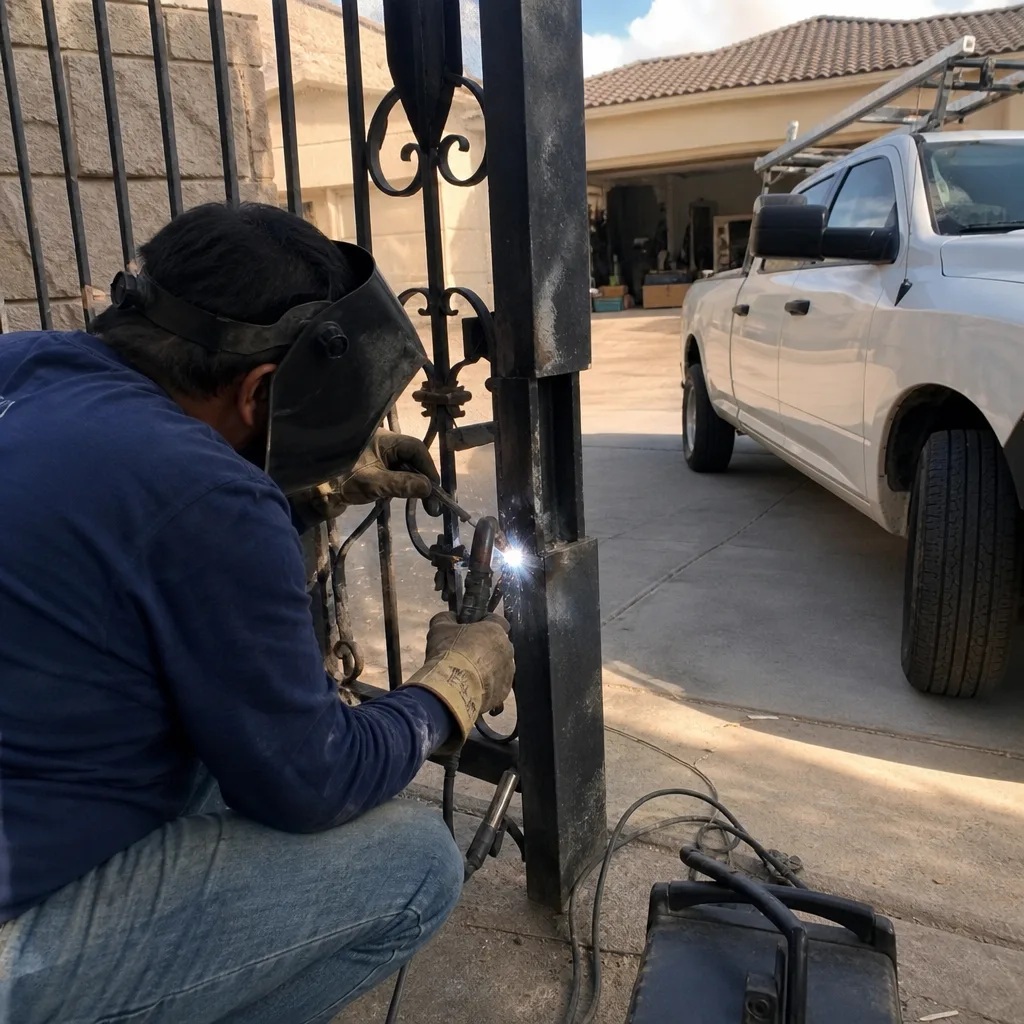
Boulder City sits in a climate that compresses failure timelines. Components rated for a 10-year service life in a temperate climate see meaningful degradation in five to seven years here, and the degradation isn’t linear. It accelerates with each summer. Three specific mechanisms matter.
- Capacitor dry-out. The electrolytic capacitors on your control board contain a liquid electrolyte that evaporates faster in heat. Once capacity drops below the motor’s startup threshold, the gate lags, then stalls, then the motor hums without moving. This is the six-week warning we open with.
- Battery failure. Backup batteries in LiftMaster and Linear operators live shorter lives in Boulder City’s summer heat. A battery that reads fine in spring can fail to hold charge by July, and you’ll only notice it when the power blinks and the gate doesn’t respond.
- Thermal expansion on photo-eyes and limit switches. Metal brackets move with temperature. A photo-eye aligned perfectly in April can drift a quarter-inch out of alignment by August, causing intermittent obstructed-path errors. This is why we photograph the alignment marks on every maintenance visit: so the next adjustment has a documented reference point.
If you’ve lived in Boulder City for more than a few summers, you already know the pattern: the first truly hot week of the year is when gates fail. We get a spike of calls in early June every year. The homeowners who caught the warning signs in May are the ones who didn’t need emergency service.
How to Log What You Observe So a Technician Can Use It
The single most useful thing you can do before you call a technician is write down what you saw. Not a story. A log. When a technician has a log, they skip the guessing game and go straight to the diagnostic. When they don’t, they spend an hour watching a gate that’s behaving perfectly, because the failure is intermittent and today it decided to work.
Here’s the log format we ask for. Keep it on your phone’s notes app, or on a sheet of paper taped inside the control box door (which we’ll see on arrival).
- Date and time. Not “yesterday.” 5:42pm on June 3rd.
- Ambient weather. Temperature, sun or shade, wind. “95°F, direct sun on the control box” tells us more than “hot.”
- What you did. Pressed the remote, used the keypad, drove over the loop, pressed the exit button inside. Be specific about which trigger.
- What the gate did. Opened fully, opened partially (how far?), paused (for how many seconds?), reversed mid-travel, made a sound, didn’t move at all.
- What you did next. Pressed again? Waited? Opened manually? Each of these tells us whether the operator reset, latched, or lost power.
- Cycle count since last issue. Roughly how many times has the gate cycled since the last time it misbehaved? A gate that fails every 40 cycles is a different diagnosis than one that fails every 400.
When you bring us a log like this, our technician walks in with a hypothesis, not a mystery. That’s the difference between a diagnostic call and a guessing call, and it’s often the difference between one visit and three.
The Three Signs That Mean Stop Using the Gate Today
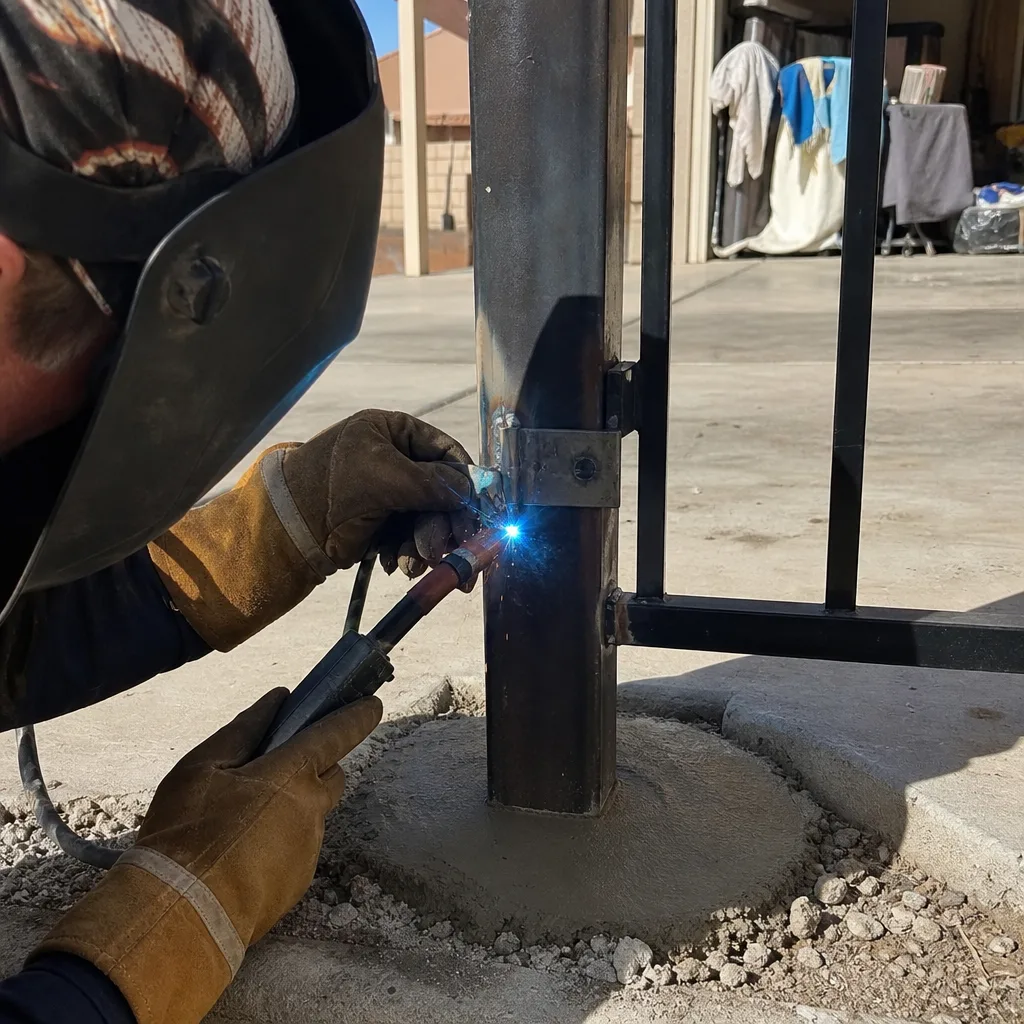
Most warning signs mean “call soon.” Three mean “call today, and stop running the gate until someone looks at it.” These are not dramatic. They’re specific, and they’re the ones we most often hear dismissed as “it’s probably fine, it’s just one of those things.”
- The gate reverses without obstruction. If your gate closes, then reverses before touching anything, your photo-eye or safety edge (the pressure-sensitive strip along the gate’s leading edge) is either misaligned, failing, or the board is reading a false obstruction. A gate that reverses unpredictably can also fail to reverse when something is actually there. Run it manually only until it’s checked.
- You smell burning near the control board or motor. Faint hot-plastic or electrical scorch smell means a component is failing hot. The gate may still run. Stop running it. The next cycle may be the one that shorts the board, and it can be a fire risk in a wooden gate assembly.
- You can move the gate by hand while the operator is engaged. With most operators, when the gate is fully closed and the operator is powered, you shouldn’t be able to push the gate open with moderate hand pressure. If you can, your motor brake is failing, your gear is stripped, or your limit switch has drifted past where it should be. That’s a gate that can open when it shouldn’t, and that’s a security problem as much as a safety one.
We’ve seen homeowners ride out all three of these for weeks because the gate “mostly worked.” If you’re unsure whether you’re seeing one of these signs, call us at (844) 320-7587 and describe it. Live person, any hour. We’d rather talk you through a non-issue than have you find out the hard way.
What Different Motor Brands Do When They’re Failing
Your operator’s brand changes its failure signature, which is useful because it lets you know what to watch for. We service nine major brands, so we’ve documented how each one fails. A few patterns matter for your warning-sign reading.
- FAAC. FAAC operators tend to fail soft. You’ll see lag and slow travel well before you see a hard stop. The board is durable but the capacitor will show the failing behavior first. Watch for response lag that grows over weeks.
- BFT. BFT boards often throw diagnostic LED codes when they’re failing, which is a gift. If your LED flickers in a pattern instead of a steady blink, note the pattern and bring it to the technician.
- Linear. Linear operators frequently show intermittent loop-trigger failures before cap failure. If your gate misses a loop trigger once a day for a week, that’s your warning.
- Viking. Viking operators have robust motors but sensitive limit switches. A Viking gate that stops short at one end of travel is usually a limit-switch drift, not a motor problem, and it’s a low-cost adjustment if you catch it early.
Because we work on whatever motor is already on the property, we can tell you what your specific brand is likely to do, rather than steering you toward a replacement. That’s not a sales posture. It’s a repair one.
What a Proper Warning-Sign Inspection Covers
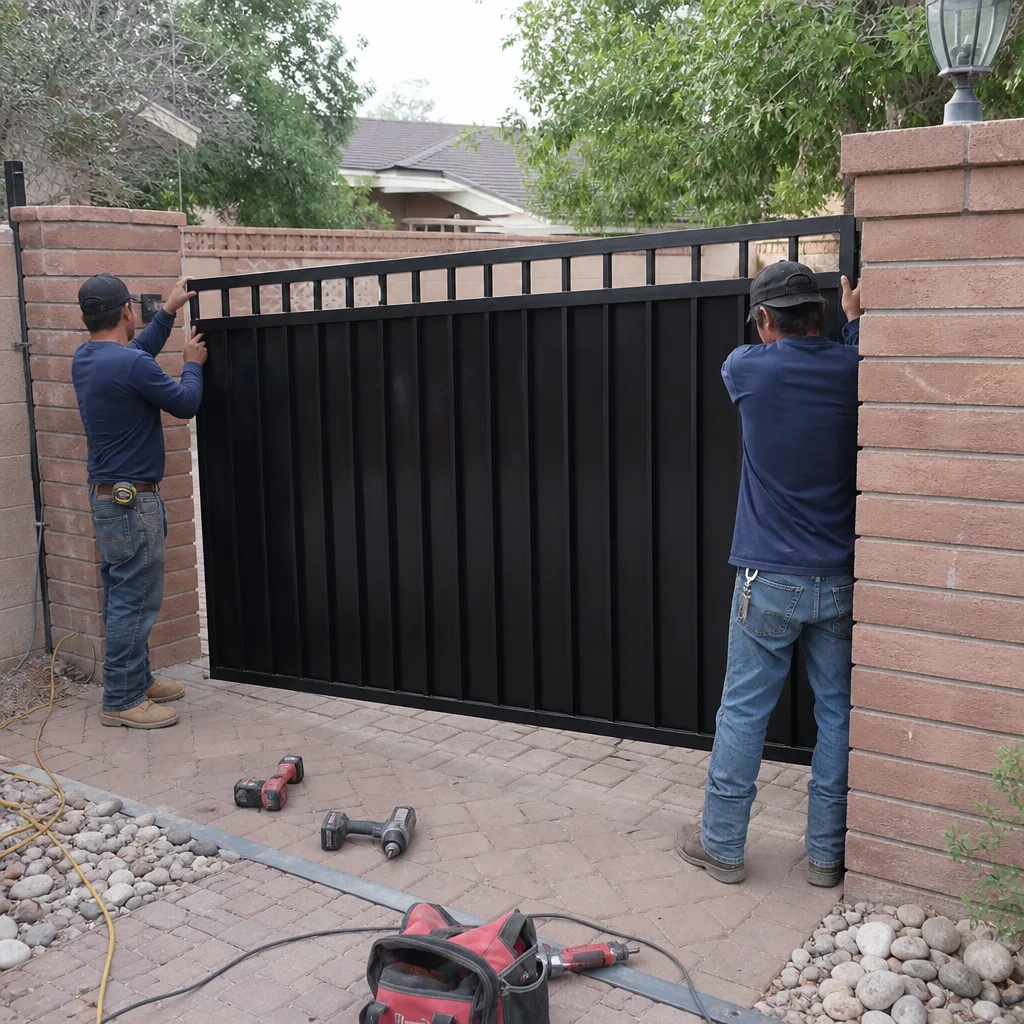
If you want to catch these signs before they become failures, a scheduled inspection is the practical answer. Here’s what a complete one includes, so you know what to expect whether you’re evaluating us or anyone else.
- Cycle testing under load. Run the gate through 20 or 30 full cycles while watching travel time, response lag, and current draw. We use these to build a baseline for your specific gate.
- Photo-eye and safety-edge alignment check. Verified with a test object, not a finger, and photographed at the frame with a measurement reference.
- Limit switch inspection and reading. We read the limit positions and compare them against travel end-points. Drift of more than a few degrees is adjusted and documented.
- Control board and wiring inspection. Visual check for scorch marks, corrosion, or fraying, plus a look at the wiring harness for signs of rodent activity or UV degradation.
- Battery load test. The backup battery, if present, tested under load, not just measured for voltage.
- Motor and gearbox check. Listen for gear whine, check for play in the output shaft, verify the manual release operates correctly.
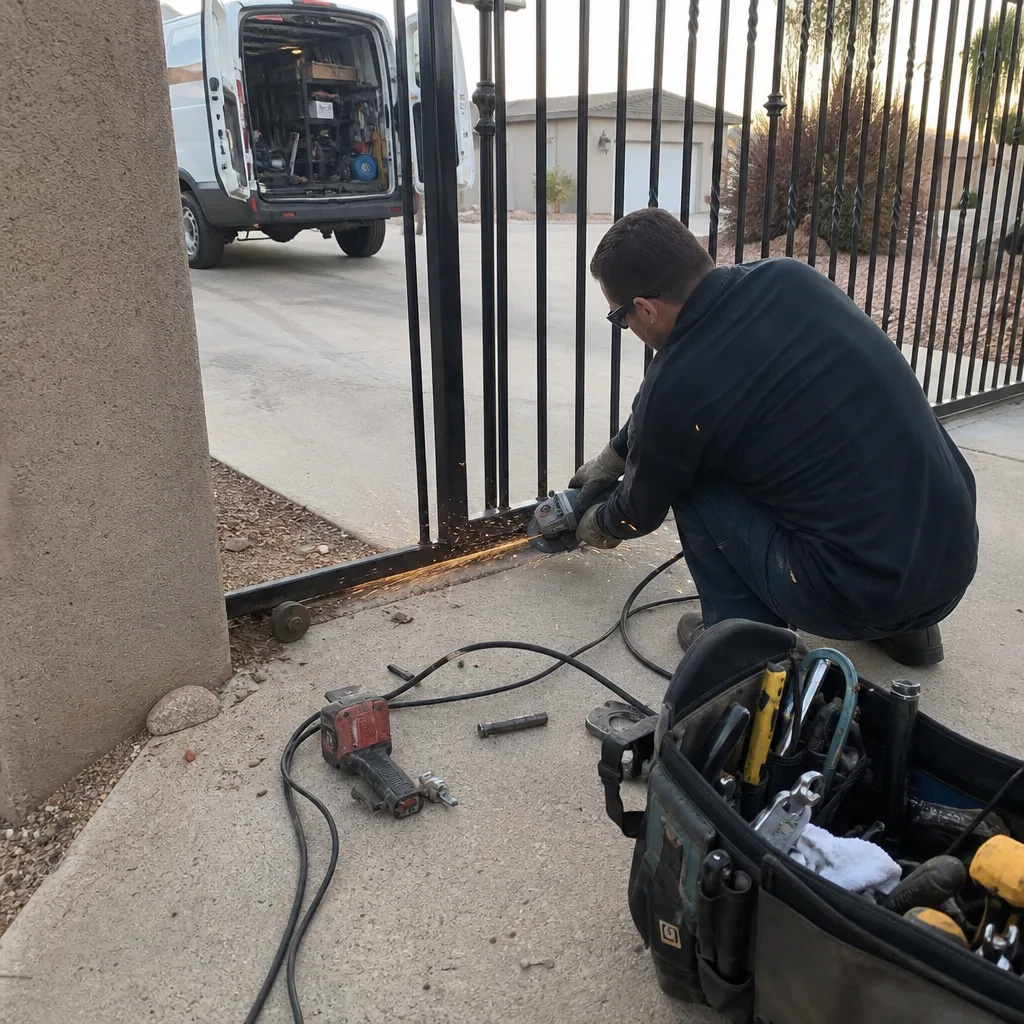
- Photo documentation. Every finding photographed, every adjustment recorded, every part number written down. That’s what you get from us on every visit, no extra charge.
If you want the full picture of what repair visits include, the gate repair page for Boulder City lays out the workflow. And if you’re still choosing a gate operator for a new install, the gate motor and opener guide covers what to look for upfront.
Common Mistakes to Avoid
- Comparing your gate to “normal” instead of to last month. A gate that always lags by two seconds feels normal. A gate that lagged by zero last month and two seconds today is failing. Track the change, not the state.
- Clearing the code and hoping it’s gone. Powering the board off and on resets the diagnostic memory. If you do it before a technician sees the code, you’ve erased the most useful piece of evidence. Write the code down first.
- Assuming intermittent means minor. In our Boulder City experience, intermittent failures are the ones that fail hardest because the failing component has been running out-of-tolerance for weeks. Don’t wait for the consistent failure.
- Oiling the arm or track as a fix. Lubricant on a gate arm or track can attract dust and accelerate wear in a desert climate. If the gate is slow, it’s rarely the arm. It’s usually electrical, and it’s usually found with a meter, not a spray can.
- Adjusting the photo-eye by eye without documenting. A photo-eye misaligned by two inches looks fine to the eye but fails the test object. If you adjust it, photograph the position so the next technician knows what you changed.
- Ignoring the control board smell. A faint electrical smell is the single most common precursor to a board replacement in Boulder City summer heat. It’s not the fan. It’s a component failing hot.
- Treating a slow gate as a motor problem before it’s diagnosed. Many slow gates are a $150 capacitor, not a $900 motor. Diagnose before you replace. Ask any company to confirm the diagnosis in writing before work begins.
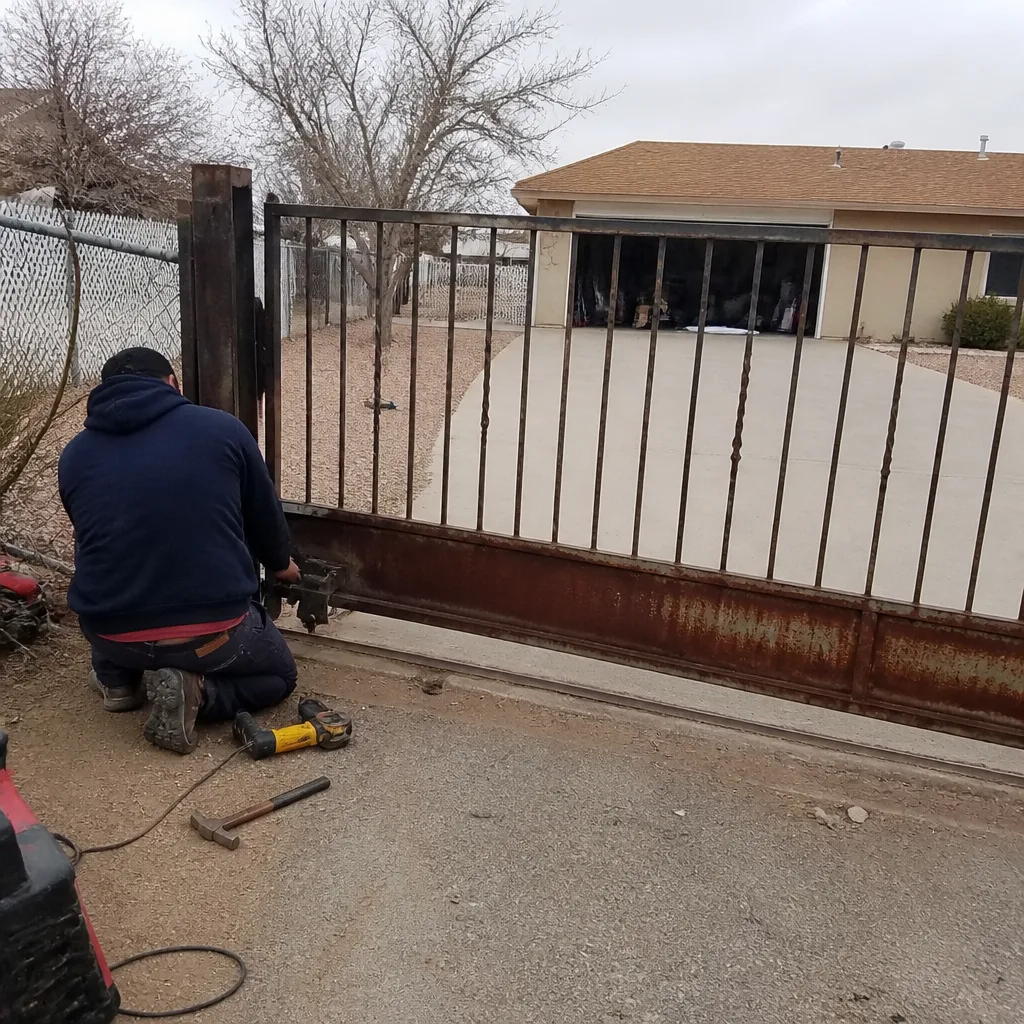
See the difference
BeforeAfter Before
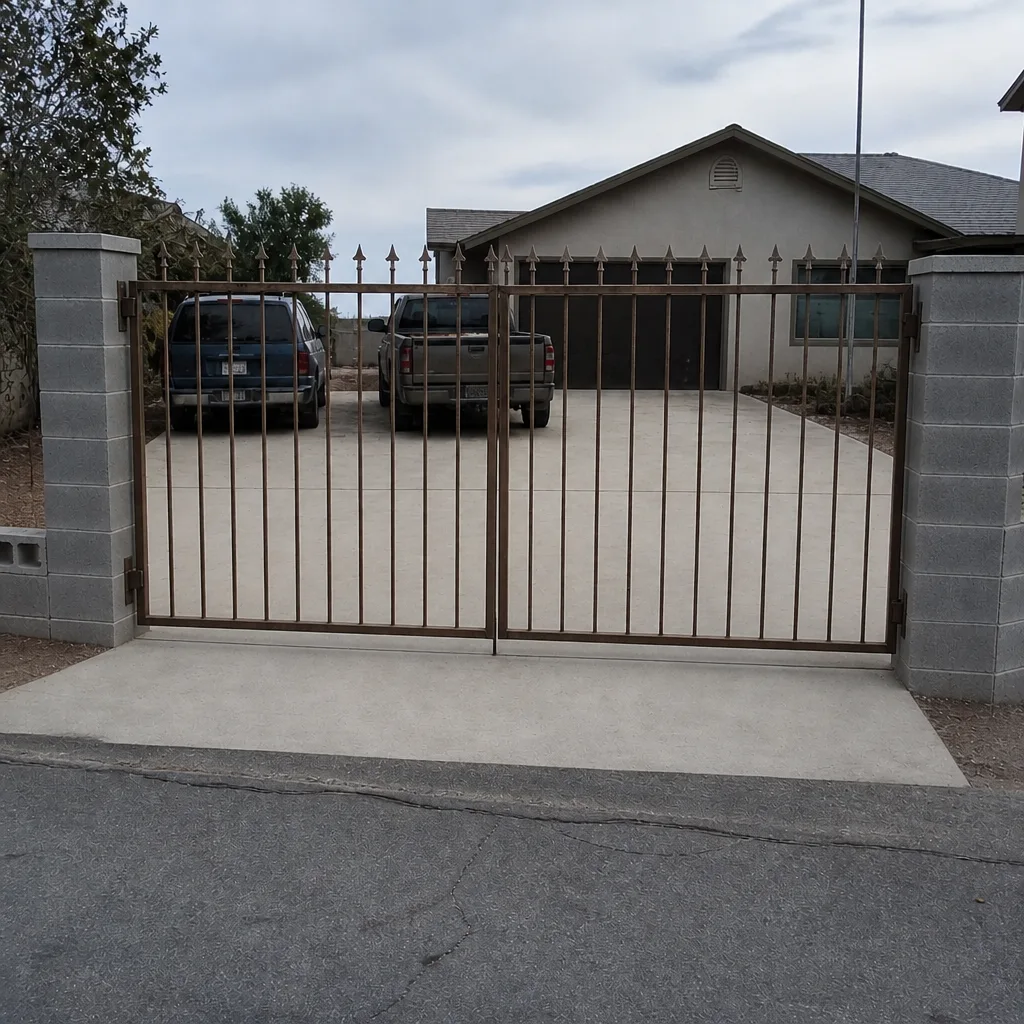 After
 Before
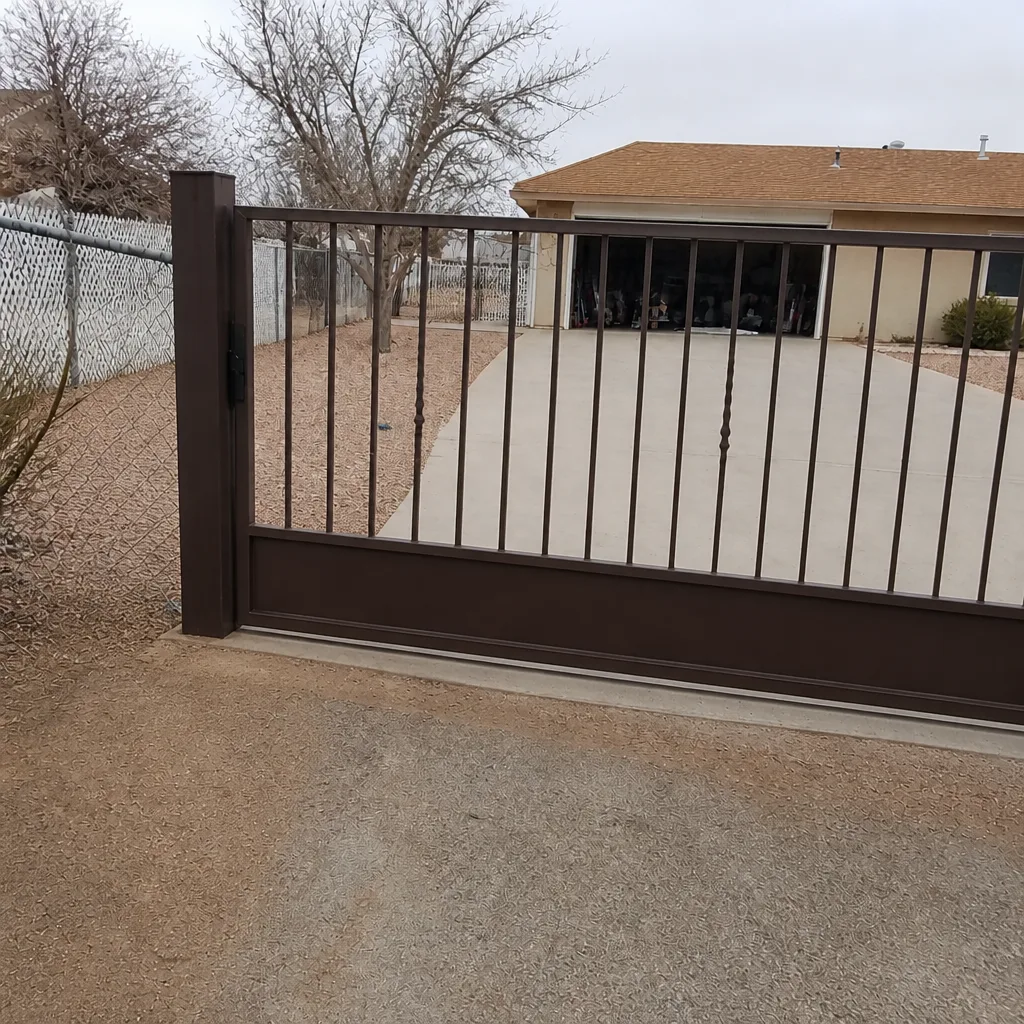 After
When to Call a Professional
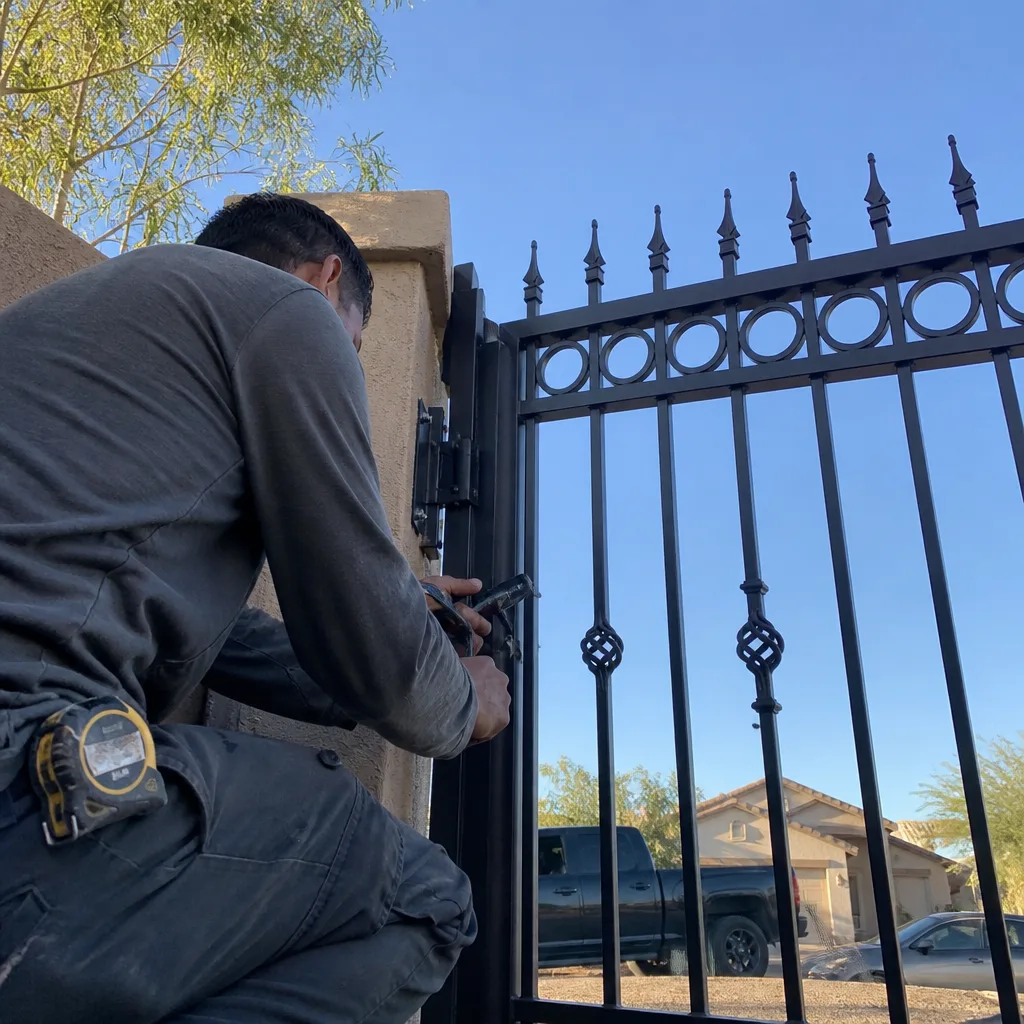
Call a professional when you see any of the three stop-signs above, when you observe a change that persists across a week of cycles, or when you can’t tell whether the issue is electrical or mechanical. Electrical access-control components run on mains voltage, and a misdiagnosis can hand you a shock or a fire. Don’t open the control box. Don’t push a warm motor. Don’t adjust the safety devices to “make it work” while you figure it out. The gate you’re standing next to can weigh hundreds of pounds and moves under its own power, so it’s worth one call to a trained technician rather than one injury to learn the difference. Vance Gate Repair works on whatever motor is already on the property, gets written price approval before work begins, and leaves a documented record so the next visit doesn’t start from zero. If you’re in Boulder City and want a free estimate, call (844) 320-7587. The price is quoted and agreed before any work starts.
Frequently Asked Questions
Most residential gate access control repairs in Boulder City land between $150 and $450 depending on whether the fix is a part (capacitor, photo-eye, limit switch) or a control board or motor. Motor and control board replacements run higher, and we always provide a written price before any work begins, so you know the number before we pick up a tool. Call (844) 320-7587 for an exact quote, and estimates are free.
Yes. Gates stuck open, gates that won’t close, and gates that reverse unpredictably are same-day priorities, and a live person answers at (844) 320-7587 any hour. Describe what the gate is doing when you call; it helps us bring the right parts. If you have the log described above, read it aloud.
No, and this is the most common misdiagnosis we see. Most slow residential gates in Boulder City are a failing motor capacitor, not the motor itself. A capacitor is a roughly $150 part; a motor replacement is a different number by a factor of several. A technician can confirm which one within 20 minutes with a meter.
A gate that fails only on hot days is usually showing thermal breakdown in a capacitor, control board, or photo-eye alignment. Heat expands metal brackets and thins the working margin on components that are near end-of-life. In Boulder City, the first sustained heat wave of the year reliably produces a wave of these failures. If your gate has failed on hot days before, don’t wait for the next one.
Test it with a physical object, not a finger. Pass a shoe or a piece of cardboard through the beam while the gate is closing. If it reverses cleanly, the beam is intact but may be drifting. If it doesn’t reverse until you’re within a few inches of the sender, or it reverses randomly without an object, it’s failing or misaligned enough to need adjustment. Call (844) 320-7587 to book an alignment check; estimates are free.
Age alone is not a reason to replace your motor. We service FAAC, BFT, Linear, Viking, and five other major brands, and in most cases an 8-year-old motor has years left in it with a proper part replacement and adjustment. Diagnose before you replace. If another company has quoted you a full replacement, we’ll review that written estimate at no charge for a free second opinion.
The Bottom Line
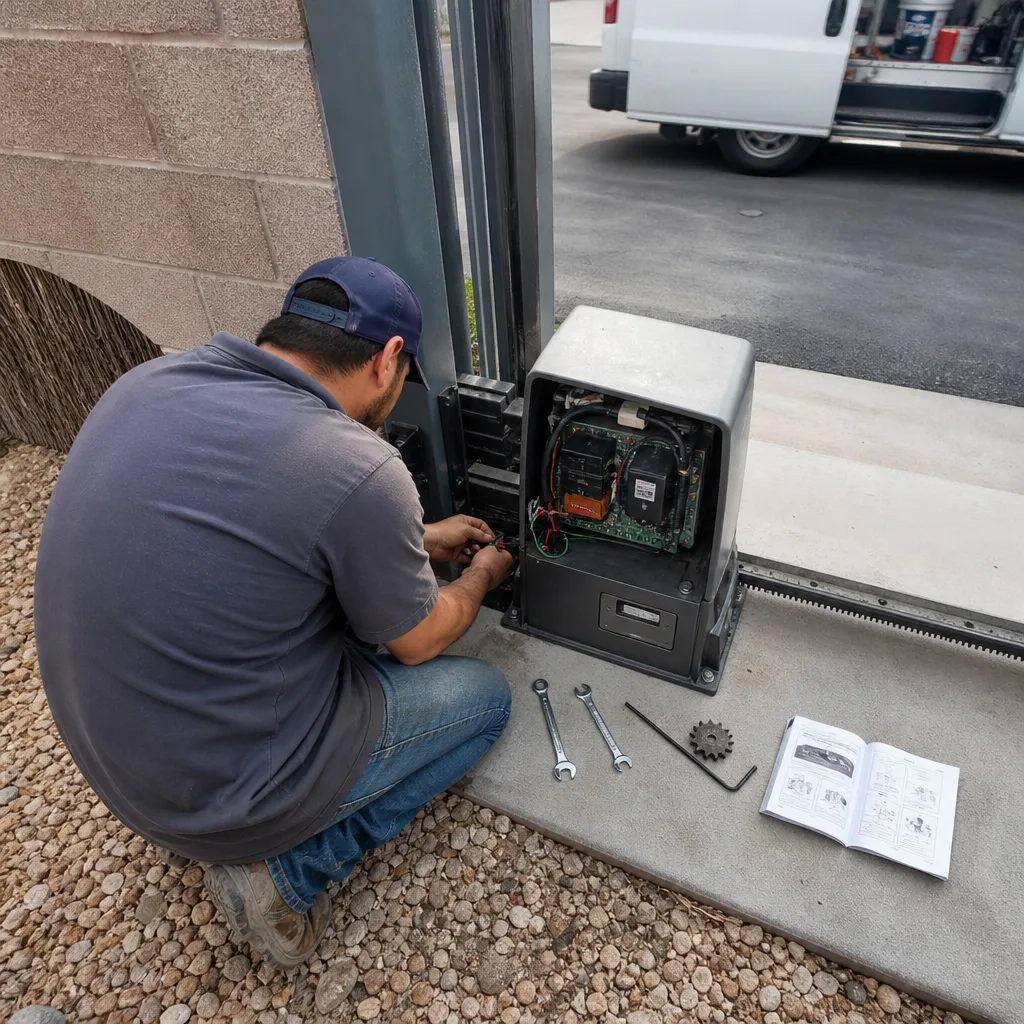
The warning signs that save you the most money aren’t loud. They’re the two-second lag, the occasional missed loop trigger, the subtle click change on the board. They only mean something when you compare your gate today against its own recent history, which means you need to notice the change and write it down. Desert heat compresses the timeline, so the warning window in Boulder City may be a few weeks where it’s a few months elsewhere. Catch the behavioral signs, listen for the auditory ones, log what you observe, and stop running the gate on the three hard stops. If you’re unsure, one call to a professional is worth more than a week of waiting. For more on what we do and how we document it, start at the Vance Gate Repair Boulder City home page, or read the gate installation page for Boulder City if you’re weighing a new gate rather than a repair.
If you’ve spotted any of these signs, or if your gate has been behaving differently for a few weeks and you want a second opinion on a written estimate from another company, bring it to us. We’ll review it at no charge. Call Vance Gate Repair at (844) 320-7587 for a free estimate. We answer 24/7, a live person every time, and the price is written and agreed before any work starts.
Written by the team at Vance Gate Repair Boulder City.