
Last updated November 18, 2026
 Wrought iron
 Wood & steel frame
 Farm & ranch
 Sliding driveway gates
 LiftMaster operators
Free on-site gate assessment - hinges, posts, and your LiftMaster or Nice gate operator checked before anything is quoted
The assessment is free and the quote is the invoice.
Get your free estimateGate Parts & Welding Troubleshooting: Common Problems and How to Fix Them
A gate that keeps going out of alignment after two adjustments doesn’t have an alignment problem. It has a weld crack or a post-footing problem, and the alignment fix is masking it. We see this on Boulder City driveways constantly: a homeowner has paid twice to have the same gate “realigned,” and the third time we put a level on the hinge post, it moves when you lean on it. The symptom was never the problem. This guide works from the root cause forward. You’ll learn the five structural failures behind most gate symptoms, how to inspect a weld for fatigue without special equipment, and which repairs can be done in place versus cut out and re-fabricated.
Quick Answer
Most recurring gate problems (sag, binding, misalignment, grinding noise, slow travel) trace back to one of five structural root causes: a cracked weld at a hinge or corner joint, a failed or shifting post footing, worn hinge hardware, a bent or undersized frame member, or a part substituted with the wrong load rating or geometry. Fixing the symptom without addressing the root cause guarantees the problem returns. A proper diagnosis starts with the weld and the footing, not the hinge and the latch.
Styles & brands we work with
- Wrought iron
- Wood & steel frame
- Farm & ranch
- Sliding driveway gates
- LiftMaster operators
Table of Contents
- The Five Structural Root Causes Behind Common Gate Symptoms
- How to Inspect a Weld for Fatigue Cracking (Without Special Equipment)
- Tracing Each Symptom Back to Its Root Cause
- Weld Repair in Place vs. Cut Out and Re-Fabricate
- Parts Substitution Traps: Load Ratings, Geometry, and Repeat Failures
- Why Documentation Prevents Repeat Failures
- When to Call a Professional
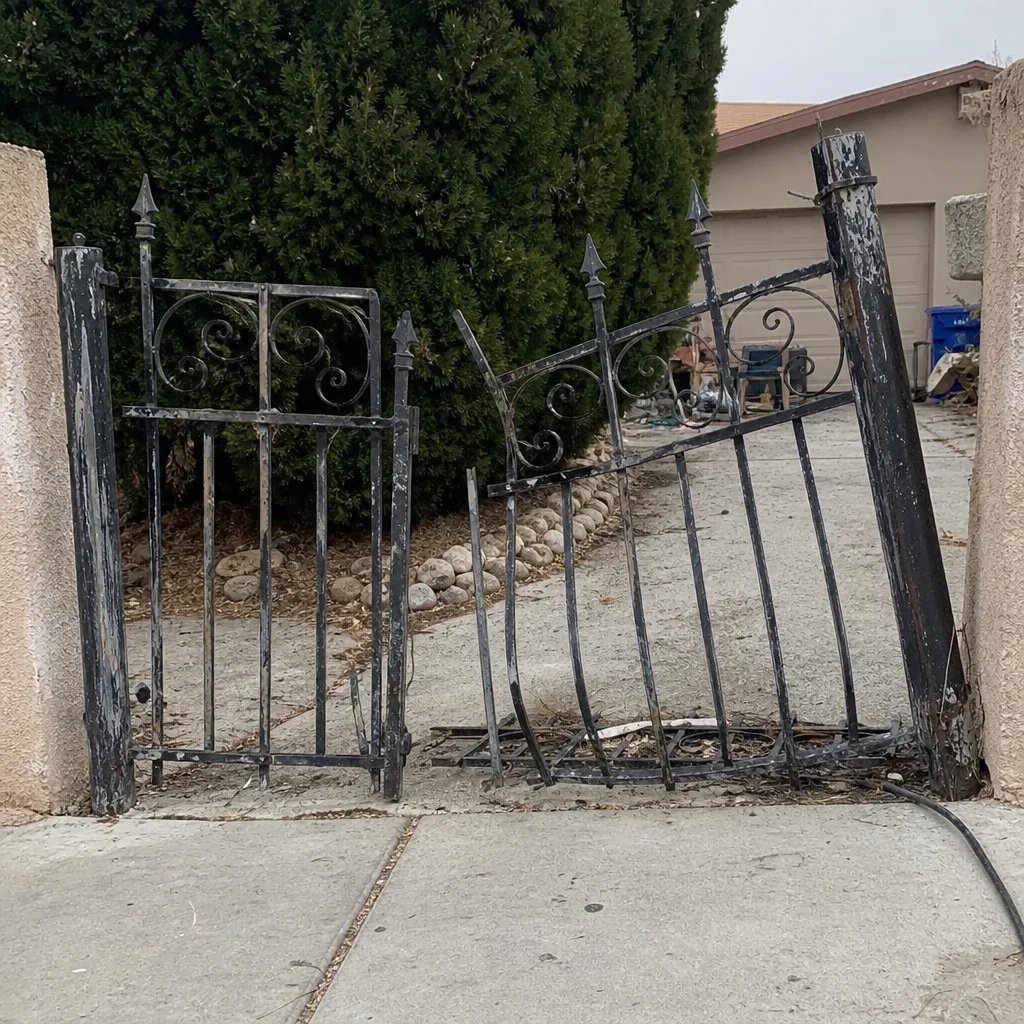 Before
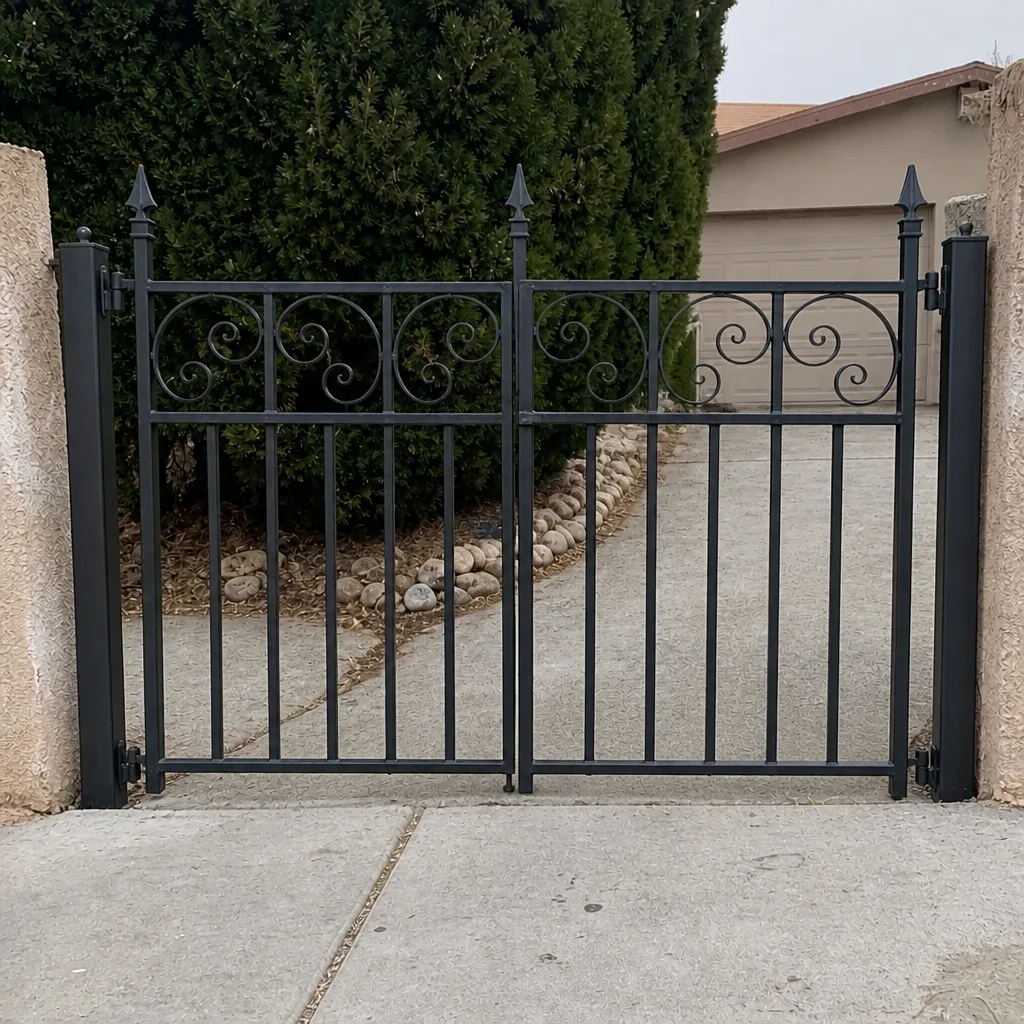 After
The Five Structural Root Causes Behind Common Gate Symptoms
Every sag, bind, misalignment, noise, or slow-travel complaint we trace in Boulder City lands on one of five structural causes. Symptoms are downstream. The cause is upstream, usually at a joint or a footing.
1. Weld fatigue cracking. The most overlooked. A weld at a hinge plate or corner joint develops a hairline crack under repeated load cycles. The gate holds its shape visually, but the joint flexes. Metal fatigue at welds is the single most common root cause we find on gates over eight years old in this climate.
2. Post footing failure or shift. The hinge post is set in concrete. If the concrete cracks, the soil shifts, or the post was undersized for the gate’s weight, the post leans or rotates incrementally. Every adjustment you make to the gate leaf is fighting a moving foundation.
3. Hinge hardware wear. Worn hinge pins or bushings introduce play that mimics misalignment. But hardware wear is almost always a symptom of load imbalance higher up the chain: if the gate sags, the hinges carry uneven load and wear faster.
4. Bent or undersized frame members. A frame tube that was marginal for the gate’s span will deflect under its own weight plus wind load. Once it deflects permanently, no hinge adjustment restores the geometry.
5. Parts substitution with wrong specs. Covered in detail below, but worth flagging here: a “compatible” hinge or wheel with a lighter load rating than the original introduces failure at a predictable point in the load path.
The rule that keeps us honest: adjust the gate last. Diagnose the weld and the footing first. If we’re called out for Gate Repair in Boulder City and the gate has been “fixed” twice already, the first thing we check is the hinge-post footing and the weld bead behind the hinge plate.
How to Inspect a Weld for Fatigue Cracking (Without Special Equipment)
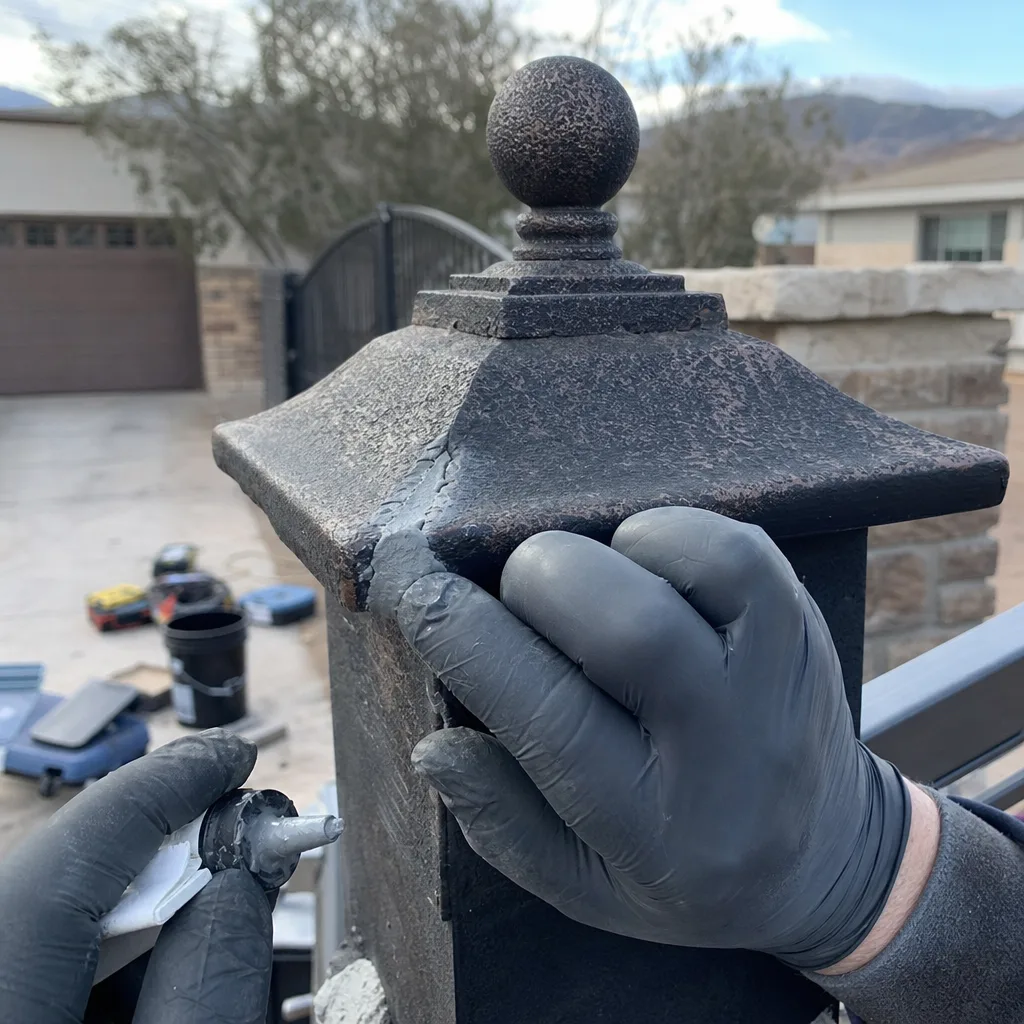
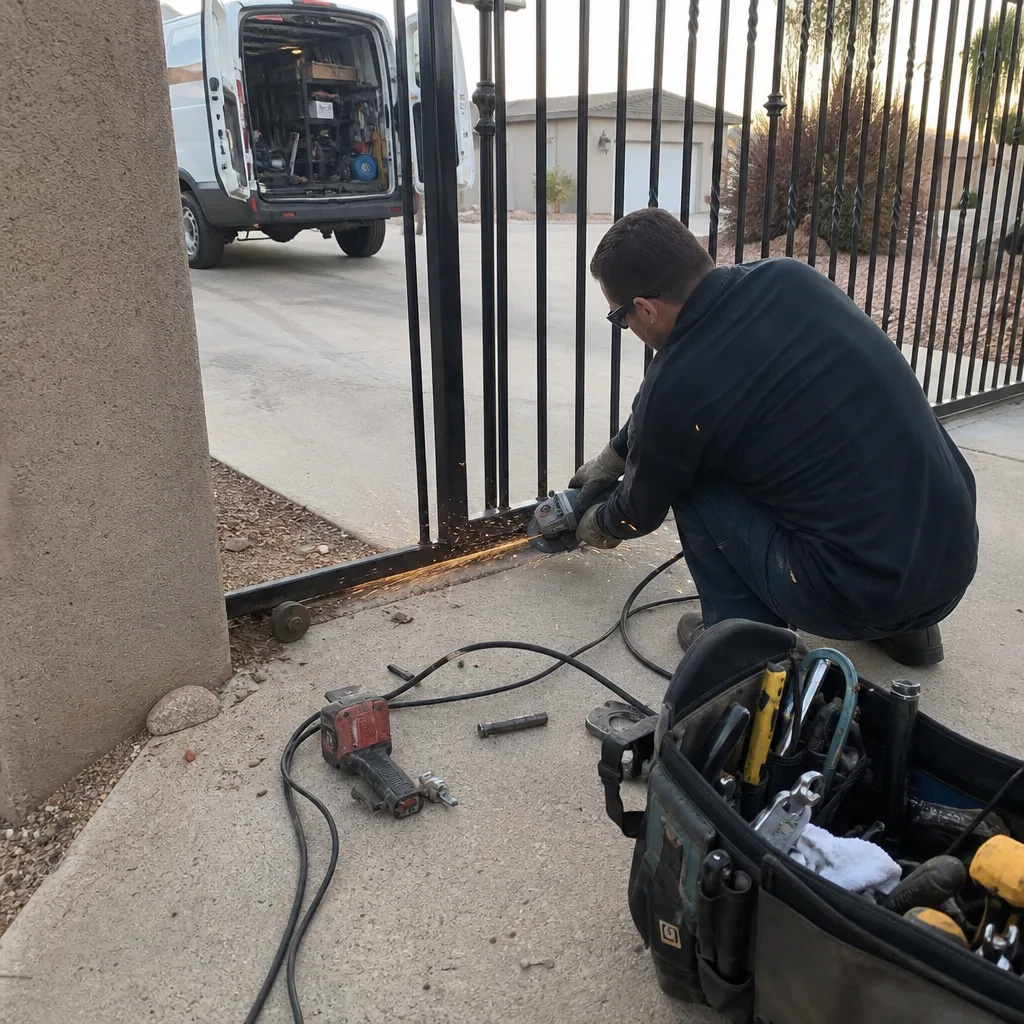
You don’t need a dye-penetrant kit to spot a fatigue crack in a gate weld. You need a flashlight, a rag, and about ten minutes. Here is the inspection sequence we use, written so you can follow it before calling anyone.
- Clean the joint first. Wipe the weld bead at each hinge plate, corner joint, and latch-side post with a rag. Desert dust and grit hide hairline cracks.
- Angle a flashlight along the weld, not at it. A crack casts a shadow when light rakes across the bead at a low angle. Direct light flattens it out.
- Look for rust bleed. A hairline crack traps moisture and rusts from the inside. A thin brown line running out of a weld bead on otherwise clean steel is a strong fatigue indicator.
- Check for paint cracking. Paint doesn’t flex. A crack in the paint along a weld toe, especially at a hinge plate, is the steel moving underneath it.
- Test for joint movement. With the gate closed and latched, grip the gate frame near the suspect joint and push-pull firmly. Any visible movement at the weld, or a tick sound, means the joint is compromised.
- Photograph the findings. Close-up photos of the weld bead, the hinge plate, and the full joint, plus one wide shot showing the gate in the frame. Date-stamp them. This is exactly what a technician needs to quote the repair without a second visit.
In Boulder City, the specific pattern to watch for is at hinge plates facing south or west. Summer surface temperatures on dark-painted steel push well past ambient, and the metal expands and contracts daily across a wide swing. We find more fatigue cracks on those faces than any other orientation. The other local factor is wind: gates here are working against gusts that load the frame far more than the sticker on the box suggests. A weld that’s marginal on paper can fail in a few seasons of that daily cycle.
Tracing Each Symptom Back to Its Root Cause
Here’s the practical part. Below is how we work backward from the symptom a homeowner reports to the structural cause driving it. If you’re writing down a description to call in, use this structure.
Sag (gate leaf drops, drags on the ground or latch)
- Check the hinge-post footing first. Is the post plumb? Lean on it. If it moves, the footing has shifted and no hinge work will hold.
- Then inspect the weld at the top and bottom hinge plates. A cracked top-hinge weld lets the leaf rotate downward over time.
- Only after both are cleared do you look at hinge pin wear.
Binding (gate catches mid-travel or at latch)
- Binding at the latch side usually points to a shifted latch post, not the gate leaf. Measure the gap top and bottom along the entire arc.
- Binding mid-travel on a swing gate often traces to a bent frame member that’s warped the leaf out of plane.
- On sliding gates, binding almost always comes from a wheel or track issue, but check the track foundation for settlement before touching the wheels.
Grinding or squealing noise
- Grinding during travel on an automated gate points to the operator, not the gate: chain, rack, or track misalignment. We cover that further on your region’s Gate Motor & Opener in Boulder City page.
- Squealing at a pivot is usually a dry hinge pin or a bushing that’s worn oval. But if the same hinge keeps squealing after lubrication, the pin is loaded unevenly because the leaf is sagging. Circle back to the footing.
Slow operation or uneven travel (automated gates)
- Before touching the operator (LiftMaster, FAAC, BFT, Linear, Viking, and the other brands we service), measure the gate’s swing resistance by hand with the operator disengaged.
- If the gate drags by hand, the root cause is structural, and the operator has been compensating for it. Replacing the motor will produce the same slow travel on the new unit.
The pattern across every symptom: check the foundation and the weld before the hardware and the operator. That order saves you money. We’ve seen homeowners buy a motor they didn’t need because the gate was dragging on a shifted footing.
Weld Repair in Place vs. Cut Out and Re-Fabricate
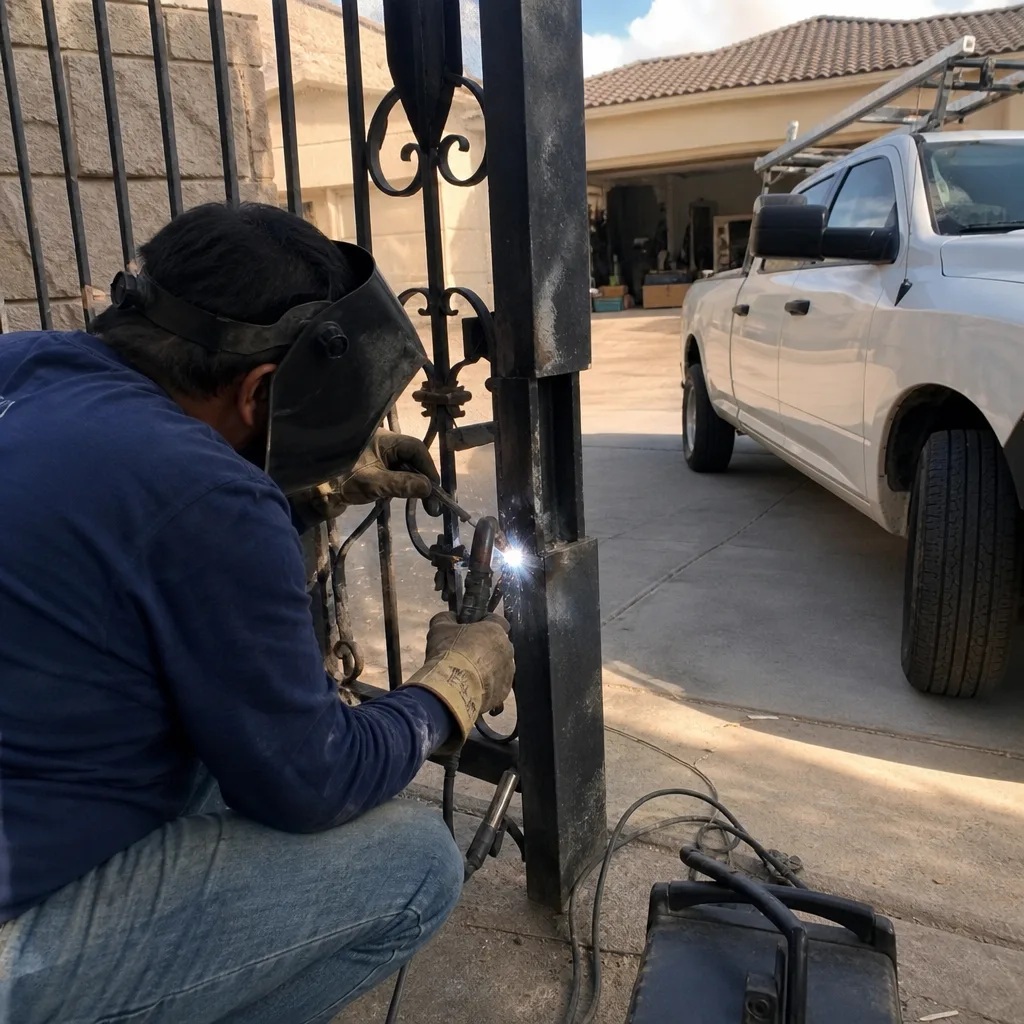
Not every weld can be fixed where it sits. Knowing which you’re looking at changes the price, the downtime, and whether the gate leaves the property. Here’s the decision framework we use.
In-place repair is possible when:
- The crack is short (roughly under 2 inches) and contained within the weld bead or the heat-affected zone immediately around it.
- The parent steel around the crack is sound, no warping, no thinning from rust-through.
- The joint is accessible from both sides with a grinder and a torch.
- The gate can be braced rigid during the re-weld so the geometry doesn’t shift as the metal cools.
Cut out and re-fabricate is required when:
- The crack has propagated into the parent tube, not just the weld. Welding over a tube crack just creates a new failure point next to the old one.
- The parent steel is thin or rusted through. You cannot get a sound weld onto compromised steel.
- The joint geometry is already wrong (bent tube, distorted hinge plate). Re-welding holds the distortion in place.
- It’s a structural joint on a gate rated for automation, where the load path matters more than on a manual gate.
A crack that’s been left long enough to rust internally is usually a cut-out case, even if it looks short. When we quote the welding portion, we scope it against which of these two categories applies. A hinge-plate re-weld in place is one price range; cutting out a section, fabricating a replacement, and re-welding to sound steel is another. That’s the point of Vance Gate Repair Boulder City home preparing a written scope before the torch comes out: so the difference is priced up front, not discovered mid-job. If the gate turns out to be beyond economical repair, we quote Gate Installation in Boulder City separately rather than steer you into it.
Parts Substitution Traps: Load Ratings, Geometry, and Repeat Failures
A “compatible” replacement part is the single most reliable way to guarantee the same failure twice. Here’s why, and what to check.
Load rating. Hinges, pivot bushings, and gate wheels are rated for a working load. A hinge rated for a 300-pound leaf on a 450-pound gate will wear out in months, not years. When you replace a hinge, match the load rating to the actual gate weight, not to what looks similar. The trap: unbranded replacements often list a rating that assumes perfect load distribution. On a gate where one hinge carries more because the leaf sags slightly, the real load exceeds the rating even before failure.
Geometry. Hinge pin diameter, plate bolt pattern, and offset all matter. A pin 1/16 inch thinner than the original introduces play that reveals itself as misalignment. A plate with a different offset changes the pivot arc and the gate binds. On automated gates, the arc change can throw off the operator’s limit settings, so the gate overshoots or hits its stops. If the original part was a FAAC hinge and the replacement is a “universal” one, the geometry is almost certainly not identical.
Material and finish. A zinc-plated hinge on a desert gate holds up. A painted mild-steel substitute rusts at the pin within a season in Boulder City’s dry-then-flash-rain pattern.
The documentation fix. Before you swap a part, record what failed and under what load. Photograph the failed part, the gate weight, and the hinge positions. When we replace hardware, the new part number goes on the record with the load conditions that killed the old one. That single habit is what stops a third replacement of the same hinge on the same gate. If you’ve got a failed part in your hand and a cracked weld either side of it, photograph both. It tells the next technician the whole story.
Why Documentation Prevents Repeat Failures
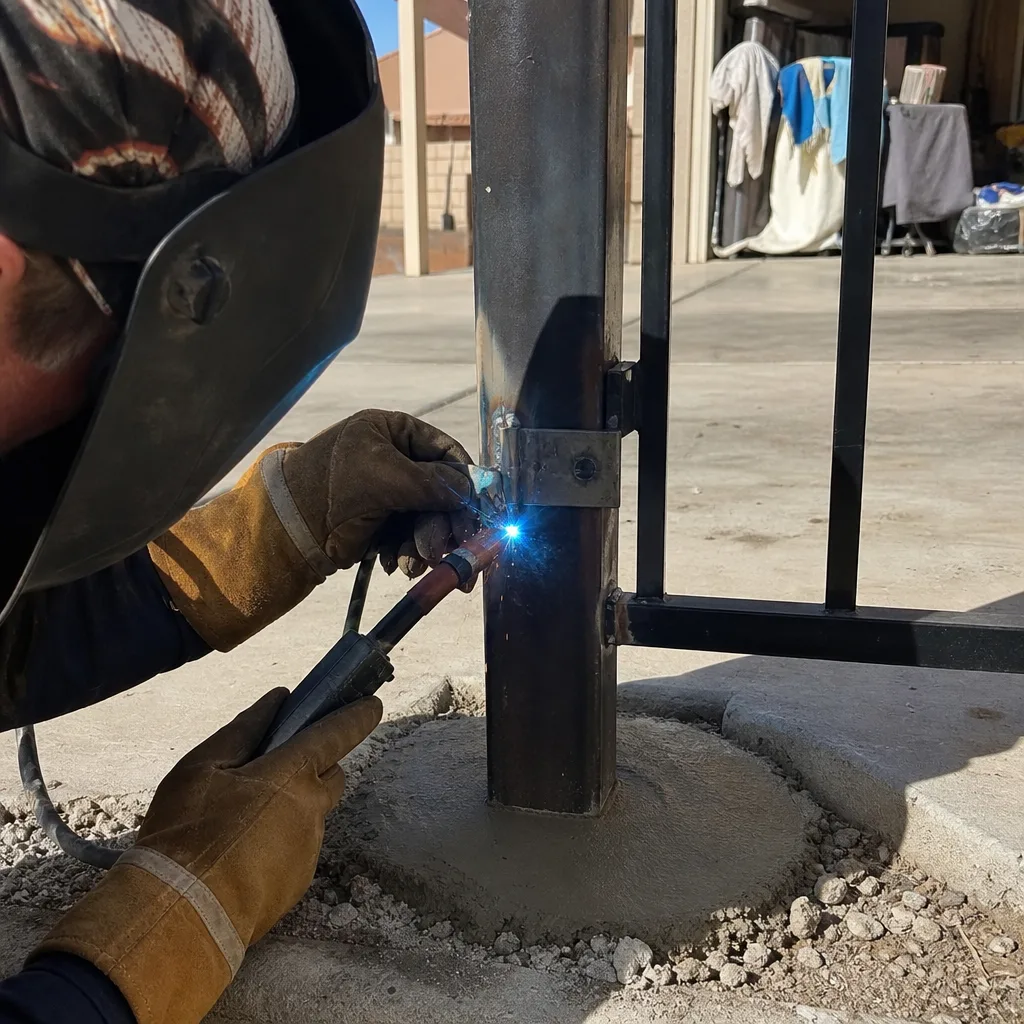
Most gate repairs fail twice because the second technician starts from zero. Nobody wrote down that the hinge post was leaning 2 degrees, that the weld was repaired in place last spring, or that the wheel was swapped for one with a lower rating. The gate gets the same diagnosis, the same fix, and the same failure next year.
The commercial access-control habit that carried over into our residential work is simple: leave a photograph record of what you found and what you did. On a welding or parts job, that record should include close-up photos of every weld you touched, the part numbers installed, the gate weight, and any footing measurements. It goes into the job record and it gets left with the homeowner. When a gate fails under the Gate Repair in Boulder City 365-Day Done Right Promise, the record tells the returning technician exactly what was there before, which is the difference between fixing it once and re-diagnosing the same problem from scratch.
Common Mistakes to Avoid
- Adjusting the gate before checking the post. If the hinge post moves when you push it, you’re aligning against a moving target. Check the footing first, every time.
- Re-welding over a crack without grinding it out. Welding onto a fatigue crack traps the crack and creates a new stress concentration just past the repair. The crack returns in a season.
- Replacing hardware without recording load conditions. A new hinge on a gate that’s still overweight for its hardware fails the same way. Record the part number, the gate weight, and the hinge positions.
- Buying a “compatible” part without matching the load rating. Especially on automated gates where a FAAC or BFT operator’s limit settings are tuned to a specific pivot arc. A geometry change throws off the automation.
- Chasing a squeal with grease when the hinge is loaded unevenly. Lubricating a dry pin is fine, but if the same hinge squeals again after a week, the pin is carrying load it shouldn’t because the leaf is sagging.
- Assuming slow gate operation means the motor is failing. Nine times in ten the gate drags by hand and the operator is doing its best. Measure manual resistance before you price a motor.
- Ignoring south and west facing welds in Boulder City. Thermal cycling on those faces drives more fatigue cracks than any other orientation. If you have a crack, look at the other welds on the same face.
See the difference
BeforeAfter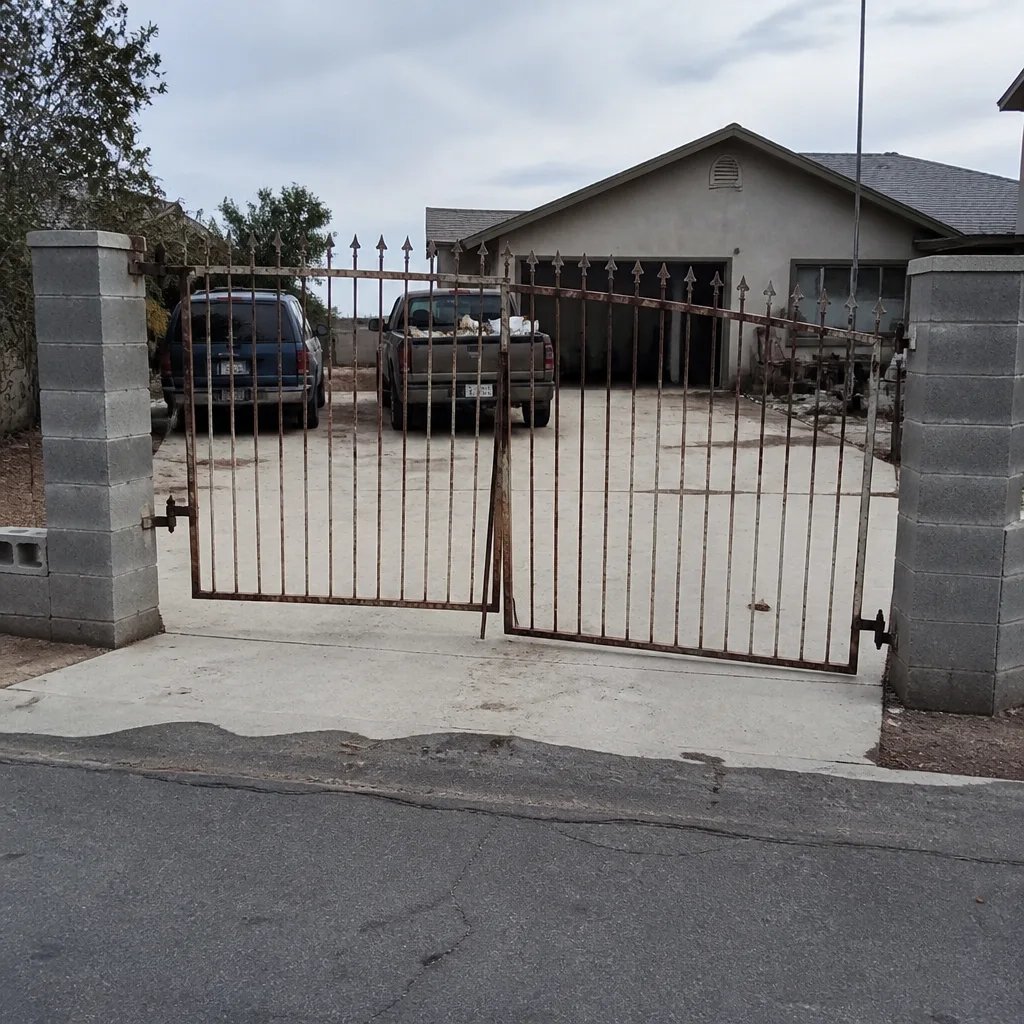 Before
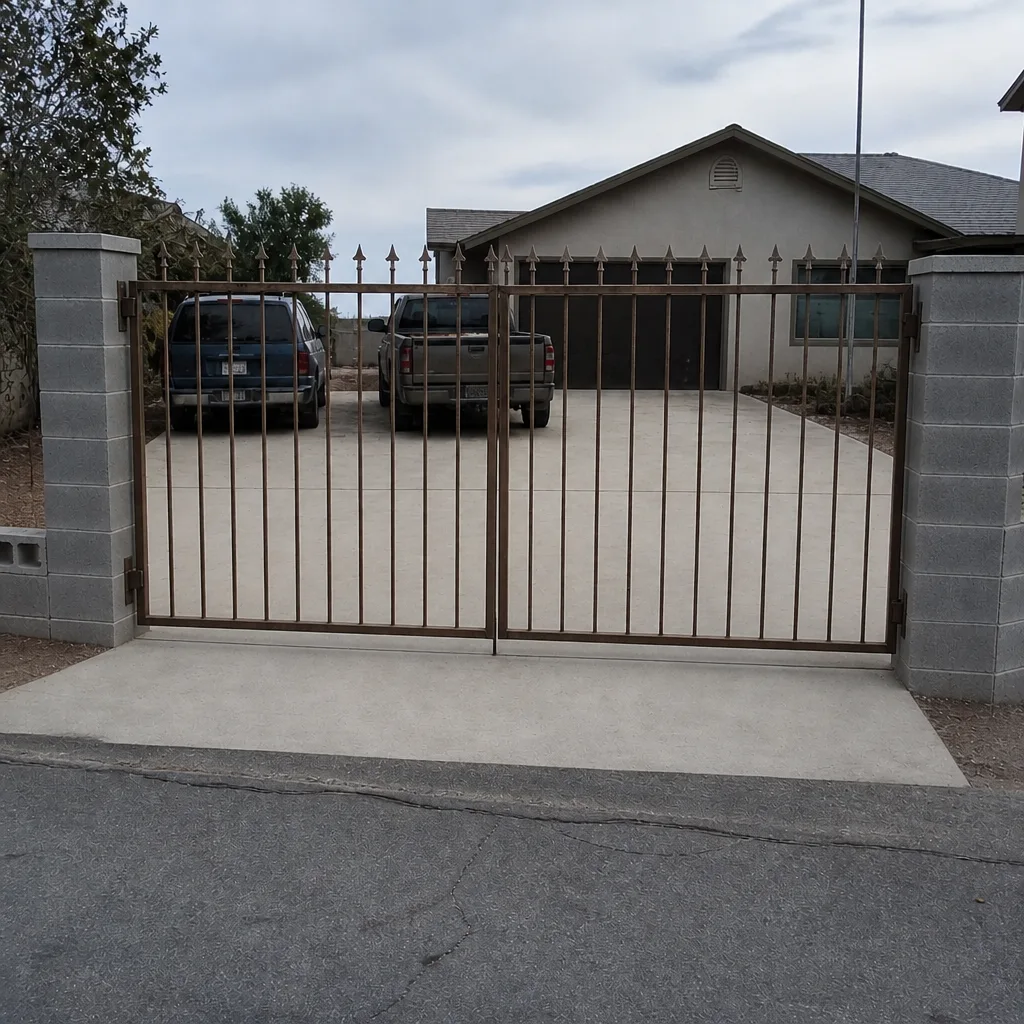 After
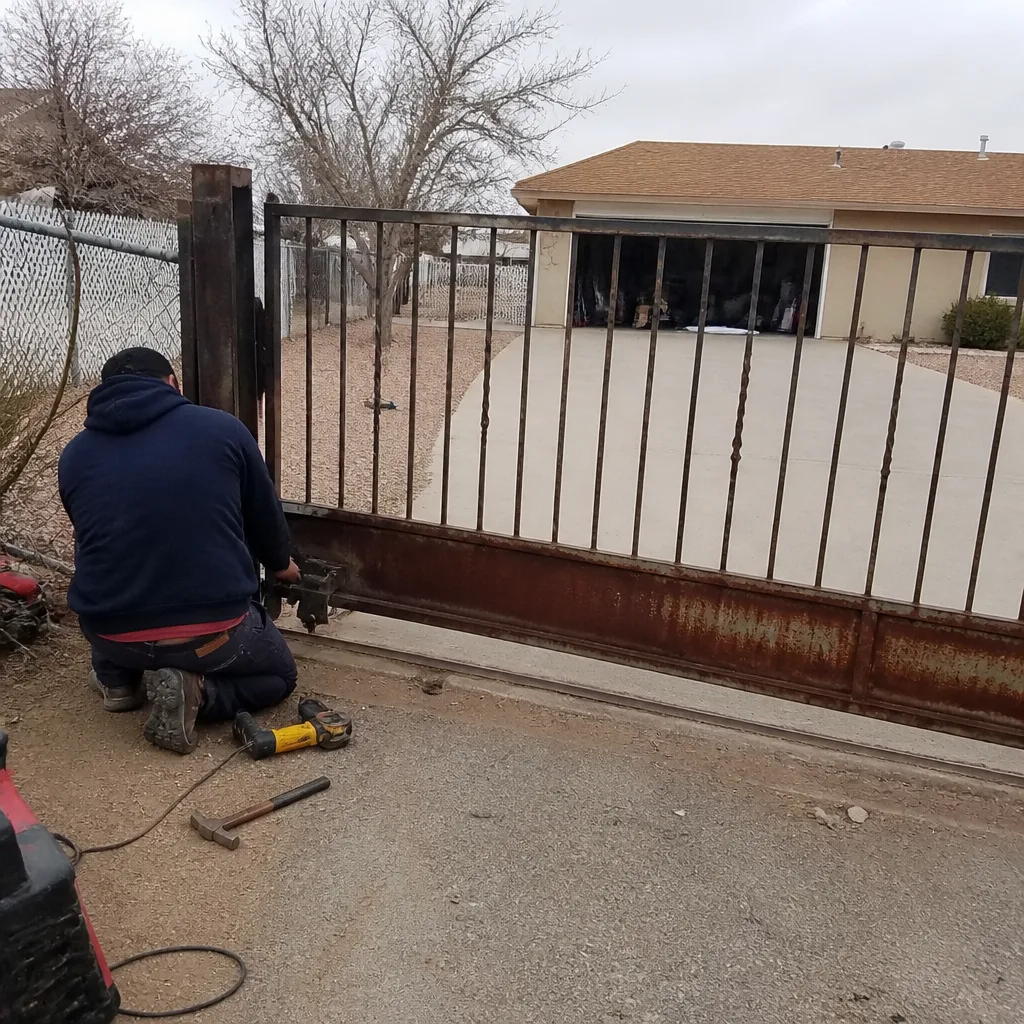 Before
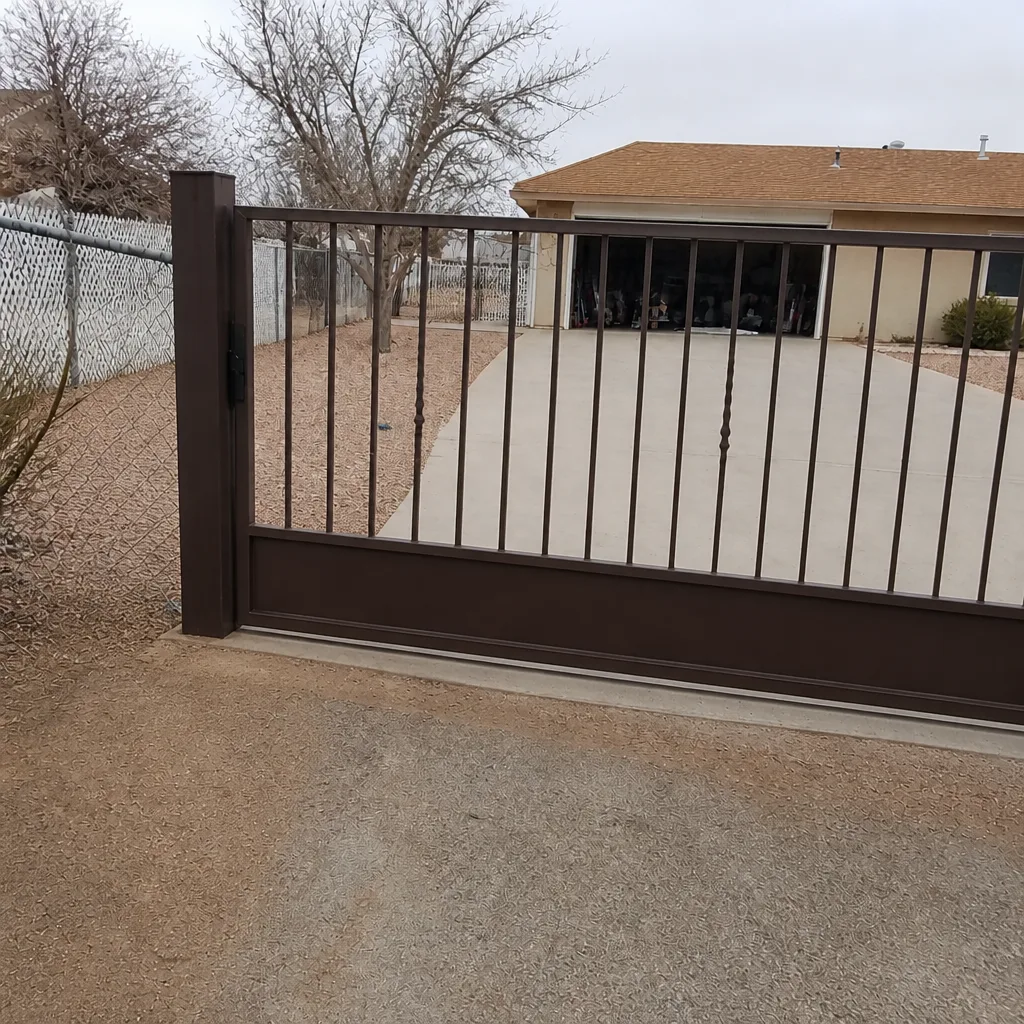 After
When to Call a Professional
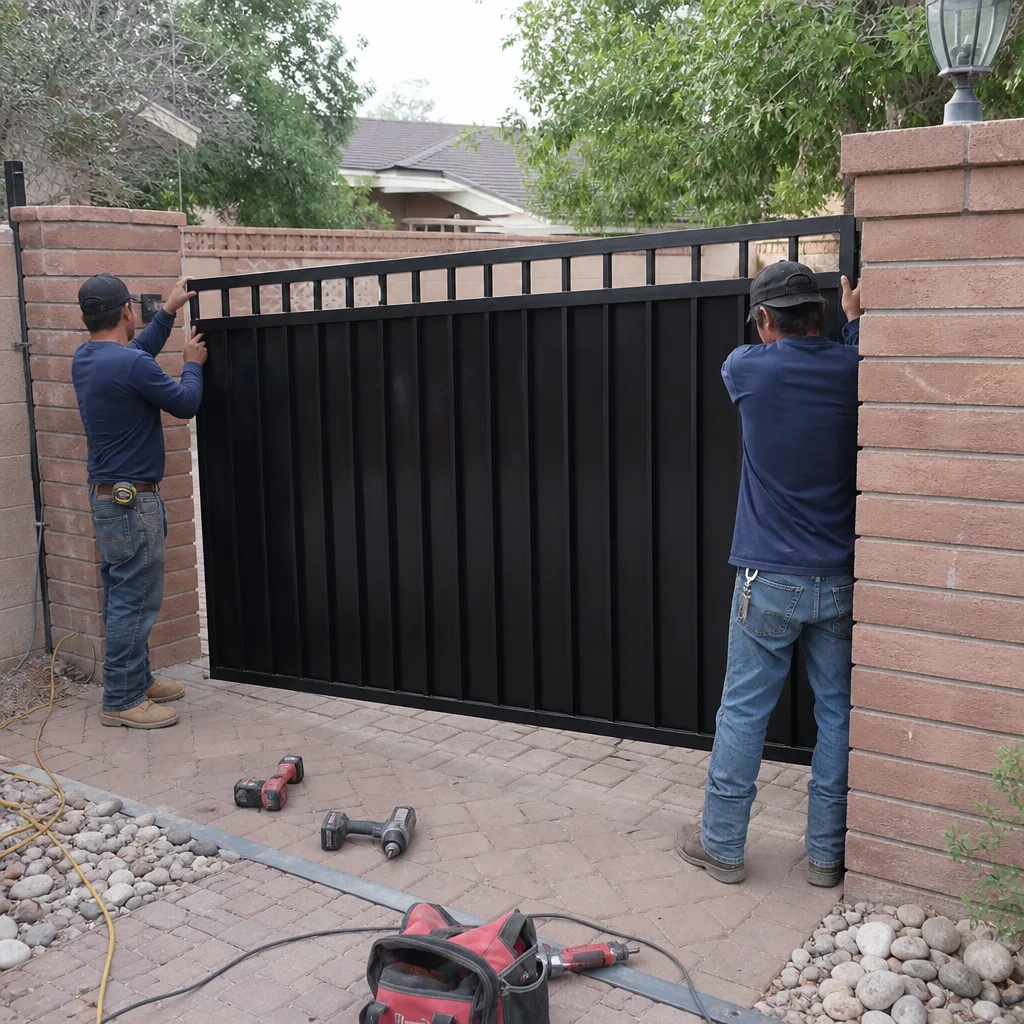
Call a professional when the weld crack extends into the parent steel, when the post moves under hand pressure, when a gate rated for automation has any structural weld failure, or when you’ve adjusted the same gate twice and the symptom keeps coming back. Those are not DIY-territory repairs, and welding over a compromised joint fails at a predictable point. Structural welding, fatigue repair, and load-rated parts substitution are where a documented diagnosis earns its keep. Vance Gate Repair Boulder City has technicians with up to 12 years of experience, services nine major automation brands including FAAC, BFT, Linear, and Viking, and provides free estimates in Boulder City. The flat price is written and handed over before any tool comes out, and every visit leaves a photo record of what was found, adjusted, and installed. Call (844) 320-7587 and a live person answers 24/7. If you’ve got a written estimate from another company, we’ll review it for free as a second opinion.
Frequently Asked Questions
A cracked weld at a hinge plate or a shifted hinge-post footing. Both let the gate leaf move out of position over time, so hinge adjustments hold for a few weeks and then fail. A technician should check for movement at the hinge-post footing and inspect the weld beads before adjusting anything. Call (844) 320-7587 for an exact quote, estimates are free.
Wipe the weld clean, angle a flashlight across the bead rather than at it, and look for a hairline shadow, a thin rust line bleeding out of the weld, or a crack in the paint along the bead. Grip the frame near the joint and push-pull firmly with the gate closed; any visible movement or a tick sound means the joint is compromised. Photograph the joint from both close and wide angles for a technician.
Short cracks contained within the weld bead or its immediate heat-affected zone can usually be repaired in place. Cracks that have propagated into the parent tube, or where the surrounding steel is thin or rusted through, require cutting out the section and re-fabricating. The difference changes the price and downtime, so a written scope should sort the two categories up front. Call (844) 320-7587 for an exact quote, estimates are free.
Usually because the replacement part has a lower load rating than the original, or because the gate is still overloaded at that hinge from a sag the new part didn’t address. Matching the load rating to the actual gate weight and recording the conditions that failed the first part is what stops a third replacement. In Boulder City, the sun-facing hinge plates take the most thermal cycling, so they’re the first to fail again when the root cause hasn’t been fixed.
Rarely. Disengage the operator and push the gate open and closed by hand. If it drags, the gate is structurally binding and the motor is compensating for a problem it can’t fix. Replacing a FAAC, BFT, Linear, or Viking operator on a binding gate produces the same slow travel on the new unit. Call (844) 320-7587 for an exact quote, estimates are free.
A close-up photo of every weld treated, the part numbers installed, the gate weight at the time of repair, and any footing measurements taken. That record goes into the job file and is left with the homeowner, so any future technician, including us on a 365-Day Done Right Promise callback, starts from the same facts rather than re-diagnosing from zero. Every Vance Gate Repair Boulder City visit includes a documented photo record under Clause 4 (Evidence on every job) at no additional charge.
The Bottom Line
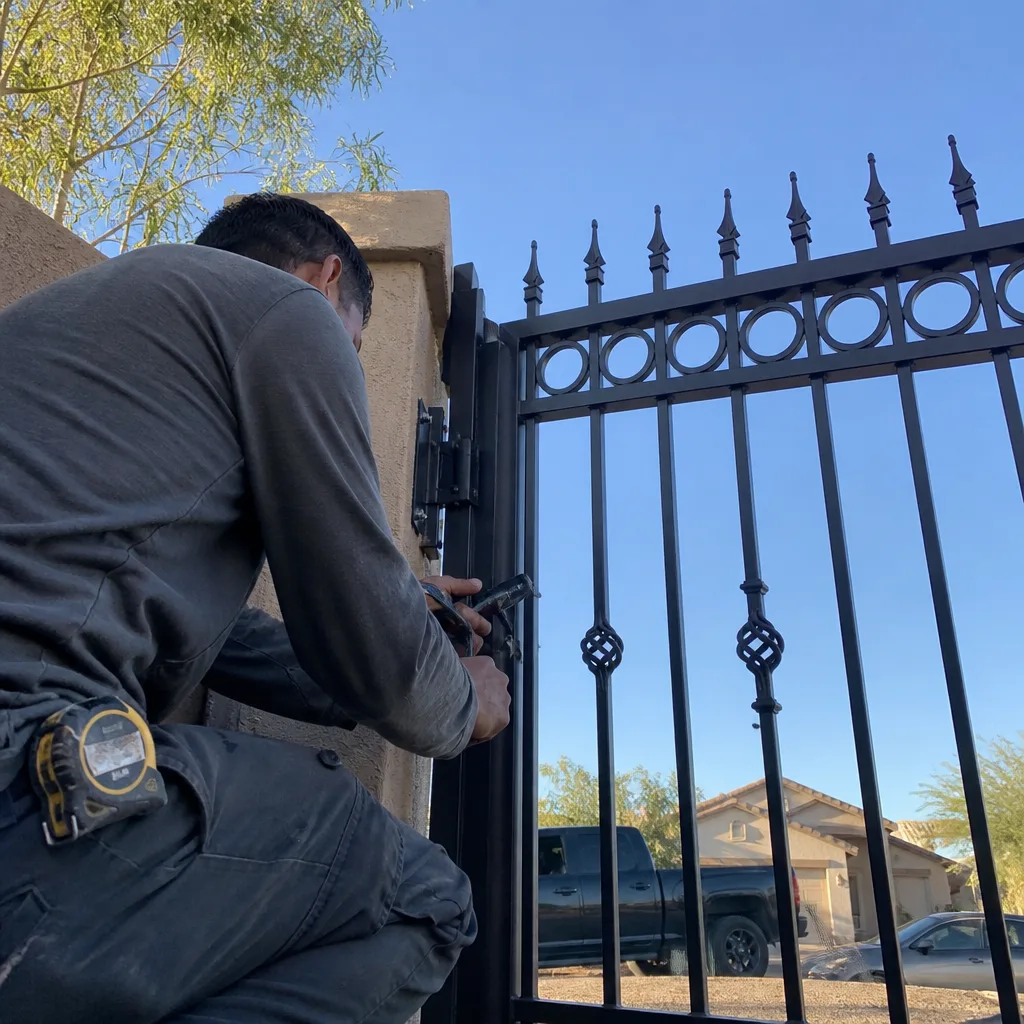
Most gate problems aren’t hardware problems. They’re a cracked weld, a shifting footing, a bent frame tube, or a substituted part with the wrong load rating, and the symptom is just how the failure surfaces. Check the footing and the weld before the hinges and the operator. Repair a weld in place when the crack is contained and the parent steel is sound; cut out and re-fabricate when it isn’t. Record what failed and under what load so the next repair isn’t a repeat. And when in doubt, photograph the joint and hand it to a technician who prices the job in writing before the torch comes out.
Contact: Vance Gate Repair Boulder City. Call (844) 320-7587 for a free estimate. A live person answers 24 hours a day. Written price before any work starts. Photo record on every visit. 365-Day Done Right Promise on all completed work.
Written by the team at Vance Gate Repair Boulder City.