
Last updated November 18, 2026
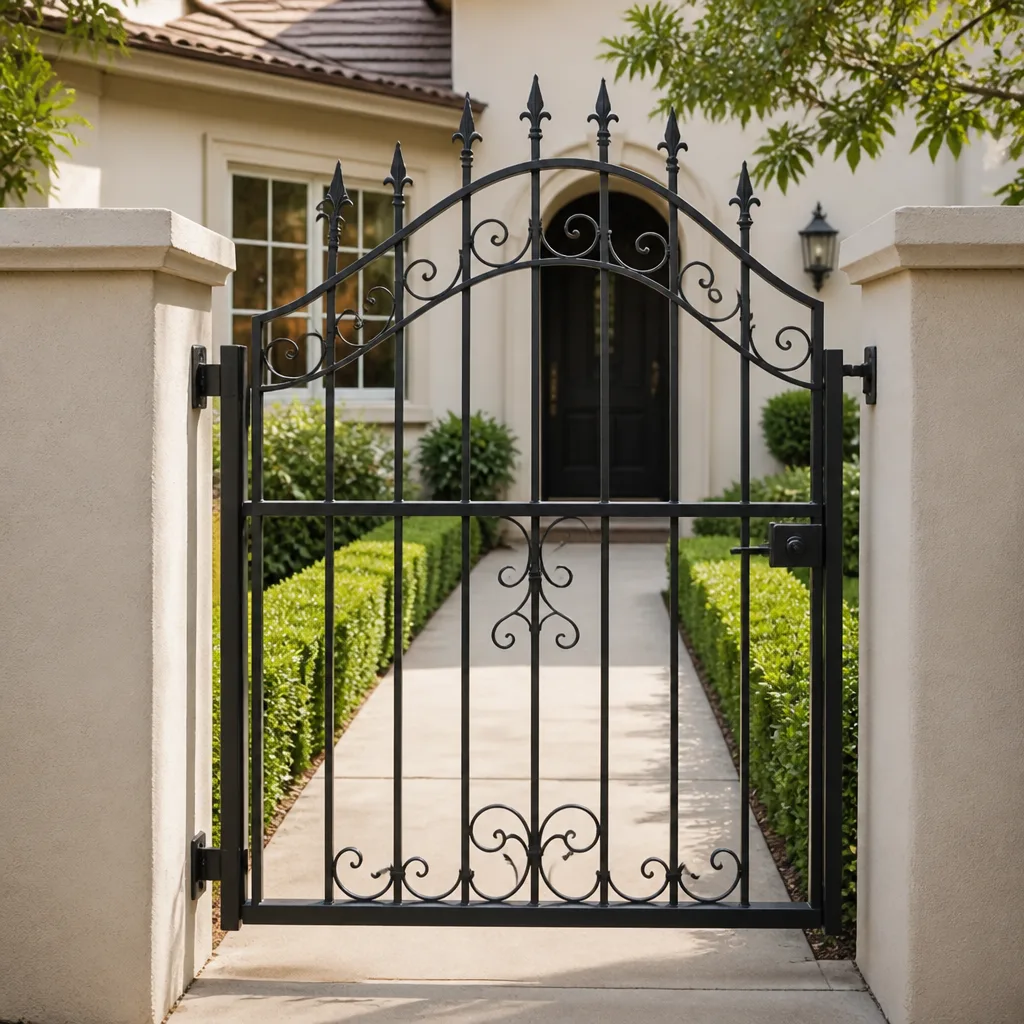 Wrought iron
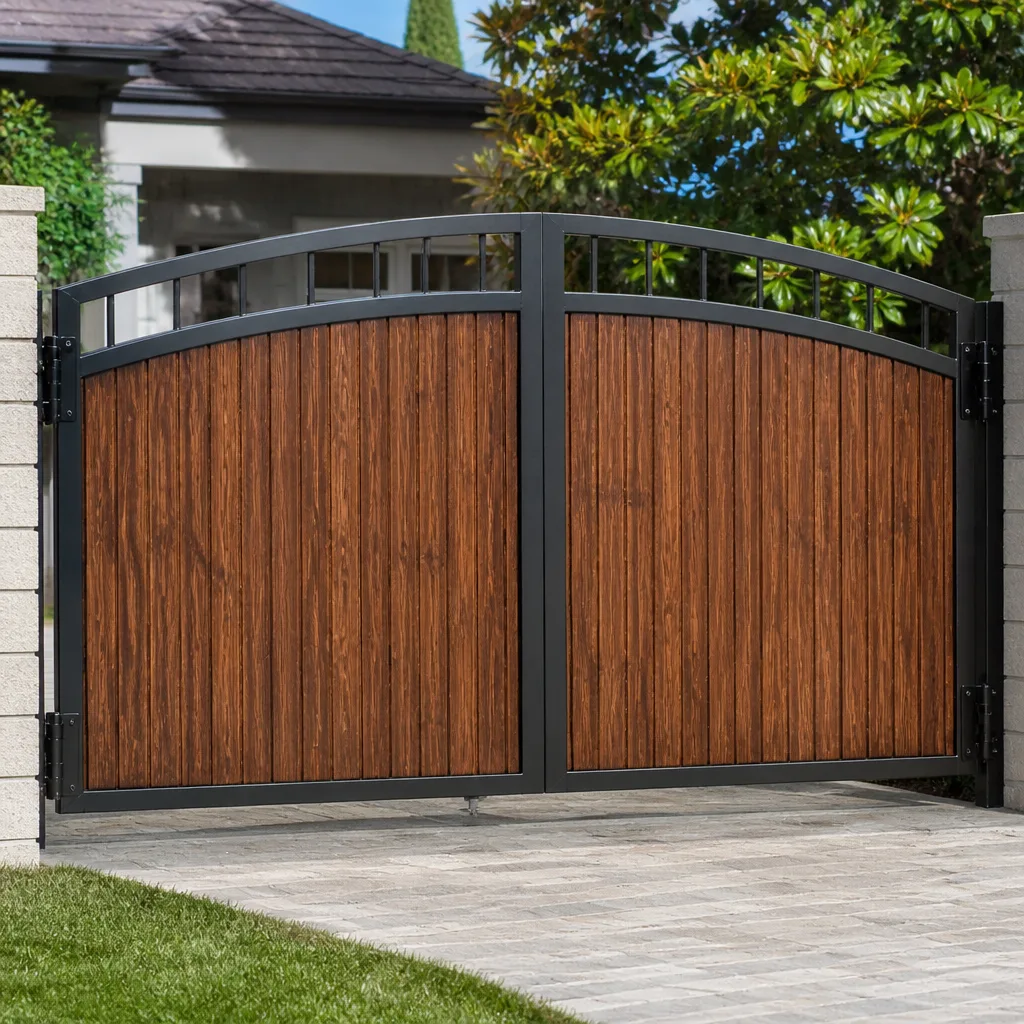 Wood & steel frame
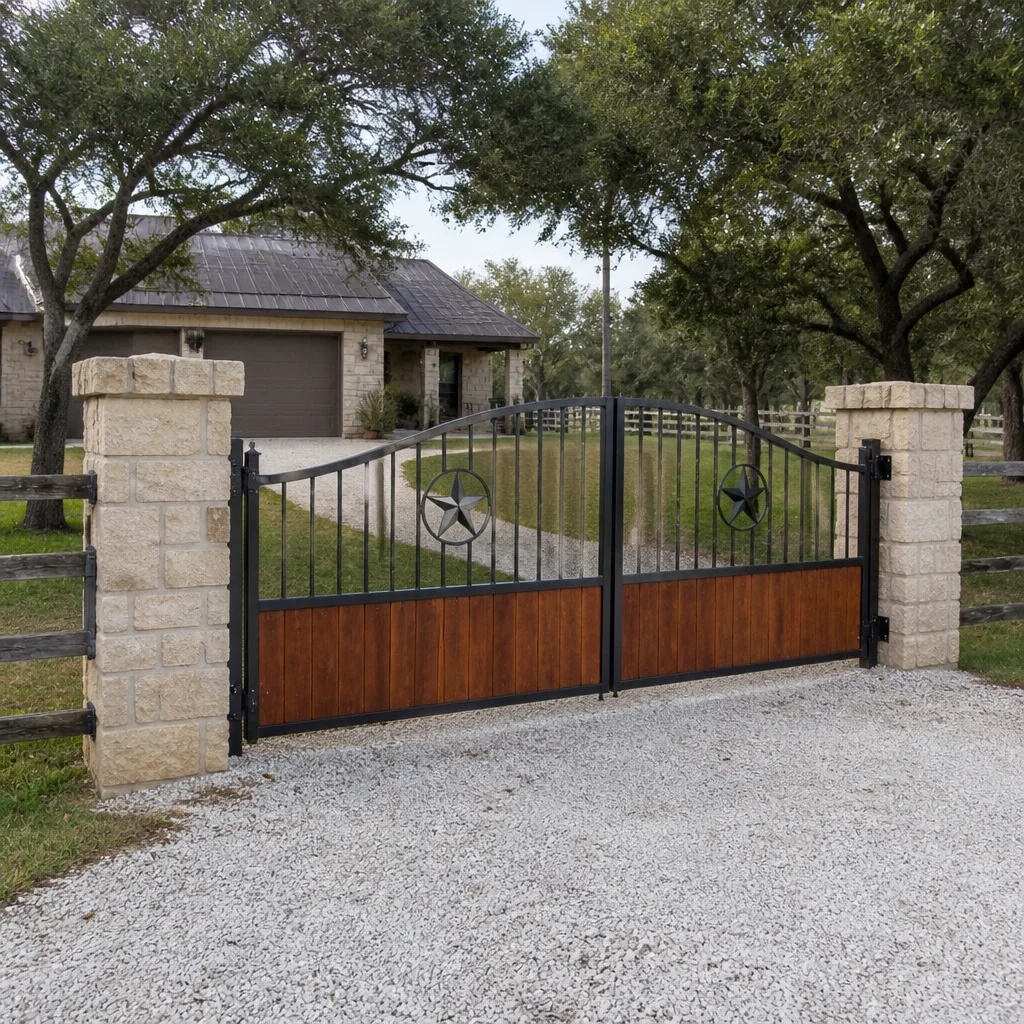 Farm & ranch
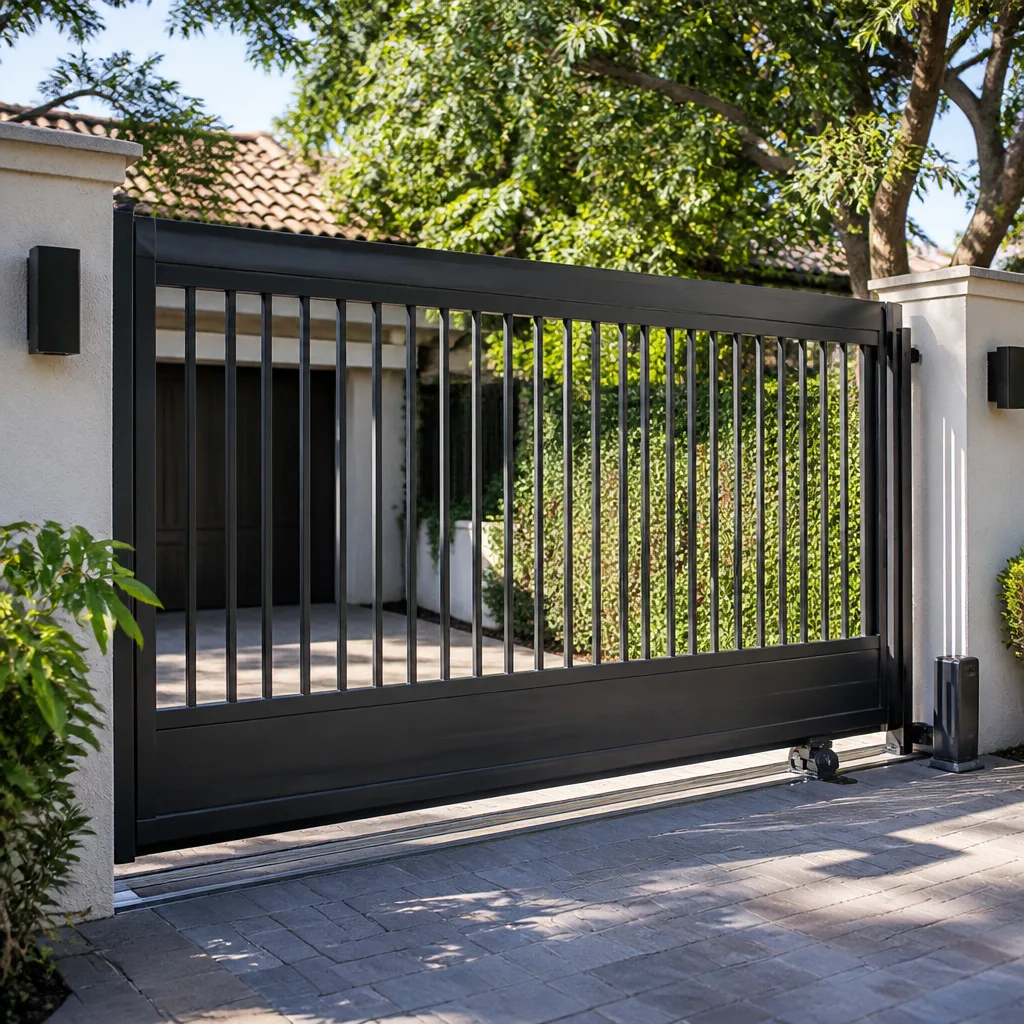 Sliding driveway gates
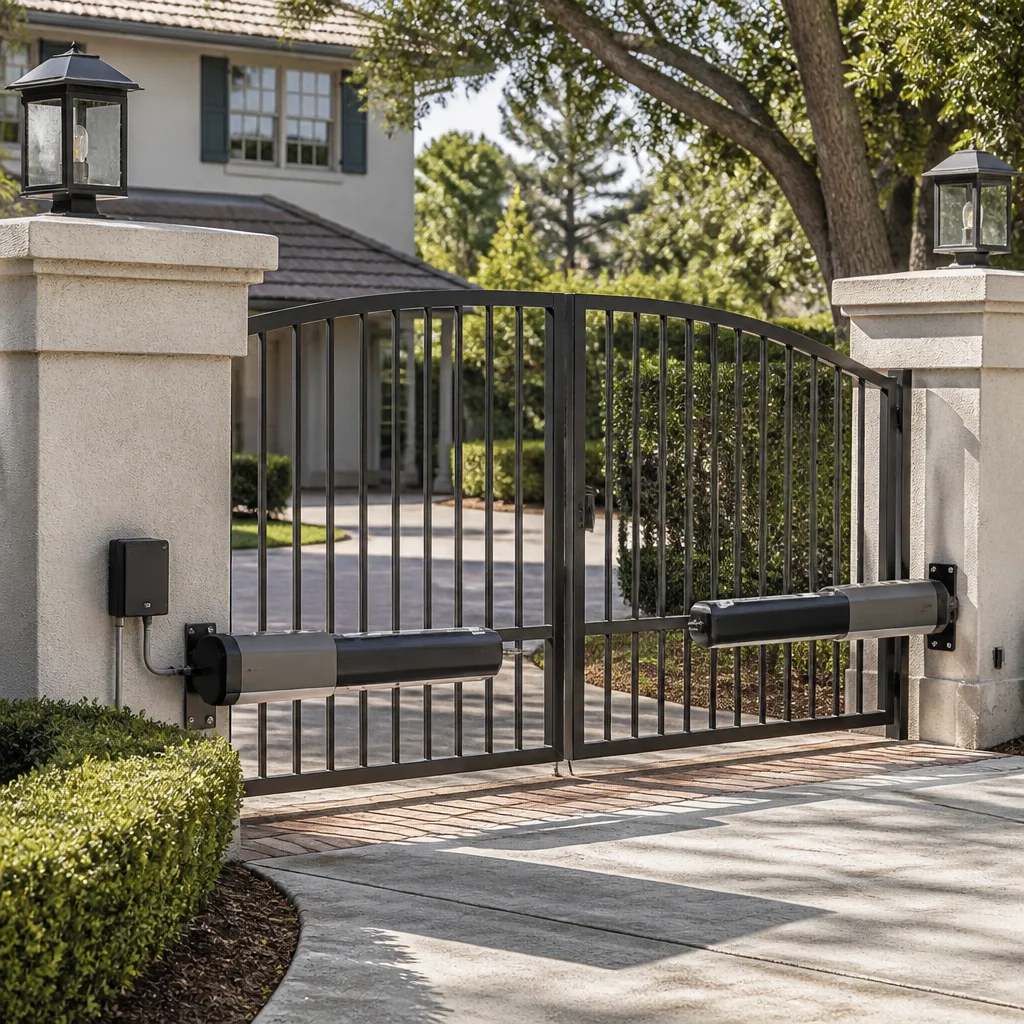 LiftMaster operators
Free on-site gate assessment - hinges, posts, and your LiftMaster or Nice gate operator checked before anything is quoted
The assessment is free and the quote is the invoice.
Get your free estimateGate Parts & Welding Warning Signs Every Homeowner Should Know
When a gate starts dragging on one side, the instinct is to adjust the hinge. But drag that wasn’t there six months ago usually means a weld has cracked and the hinge is now carrying load it was never designed for. That’s the thing most homeowners miss: a gate rarely fails at the part that first goes bad. It fails at the parts next to it, which quietly take on stress they were never built to handle. In this guide, we’ll show you how to read that redistribution – the cracked paint, the rust tracking along a weld bead, the bolt that keeps loosening – and when a warning sign in Boulder City means you should stop operating the gate entirely.
Quick Answer
The most important gate parts and welding warning signs are a gate that drags or sags on one side, paint cracking perpendicular to a weld joint, rust that tracks in a line along a bead rather than spreading in a patch, bolts that re-loosen within weeks of tightening, and alignment that shifts with the seasons. Any of these points to a partially failed weld or hardware component that has shifted stress onto adjacent parts – and a gate in that condition can fail suddenly, so treat it as a hazard until a professional inspects it.
Styles & brands we work with
- Wrought iron
- Wood & steel frame
- Farm & ranch
- Sliding driveway gates
- LiftMaster operators
Table of Contents
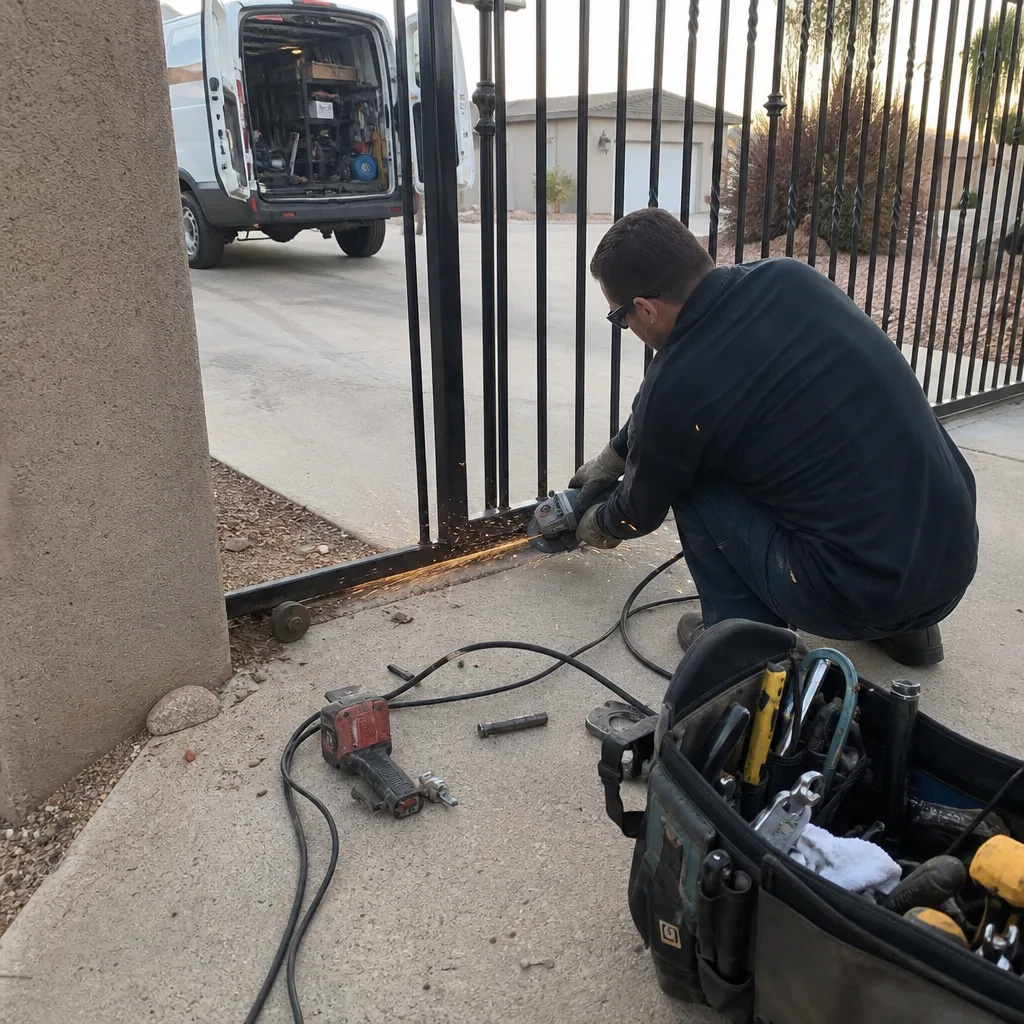
- Load redistribution: why the part that fails is rarely the part that’s broken
- Reading weld fatigue: rust patterns, paint cracks, and micro-gaps
- Hardware clues that the frame itself has moved
- Cosmetic rust vs. structural rust: how to tell the difference
- When to stop operating the gate entirely
- How Boulder City’s climate accelerates gate wear
- Common mistakes to avoid
- Frequently asked questions
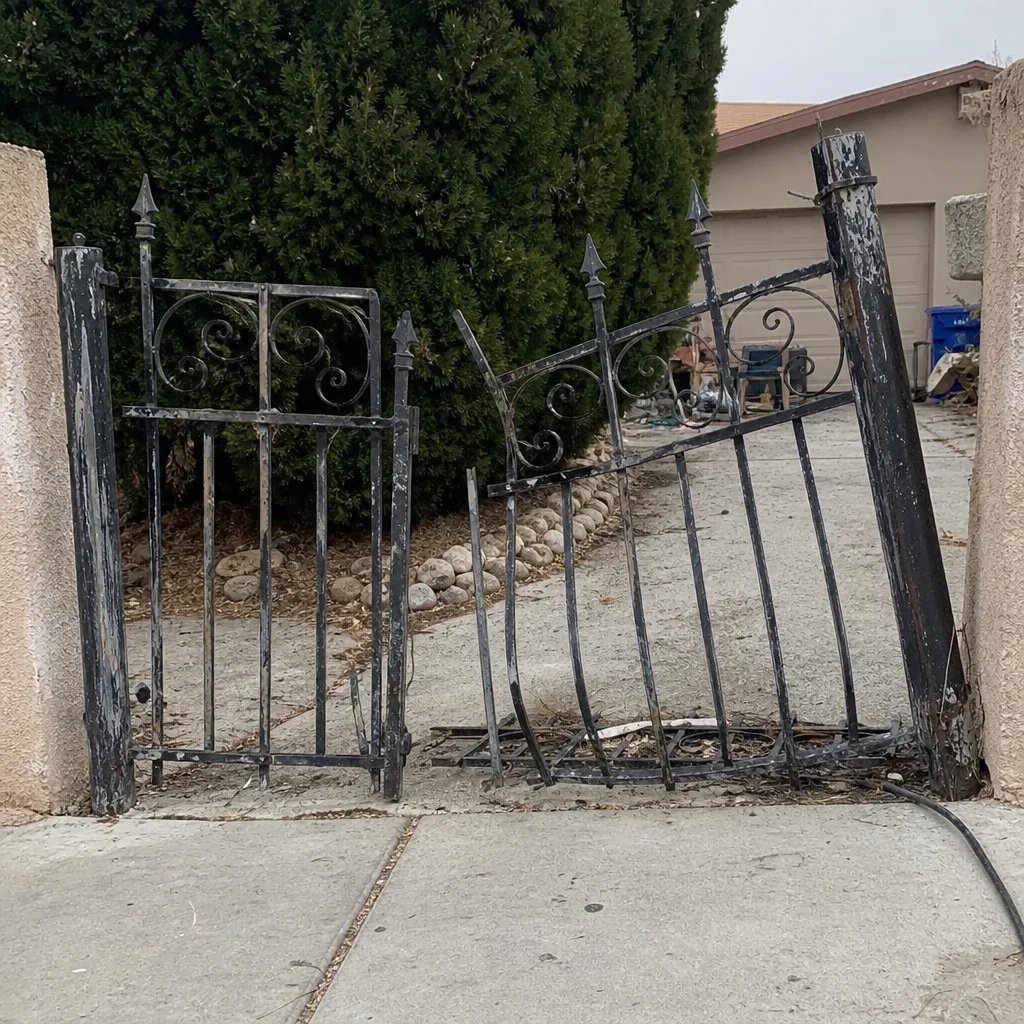 Before
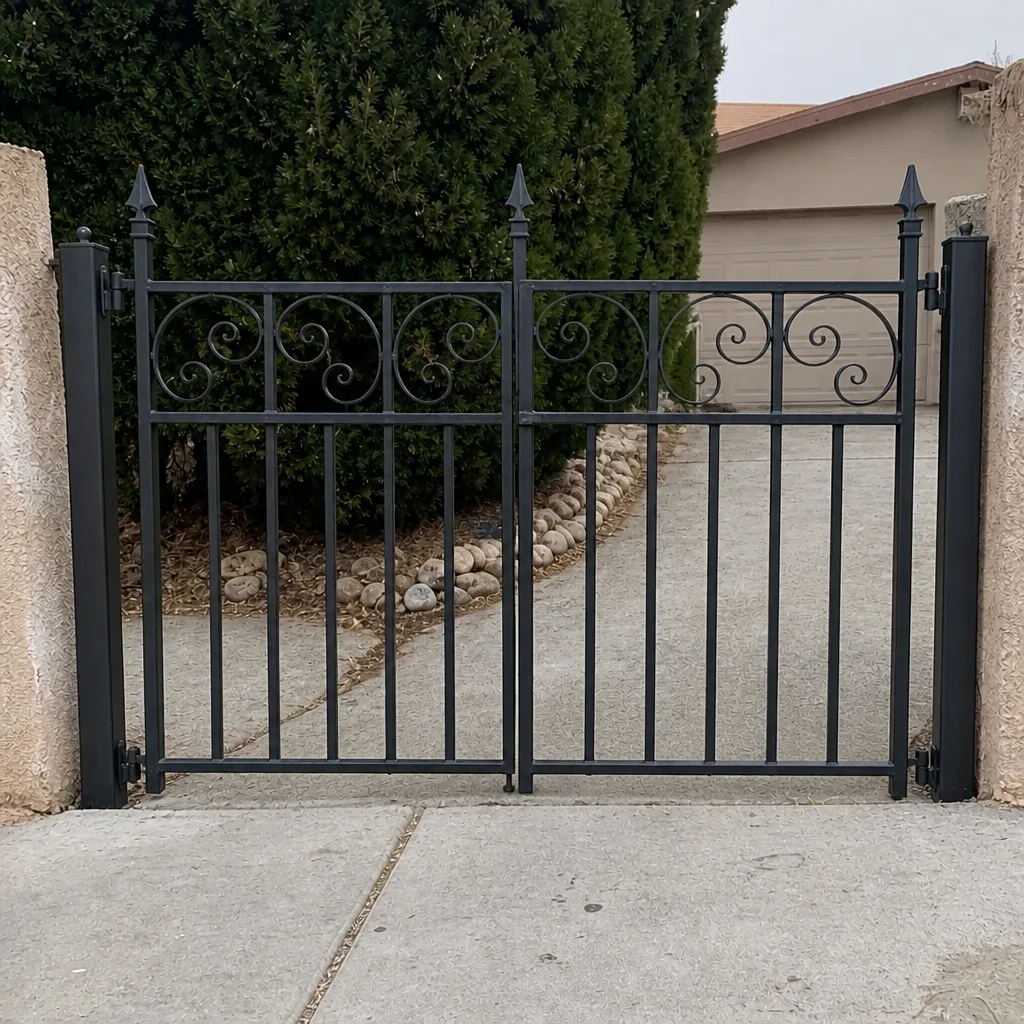 After
Load Redistribution: Why the Part That Fails Is Rarely the Part That’s Broken
A driveway gate is a structure under constant load. The hinges, the frame, the welds at every corner, the posts in the ground – all of them share the gate’s weight and the force of every open and close. When one piece weakens, the load doesn’t vanish. It moves. The structure finds a new way to hold itself up, and that new path usually overloads a part that was never sized to carry it.
That’s why the first sign you notice is almost always in the wrong place. A homeowner sees the gate dragging and assumes the hinge has worn out. Adjusting the hinge may even help for a week or two. But if a weld at the frame corner has cracked, the hinge is now doing the weld’s job, and the drag will come back because the real problem was never the hinge.
Here’s the sequence we’ve seen play out again and again on gates around Boulder City:
- A weld at one corner of the frame cracks by a few thousandths of an inch, usually where the gate meets the hinge plate or the diagonal brace.
- The frame loses stiffness at that corner and flexes slightly each time the gate swings.
- The flexing transfers extra load to the hinge and to the post anchor bolts.
- The hinge starts to wear faster and the bolts start to loosen – which is the symptom you actually notice.
- You tighten the bolts or adjust the hinge, and it feels fine for a few weeks before the drag returns.
The pattern to notice is the return. A problem that comes back after a fix is telling you the load is still being redistributed somewhere underneath. For a deeper look at how we diagnose that on a swing gate, our gate repair in Boulder City page walks through the inspection steps in order.
Reading Weld Fatigue: Rust Patterns, Paint Cracks, and Micro-Gaps
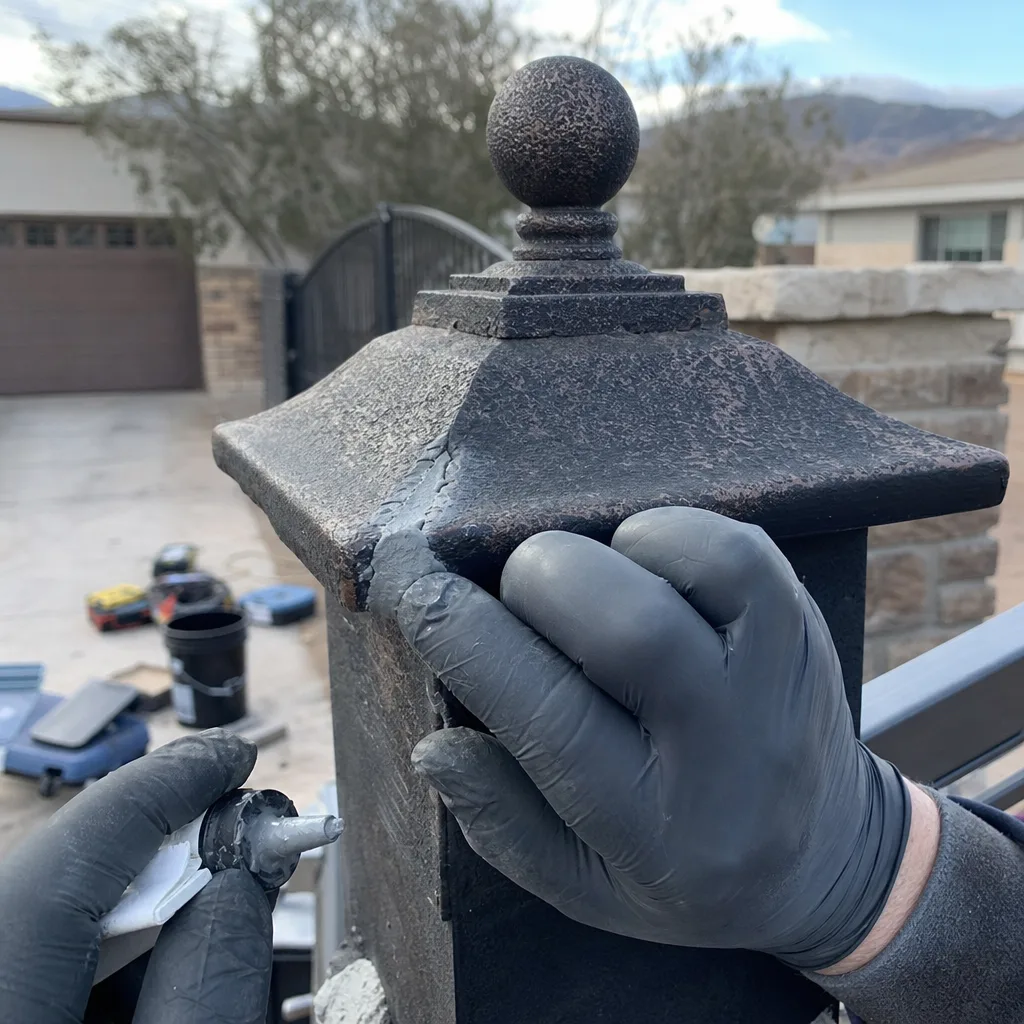
Weld fatigue doesn’t announce itself. It leaves small, specific marks. Once you know the four visual indicators, a five-minute walk around your gate tells you most of what an inspection would tell a technician.
Paint cracking perpendicular to a joint. Paint is brittle. When the steel under it flexes more than the paint can bend, the paint cracks. The direction matters: a crack running at right angles across a weld joint is a flexing signal. A crack running parallel to the weld or in the middle of a flat panel is usually just sun damage.
Rust tracking along a bead. A failing weld develops a hairline crack, water gets in, and rust bleeds out in a line along the weld seam – not a patch, a line. If you see a rust trail that follows the bead like a drawn line, the weld is no longer watertight and is very likely no longer load-bearing the way it was designed to be.
Micro-gaps at corners. Get close to the corners where two frame sections meet. A gap that didn’t exist before, even a sliver, means the two pieces have moved relative to each other. That movement is exactly the displacement a failed weld allows.
Powder-coat bubbling along a seam. Bubbling that follows a joint is the same story as the rust line: moisture is trapped inside, and it got in through a crack.
What you’re looking for is the combination of location and pattern. Any single mark could be cosmetic. A paint crack plus a rust line along the same bead, or a corner micro-gap plus looseness, is the pairing that tells you a weld is failing – and it’s the difference between a cosmetic fix and structural work.
Hardware Clues That the Frame Itself Has Moved
Hardware is honest. Bolts, hinges, and latches tell you when the frame has moved, because they can’t move with it. What feels like loose hardware is often the frame shifting and leaving the hardware behind.
Watch for these signs:
- Bolts that re-loosen within weeks of tightening. A bolt that loosens once is normal. A bolt that comes loose again after two or three weeks is telling you the two pieces of metal it clamps are moving relative to each other. That’s a frame-movement signal, not a bolt problem.
- Alignment that shifts with the seasons. If the gate rubs at the latch in summer and clears in winter, the frame or the posts are moving with temperature. In our experience, that seasonal shift usually has a root cause – a soft footing, a cracked weld letting the frame flex, or a hinge plate pulling its anchor loose.
- Hinge plates that sit proud of the frame. Look along the hinge plate. If there’s a visible gap between the plate and the gate frame, the plate has been pulled off by load.
- A latch that needs a firm shove where it used to drop in. The gate has moved, not the latch.
Tightening hardware is a fine stopgap. But if the same bolts loosen a second time, stop tightening and get the frame checked. On gates with automation, that movement also throws off the operator’s travel and limit settings, which is why we cover both together on our gate motor & opener in Boulder City page.
Cosmetic Rust vs. Structural Rust: How to Tell the Difference
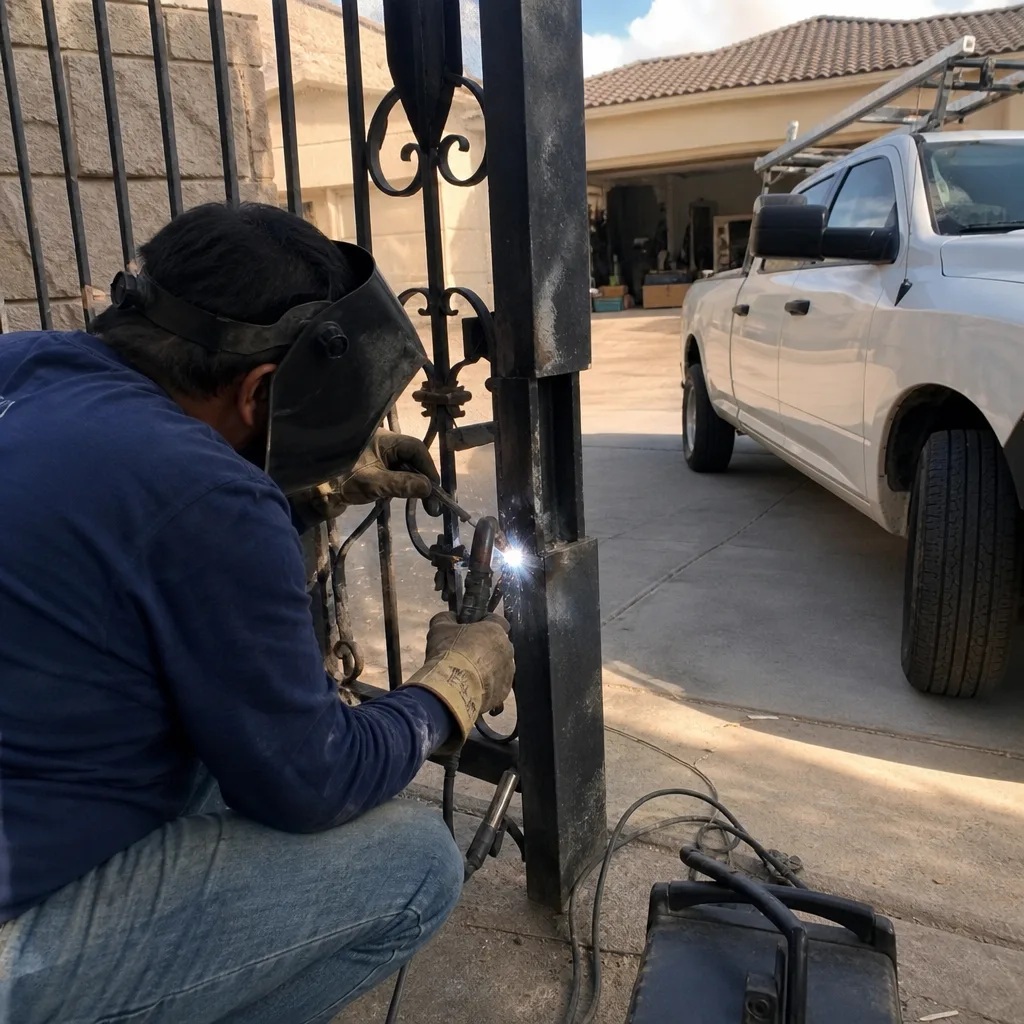
Not all rust matters. Steel gates in the desert Southwest will always show some surface rust, especially near the ground and on the lower rail. The question is whether the rust is sitting on top of the metal or eating through it.
Here’s the test that separates the two, and it’s the one a technician uses first:
- Poke it. Press a screwdriver tip into the rusted area. If the steel feels solid underneath, the rust is surface-level and cosmetic. If the tip sinks in or finds soft spots, the metal has thinned and the section is structurally compromised.
- Follow the edge. Cosmetic rust spreads in a patch. Structural rust follows a line – a seam, a weld bead, the bottom rail where water collects. A rust line along a weld is a much bigger concern than a rust patch on a flat panel.
- Look underneath. Surface rust is on the outside. If rust is bleeding out from inside a tube section or the underside of a rail, water has been trapped inside and the steel is rusting from within.
- Check for flaking and scale. Steel that has thinned produces flaky scale. Fresh surface rust is orange and slow. Flaking is a sign the metal has lost volume.
The practical benchmark: if you can dig a screwdriver into it, it’s structural. That section needs repair or replacement, not a coat of rust converter. Rust converters work well on cosmetic rust, and they’re a reasonable maintenance step. Nobody should paint over a soft spot and call it handled.
When to Stop Operating the Gate Entirely
Most gate issues are worth diagnosing but not worth panicking over. A drag, a rattle, a seasonal alignment problem – these can wait for a scheduled repair. A few conditions can’t. If you see any of the following, stop using the gate and get a professional out before you open it again:
- A visible crack through a weld or a frame section. Once the crack is open, the joint is no longer doing its structural job, and the gate could fail while it’s moving.
- A gate that drops or shifts when you push against it. Gate sag that moves under a light push means a weld or hinge is on the verge of giving way.
- A hinge pulling away from the frame or post. If you can see the hinge plate separating from its mount, load has already shifted to the other hinge, and that one is now the only thing holding the gate up.
- A gate that binds and shudders during travel, especially an automatic one. A gate that jars mid-swing is putting enormous force on its motor, its arm, and the frame all at once. Stop operating the automation and get it checked.
- Sharp metal or exposed weld edges within reach. A gate that has cracked or fractured is a serious pinch and laceration hazard. If any exposed edge is in reach of a hand or a child, keep the gate open and don’t move it.
We don’t give step-by-step repair instructions for structural welds on gates, and neither should a guide. A cracked weld or a failed hinge plate is a load-bearing failure, and welding or re-rigging it requires a professional. The safe move is to stop operating the gate and have a technician inspect it. In the meantime, a gate that’s failing on a weld can usually be propped in the open position and latched there safely.
How Boulder City’s Climate Accelerates Gate Wear
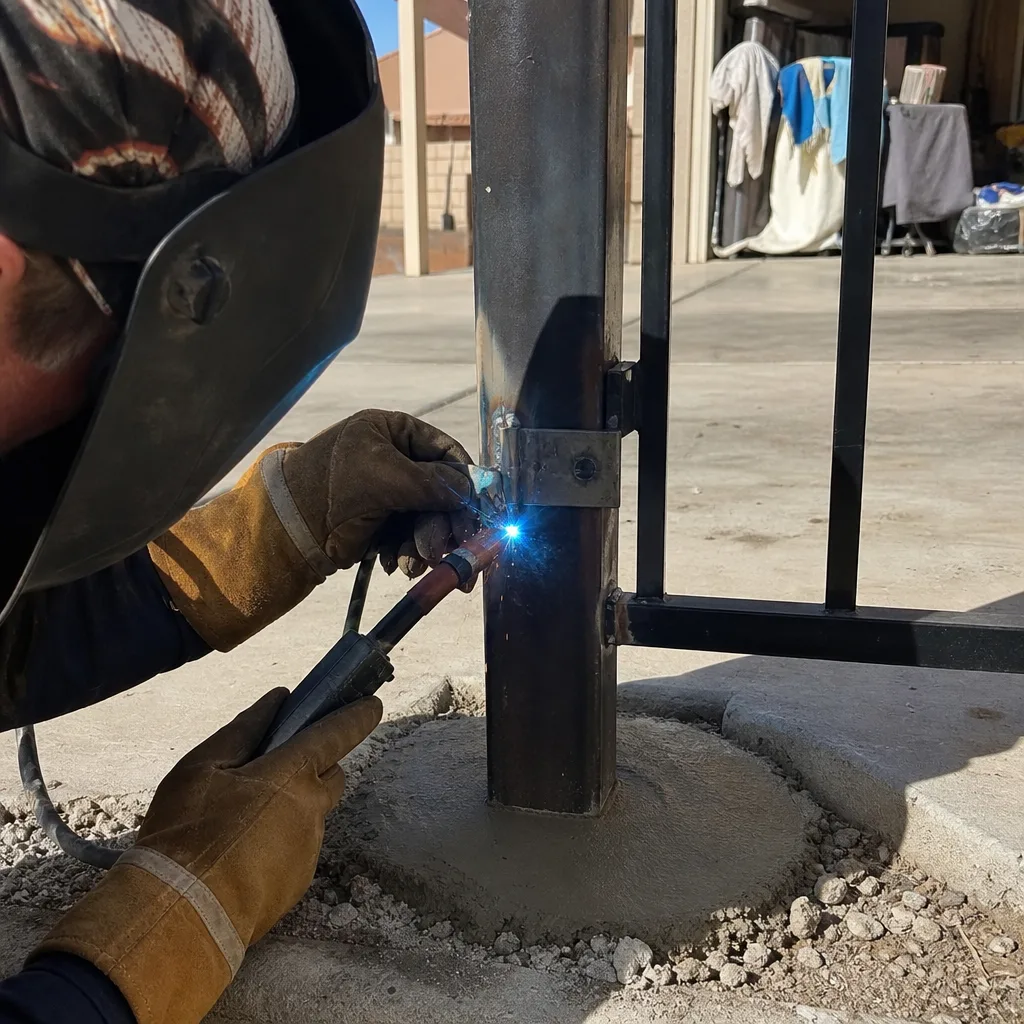
Boulder City sits on the dry side of the Mojave at around 2,500 feet, near Lake Mead and the edge of the Eldorado Valley. That setting creates a specific gate-wear pattern you won’t see in wetter climates, and it’s worth knowing because the visible symptoms show up in different places here.
The heat expands steel. A gate in Boulder City can move several sixteenths of an inch in a day, and a gate that runs on a post set in a footing on our thin desert soils can develop seasonal alignment that goes beyond what a homeowner would expect anywhere else. UV fades and hardens powder coat, which is why paint cracking on Boulder City gates often starts on the sun-facing side before a weld shows any sign of fatigue.
Summer heat is hard on hardware. Bolts, hinges, and operators all take a beating in July and August, and we regularly see gates in Boulder City where the winter weather was the tipping point – a loosened hinge or a hairline weld crack that opened up after a few months of thermal cycling. Wind is the other factor. Boulder City’s spring and early-summer gusts load the gate laterally in a way the frame wasn’t designed for, and that lateral load is exactly the kind that can crack a marginal weld. On gates with swing operators, that combination of heat, wind, and frame flex also throws off the limit switches over time. Our gate installation in Boulder City page covers the mounting and footing practices that prevent it.
Common Mistakes to Avoid
- Tightening loose bolts and calling it fixed. If a bolt loosens again within a month, the real issue is frame movement, not hardware. Tightening it a third time just hides a structural problem and delays a proper inspection.
- Adjusting a hinge to fix a drag. A drag that appeared over the last six to twelve months in a Boulder City gate almost never comes from the hinge. Look for the weld crack first, or you’ll keep adjusting the wrong part until something fails.
- Painting over rust without testing it. Rust converter and paint work well on surface rust. Put them over a soft spot and you’ve hidden a load-bearing problem from yourself and from the next technician who inspects the gate.
- Running an automatic gate that binds. A gate that has started to bind doesn’t just strain the frame – it wears out the motor and can throw off the limit switches. On an automatic gate with a cracked weld or a failing hinge, the automation compounds the damage.
- Assuming a rattle is normal. Gates do make noise, and some of it is expected. A rattle that started recently and gets worse with wind is a redistribution signal, and it’s worth diagnosing before the frame moves further.
- Waiting until the gate won’t close. A gate that runs to the end of its travel and stops closing cleanly is usually the last stage of a problem that started months earlier. The earlier it’s caught, the cheaper the repair.
- Getting a verbal estimate for structural work. If a gate has a cracked weld, you want the scope in writing – and that’s exactly the practice we work under. Every job from Vance Gate Repair Boulder City gets a written price before work starts and a photo record of what was found and what was repaired.
See the difference
BeforeAfter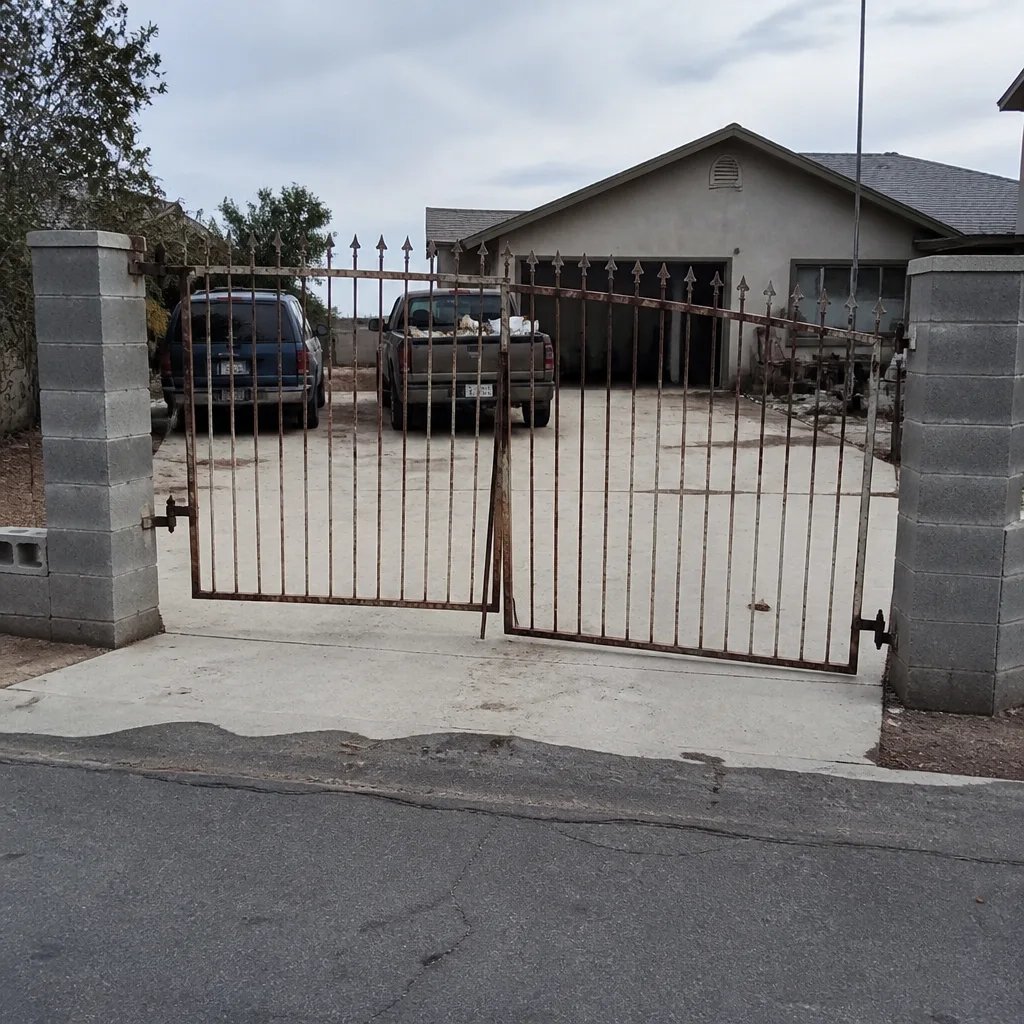 Before
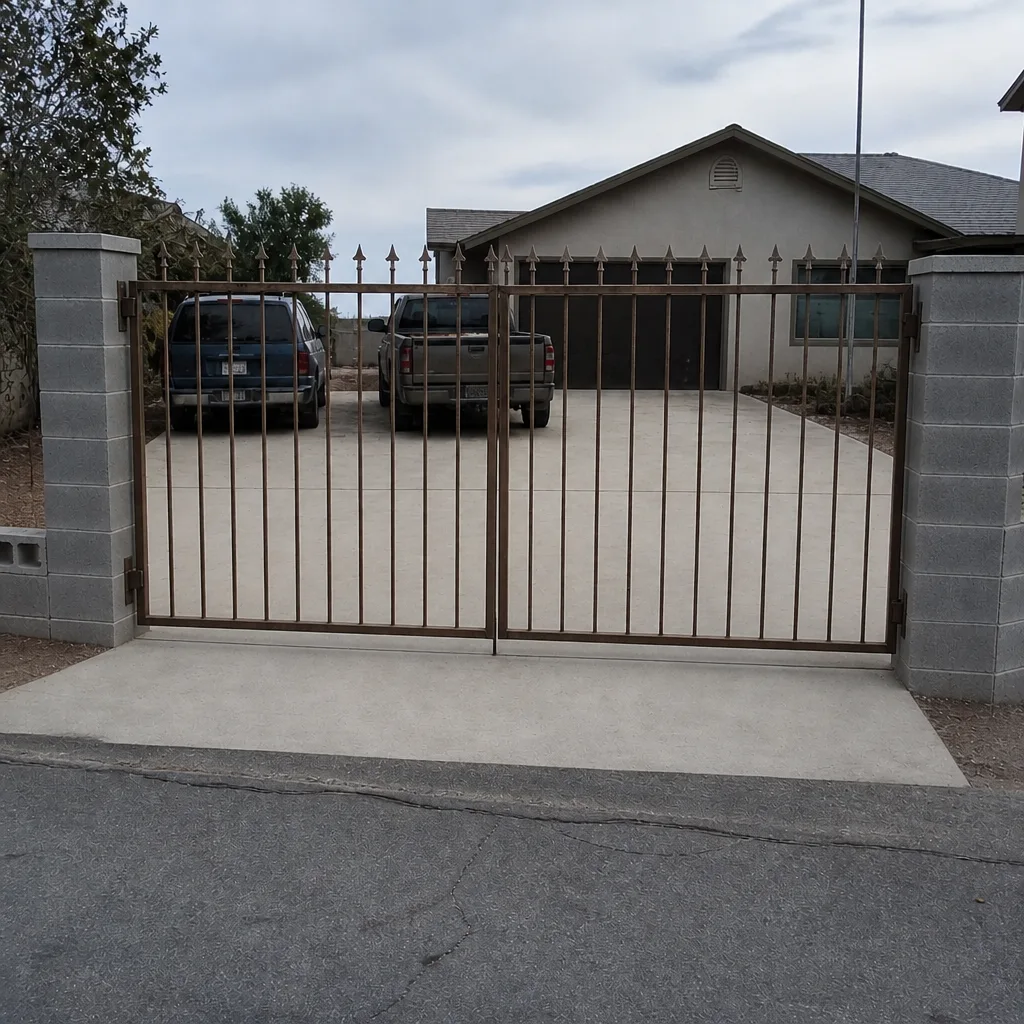 After
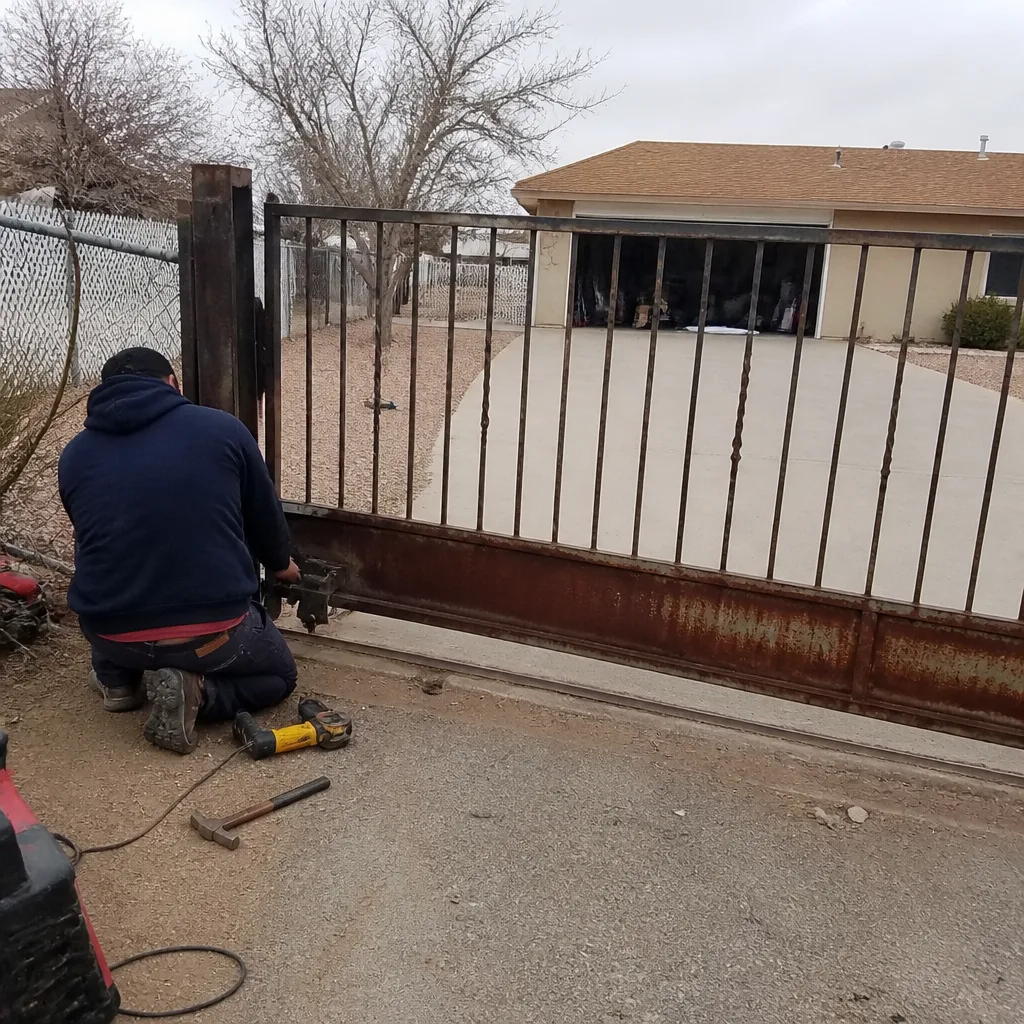 Before
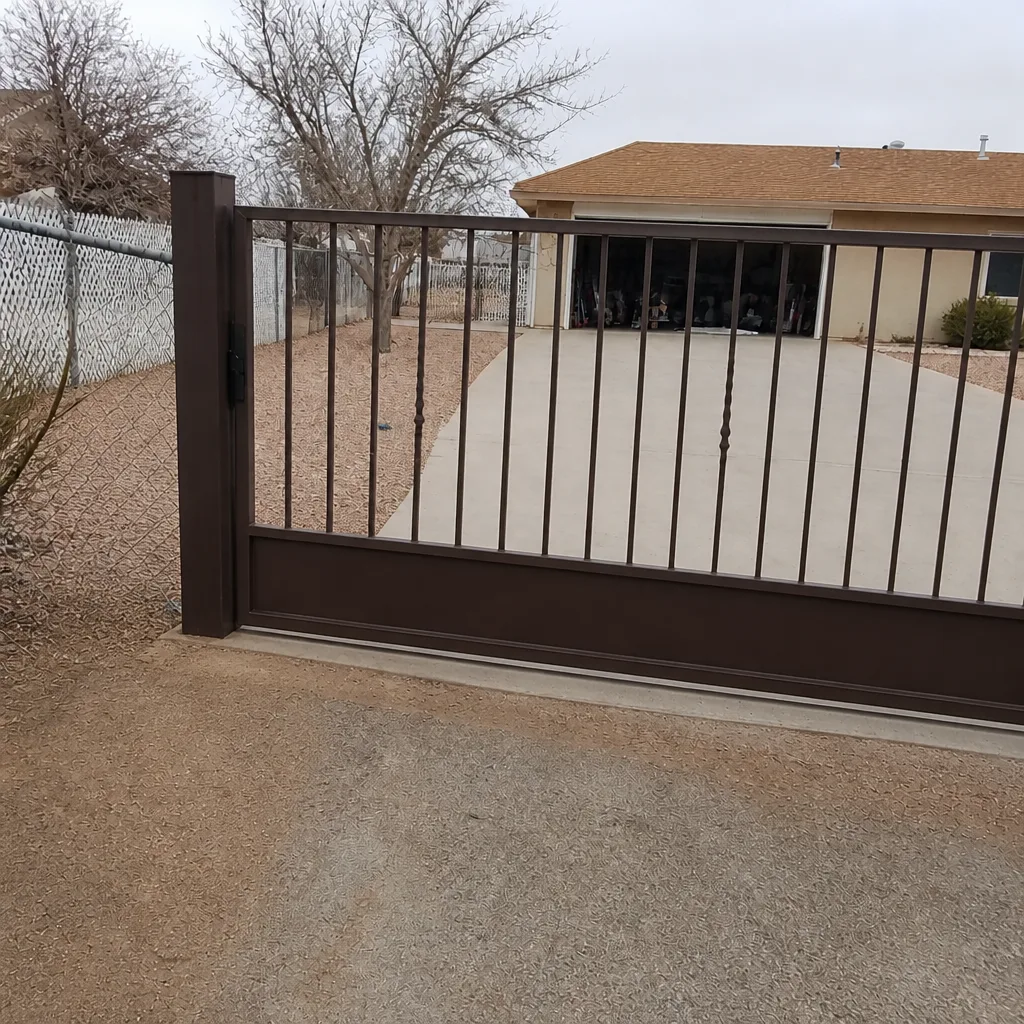 After
When to Call a Professional
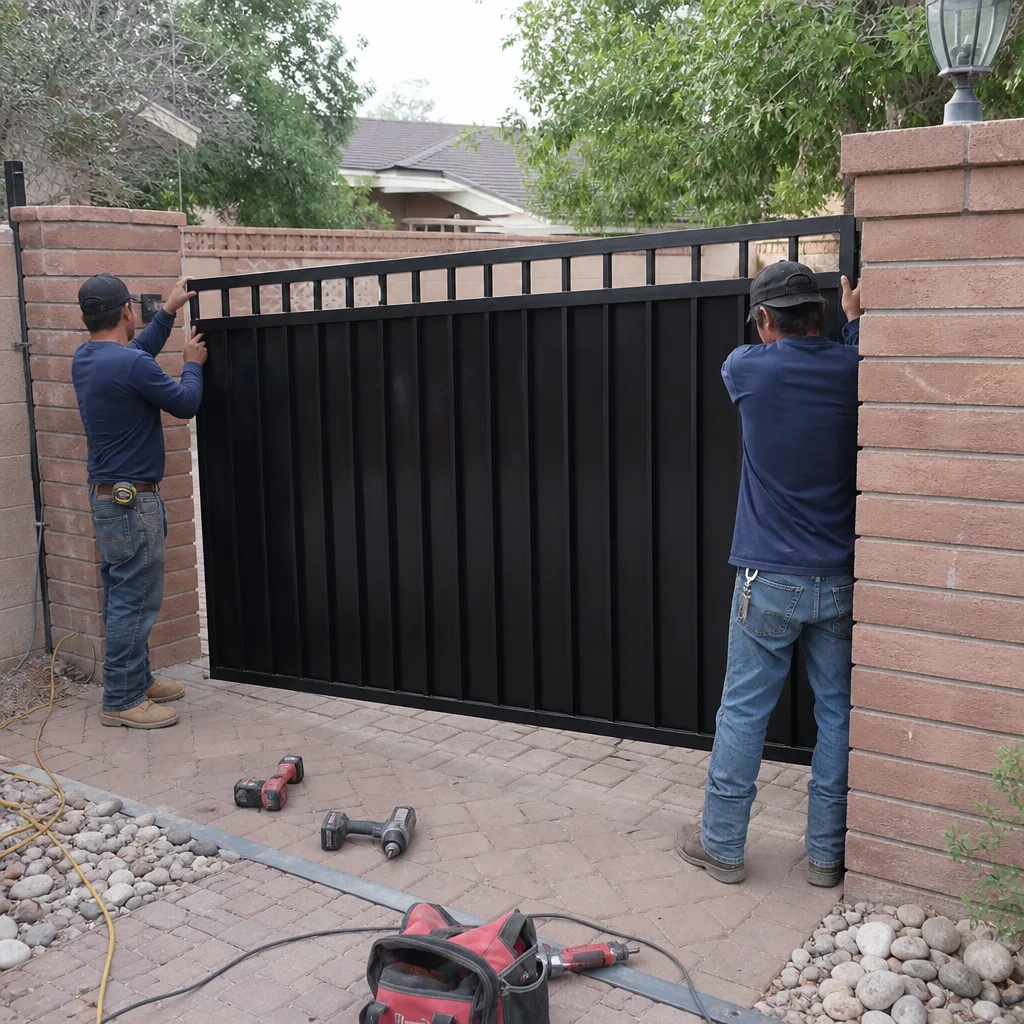
Call us when you see any of the following: an open crack in a weld or frame, a hinge that’s pulling away from the frame or post, a gate that shudders during automated travel, or bolts that keep loosening after two or three tightenings. A dragging gate that continues to drag after you’ve checked the obvious hardware is also worth a look, because that drag is often the last visible symptom before a weld fails. The same goes for any gate that’s developed a rattle or a seasonal alignment shift – you’ll know within a month whether it’s cosmetic. We service the major automation brands you’re likely to see on Boulder City gates, including FAAC, BFT, Linear, and Viking, so if the frame problem has also thrown off the operator, we can sort both together. Vance Gate Repair Boulder City offers free estimates in Boulder City – call (844) 320-7587, and a live person will answer at any hour.
Frequently Asked Questions
Rust tracking in a line along a weld bead or paint cracking perpendicular to a joint are the two most reliable signs. Either means the weld has flexed enough to break its coating, which allows water in and usually means the joint has lost some of its structural stiffness. If you see either, get the weld checked before the gate is used again.
No. A cracked weld on a gate is a load-bearing failure, and re-welding or re-rigging it safely requires a trained technician with the right equipment and knowledge of how the gate is loaded. Operating a gate with a failed weld is a real safety hazard. Call us at (844) 320-7587 and we’ll inspect it.
Because the two pieces of metal they clamp are moving relative to each other. That’s usually a sign of a flexing frame, a cracking weld, or a hinge plate pulling its anchors – not a hardware problem. Loosening that repeats within weeks of tightening is the classic redistribution signal.
Poke the rusted steel with a screwdriver. If the steel feels solid underneath, it’s cosmetic. If the tip sinks in or finds soft spots, the metal has thinned and the section is compromised. Rust that tracks along a weld seam or a bottom rail is more concerning than rust in a flat patch, because it means water has been getting into a joint.
It can. Boulder City’s summer heat and seasonal temperature swings expand and contract steel all day, and spring wind gusts push load on the gate sideways – the exact kind of stress that can widen a marginal weld over time. If your gate is showing a new drag or rattle after a windy season, that’s worth having checked.
Only if the sign is one of the stop conditions: an open crack, a gate that drops or shifts when you push it, a hinge pulling away from its mount, or a gate that shudders during travel. A rattle or a slight drag should be diagnosed but doesn’t necessarily mean shutting the gate down. When in doubt, keep the gate open and latched until we can take a look.
The Bottom Line
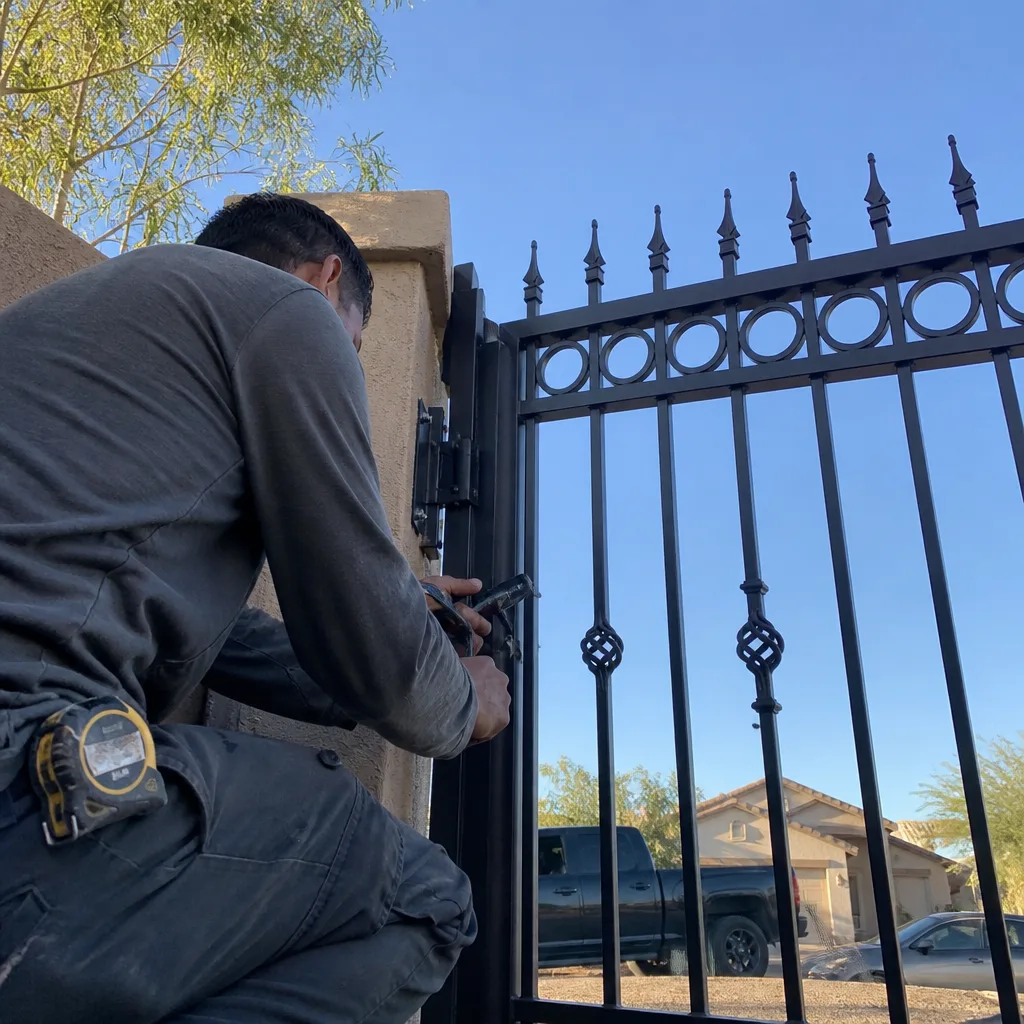
Gate structural failure rarely announces itself at the part that first goes bad. It shows up as drag, rust, or a loose bolt somewhere else – a sign that load has been redistributed onto a component that wasn’t built for it. So watch for three things: drag that wasn’t there six months ago, rust or paint cracking that follows a weld line, and hardware that re-loosens after a fix. Any one of them is worth a professional inspection. Any combination of them is a stop-and-look. And if you see an open crack, a hinge pulling away, or a gate that shudders during travel, stop operating it and call someone.
If you’re dealing with any of these signs on a gate in Boulder City, we’re happy to take a look and hand you a written price before anyone picks up a tool. For a wider view of what we handle on residential and light commercial gates, start at our Vance Gate Repair Boulder City home page, or call (844) 320-7587 for a free estimate – a live person answers at any hour.
Written by the team at Vance Gate Repair Boulder City.