
Last updated November 18, 2026
 Wrought iron
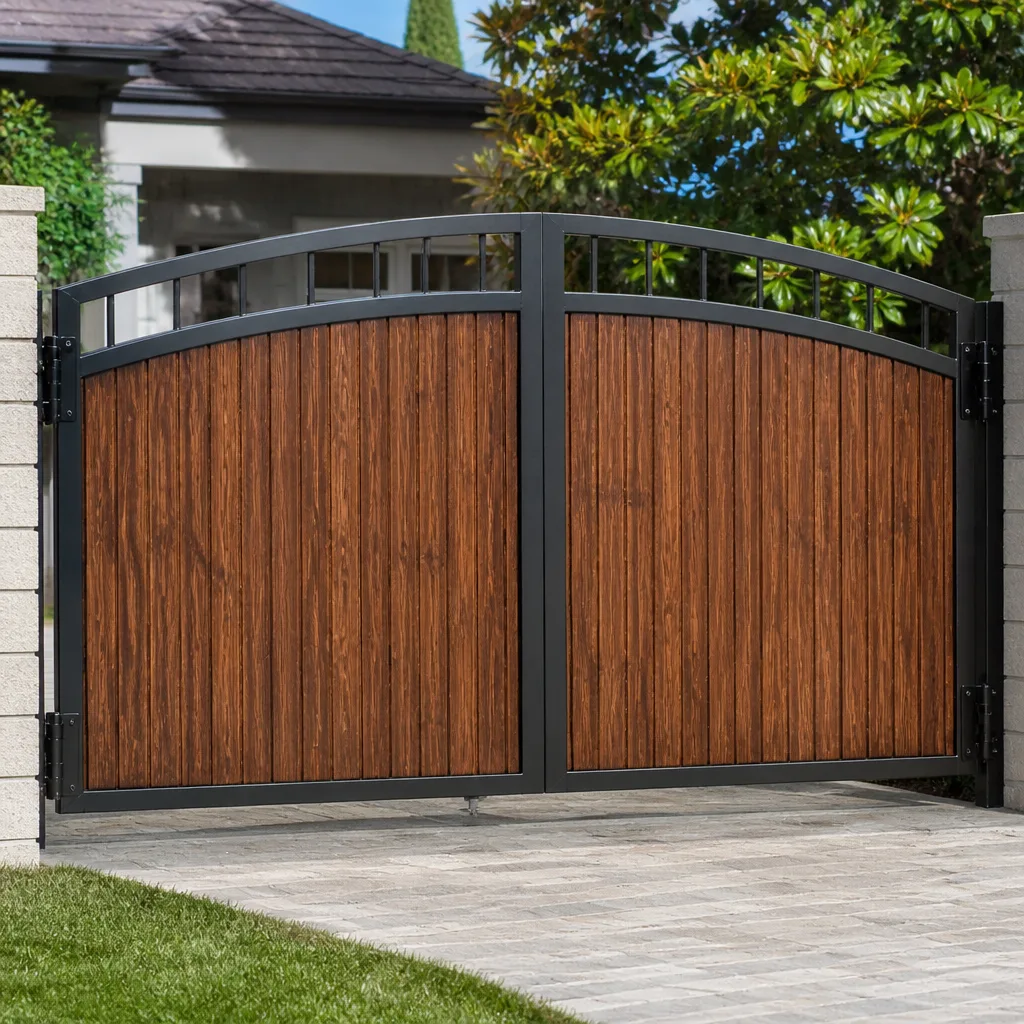 Wood & steel frame
 Farm & ranch
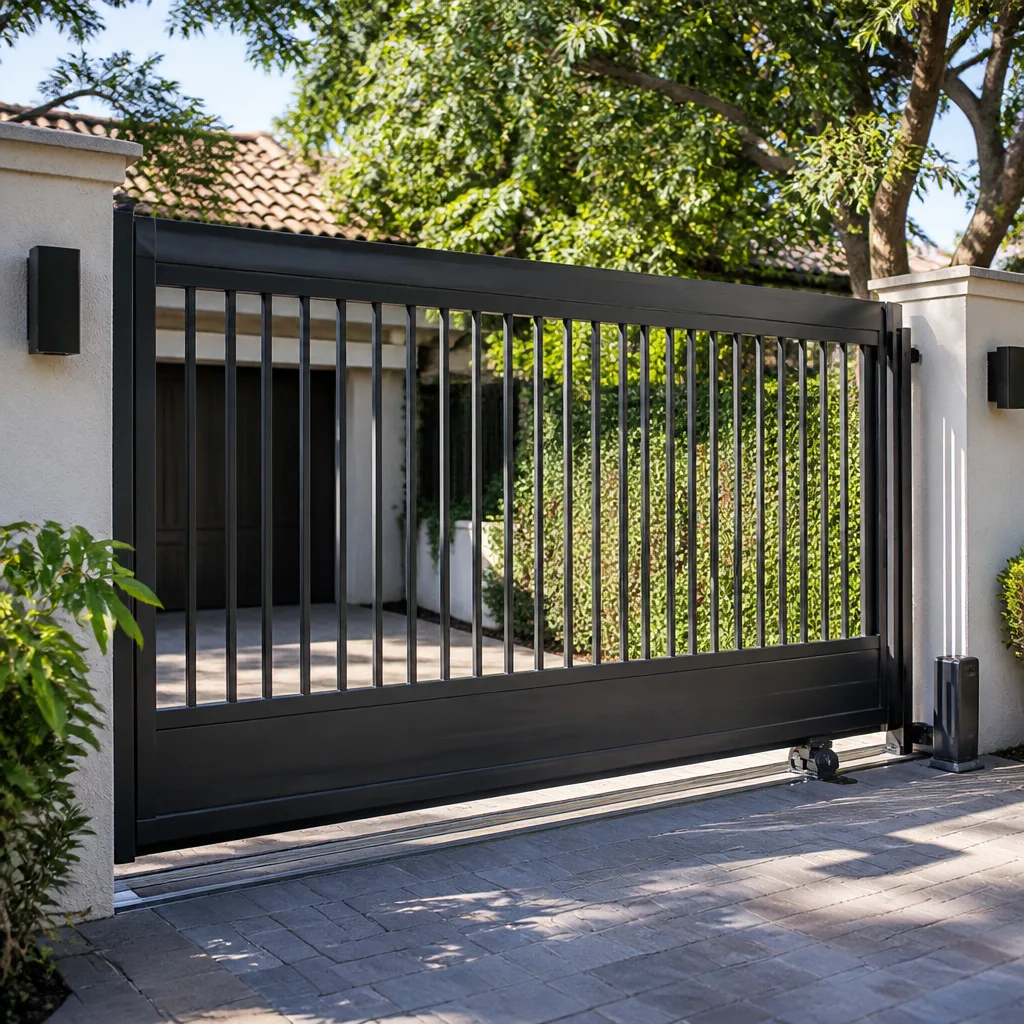 Sliding driveway gates
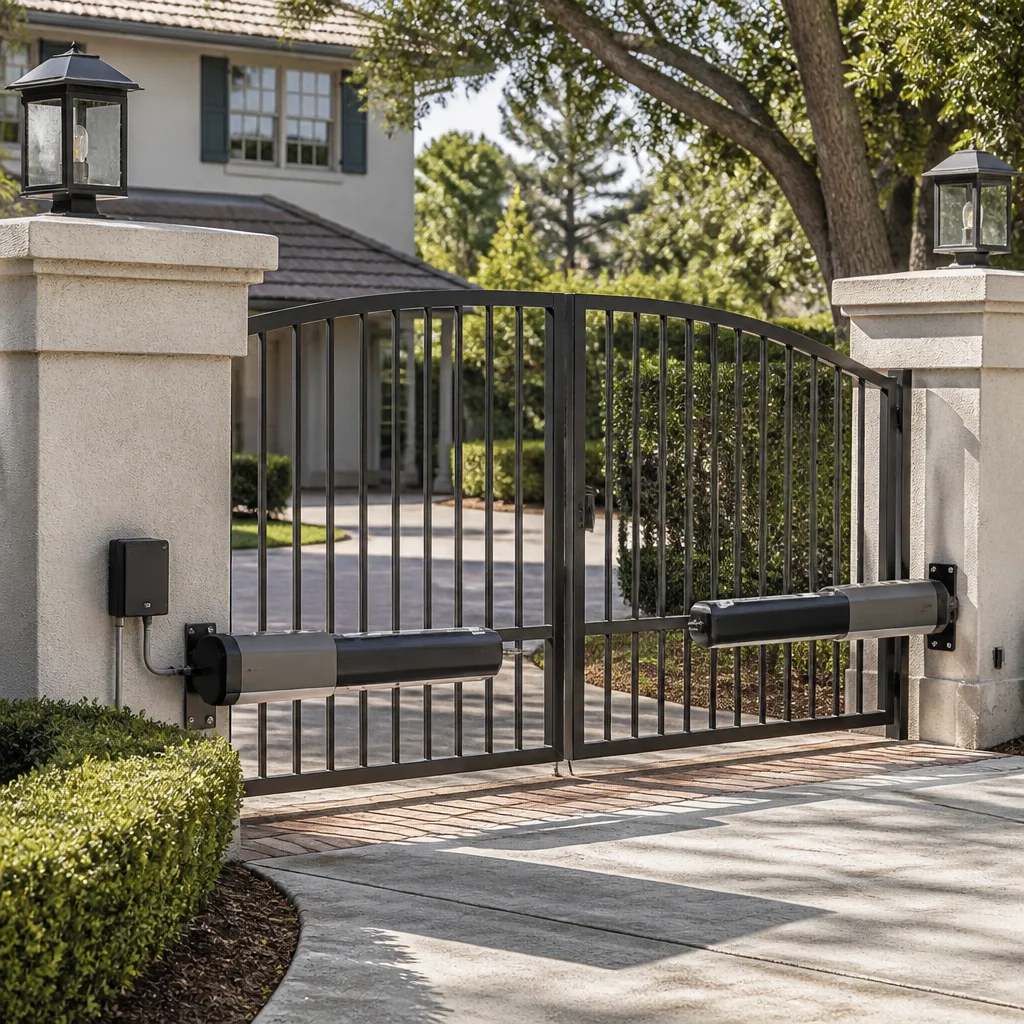 LiftMaster operators
Free on-site gate assessment - hinges, posts, and your LiftMaster or Nice gate operator checked before anything is quoted
The assessment is free and the quote is the invoice.
Get your free estimateGate Repair Maintenance Checklist for Boulder City Homeowners
Checking a gate without recording what you found is the same as not checking it. The next person starts from zero either way. We’ve opened control boxes in Boulder City where a previous technician had clearly adjusted a limit switch, but left no note, no photo, no reading, so the diagnosis began at square one and the homeowner paid twice to rediscover the same fault. This guide is built differently. Every item below ends with a measurement, a photo, or a written number, so your gate builds a history instead of resetting every year. You’ll get a quarterly and annual split matched to Boulder City’s two hard seasons, and the exact format a future technician can actually use.
Quick Answer
A gate maintenance checklist for Boulder City should combine a quarterly visual-and-functional pass with an annual deep check, and every item must produce a recorded value (limit-switch position, travel time, amp draw, photo) rather than a checkbox. Because Boulder City swings between peak desert heat and hard-freeze nights, the checks that matter most are UV-damaged rubber seals, caliche dust in control boards, and thermal movement at hinge plates. Record what you find, store it where the next technician can reach it, and your gate stops failing the same way twice.
Styles & brands we work with
- Wrought iron
- Wood & steel frame
- Farm & ranch
- Sliding driveway gates
- LiftMaster operators
Table of Contents
- Why a Checklist Without a Record Fails
- Visual Check vs. Functional Baseline
- Boulder City Conditions That Wear a Gate
- The Quarterly Checklist
- The Annual Deep-Check Checklist
- How to Record Findings a Future Technician Can Use
- Common Mistakes to Avoid
- When to Call a Professional
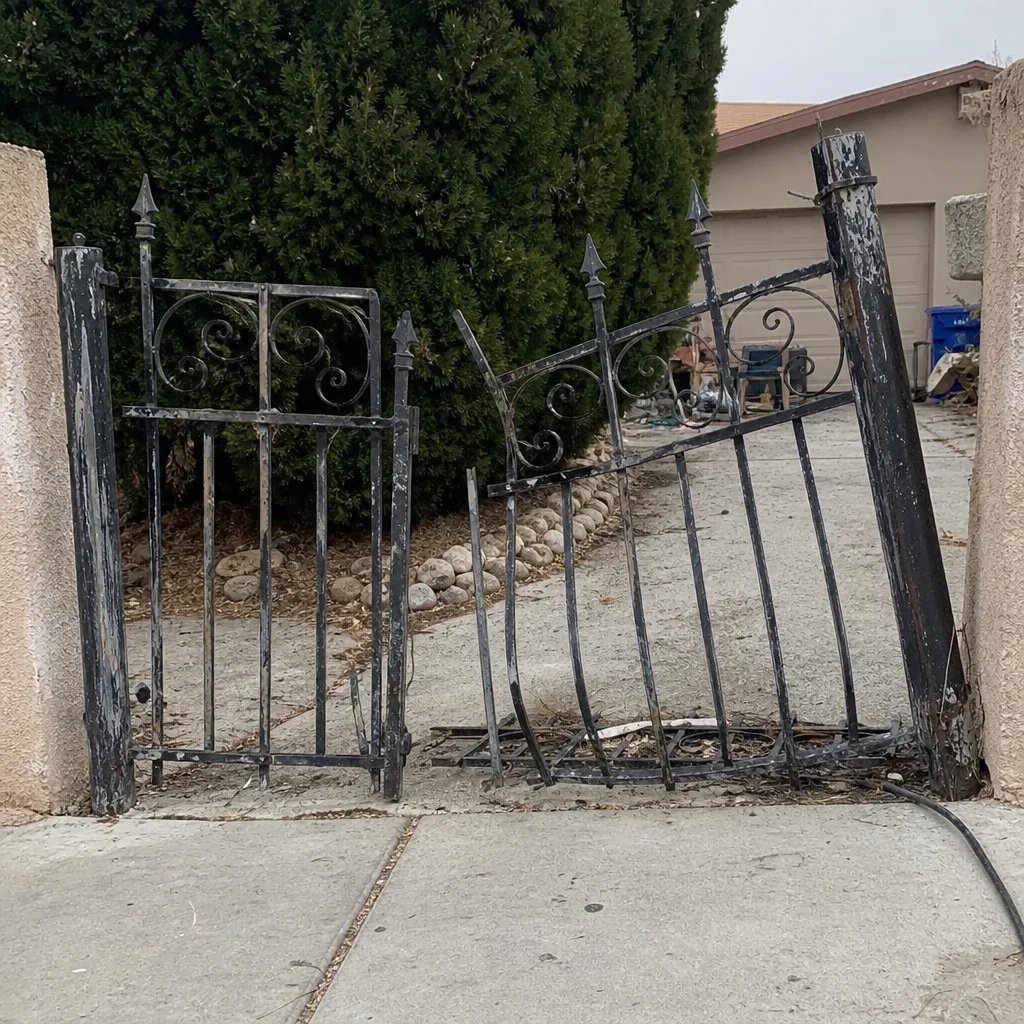 Before
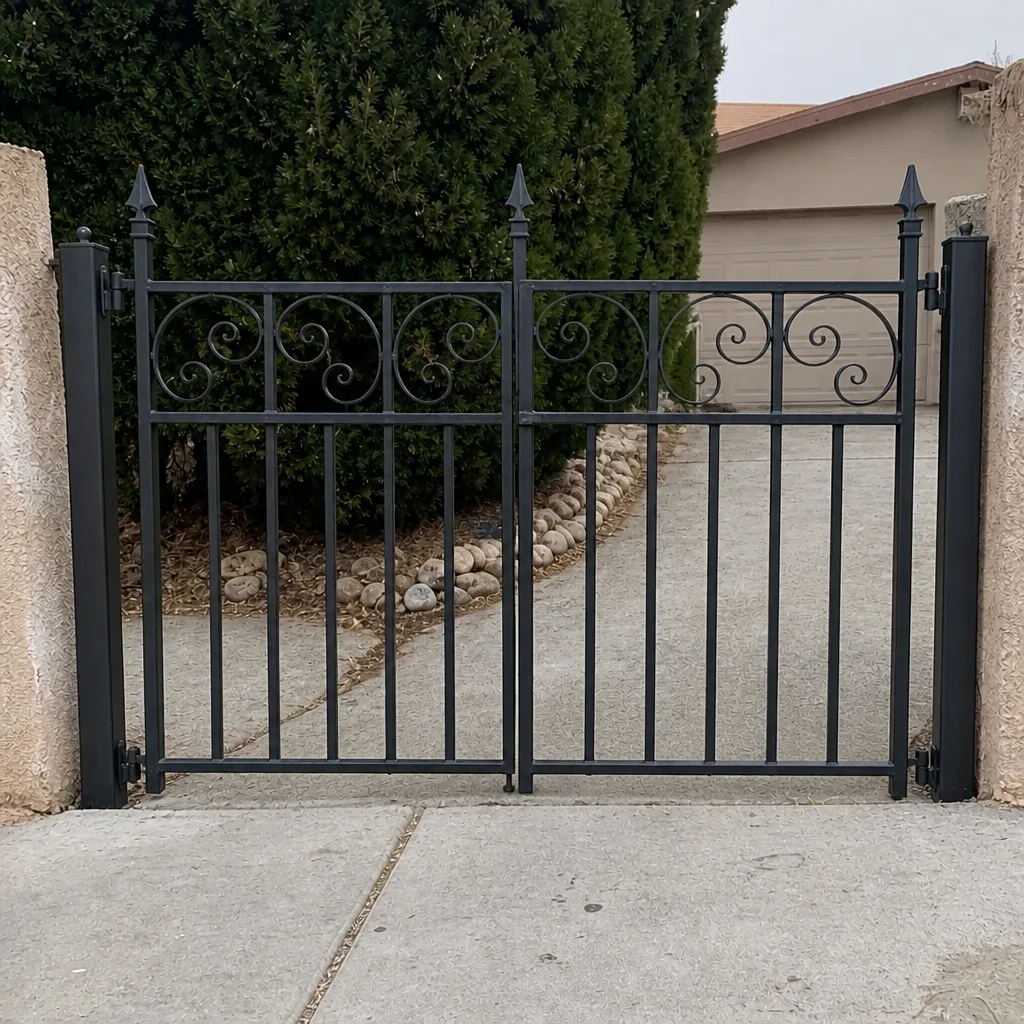 After
Why a Checklist Without a Record Fails
A task list tells you what to touch. A record tells you what changed. Those are different jobs, and only the second one saves you money. Consider a limit switch (the component that tells the motor where the gate should stop). If you glance at it and think “looks fine,” you’ve learned nothing you can act on later. But if you photograph it and note that the arm sits at a specific angle, then six months from now you can compare and see the drift before the gate starts slamming.
This is the habit we carried over from commercial access-control work, where a gate on a property with no record is a liability. On residential driveways in Boulder City, the same principle holds at a smaller scale: a gate with a written history is cheaper to own than a gate with a memory.
Under The Haven Standard, every visit we make produces a documented photo record of what was found, what was adjusted, and what was replaced. You don’t need our truck in the driveway to work the same way. You need a phone camera, a notebook or a shared folder, and the discipline to write the number down. When a repair is eventually needed, that record is what lets a technician skip the guesswork. Our gate repair service in Boulder City starts from exactly that evidence.
Visual Check vs. Functional Baseline
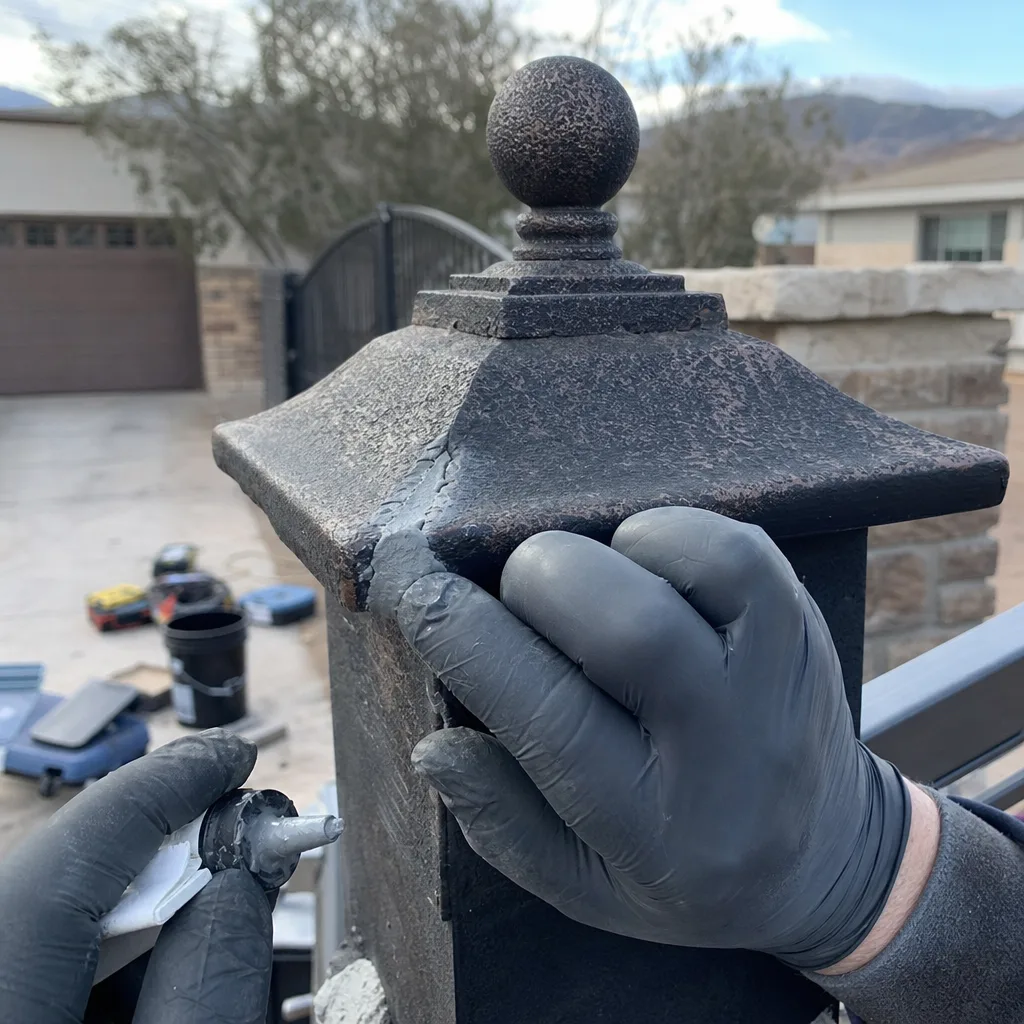
Most homeowners do a visual check and call it maintenance. A functional baseline is a different thing, and it’s the one that catches failures early. A visual check answers “does anything look broken?” A functional baseline answers “is this gate behaving the same way it did last quarter?” The second question flags a motor that’s drawing more current, a hinge that’s stiffening, or a seal that’s starting to bind, all before anything visibly fails.
Build your baseline around three measurements:
- Torque resistance: with the operator disengaged (use the manual release), push the gate open by hand. It should move with light, even resistance. Note in writing whether it felt smooth, stiff, or gritty. Stiffness that creeps up quarter to quarter means a hinge or roller is failing.
- Travel time: time the full open and full close cycle with a stopwatch. Write the seconds down. A gate that took 14 seconds last spring and takes 18 now is telling you the operator is working harder than it should.
- Photo reference points: shoot the same four angles every time: the hinge plates, the limit switch or encoder area, the photo-eye alignment, and the control board. Same distance, same light. Side-by-side photos over a year will show drift you’d never notice in person.
That third item is where most checklists fall apart. A photo taken from a different angle each time is useless. A photo taken from the same spot becomes a measurement. If your gate runs a Ghost Controls or Elite operator, the control board layout is stable enough that a repeatable board photo will show you dust buildup and corrosion before either becomes a fault.
Boulder City Conditions That Wear a Gate
Boulder City is hard on gate hardware in ways that a generic national checklist won’t catch. Three local conditions deserve their own line items.
UV degradation on rubber seals. Desert sun breaks down the rubber weather seals around the operator housing and the gate frame faster than almost anywhere else. When a seal goes chalky and starts to crack, fine grit gets inside and works on the motor bearings. Check the seals by hand each quarter: they should feel supple, not brittle. A cracking seal is a cheap fix now and an operator replacement later.
Caliche dust intruding into control boards. The alkaline dust that blows off Boulder City’s caliche soil is fine enough to settle inside control enclosures, and it’s mildly corrosive when it combines with morning condensation. That film across a circuit board is the single most common cause of intermittent faults we find on local gates. A quarterly look inside the enclosure (with power off) and a photo of the board keeps you ahead of it.
Thermal expansion gaps at hinge plates. Boulder City summers push metal to extremes, and hard-freeze nights in winter contract it back. Hinge plates and gate frames move with that cycle. Bolt torque that was correct in July can be loose by January. Check the hinge bolts each season and record which ones needed attention; a bolt that keeps loosening is a sign of a worn bushing, not just vibration.
If you’d rather have a technician read these conditions on your specific gate, our gate motor and opener service in Boulder City covers exactly this kind of inspection. The Vance Gate Repair Boulder City home page lays out the full range of what we handle.
The Quarterly Checklist
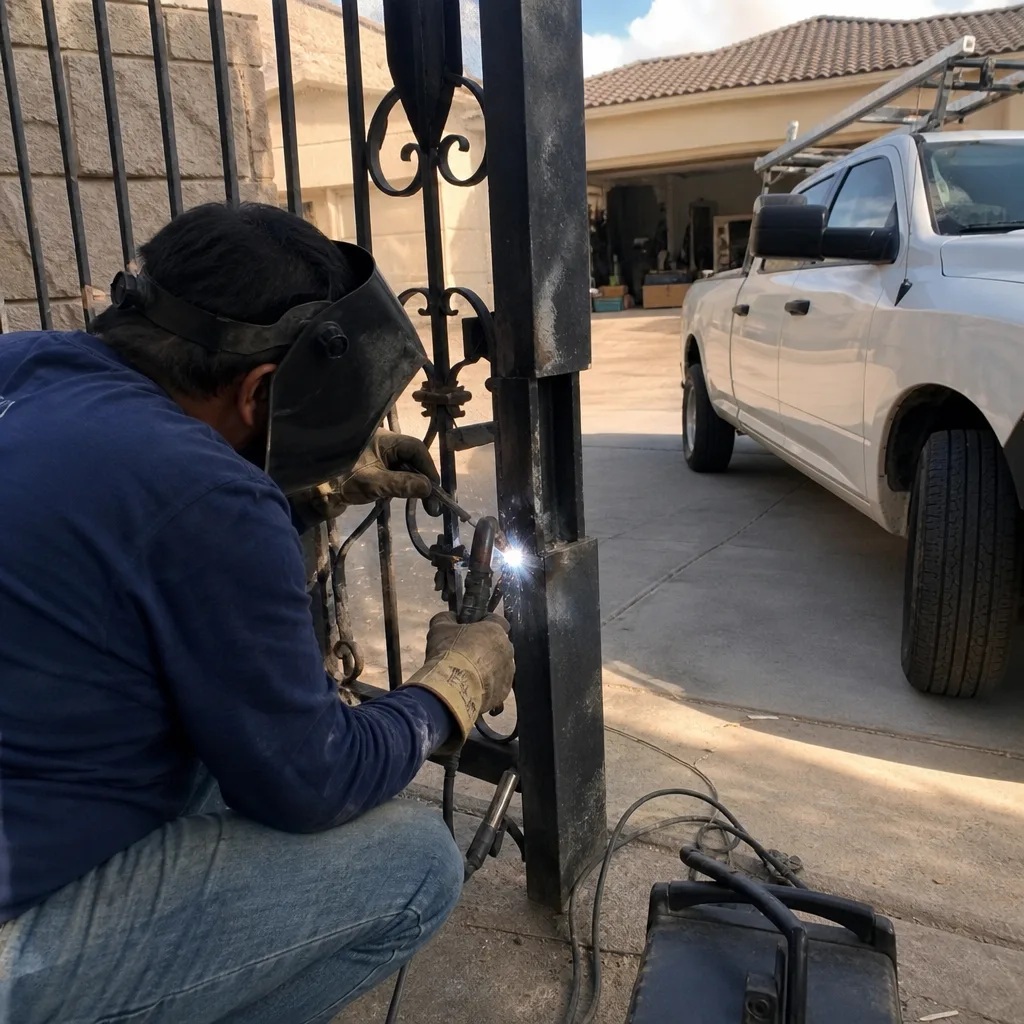
Run this four times a year, and time one of them to the shoulder season (spring or fall) so it lands between the two hard seasons rather than in the middle of one. Each step ends with something written or photographed.
- Disengage the operator and push the gate by hand. Record smooth, stiff, or gritty, plus any point where it binds. Photograph the hinge plates before you start.
- Time a full open and close cycle. Write the seconds down next to the date. Compare to last quarter.
- Inspect every rubber seal by hand. Note any that are chalky, cracked, or pulling away. Photograph the worst one.
- Check the photo-eye alignment. The photo-eye is the infrared beam that stops the gate if something crosses its path. Break the beam with your hand and confirm the gate reverses. Record pass or fail.
- Power down and look inside the control enclosure. Photograph the board. Note any visible caliche dust or corrosion film.
- Check hinge and bracket bolt torque. Note which bolts needed snugging. A repeat offender gets flagged for a bushing check at the annual service.
- Test the manual release. Confirm it works smoothly and that you can re-engage the operator afterward. Record it.
- Photograph the four standard angles. Hinge plates, limit switch or encoder area, photo-eye, control board. File them with the date.
That’s roughly 30 minutes per quarter for a typical swing gate. The value isn’t in the tasks, it’s in the eight recorded results you now have to compare against next time.
The Annual Deep-Check Checklist
The annual pass goes further than the quarterly one. It’s the check where you look for slow wear that a visual inspection can’t see. If you’re not comfortable opening the operator housing or reading electrical values, this is the point to hand it to a technician, and there’s no shame in that. High-tension springs, capacitors, and live wiring inside an operator can hurt you, so the safety caveat here is real: don’t work inside a powered enclosure unless you’re trained and have isolated the power at the breaker, not just the switch.
- Compare a full year of quarterly photos. Lay the four board photos side by side and look for progressive dust or corrosion.
- Record motor amp draw. This is the current the motor pulls during travel, and rising amps over the year is the earliest sign of a failing bearing or a binding gate. Write the number down.
- Document limit-switch positions precisely. Note where each switch or encoder sits so a future adjustment can be compared to a known starting point. The most common repair we find in Boulder City is a limit switch that’s been nudged past its correct travel position, and a written baseline is what prevents that drift from going unnoticed.
- Inspect the operator’s internal seals and grease. Note the condition and whether the housing shows any moisture entry.
- Check the structural welds and post anchors. Look for cracks or movement at the frame joints and photograph anything suspect.
- Verify battery backup, if your operator has it. Record the test result and the date.
If the annual pass turns up something that needs correcting, from a loose anchor to a creeping amp draw, that’s a documented finding you can hand to any technician. For operators from brands like Viking or DoorKing, a written baseline makes a future repair faster and cheaper.
How to Record Findings a Future Technician Can Use
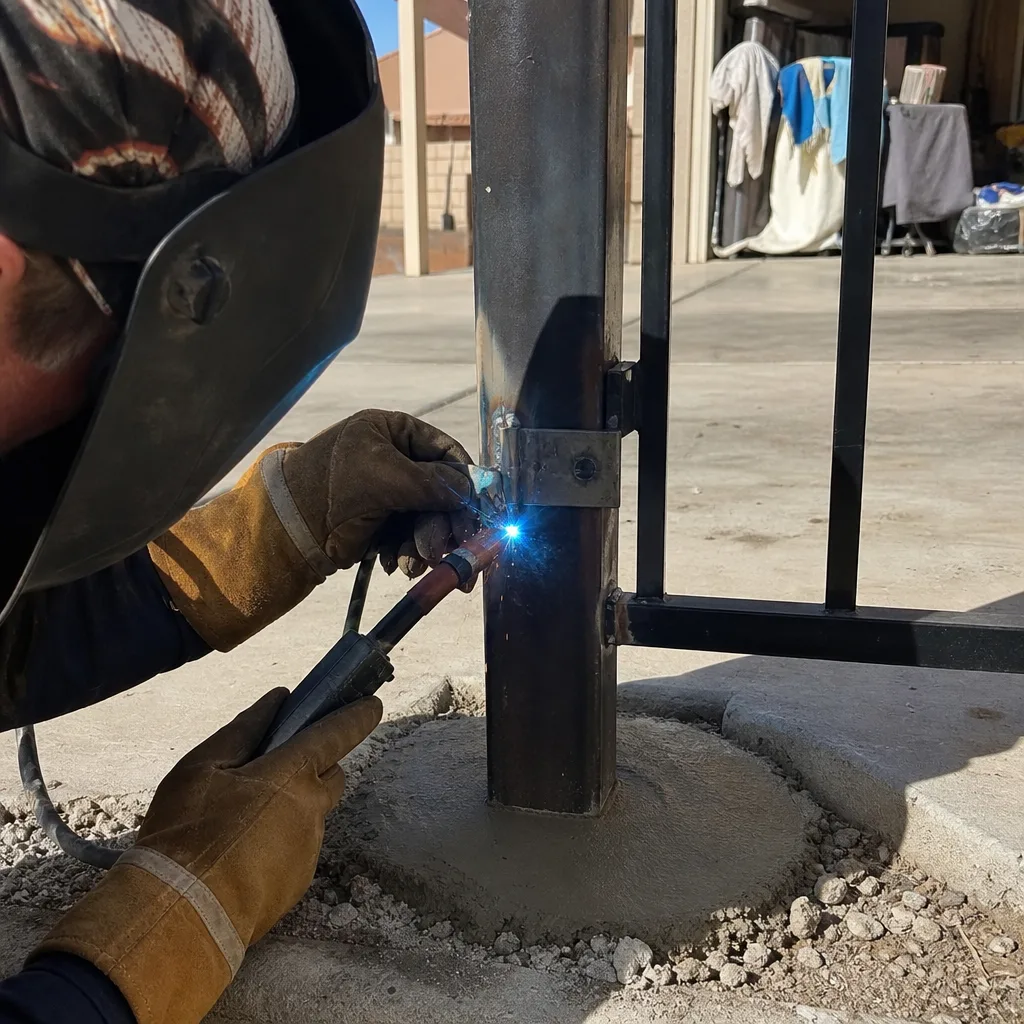
A record is only as good as its format. The goal is that whoever touches the gate next, whether that’s you in six months or a technician in two years, can understand it in under a minute. Here’s what that looks like:
- One folder per gate, one file per visit. Name files by date first (2026-03-14-hinge.jpg) so they sort chronologically without any effort.
- Four standard photos per visit, same angles. Hinge plates, limit switch or encoder, photo-eye, control board. Same framing every time.
- A one-line written log per item. Not “checked limit switch,” but “limit switch set, arm at rest against the closed stop, photo taken.”
- Every number, dated. Travel time in seconds, amp draw if you measured it, which bolts needed snugging. Numbers beat adjectives.
- A parts list when anything is replaced. The exact part number, so a future repair doesn’t have to reverse-engineer what’s on the gate.
Store the folder somewhere you’ll find it: a cloud folder shared with anyone who cares for the property, or a printed binder kept with the gate’s manual. The single most useful thing you can do is leave the most recent summary taped inside the operator housing, so the next person opening it finds a starting point instead of a blank page.
This is exactly the record we leave behind on every visit under Clause 4 (Evidence on every job). It’s also why our gate installation in Boulder City hands over a documented baseline at day one rather than after the first problem.
Common Mistakes to Avoid
- Checking without recording. A gate you inspected from memory last year tells a future technician nothing. If you don’t write the number down, the check didn’t happen.
- Photographing from a new angle each time. Boulder City homeowners often shoot a quick photo from wherever they happen to stand. Inconsistent framing makes comparison impossible, so pick four angles and stick to them.
- Ignoring caliche dust until the board faults. A little alkaline dust on a control board looks harmless. Combined with desert condensation, it’s the top cause of intermittent faults we find locally.
- Snugging hinge bolts without noting which ones. A bolt that loosens every quarter is a worn bushing, not a loose bolt. Recording which bolt keeps moving is what turns a nuisance into a diagnosis.
- Doing the annual electrical check without isolating power. Reading inside a live operator enclosure is genuinely dangerous. Always cut power at the breaker, not just the switch.
- Using the same schedule for a hard-freeze month as a peak-heat month. Boulder City’s two seasons stress the gate differently. One seasonal photo set each is what catches thermal movement before it cracks a weld.
- Treating a stiff gate as a motor problem. Rising travel time or stiffness usually points to a mechanical bind at the hinges, not the operator. Chasing the motor first wastes money.
When to Call a Professional
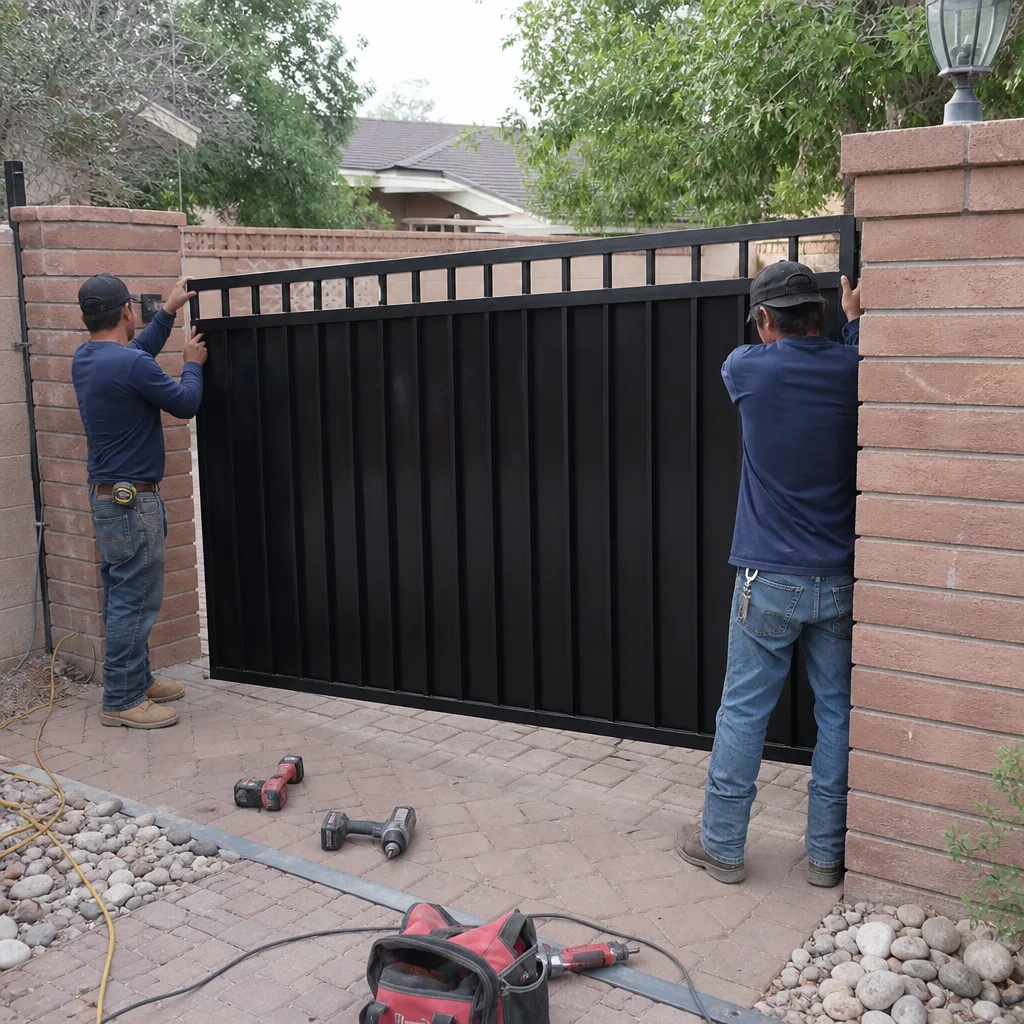
Some findings belong in a technician’s hands, and a documented checklist is what tells you when you’ve crossed that line. Call a professional if your recorded travel time has jumped noticeably with no change in conditions, if motor amp draw is rising quarter to quarter, if you find moisture or corrosion inside the operator housing, or if a hinge bolt keeps loosening after you’ve snugged it. Rising amps and creeping travel time are the two values that most often mean a bearing or an internal component is failing. Wear on structural welds or post anchors also warrants a look, because a gate that’s slowly shifting at the post is a safety problem, not just a maintenance one. Vance Gate Repair Boulder City offers free estimates in Boulder City and works on all the major automation brands already on your property, so you’re not steered toward a replacement when a repair will do. Call (844) 320-7587 for a free estimate, and bring your written record if you’ve been keeping one.
See the difference
BeforeAfter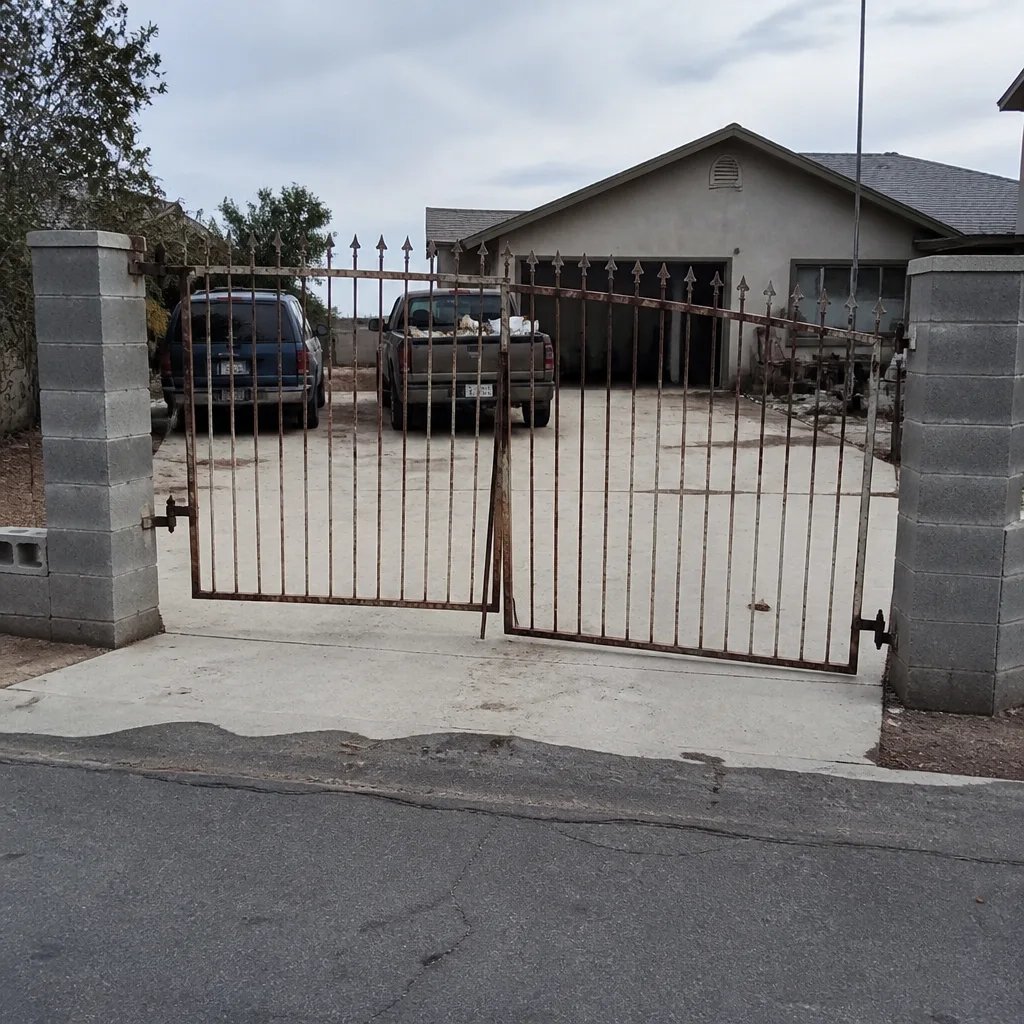 Before
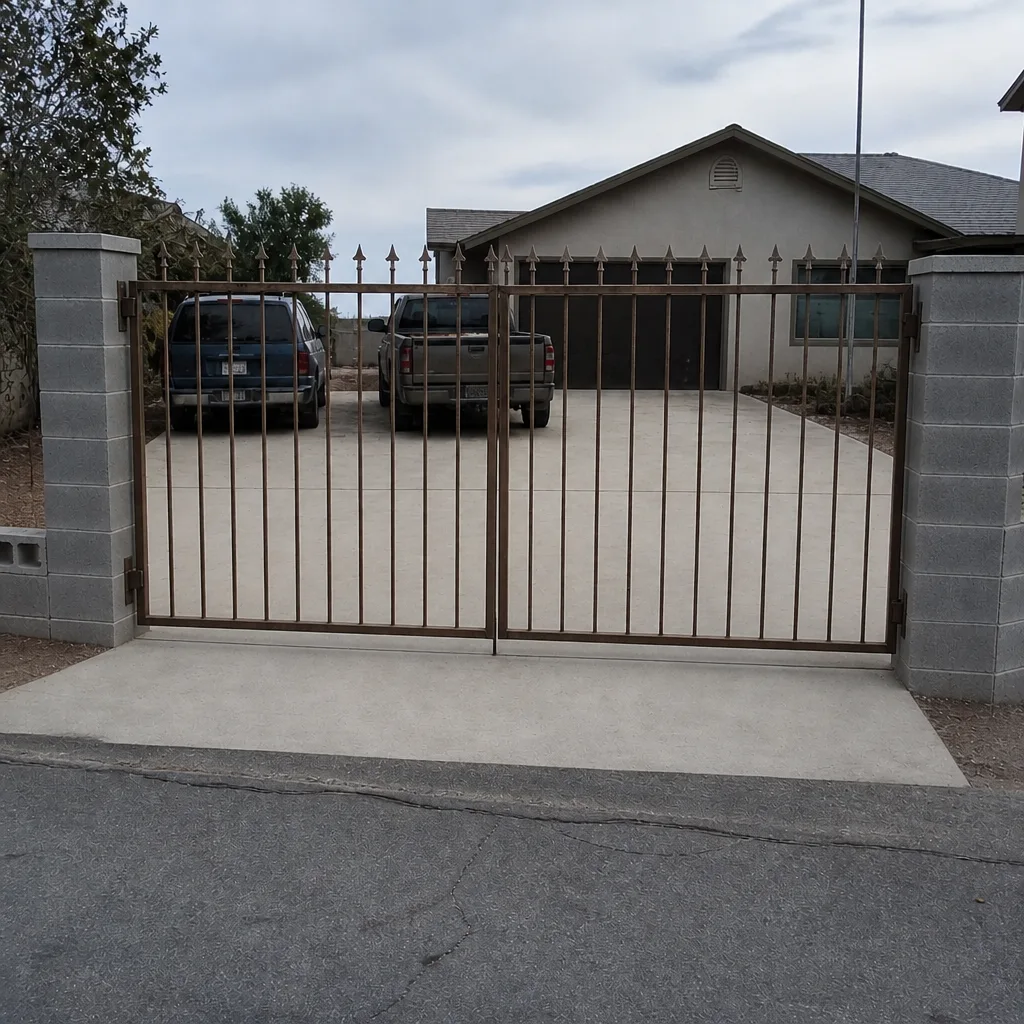 After
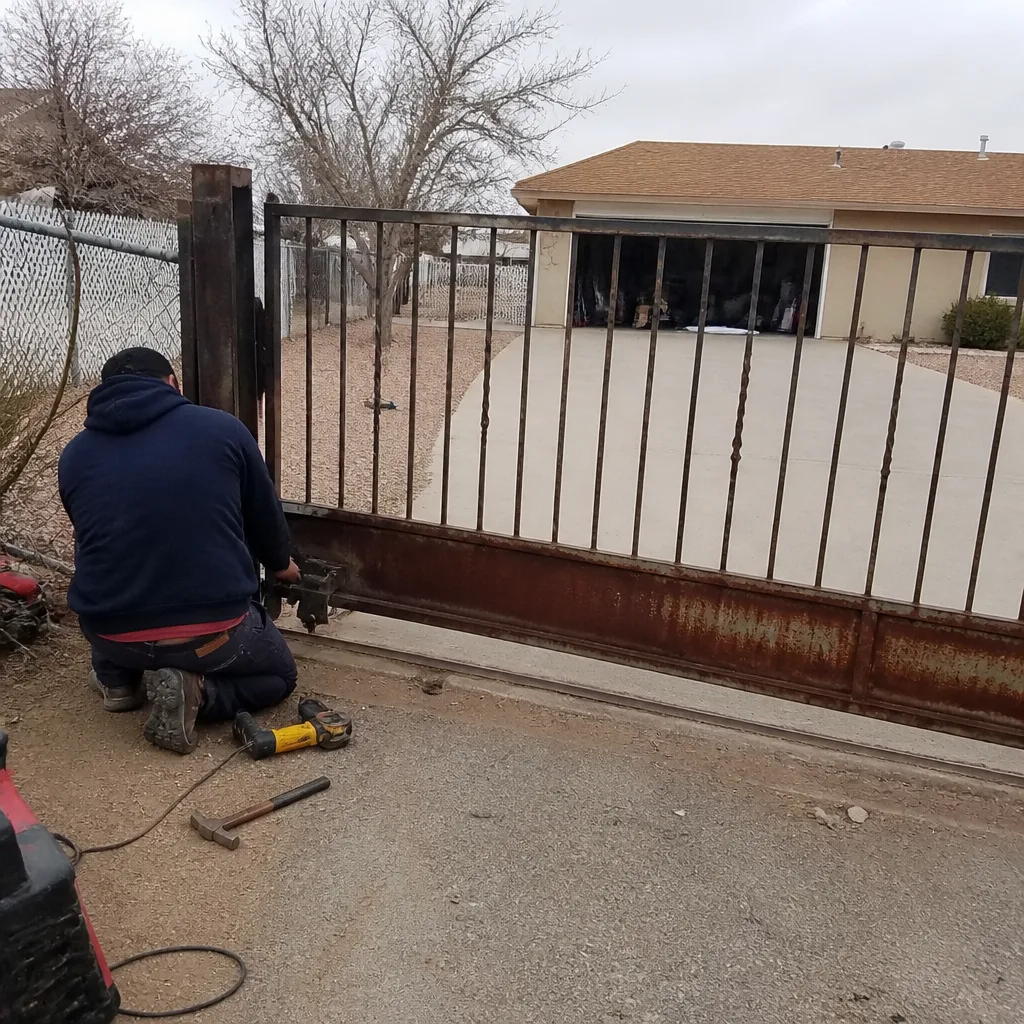 Before
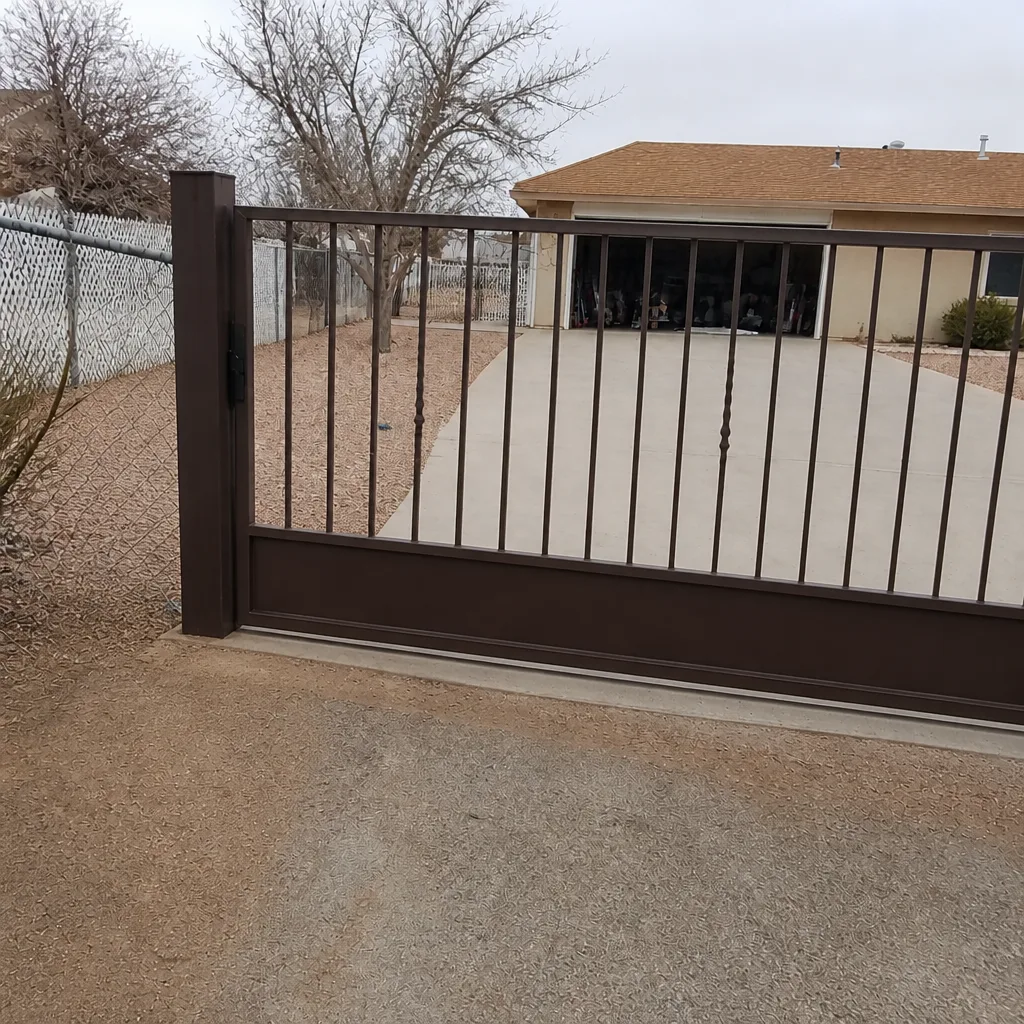 After
Frequently Asked Questions
Every quarter for the visual-and-functional pass and once a year for the deep check, timed so one pass falls in a shoulder season between peak heat and hard-freeze nights. Boulder City’s temperature swing is what sets the schedule: rubber seals and hinge bolts move with the seasonal swing, so four lighter checks catch more than one heavy check.
Record travel time in seconds, hinge torque notes, and four consistent photos at minimum, plus amp draw on the annual pass. The point of recording is comparison across time, not a checkbox for the day, so keep the same four angles and write the numbers down. Call (844) 320-7587 if you want a technician to establish the baseline for you, free of charge for an estimate.
Caliche dust is fine and alkaline enough to settle inside a control enclosure and turn corrosive when combined with morning condensation, and that film is the most common cause of intermittent faults we find on Boulder City gates. The fix is a quarterly look inside the box with power off plus a dated photo of the board. If you’re not comfortable opening the enclosure, have a technician do it.
Photograph the switch or encoder from a fixed distance and note the arm’s position against its stop in writing, so any future adjustment can be measured against a known starting point. Limit drift is the most common repair we see, and a photo baseline is what makes drift visible early. Call (844) 320-7587 if you’d like us to set and record the baseline correctly the first time.
Only if you’re trained and comfortable working inside an isolated, powered-down enclosure, because capacitors, live wiring, and mechanical tension can hurt you. Cutting power at the breaker, never just the switch, is the non-negotiable step. When in doubt, leave it to a technician trained on your operator brand.
Yes, because a written history lets a technician skip the guesswork and go straight to the fault, which cuts labor time on every future repair. A gate with a record gets fixed in one visit; a gate without one often takes a diagnostic visit plus the repair. Call (844) 320-7587 and we’ll review any written estimate you have at no cost.
The Bottom Line
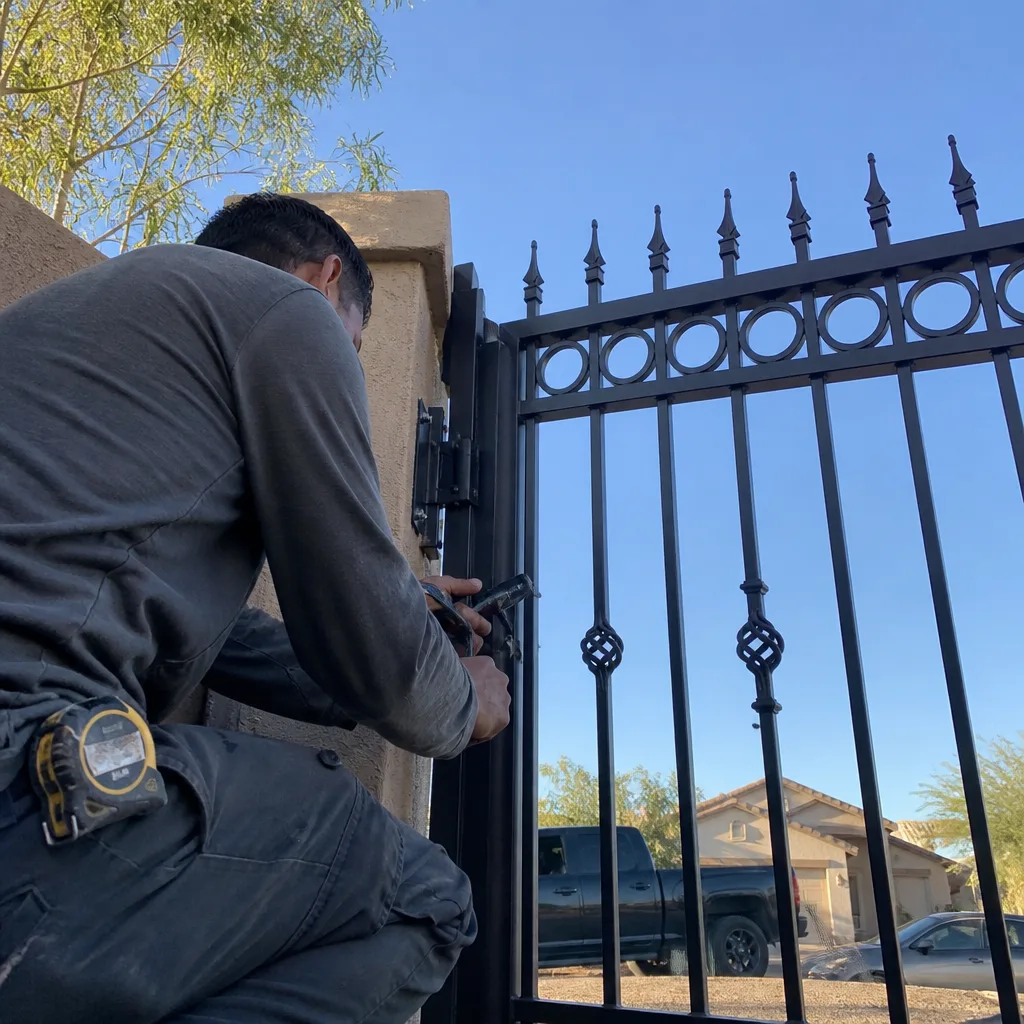
Your checklist only earns its keep when each item ends in a recorded number or photo, not a checkbox. Do the quarterly pass four times a year, do the annual deep check once, and keep everything in one dated folder. In Boulder City, spend the most attention on UV-cracked seals, caliche dust in the control board, and thermal movement at the hinge plates, since those three conditions cause most of the wear we see locally. Build the record, and every future repair gets faster and cheaper. Skip it, and you’ll pay to rediscover the same problem twice.
Ready to build a baseline on your gate? Vance Gate Repair Boulder City provides free estimates and leaves a documented photo record on every visit. Call (844) 320-7587 to schedule yours.
Written by the team at Vance Gate Repair Boulder City.