
Last updated November 18, 2026
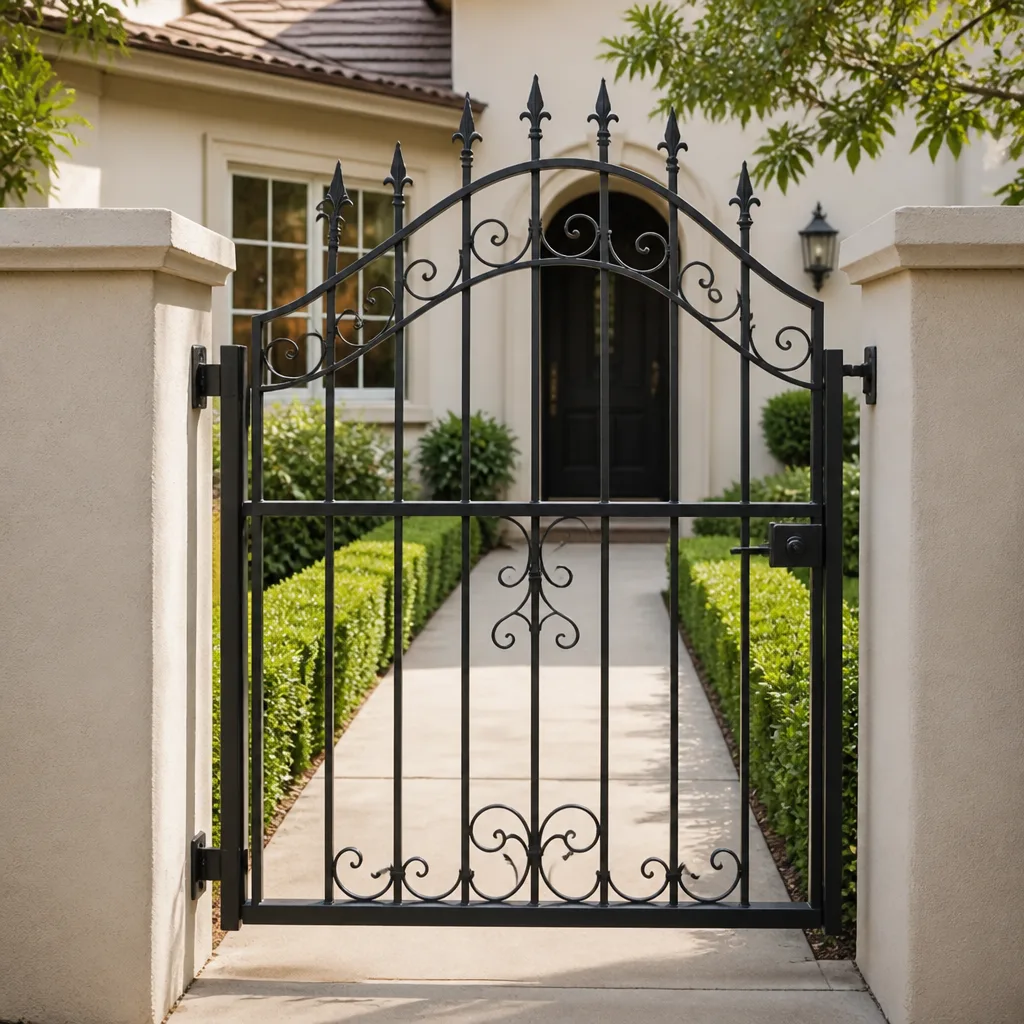 Wrought iron
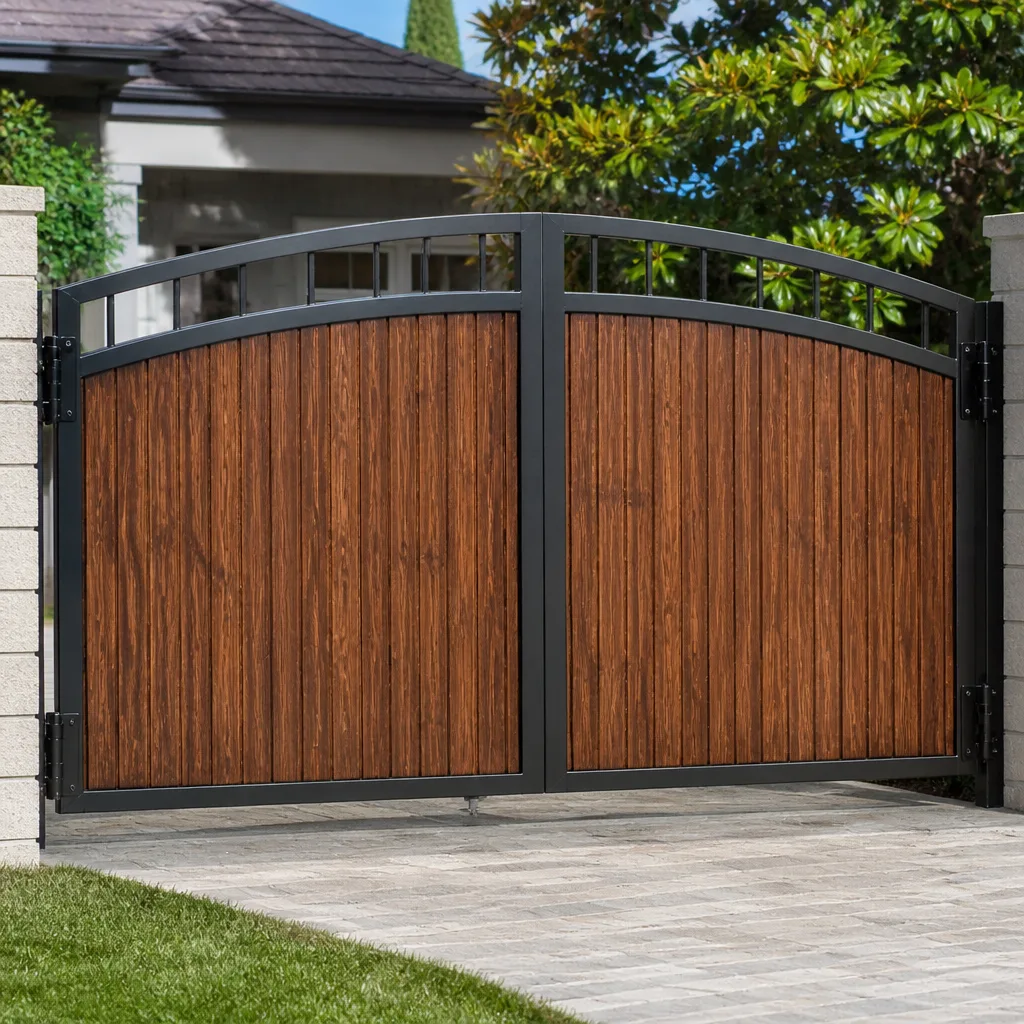 Wood & steel frame
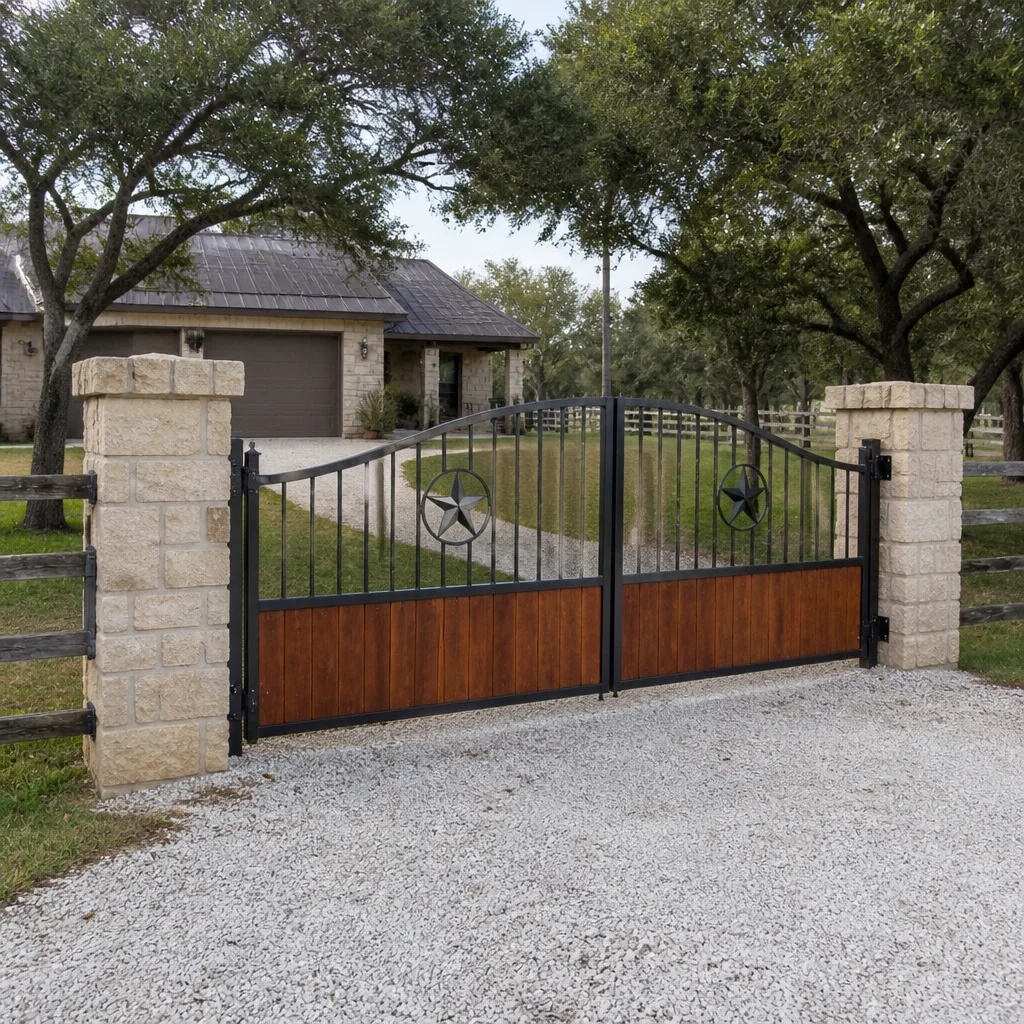 Farm & ranch
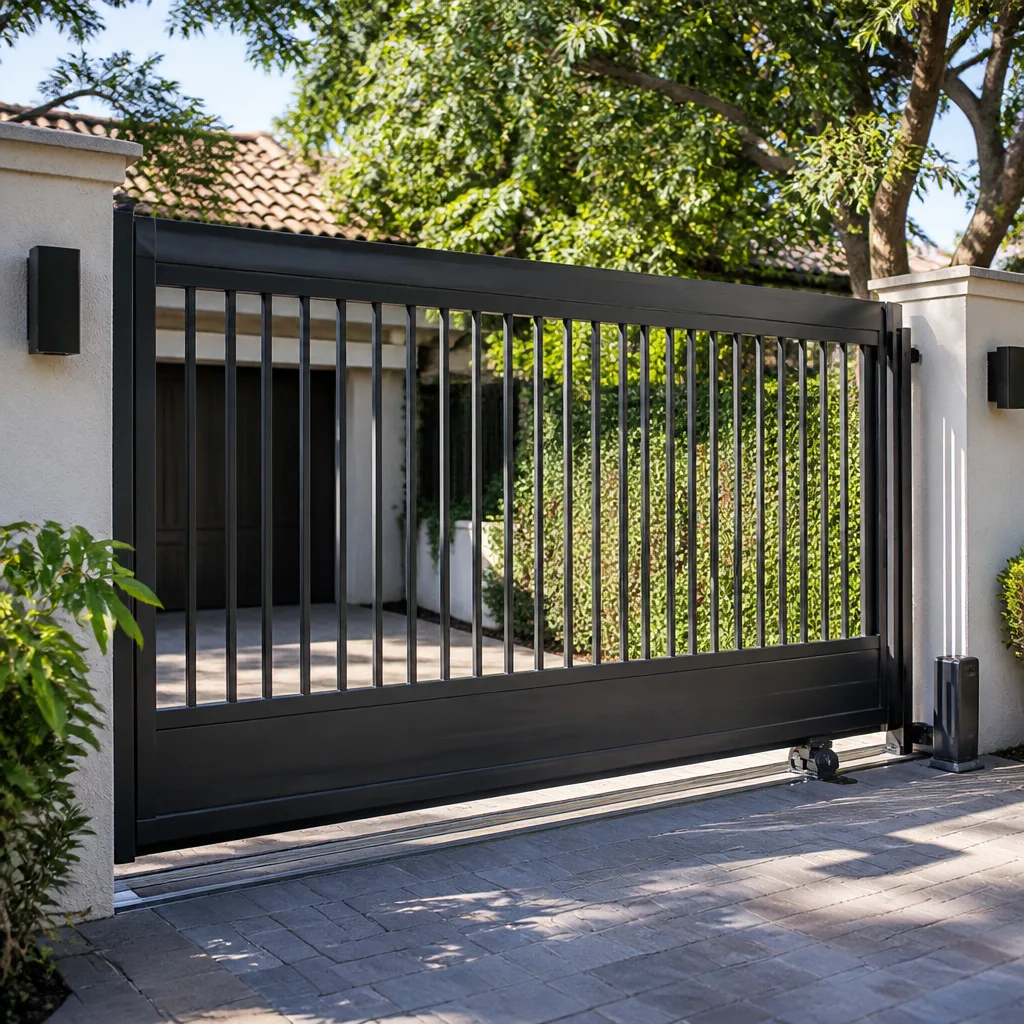 Sliding driveway gates
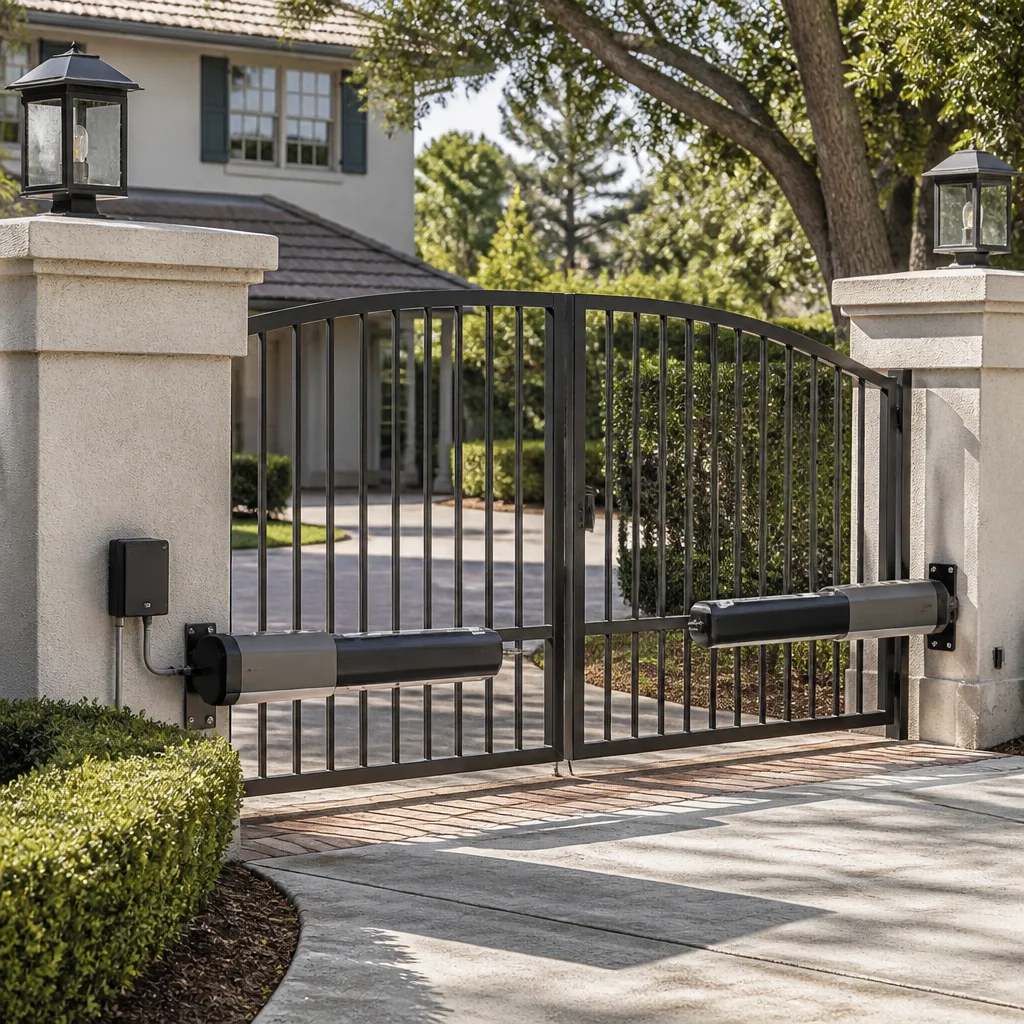 LiftMaster operators
Free on-site gate assessment - hinges, posts, and your LiftMaster or Nice gate operator checked before anything is quoted
The assessment is free and the quote is the invoice.
Get your free estimateSeasonal Gate Repair Care for Boulder City: Year-Round Homeowner’s Guide
A gate that runs fine in March will bind in July. Not because anything broke, but because thermal expansion at the hinge plate was never accounted for when the stops were set. We’ve watched this exact sequence play out on driveway gates across Boulder City more times than we can count: a spring that felt smooth, a swing that closed clean, then a 108°F afternoon when the motor starts straining and the homeowner assumes the opener is dying. It isn’t. The gate is telling you the season changed. This guide breaks the year into the months when specific components actually fail here, and tells you which tasks belong to you and which belong to a technician.
Quick Answer
Seasonal gate care in Boulder City is not a spring-and-fall checklist. It’s a calendar keyed to what fails and when: adjust limit switches and swap grease viscosity in May and June before ground temperature passes 100°F, inspect post footings in October and November when caliche and concrete move with the first frost cycles, and record a baseline (travel time, amp draw, photo reference) every season so you have a comparison point when symptoms appear. The UV load here also makes material-by-material inspection intervals matter more than a generic “check twice a year” rule.
Styles & brands we work with
- Wrought iron
- Wood & steel frame
- Farm & ranch
- Sliding driveway gates
- LiftMaster operators
Table of Contents
- Why a Boulder City Gate Needs a Calendar, Not a Checklist
- May – June: Pre-Summer Adjustments Before the Ground Bakes
- July – September: Heat, UV, and the Components That Fail First
- October – November: Frost Cycles, Footings, and Why Gate Sag Is a Fall Diagnosis
- December – February: Cold-Weather Motor Behavior and What to Watch
- Year-Round UV Load: Which Materials Degrade Fastest in Boulder City
- How to Record a Seasonal Baseline You Can Actually Use
- Homeowner Tasks vs. Technician Tasks: Where the Line Sits
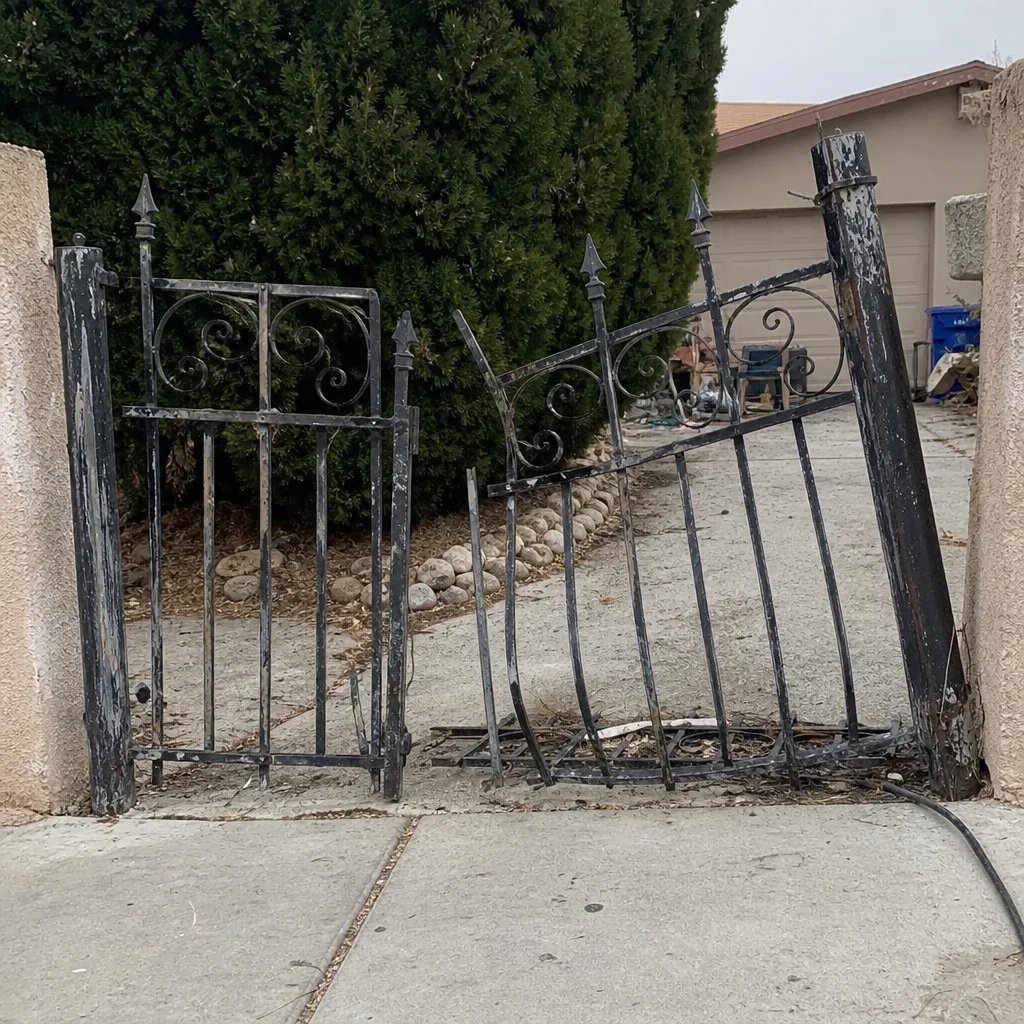 Before
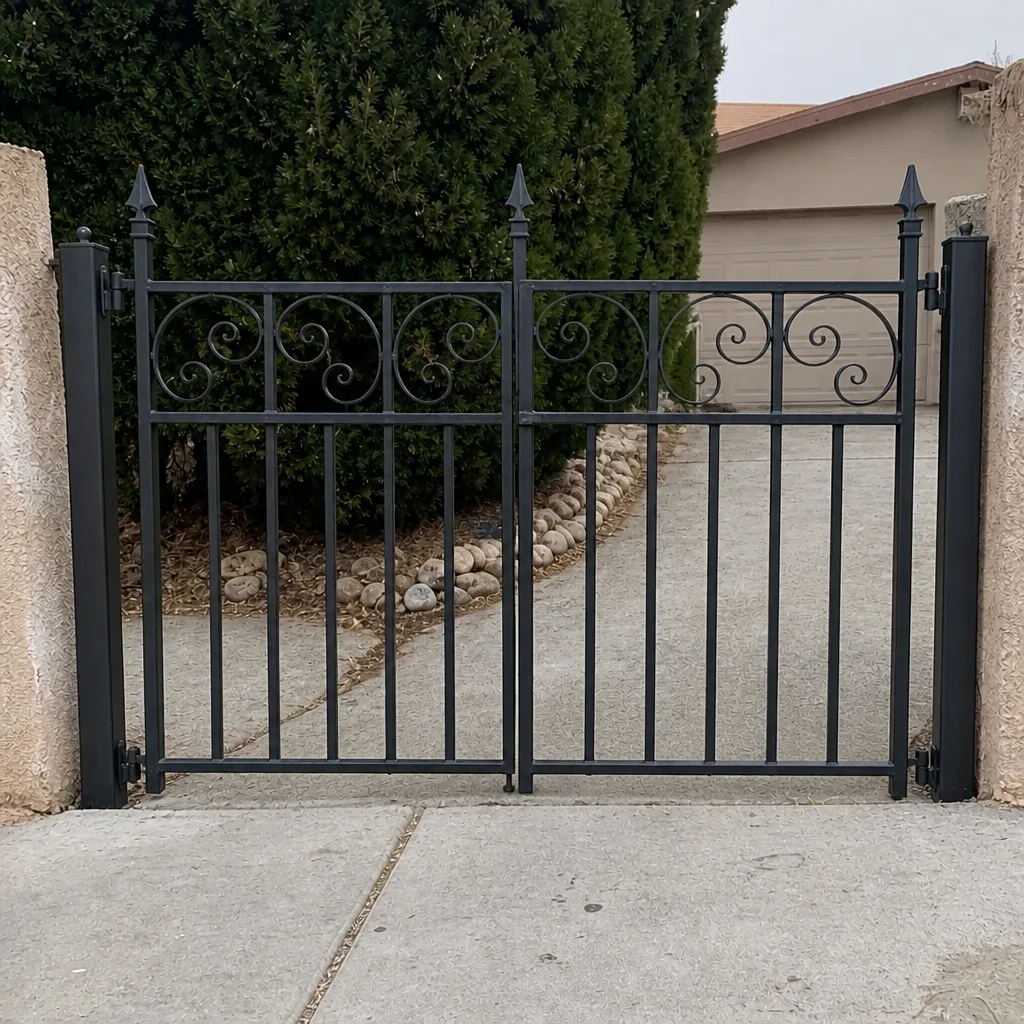 After
Why a Boulder City Gate Needs a Calendar, Not a Checklist
Generic gate advice says inspect in spring and fall. That advice was written for climates with mild, humid summers. Boulder City is a different animal: summer ground temperatures routinely push past 100°F, the desert sun delivers high UV load year-round, and the caliche layer under most properties here behaves very differently from ordinary soil when moisture and temperature swing. Each of those stresses a different gate component on a different schedule.
A swing-gate motor that was set perfectly in February will read a different position at the hinge in August. Steel expands. The gap at the latch closes. The limit switch that told the motor “stop here” is now telling it to stop 3/8 inch past where the gate actually wants to go, and the motor grinds against the mechanical stop on every cycle. Nothing broke. The season moved.
That’s the gap this guide fills. Instead of a twice-a-year walk-around, we’ve mapped the Boulder City gate year to the months when each failure mode actually peaks. The calendar below is built from what we find on service calls here, not from a manufacturer’s boilerplate schedule. For the underlying repair work referenced throughout, our Gate Repair in Boulder City page covers the diagnosis-and-fix side in more detail.
May – June: Pre-Summer Adjustments Before the Ground Bakes
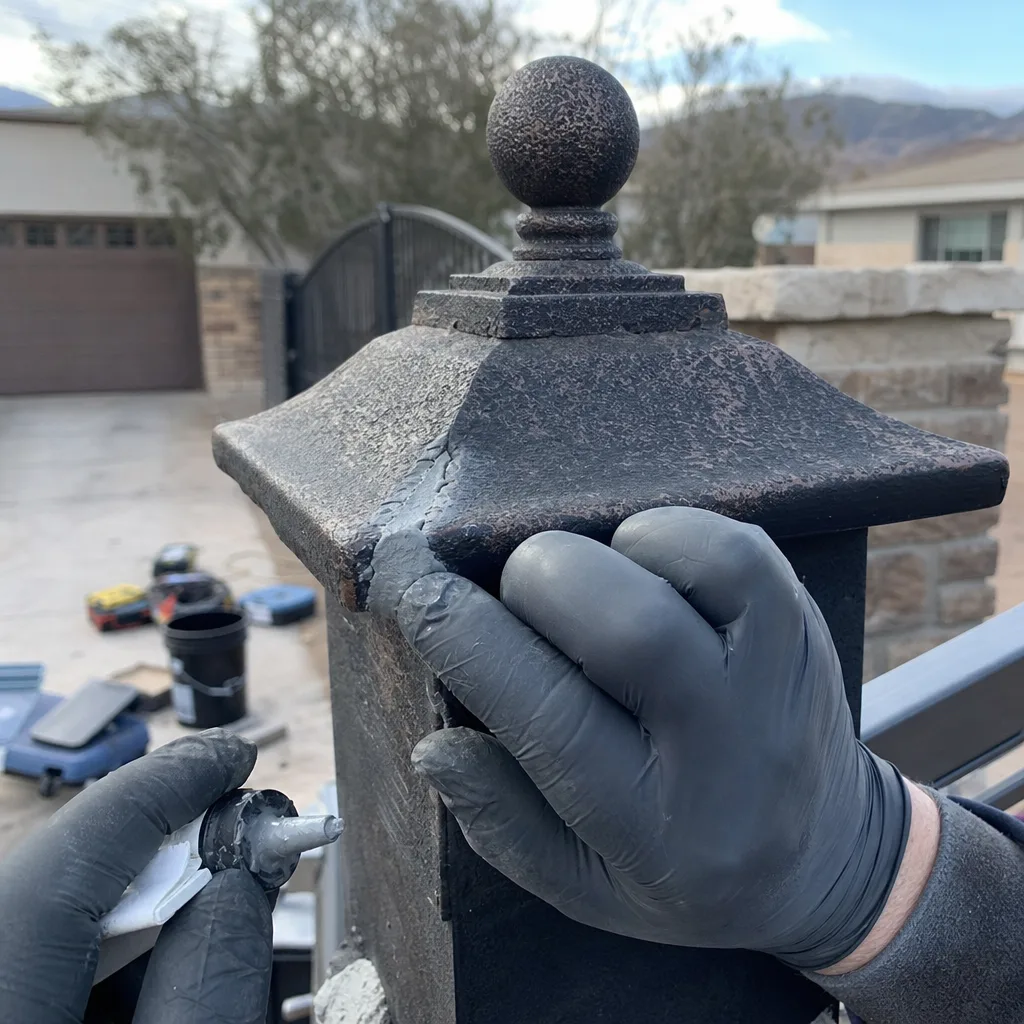
The two months before peak heat are the highest-leverage window on the calendar. Everything you adjust here either prevents a July failure or defers one. Once the ground temperature passes 100°F in late June, adjustment work gets harder, motors run hotter, and any play you left in the system shows up as a bind.
Here’s what we adjust on a May – June visit, in order:
- Reset limit switches to account for expansion. We check where the gate actually stops versus where the limit switch is set, and reset the switch to leave a small margin. This is the single most common pre-summer fix.
- Swap grease viscosity. The lubricant that’s fine at 70°F can get stiff or thin out under sustained heat. We use a lubricant rated for the operating temperature the motor will actually see, not the one on the spec sheet’s default.
- Check thermal cutoff sensitivity. Most operators have a thermal cutoff that shuts the motor down when it overheats. If the cutoff is set too aggressively, you’ll get nuisance shutdowns on hot afternoons. If it’s set too loosely, the motor runs hot and ages faster. We verify the setting while the ambient temperature is still moderate so we’re not chasing it in July.
- Test the safety edges and photo-eyes. Heat softens rubber safety edges and can shift the alignment of the infrared photo-eye (the beam that stops the gate if something crosses the path). A two-inch misalignment here is common and easy to correct before the busy summer season.
- Photograph and record. Every adjustment gets a photo of the before and after position, plus the reading. That record is the baseline for the next season.
If your motor is a LiftMaster or a DoorKing, the limit switch travel and thermal settings are accessible without opening the gearbox, which keeps the pre-summer work quick. On older Mighty Mule units, the same adjustments are more involved because the limit mechanism is less forgiving. Either way, this is a job worth doing in May, not August.
July – September: Heat, UV, and the Components That Fail First
Peak summer is when the phone rings. The failures we see in July, August, and September follow a predictable order, and knowing the order tells you where to look first.
- Motor overheat and thermal shutdown. The most common symptom is a gate that runs a few cycles then stops and won’t respond for twenty or thirty minutes. That’s usually thermal cutoff, not a dead motor.
- Binding at the hinge plate. As the steel expands, a gate that had a clean swing in March starts to drag. The motor works harder, draws more current, and heats up faster. A bind and an overheat are often the same problem seen from two angles.
- Battery and control-board heat stress. Control boards and backup batteries in an operator housing on a sunny wall see temperatures well above the ambient air temperature. We’ve opened housings here where the internal temperature read high enough to shorten battery life significantly.
- Safety-edge rubber cracking. UV plus heat hardens the rubber on safety edges. A hardened edge stops protecting the way it should, which is a safety issue, not just a maintenance one.
- Photo-eye misalignment. Vibration and ground movement shift the posts slightly, and the beam falls out of line. This is one of the most common July service calls.
We don’t recommend homeowners open an operator housing in summer. The internal components run hot and the control board holds a charge. What you can do is listen: a gate that sounds different, runs slower, or stops unexpectedly in July is telling you which of the above is happening. Note the symptom and the time of day, and that record helps the technician arrive with the right parts.
October – November: Frost Cycles, Footings, and Why Gate Sag Is a Fall Diagnosis
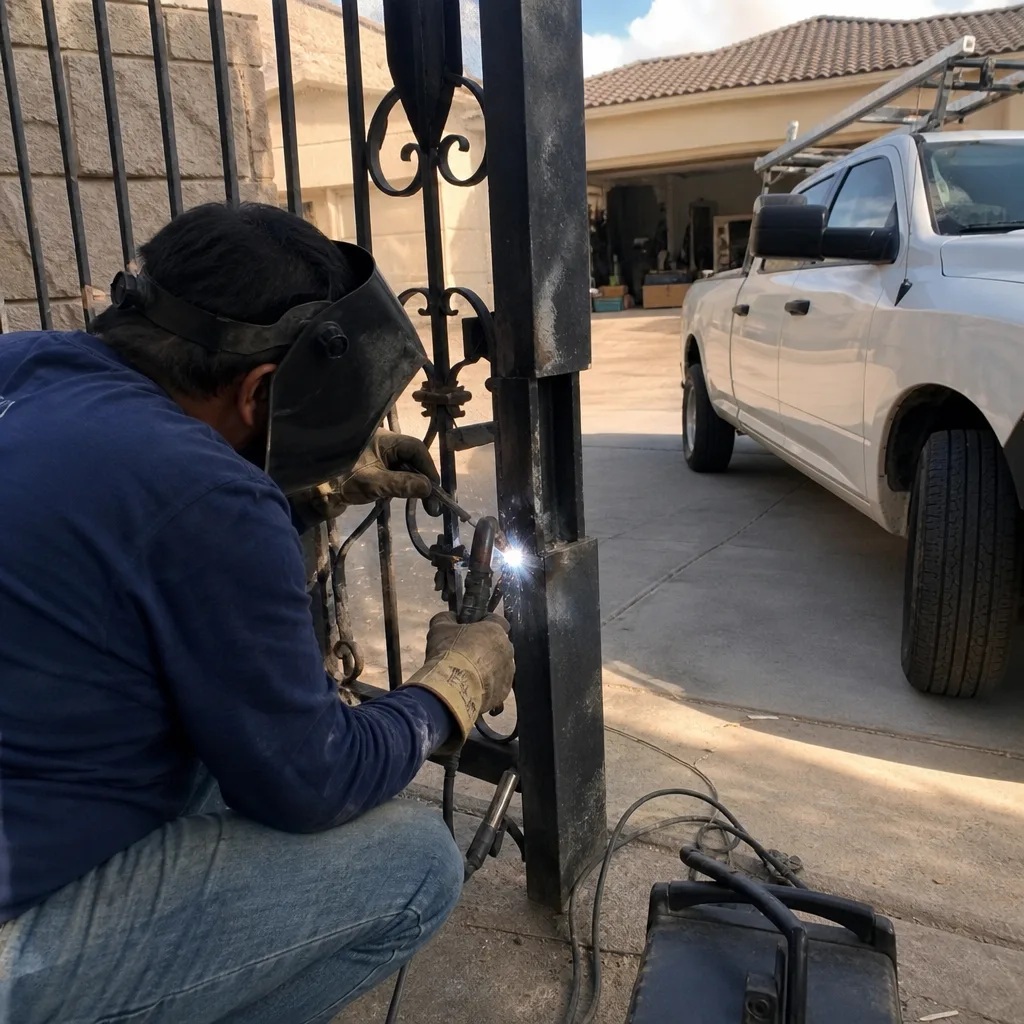
Most homeowners think gate sag is a spring problem because that’s when they notice the gate dragging. In Boulder City, sag is a fall diagnostic. Here’s why.
Boulder City sits on ground with a heavy caliche layer, a naturally cemented soil that holds moisture and moves with temperature and moisture swings differently than loose soil. Through the summer, the ground under a gate post dries and contracts. When the first cool nights and the first moisture arrive in October and November, that ground expands again, and the concrete footings that hold your gate posts shift with it. The shift is small, usually a fraction of an inch, but a fraction of an inch at the footing translates to a noticeable droop at the latch, three or four feet away.
So the fall inspection is about footings, not just hardware:
- Check post plumb. A post that’s out of plumb by even a small amount is the root cause of most sag. We check with a level and photograph the reading.
- Inspect the concrete at the base. Hairline cracks radiating from the post, or a gap opening between the concrete and the soil, tell you the footing is moving.
- Look at the hinge side first. If the hinge post has moved, the whole gate geometry is off. Fixing hinges or latches without addressing the post is wasted effort.
- Check the latch and strike alignment. A latch that used to engage cleanly and now catches on the edge is a fall symptom of footing movement, not a latch failure.
If the footing has moved, that’s technician territory. Re-setting a gate post means digging out concrete and re-pouring with proper depth for the soil here. Get the footing sorted in October or November, and you avoid the spring surprise of a gate that won’t close at all. If you’re comparing written estimates for footing work, our Vance Gate Repair Boulder City home page explains how our written-price process works before any work begins.
December – February: Cold-Weather Motor Behavior and What to Watch
Boulder City winters are mild compared to most of Nevada, but the overnight lows are cold enough to matter for gate operators. The most common winter symptom we hear about is a gate that’s sluggish on the first cycle of a cold morning and fine the rest of the day.
That sluggishness is usually lubricant viscosity. Lubricant that flows freely at 70°F is thicker at 35°F, and the motor works against that extra resistance until it warms up. If you swapped to a heat-rated lubricant in May, you want to confirm it still performs at the cold end of its range, which is why we check both ends when we spec a lubricant. A lubricant that’s spec’d for the summer heat but not the winter cold is a half-solution.
Winter is also when we check:
- Battery backup health. Cold reduces battery capacity. A backup battery that’s nearing the end of its life fails first in cold weather. Test it in December, not when the power goes out.
- Limit switch drift from summer adjustments. If we reset limits in June, the winter contraction can move the mechanical stop slightly the other way. A quick re-check in December confirms the summer setting still holds.
- Safety-edge flexibility. Cold rubber gets stiff. A stiff edge may not deflect the way it should when something crosses the path. This is a safety check, not a comfort check.
- Moisture intrusion at the control housing. Winter rain finds any gap in a housing seal. We check the seal and the interior for moisture and photograph what we find.
Year-Round UV Load: Which Materials Degrade Fastest in Boulder City
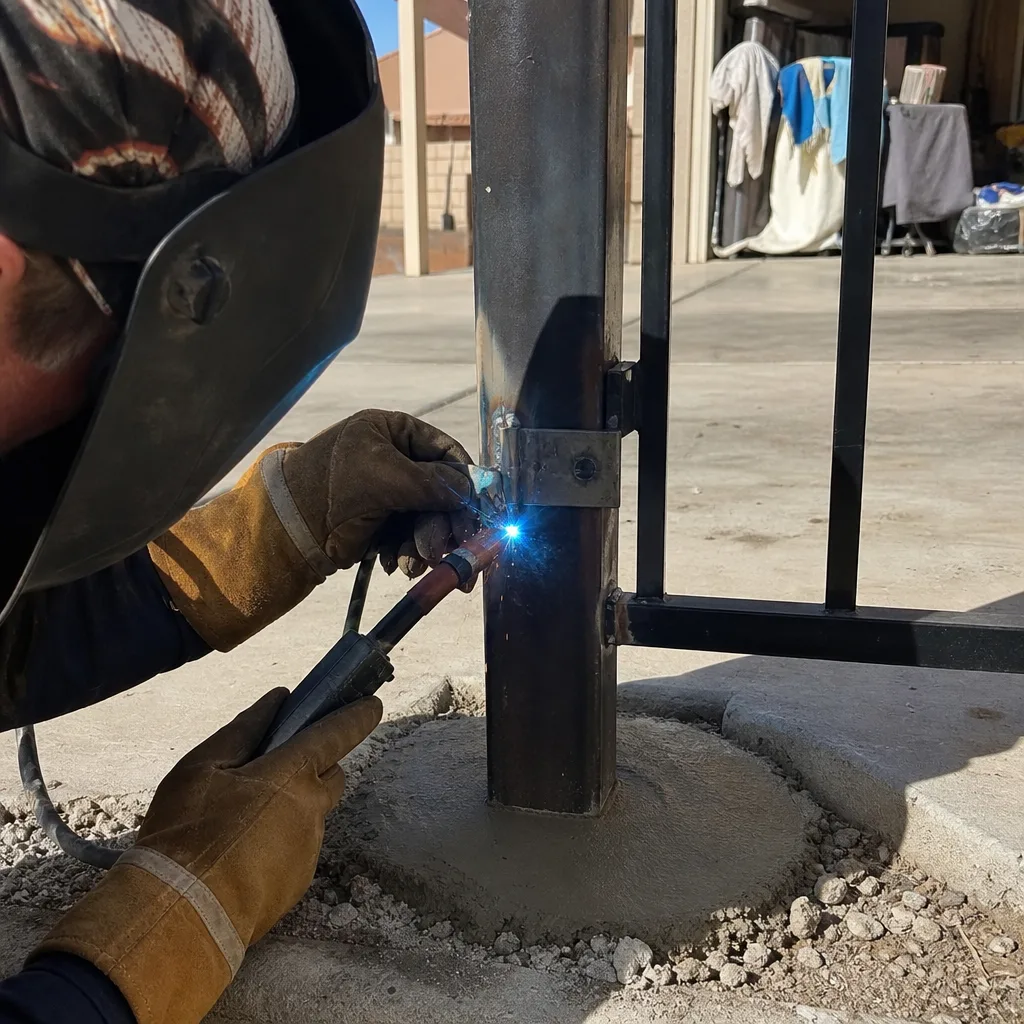
Boulder City’s sun is the constant across every season. UV load doesn’t take winter off. It degrades different gate materials at different rates, and the inspection interval should match the material, not the season. Here’s how we prioritize inspections by material:
- Rubber and synthetic components (safety edges, seals, gaskets): fastest degradation. Inspect every 3 months. UV hardens and cracks rubber, and a cracked safety edge is a safety failure, not a cosmetic one. This is the shortest interval on the list.
- Painted or powder-coated steel: moderate-to-fast. Inspect every 4 to 6 months. Chalky paint and small chips at the hinge points let moisture under the coating, which starts corrosion that spreads. Touch-up is cheap; repainting a gate is not.
- Galvanized steel: moderate. Inspect every 6 months. The zinc coating wears faster in high-UV, dry conditions than in milder climates. Check for white rust or zinc loss at the welds.
- Aluminum: slower. Inspect every 6 to 12 months. Aluminum doesn’t rust through the way steel does, but the finish can chalk and the hinge hardware on aluminum gates can still corrode.
- Wood: slowest for UV, fastest for moisture. If you have a wood gate, UV and dry heat cause checking and splitting, which we inspect every 6 months, but the bigger wood issue here is moisture from winter rain and irrigation.
An Elite or a FAAC operator housing gets the same UV treatment. The plastic on the housing chalks and the internal wiring is exposed to heat, which is why we include a housing inspection with every visit, no matter the season.
How to Record a Seasonal Baseline You Can Actually Use
The single most useful thing a homeowner can do for a gate is keep a record. A record tells the technician what changed and when. And on a gate, “what changed” is often the entire diagnosis. Here’s how to build a baseline in about ten minutes, once a season, using a phone camera and a notebook.
- Photograph the gate in the open and closed positions. Two photos, one from a fixed viewpoint, one from the other side. Same angle every time.
- Record the time it takes to open and close. Use the stopwatch on your phone. A gate that took 14 seconds in May and takes 18 seconds in August is telling you it’s binding.
- Listen and note the sound. A grind, a click, a hum that wasn’t there before, all matter. Write down what you hear and when.
- Note the ambient temperature and the time of day. This is the reference point for the next season’s symptoms.
- Photograph the hinge plates, the latch, and the post base. These are where movement shows up first.
- Note any recent changes. A new car in the driveway, new landscaping that moved a photo-eye, a gate that started catching after a storm. Context matters.
If you want the technical version, amp draw is the reading that tells you the most. Amp draw measures how hard the motor is working. A gate that draws more amps than it did last season is telling you something has changed before any symptom shows up. We record amp draw on every visit as part of our documentation, which is how we catch a bind in September rather than hearing about it in December. You don’t need a meter to be useful here, but a technician’s recorded amp reading is the clearest early warning a gate can give you.
For a sense of what repair work typically involves, our Gate Motor & Opener in Boulder City page goes through the most common operator-level fixes and how they’re priced.
Homeowner Tasks vs. Technician Tasks: Where the Line Sits
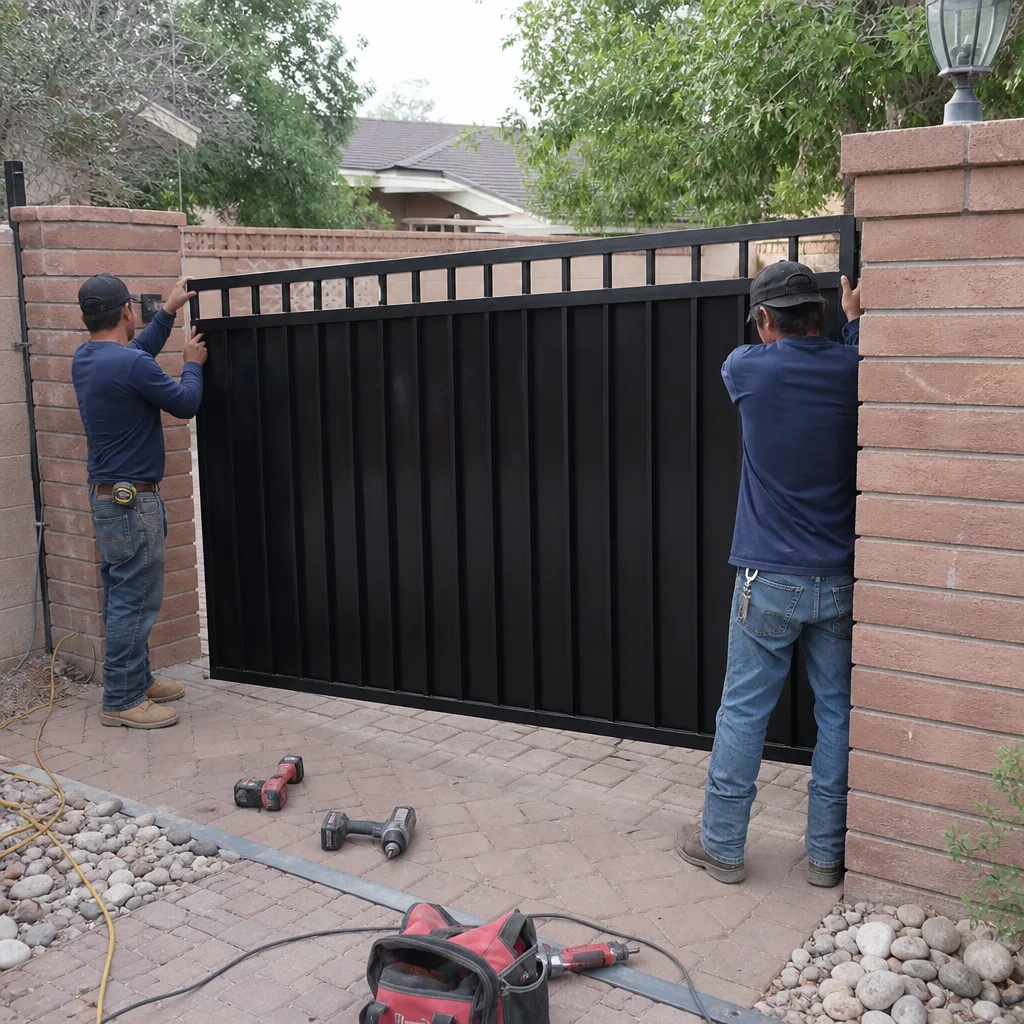
Some seasonal work is safe for a homeowner. Some is not. The line is drawn at anything involving electrical components, high-tension springs, or the mechanical settings that keep the gate from crushing something. Here’s where we draw it, in plain terms.
Safe for a homeowner, with no tools beyond a phone camera:
- Photographing the gate, hinge plates, latch, and post base each season.
- Recording open and close times with a stopwatch.
- Noting sounds, symptoms, and the time of day they occur.
- Visually checking the safety edges for cracking or stiffness.
- Confirming the photo-eye isn’t obstructed and the lens is clean.
- Clearing debris from the gate’s path and checking the ground for new cracks near the post.
Technician territory:
- Any adjustment to limit switches, thermal settings, or the control board.
- Opening the operator housing. The internal components run hot and the control board holds a charge.
- Any work involving the gate’s springs or cables. High-tension gate springs and cables store enormous force and can cause serious injury if released without the right tools and knowledge. This is not a DIY job, full stop.
- Replacing or adjusting safety edges and photo-eyes. A misaligned safety device is a safety failure, and a technician verifies the alignment with a test, not a guess.
- Any footing or post work. Digging out and re-pouring concrete with the right depth for the caliche and frost conditions here is a job for someone who does it regularly.
- Electrical work of any kind. If the operator needs a power connection, a trained electrician or gate technician handles it.
The reason we’re specific about this is that the most serious gate injuries we hear about come from homeowners attempting spring, cable, or control-board work. A gate that’s slow in July is a nuisance. A spring that lets go while you’re working on it is an emergency. Since 2014 we’ve repaired and installed over 22,000 gates, and every one of those jobs started with a written scope and a written price before a tool came off the truck. If you’re not sure whether a task is safe, that uncertainty is the signal to call a technician.
If you’re planning a new gate or replacing an operator rather than just maintaining one, our Gate Installation in Boulder City page covers what a measured, scheduled install looks like from the first walk-through to the final documentation.
Common Mistakes to Avoid
- Treating spring and fall as the only inspection points. The May – June window and the October – November footing check are the two most important dates on the calendar here, and a generic spring-fall routine misses both. The gate tells you when it needs attention; the calendar here tells you when to listen.
- Resetting limit switches in July instead of May. By July the metal has already expanded, so you’re setting the limit against a gate that will shrink back in the fall. Adjust before the heat peak, not during it.
- Assuming gate sag is a spring problem. In Boulder City, sag almost always traces to footing movement during the fall frost cycles. Fixing the latch hardware without checking the post base is a fix that won’t hold.
- Using the same lubricant year-round. Lubricant that’s fine at 70°F is thicker at 35°F and thinner at 110°F. Check both ends of the temperature range when you spec a lubricant, or you’re solving half the problem.
- Skipping the photo record. A homeowner who can’t tell a technician what the gate did last season is starting the diagnosis from zero. Ten minutes with a phone camera each season saves real time and money later.
- Ignoring the safety edges because the gate “still works.” A hardened or cracked safety edge is a safety failure even when the gate cycles normally. UV degradation on rubber is fast here, and the edges are the component most likely to fail without an obvious symptom.
- Opening the operator housing to “take a look.” The components run hot and hold a charge. Whatever you’re hoping to spot is not worth the risk, and a technician has the tools to diagnose it safely.
See the difference
BeforeAfter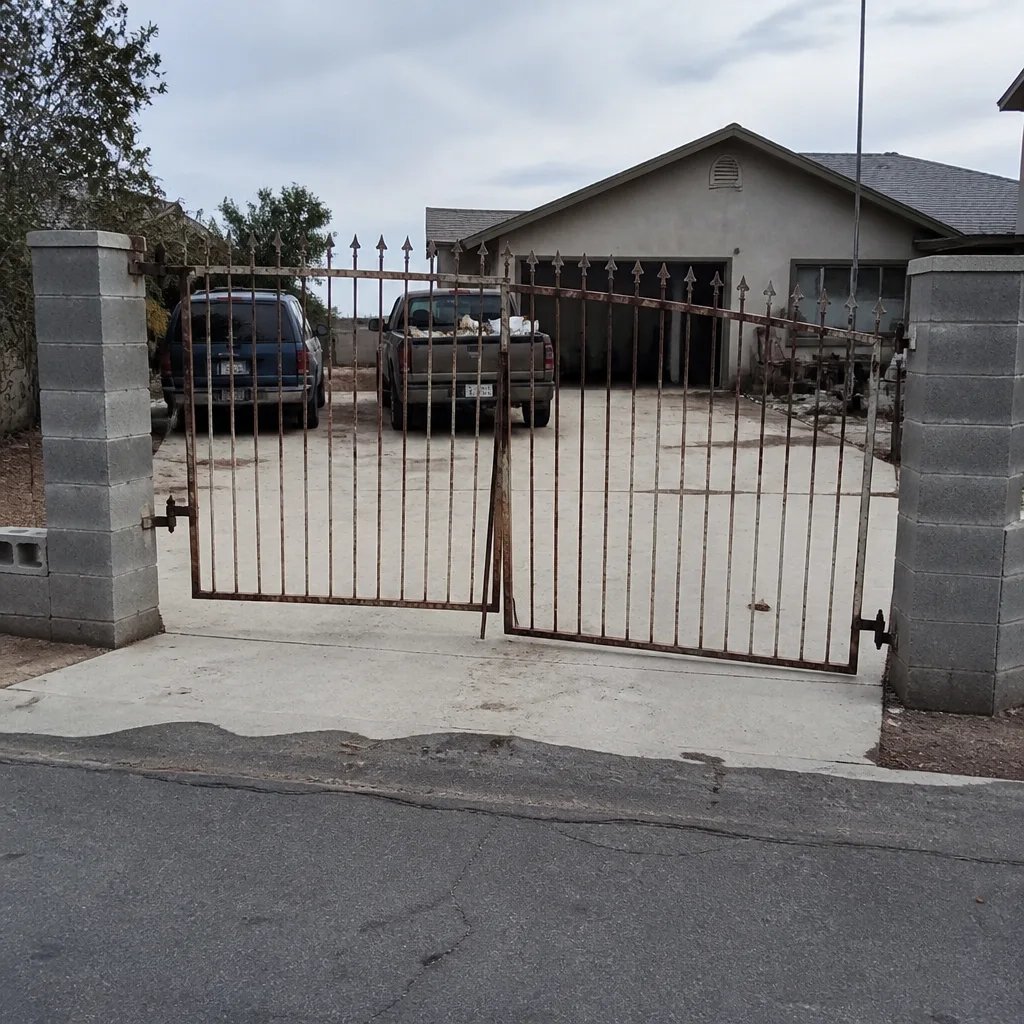 Before
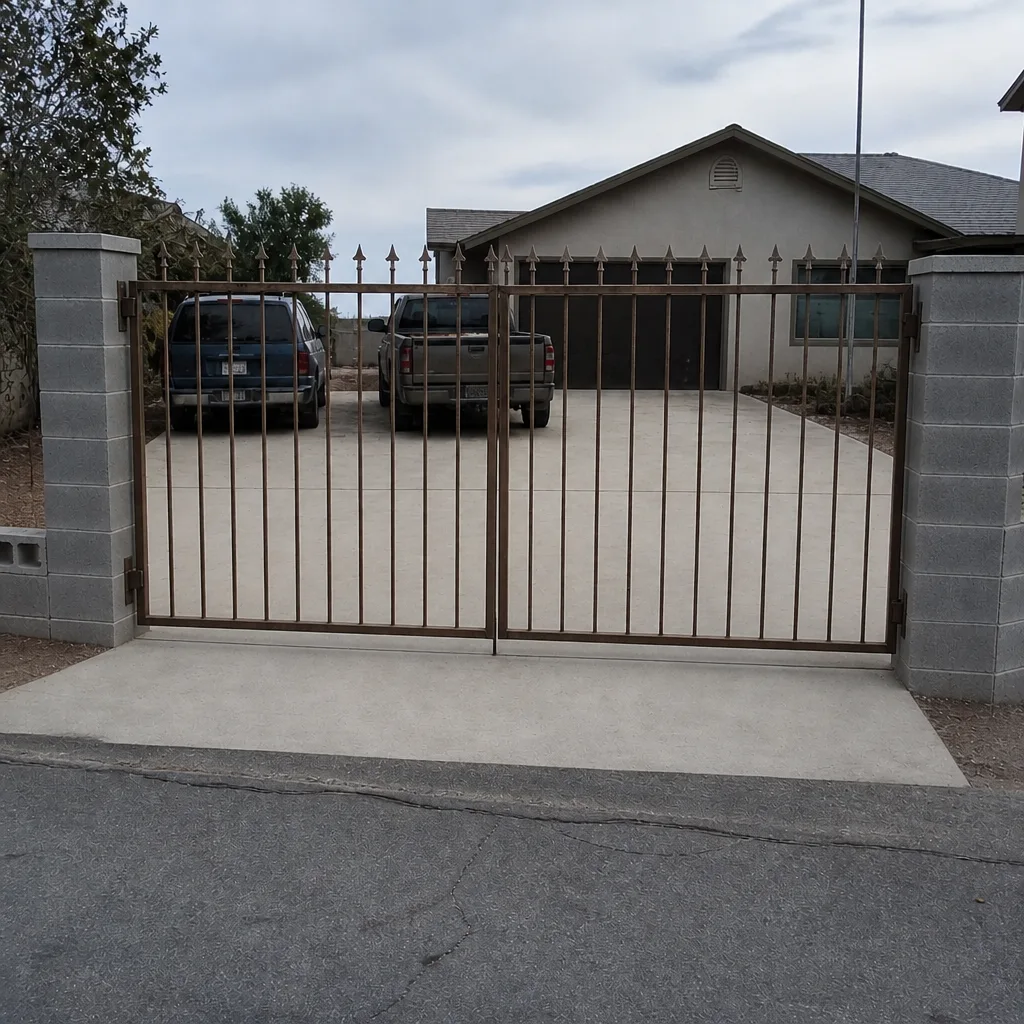 After
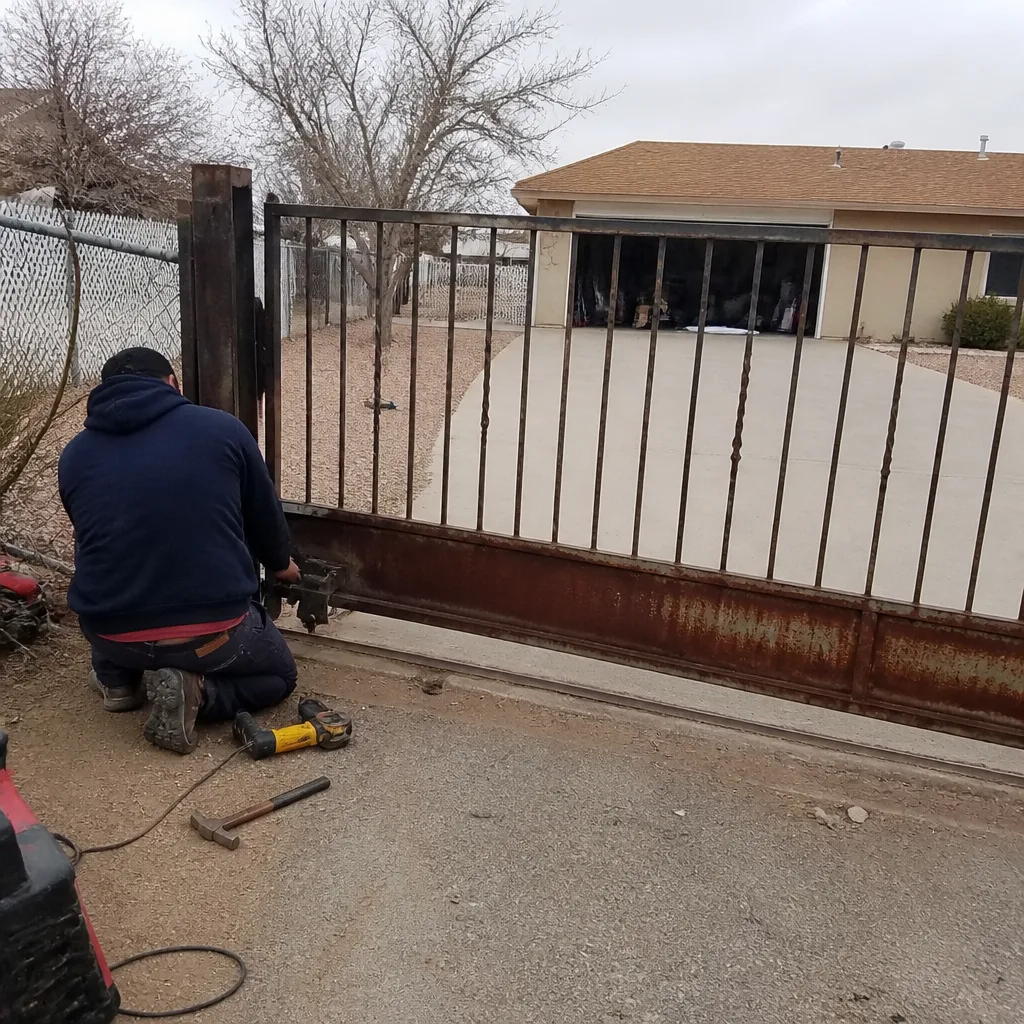 Before
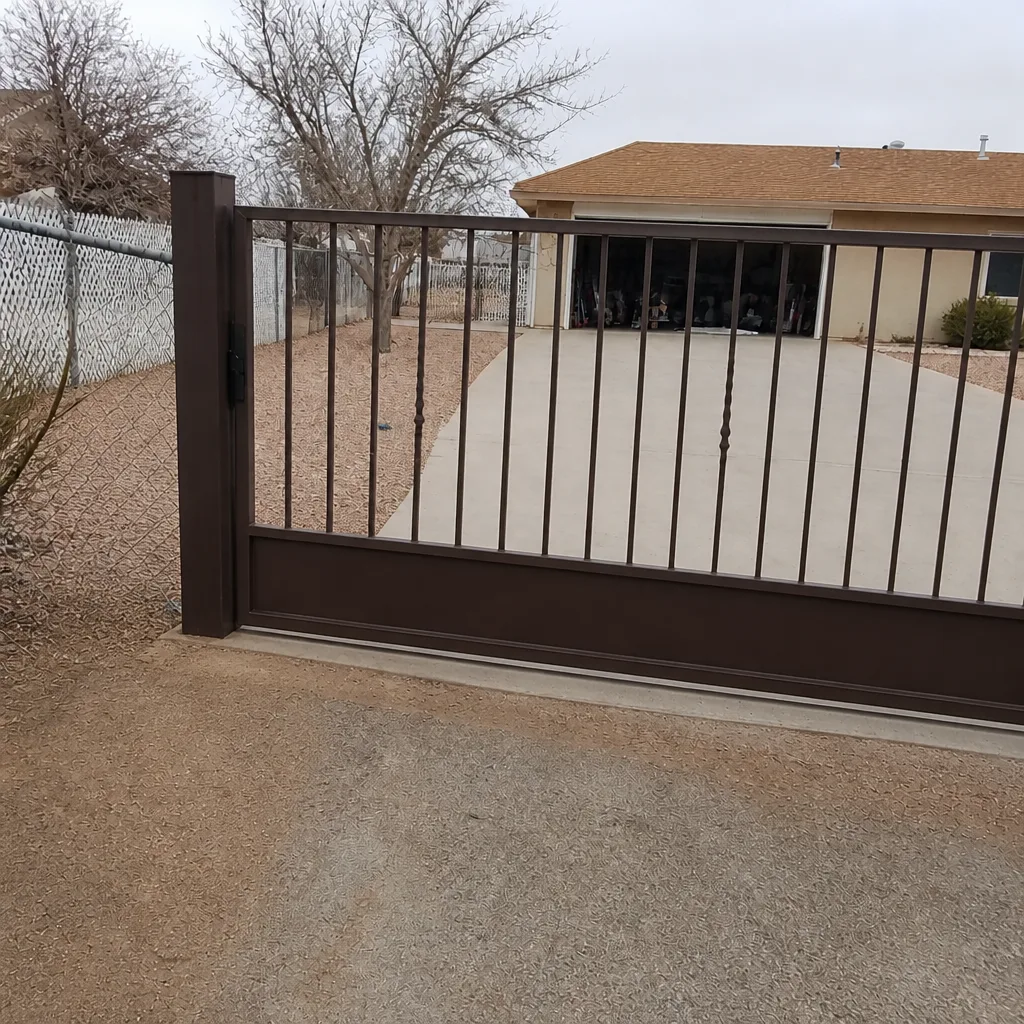 After
When to Call a Professional
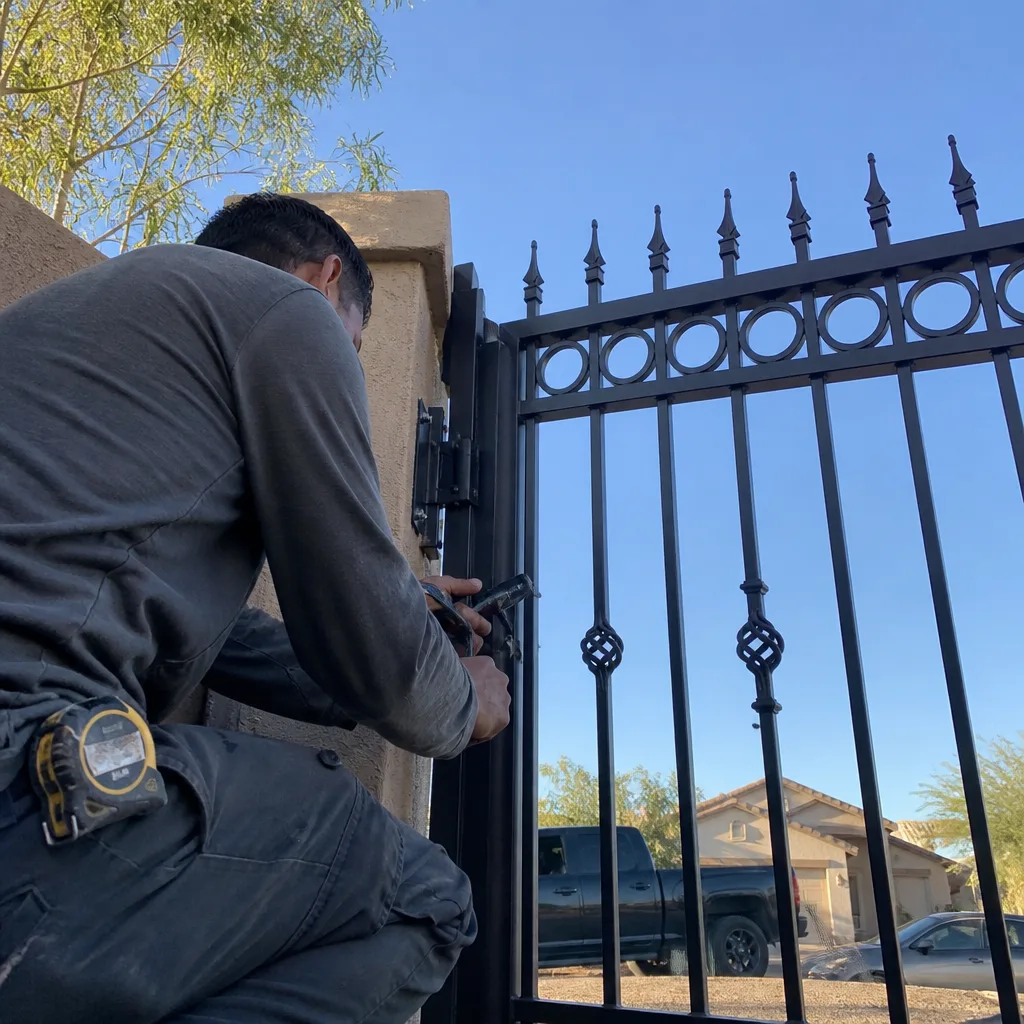
Call a professional for anything involving springs, cables, control boards, electrical connections, or footing work, and call immediately if the gate binds, stops mid-travel, or runs slower than it did last season. A gate that’s dragging is a gate that’s drawing more current, and a motor running hot ages faster. If the post base shows new cracks or the latch has stopped engaging cleanly, that’s a footing issue and it will get worse with the next frost cycle. If you’ve taken over a property with an unfamiliar operator, or the motor is one of the brands we service (DoorKing, Elite, Mighty Mule, LiftMaster, and others), a technician can confirm the settings and leave a documented baseline you can compare against. Safety edges and photo-eyes that don’t pass a test need attention the same week, not the same month.
Vance Gate Repair Boulder City offers free estimates in Boulder City. Call (844) 320-7587 and a live person will answer, any hour of the day or night. We serve residential and light commercial gate customers here, and our technicians have up to 12 years of experience. Every visit leaves a written scope, a written price, and a photographed record. If you’d rather bring a written estimate from another company and have us review it, we offer a free second opinion.
Frequently Asked Questions
Twice a year at minimum, but not the generic spring-fall schedule. Have the substantive inspection done in May – June, before ground temperature passes 100°F, and again in October – November, when footing movement from frost cycles shows up. Between those, a homeowner can do a ten-minute visual and photo baseline each season. A gate on a high-UV exposure wall may need the safety-edge check every three months.
Thermal expansion. The steel gate and hinge plate expand with the heat, which closes the gap at the latch and can cause a bind the motor has to work against. This is usually a limit-switch and hinge adjustment made in May, not a motor replacement. If the gate is slow or stops after a few cycles, the motor may also be hitting its thermal cutoff. Call (844) 320-7587 for a free estimate and we’ll confirm the cause before recommending any part.
Gate sag here usually traces to footing movement, not loose hinges. The caliche layer under most properties holds moisture and moves with the fall frost cycles, and that movement shifts the post slightly, which shows up as a droop at the latch. Inspect for sag in October or November, and fix the post rather than just the latch. If the post has moved, re-setting the footing is technician work.
No, we don’t recommend it. Limit switches and safety edges set the mechanical and safety limits of the gate, and a misadjusted setting can cause the gate to bind, overheat the motor, or fail to stop when something is in its path. Any work involving the gate’s springs or cables should also always be done by a trained technician, because those components store enormous force. A homeowner can safely photograph, time, listen, and note symptoms, which is genuinely useful for the diagnosis.
It depends heavily on material and exposure. Rubber safety edges degrade fastest here because of year-round UV load, so inspect them every three months. Motor life depends on the brand, the heat the operator housing sees, and how much current the motor draws on a bind. Regular May and December checks extend motor life because they catch the current-draw increase before it becomes a failure.
Yes, on every job. The written price is a flat price, handed over before any work starts, so there’s no surprise invoice at the end. It’s part of our Haven Standard. If you have a written estimate from another company, we’ll review it at no cost. Call (844) 320-7587 for a free estimate.
The Bottom Line
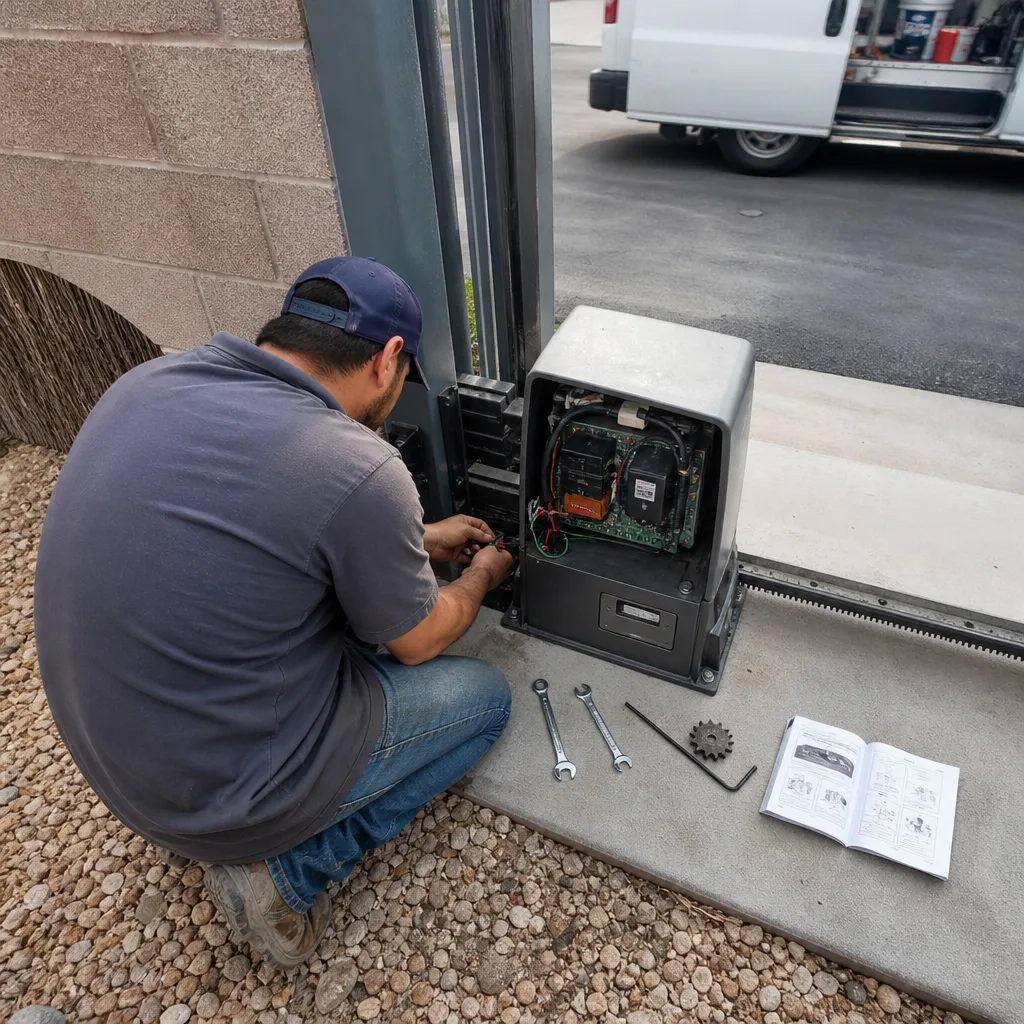
Boulder City’s seasons don’t damage every gate component equally, so a seasonal care plan should key specific tasks to the months when each failure mode peaks. Adjust limit switches and grease viscosity in May and June before the ground bakes. Watch for motor thermal shutdown, photo-eye misalignment, and safety-edge hardening through July and September. Handle footing and post movement in October and November, when frost cycles shift the caliche and concrete. Keep a seasonal baseline with photos, times, and notes so the next symptom has a comparison point. And know where the line sits: springs, cables, control boards, electrical, and footing work belong to a technician. Do that, and you’ll catch most gate problems in the season they start, not the season they break.
Written by the team at Vance Gate Repair Boulder City.