
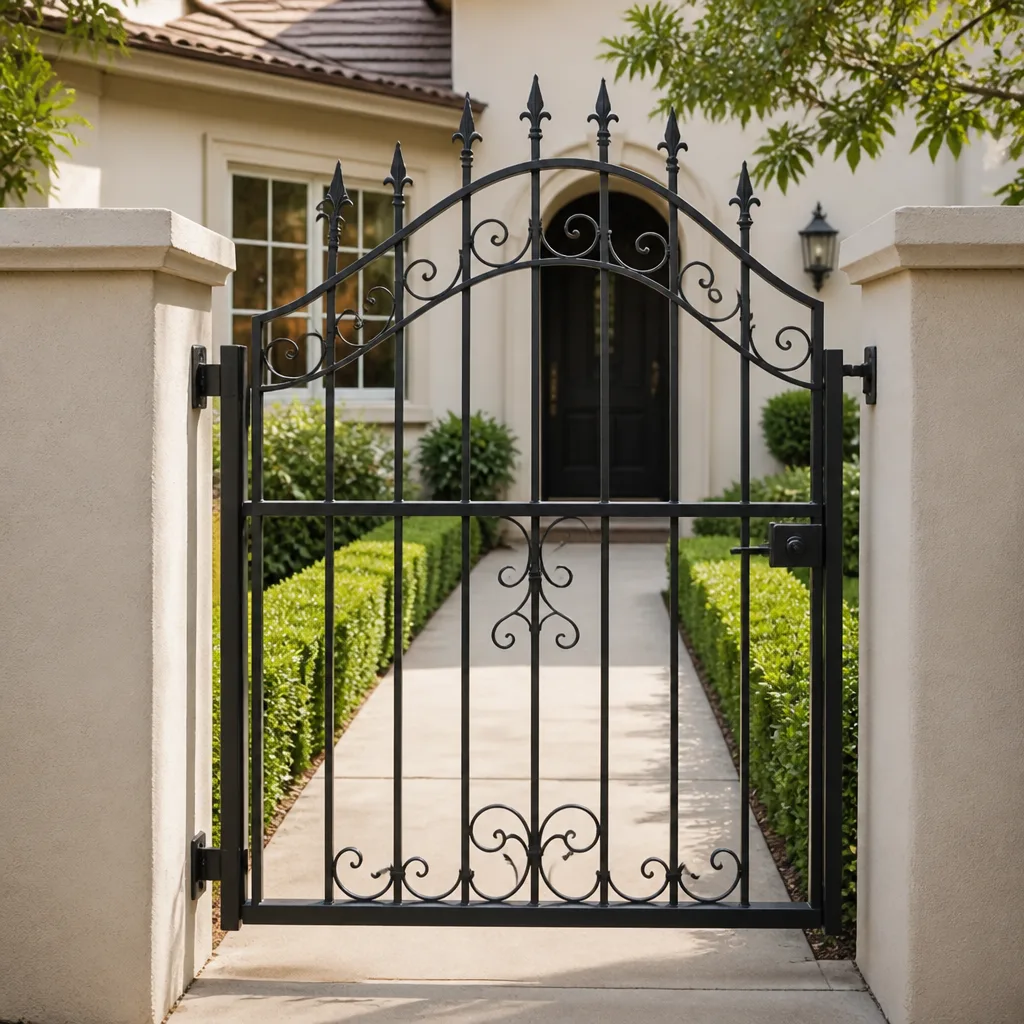
 Wrought iron
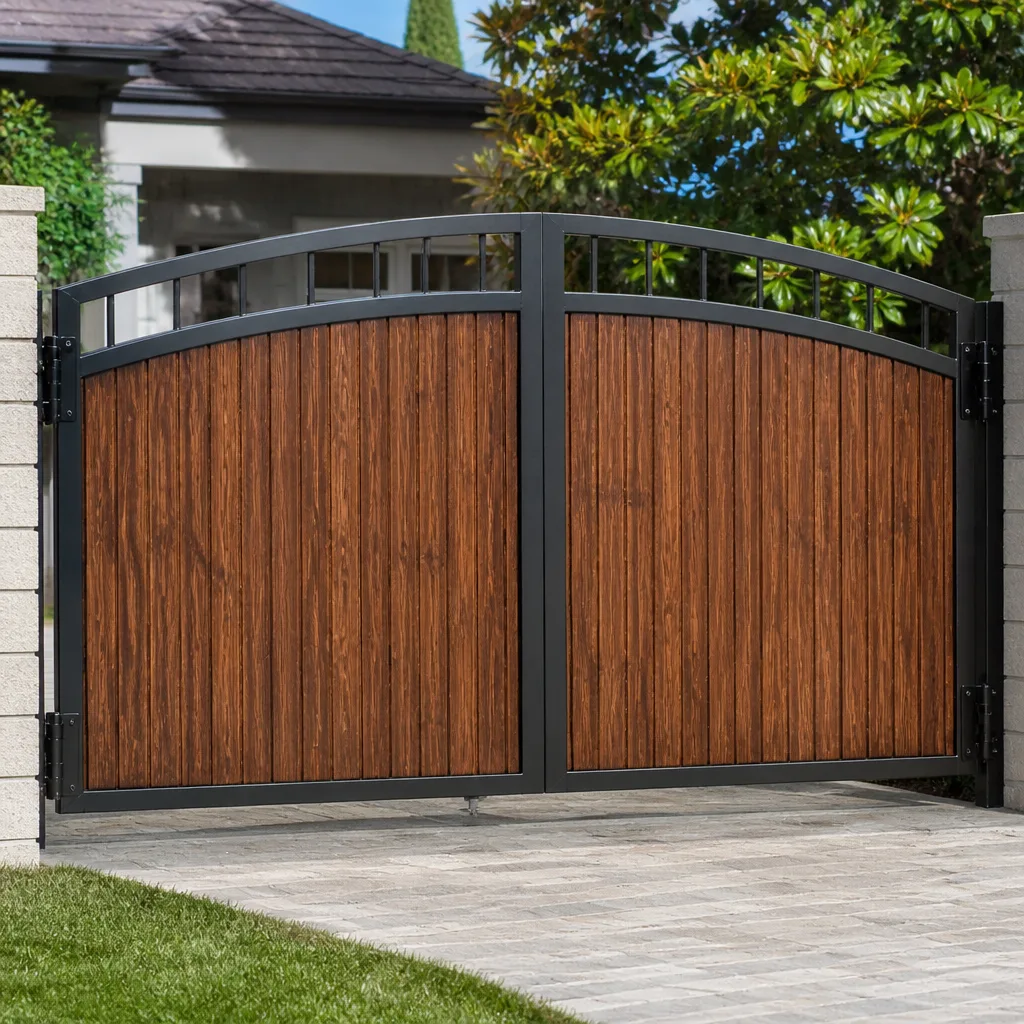 Wood & steel frame
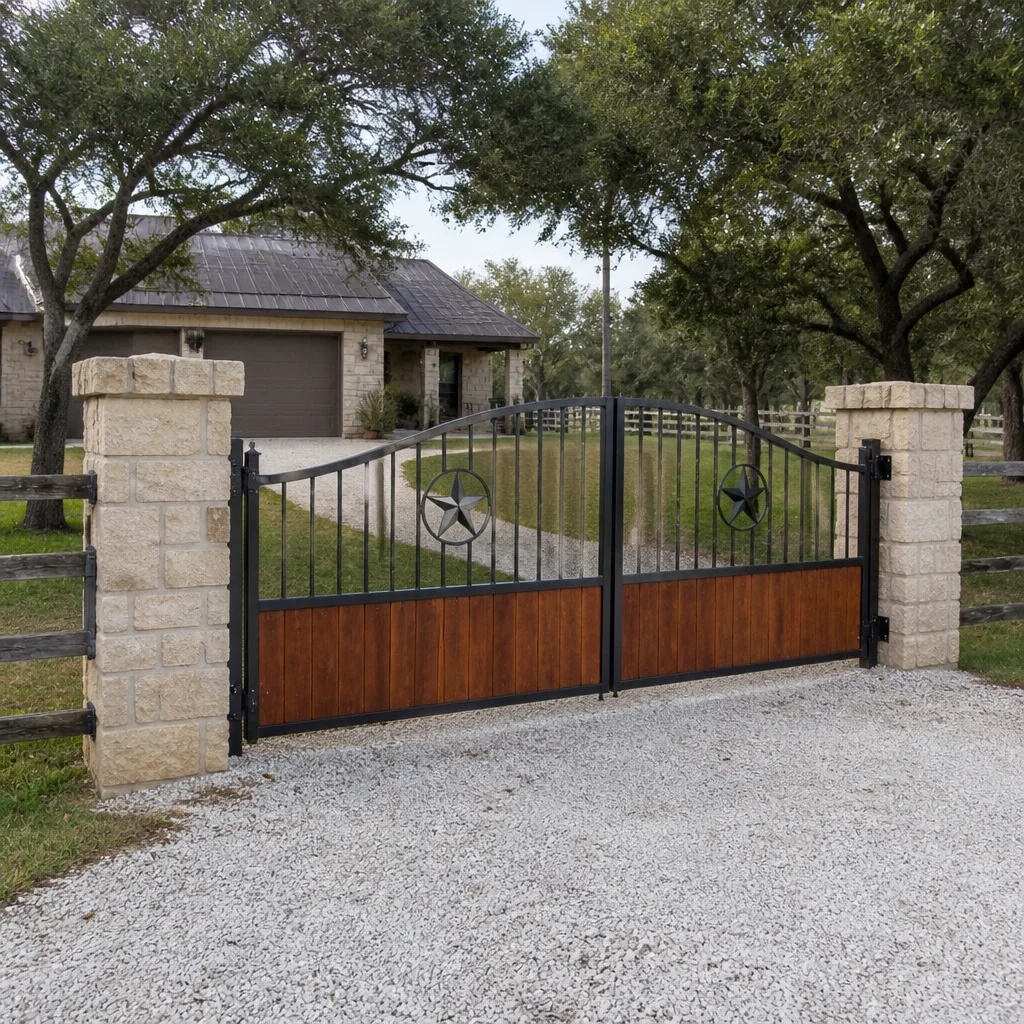 Farm & ranch
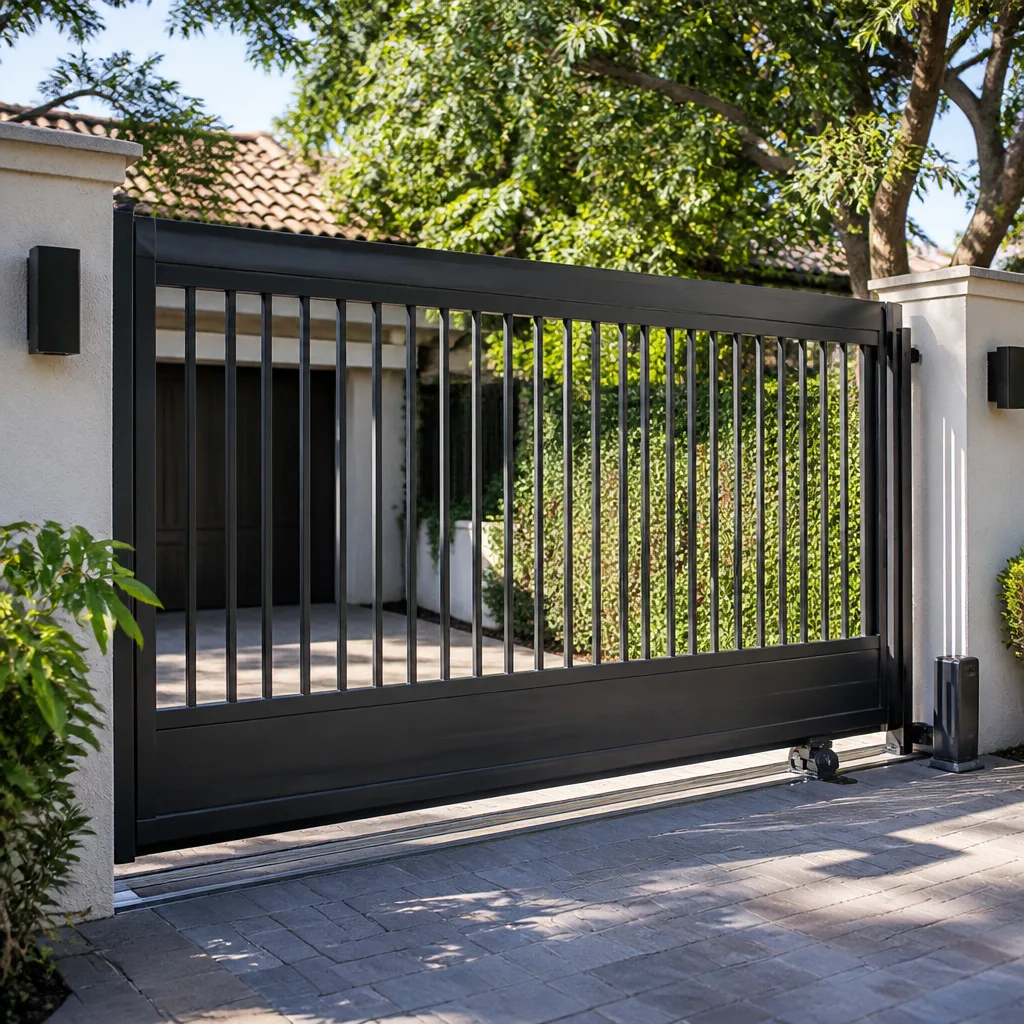 Sliding driveway gates
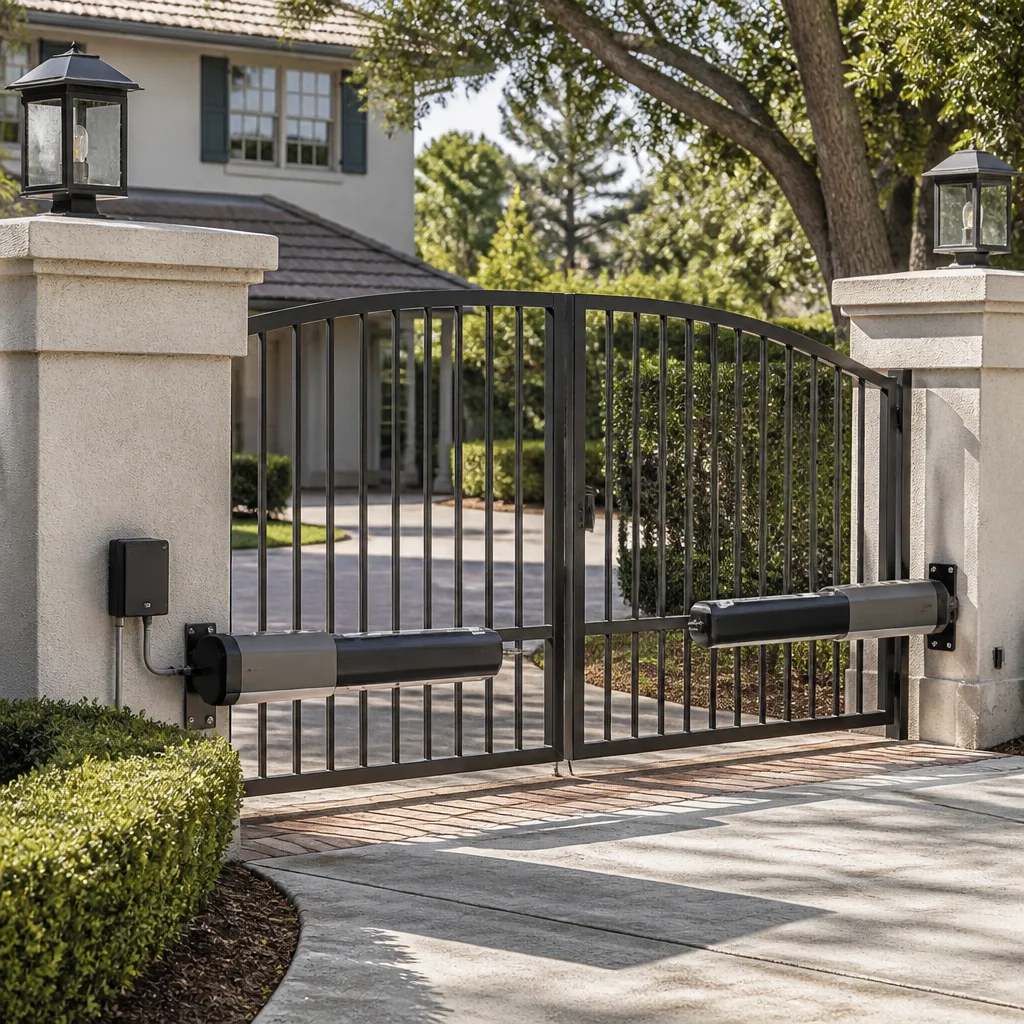 LiftMaster operators
Free on-site gate assessment - hinges, posts, and your LiftMaster or Nice gate operator checked before anything is quoted
The assessment is free and the quote is the invoice.
Get your free estimateStyles & brands we work with
- Wrought iron
- Wood & steel frame
- Farm & ranch
- Sliding driveway gates
- LiftMaster operators
See the difference
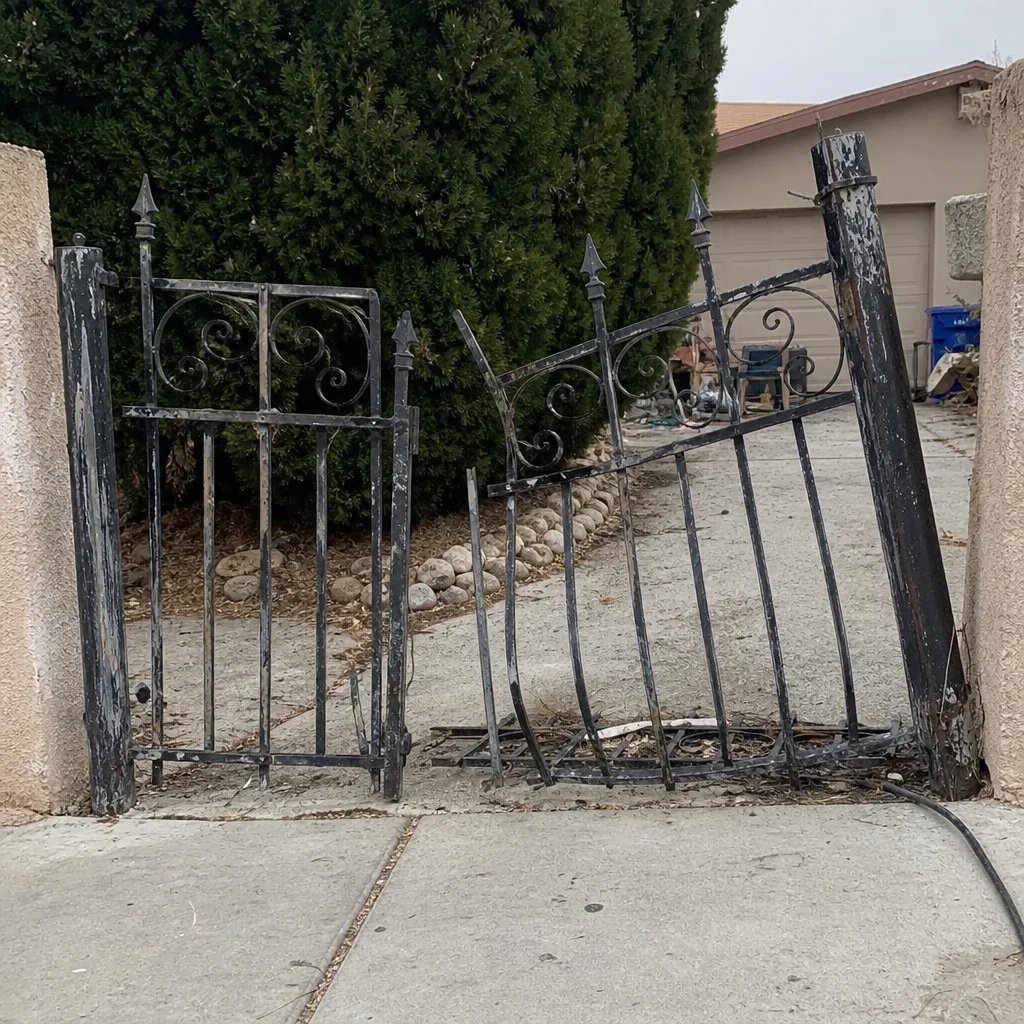 Before
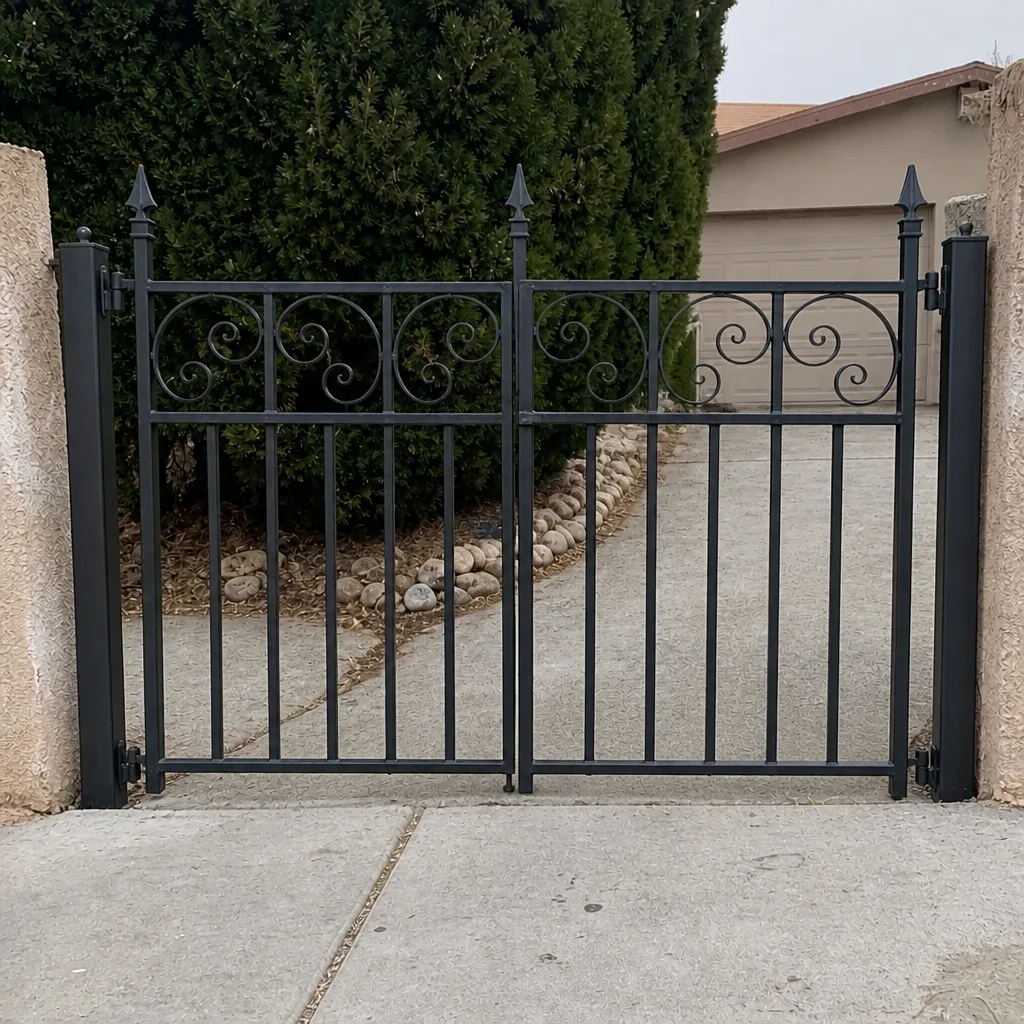 After
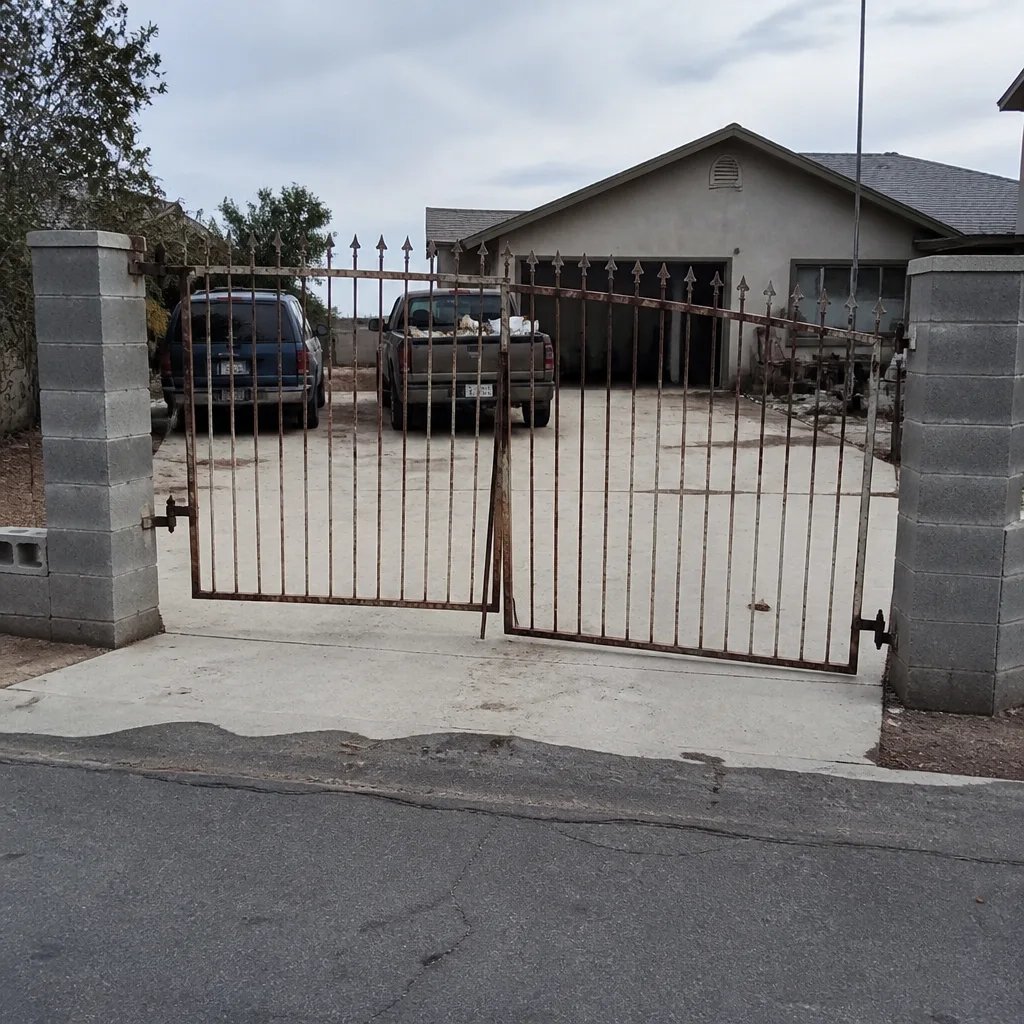 Before
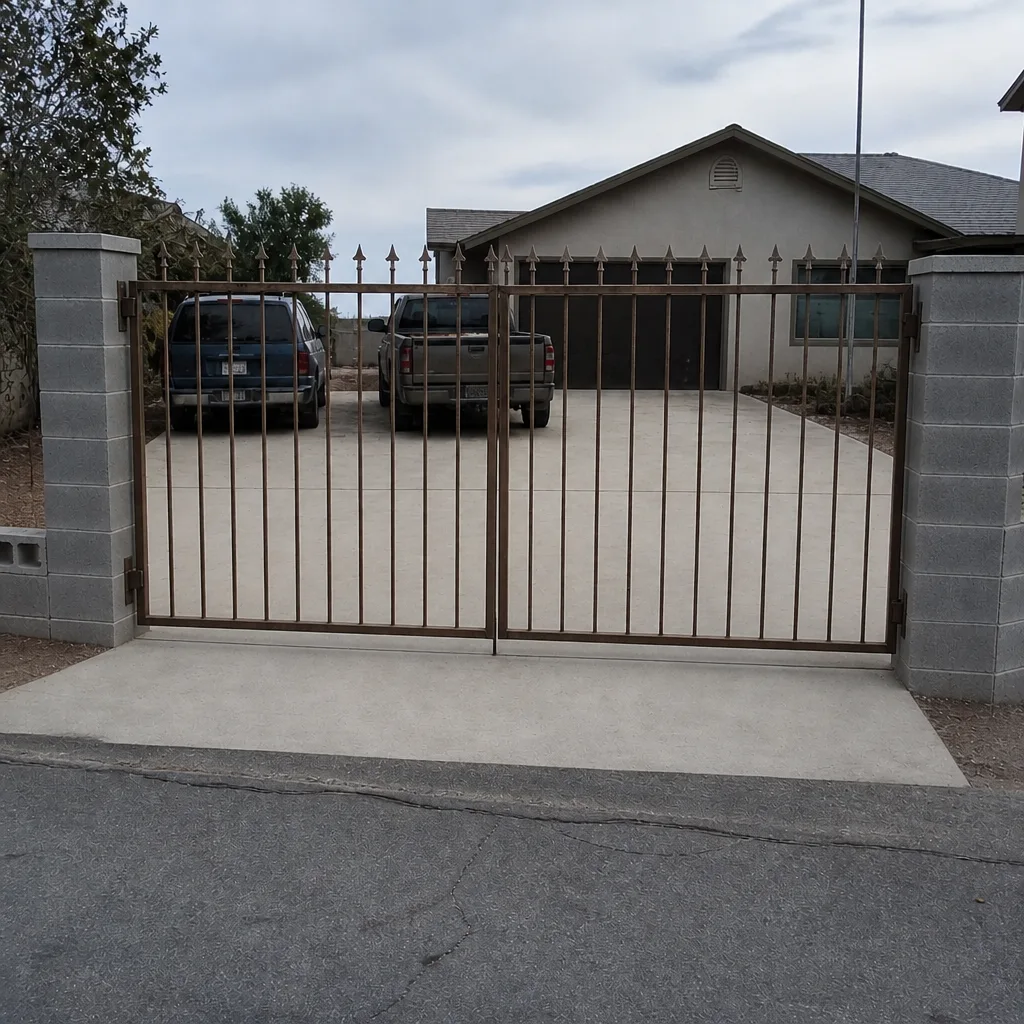 After
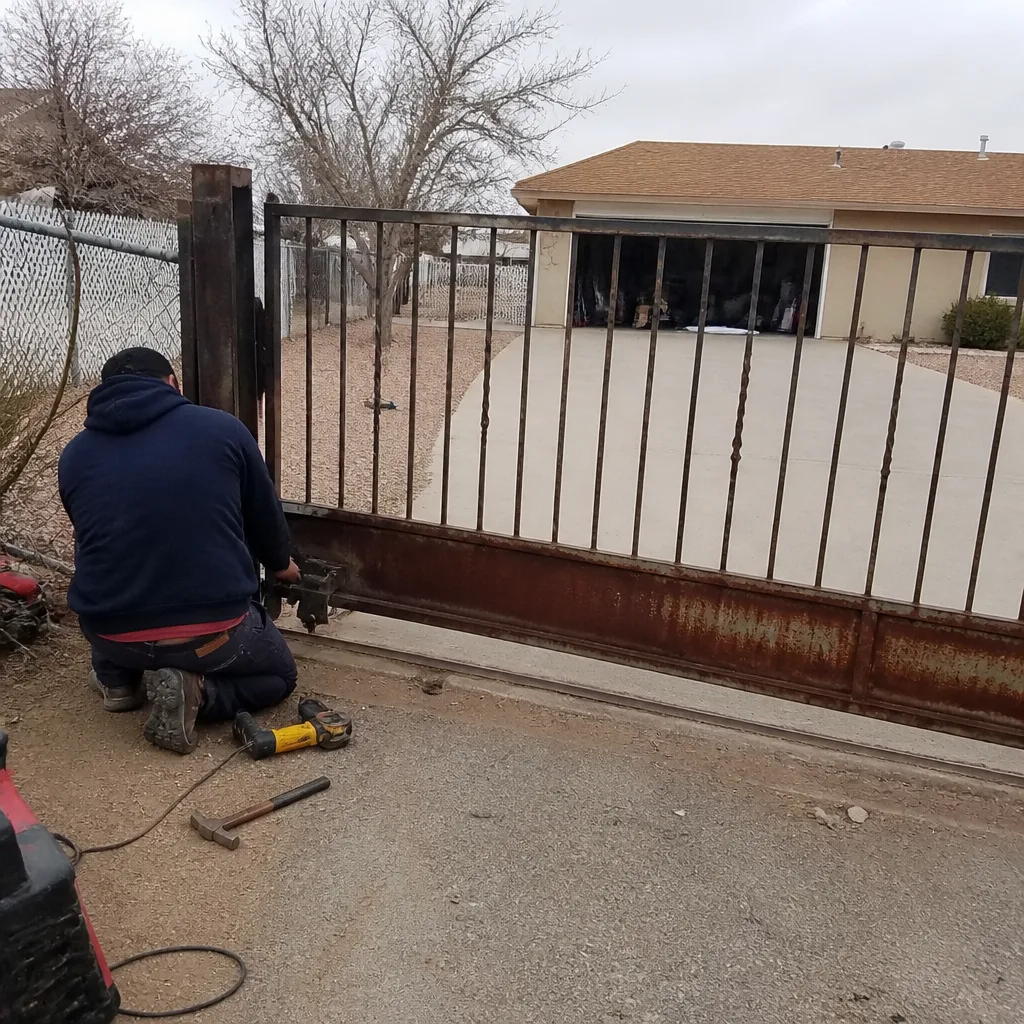 Before
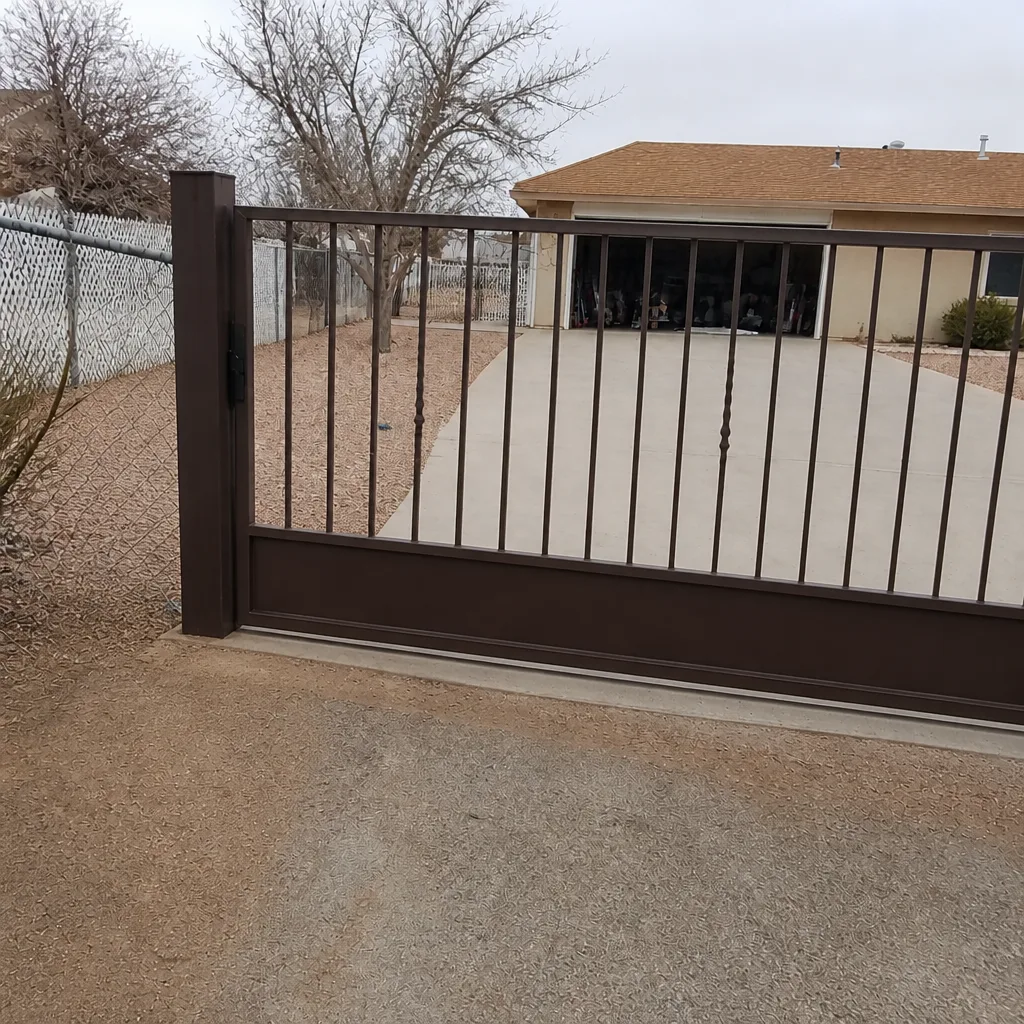 After
Wrought Iron vs Aluminum Gate in Boulder City, NV: Which Should You Choose?
Choose wrought iron if your gate hangs on a historic-district property around Nevada Way or Avenue B, if the posts are set at a non-standard spacing, or if you want the original streetscape preserved. Choose aluminum if you’re replacing a gate on a later ranch home on the east side and a standard kit width already fits. That’s the short answer. The long answer is that Boulder City isn’t a normal gate market, because a lot of the ironwork here wasn’t bought from a catalog – it was fabricated on site by federal construction crews in the 1930s. For a written assessment of what you actually have before you decide, call Vance Gate Repair Boulder City at (844) 320-7587.
Why Boulder City’s Gate Question Is Different From Everywhere Else
Walk the historic core and you’ll pass iron pedestrian gates that have been opening and closing for close to ninety years. Some of them still have their original hand-forged strap hinges. The fences and setbacks around them aren’t decorative choices – Boulder City was laid out as a federal planned community, and the historic district design guidelines govern visible fence and gate materials on street-facing elevations. That’s the part most wrought-iron-versus-aluminum articles skip entirely.
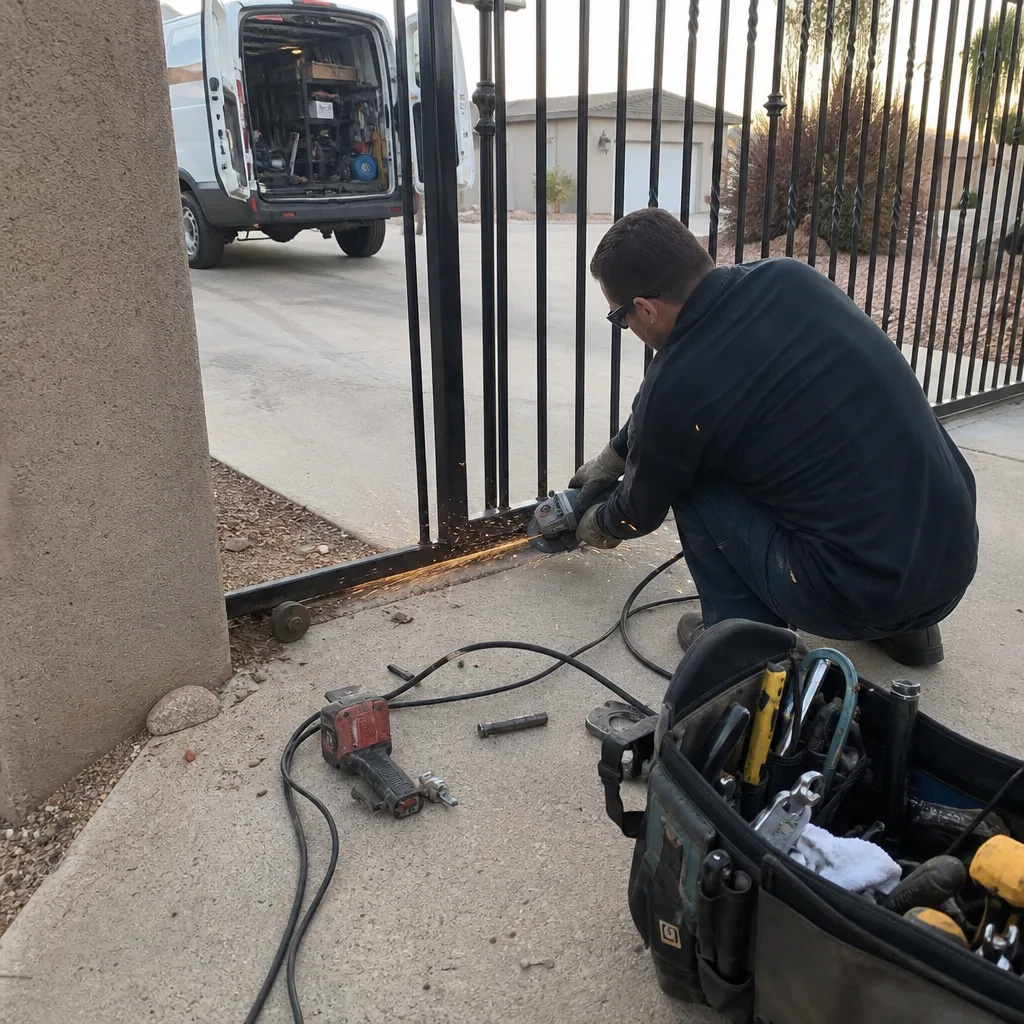
Practically, it means this: swapping an original iron gate for a standard aluminum kit gate on a street-facing elevation can require a certificate of appropriateness before anyone drills a post. Even when a property sits outside the review boundary, the dimensional problem remains. Original gates here were built to fit specific post spacings that don’t correspond to any standard aluminum kit width. That’s why custom fabrication and on-site welding show up so often in this town – and why a straight cost comparison online rarely survives contact with an actual Boulder City fence line.
Wrought Iron vs Aluminum: The Honest Comparison
| Factor | Wrought Iron | Aluminum |
|---|---|---|
| Historic district fit | Matches original streetscape and profile on street-facing elevations | May trigger a certificate of appropriateness review before installation |
| Dimensional fit | Fabricated to the existing post spacing; can be welded on site | Standard kit widths; often needs adapters or a rebuilt frame to fit |
| Thermal movement | Lower coefficient of thermal expansion – less daily movement | Expands and contracts more between night and afternoon peak; welds and frame joints can fatigue-crack over time |
| Weight and hardware load | Heavy; original hinges and latches were sized for it | Lighter; existing hardware may need replacing to work correctly |
| Repair path | Seized hinges can often be freed and re-hung; vintage-style hardware is still available | Usually component replacement rather than repair |
| Best fit | Historic core bungalows and workers’ cottages, custom-fabricated gates | Later east-side ranch homes with standard post spacing |
The Desert Performance Difference You Won’t Read Anywhere Else
Aluminum moves more with temperature than iron does. That sounds like a technicality until you live at the mouth of the Eldorado Valley, where summer highs routinely top 105°F and nights drop 50 to 70 degrees below the afternoon peak. Every one of those swings works an aluminum frame joint a little harder than it works an iron one. Over a few summers, the welds at the corners of a lightweight aluminum gate are the first thing to crack. Iron isn’t immune to heat, but it holds its shape better through that daily cycle.
The other desert factor is grit. Historic-district gates seize not because the metal failed but because desert dust works into the hinge barrel and the grease bakes solid. A seized hand-forged strap hinge on an original iron gate can often be freed with dry graphite lubricant and the gate re-hung. It does not need to be replaced with aluminum just because it’s old. We keep a stock of vintage-style hinges for exactly this situation, and we use dry graphite rather than oil, which turns to gum in 110°F summers and makes the problem worse by August.
BeforeAfterWhat Aluminum Is Actually Good At
None of this makes aluminum a bad material. It’s lighter, it doesn’t rust the way raw iron does, and it costs less to buy. On a later ranch home on Boulder City’s east side with standard post spacing and no historic overlay, an aluminum gate is a sensible, straightforward choice. Where homeowners get into trouble is assuming the aluminum decision they made for a Phoenix subdivision transfers to a 1948 workers’ cottage with a 44-inch gate opening and a hand-forged latch.
Repair vs Replace: Run the Numbers Before You Decide
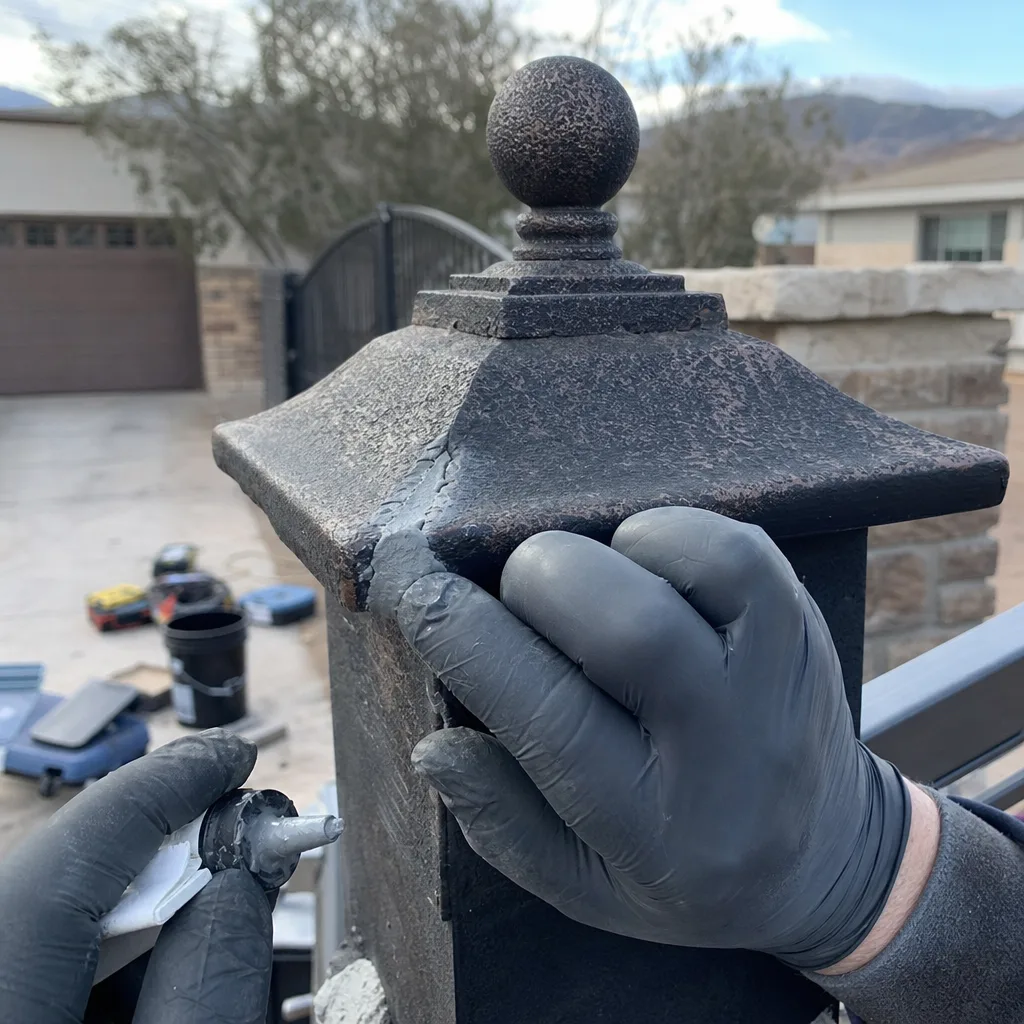
Most homeowners call us expecting to be told to replace. Often the honest answer is that the gate needs thirty minutes of hinge work and a latch adjustment, not a new gate. Here’s how we work through it:
- Photograph the original hardware first. Before anything is touched, we document what’s there – hinge style, latch type, post spacing, gate width. You get a copy, which matters for insurance records and for any historic district file.
- Separate repairable from fabrication-bound. The written scope identifies which components are original and can be freed, re-hung or re-welded, and which genuinely require new fabrication.
- Check the automation separately. The gate and the opener are two different problems. A perfectly good iron gate can hang on a tired motor, and we service LiftMaster, FAAC, BFT, Mighty Mule and five other major brands – so the motor already on your property gets worked on, not automatically swapped.
- Price it in writing before any tool comes out. The flat price is written and handed to you first. That’s the whole point of the way we work.
- Leave a record. When we’re done, you get a photo log of every adjustment and a written part number for anything installed. The next technician – ours or anyone else’s – starts from facts instead of guesses.
If you’ve already got a written estimate from another company, bring it. We’ll review it at no charge and tell you honestly whether the scope matches what’s actually on your gate.
Do You Need a Certificate of Appropriateness for a Gate Swap in Boulder City?
If your property sits in the historic district and the gate is visible from the street, possibly yes – which is precisely why the material choice is a preservation question here and not just a budget one. A standard aluminum kit gate that changes the profile of a street-facing elevation is the kind of change review boards look at closely. Iron replacements that match the original profile and dimensions tend to move through review far more smoothly. We can’t approve anything on your behalf, but we can document the existing gate thoroughly enough that your application has photographic evidence behind it.
Where Wrought Iron and Aluminum Gates Fit in Boulder City
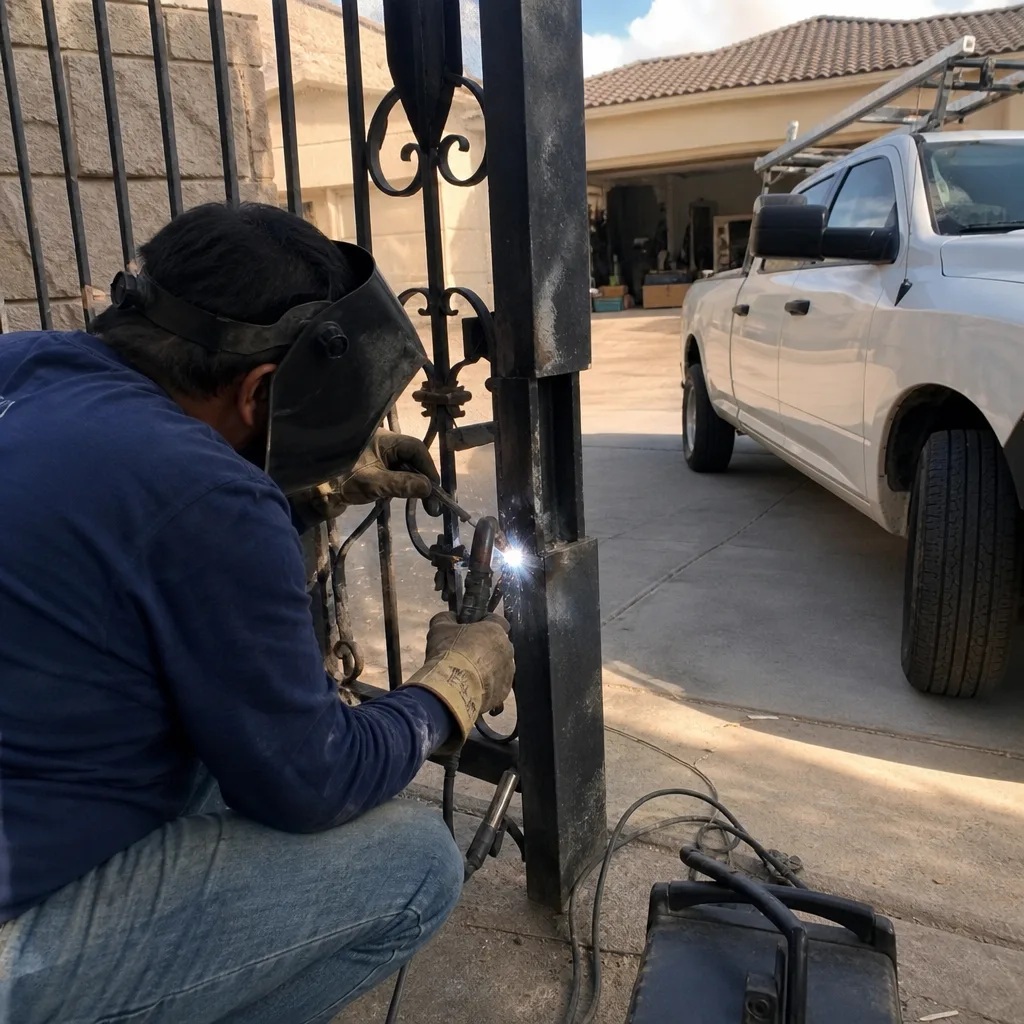
- Historic core bungalows and federal workers’ cottages: original wrought-iron pedestrian gates, hand-forged hinges, custom post spacing. Repair-first, match the profile if replacement is unavoidable.
- East-side ranch homes: later construction, standard spacing, aluminum is often the practical choice.
- Driveway gates throughout town: wind exposure off the McCullough Range is the real enemy – sustained 30 to 40 mph spring gusts bend lightweight metal and can knock older gates off their tracks entirely. Whatever material you pick, the posts and hinges need to be sized for wind, not just for weight.
Whichever way you go, the bracket, post and hinge work is where a gate actually succeeds or fails. For new builds we handle Gate Installation with the same written-scope approach, and you can see more on our Gate Installation in Boulder City page. Back to the home page for the full picture of what we service.
Key Takeaways
- In Boulder City’s historic district, gate material is partly a preservation question, not just a cost one.
- Original 1930s-1950s iron gates were custom-fabricated to post spacings no aluminum kit matches.
- Aluminum expands and contracts more with heat; Boulder City’s 50 to 70°F daily swings fatigue aluminum welds over time.
- A seized original iron hinge usually needs graphite and a re-hang, not replacement.
- Every visit from us includes a photo record and a written price before work starts.
FAQs
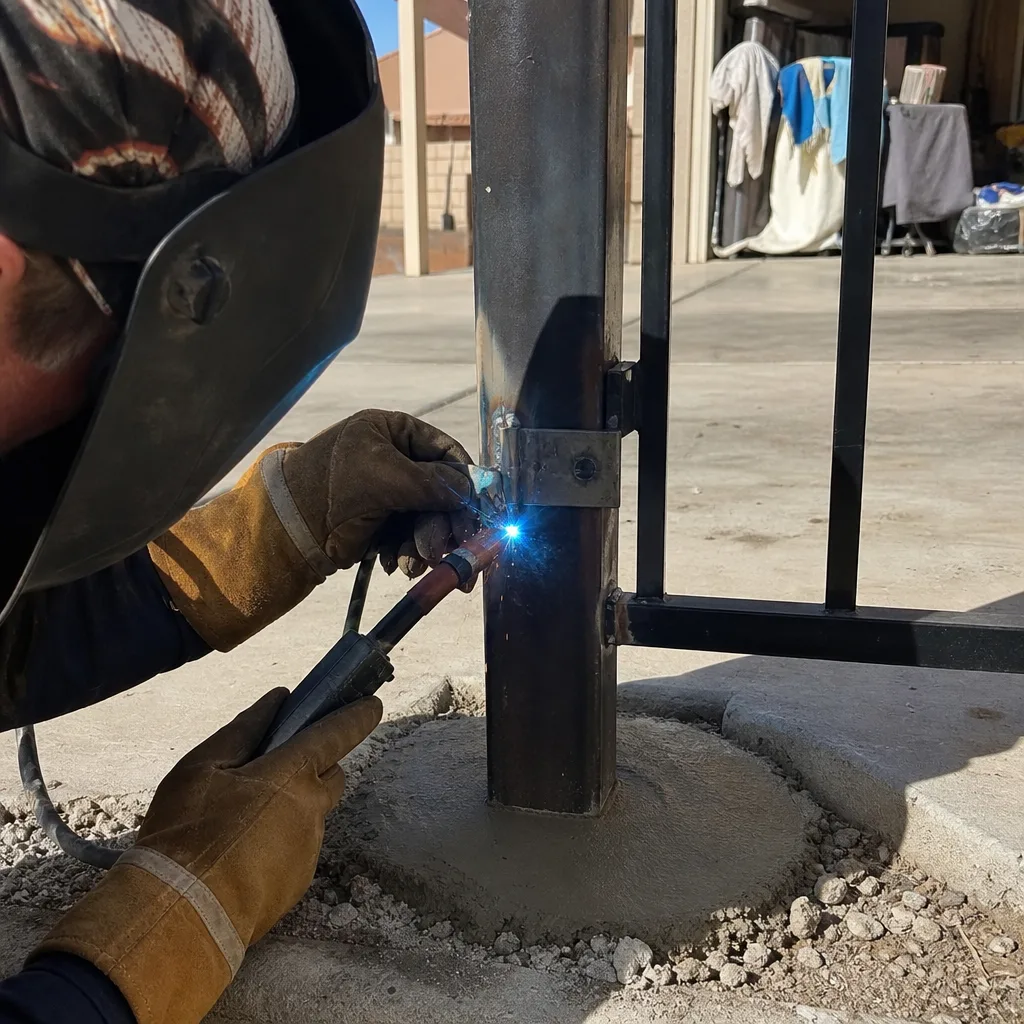
Wrought iron is the better choice for historic-district properties and custom post spacings; aluminum is the better choice for later ranch homes with standard spacing. The deciding factor in Boulder City is usually whether the gate is visible from the street in the historic core, because that’s where material and profile rules apply. Call (844) 320-7587 and we’ll tell you which category your property falls into.
Not automatically. A street-facing material change on a historic-district property can require a certificate of appropriateness before installation, so the swap needs review first. We document the existing gate thoroughly – photos, hinge style, post spacing – so you have real evidence for the application. Call (844) 320-7587 for a free assessment.
Usually no. Seized hand-forged strap hinges can often be freed with dry graphite lubricant and the gate re-hung, and we keep vintage-style hinges in stock for exactly this. Oil is the wrong choice here – it turns to gum in 110°F summers and makes the seize worse. Call (844) 320-7587 and we’ll look at it.
It depends heavily on whether the replacement has to be custom-fabricated to your post spacing, which is common in the historic core, versus a standard aluminum kit on an east-side ranch lot. Because the range is so wide, we don’t quote over the phone – we write the flat price on site and hand it to you before any work begins. Estimates are free: (844) 320-7587.
Have Us Look Before You Decide
If you’d rather have it looked at, Vance Gate Repair Boulder City offers a no-pressure assessment in Boulder City – we photograph what’s there, tell you what’s repairable, and hand you a written price before anything is touched. Call (844) 320-7587 for a free estimate.
Written by the team at Vance Gate Repair Boulder City, serving Boulder City, NV.