
Last updated November 18, 2026
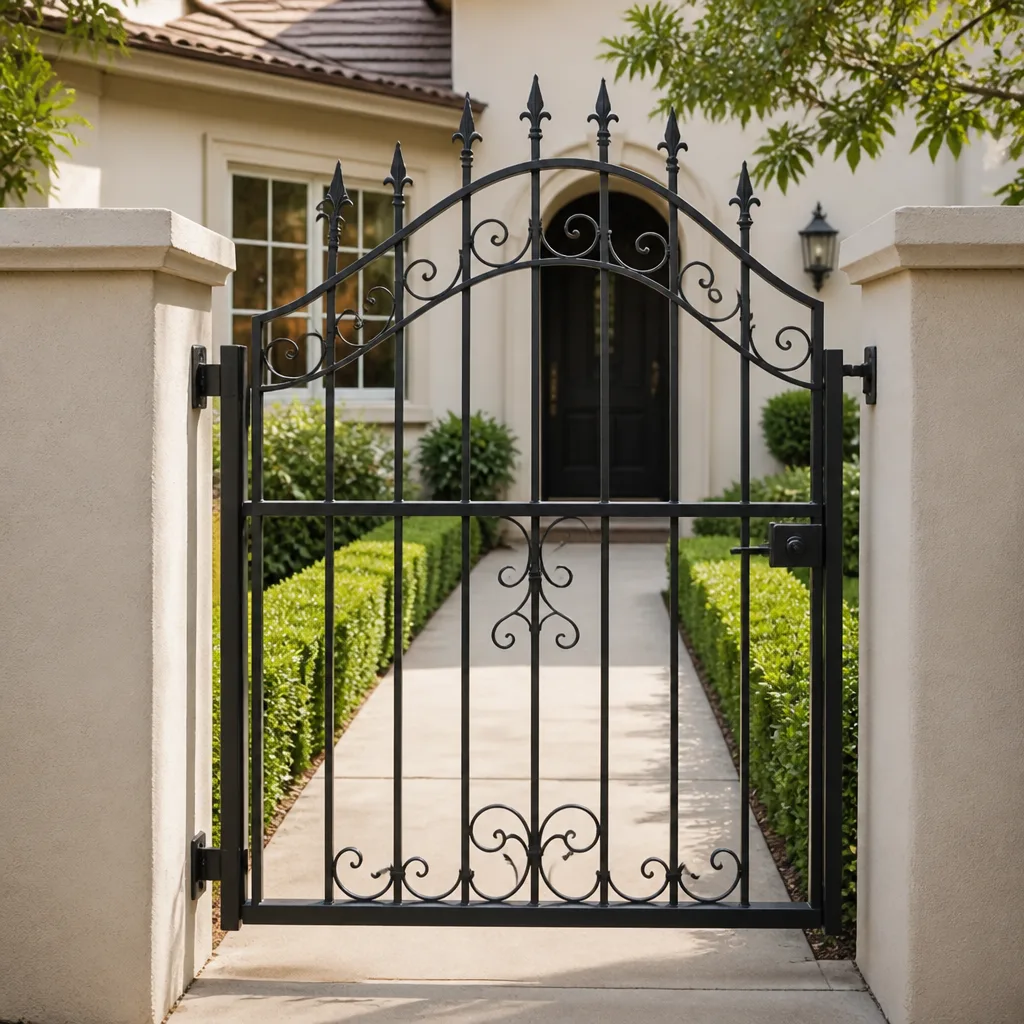 Wrought iron
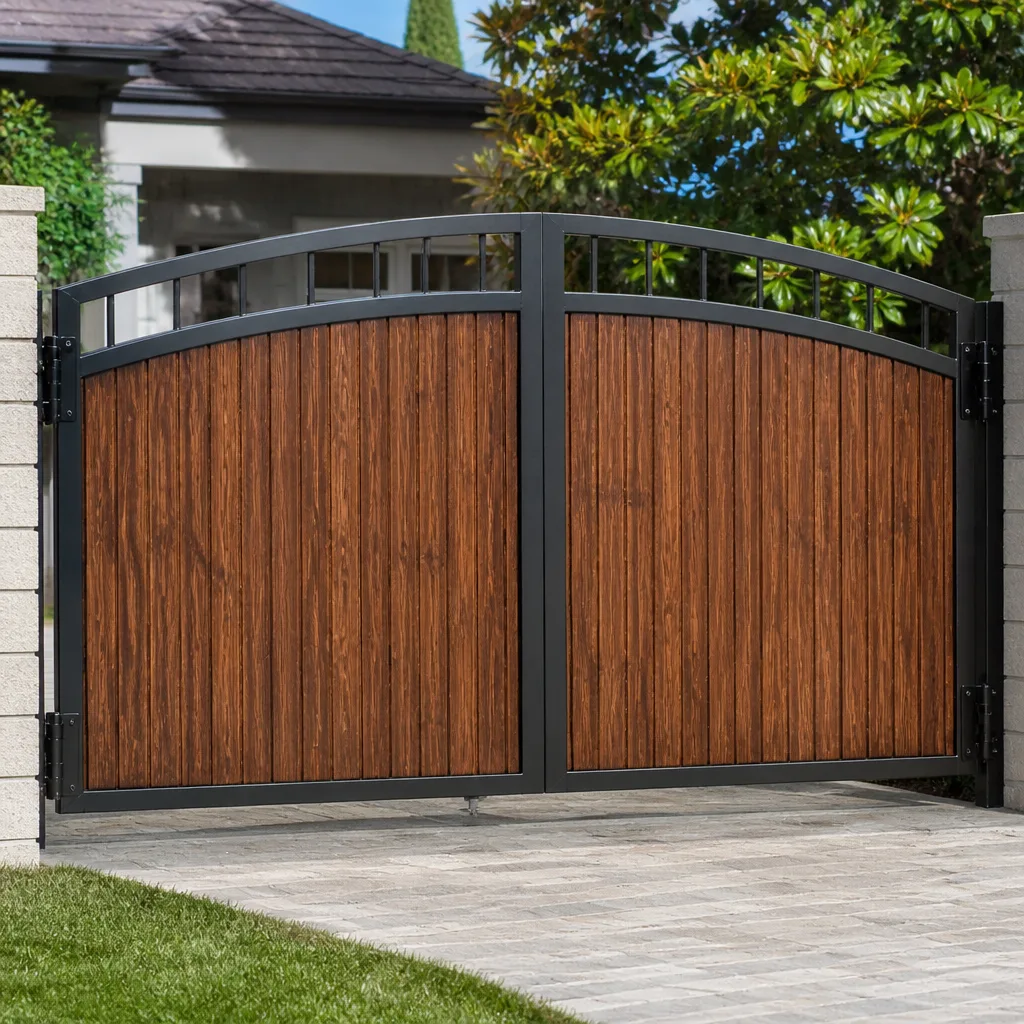 Wood & steel frame
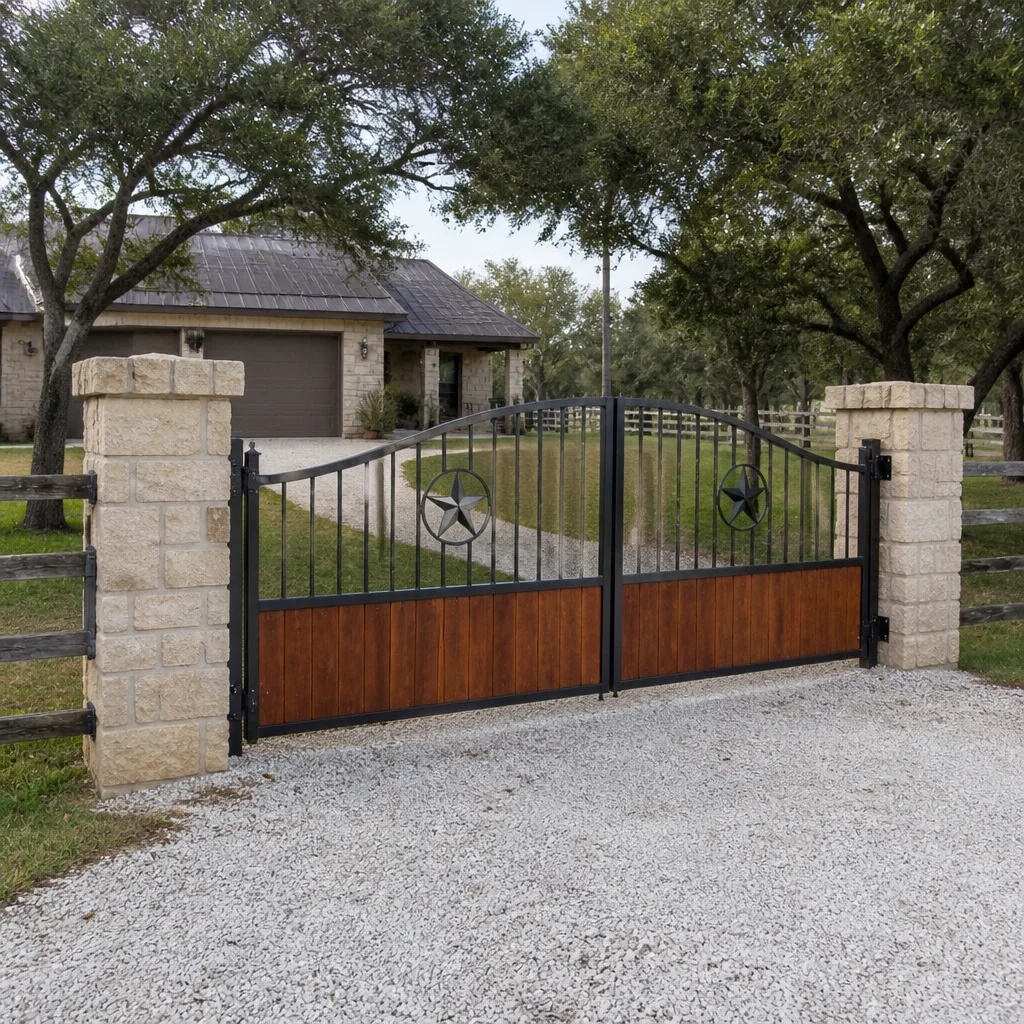 Farm & ranch
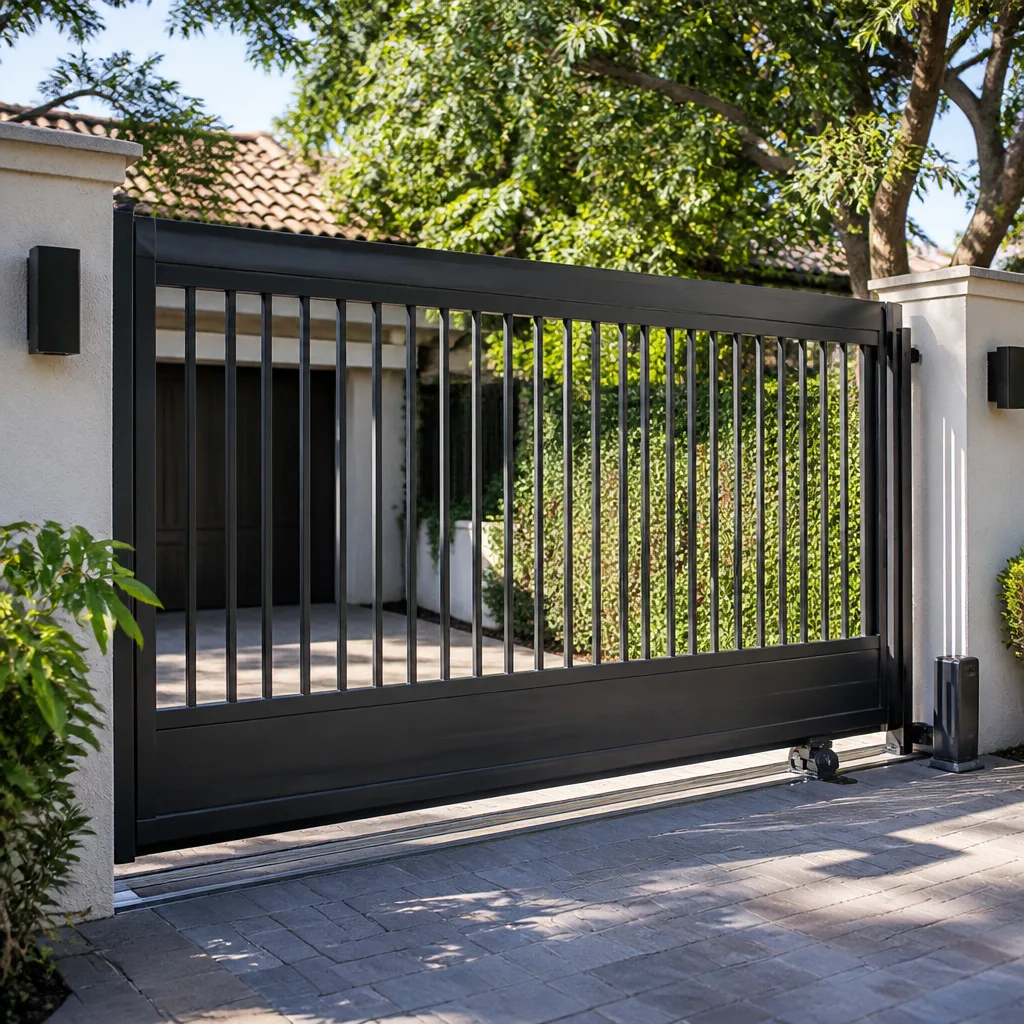 Sliding driveway gates
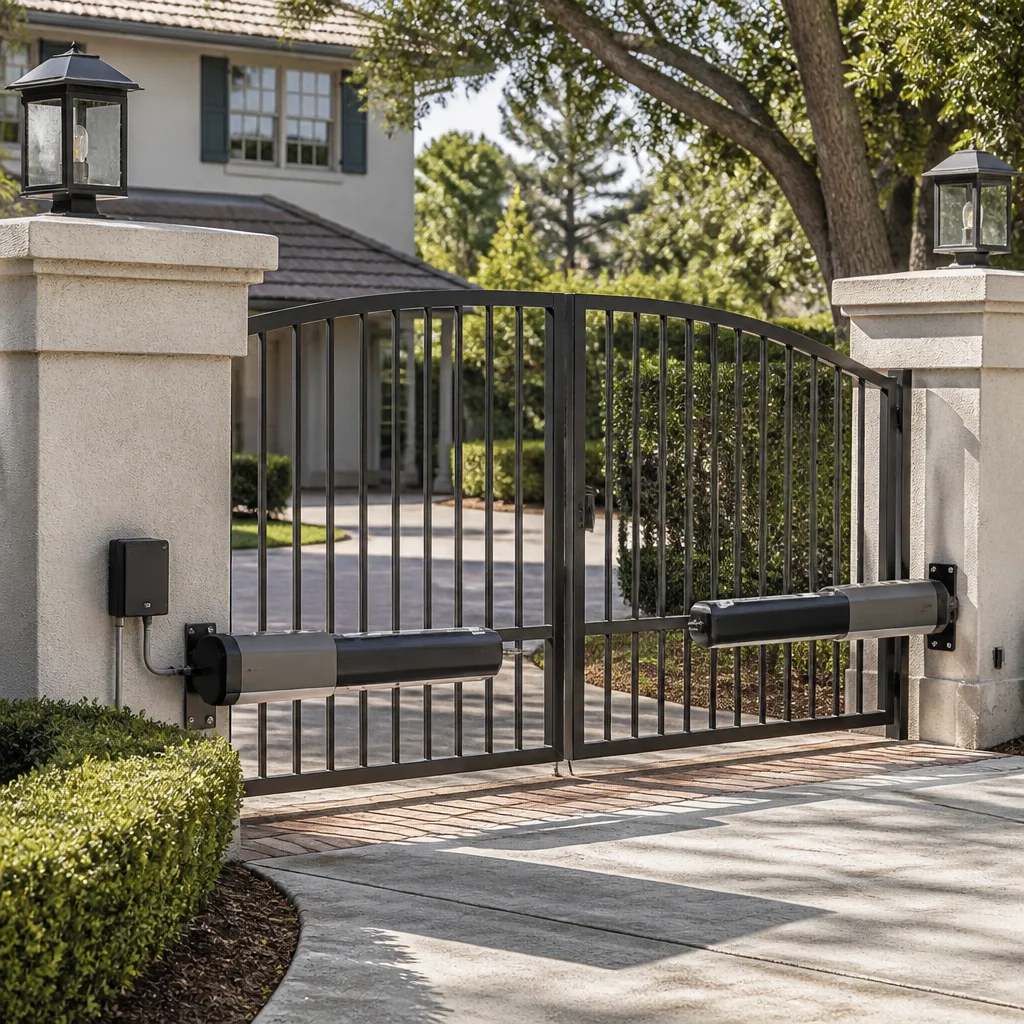 LiftMaster operators
Free on-site gate assessment - hinges, posts, and your LiftMaster or Nice gate operator checked before anything is quoted
The assessment is free and the quote is the invoice.
Get your free estimateGate Repair Emergency Preparedness Guide for Boulder City Homes
Most gate emergencies we’re called to in Boulder City don’t start with the gate. They start with a homeowner standing in the dark, phone in one hand, flashlight in the other, trying to find a manual release they’ve never once had a reason to look for. Here’s the part that surprises people: the two most common after-hours failures need opposite responses. A gate stuck open is a security problem you need to close quickly. A gate stuck closed is a safety problem you may need to open right now. This guide walks through both, in the order you’d actually face them.
Quick Answer
For an emergency gate repair in Boulder City NV, the first thing to establish is whether the gate is stuck open or stuck closed. Stuck open means you secure the property and document the failure before calling a technician. Stuck closed means you locate the manual release first, and if anyone in the vehicle needs medical access, you call 911 before you call a gate company. Both scenarios get faster and cheaper when you know your model number, your power status, and where the release lever sits before anything breaks.
Styles & brands we work with
- Wrought iron
- Wood & steel frame
- Farm & ranch
- Sliding driveway gates
- LiftMaster operators
Table of Contents
- Why A Stuck-Open Gate and a Stuck-Closed Gate Need Opposite Protocols
- How To Find and Operate the Manual Release on Common Gate Operators
- The Stuck-Open Protocol: Secure the Property First
- The Stuck-Closed Protocol: When To Call 911 Before a Technician
- What To Have Ready When You Call So Dispatch Doesn’t Waste a Minute
- Preventing the Most Common Boulder City After-Hours Failures
- Common Mistakes to Avoid
- Frequently Asked Questions
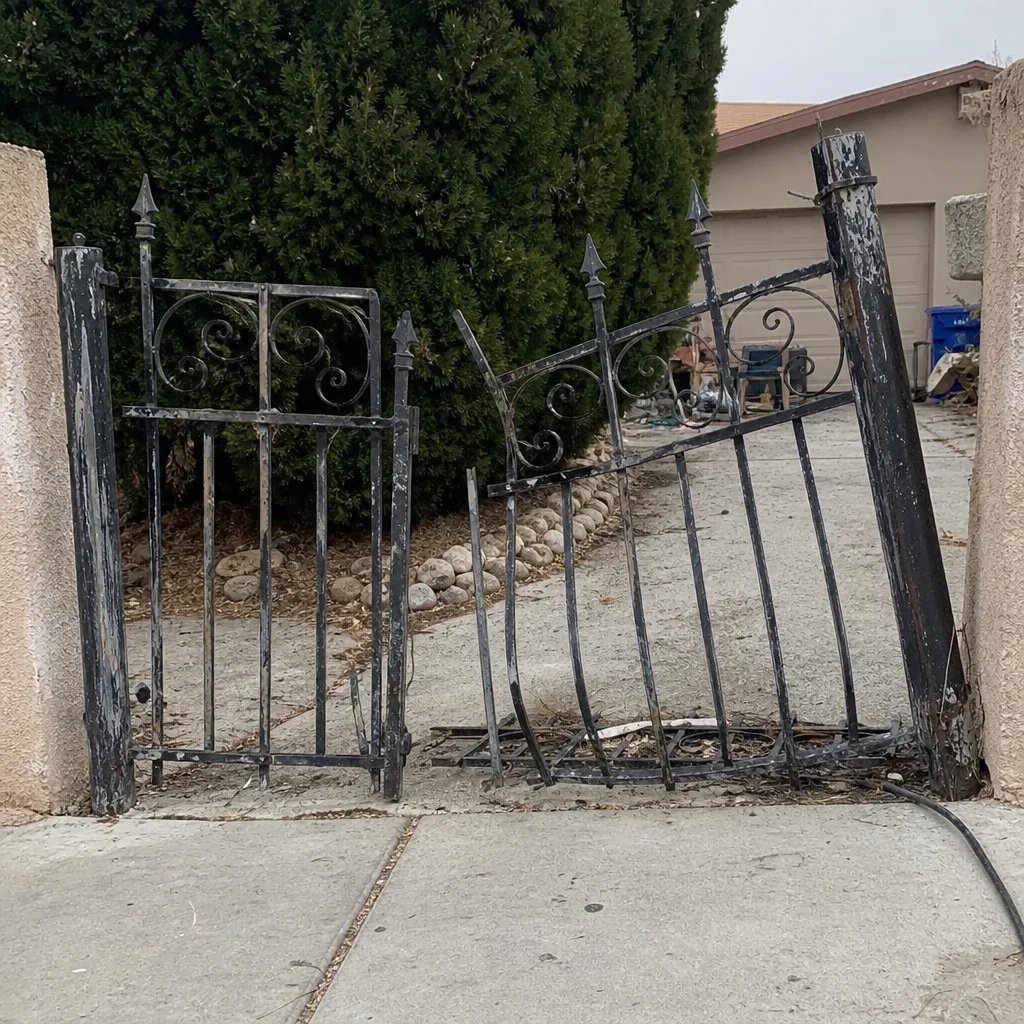 Before
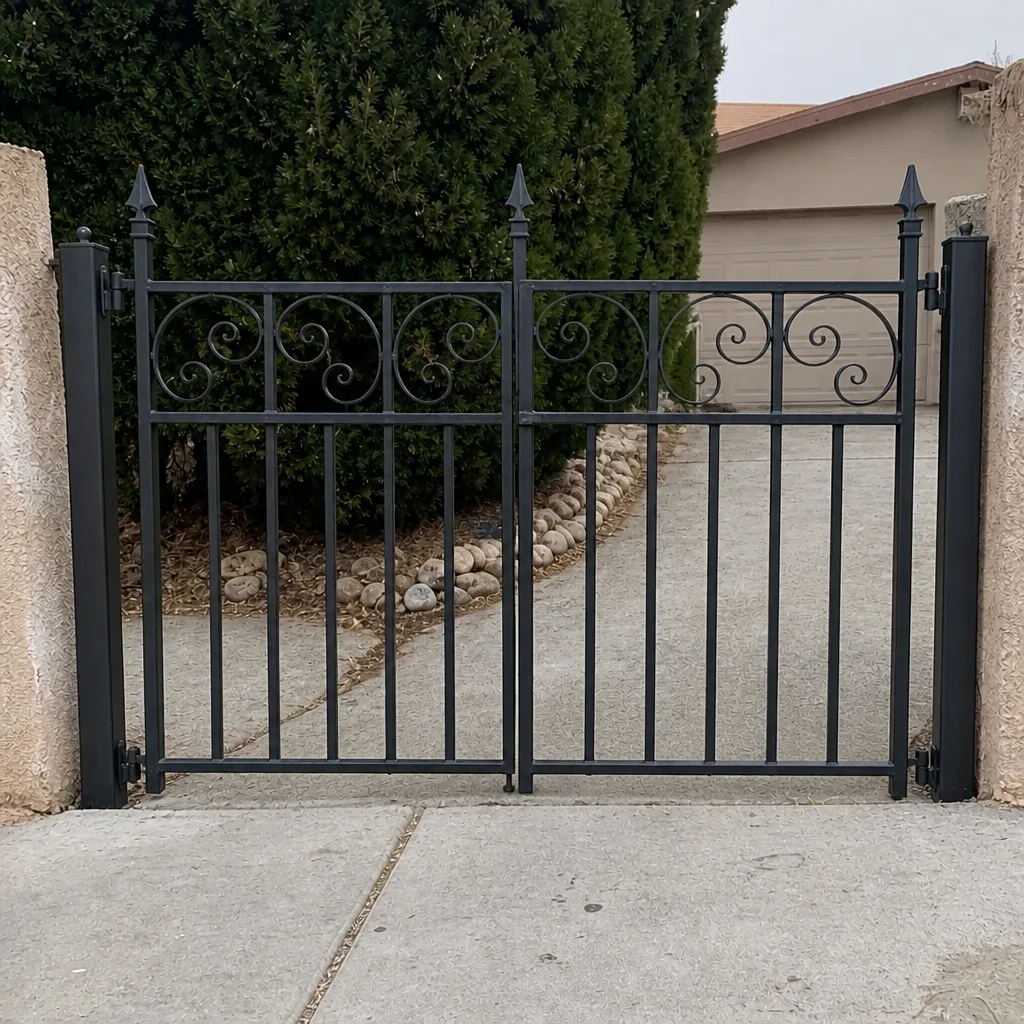 After
Why A Stuck-Open Gate and a Stuck-Closed Gate Need Opposite Protocols
A gate that won’t close leaves your driveway, side yard, or equipment open to the street. That’s a security failure, and the clock on it is measured in theft risk, not in physical danger. A gate that won’t open can trap a vehicle in the driveway with someone inside who may be having a medical emergency. That’s a life-safety failure, and the clock on it is measured in minutes.
We’ve pulled up to both kinds of calls in Boulder City on the same night. The stuck-open call usually came in after the homeowner noticed the gate hanging wide at dusk. The stuck-closed call came in mid-panic, often with someone already late for the emergency room. Treating them the same way is how people lose time they don’t have.
Here’s the split in plain terms:
- Stuck open: secure the opening with a temporary barrier or lock, photograph the gate’s position and any visible damage, then call a technician during normal dispatch. Nobody is at risk of physical harm in this scenario. The risk is property.
- Stuck closed: immediately locate the manual release and, if it’s a life-safety situation involving a person inside a vehicle, call 911 first. The gate technician is the second call, not the first.
- Stuck at an angle (partially open): treat it as stuck-closed for safety purposes until you confirm nobody is trapped, then treat it as stuck-open for security purposes.
Both categories benefit from one thing equally: knowing your operator’s model before the failure. If you already know whether you have a Ghost Controls or a DoorKing on that post, the emergency conversation gets cut in half. We service nine major gate-automation brands, so whatever motor is already on your property, we can work on it without steering you toward a replacement.
How To Find and Operate the Manual Release on Common Gate Operators
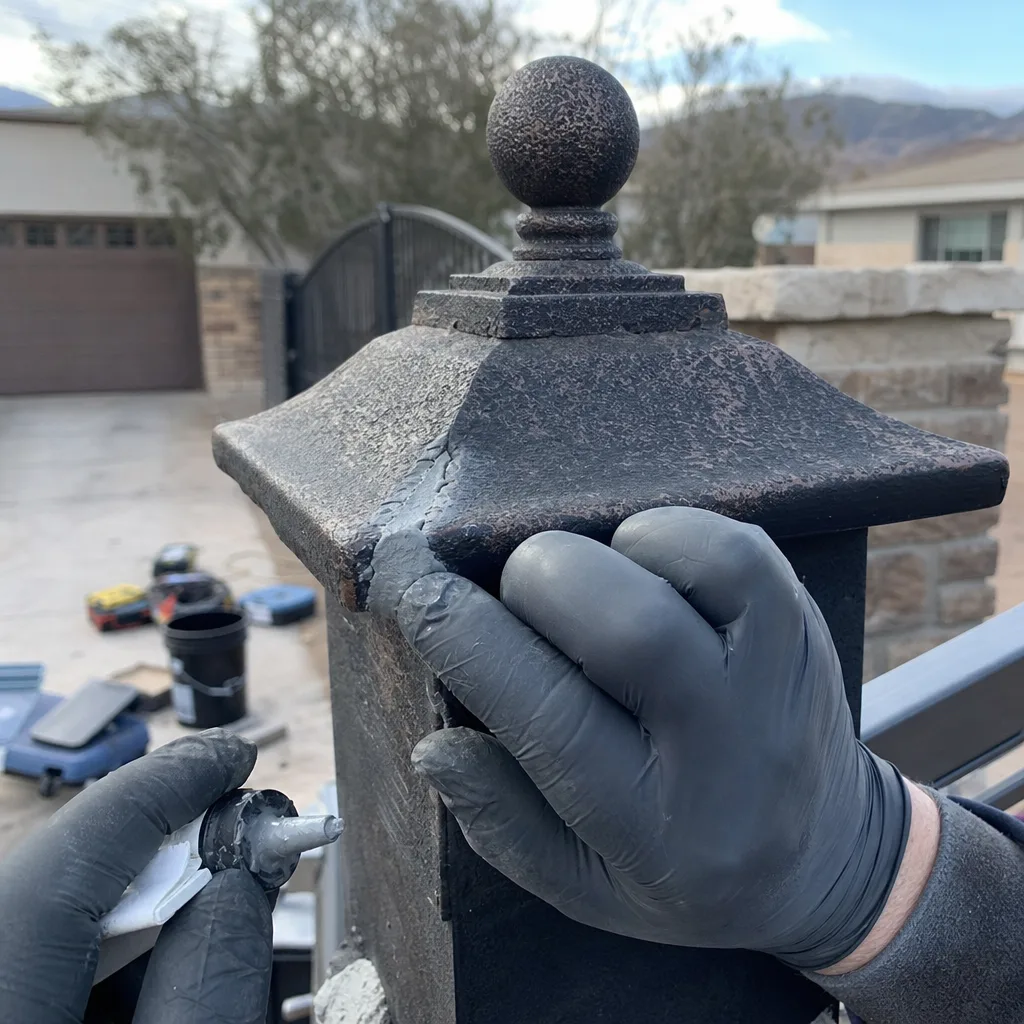
The manual release is the single most important piece of hardware on your gate, and most Boulder City homeowners have never touched it. On a swing gate, it looks like a chrome lever or a key-operated release cylinder near the hinge. On a slide gate, it’s usually a lever on the operator housing itself. Some operators use a keyed release that requires the same key your installer left in the gate’s control box or gave you at handoff.
We’re not going to walk you through pulling the lever yourself at 11 PM. The release is spring-loaded on many models, and a swing gate under tension can swing hard enough to injure a hand or a shoulder. What you can do safely, tonight, is find it and photograph it so you’re not discovering it in the dark.
Find Your Release Before You Need It
- Walk to the operator housing (the box attached to the gate or the post). Look for a small lever, a keyed cylinder, or a label that says “release.”
- Photograph the lever, the keyed cylinder, and the surrounding hardware with your phone’s flash on. Save it in a photo album you’ll remember.
- Locate the key. On most residential swing operators, the key lives on the same ring as your house key or is stored in the control box under the cover.
- Check the instruction plate on the operator housing. Most brands print release instructions on the housing or inside the control-box lid.
What the Common Boulder City Operators Use
Ghost Controls operators (common on residential swing gates around the Eldorado Valley side) typically use a lever release on the operator’s side housing. DoorKing slide operators use a keyed release on the chassis. Elite and Mighty Mule swing operators use a release lever that swings the arm free of the gate. Every one of them has a printable release procedure, and every one of them is easier to operate when you’ve studied the lever once in daylight with the gate in its normal position.
If you can’t find the release, don’t force anything. Call and we’ll talk you through locating it while a technician is on the way. Our technicians answer a live line at every hour, not a voicemail loop.
The Stuck-Open Protocol: Secure the Property First
A gate stuck open at dusk is a driveway standing open to the street. The first move is a temporary barrier, not a phone call. A pair of heavy-duty cable locks through the gate frame and post will hold a swing gate closed against wind and casual entry until a technician can arrive. A ratchet strap or a chain through the gate and post will do in a pinch. If the gate is a slide gate stuck open, a wheel chock or a cable lock through the track stops it from rolling.
Then document before you call. Photograph the gate’s exact position, the operator’s display panel (if it has one), any visible fault code, and the power status (breaker position, any GFCI trip). Boulder City’s spring windstorms and summer heat can both cause a gate to stop where it is, and the photo tells us which.
What To Photograph Before You Call
- The whole gate from a distance, so we can see the angle it stopped at.
- The operator housing and any fault LED or error code on the panel.
- The control-box breaker or disconnect switch, showing on or off position.
- Any obstacle in the gate’s path (a rock, a branch, a parked car the beam is reading).
If you don’t have a cable lock, don’t improvise with a rope tied to a gate arm. A rope under tension can snap or pull the gate arm off its mount. Chain and padlock or a proper cable lock are the answer. And a quick word on the tempting fix: don’t try to reset the operator repeatedly hoping the gate closes. Repeated resets on a thermal fault don’t work, and they can overheat the motor.
The Stuck-Closed Protocol: When To Call 911 Before a Technician
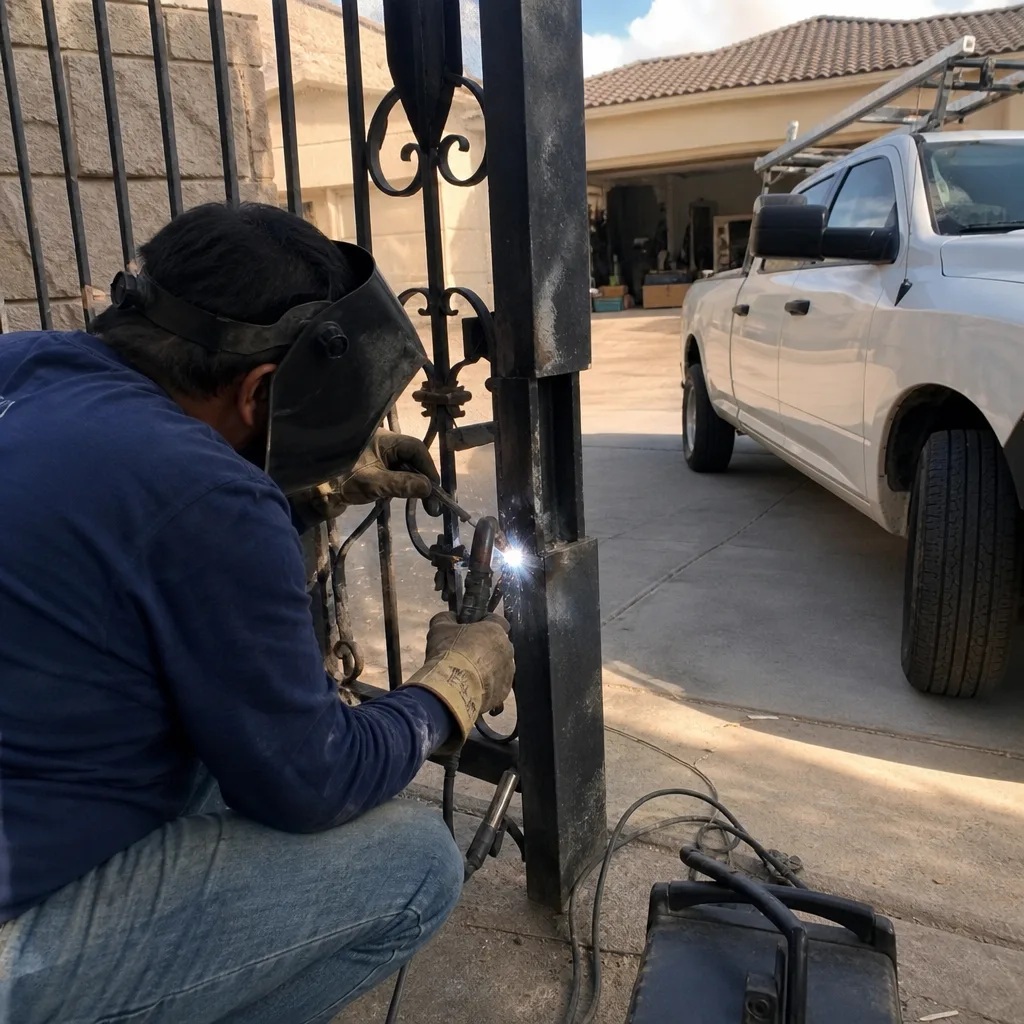
This is the one that stops us. A gate stuck closed while someone in a vehicle needs medical access is a life-safety event. If a person in the car is having chest pain, difficulty breathing, or any symptom you’d call about normally, call 911 first. The gate technician is the second call. No piece of equipment is worth fifteen minutes of response delay.
Once you’ve called emergency services, the manual release is what gets the vehicle out past the gate so it can meet the ambulance at the street. This is why locating the release in daylight matters. In the dark, with someone in distress, you don’t have time to read a housing label.
If Someone Is Not In Danger
If the gate is stuck closed and nobody is at medical risk, the sequence is calmer. Listen for the operator to cycle: a running motor with a humming sound and no gate movement usually means a belt, a chain, or a clutch issue. A dead motor with no sound usually means the control board, a breaker, or a power failure. Either way, photograph the operator panel and call.
Do not cut or drill anything through the gate mechanism. Manual releases exist precisely so nothing needs cutting. If the release actually won’t budge, the problem is mechanical, and a technician needs to be on-site. The 365-Day Done Right Promise covers the repair once we’re there, but it can’t get us there faster than a clear call.
What To Have Ready When You Call So Dispatch Doesn’t Waste a Minute
The fastest calls we take are the ones where the homeowner has four things ready. That’s it. Four pieces of information and we can have a technician dispatched with the right parts and the right focus before the call ends.
Have These Four Things Ready
- Operator model number. It’s printed on the operator housing. Ghost Controls, Elite, Mighty Mule, DoorKing, LiftMaster, FAAC, BFT, Linear, and Viking all print it somewhere accessible. If you can’t find it, read us the brand name at least.
- Symptom description. “Gate won’t move but motor hums.” “Gate moves an inch and stops.” “Gate reverses mid-travel.” “Gate won’t respond to remote at all.” Each of those is a different diagnosis and a different part on the truck.
- Power status. Is the breaker on? Is the GFCI in the control box tripped? Has the power been off recently?
- Gate type. Swing gate or slide gate, and roughly how wide. Single leaf or double leaf.
Have those ready and the call takes two minutes. Have none of them and we’re going to spend the first five minutes asking, which is fine, but it’s five minutes you could have spent getting someone on the road.
When you call, you’ll get a live person, not a queue. That’s deliberate. Under the Haven Standard, the written price arrives before any tool comes out, so by the time the technician confirms the diagnosis, the price is already a number, not a “call you back with a quote.”
Preventing the Most Common Boulder City After-Hours Failures
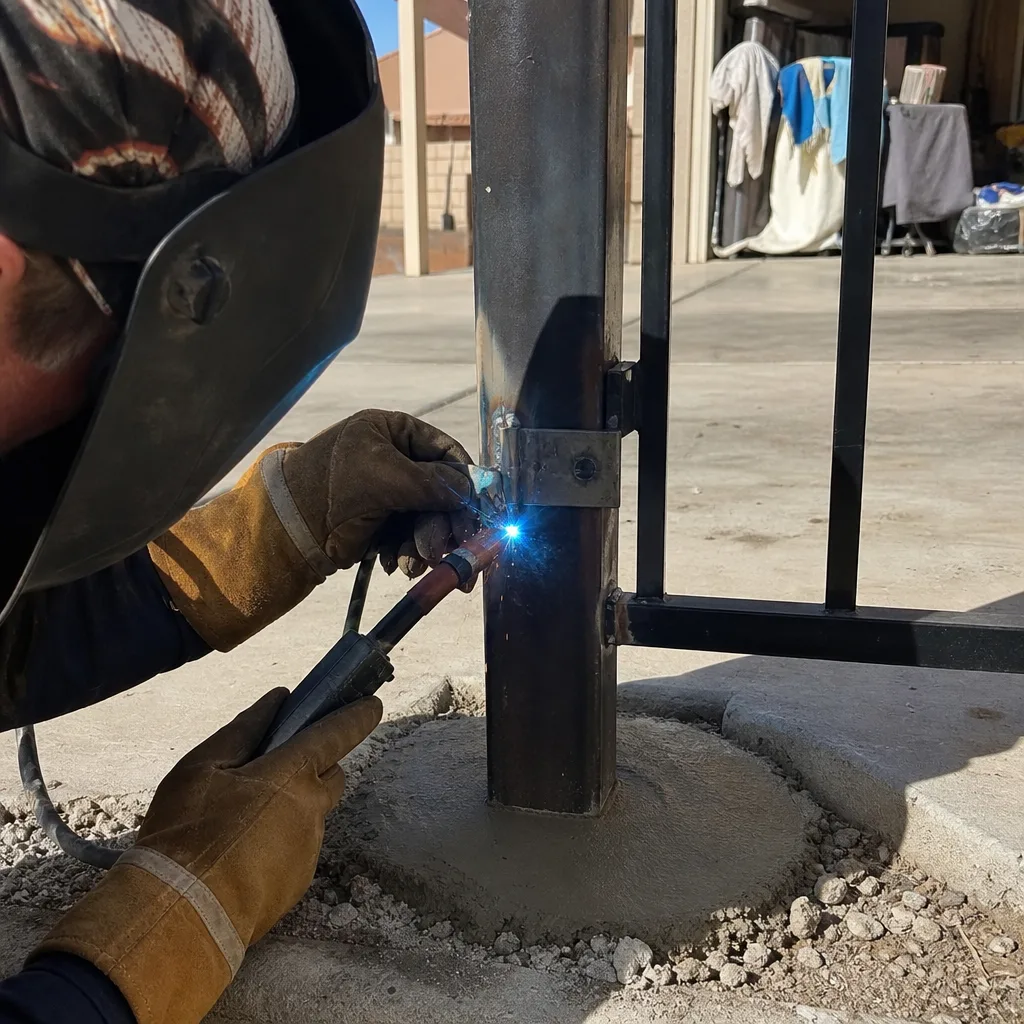
The two failures that bring us out to Boulder City gates after dark most often are both preventable, and they’re specific to this climate and this power grid.
Summer Power Fluctuations and Board Reset Failures
Boulder City summers run into the triple digits, and the local power grid carries a lot of air-conditioning load. Brownouts and brief surges cause gate control boards to reset or lock into a fault state. A board that won’t respond after a power blip is usually a surge-protection issue, not a dead board. A whole-house surge suppressor on the circuit serving the gate operator is the cheap prevention. A dedicated circuit breaker at the operator is the second. We’ve seen gates in the neighborhoods near Boulder City’s older housing stock lose a board to a summer surge more than once a season.
Thermal Cutoff Trips at Peak Heat
The operator duty cycle is the number of times the gate can open and close in an hour before the motor needs to rest. In cooler months a residential gate rarely trips its thermal cutoff. In a Boulder City July, a gate that opens and closes a lot (guests, deliveries, kids in and out) can trip the cutoff by midafternoon. If the gate stops working around 2 or 3 PM on a hot day and resumes later, that’s the thermal cutoff, not a component failure. The fix is either a higher duty-cycle operator or better air movement around the housing, and it’s worth a conversation before July.
Preventative Maintenance That Pays For Itself
- Once a month, clear debris from the gate’s travel path and check the photo-eye alignment by hand.
- Once a quarter, photograph the operator panel and check for a fault code before it becomes an emergency.
- Before summer, check the plug-and-cord and the breaker serving the operator for any heat marks.
- Keep the manual release key on your house key ring, not in a drawer.
For a deeper look at how we diagnose motor and opener faults like these, our page on Gate Motor & Opener in Boulder City walks through the common board and limit-switch failures we document on site.
Common Mistakes to Avoid
- Calling a gate technician before 911 when someone is in medical distress. The gate can be fixed tomorrow. A person inside a vehicle with chest pain cannot wait.
- Leaving a gate stuck open overnight without a temporary barrier. A Boulder City driveway open to the street after dark is a standing invitation. A cable lock through the frame and post settles it until morning.
- Repeatedly resetting the operator on a thermal cutoff. If the gate stops working around 2 PM and starts again after sunset, resetting it won’t help. Let it cool.
- Cutting or drilling the gate hardware instead of using the manual release. The release exists so you don’t have to destroy a $400 operator to get a car out.
- Not knowing the model number when calling. Dispatch with the brand and model gets the right part on the road. Dispatch without it costs time.
- Repeatedly forcing a gate that’s jammed on a rock or debris. Forcing it past an obstruction bends the arm and strips the gear, and turns a five-minute fix into a replacement.
- Assuming a brownout killed the board when it’s actually a tripped GFCI. Check the control box and the breaker before assuming the worst.
If you’re pulling together paperwork for a second opinion on any quote, we’ll review another company’s written estimate at no charge. That’s part of how the documentation habit works here. For the full range of what we handle in the field, our Gate Repair in Boulder City page covers the repair categories we see most.
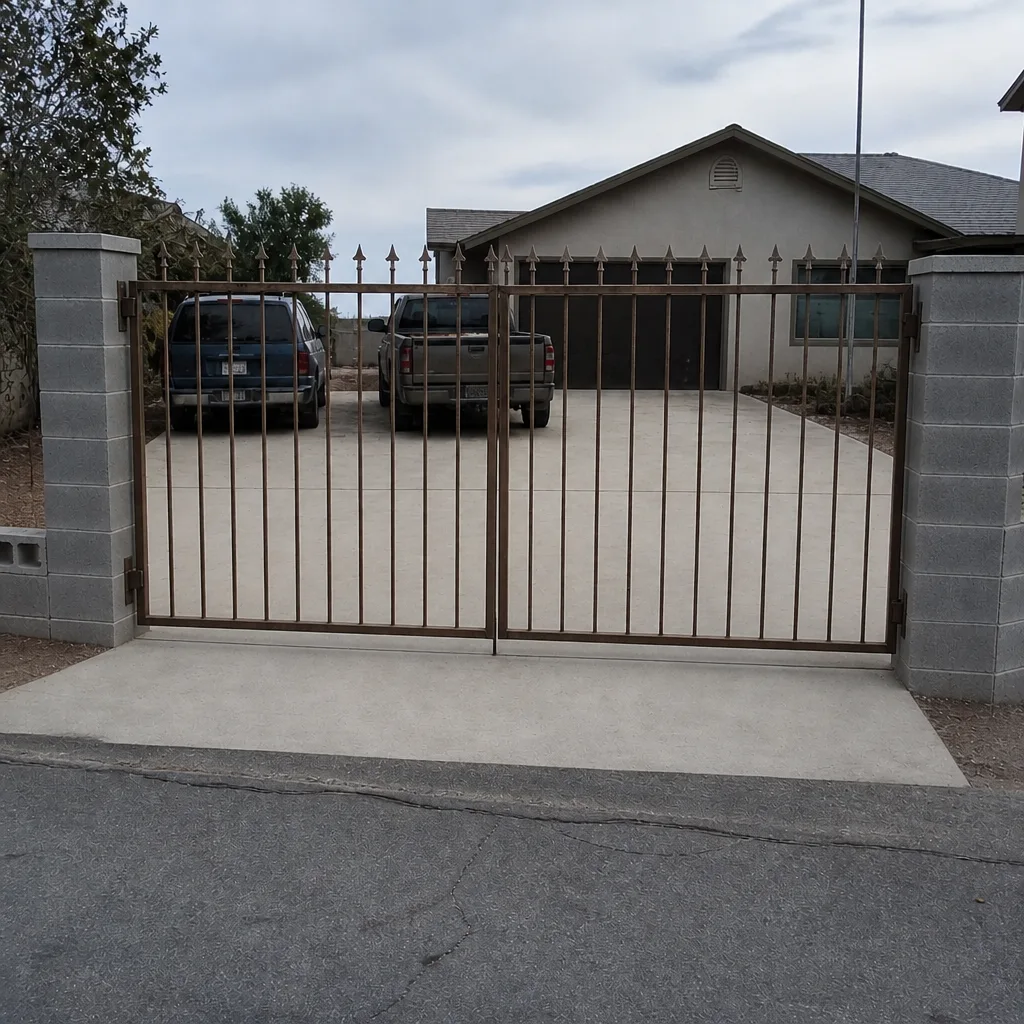
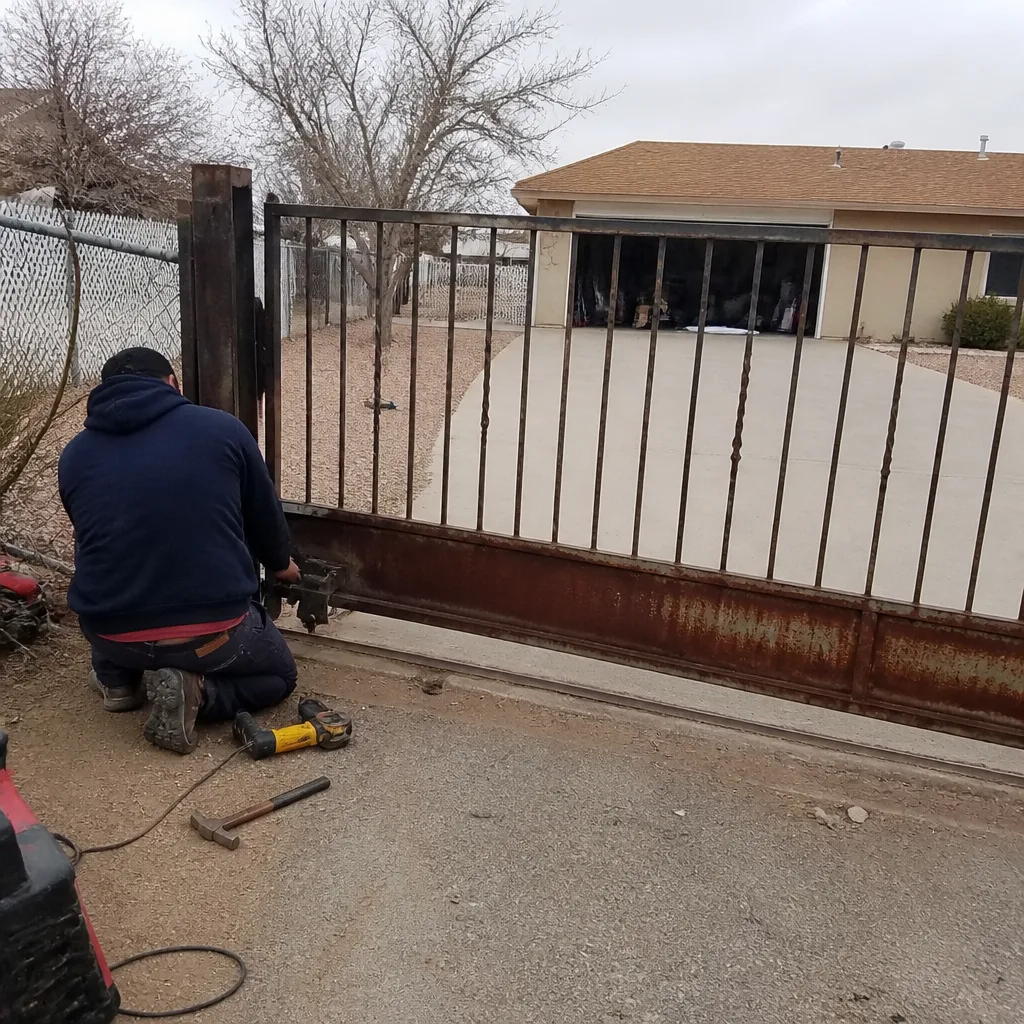
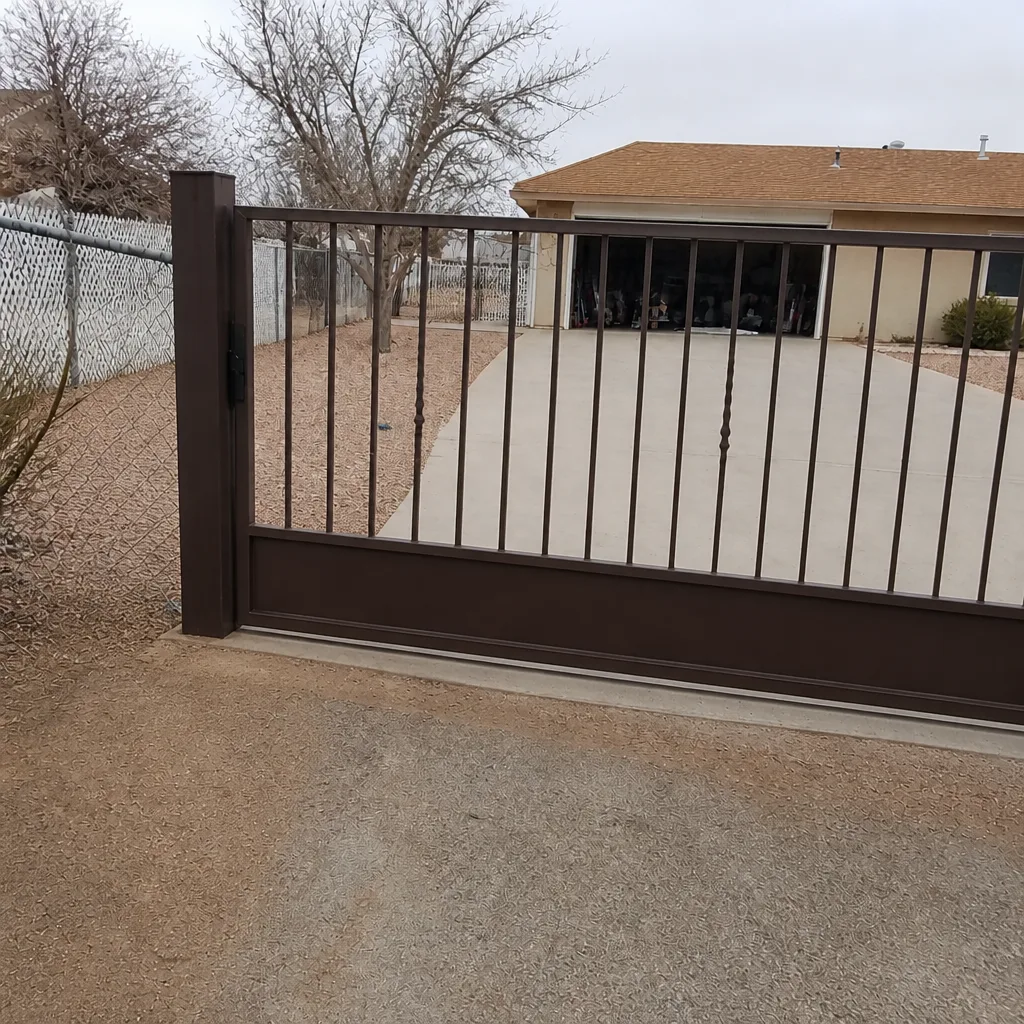
See the difference
BeforeAfter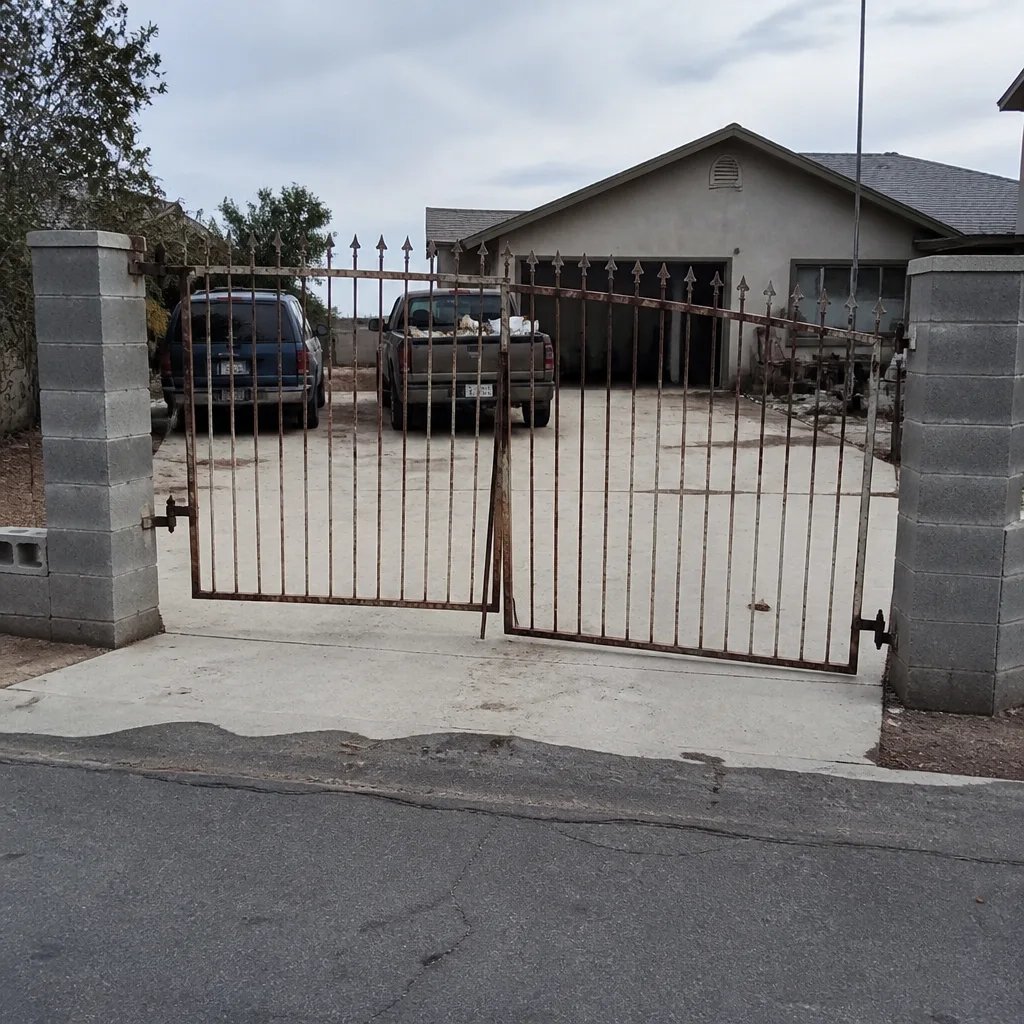 Before
 After
 Before
 After
When to Call a Professional
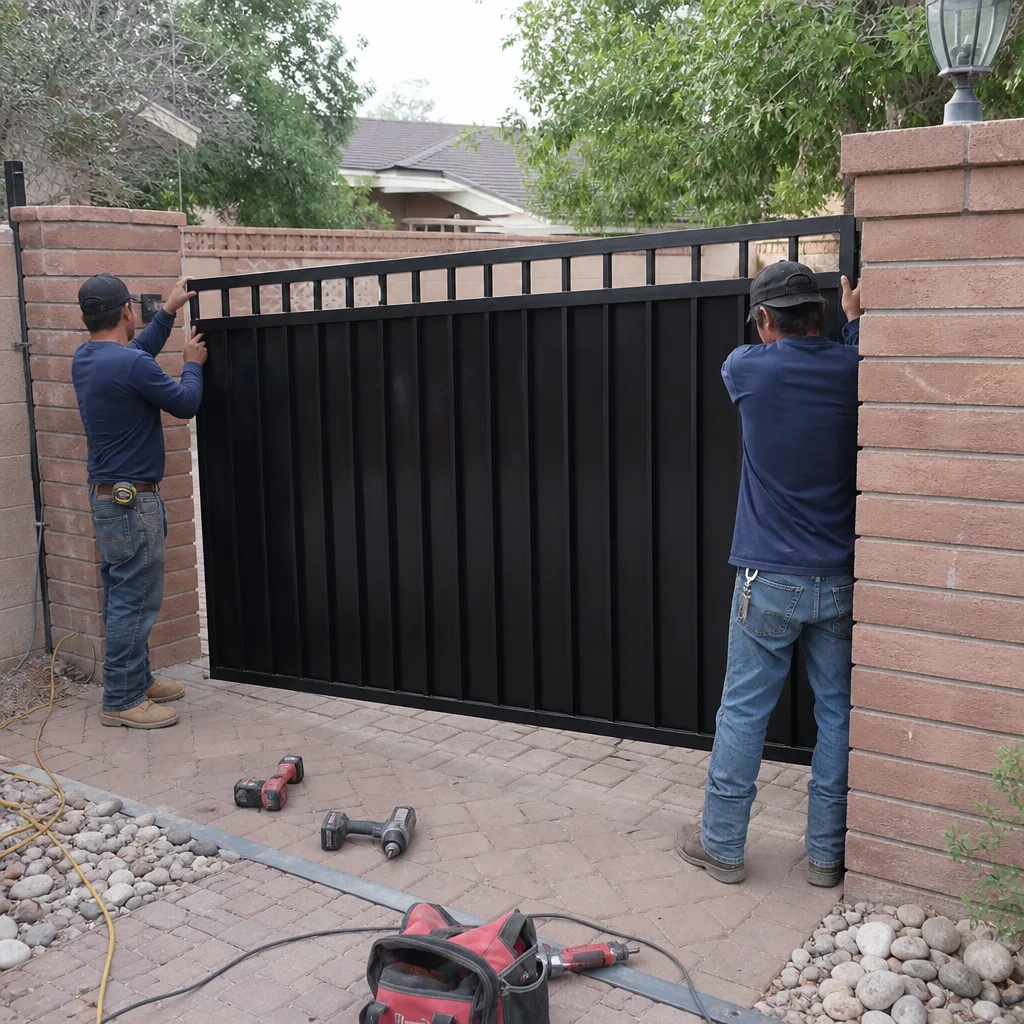
Call a professional the moment any of the following is true. The gate hums but doesn’t move. The gate moves but reverses at the same spot every time. The operator panel shows a fault code you can’t clear. The gate is stuck closed and the manual release won’t disengage. The gate is stuck open and you can’t secure it with a temporary lock. The gate drops or sags on its hinge. And any time the last person who touched the gate was a homeowner with a ladder and a wrench.
The reason to call rather than keep resequencing is documentation. Under the Haven Standard, every visit leaves a photographed record of what was found, what was adjusted, and what part number was installed. That record goes with the house, so the next technician reads instead of guessing.
Vance Gate Repair Boulder City offers free estimates in Boulder City, with the written price in hand before any work starts. Call (844) 320-7587 any hour. A live person answers, day or night.
If you’re weighing a repair against a new build, our Gate Installation in Boulder City page covers what a measured, scheduled install looks like, and our Vance Gate Repair Boulder City home page has the full service overview.
Frequently Asked Questions
Yes, if your operator has a manual release and you can locate it. On swing gates it’s usually a chrome lever or keyed cylinder near the hinge. On slide gates it’s a lever on the operator housing. Find it in daylight now, photograph it, and keep the key accessible.
Most residential emergency gate calls fall in a wide range depending on the failure. A limit-switch reset or photo-eye realignment is a much smaller line than a control board replacement or a stripped gear. You get the flat written price before the technician starts, so the range is converted to a number before any tool comes out. Call (844) 320-7587 for an exact quote, and estimates are free.
Yes. A live person answers the line 24 hours a day, so a stuck-closed gate call gets a real human, not an automated attendant. If anyone in the vehicle is in medical distress, call 911 first, then call us. The gate is the second call.
Secure the gate if it’s stuck open with a cable lock or chain through the frame and post. Photograph the gate’s position, the operator panel, and the power status. Don’t force the gate past an obstruction. Have the model number and symptom description ready so dispatch can move quickly.
Yes. We service Ghost Controls, DoorKing, Elite, Mighty Mule, and five other major automation brands. That means we work on whatever motor is already on the property rather than steering you toward a replacement.
It covers the completed repair for one full year. If the repair isn’t right, we make it right, no argument and no additional charge within that window. It applies to every job, not to a select tier.
The Bottom Line
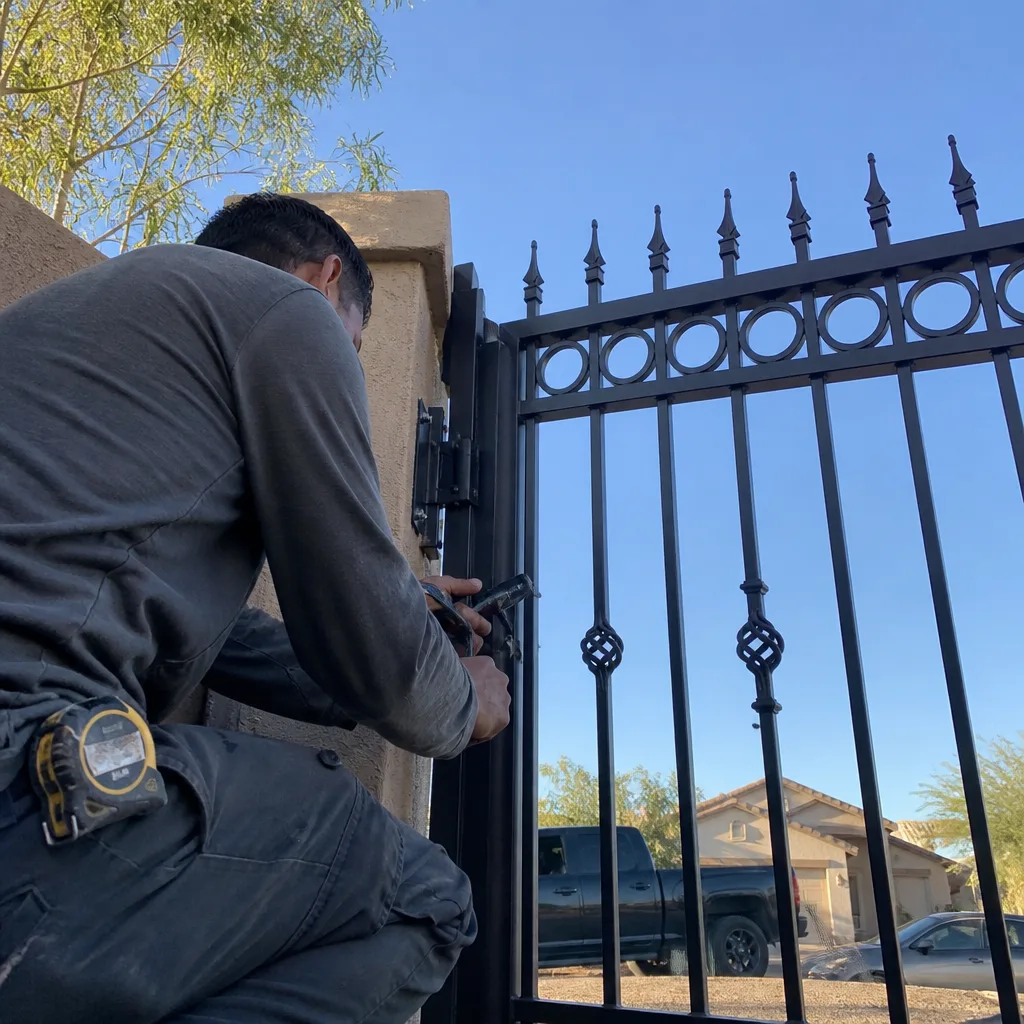
Two failures, two protocols. Stuck open is a security problem: secure the opening with a cable lock or chain, photograph the gate’s position and the operator panel, and call during normal dispatch. Stuck closed is a safety problem: locate the manual release, and if anyone in the vehicle needs medical access, call 911 first. In both cases, the four pieces of information that shorten the call are the model number, the symptom, the power status, and the gate type.
The best Boulder City gate emergency is one you’ve already prepared for. Find the release in daylight. Photograph the panel. Get the number on your key ring. And if anything looks jammed, bent, or humming without moving, call and we’ll dispatch a technician with the documentation habit behind them.
Written by the team at Vance Gate Repair Boulder City.