
Last updated November 18, 2026
 Wrought iron
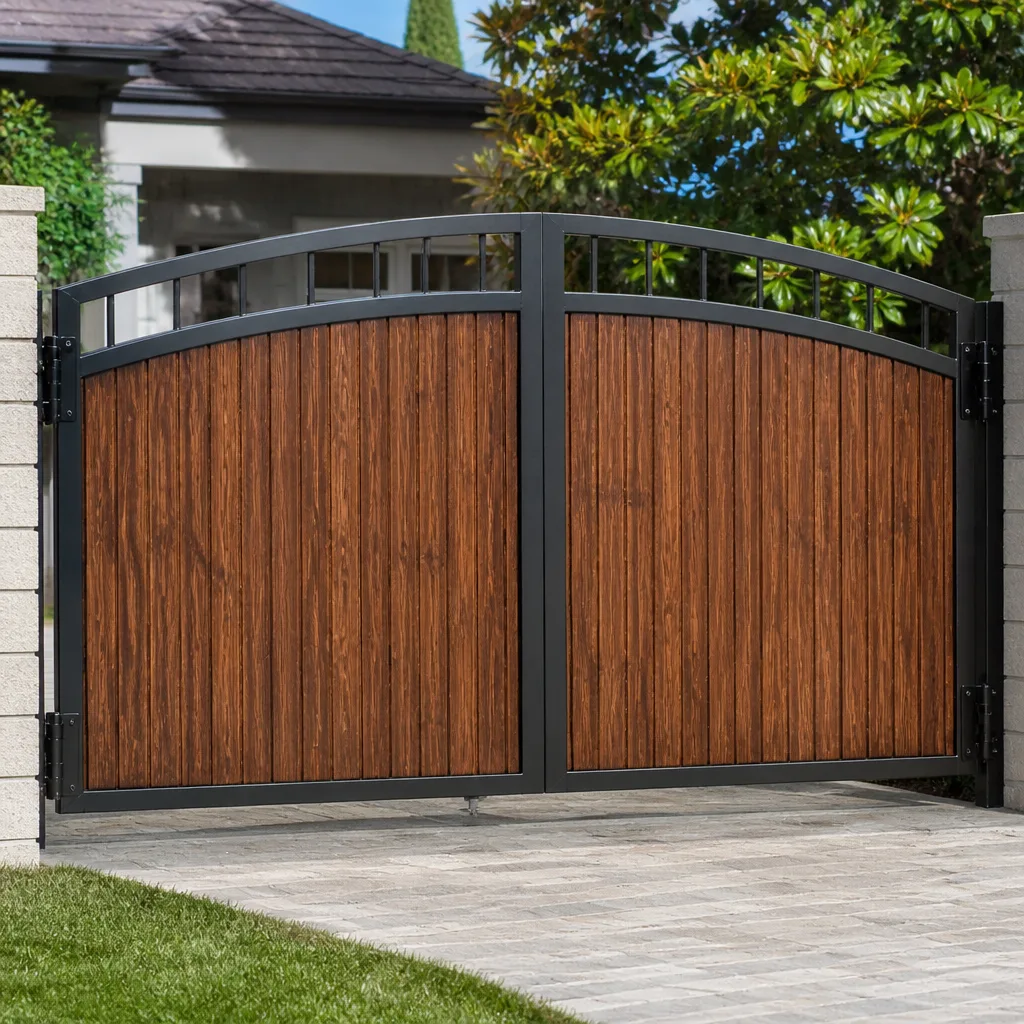 Wood & steel frame
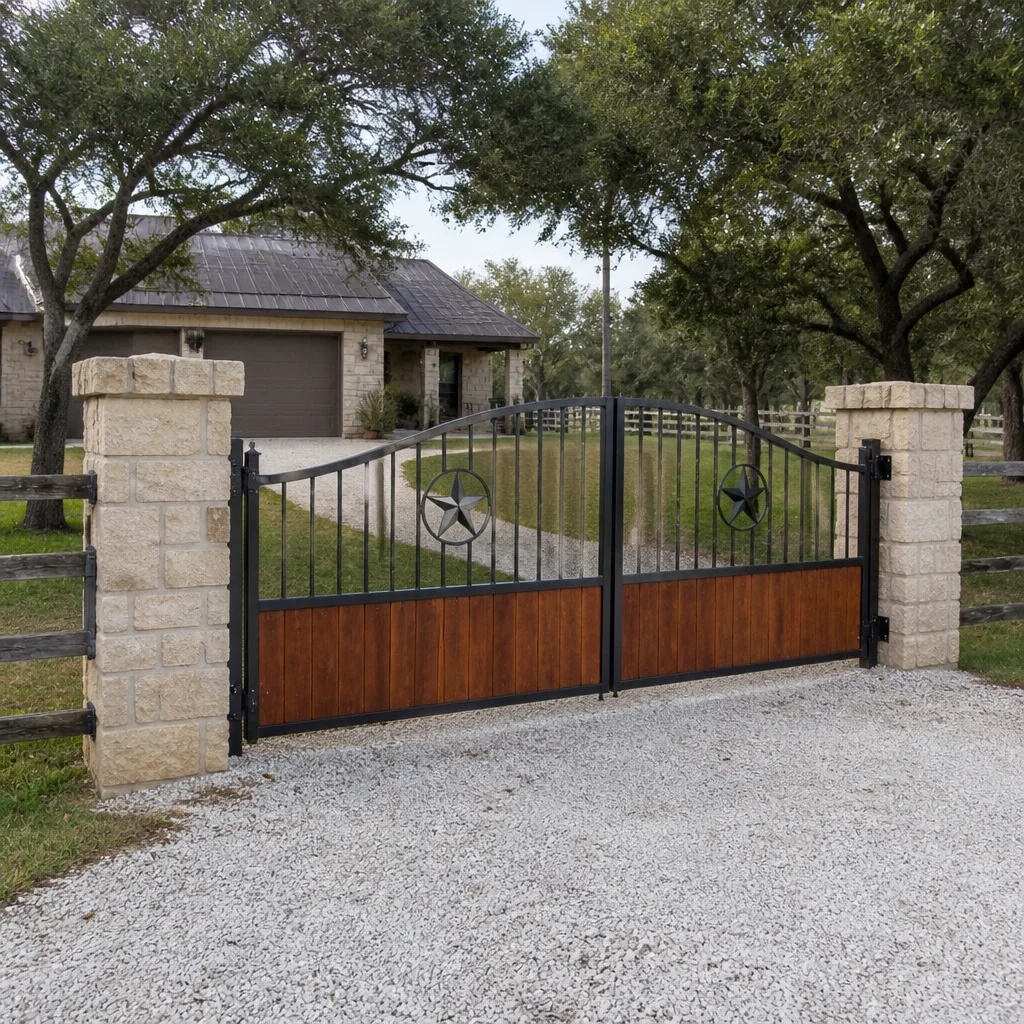 Farm & ranch
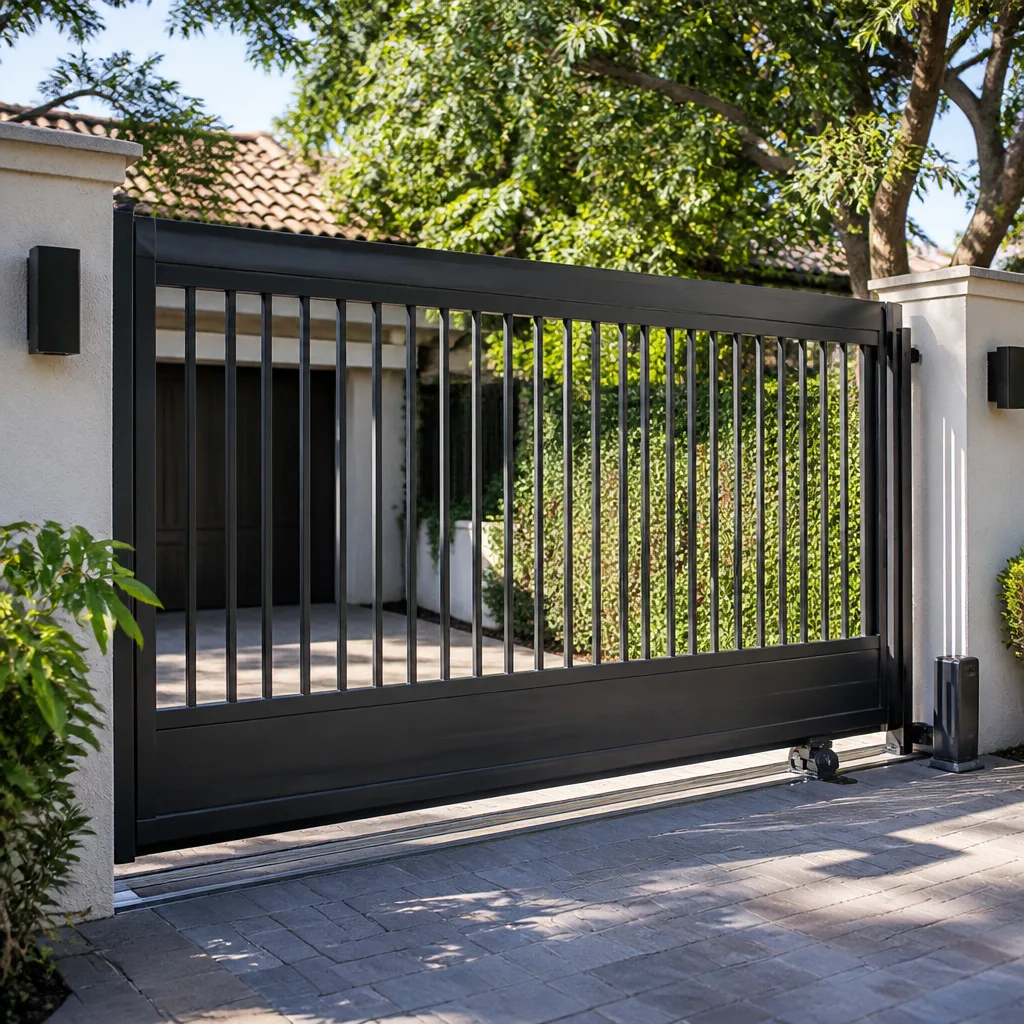 Sliding driveway gates
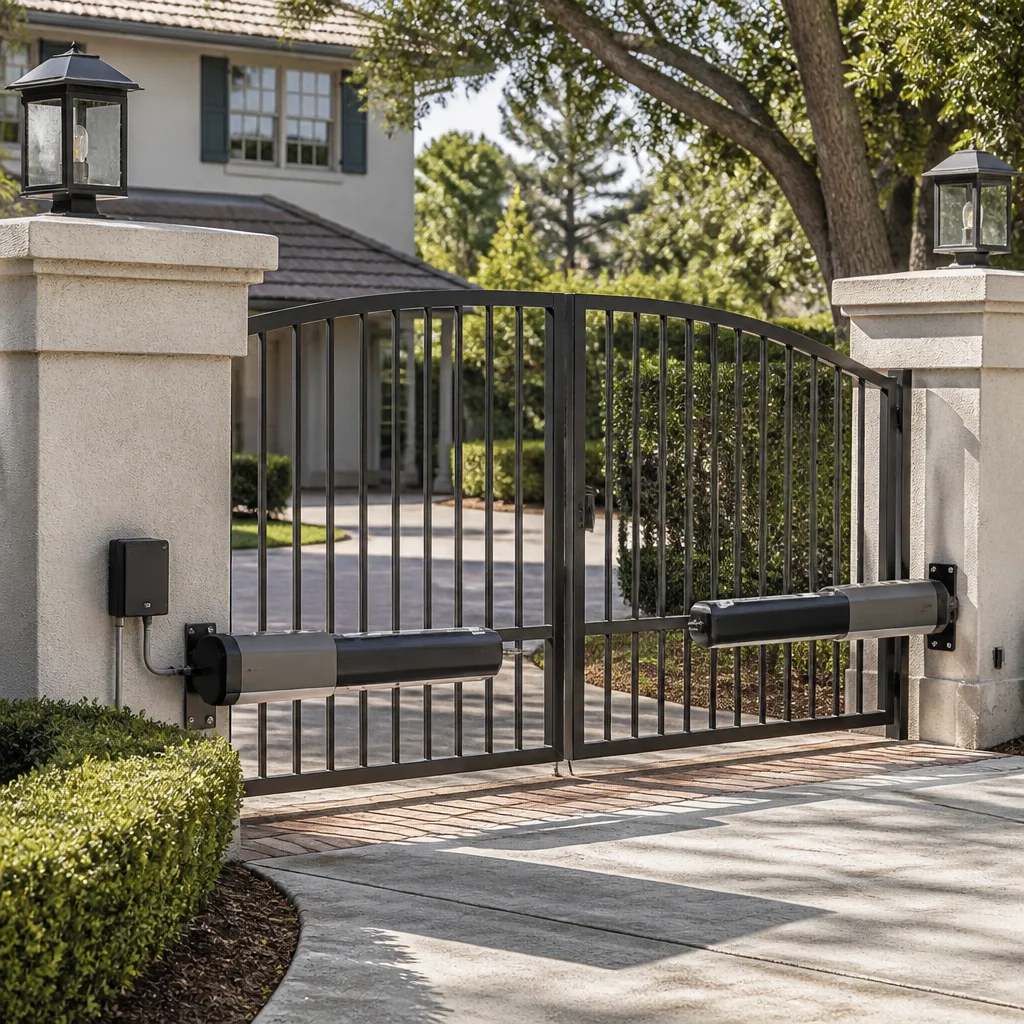 LiftMaster operators
Free on-site gate assessment - hinges, posts, and your LiftMaster or Nice gate operator checked before anything is quoted
The assessment is free and the quote is the invoice.
Get your free estimateGate Motor & Opener Maintenance Schedule: What to Do and When
Two gates with the same FAAC motor can live completely different lives. One sits on a vacation property that cycles maybe 50 times a month. The other sits on a full-time Boulder City residence where kids, dogs, deliveries and a daily commute push it past 300 cycles. A calendar-based schedule treats both gates the same way, which is exactly why one keeps humming along and the other burns out a gearbox at year four with no warning. In this guide we’ll show you how to build a maintenance schedule around two inputs at once: the operator’s actual cycle count and the seasonal conditions that hit Boulder City specifically. You’ll learn what to lubricate and what to never touch, how to test a backup battery properly, and what a real maintenance visit should hand you in writing when it’s done.
Quick Answer
The right maintenance schedule for a gate operator combines a calendar interval with a cycle-count trigger: residential swing and slide gates typically need service every 6 months OR every 1,500 – 2,000 cycles, whichever comes first, plus a pre-summer heat prep in May and a post-monsoon dust inspection in October for Boulder City’s climate. Battery backup should be load-tested annually, gearing inspected at each visit, and every adjustment photographed and documented in writing. If your operator is approaching either threshold, it’s time to schedule service before a failure forces the issue.
Styles & brands we work with
- Wrought iron
- Wood & steel frame
- Farm & ranch
- Sliding driveway gates
- LiftMaster operators
Table of Contents
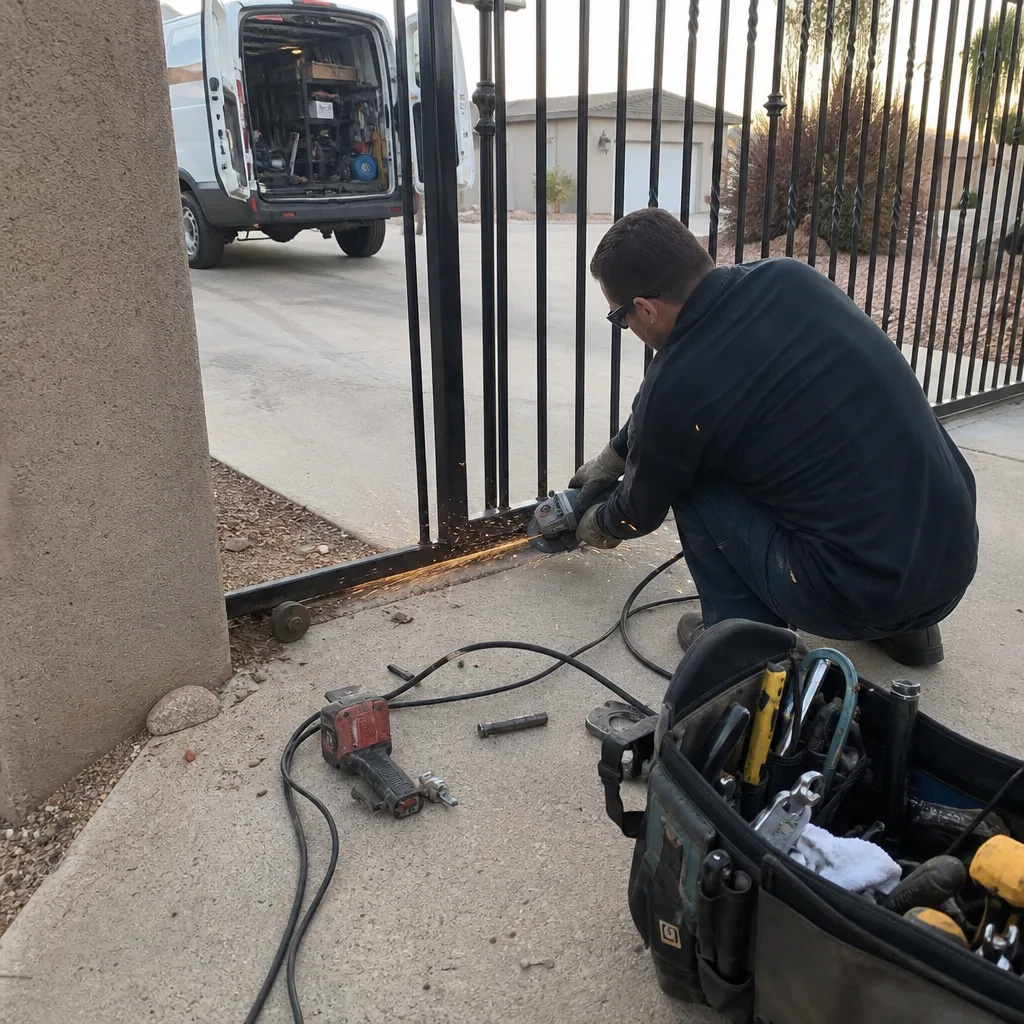
- Why a Cycle Count Beats a Calendar Alone
- How to Estimate Your Monthly Cycles
- The Boulder City Seasonal Overlay: May and October
- Lubrication Points by Operator Type (and What Never to Use)
- Battery Backup Testing: The Load Test That Actually Works
- What a Maintenance Visit Should Produce in Writing
- The 12-Step Annual Maintenance Walkthrough
- Common Mistakes to Avoid
- When to Call a Professional
- Frequently Asked Questions
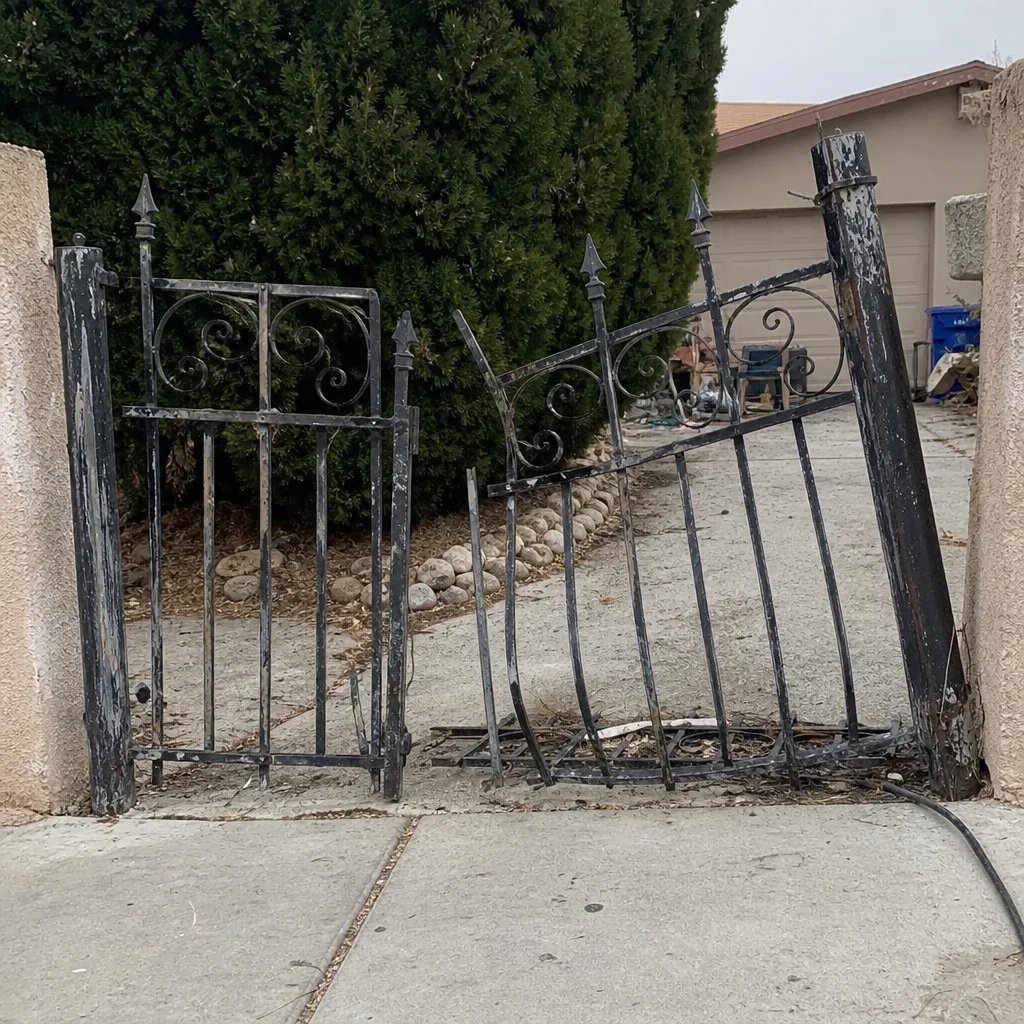 Before
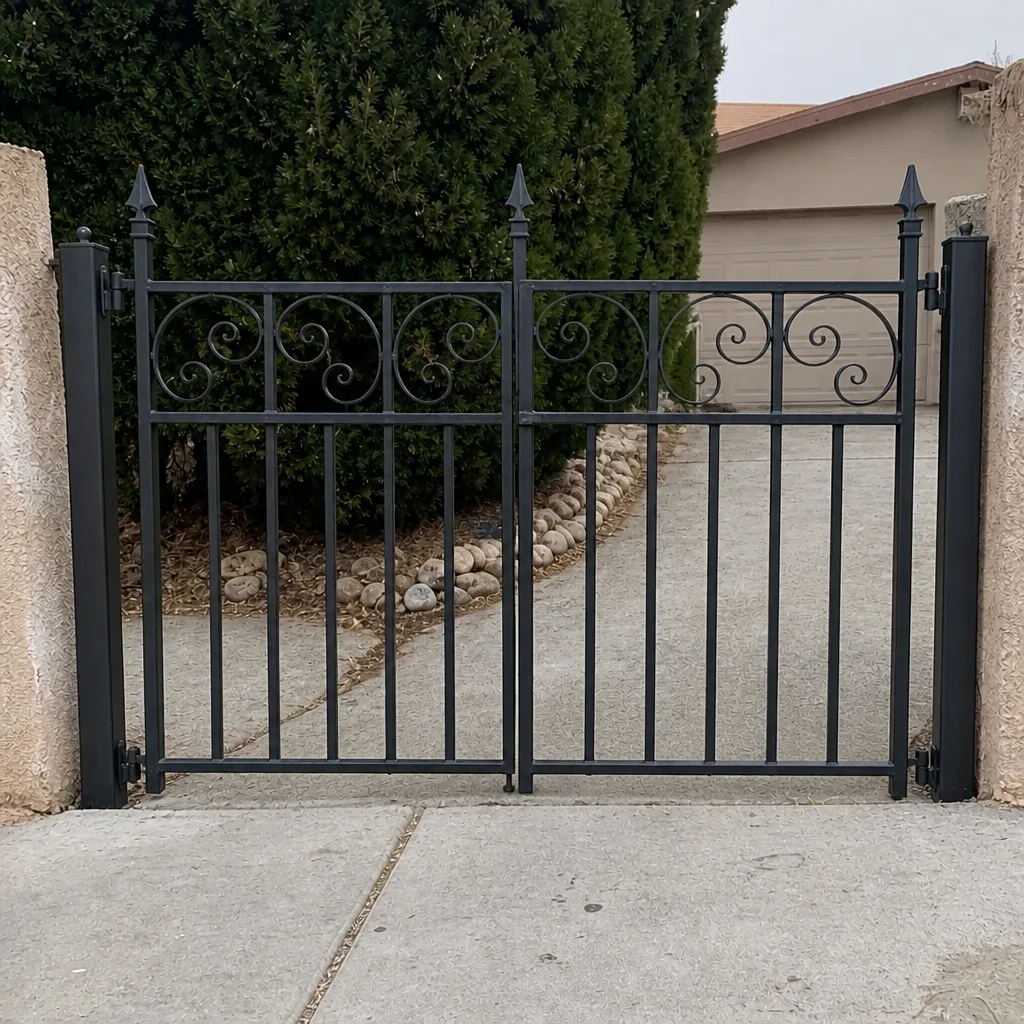 After
Why a Cycle Count Beats a Calendar Alone
Gate operators wear out in direct proportion to how many times they move, not how many months they’ve been sitting there. A residential swing gate that opens and closes 300 times a month will pass 3,600 cycles in a year. A vacation-property gate at 50 cycles a month logs 600. Same operator model, six times the mechanical wear. If you service both gates on the same “once a year” schedule, the high-cycle gate runs to failure while the low-cycle gate gets needlessly opened up every spring.
The industries that take this seriously already know it. Commercial access-control sites count cycles obsessively because operators like DoorKing and Elite publish a rated cycle life and every cycle burns a slice of it. Residential gates deserve the same accounting. We’ve seen Viking and Linear operators on Boulder City driveways outlast identical units across town by five years, simply because the homeowner logged cycles and called when they hit the threshold instead of waiting for a calendar reminder.
The dual trigger:
- Time trigger: service every 6 months regardless of use, because lubricants oxidize, seals dry out, and dust settles whether the gate moves or not.
- Cycle trigger: service at 1,500 cycles for a heavy gate (steel frame, solid infill), 2,000 cycles for a lighter or ornamental gate, whichever threshold arrives first.
- Event trigger: any collision, storm, power surge, or slowdown after a monsoon squall resets the clock entirely.
The point of tracking both is that neither alone catches everything. A calendar-only schedule misses the overworked gate. A cycle-only schedule misses the underused gate whose grease has turned to paste after two summers of desert heat. If you’re not sure what motor is on your property, the team at our gate motor & opener service in Boulder City can identify it and set the correct thresholds for your specific model.
How to Estimate Your Monthly Cycles
You don’t need a diagnostic tool to count cycles. Most modern operators (FAAC, BFT, Linear, LiftMaster) either log cycles in the control board memory or have a service LED that indicates when the cycle counter hits its preset. Older units often don’t, so you estimate from household habits. This is the honest way almost every homeowner we work with approaches it, and it gets you within about 20% of the true number, which is good enough for setting a schedule.
Use this estimation method:
- Count daily commutes: every household vehicle that leaves and returns is roughly 2 cycles per day per vehicle.
- Add deliveries and services: estimate 1 – 2 per day if you regularly receive packages, landscaping, cleaning, or pool service.
- Add visitors: 1 – 3 per week for most households; more if you host family regularly.
- Add manual cycles: any time someone uses the gate manually because the remote failed or the power was out.
- Multiply by 30 to get a monthly figure. Two cars, one regular delivery, and a few visitors per week lands around 180 – 220 cycles a month, which crosses the 2,000-cycle threshold roughly every 9 – 11 months.
A Boulder City primary residence with two vehicles and normal delivery traffic will almost always hit the 2,000-cycle trigger before the 12-month mark. A vacation property at 50 cycles a month won’t hit it for 3.5 years, which is why the 6-month time trigger matters more for those gates. If you can read the operator’s memory, do that instead; it’s the most accurate number available and it’s what we record on every service visit we make.
The Boulder City Seasonal Overlay: May and October
The desert climate around Boulder City creates two seasonal maintenance windows that a generic national schedule will never mention. Both center on the same enemy: dust.
May: pre-summer heat prep. Boulder City regularly hits 100°F+ from June through September, and gate operators are typically mounted in direct sun without shade. Heat degrades lubricants faster than use does. The May visit is about mechanical readiness for the season: fresh grease on the drive gears, a check of the control board’s thermal cutoff (if it has one), cleaning of the air vents that cool the housing, and confirming that the arm bracket and hinge points aren’t already loose from 8 months of cycles. Battery capacity also drops in heat, so May is the right time to load-test the backup.
October: post-monsoon dust inspection. The July – September monsoon season throws fine grit into every exposed mechanism in Boulder City. By October the gate has eaten months of it. The October visit is about cleaning and inspection: blowing out the control board housing with compressed air (never shop air with oil in the line), wiping and re-packing hinge points, inspecting the drive chain or arm for grit abrasion, and checking the photo-eye lenses, which are the single most common component we find fouled in October. This is also when you want to look at the tracks on slide gates; fine dust packs in the track rail and grinds the rollers down at four times the normal rate.
If your gate is on a hillside property with exposed rock or gravel driveway, both seasonal windows become more urgent. Loose aggregate near a slide gate track is the fastest way to fail a roller, and we’ve seen gates in Boulder City fail a drive wheel in a single season when the driveway was repaved without the track being cleaned first.
Lubrication Points by Operator Type (and What Never to Use)
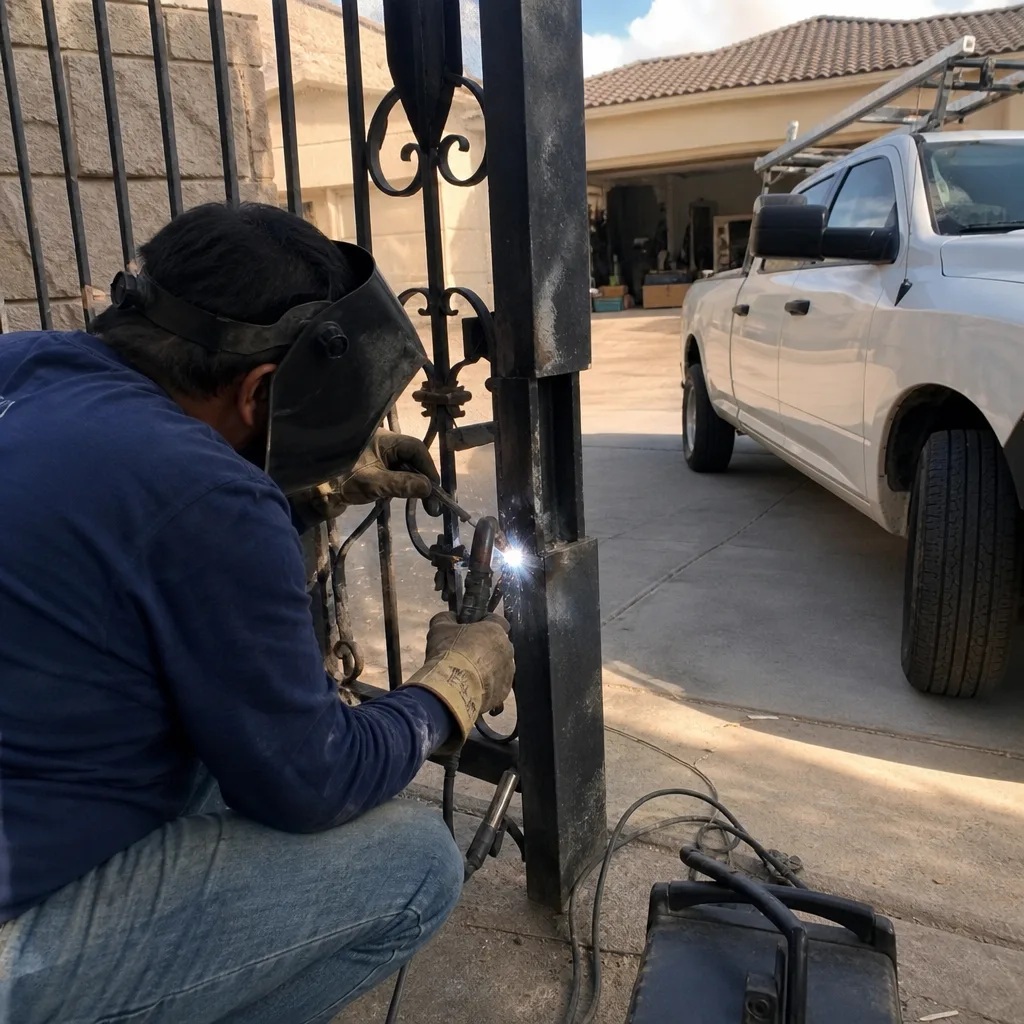
Lubrication is where most DIY maintenance goes wrong. The wrong product doesn’t just fail to help; it attracts dust, degrades plastic, or dissolves seals. Here’s what to use and what to avoid, broken out by the components you’ll actually touch.
Swing gate operators (arm-style: FAAC, BFT, Viking, LiftMaster)
- Drive arm pins and pivot points: use a dry PTFE or silicone spray. It penetrates, leaves a thin film, and doesn’t collect grit the way grease does.
- Hinge pins on the gate leaf: white lithium grease on a brush, applied sparingly. Two or three hinges per gate.
- Arm bracket to gate post: same white lithium; check for movement every six months.
- Never: WD-40 (the classic blue can) on the arm pins. It displaces the proper lubricant and evaporates within weeks. It’s a solvent, not a grease.
Slide gate operators (Linear, Elite, DoorKing, Mighty Mule)
- Chain drive: dedicated chain lubricant in an aerosol or drip form. Never motor oil; it slings off and stains concrete.
- Idler wheels and track rollers: dry silicone spray. Deliberately avoid thick grease here, which grabs dust and turns the track into sandpaper.
- Track rail itself: clean, never lubricated. Wipe it down with a dry cloth; that’s the entire maintenance step.
What never to use on residential operators
- Grease on nylon gears. Many residential operators use nylon or acetal drive gears that don’t need lubrication at all. Adding petroleum grease to nylon can accelerate wear and attracts grit into the gear teeth. Leave them dry and clean only.
- Oil on plastic bushings. Same story. Most operator manufacturers specify no lubrication on plastic bushings; petroleum products can degrade the polymer over time.
- Anything “heavy-duty” on a homeowner gate. If the product was designed for a commercial gate that cycles 1,000 times a day, it’s wrong for a driveway gate that cycles 200 times a month. Clean and light is the rule.
If you’re not sure which gear type your operator uses, don’t guess. Call us at (844) 320-7587 and we’ll tell you what’s in your specific model before you pick up a can. Getting this wrong on nylon gears is a known cause of premature gearbox failure, and the replacement cost is significant.
Battery Backup Testing: The Load Test That Actually Works
Most battery backups on gate operators fail the same way: they read 12.6 volts on a multimeter and look perfectly healthy right up until the moment the power goes out, at which point the gate clicks, hesitates, and stops mid-travel. The 12.6V reading is a resting voltage. It tells you the battery can sit there. It tells you nothing about whether the battery can supply the surge current the motor demands at startup, which is typically 3 – 5 times the running current.
The load test that reveals a dying battery:
- Put a voltmeter on the battery terminals and note the resting voltage.
- Trigger the gate to open while watching the meter.
- Watch for the voltage to drop during the motor startup. A healthy battery sags to about 11.5 – 12.0V and recovers. A failing battery drops below 10.5V, sometimes below 9V, then the gate stalls or reverses.
- Repeat for the close cycle. Then repeat the whole sequence two more times, back to back, to simulate real outage conditions.
A battery that fails this test needs replacing even if it’s only 18 months old. Heat is the killer in Boulder City; operators mounted in summer sun routinely see battery life cut from 4 – 5 years down to 2 – 3. Test in May, before the heat bites, and again in October. We photograph the meter reading on every test so the homeowner has a record of exactly when the battery started failing and when it was replaced.
What a Maintenance Visit Should Produce in Writing
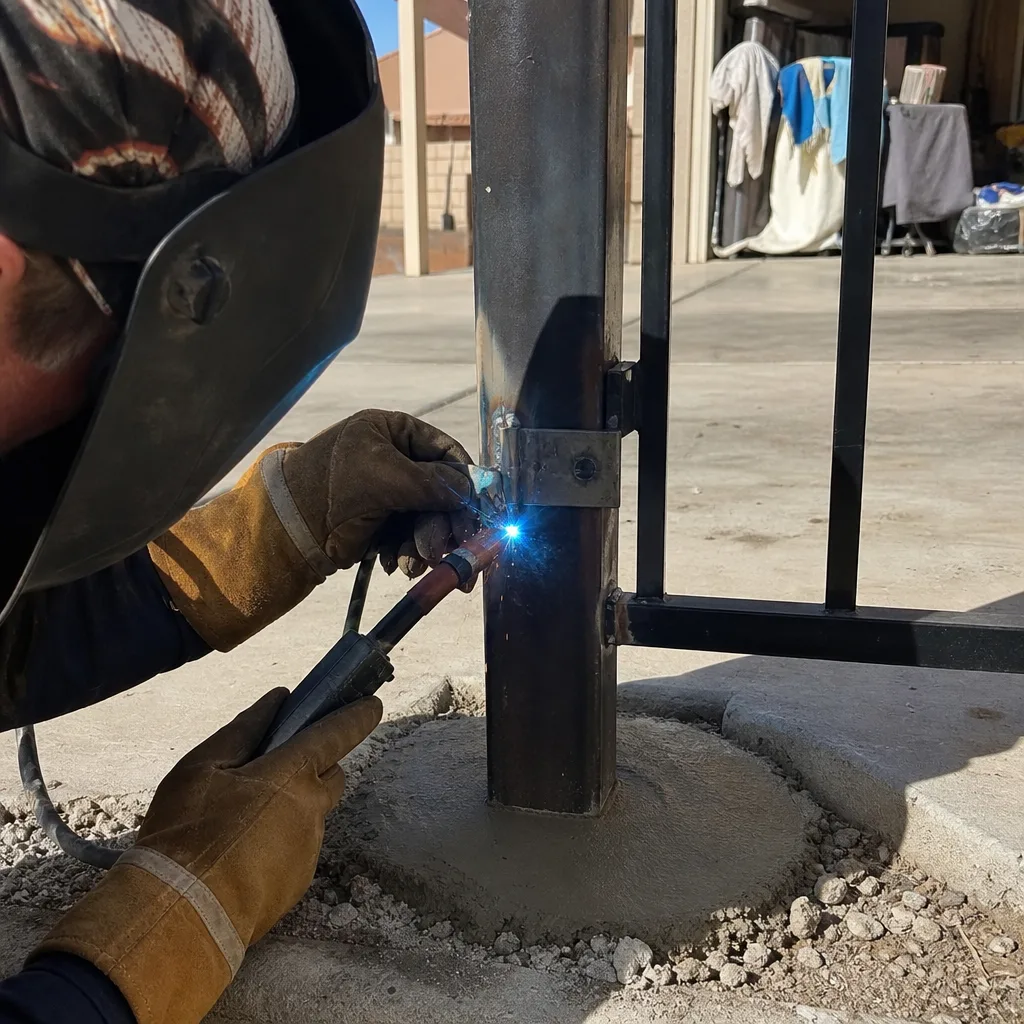
This is where most gate service companies fall short, and it’s where the difference between a real maintenance visit and a quick look shows up. A proper visit produces a documented record. Without one, the next technician (and the homeowner) has to rediscover the same problems from scratch, and that’s how people end up paying twice for the same diagnosis.
Here’s the document package you should walk away with after every maintenance visit:
- Cycle count reading at time of service (or the operator’s memory log).
- Battery load test result: resting voltage, sag voltage under load, and pass/fail.
- Photo record of limit switch positions before and after any adjustment. Limit switches are where operators drift out of alignment, and a photo with the exact position is worth more than any written description.
- Photographs of drive gear and hinge condition, before and after cleaning and lubrication.
- Any parts replaced with the actual part number and manufacturer.
- Recorded motor current draw, compared against the spec; a rising current draw is an early signal of hinge binding or bearing wear.
- Written statement of what was found, what was adjusted, and what was left in place.
This is the documentation habit we brought over from commercial access-control work, and it’s codified in our gate repair service in Boulder City as Clause 4 of the Haven Standard: a photo record on every single visit at no extra charge. Any company that wants to charge for that documentation is the wrong call. It should be standard.
The 12-Step Annual Maintenance Walkthrough
This is the order we follow on every maintenance visit, whether the gate is a LiftMaster on a mid-century Boulder City residence or a FAAC on a hillside build near the lake. The order matters because each step informs the next.
- Visual survey from outside the gate. Note the gate leaf condition, post integrity, and any dropped hardware before touching the operator.
- Cycle count reading and record in the maintenance log.
- Battery load test. Record resting and sag voltages.
- Manual release test. Confirm the gate can be moved by hand without resistance; binding shows up here first.
- Photo-eye alignment and lens cleaning. Check both the transmitter and receiver, and clean with a dry cloth.
- Motor current draw measurement at full open and close, compared against spec.
- Limit switch check against recorded travel; adjust only if drift exceeds 5 degrees.
- Hinge and pivot point inspection, cleaning, and lubrication with the correct product for the material.
- Drive gear and chain inspection (chain-drive operators), cleaning, and correct lubrication.
- Control board housing blowout and terminal screw check. Photograph the wiring layout before closing the housing.
- Safety edge and reverse test with an actual obstruction, not just a hand wave.
- Written summary, photo log, and cycle/battery record left with the homeowner.
Every step in this list gets a photo. That’s the rule. Higher-end installs (DoorKing, Elite, commercial BFT) sometimes have additional items on the checklist, but the twelve here cover every residential operator we work on, across all nine automation brands we service. For a full picture of how maintenance sits alongside the other things we do, the Vance Gate Repair Boulder City home page is the best starting point, and if your gate is due for a replacement the gate installation service in Boulder City covers what gets specified and why.
Common Mistakes to Avoid
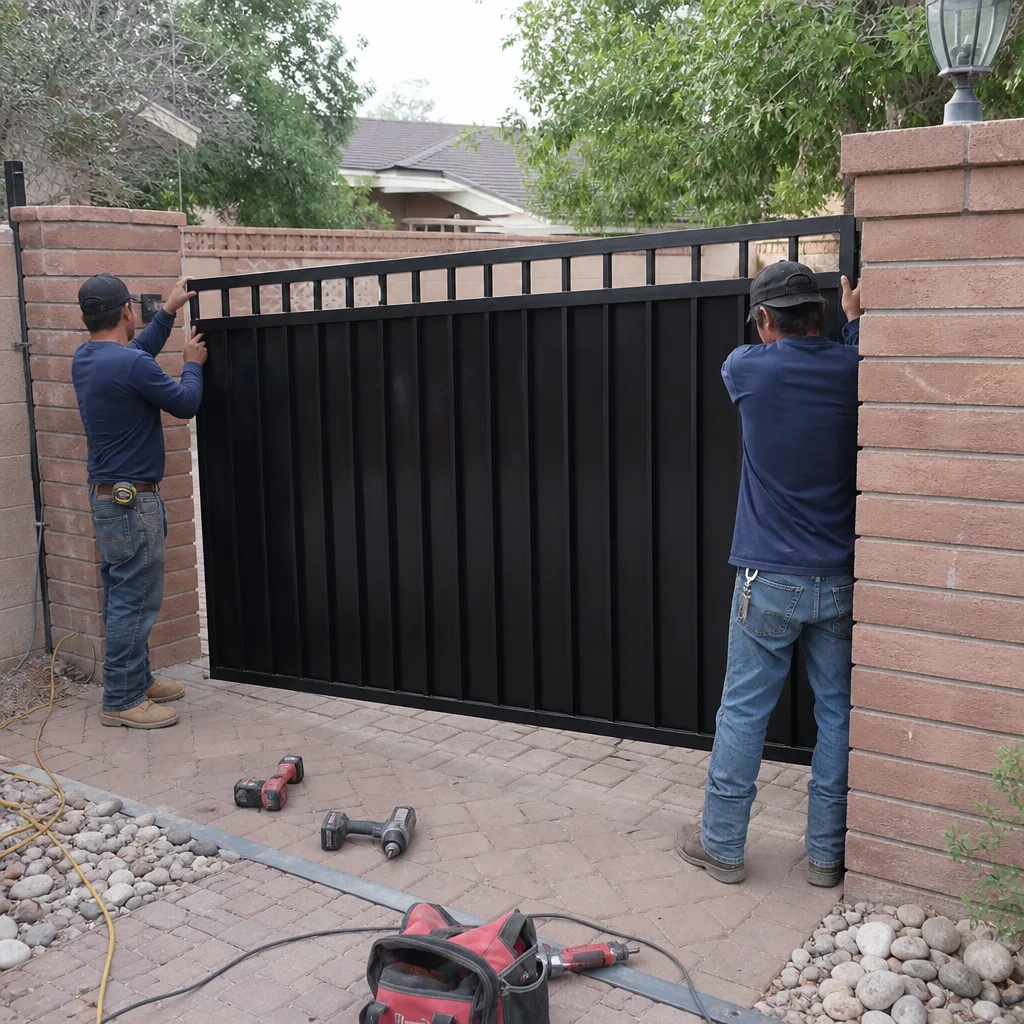
- Servicing on the calendar only. A high-cycle gate on a once-a-year schedule wears out in year four while a low-cycle gate down the street is still going in year ten. Track cycles and service at the threshold.
- Using WD-40 on the arm pins. It evaporates, strips the existing lubricant, and attracts dust. Use a dry PTFE or silicone spray on swing-arm pivot points and nothing else on that joint.
- Greasing nylon gears. Many residential FAAC and Viking operators use nylon gears that don’t need lubrication. Adding grease accelerates wear and collects grit from Boulder City’s dust.
- Trusting a 12.6V resting battery reading. Resting voltage tells you the battery exists, not that it can run the motor. Load-test it under motor startup draw or it means nothing.
- Ignoring the October post-monsoon inspection. Fine aggregate dust from monsoon season packs into slide-gate tracks and photo-eye lenses, and if you skip the October visit both components eat a full extra season of damage.
- Skipping the manual release test. If the gate can’t be moved by hand during a power failure, the mechanism is binding, and that binding is grinding away at your motor every cycle.
- Accepting a maintenance visit with no written record. A verbal “looks fine” leaves the next technician (and you) guessing. Insist on the photo log, the readings, and the part numbers in writing.
When to Call a Professional
Any maintenance item that involves opening the operator housing, adjusting limit switches, testing motor current, or troubleshooting the control board should be handled by a trained technician, both because the control board carries line voltage even when the motor isn’t running, and because operator springs and drive arms can store mechanical force even after the power is off. Call us if the gate reverses without an obstruction, moves unevenly or stalls mid-travel, the battery sags below 10.5V under load, the operator housing shows rust or water intrusion, the gate has been struck or blown against the stop, or it’s been more than 12 months since the last documented service. Vance Gate Repair Boulder City offers free estimates in Boulder City. Call (844) 320-7587. Every visit includes the written price before work begins, a photographed record when we leave, and the 365-Day Done Right Promise on everything we do.
Frequently Asked Questions
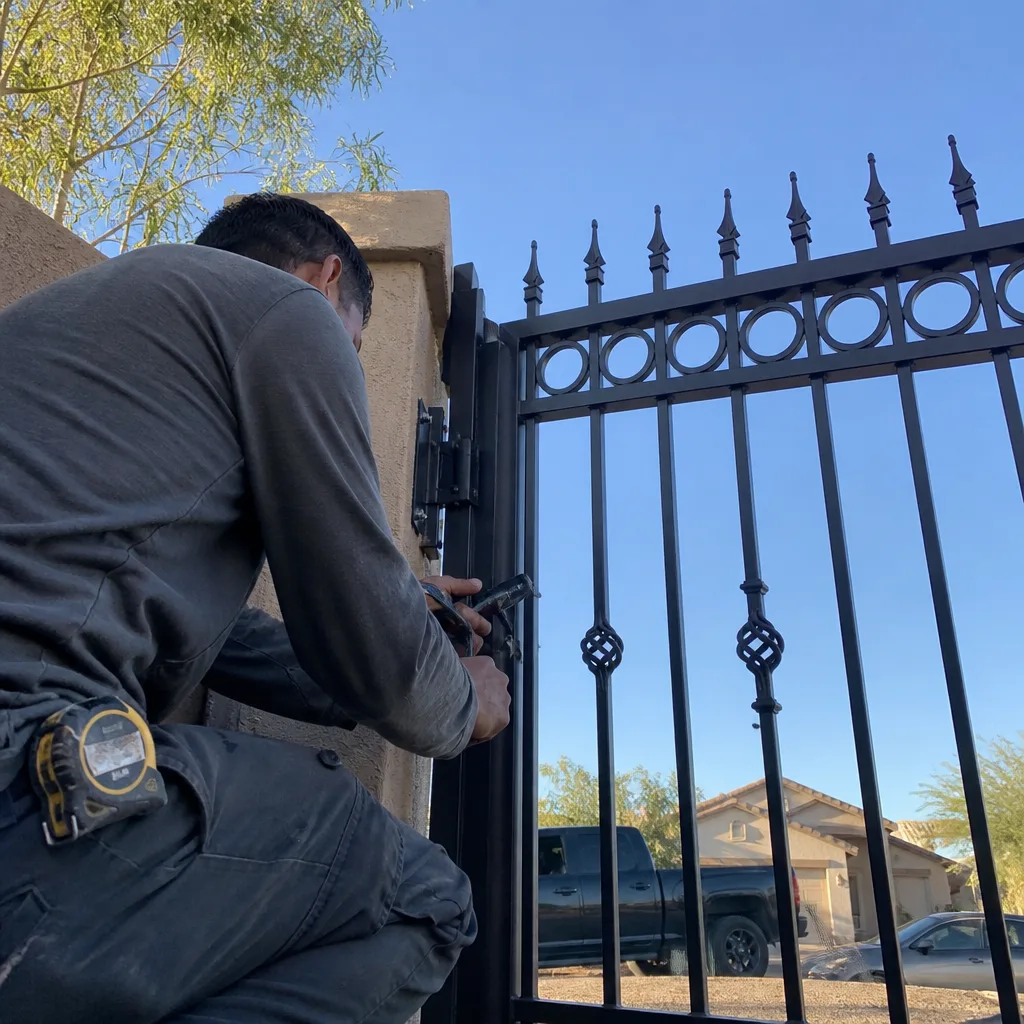
Residential gate motors should be serviced every 6 months OR every 1,500 – 2,000 cycles, whichever comes first, plus seasonal inspections in May (pre-summer heat prep) and October (post-monsoon dust inspection) in Boulder City. A high-cycle primary residence will likely hit the cycle trigger before the 12-month mark; a low-cycle vacation property hits the time trigger instead. Call (844) 320-7587 for an exact recommendation based on your operator model and household habits.
Use dry PTFE or silicone spray on swing-arm pivot pins, white lithium grease on gate hinge pins, and a dedicated chain lubricant on slide-gate chains. Never use WD-40 on arm pins, never grease nylon gears or plastic bushings (leave them dry and clean), and never apply heavy grease to a slide-gate track rail. If you don’t know which gear material your operator uses, don’t guess; we’ll tell you over the phone at (844) 320-7587.
A gateway backup battery needs replacing when it fails a load test, meaning its voltage sags below 10.5V during motor startup, even if it reads a healthy 12.6V at rest. Resting voltage alone cannot confirm a battery’s health because it doesn’t test the surge current the motor demands. Test with the gate running, not sitting. If your battery fails the load test, we stock compatible replacements for most major brands and can quote you the exact part number before we arrive; call (844) 320-7587.
Boulder City’s climate creates two specific maintenance windows that national schedules don’t account for: pre-summer heat prep in May (heat degrades lubricants and cuts battery life) and post-monsoon dust inspection in October (fine grit from summer squalls packs into slide-gate tracks and fouls photo-eye lenses). Skipping either window shortens the life of the drive mechanism, the battery, and the photo-eye beam interruption circuit. Local maintenance schedules built for a coastal climate miss both. Call (844) 320-7587 for a Boulder City-specific schedule built around your operator.
A proper maintenance visit should leave you with a written record that includes: the cycle count reading, battery load test voltages (resting and under load), photo documentation of any limit switch adjustment, photographs of the drive gear condition before and after service, any part numbers replaced, and the technician’s written notes on what was found and left in place. At Vance Gate Repair Boulder City, this documentation package is delivered on every visit under Clause 4 of the Haven Standard, with no extra charge. Call (844) 320-7587 to schedule a documented maintenance visit.
Light lubrication of external hinge pins and cleaning photo-eye lenses are safe for most homeowners to do themselves, but anything that involves opening the control board housing, adjusting limit switches, testing motor current, or touching any part when the gate is energized should be done by a trained professional because of the stored mechanical force and line voltage involved. Limit switch adjustment in particular is deceptive; a small movement in the wrong direction can put the gate into a travel state that destroys the gearbox. Call (844) 320-7587 to schedule professional service; estimates are free.
The Bottom Line
A maintenance schedule built on both cycle count and season will always outperform a calendar alone. Track your monthly cycles using the estimation method above, service at the 1,500 – 2,000-cycle threshold OR every six months, whichever arrives first, and add the two Boulder City-specific windows: May pre-summer heat prep and October post-monsoon dust inspection. Lubricate correctly for your operator’s materials, load-test the battery under motor startup draw (not just resting voltage), and insist on a written, photographed record at every visit. If you’re unsure where your operator sits on either threshold, a documented inspection will tell you exactly where you stand.
Ready to get on a real schedule instead of a guess? Call Vance Gate Repair Boulder City at (844) 320-7587 for a free estimate. A live person answers 24 hours a day, seven days a week, the flat price is written and in your hands before any work starts, and every visit leaves a photographic record of what we found, what we set, and what we installed. That record is filed in your job history so no future technician, ours or anyone’s, has to rediscover the same problem. One phone call, one written scope, one documented visit. That’s the whole approach.
Written by the team at Vance Gate Repair Boulder City.
See the difference
BeforeAfter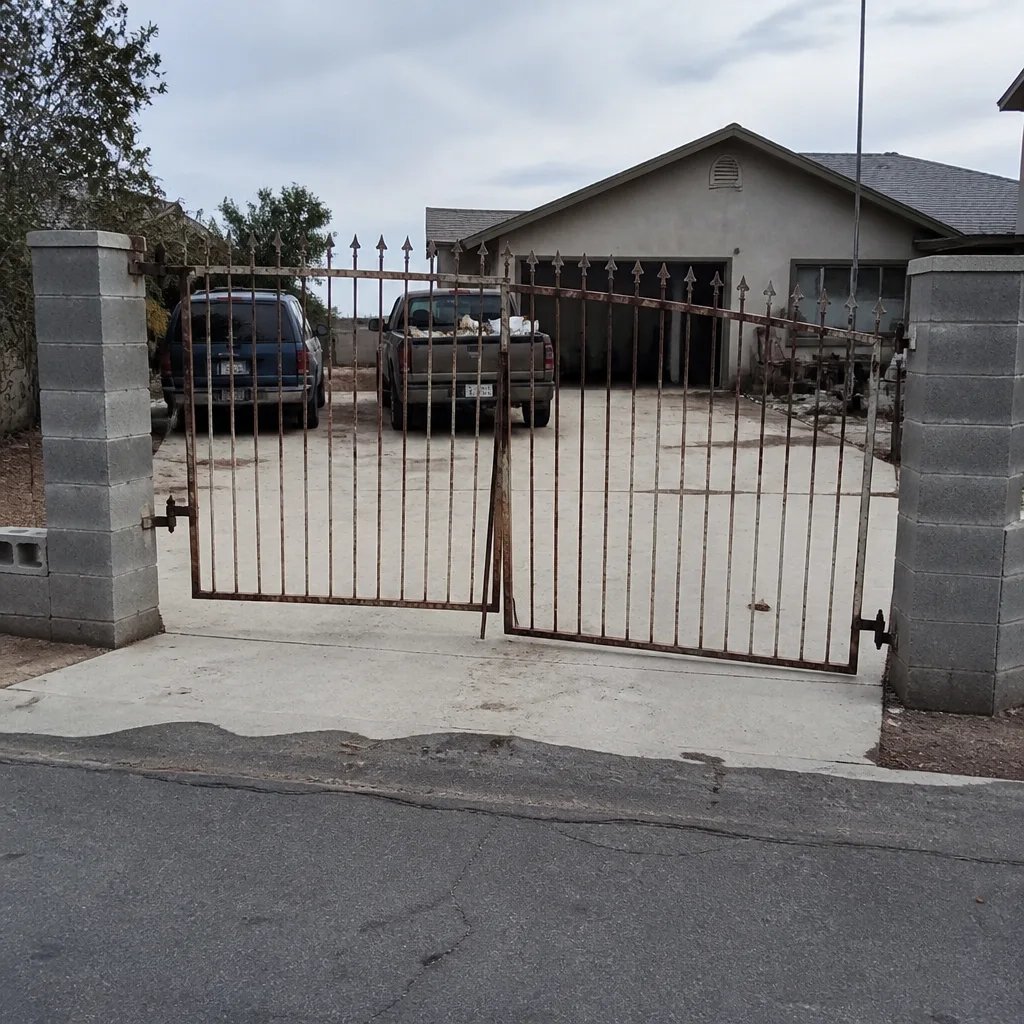 Before
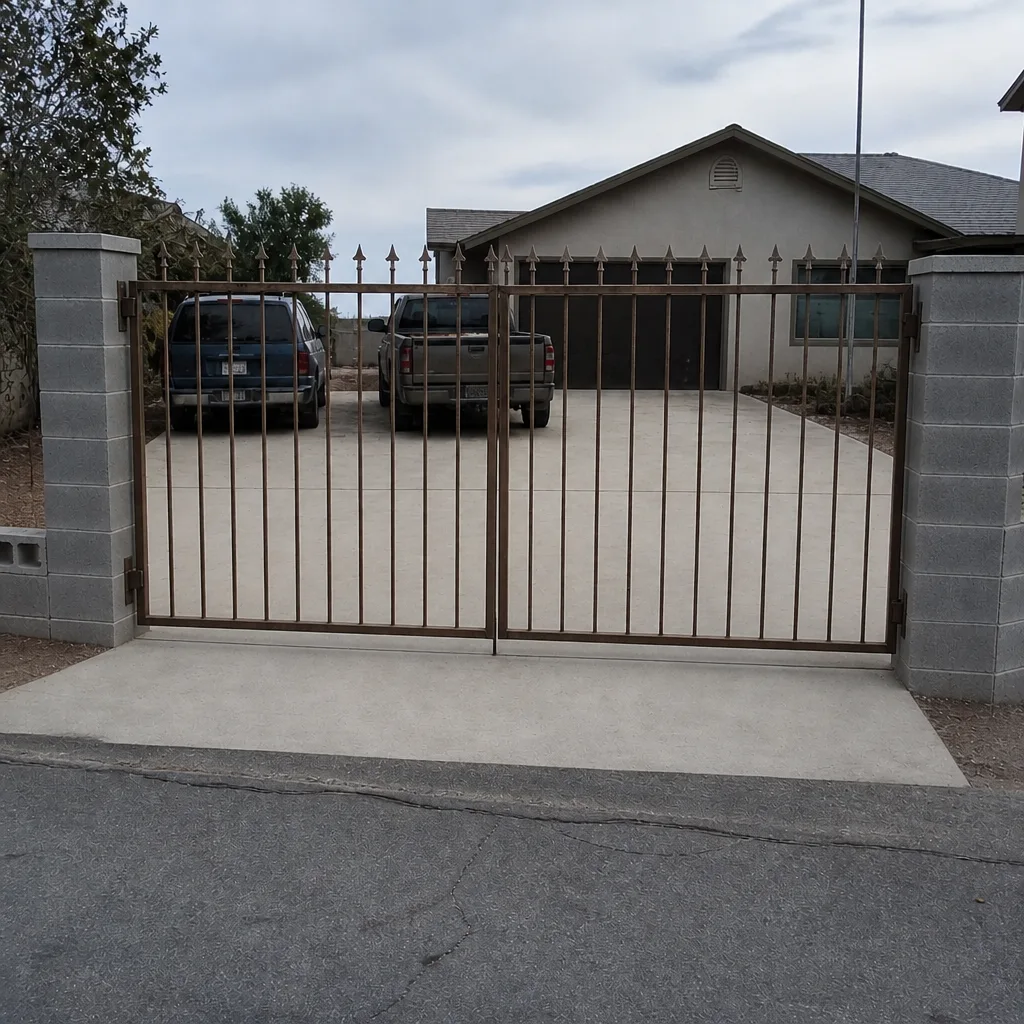 After
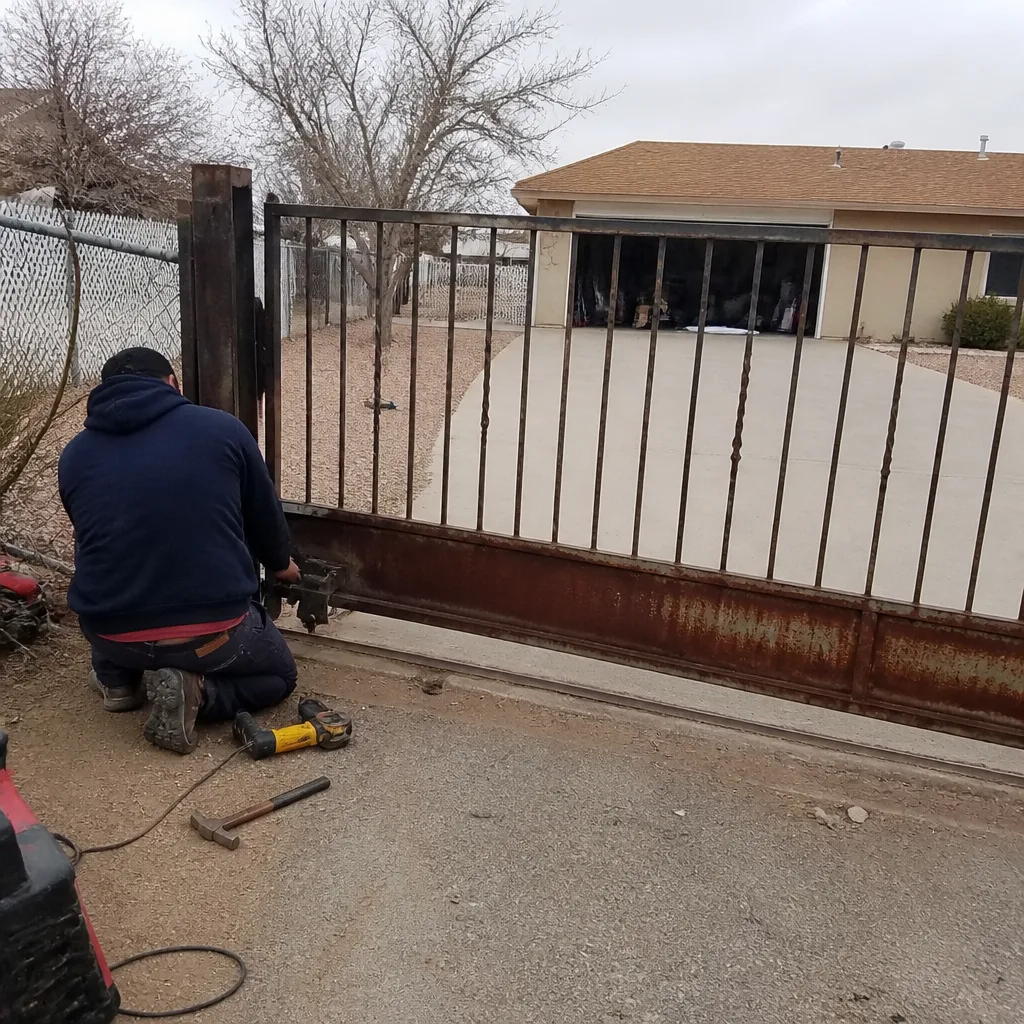 Before
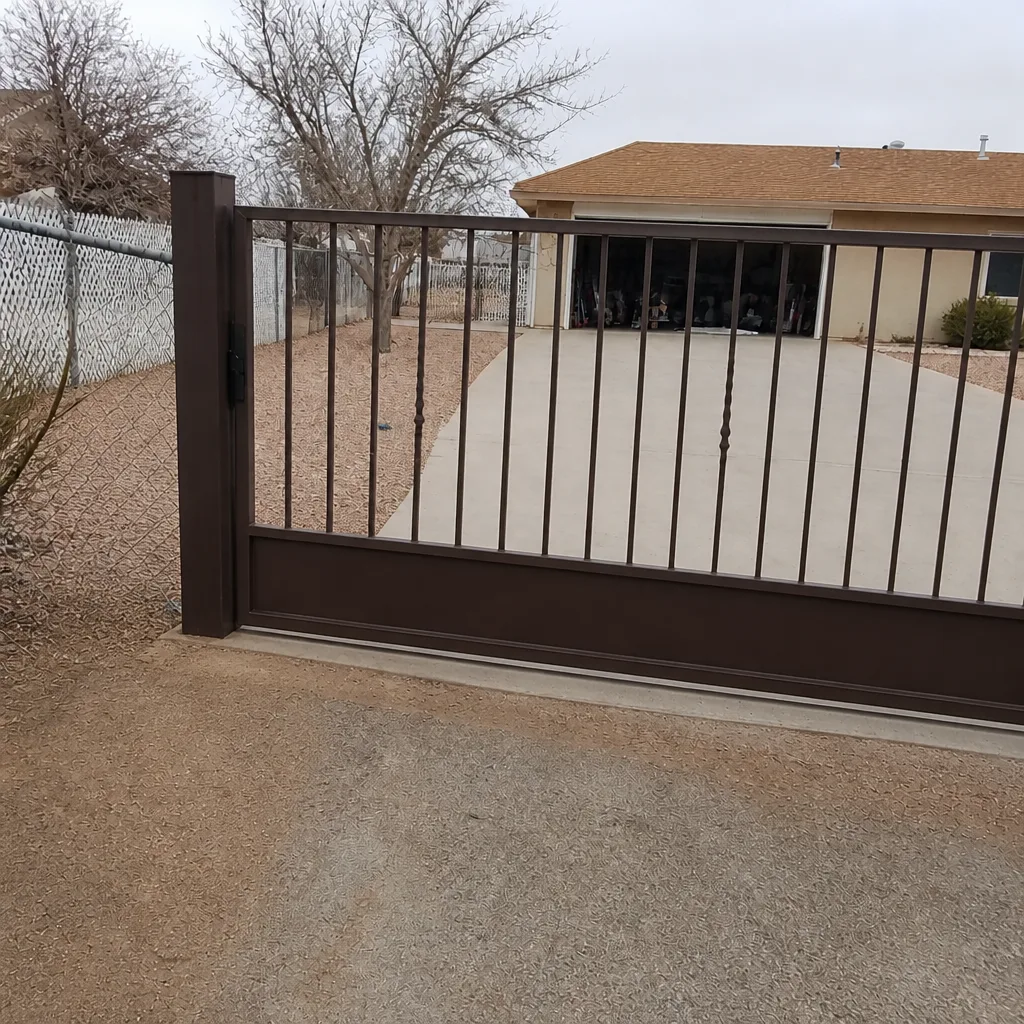 After