
Last updated November 18, 2026
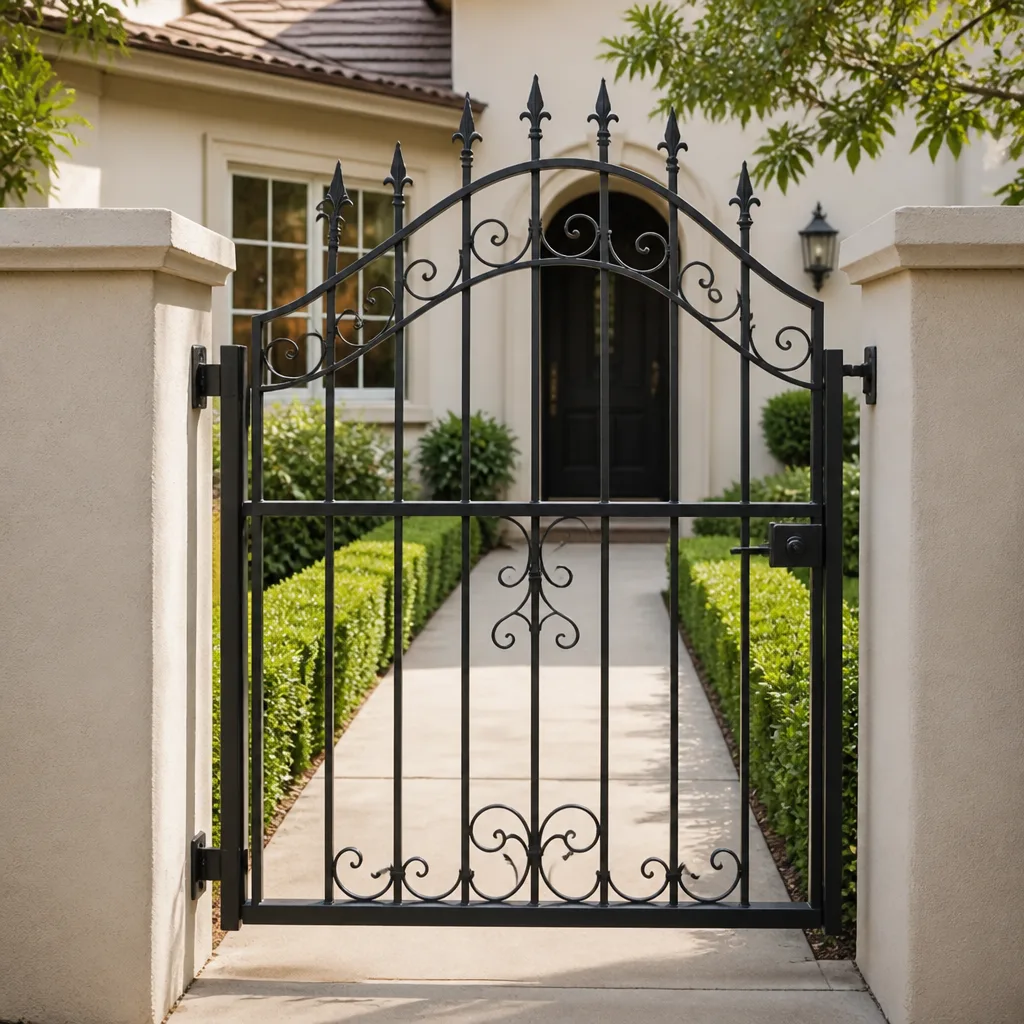 Wrought iron
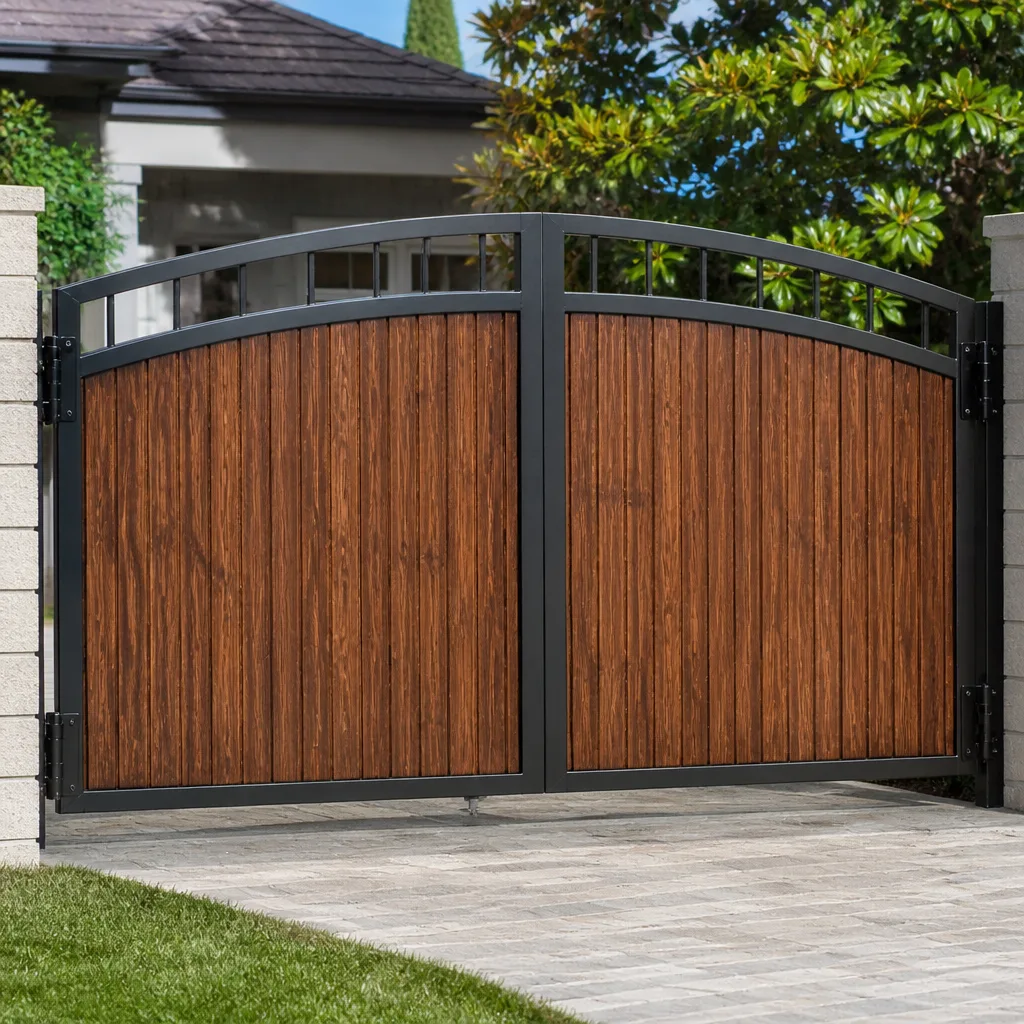 Wood & steel frame
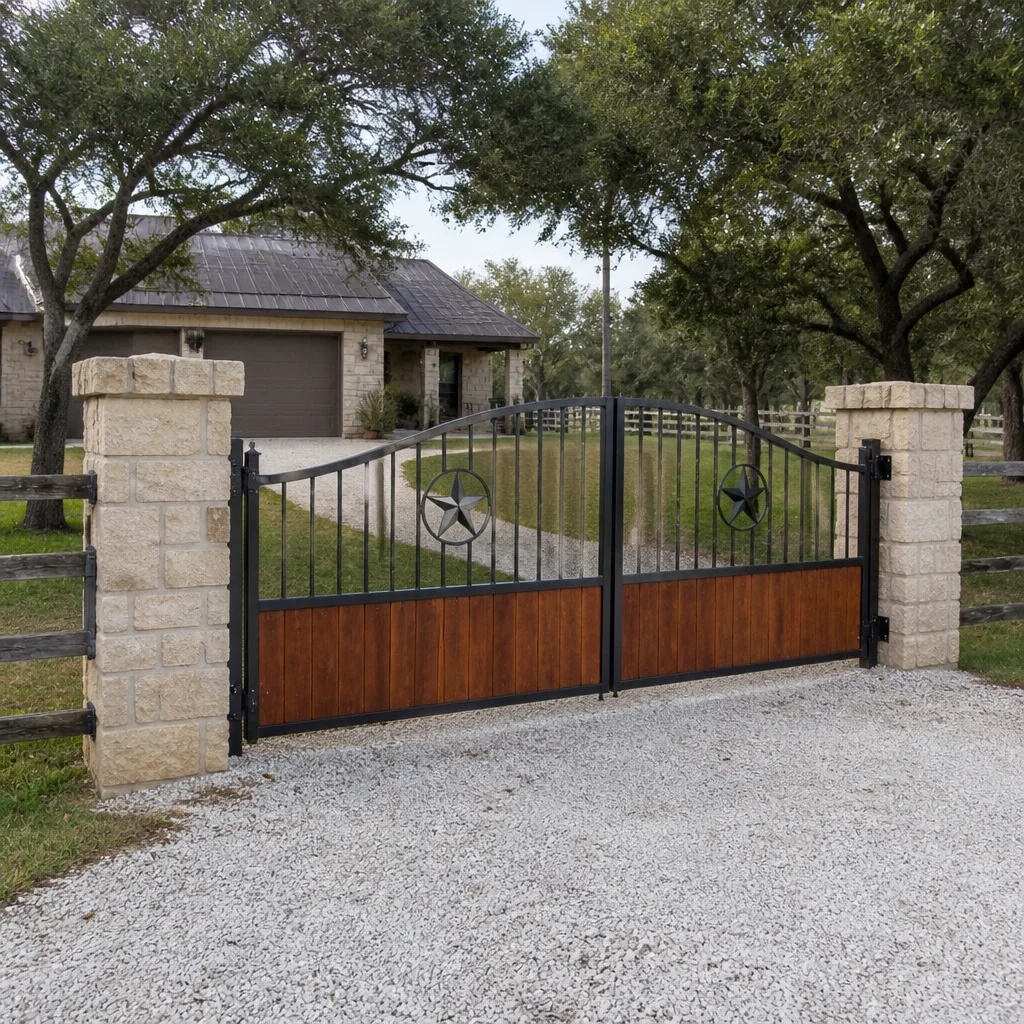 Farm & ranch
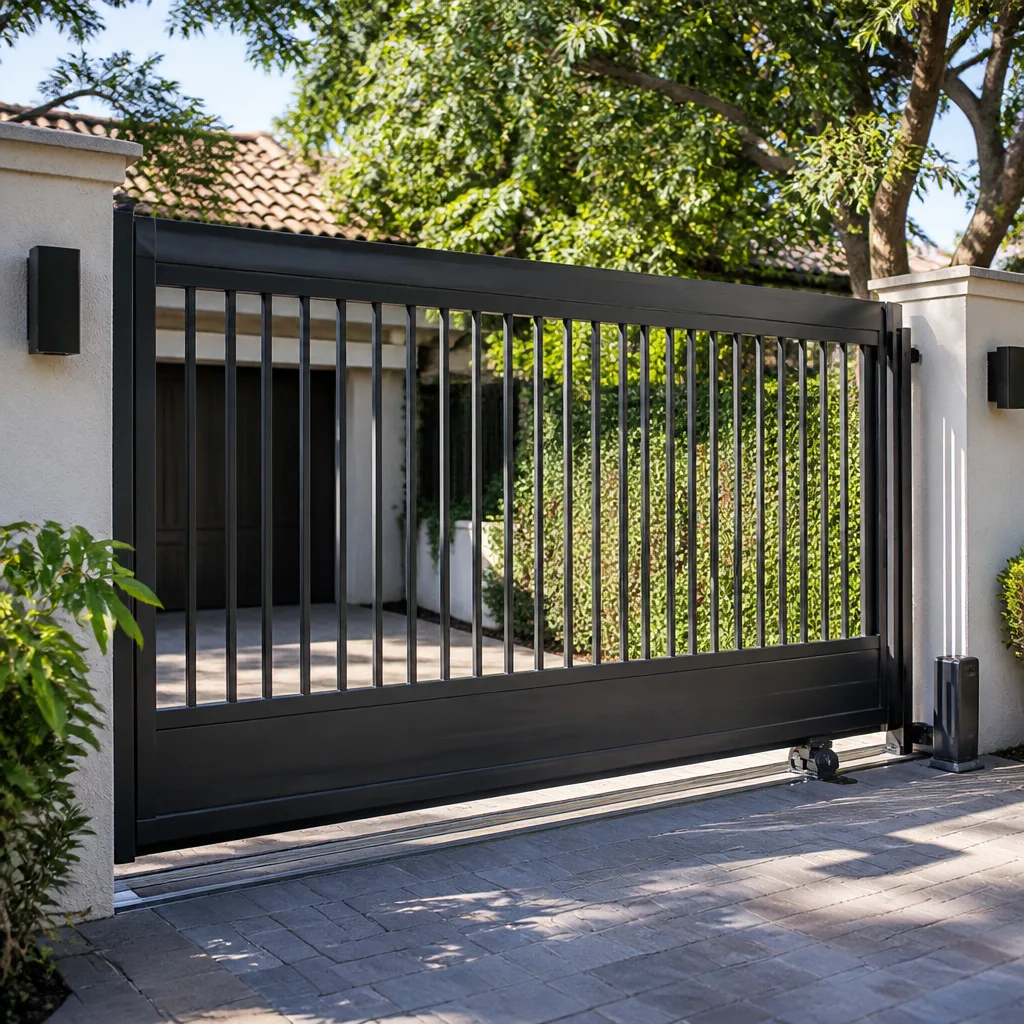 Sliding driveway gates
 LiftMaster operators
Free on-site gate assessment - hinges, posts, and your LiftMaster or Nice gate operator checked before anything is quoted
The assessment is free and the quote is the invoice.
Get your free estimateGate Parts & Welding Maintenance Schedule: What to Do and When
A bolt torqued to 40 ft-lbs at installation that reads 22 ft-lbs at the 12-month inspection isn’t within tolerance. It’s halfway to a stress fracture, and “looks tight” would have passed it. That gap between how gate hardware is usually checked and how it should be checked is why hairline weld cracks and quiet torque loss go unnoticed until a hinge tears out of a post. This guide replaces visual feel with measurable thresholds: specific torque readings, weld bead criteria, hinge play tolerances, and a photographic baseline that makes every future inspection in Boulder City comparable. You’ll finish knowing what to do at month one, month six, year one, and year five.
Quick Answer
Gate parts and welding should be inspected on a tiered schedule: lubrication and a bolt re-torque check every six months, a full hardware and weld inspection with torque verification every twelve months, and a detailed weld and heat-cycling review every five years. Every entry needs a photographic baseline from day one and written readings, not impressions. In Boulder City, the desert temperature swing makes annual weld inspection non-negotiable.
Styles & brands we work with
- Wrought iron
- Wood & steel frame
- Farm & ranch
- Sliding driveway gates
- LiftMaster operators
Table of Contents
- Why “Looks Fine” Is a Maintenance Failure
- The Full Maintenance Schedule at a Glance
- The Six-Month Service: Lubrication and Torque
- The Annual Inspection: Hardware, Hinges, and Measurements
- Weld Bead Visual Criteria: What Passes and What Fails
- Five-Year Weld Review and Boulder City Heat Cycling
- Building a Photographic Baseline on Day One
- How to Write a Maintenance Log Entry That’s Actually Useful
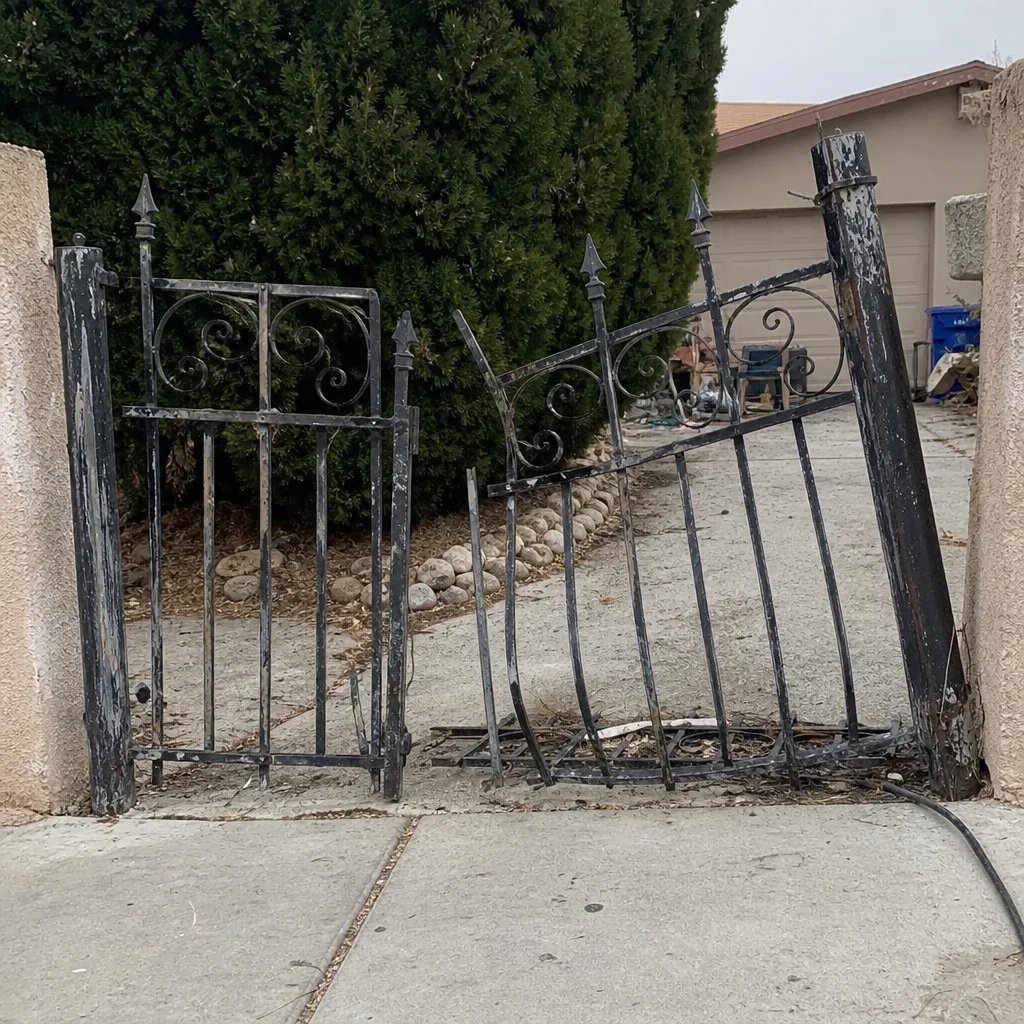 Before
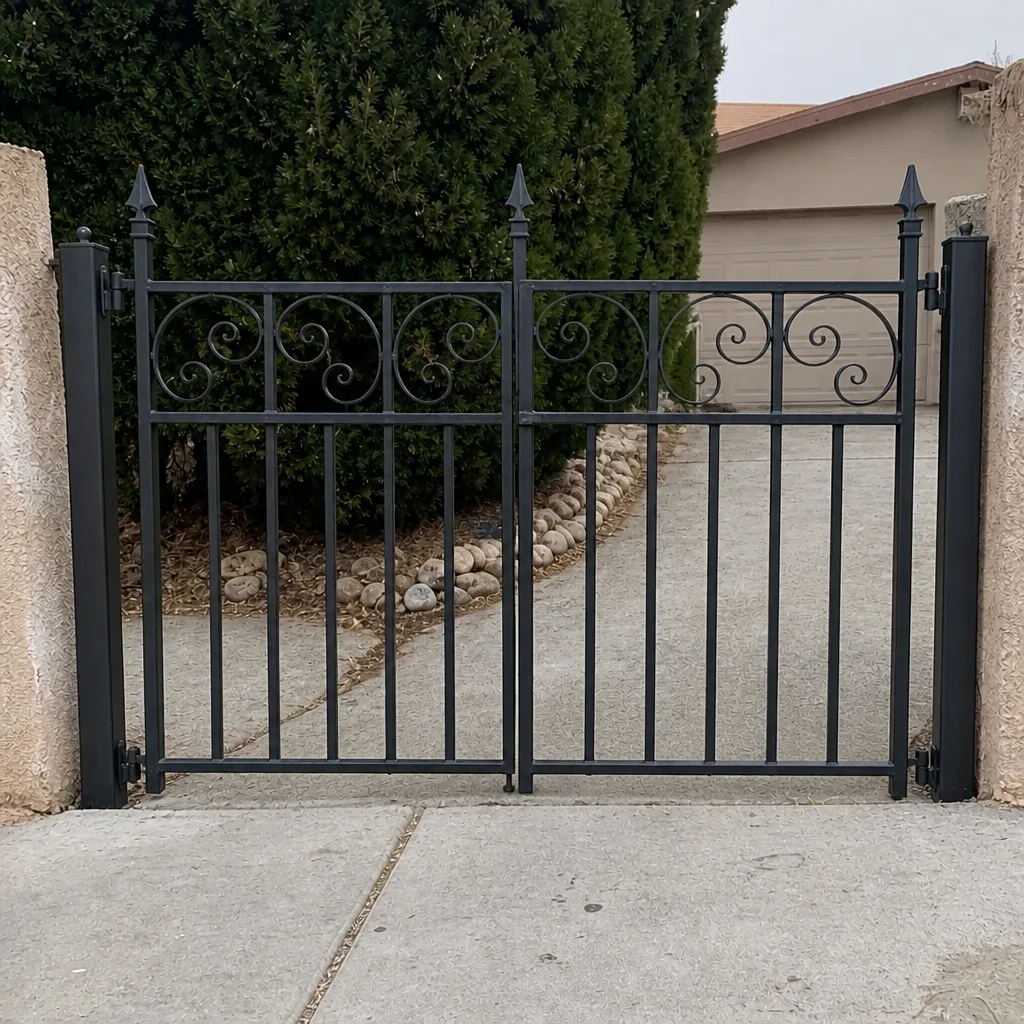 After
Why “Looks Fine” Is a Maintenance Failure
Most gate maintenance decisions run on visual impression. The gate swings, the bolts look seated, the weld has paint on it, so it passes. The problem is that the failure modes on a driveway gate are invisible until they’re structural: torque loss, hairline fatigue cracks in weld toes, and hinge wear measured in fractions of an inch.
We see it constantly on gate repair in Boulder City calls. A homeowner reports the gate sagging or dragging. We measure hinge play at the pintle and find it’s moved a quarter inch. That didn’t happen overnight – it wore across two years of inspections that all read “no visible issues.” A quarter inch of measured play at the twelve-month mark would have triggered a shim and a re-torque. Two years of “looks fine” triggers a hinge replacement.
Measurable thresholds change that. Instead of a pass/fail verdict based on impression, you get a number to compare against last time. A reading of 22 ft-lbs on a fastener spec’d at 40 isn’t ambiguous. It’s a flagged item, documented, with a date on it. That’s the whole discipline this guide teaches.
The Full Maintenance Schedule at a Glance
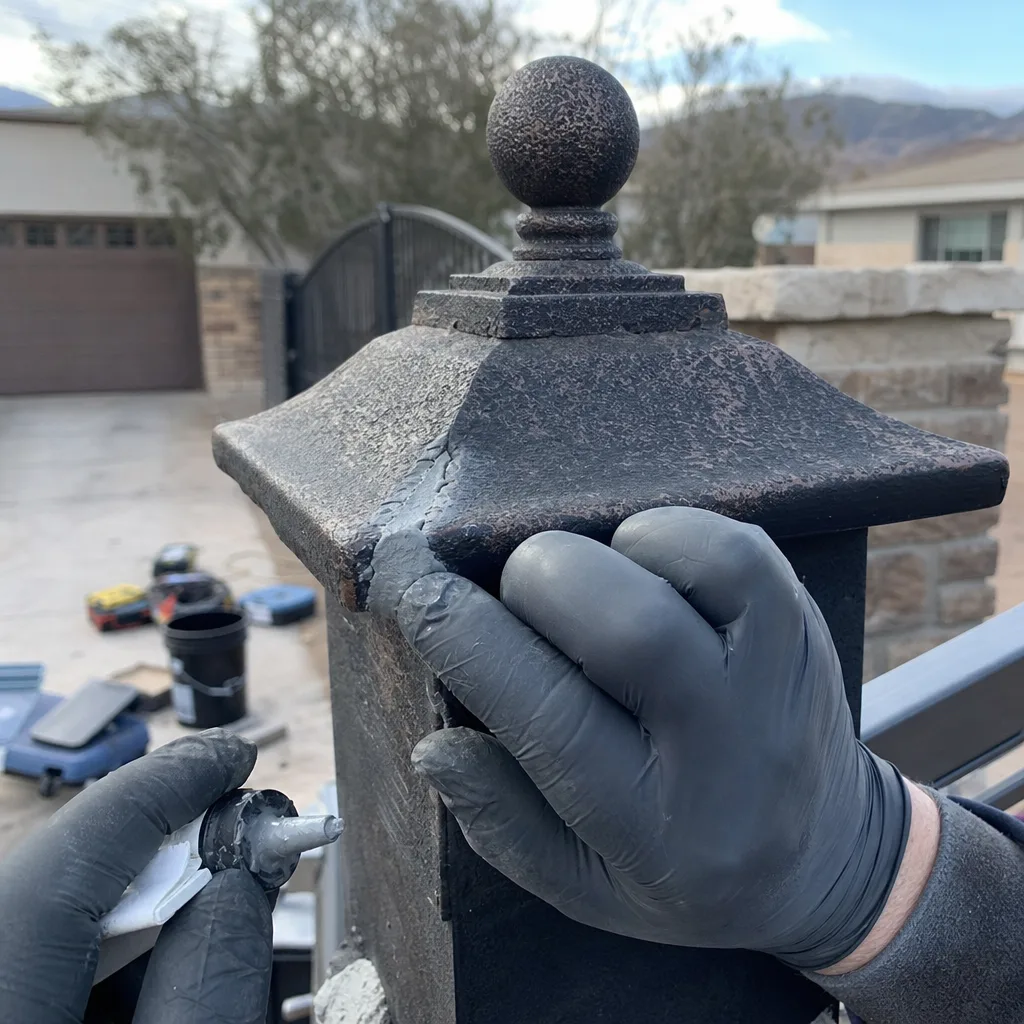
Here’s the tiered schedule we recommend for a residential driveway gate, whether it swings or slides. Adjust frequency upward for high-cycle gates (more than 20 openings a day) or gates in exposed, wind-loaded positions.
- Day one – baseline. Photograph every hinge, weld joint, latch, and fastener. Record starting torque readings on all structural hardware. Log the date, the brand (this matters if you’re running Linear, Viking, or Ghost Controls hardware), and every measurement.
- Every 6 months – lubrication and torque. Lubricate hinges, pintles, and the operator arm’s pivot points with the correct product. Re-check torque on the anchor bolts and hinge fasteners against the spec sheet.
- Every 12 months – full inspection. Torque verification, hinge play measurement, weld bead inspection, latch alignment check, and a photo comparison against the baseline set.
- Every 5 years – weld and heat-cycle review. Detailed inspection of weld toes and heat-affected zones, especially in Boulder City’s climate. If any crack indication appears, a certified welder evaluates it.
- Anytime – after a hard windstorm, a vehicle strike, or a new noise. Don’t wait for the interval.
One note: this schedule covers parts and welding. Motor and operator service runs on its own rhythm, and you can find that detail on our gate motor & opener in Boulder City page. The two disciplines overlap at the operator mounting bracket, which gets checked on both.
The Six-Month Service: Lubrication and Torque
The six-month service is the one most homeowners can partly do themselves, and the one most people skip entirely. Both matter.
Lubrication: Correct Product Specifications
Not all gate lubricants are interchangeable, and the wrong one attracts grit that accelerates the wear you’re trying to prevent.
- Hinges and pintles: a lithium-complex grease or a dry PTFE (Teflon-based) spray. Dry film is better in dusty environments because it doesn’t hold grit. Apply to the pintle pin, work the gate open and closed through a few cycles, then wipe the excess.
- Latch and striker: dry PTFE, never heavy grease. A greased latch in dust becomes a gritty latch.
- Operator arm pivot points: follow the manufacturer’s spec. Linear and Viking arms typically want a light lithium or the brand’s specified grease – the manufacturer’s manual wins over generic advice.
- Chain (sliding gates): chain-specific lubricant, applied to a clean chain. Never a water-displacing spray alone, which evaporates and leaves the chain dry.
Bolt Re-Torque: Do It With a Wrench, Not a Wrench by Feel
This is the step that turns “looks tight” into a reading. Use a calibrated torque wrench. Check anchor bolts at the post base, hinge fasteners at the gate frame, and the operator mount bolts. Compare each to the manufacturer’s spec – typically 30-45 ft-lbs for a structural hinge fastener, but the spec sheet governs, not a guess.
Record what you find. A fastener that read 40 ft-lbs last time and reads 30 this time is losing preload. That’s the early signal of a fatigue issue, and catching it here saves a weld repair later.
The Annual Inspection: Hardware, Hinges, and Measurements
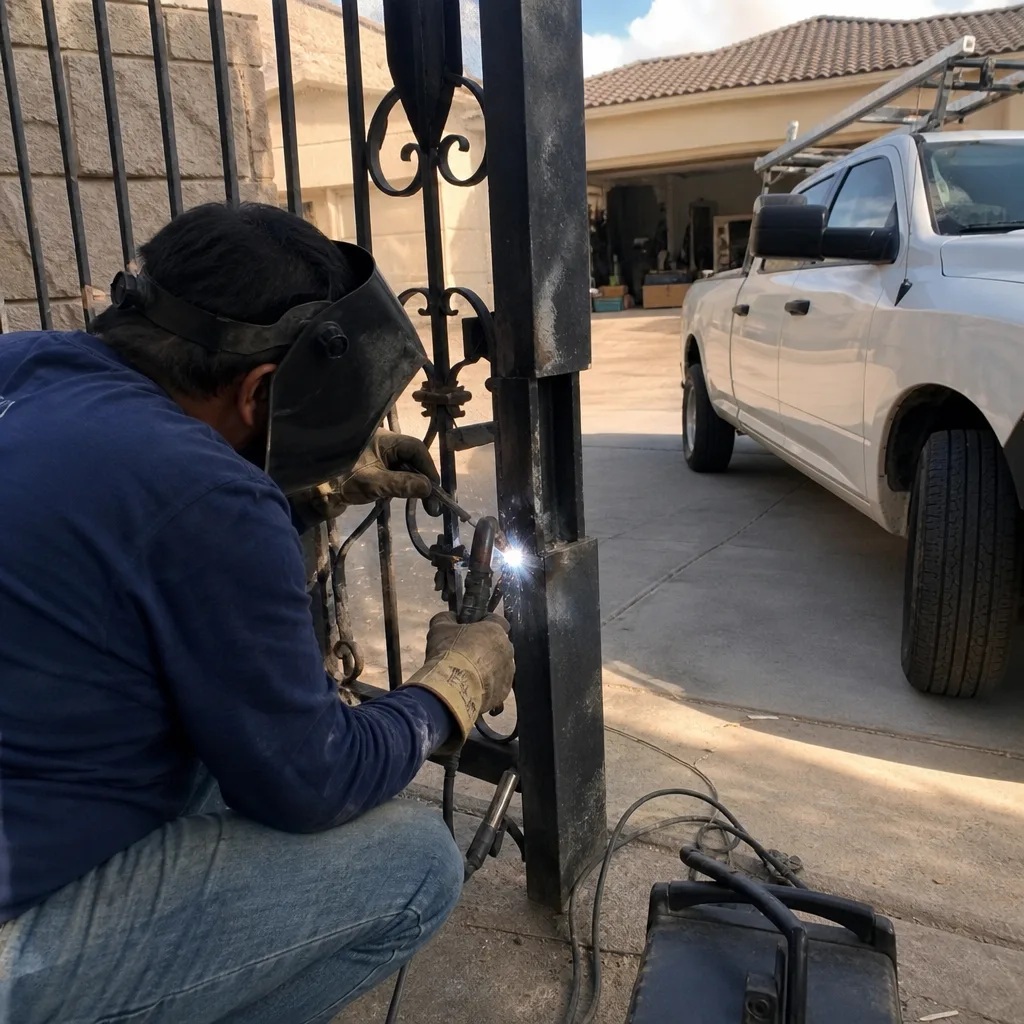
The annual inspection is where measurements replace opinion across the whole gate. Bring a torque wrench, a tape measure, a level, and a camera.
Hinge and Pintle Play Tolerance
Hinge play is measured as the lateral movement at the gate’s free end relative to the post, with the gate closed but not latched. Here’s the pass/fail we use:
- Up to 1/16 inch (about 1.5 mm): normal wear, no action. Document the reading and compare next year.
- 1/16 to 1/8 inch: monitor closely or shim. Re-check at six months rather than twelve.
- Over 1/8 inch: flag for hinge service. This is where gate sag and drag begin, and it’s cheaper to correct now than after the hinge tears its fasteners out of the post.
The Annual Checklist
- Measure hinge play at the free end and record in fractions of an inch.
- Verify torque on every structural fastener against spec; note any that dropped more than 10 percent since last reading.
- Inspect every weld bead using the criteria in the next section.
- Check latch alignment: the gate should latch without being lifted or forced.
- Check the gate against a level at the top rail; note any movement from the prior year.
- Look at the post for cracks at the anchor or base weld.
- Photograph everything and file it against the baseline set.
If you’d rather have this done with a documented record left behind, our Vance Gate Repair Boulder City home page explains how we run an inspection – written findings and photos on every visit.
Weld Bead Visual Criteria: What Passes and What Fails
You don’t need a welding certification to inspect a bead visually. You need to know what to look at. Here are the criteria we apply on a visual weld review.
What Passes
- A uniform bead with a consistent crown height along the length – no sudden flattening or bulging.
- A smooth transition from the bead into the base metal at the toe (the edge where the weld meets the metal). A concave, blended toe passes.
- No undercut (a groove melted into the base metal alongside the bead) beyond a hairline.
- Consistent ripple pattern that follows the direction of travel.
- Paint or coating intact, with no rust bloom tracking a line.
What Fails – and Warrants a Closer Look
- A rust-colored line tracing the weld toe, which is often the first visible sign of a crack indication in a fatigue zone.
- Any visible crack at the toe, the crater, or the heat-affected zone.
- Excessive undercut, or a bead that sits proud with a sharp, non-blended toe.
- Porosity – the small surface pits that weaken the joint and trap moisture.
- Discoloration or scale on a bead that’s supposed to be finished and painted, suggesting a repair was made without documentation.
If you find a crack indication, stop. This is the point where a trained, certified welder evaluates and repairs the joint – a visual check flags a problem, it doesn’t fix one. A cracked weld that goes unrepaired and then fails under load can drop a gate. Get a professional on it, and photograph it before anyone touches it so the failure is documented.
Five-Year Weld Review and Boulder City Heat Cycling
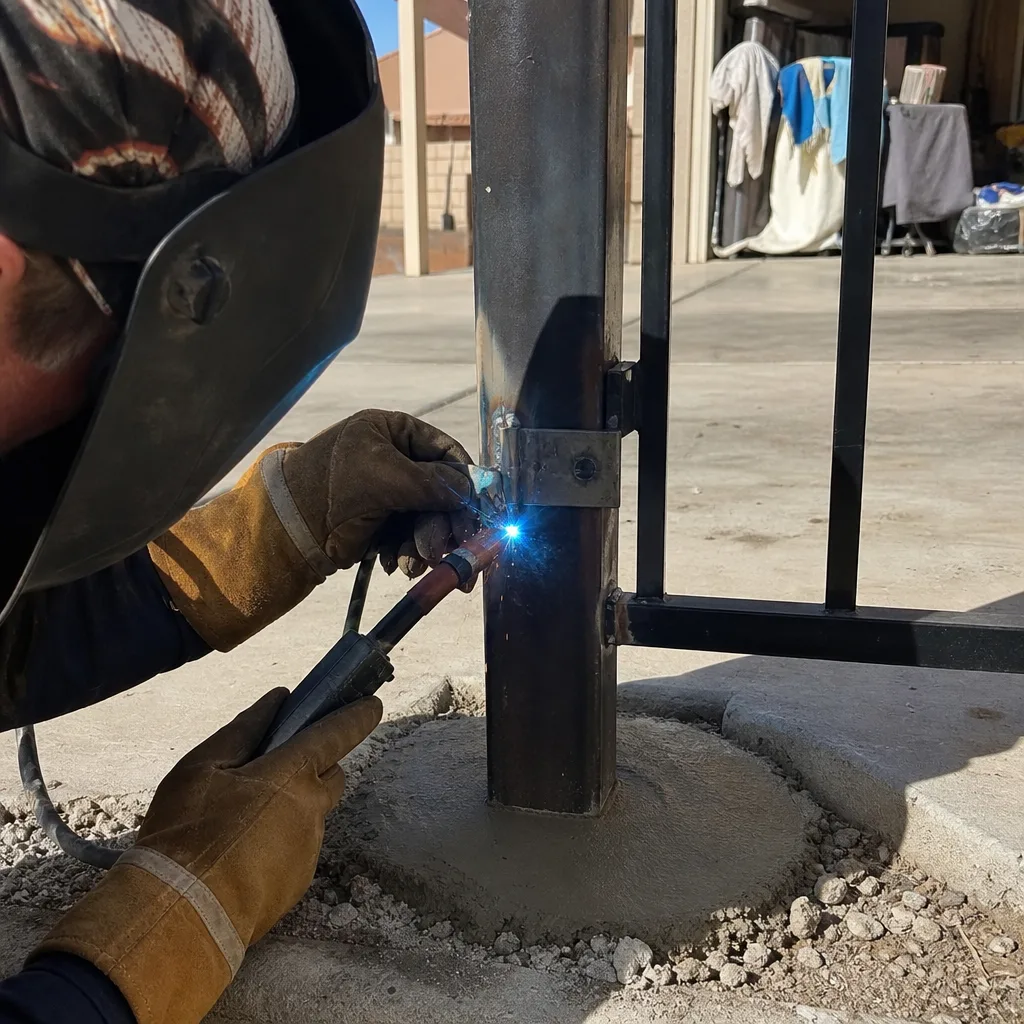
Boulder City sits in the Mojave, and the desert swing is brutal on welded steel. Summer highs well into triple digits, winter overnight lows near freezing – that’s a daily-to-seasonal expansion and contraction cycle across every weld joint on the gate. Steel grows and shrinks with temperature, and a weld toe is where that stress concentrates.
Over a five-year interval, a gate in Boulder City might see several thousand of these cycles. Each one is small. Stacked together, they’re exactly the conditions that turn a tiny toe defect – a little undercut, a bit of porosity – into a propagating crack. That’s why our interval for a detailed weld and heat-affected-zone review is five years here, and why we check the toe specifically.
Two more local realities tighten the schedule. The wind exposure on properties along the ridge lines loads the gate frame repeatedly, which adds fatigue to the same joints. And the dry air, combined with occasional flash-flood monsoon moisture, means a gate can go from bone-dry to soaked and back within a week – which drives rust bloom along the weld toe faster than a wetter, steadier climate would.
The practical takeaway: in our experience, Boulder City gates benefit from a weld inspection at year one, then every year, with the full heat-cycle review at the five-year mark rather than deferring the whole thing to year five. A gate part or weld flagged early in Boulder City is a small correction; the same defect left to propagate is a frame repair.
Building a Photographic Baseline on Day One
A maintenance schedule without a baseline is a series of opinions with no comparison. The photograph is what makes every future inspection meaningful. Build the set on day one.
- Establish the vantage points. Pick four or five fixed photo positions – full gate from the drive, each hinge close up, the latch, the post base, and every accessible weld joint. Photograph from the same spot every time.
- Include a scale reference. Lay a coin or a small ruler against each hinge and weld so future comparisons have a size anchor, and date-stamp every shot.
- Capture the hardware. Photograph the fastener heads and the torque readings written beside them. A photo of a bolt head with its wrench mark and a note of “40 ft-lbs, Jan” is a record. A photo of a bolt head alone is not.
- Capture the weld toe. Get close and in good light. The toe is where failures start, so that’s the shot that matters.
- File by date. Group the photos into a folder named by inspection date. When the next technician arrives, one glance at the folder shows the whole history.
This is the same documentation habit we bring to every visit. Under the Haven Standard, every job leaves a photo record of what was found, what was set, and what was replaced – and a written price before work starts. That combination is what a homeowner should ask any gate company for.
How to Write a Maintenance Log Entry That’s Actually Useful
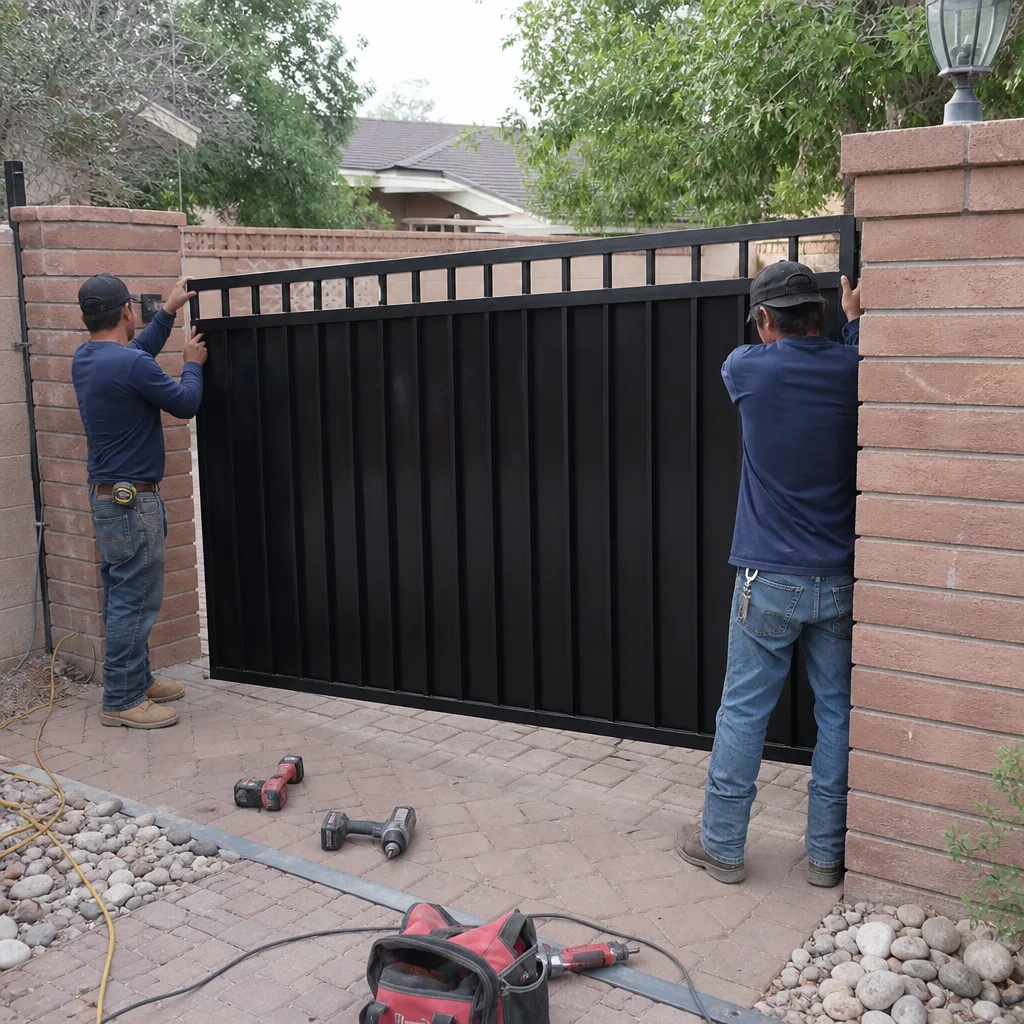
Most maintenance logs are useless because they record a mood instead of a measurement. “Gate inspected, all good” tells the next person nothing. Here’s the structure that makes an entry useful to any technician, not just the one who wrote it.
- Date and gate identifier. Which gate, what kind, and what operator brand is on it – Linear, Viking, Ghost Controls, DoorKing. Brand matters because part numbers differ.
- Location and reading. For each checkpoint, name where it is and the measured value. “Rear left hinge, torque 38 ft-lbs” beats “hinges fine.”
- Comparison to last reading. State the prior value and the change. “Down from 40 ft-lbs at last check – re-torqued to 40.” That’s the sentence a future technician needs.
- Action taken. What was adjusted, shimmed, lubricated, or replaced, with the part number if applicable.
- Flag or monitor item. Anything that didn’t fail but should be watched. “Right pintle play 1/8 inch – monitor at six months.”
- Photo reference. Name the photo folder that corresponds to this entry.
Write it in plain language and file it where the next person will look. A homeowner with a folder of dated, measured entries, matched to photos, never has to pay a second technician to rediscover a problem the first one already knew about.
Common Mistakes to Avoid
- Using feel instead of a torque wrench. “Looks tight” passes a bolt that’s lost half its preload. In Boulder City’s heat cycle, that’s the difference between a re-torque and a weld repair.
- Greasing a dusty hinge with heavy grease. The grease holds grit that grinds the pintle. Use a dry PTFE film in a dusty, desert environment.
- Skipping the photographic baseline. Without a day-one photo set, every future inspection has nothing to compare against, and “no visible issue” becomes the default answer.
- Ignoring a rust line at the weld toe. That thin rust trail is often the first visible sign of a crack indication. Treat it as a flag, not as cosmetic.
- Deferring weld review to the five-year mark in a desert climate. The heat cycling on a Boulder City gate means the toe should be checked every year, not every five.
- Writing mood-based log entries. “All good” is not a record. Measured values plus a comparison keep the next technician from starting over.
- Assuming the operator is the whole system. Motor service is one thing; hinge play, torque, and weld integrity fail independently. A working motor doesn’t mean a sound gate.
See the difference
BeforeAfter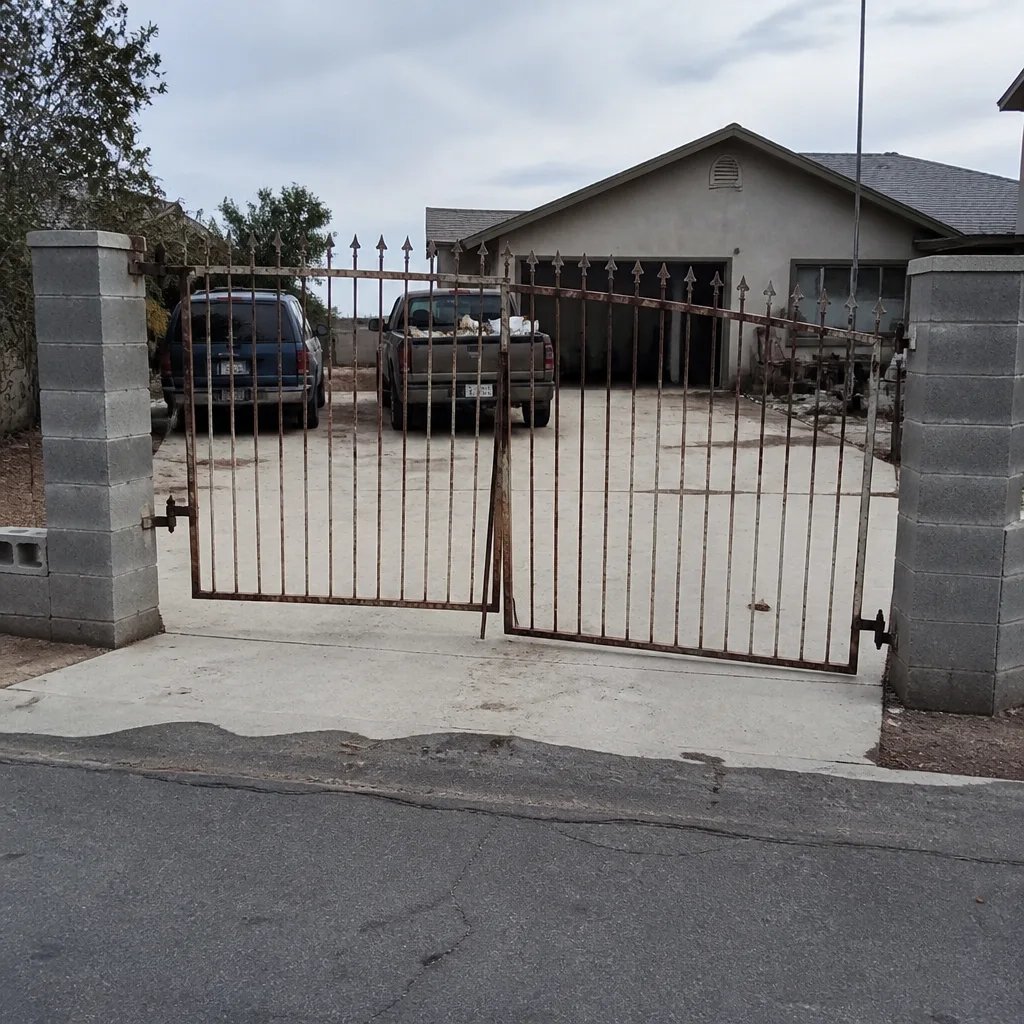 Before
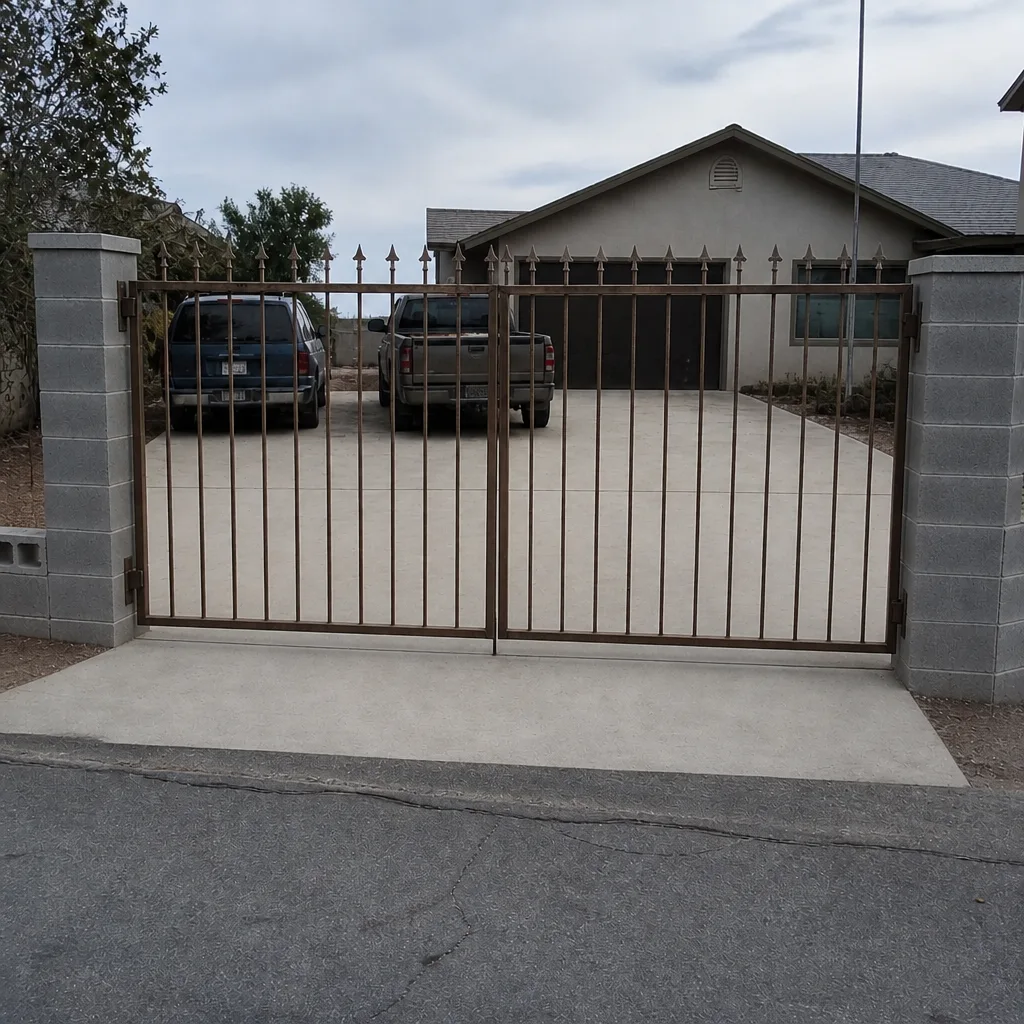 After
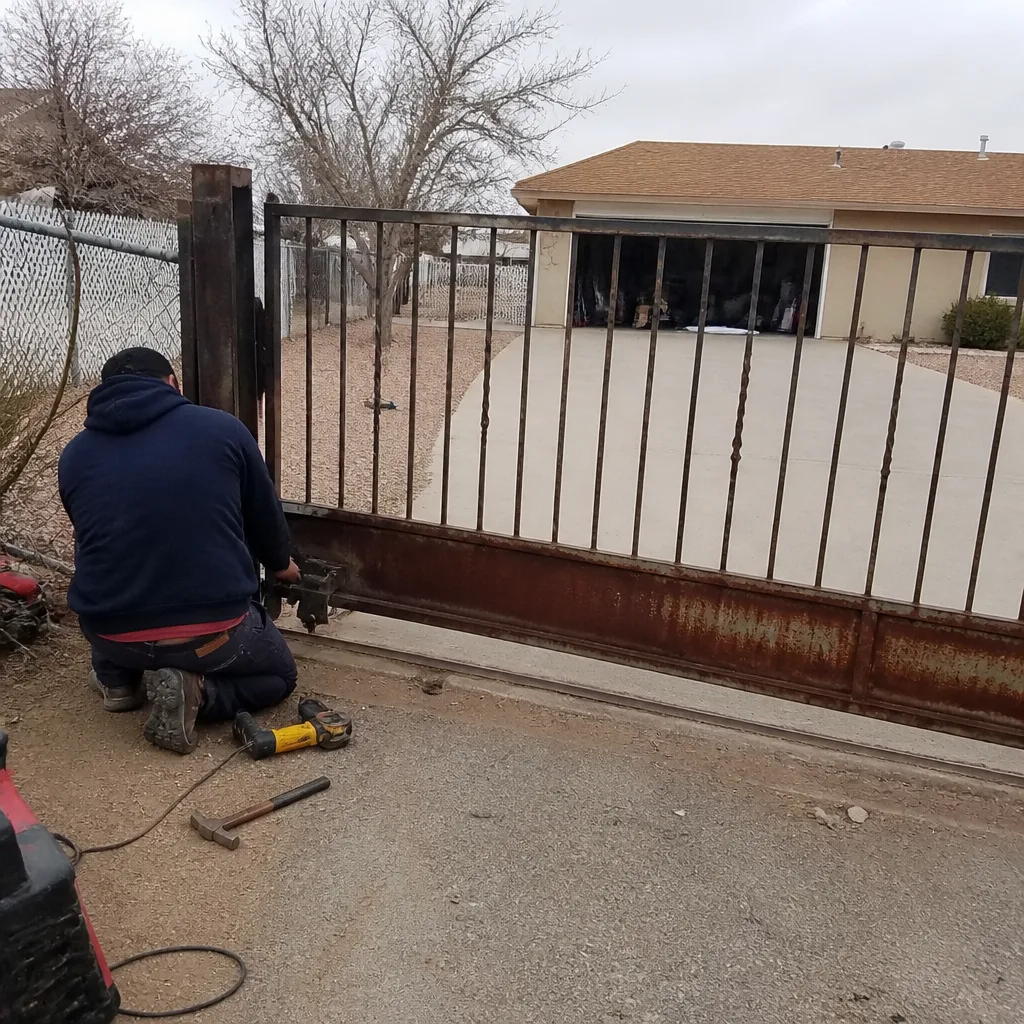 Before
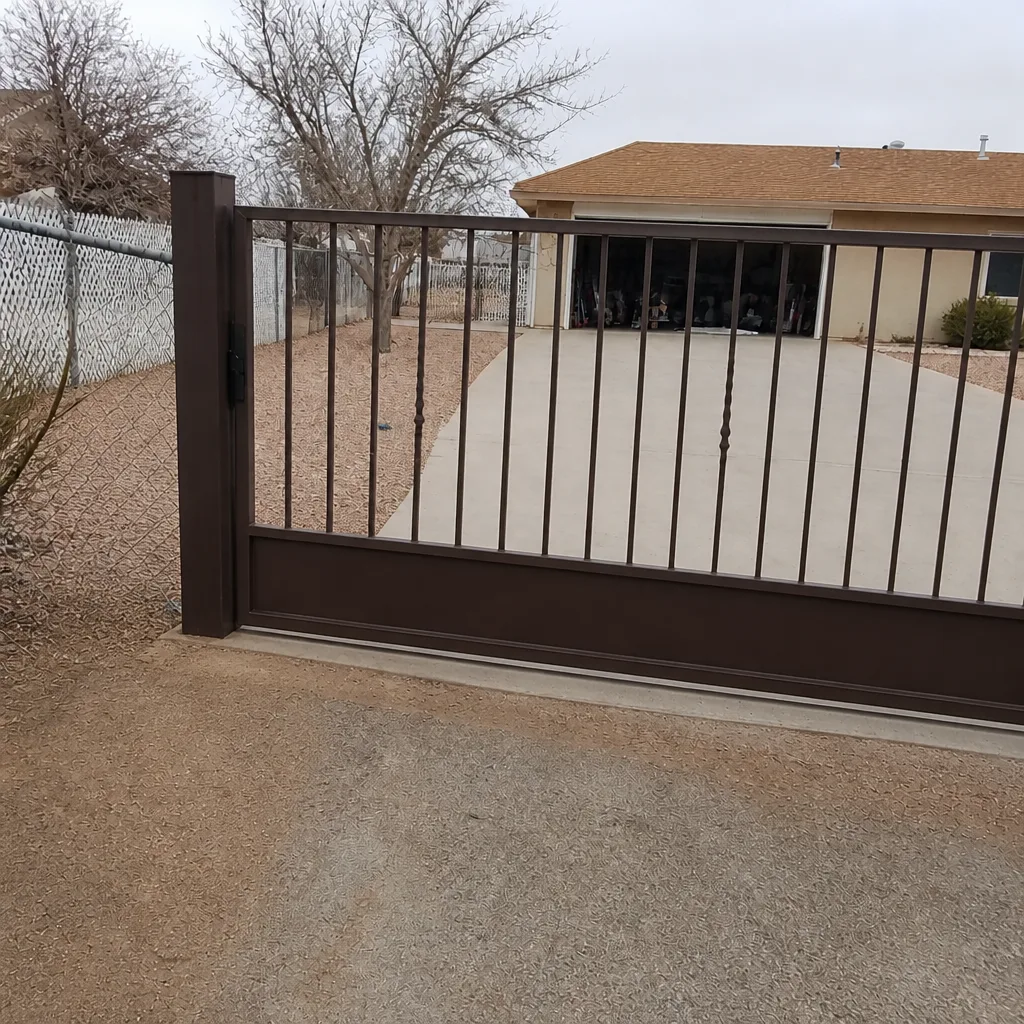 After
When to Call a Professional
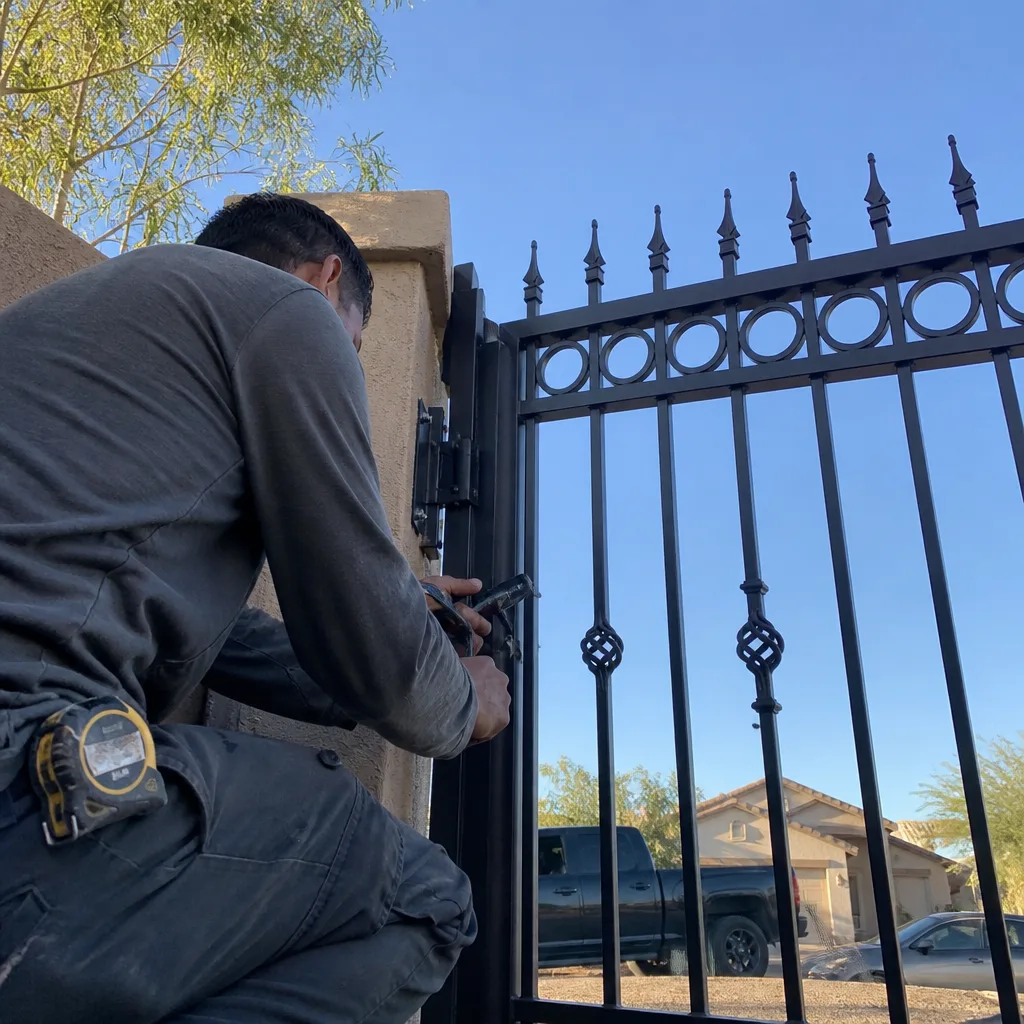
Some of this schedule a homeowner can run – lubrication, a torque check with the right wrench, and a photo baseline all belong on your side of the line. The moment you find a weld crack indication, a hinge with over 1/8 inch of play, or a fastener that keeps losing torque after you re-set it, that’s a professional call, not a look-and-see. Sliding-gate track, cantilever, and heavy swing-gate hardware bring risks that a visual check can’t resolve, and any welding repair needs a trained, certified welder. If you’re unsure whether a reading is a problem, that’s also a good reason to get it measured properly. Vance Gate Repair Boulder City offers free estimates in Boulder City – call (844) 320-7587 and we’ll inspect, measure, and leave you a written record. Every quote is written and agreed before any work starts, and every visit includes a photo record.
Frequently Asked Questions
Lubrication and a torque check every six months, a full measured inspection every twelve months, and a detailed weld review every year in Boulder City’s climate with the full heat-cycle review at five years. The desert temperature swing accelerates wear at the weld toe, which is why the weld check runs annually here rather than on a longer interval.
Follow the manufacturer’s spec sheet – typically 30-45 ft-lbs for structural hinge and anchor fasteners, but the spec governs, not a general rule. The important habit is measuring with a calibrated torque wrench and recording the reading so the next check has a comparison. Call (844) 320-7587 for a measured inspection – estimates are free.
Up to about 1/16 inch of lateral play at the free end is normal wear; over 1/8 inch should be serviced because that’s when sag and drag begin. Between the two, monitor at six months. Measuring in fractions of an inch turns a guess into a flag.
You can perform a visual check for a rust line at the weld toe, undercut, porosity, or a visible crack – and you should, annually. You should not attempt to weld or repair a cracked joint yourself. That’s a certified welder’s job, and a cracked weld that fails under load can drop a gate.
Daily and seasonal heat cycling, wind loading on exposed frames, and occasional monsoon moisture combine to concentrate stress at the weld toe. Over Boulder City’s swings, a small toe defect can propagate into a crack. That’s why the toe gets checked every year.
Yes – every visit includes a photographic record of what was found, what was set, and what was replaced, filed to the job record and left with you. Our technicians have up to 12 years of experience, and every part and weld reading is documented so no future technician has to rediscover the same problem.
The Bottom Line
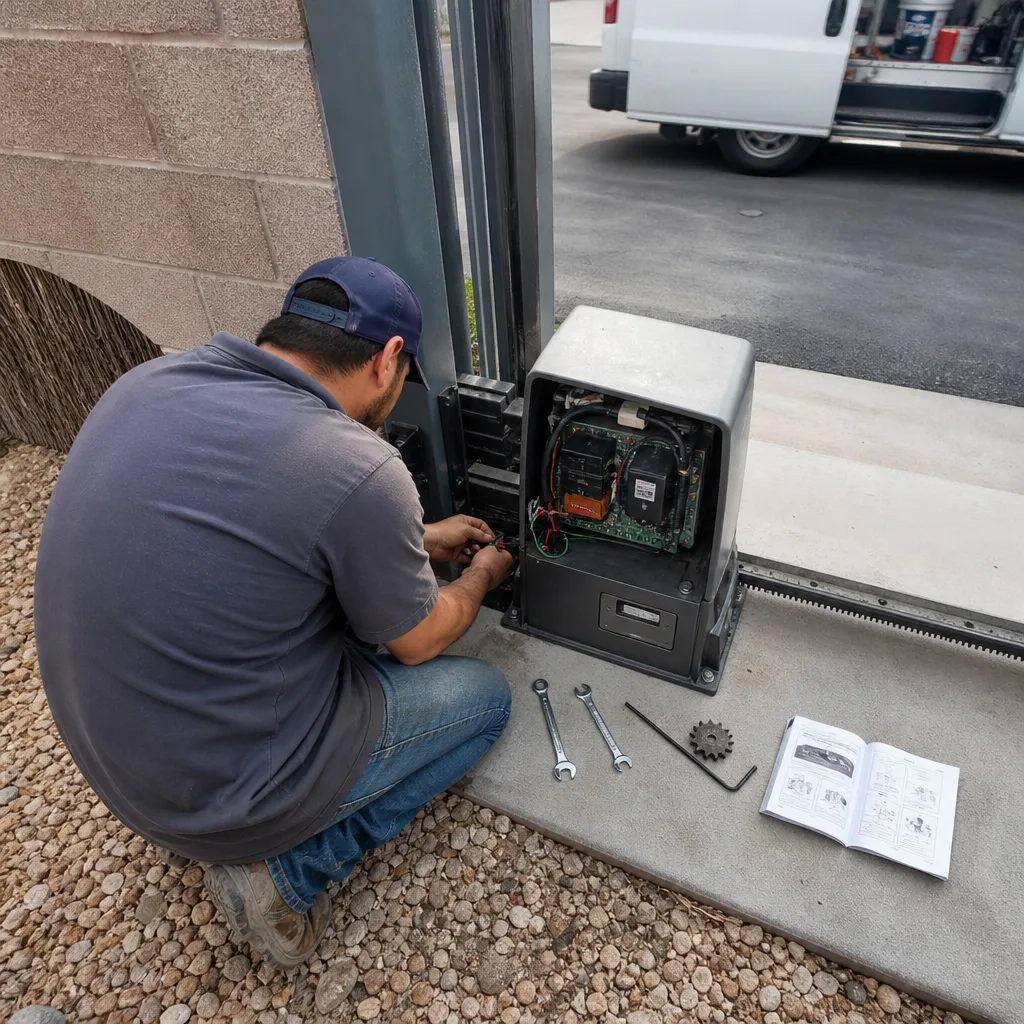
A gate maintenance schedule works when it’s built on measurements, not impressions. The two habits that carry it: record a photographic baseline on day one so every future check has something to compare against, and write every reading – torque, hinge play, weld condition – with a date. Lubricate and re-torque every six months, run a full measured inspection every twelve, and in Boulder City, check the weld toe every year because the heat cycling here won’t wait for a longer interval. That discipline turns a schedule of “looks fine” into a record that protects the gate, and the homeowner’s wallet.
For a measured inspection with a written price and a photo record, our gate installation in Boulder City team is happy to help, and so is our repair crew. Call (844) 320-7587 for a free estimate – a live person answers around the clock, and every quote is written before any work begins.
Written by the team at Vance Gate Repair Boulder City.