
Last updated November 18, 2026
 Wrought iron
 Wood & steel frame
 Farm & ranch
 Sliding driveway gates
 LiftMaster operators
Free on-site gate assessment - hinges, posts, and your LiftMaster or Nice gate operator checked before anything is quoted
The assessment is free and the quote is the invoice.
Get your free estimateGate Access Control Maintenance Schedule: What to Do and When
Most access-control failures aren’t sudden. They’re the result of a limit switch that drifted 4mm over 18 months that nobody wrote down. We’ve pulled apart gate operators in Boulder City where the arm was still swinging and the motor still humming, but the open position had walked nearly three-quarters of an inch from where it was set, and the only reason we knew is that a prior technician had left a reading to compare against. This guide is about building a maintenance schedule around documented numbers, not just calendar dates. You’ll learn what to measure, when to measure it, how Boulder City’s heat cycle changes the intervals, and how to hand a log to the next technician so nobody starts from zero.
Quick Answer
A working gate access-control maintenance schedule combines a 90-day owner walkthrough with an annual technician inspection, and it only works if each visit records actual readings – loop detector sensitivity, battery voltage under load, limit-switch position in degrees or millimeters – so the next visit can compare against a baseline. In Boulder City, the summer heat cycle argues for inspecting capacitors and wiring insulation annually rather than every two years. The schedule itself is less important than what gets written down at each stop.
Styles & brands we work with
- Wrought iron
- Wood & steel frame
- Farm & ranch
- Sliding driveway gates
- LiftMaster operators
Table of Contents
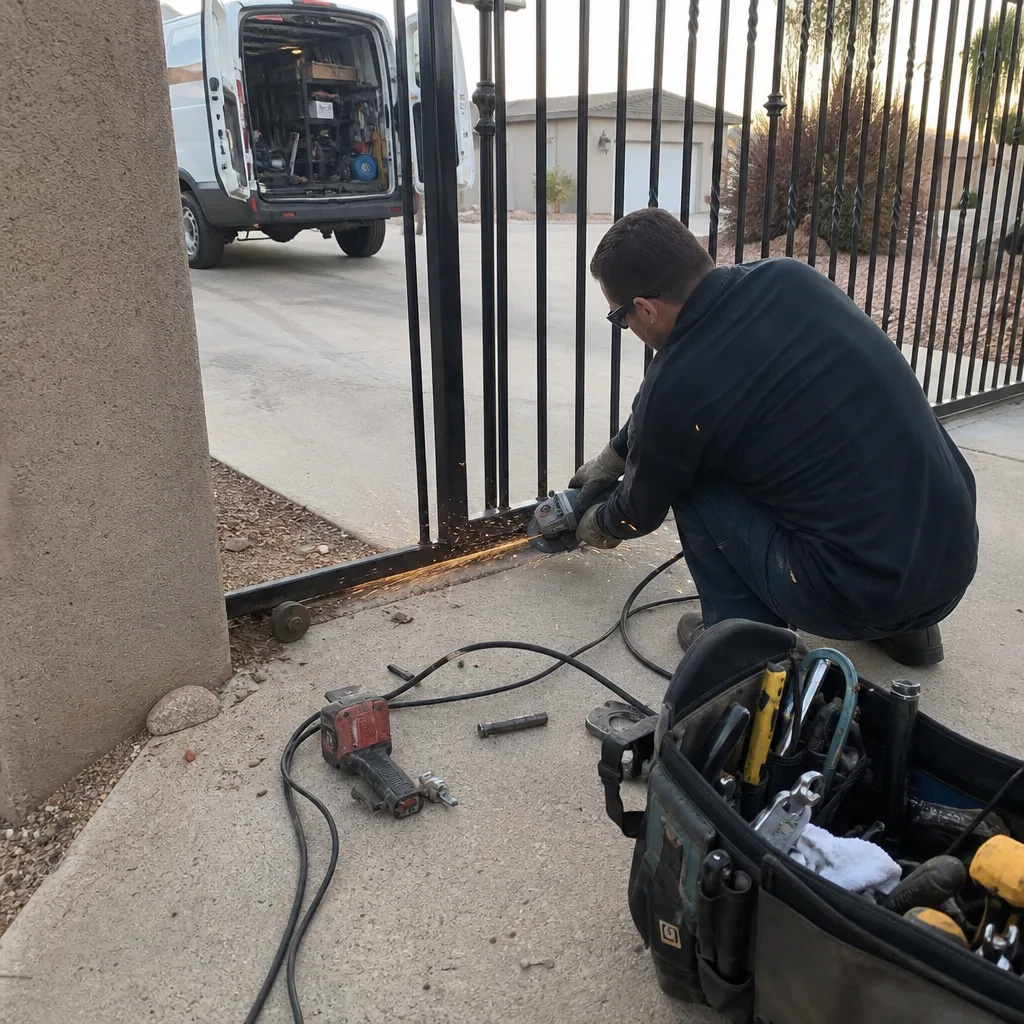
- Why Interval Schedules Fail Without a Baseline
- What to Measure, Not Just Check
- How Boulder City Heat Changes Your Intervals
- 90-Day Owner Walkthrough vs. Annual Technician Inspection
- The Annual Technician Inspection, Step by Step
- How to Store and Hand Off Your Maintenance Log
- Common Mistakes to Avoid
- When to Call a Professional
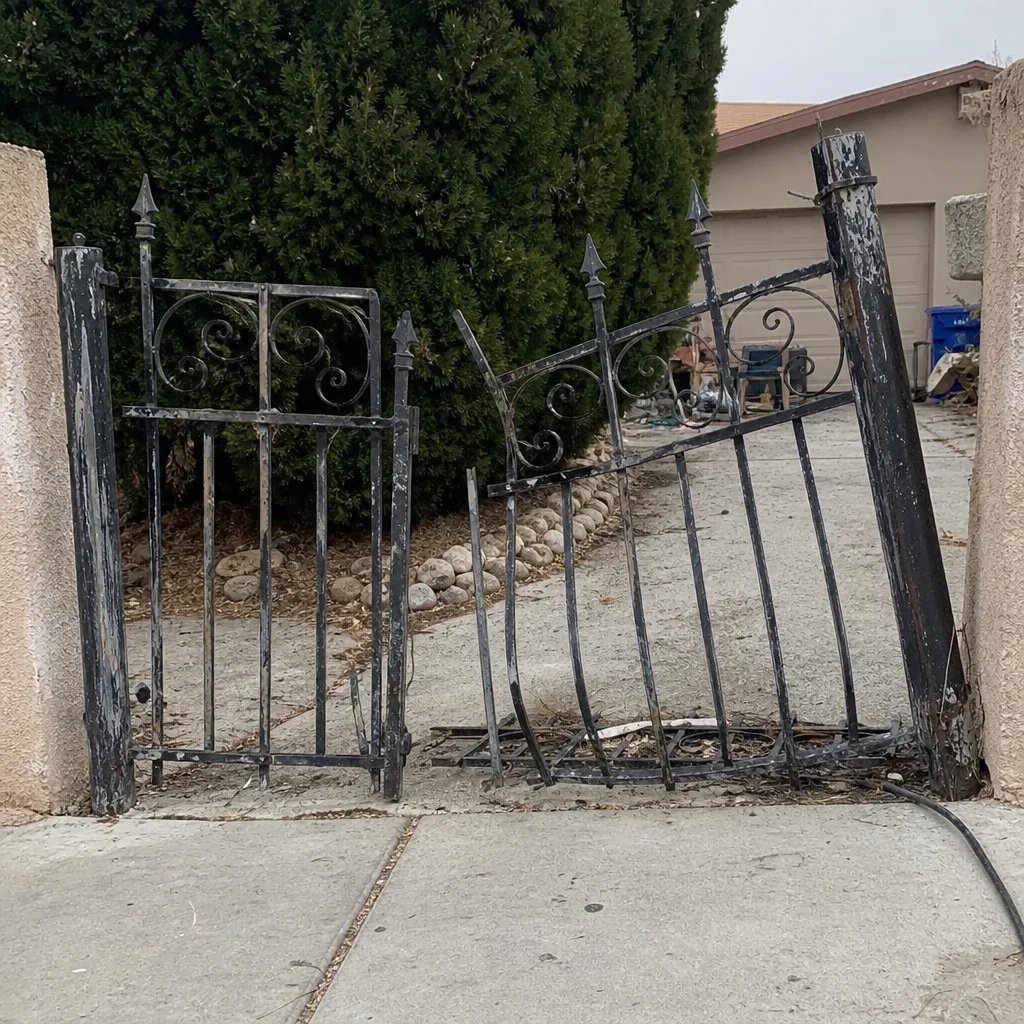 Before
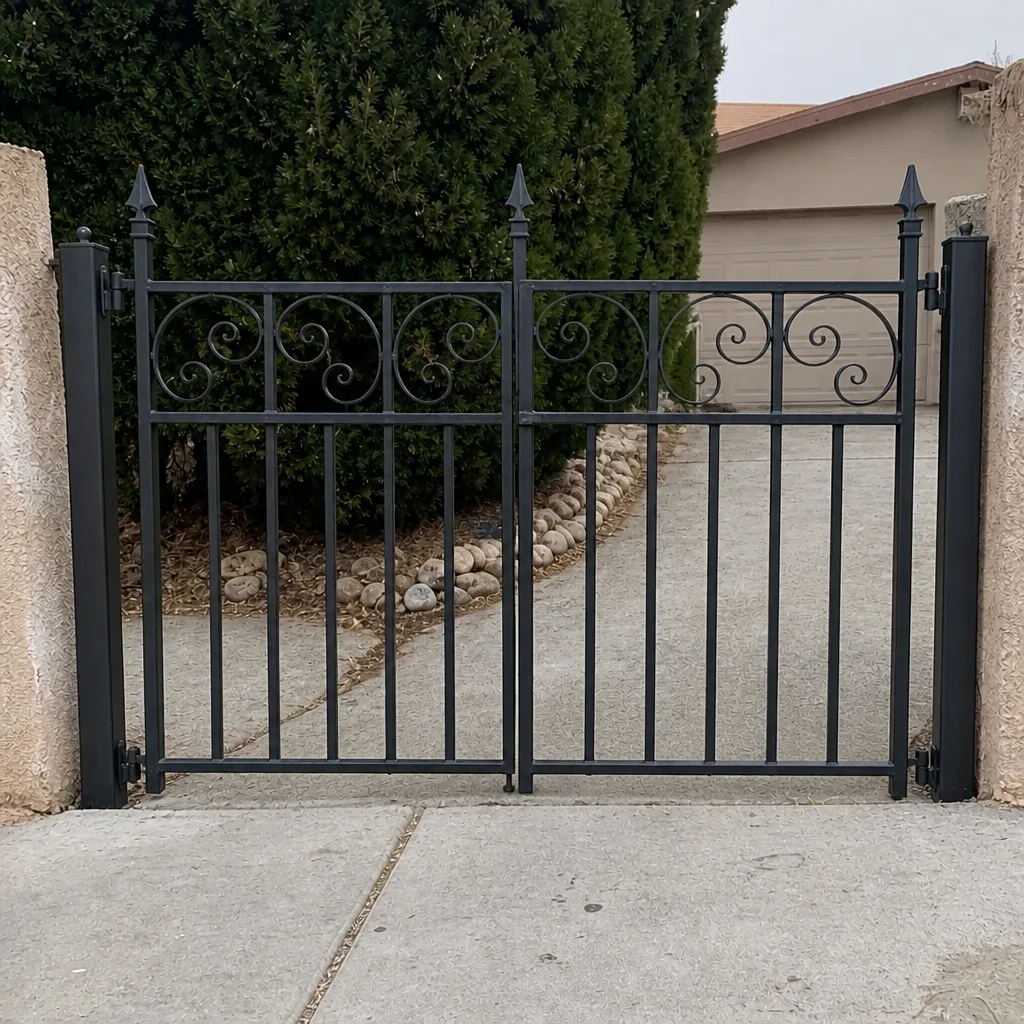 After
Why Interval Schedules Fail Without a Baseline
A calendar tells you when to look. It doesn’t tell you what “normal” was the last time someone looked. That’s the gap that sinks most maintenance plans, and it’s why two gates on the same street in Boulder City, installed the same year with the same Linear operator, can fail six months apart with no warning to either homeowner.
Here’s the mechanism. A limit switch sets where the gate stops at full open and full close. Over months, vibration from the operator, thermal expansion from the sun, and the ordinary flex of a swing arm push that setting a little past where it started. Four millimeters of drift across eighteen months is invisible to the eye. By the time it’s 25mm, the gate is slamming, the motor is drawing more current on every cycle, and the control board is taking a beating it wasn’t designed for. Nobody wrote down the original reading, so there was nothing to compare against until the failure announced itself.
Documented baselines fix three things at once:
- They catch slow drift early. If the open limit was 92 degrees last year and it’s 96 this year, that’s a conversation. If you never wrote down 92, it’s a guess.
- They separate wear from environment. A battery reading of 12.1 volts means something different in January than in August in Boulder City. The number only tells a story next to a prior number.
- They stop repeat billing. When the next technician can see what was already adjusted and when, they don’t re-diagnose a problem that was solved. That’s the whole point of a written record.
This is the habit we carried over from commercial access-control work: every visit leaves a written record of what was found, what was set, and what was replaced. A maintenance schedule built on that habit is a schedule you can actually trust.
What to Measure, Not Just Check
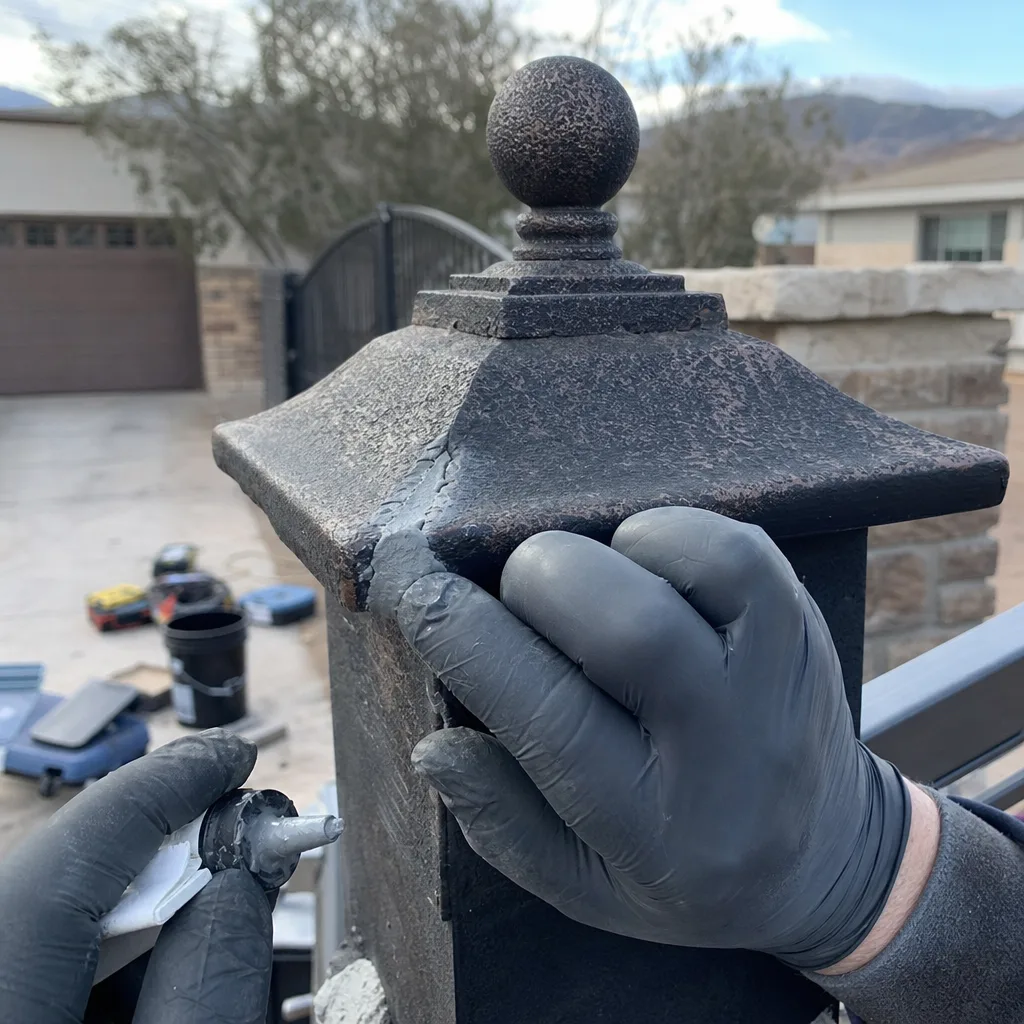
“Checked” is a word that hides a lot. An operator that’s “checked” and marked fine on a form tells the next person nothing. The items below need a number attached and a date next to it. We use this list on every gate repair in Boulder City call that includes access-control work.
Loop detector sensitivity
Vehicle loop detectors sit under the driveway and tell the operator a car is present. Sensitivity is adjustable, and it drifts with ground movement, moisture, and the age of the loop wire. Record the sensitivity setting and what the detector reads with a known test vehicle. A loop that’s slightly over-sensitive will hold a gate open on a passing truck; one that’s under-sensitive won’t trigger at all for a motorcycle. Both are slow failures.
Battery voltage under load
Measuring a backup battery at rest tells you almost nothing. Measure it while the gate is cycling, because that’s when a weak battery shows its hand. A reading that sags under load but recovers at rest is a battery on its way out, and it’ll strand the gate the first time the power blinks. Write down both numbers – at rest and under load – with the ambient temperature.
Limit-switch positions
Record the open and close limit positions in degrees or millimeters, whichever your operator’s documentation uses. This is the single most useful reading you can keep, because limit drift is the quiet cause of most swing and slide-gate problems. DoorKing and Viking operators both expose limit settings you can read and record; Ghost Controls units vary, so note the model and how the setting was captured.
Photo-eye alignment and capacitor condition
A photo-eye (the infrared beam that stops the gate if something crosses the path) needs its alignment noted, not just its function. “Working today” doesn’t tell you it’s two inches off and one windy afternoon from tripping. Capacitors on the start circuit deserve a visual and a reading too; they degrade with heat, and a bulging cap is a failure waiting for a hot afternoon.
How Boulder City Heat Changes Your Intervals
Boulder City sits in a stretch of desert where summer afternoons routinely clear 105°F, and a gate operator in direct sun runs hotter than the air around it. That matters for two components more than any others: capacitors and wiring insulation.
Capacitors age faster at high temperature. The rule of thumb in electronics is that every 18°F of sustained heat roughly halves a capacitor’s service life, and a control box sitting in full afternoon sun in Boulder City spends months well above ambient. Insulation on the wiring inside that same box gets brittle and cracks, and cracked insulation is the beginning of a short that won’t show up until it does. Neither failure is dramatic on the day it starts. Both are easy to catch a year early if someone opens the box and looks.
What that means for intervals here:
- Annual technician inspection is the floor, not every two years. The heat cycle compresses the timeline on capacitors and wiring, and the inspection is where you catch a cap starting to swell.
- Check the control box in late spring. The failure you don’t want is the one that lands in July. A spring look at the capacitor and the wiring is cheaper than a mid-summer emergency.
- Watch shade and sun exposure. A gate operator in the shade of a block wall on the north side of a Boulder City property will hold up differently than one baking on an exposed west-facing drive. Note the exposure in your log so the next visit calibrates to it.
None of this is exotic. It’s the same physics that wears out a car battery faster in the desert than in a mild climate, applied to the box that runs your gate.
90-Day Owner Walkthrough vs. Annual Technician Inspection
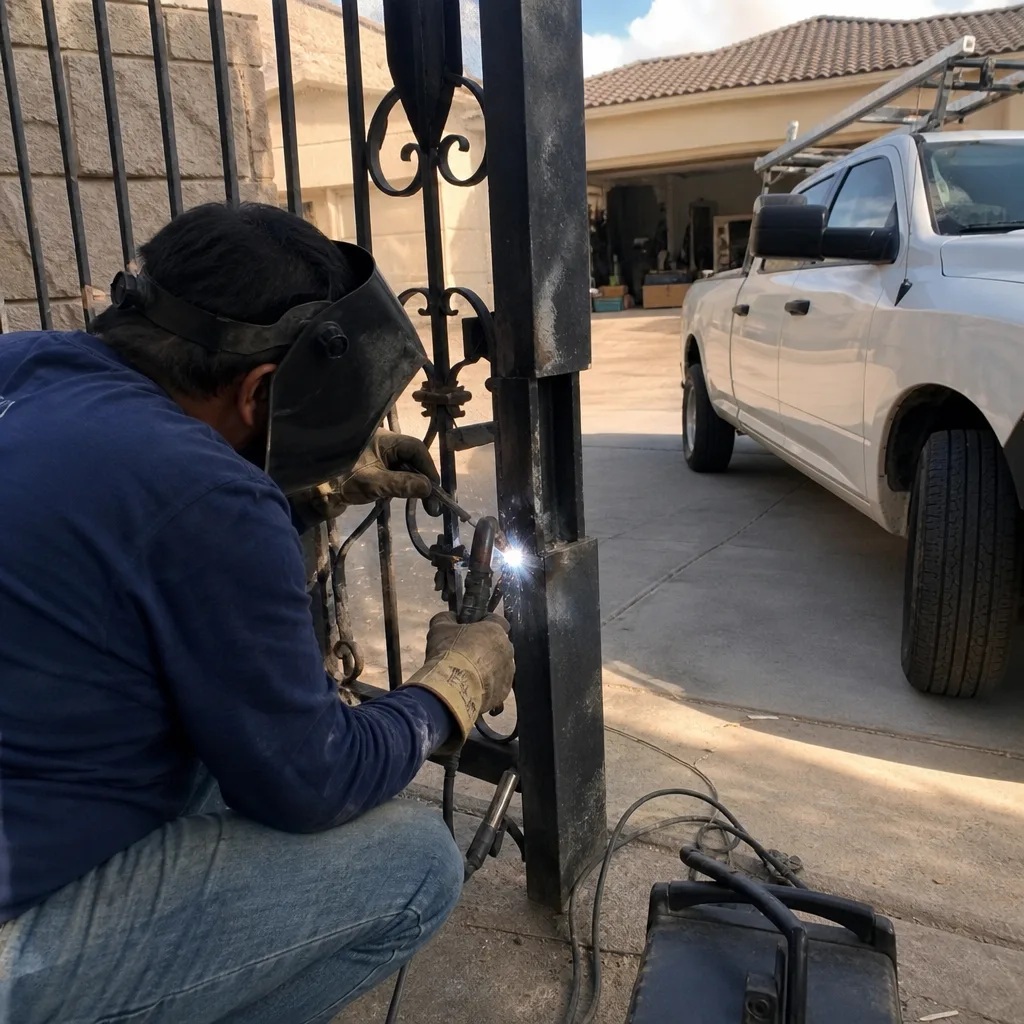
Two people, two jobs. The 90-day walkthrough is something you can do yourself in about ten minutes, and it catches the obvious stuff between professional visits. The annual technician inspection is where the measurements and the tight adjustments happen. Keeping them separate is what keeps both useful.
The 90-day owner walkthrough covers:
- Cycle the gate fully open and closed three times and listen. New grinding, clicking, or a change in motor sound is worth writing down with the date.
- Look at the photo-eyes. Are they clear of cobwebs, dust, and any plant growth that’s crept in since the last trim?
- Test the safety edge or reverse feature by putting an object in the gate’s path while it closes. It should stop and reverse. Don’t force it.
- Walk the track or the swing path and clear debris, gravel, and anything the wind has pushed into the travel.
- Check the manual release. Can you disengage the operator? It should move freely by hand when released.
- Note anything you see or hear that’s changed, and jot the date. That note is the beginning of your log.
Leave the control box closed. High-voltage wiring and the start capacitor live in there, and opening that panel is a job for a trained technician – the stored charge alone can hurt you even with the power off.
The annual technician inspection covers:
Everything in the owner walkthrough, plus the measured items: loop sensitivity, battery voltage under load, limit-switch positions, capacitor condition, wiring insulation, motor current draw, and a full check of the control board and any access hardware. That’s also where the technician photographs what they found and what they set. When you need a motor serviced or replaced as part of that inspection, gate motor & opener in Boulder City work follows the same documentation habit.
The Annual Technician Inspection, Step by Step
Here’s the order we run an annual inspection in, and the order we’d suggest you ask for if you’re comparing companies. Doing it in this sequence means each reading is taken under known conditions, so next year’s comparison is honest.
- Document the starting state. Photograph the control box, the operator, the gate hardware, and the photo-eyes before touching anything. This is the baseline photo for the year.
- Record the readings before adjustment. Limit positions, loop sensitivity, battery voltage at rest, battery voltage under load, motor current draw. These are the numbers next year’s visit will compare against.
- Inspect the control box interior. Capacitor condition, wiring insulation, terminal tightness, signs of heat or moisture. This is the step that catches Boulder City’s heat-related wear.
- Check the mechanical side. Hinges, rollers, tracks, arm brackets, and the gate frame itself. A perfect electrical reading on a gate with a cracking weld is a false sense of security.
- Test every safety device. Photo-eyes, safety edges, reverse-on-obstruction. Confirm each one actually stops the gate, not just that it’s wired.
- Adjust only what needs adjusting, and record the new value. If the open limit moves from 92 to 94 degrees, write both numbers and the reason.
- Cycle and confirm. Run the gate through ten full cycles and confirm the new settings hold. Re-record if anything drifted during the test.
- Leave the record. A photo log of what was found, what was set, and what was replaced, plus the part numbers of anything installed. You should have this in your hands before the technician drives away.
That last step is the difference between a schedule that compounds in value and one that resets every year. It’s also what we mean when we talk about documentation being part of the job, not an extra.
How to Store and Hand Off Your Maintenance Log
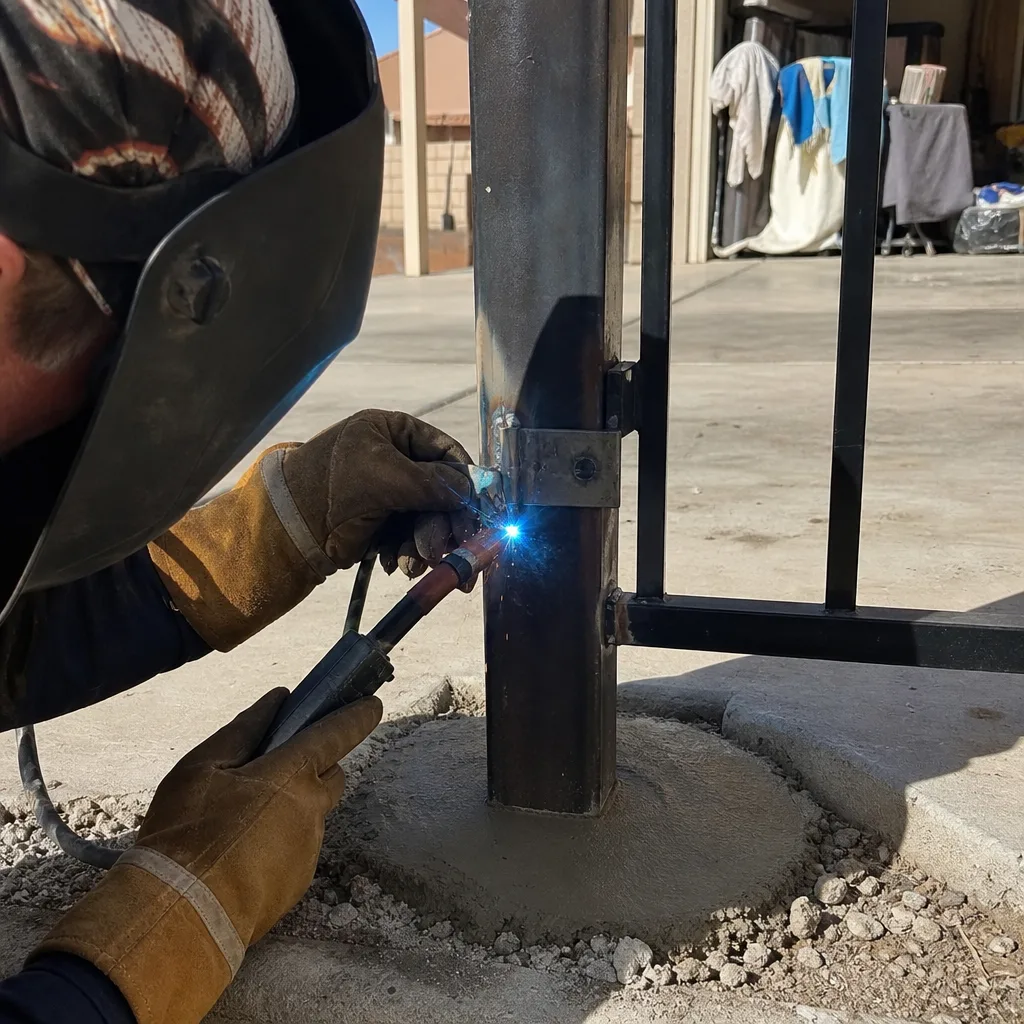
A log only helps the next person if they can find it. Here’s how to build one that a future technician can actually use without calling you first.
Keep it in one place, and keep it physical as well as digital. A folder in a kitchen drawer labeled “gate” plus a scanned copy in your email works fine. What matters is that the numbers are legible and dated. For each visit, include:
- The date, and who did the work (company name and the technician’s name from the dispatch).
- All the measured readings: limits, loop sensitivity, battery at rest and under load, motor current.
- Photos of the control box interior, the limit settings, and the photo-eyes.
- Any parts replaced, with the part numbers.
- Any adjustment that was made, with the before and after value.
When you sell the home, or when you switch service providers, hand the folder over. A technician who opens that log starts the visit with eighteen months of history instead of from zero. If you’re comparing companies and want a second opinion on a previous written estimate, bring the paperwork; we’ll review it at no cost. That’s the same principle applied to a quote: the record makes the next conversation cheaper and faster for everyone.
The philosophy behind this is simple. Every visit should leave a record behind, and the record should be good enough that a technician who wasn’t there can pick up where the last one stopped. If you’re starting a new gate install and want the access hardware documented from day one, that habit begins with gate installation in Boulder City.
Common Mistakes to Avoid
- Relying on a calendar with no readings. A schedule without numbers is a reminder, not maintenance. The value of the annual visit is the comparison, and there’s nothing to compare if nobody wrote down the last reading.
- Skipping the spring control-box check. Boulder City’s heat kills capacitors and cracks insulation over months, not days. A spring inspection catches it before July, when a failure is most expensive and least convenient.
- Testing the reverse feature once and calling it done. Safety devices fail slowly, and a photo-eye that trips on a passing shadow today may be misaligned an inch and a half tomorrow. Re-test at every walkthrough.
- Opening the control box yourself. High-voltage wiring and stored capacitor charge can injure you even with the power off. The panel stays closed on your walkthrough; that’s the technician’s job.
- Throwing the photo log in the trash. The photos are the record. If you’ve ever wondered why a charge appeared on a repair bill, the photos usually answer it. Keep them with the log.
- Letting a small limit drift become a motor replacement. Four millimeters over eighteen months is a five-minute adjustment. Wait two years and the motor’s current draw climbs, the control board wears, and what was a tune-up becomes a repair. The reading is what catches it in time.
- Switching companies without handing over the history. A new technician starting from zero re-diagnoses problems you already paid to solve. Hand over the log, or ask for it before you switch.
When to Call a Professional
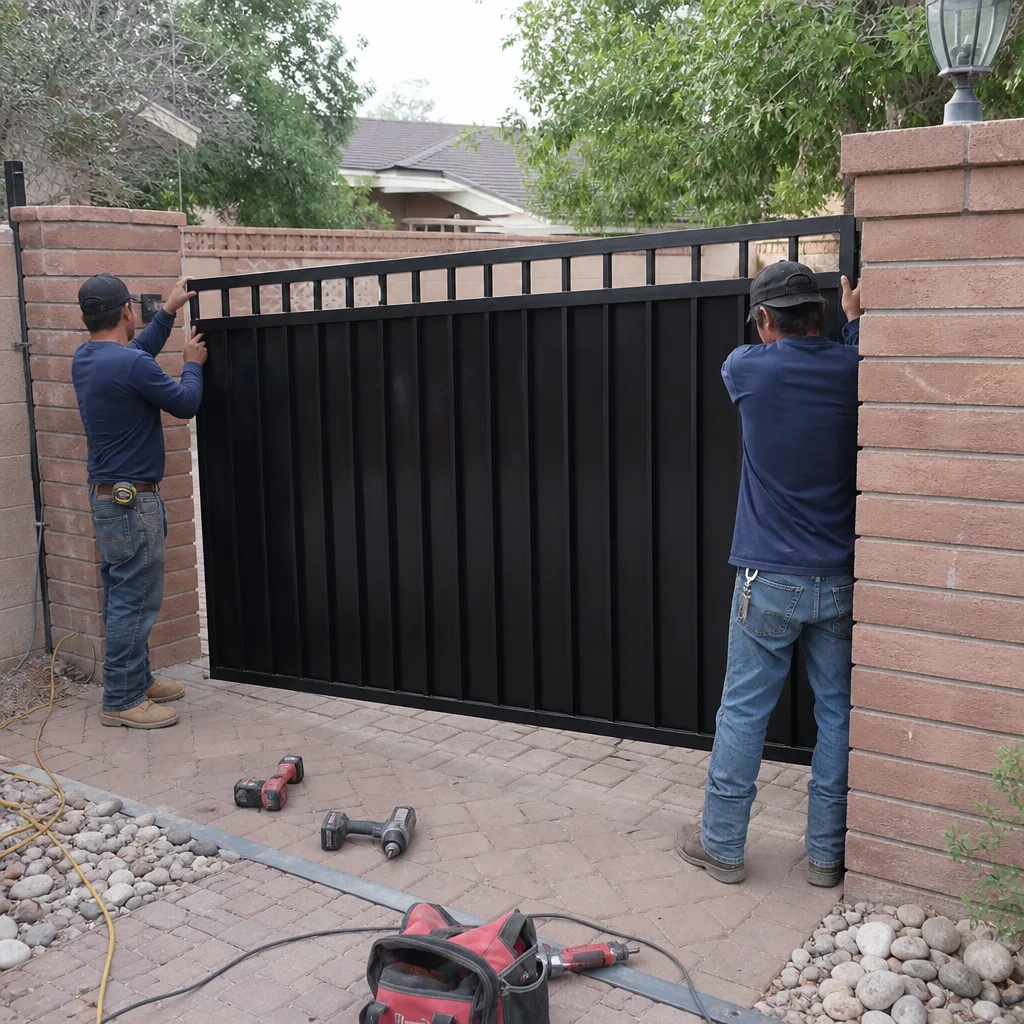
Call us when the gate is doing something new – a grinding noise that wasn’t there last month, a reverse feature that no longer reverses, a motor that runs hot to the touch after one cycle. Call if you’re opening the control box for the first time in years and can’t remember when it was last inspected; the meter readings inside will tell us what condition it’s in. Call if the gate has stranded you and the manual release isn’t behaving, or if a Boulder City power blink left the operator stuck in a position it won’t leave. And call if you just bought a home with an existing gate system and there’s no log to inherit. Vance Gate Repair Boulder City offers free estimates in Boulder City – call (844) 320-7587 and a live person picks up at any hour.
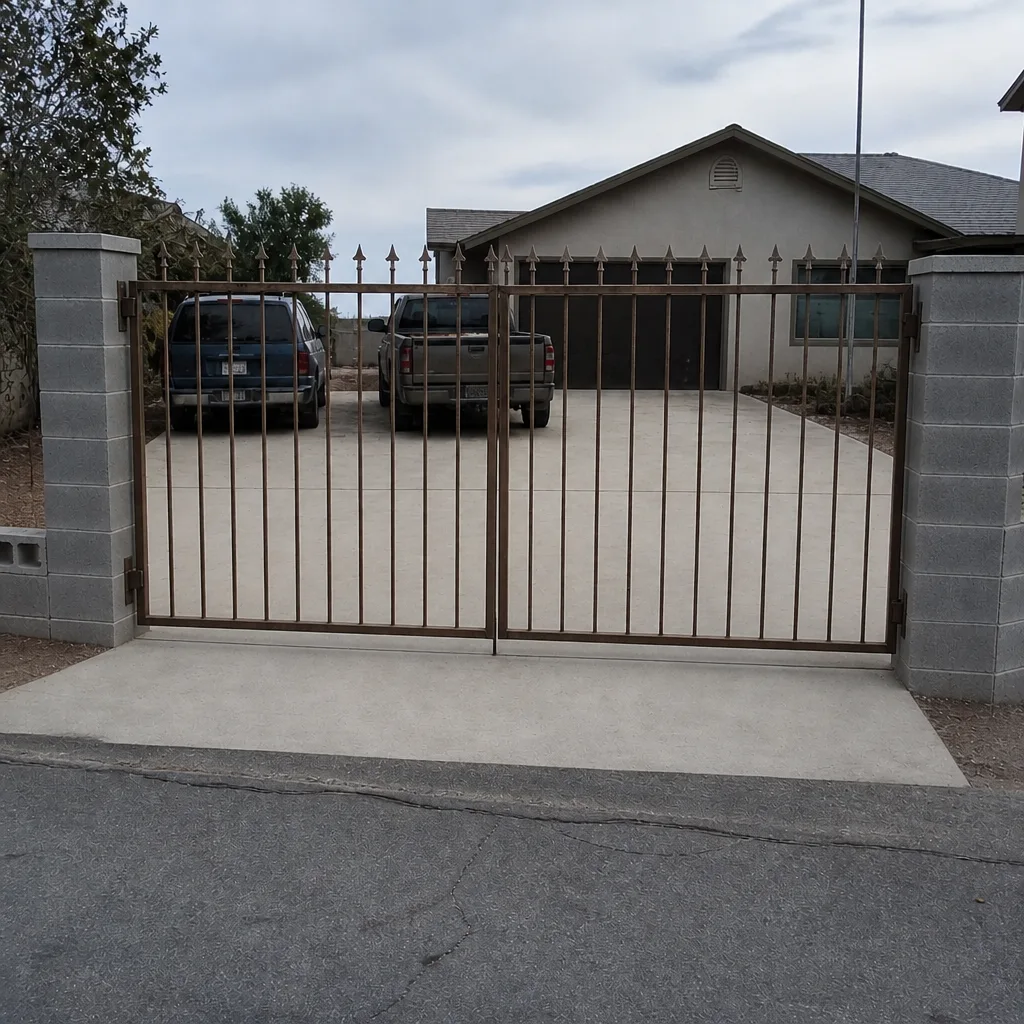
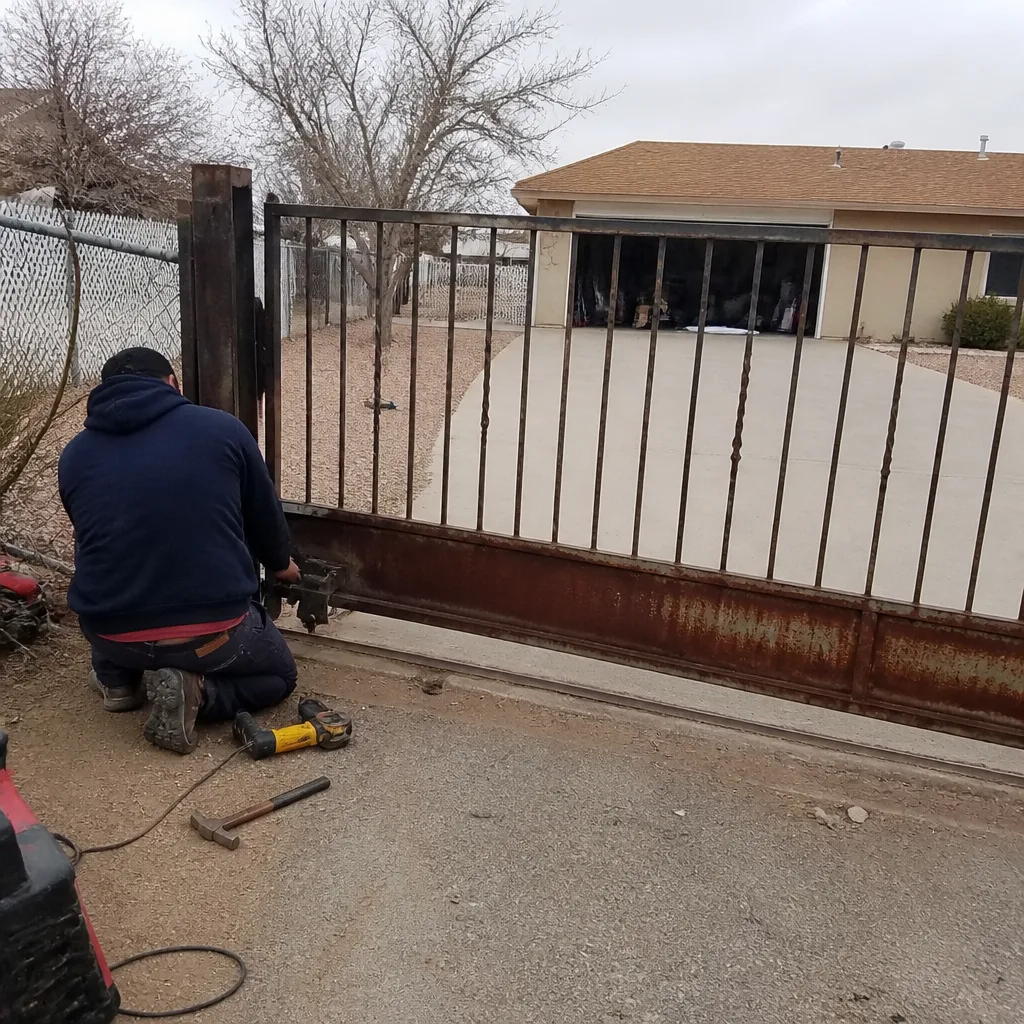
See the difference
BeforeAfter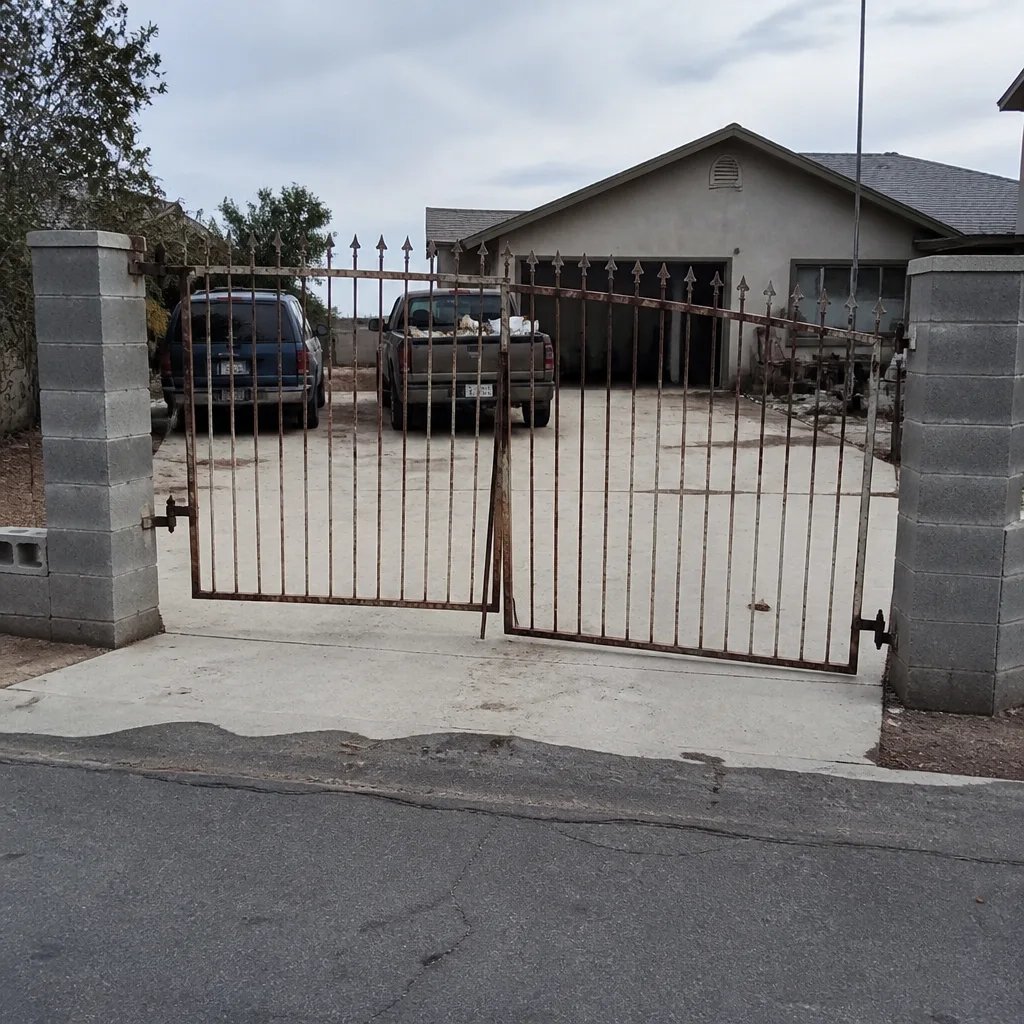 Before
 After
 Before
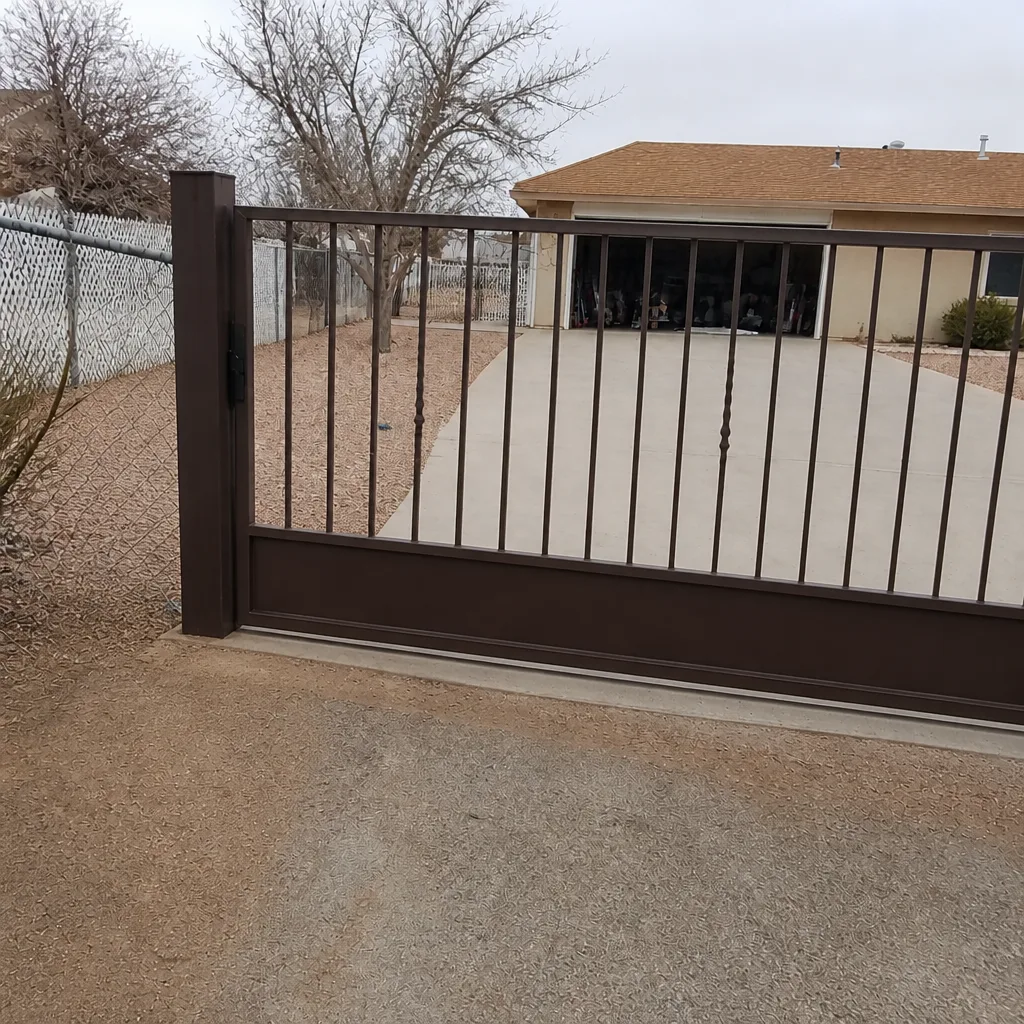 After
Frequently Asked Questions
Once a year for a full technician inspection, with a 10-minute owner walkthrough every 90 days in between. In Boulder City, the summer heat cycle makes the annual inspection the floor, not the ceiling, and a late-spring control-box check is worth adding because capacitors and wiring insulation degrade faster at sustained high temperature. The walkthrough catches the obvious stuff; the annual does the measuring.
Measured readings, dates, photos, and part numbers – not just a checkbox list. For each visit, record the limit-switch positions, loop detector sensitivity, battery voltage at rest and under load, motor current draw, and photos of the control box interior and photo-eye alignment. Any part replaced goes in with its part number, and any adjustment goes in with the before and after value. If a log doesn’t have numbers in it, the next visit has nothing to compare.
Sustained high temperatures shorten capacitor life and make wiring insulation brittle, and a control box in full afternoon sun in Boulder City runs hotter than the air around it. The practical result is that heat-related failures show up earlier than the manufacturer’s generic interval suggests, which is why we recommend inspecting capacitors and insulation every year rather than every other year, and noting the operator’s sun exposure in the log so future visits account for it.
You can handle the owner walkthrough – cycling the gate, testing the reverse feature, clearing debris, checking the manual release – and that’s genuinely useful. What you shouldn’t do is open the control box. High-voltage wiring and stored capacitor charge can injure you even with the power off, and the meter readings inside are what tell a technician whether the system is drifting. Leave that panel closed.
Give the new company the whole record: dates, readings, photos, part numbers, and any adjustments that were made. A technician who starts with a baseline can tell in a few minutes whether the system is drifting and by how much; one starting from zero will re-measure everything and may re-diagnose a problem that was already solved. If you’re not sure the previous work was done right, bring the written estimate from the prior company and we’ll review it at no charge.
The first visit becomes the baseline. A technician will take a full set of readings and photos of the current state, and from that point forward the schedule has something to compare against. If you’ve just moved into a Boulder City home with an existing gate and no records, that first inspection is the most valuable one you’ll schedule, because it turns an unknown system into a known one. We service Linear, Viking, DoorKing, and several other major brands, so whatever motor is already on the property, it can be documented rather than replaced.
The Bottom Line
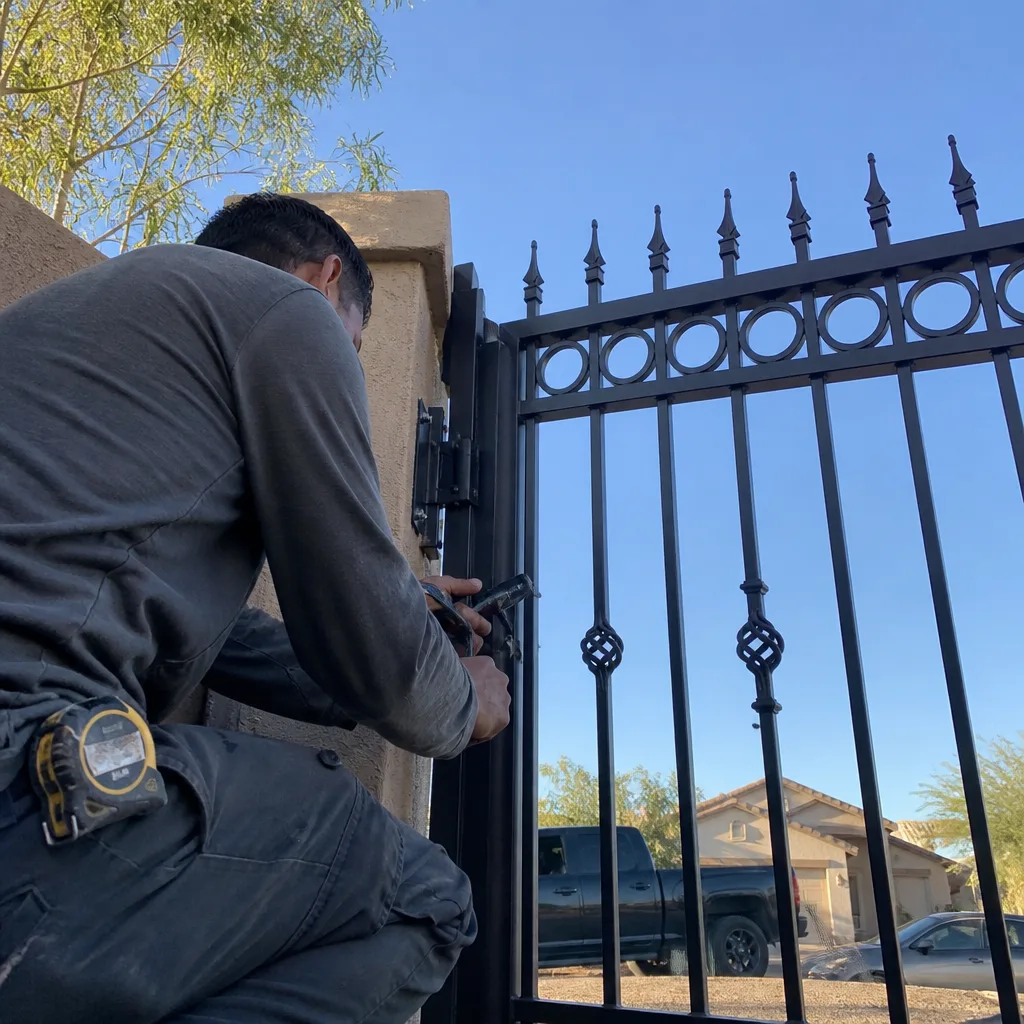
A maintenance schedule works because of what gets written down, not because of the dates on it. Measure the limit positions, the loop sensitivity, and the battery voltage under load; record them with dates and photos; and hand the log to whoever works on the gate next. In Boulder City, the heat cycle makes that annual inspection more important than the generic interval suggests, and the spring control-box check is worth adding. Twenty-two thousand gates in, we’ve learned the slow drift is what gets missed – and the written baseline is what catches it. Whether you’re scheduling an inspection or need a repair, Vance Gate Repair Boulder City home is the place to start, and our technicians have up to 12 years of experience on the motors already on your property.
Contact
Call (844) 320-7587 for a free estimate in Boulder City. A live person answers at any hour, the written price is in your hands before any work starts, and every visit leaves a photo record of what was found and what was set – so the next visit starts from evidence, not memory.
Written by the team at Vance Gate Repair Boulder City.