
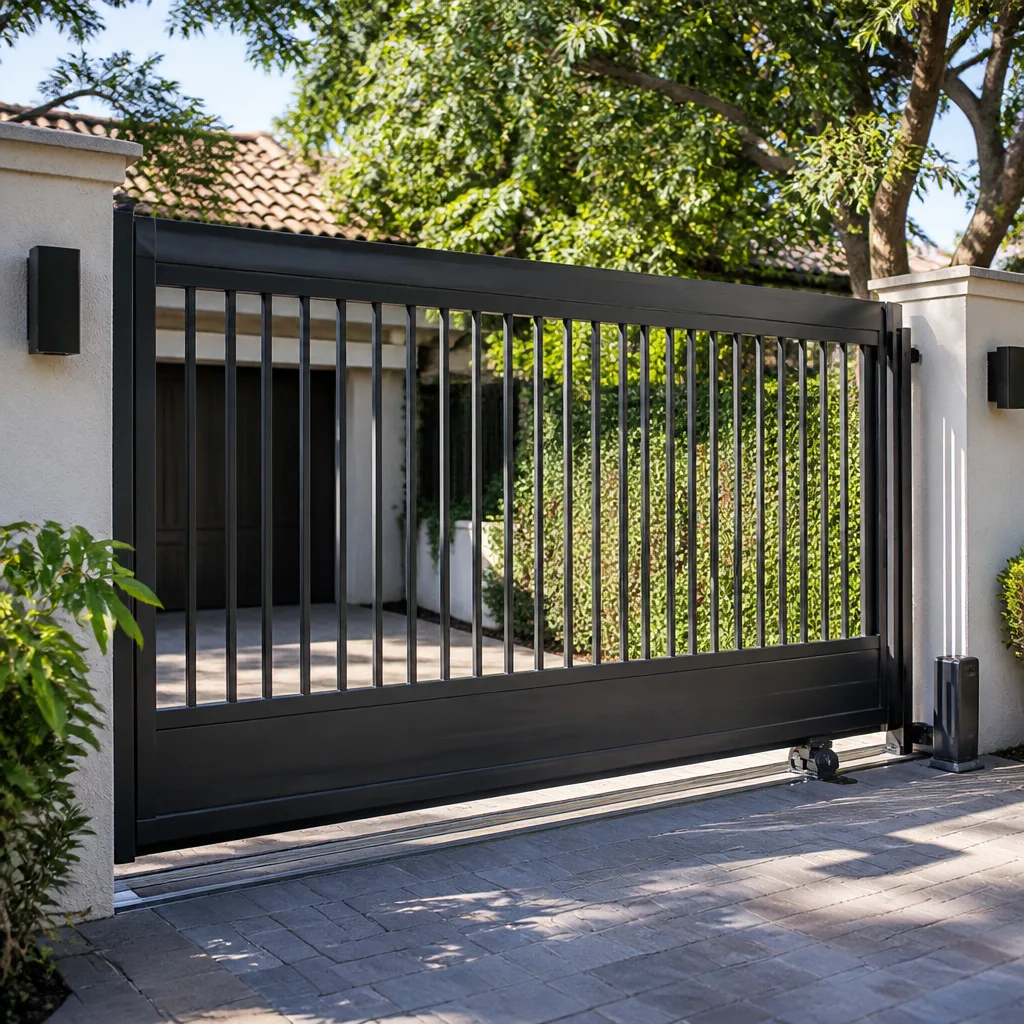
 Sliding driveway gates
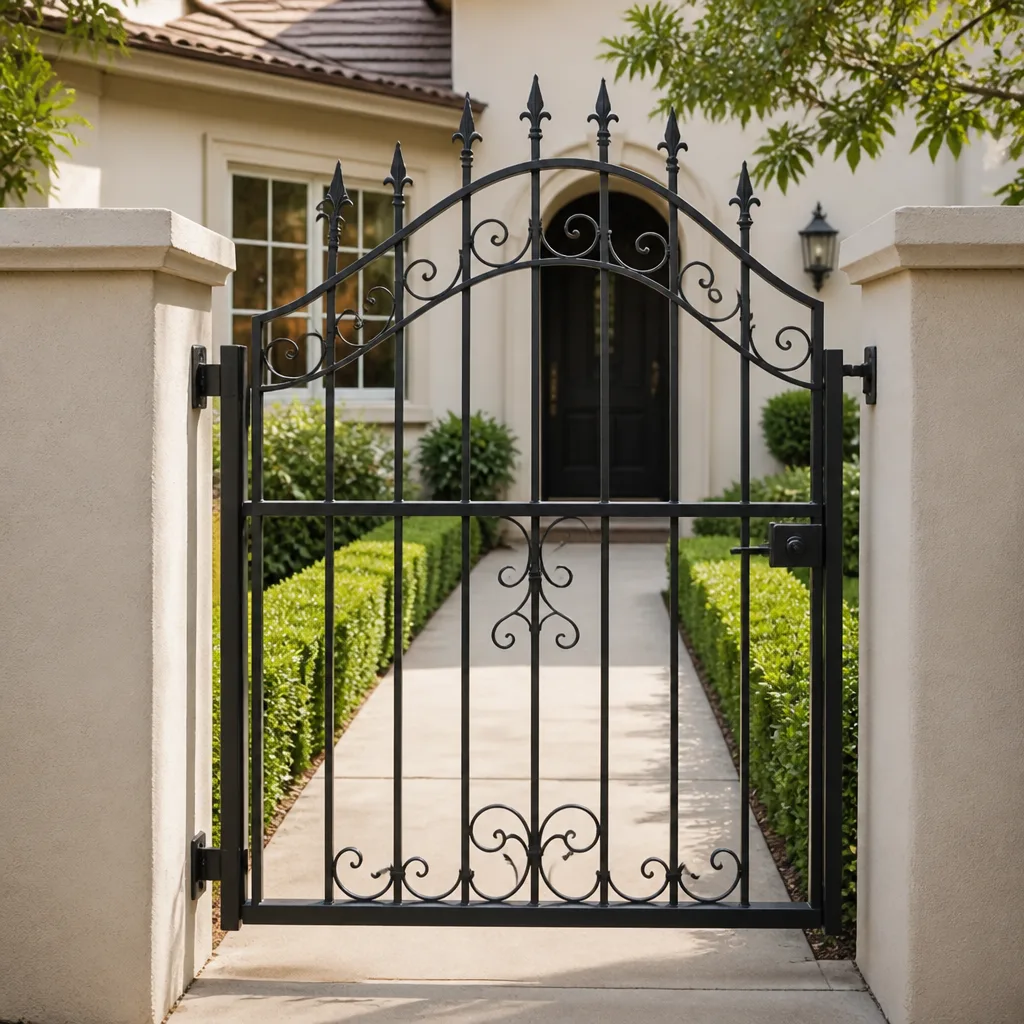 Wrought iron
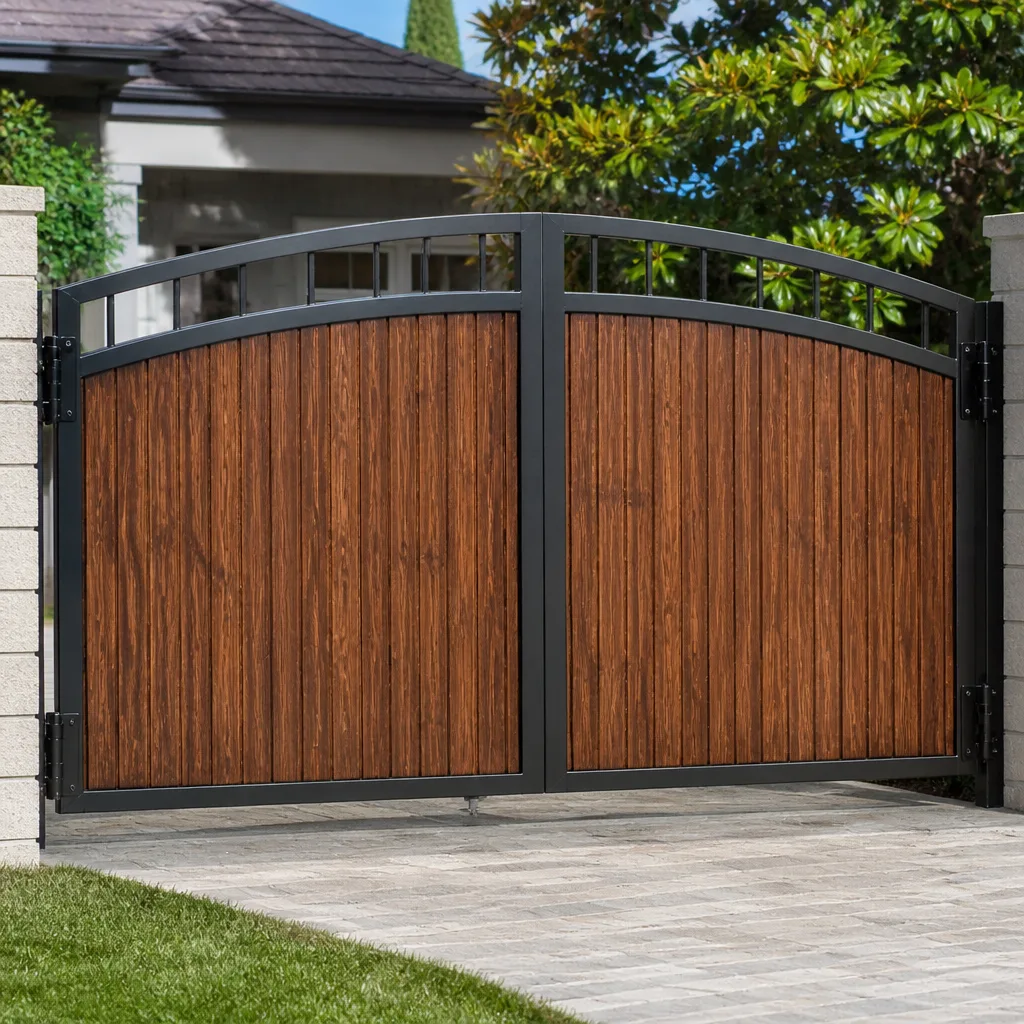 Wood & steel frame
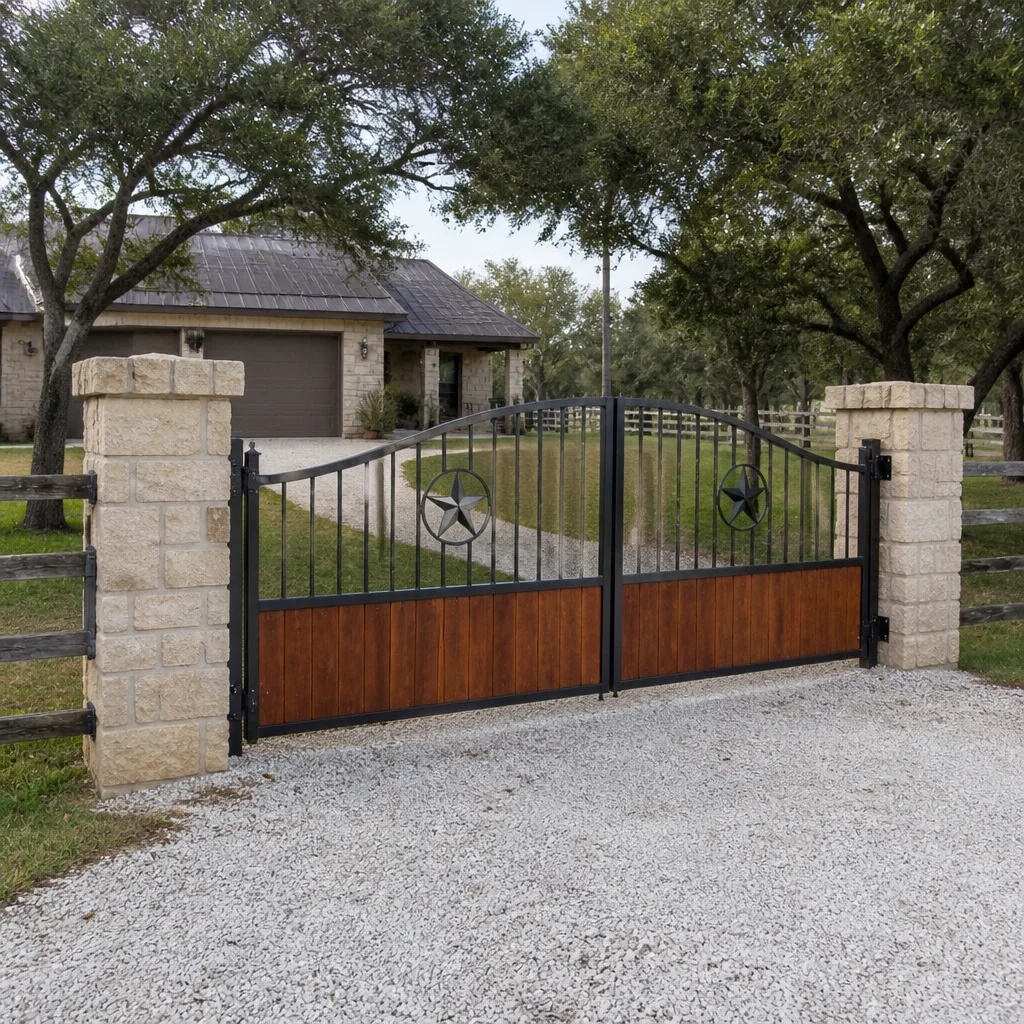 Farm & ranch
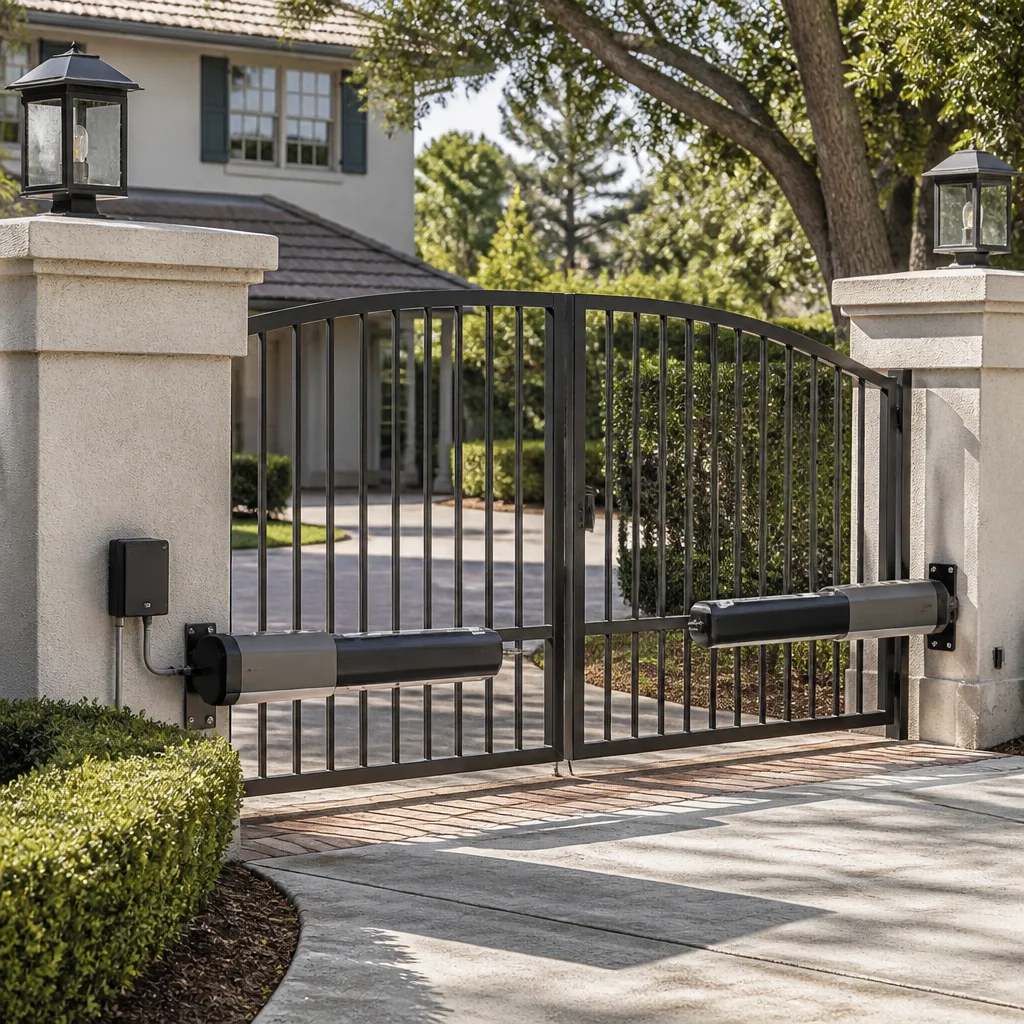 LiftMaster operators
Free on-site gate assessment - hinges, posts, and your LiftMaster or Nice gate operator checked before anything is quoted
The assessment is free and the quote is the invoice.
Get your free estimateStyles & brands we work with
- Wrought iron
- Wood & steel frame
- Farm & ranch
- Sliding driveway gates
- LiftMaster operators
See the difference
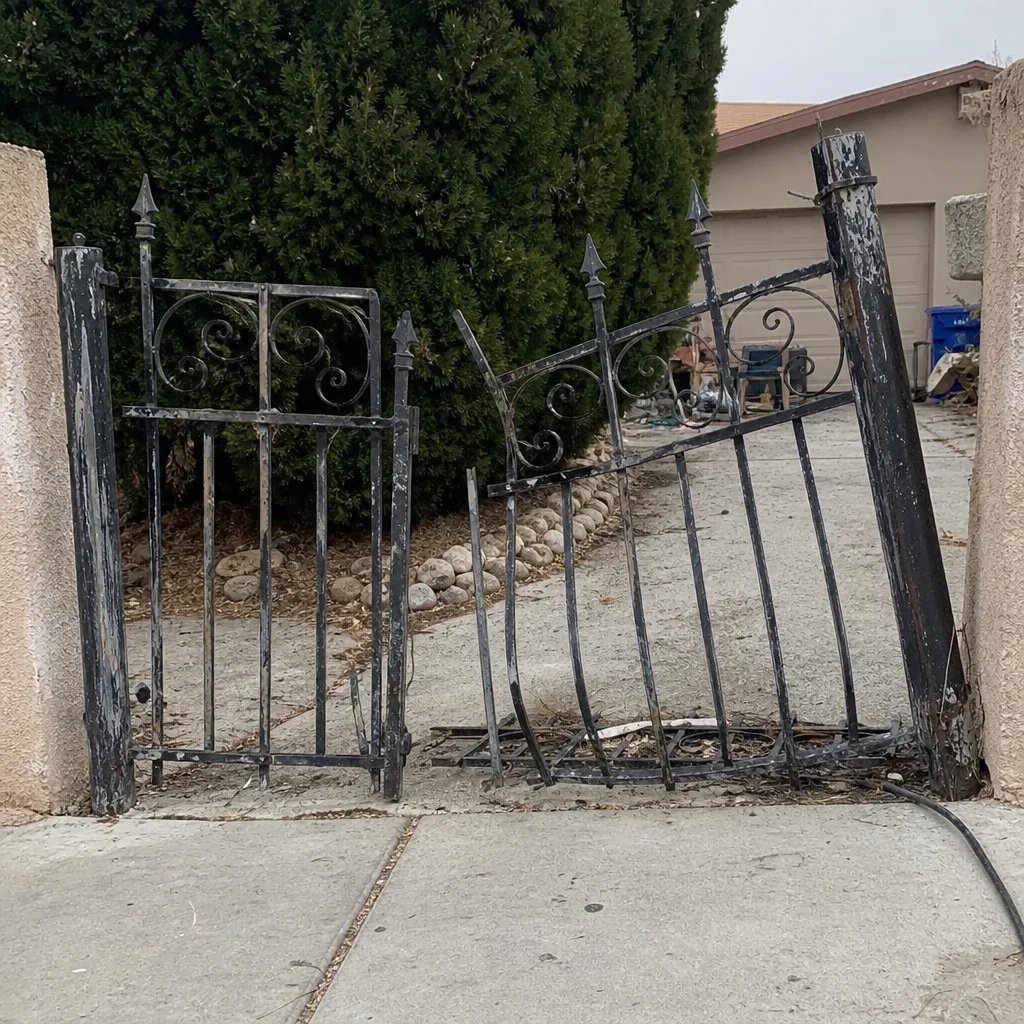 Before
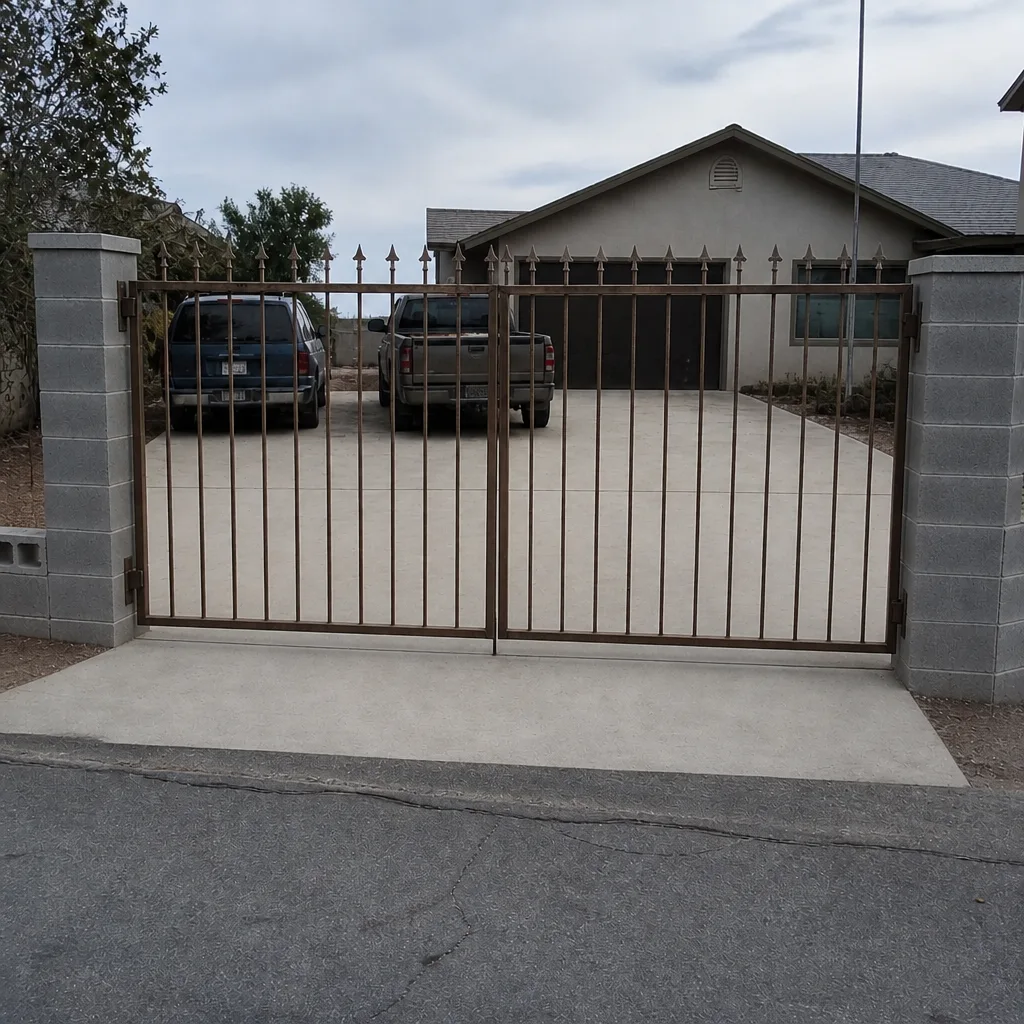
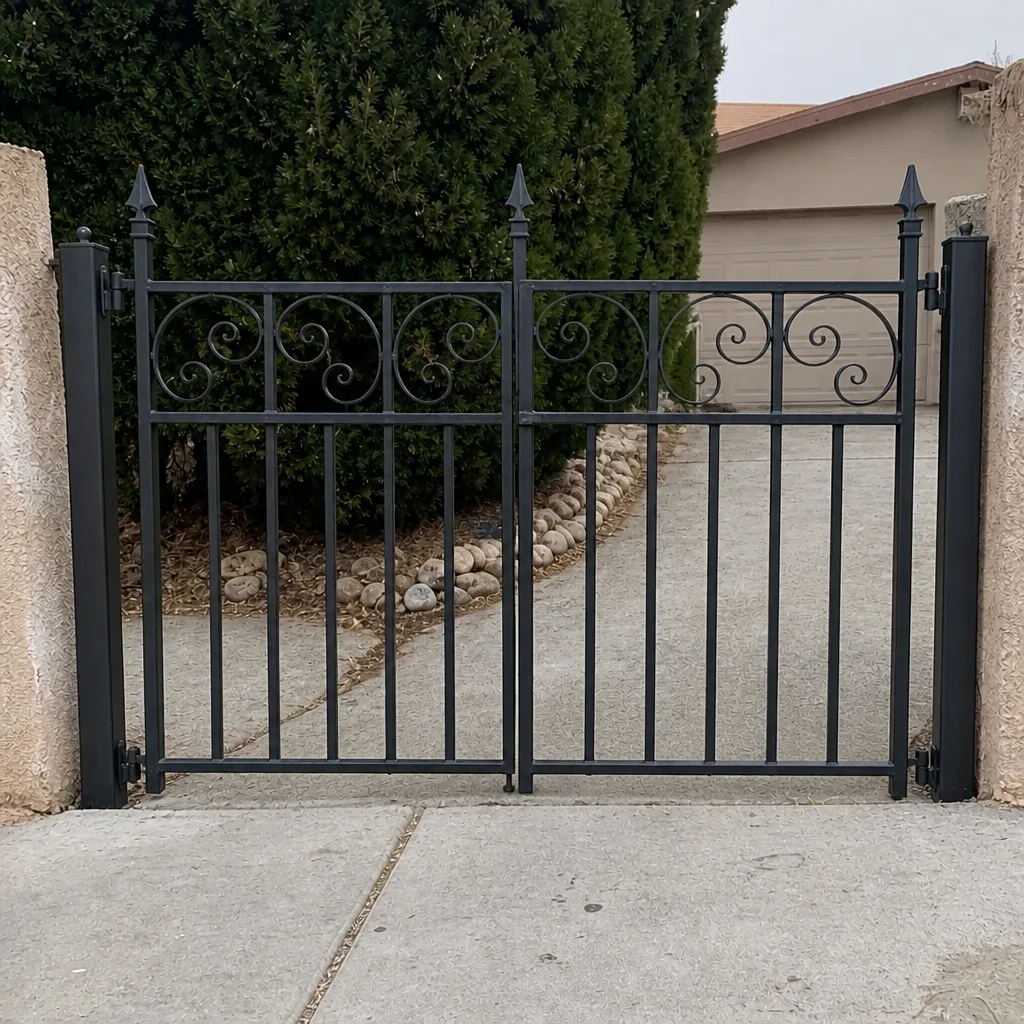 After
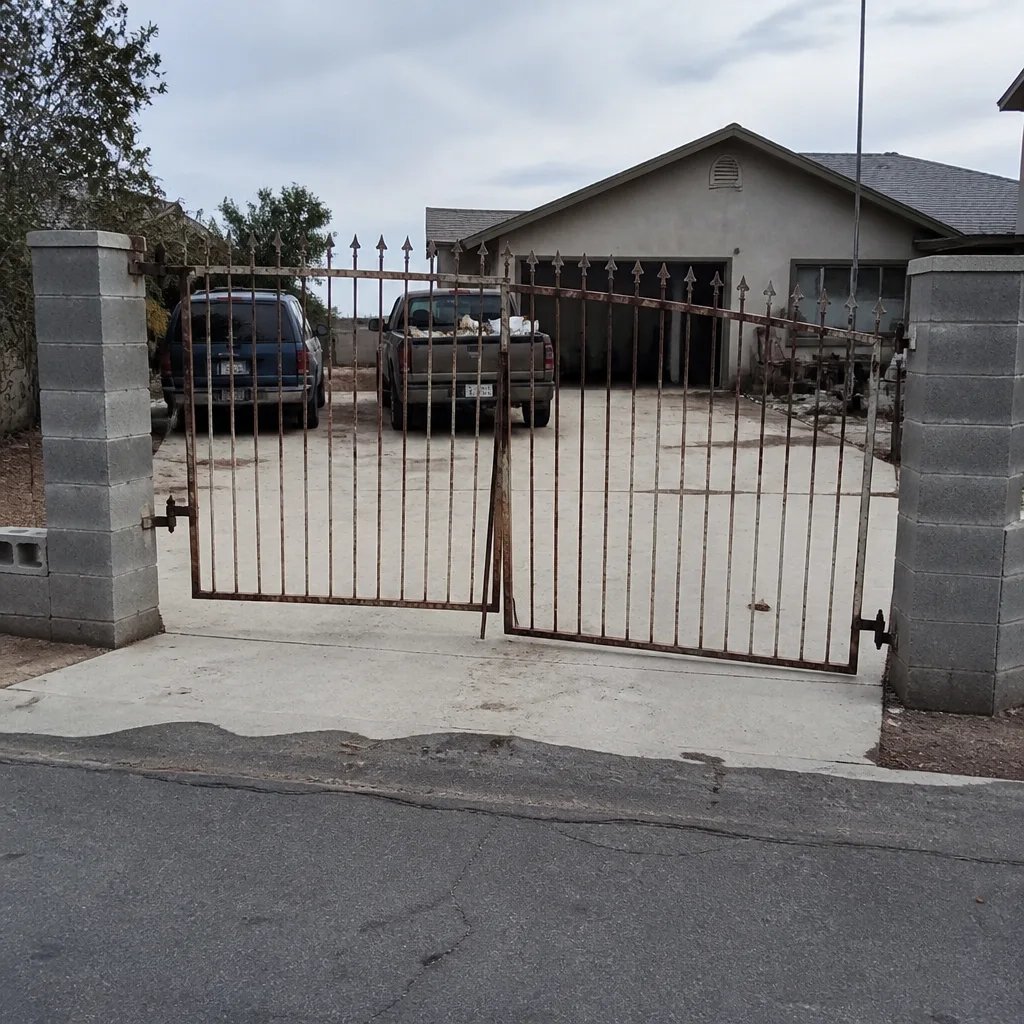 Before
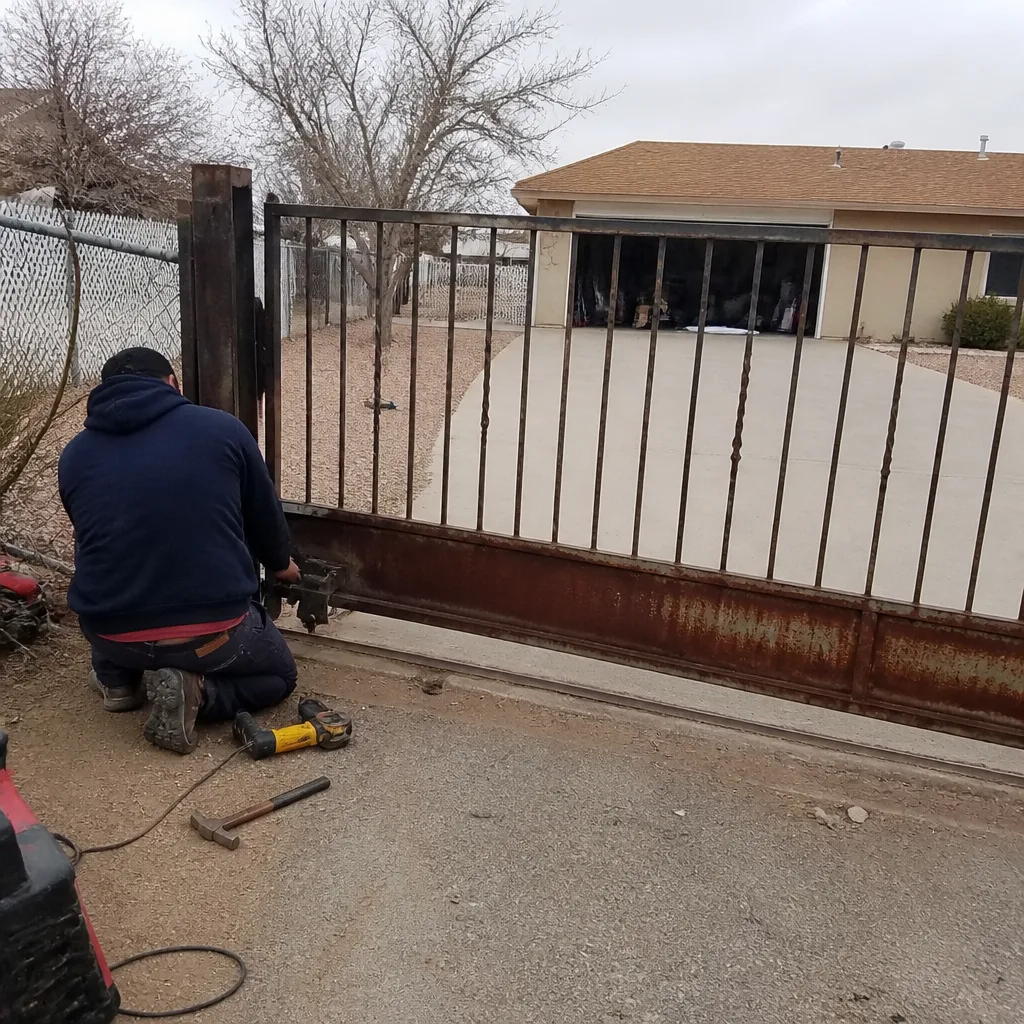
 After
 Before
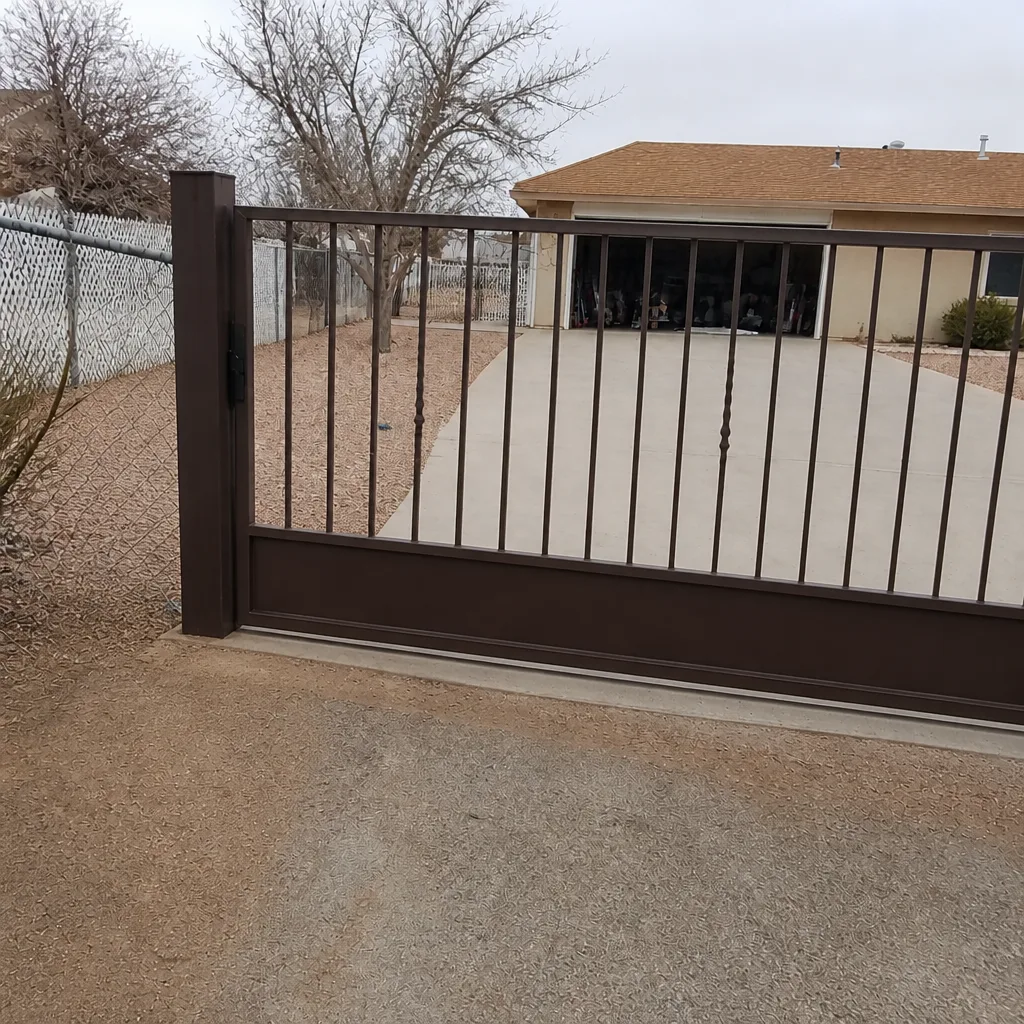 After
Swing Gate vs Sliding Gate in Boulder City, NV: The Bottom Line
Choose a swing gate only if your driveway is wide, flat, and your fence line sits well behind the property setback. In most of Boulder City, a sliding gate wins. The town’s 1930s federal-planned layout keeps fences tight to consistent setback lines, so a swing gate’s clearance arc often collides with code before it collides with anything else. And a 12-foot swing panel turns a 35-to-40 mph spring gust off the McCullough Range into real hinge stress. Call (844) 320-7587 for a free written assessment of which type your lot actually supports.
Key Takeaways
- Sliding gates stay inside the fence line, so they sidestep Boulder City’s historic district setback calculations entirely.
- A swing gate presents its full face to crosswind; a cantilever slider moves parallel to it and lightens the load on hinges and the operator.
- Exposed desert sliders collect grit in the track and on the bottom rollers, so they need more cleaning than a swing gate’s hinge points.
- The right motor follows the gate type your site supports – not the brand a technician happens to sell.
Why Boulder City Turns This Into a Structural Question
A swing gate that clears your driveway in calm weather can act as a 40-square-foot sail when a Mojave spring wind hits. That is not a figure of speech. A standard 12-foot panel, six feet tall, is roughly 72 square feet of flat surface. Even at partial open on a gusting day, it presents a broad perpendicular face to a crosswind running through the Eldorado Valley at sustained 30 to 40 mph in spring.
Every one of those gusts loads the hinge plates and the operator arm. Over a season, that adds up to measurable wear on the actuator – clutch slip, arm strain, limit drift. We see it in the repair records for gate operators across the historic core: the swing gates near Nevada Way and Avenue B that fail early are almost always the ones with the least wind shelter.
A sliding gate changes the physics. It moves parallel to the wind instead of catching it. The panel still experiences side loading, but the operator isn’t fighting a sail, and the hinges on a swing gate aren’t taking repeated torque spikes. That single difference is the strongest argument for a slider on any Boulder City lot with open exposure to the west or northeast.
The Historic District Setback Issue Nobody Warns You About
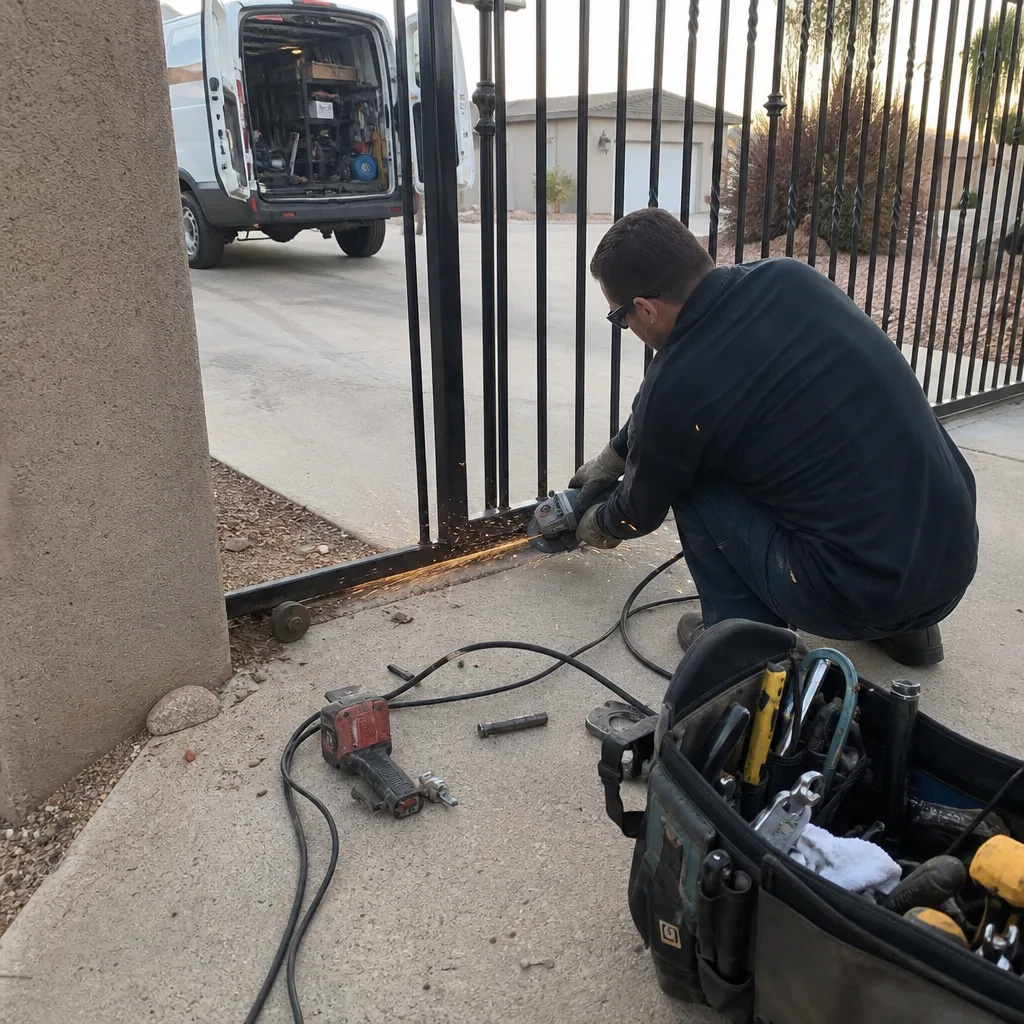
Boulder City’s federal-planned layout requires consistent fence setbacks and forbids visible front-yard solid walls. That layout protects the streetscape, but it also limits how far a swing gate can arc into the front yard before it violates setback rules – or before it swings through a neighbor’s fence line, or into the street right-of-way.
On a sliding gate, that whole calculation disappears. The gate travels along the fence line itself. Whether it’s a cantilever design that floats over the driveway or a V-groove track grounded at grade, the travel path stays within the existing envelope. If you’re weighing a residential gate install in the historic core, this is usually the deciding factor – not cost, not aesthetics.
We walk this calculation on every estimate, and we put the numbers on paper before anyone picks up a tool. That’s the whole point of the Haven Standard: a written scope and a written price, handed over before the work begins.
BeforeAfterThe Housing Stock Reality: Narrow Lots, Custom Gates
Most of Boulder City’s older homes are small 1930s-1950s single-story bungalows and federal workers’ cottages. Many still have original wrought-iron pedestrian gates and wooden garage doors. Driveways on those lots are narrower than modern builds – which matters because a swing gate’s clearance arc needs lateral room. On a 10-foot or 11-foot driveway, that arc often conflicts with a parked vehicle or a neighboring structure in ways a slider simply doesn’t.
Here’s what we find on-site, not in a catalog:
- Original iron pedestrian gates at the historic properties around Nevada Way and Avenue B: hand-forged strap hinges that seize from desert grit and sun-baked grease. We stock vintage-style hinges and use dry graphite rather than oil, because oil turns to gum in a 110°F summer.
- Narrower driveway aprons on the bungalow stock: swing arcs that work on paper but hit a parked truck in real life. A cantilever slider solves this without widening the lot.
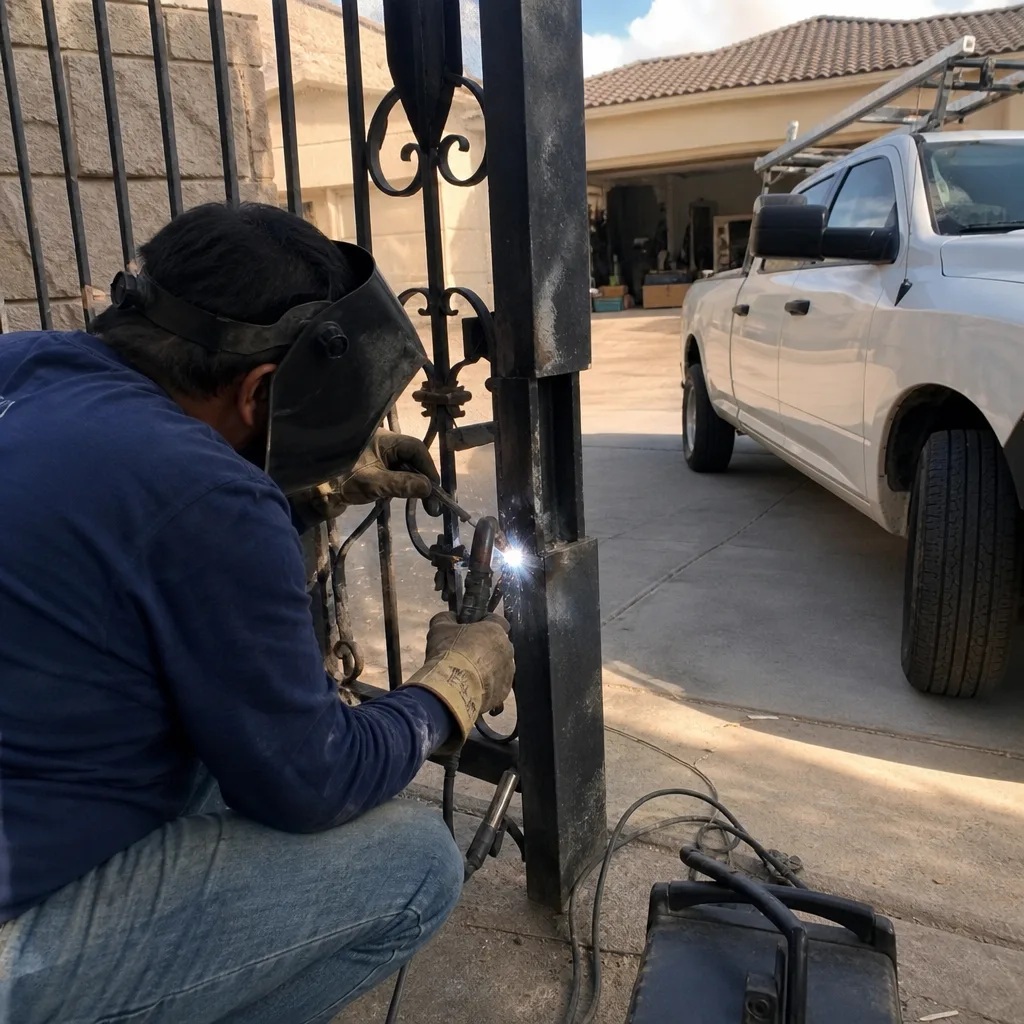
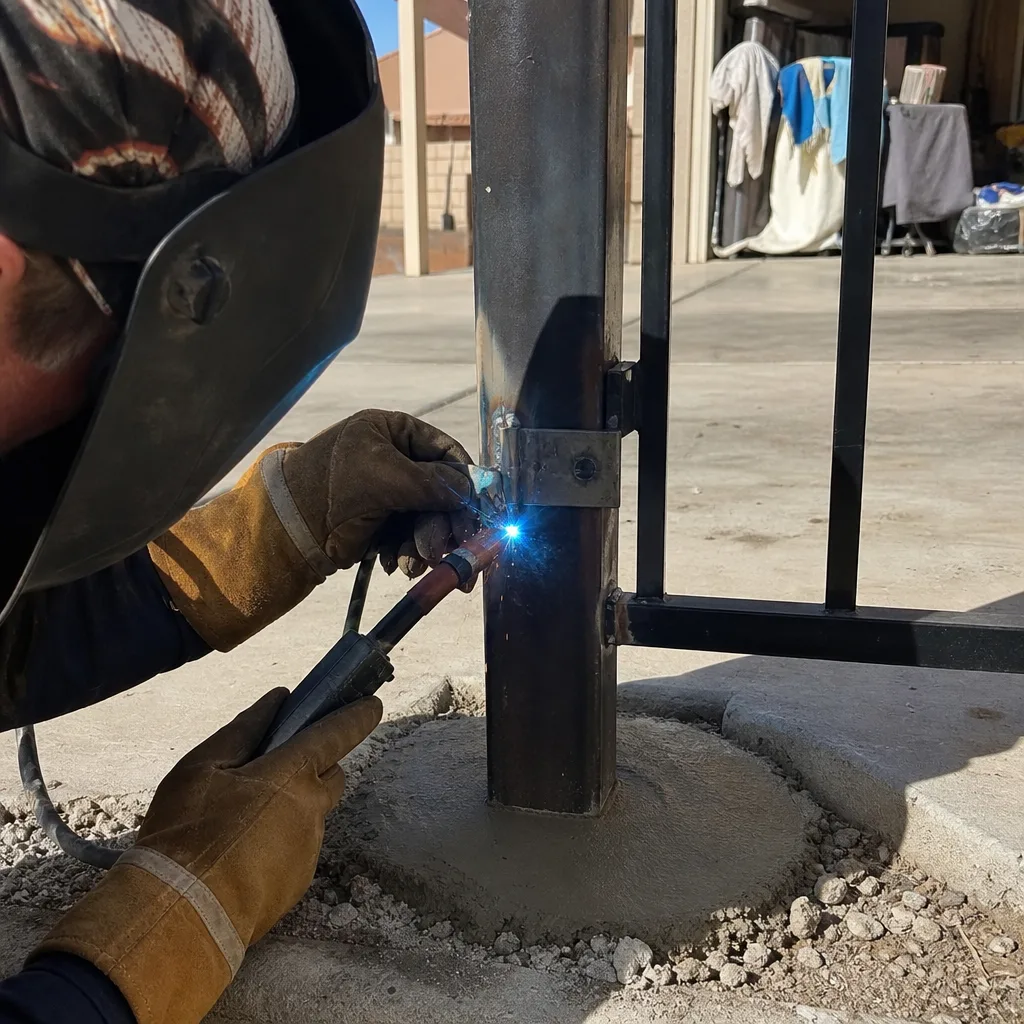
- Custom fence lines that no drop-in kit fits. Every install requires on-site fitting and welding, which is why we carry the gear to fabricate on-site rather than order a standardized gate and hope.
Side-by-Side: What Each Type Actually Demands
| Factor | Swing Gate | Sliding Gate |
|---|---|---|
| Setback room needed | Clearance arc into front yard; often conflicts with Boulder City setback rules | Stays inside the fence line; no arc to calculate |
| Wind load | Full face to crosswind; heavy hinge and actuator strain in 30-40 mph gusts | Moves parallel to wind; lighter mechanical load |
| Narrow driveway fit | Tight on 1930s-50s bungalow lots | Works on narrow aprons via cantilever or V-groove |
| Maintenance on exposed desert lots | Hinge lubrication, occasional arm adjustment | More frequent track and roller cleaning from grit |
| Typical residential install | $1,800-$3,500 (gate + operator, standard lot) | $2,400-$4,800 (gate + operator, track/hardware) |
| Operator strain in high wind | Higher; clutch and arm wear visible in service records | Lower; limit drift is rare by comparison |
Those are real working ranges, not catalog quotes – track grade, cantilever vs. V-groove, and site prep move the number. We name the price in writing before work starts, every time.
What We Recommend, and Why Brand Follows Site
On most Boulder City lots – especially anything with west or northeast exposure and a fence line tight to setback – we recommend a sliding gate with a cantilever or V-groove track. The wind argument holds, the setback argument holds, and the housing stock argument holds.
Swing gates still make sense when the driveway is wide, the fence sits well behind the setback, and the property is sheltered from prevailing wind. If that’s your lot, we’ll say so.
Because we service all nine major automation brands – Linear, Viking, Ghost Controls, and DoorKing among them – the operator recommendation follows the gate type that fits your site. It isn’t the motor a technician happens to have on the truck. On more than a few jobs, the right call has been to keep the existing Linear or DoorKing operator and change only the gate or the track beneath it. Repair first, replace second.
The Maintenance Trade-Off, Named Honestly
A sliding gate on an exposed desert lot collects grit in the track and on the bottom rollers. That’s the real downside of the type, and we won’t pretend otherwise. It means more frequent cleaning than a swing gate’s hinge points, which mostly just need an occasional graphite touch.
But the swing gate’s wind exposure is the bigger, harder-to-manage cost over the years – actuator strain and hinge wear don’t clean off. So we document track condition and roller wear on every visit, photograph the limit-switch readings, and leave you a maintenance baseline you can work from. When you call back in a year, we know exactly where the rollers were last time. No one has to rediscover the same problem.
How We Approach a Swing vs. Sliding Gate Decision: Step by Step
- Measure the set-back clearance. We check the actual fence line against Boulder City’s setback requirements before drawing any arc.
- Walk the driveway apron. We measure the parking footprint, note neighboring structures, and check what a swing arc actually clears on a normal day, not just on paper.
- Read the wind exposure. We note prevailing direction off the McCullough Range and any shelter walls or trees between you and the gusts.
- Inspect existing hardware. If you already have an operator – Linear, Viking, Ghost Controls, DoorKing, or any of the other five – we read the model plate and check clutch wear before recommending a change.
- Write the price. You get a written scope and a flat number before any tool is picked up. No surprises at the invoice.
- Document the visit. We photograph the installation or repair, log the limit-switch values and part numbers, and leave a record with you.
If you’re starting from a blank lot, our Gate Installation service handles the full job from layout through commissioning. For existing gates that just need adjustment or repair, there’s a separate repair track we can walk you through.
FAQs
Most residential sliding gate installs in Boulder City run $2,400-$4,800 including gate, track, and operator; swing gates typically run $1,800-$3,500. The swing gate looks cheaper on paper, but on a high-wind lot the shorter operator life and hinge wear often erase that gap within a few years – we walk the real comparison on-site.
Sometimes – it depends on the arc clearance relative to your specific fence line, and any lot in the historic district needs the calculation done before you buy the gate. A sliding gate sidesteps the calculation entirely because it stays within the fence envelope. We check this on every estimate before quoting.
Often, yes – hinge seizure, limit-switch drift, and operator clutch issues are all repairable in place. We service all nine major brands and won’t steer you toward replacement if a repair brings the gate back to full function. Every repair is covered by our 365-Day Done Right Promise: if it’s not right, we make it right within a year, at no charge.
A sliding gate, by a wide margin. In the 30-40 mph gusts that come off the McCullough Range in spring, a 12-foot swing panel acts as a sail against its hinges and actuator; a slider moves with the wind direction rather than against it. That geometry – more than brand of operator or quality of hardware – determines long-term mechanical life on an exposed lot.
Talk to Someone Before You Commit to a Gate Type
If you’d rather have it looked at, Vance Gate Repair Boulder City offers a no-pressure assessment in Boulder City – we measure your setback, read the wind exposure, and hand you a written price before any work begins. Call (844) 320-7587 for a free estimate. Our technicians have up to 12 years of experience, and every visit ends with a documented record you keep.
Written by the team at Vance Gate Repair Boulder City, serving Boulder City, NV.