
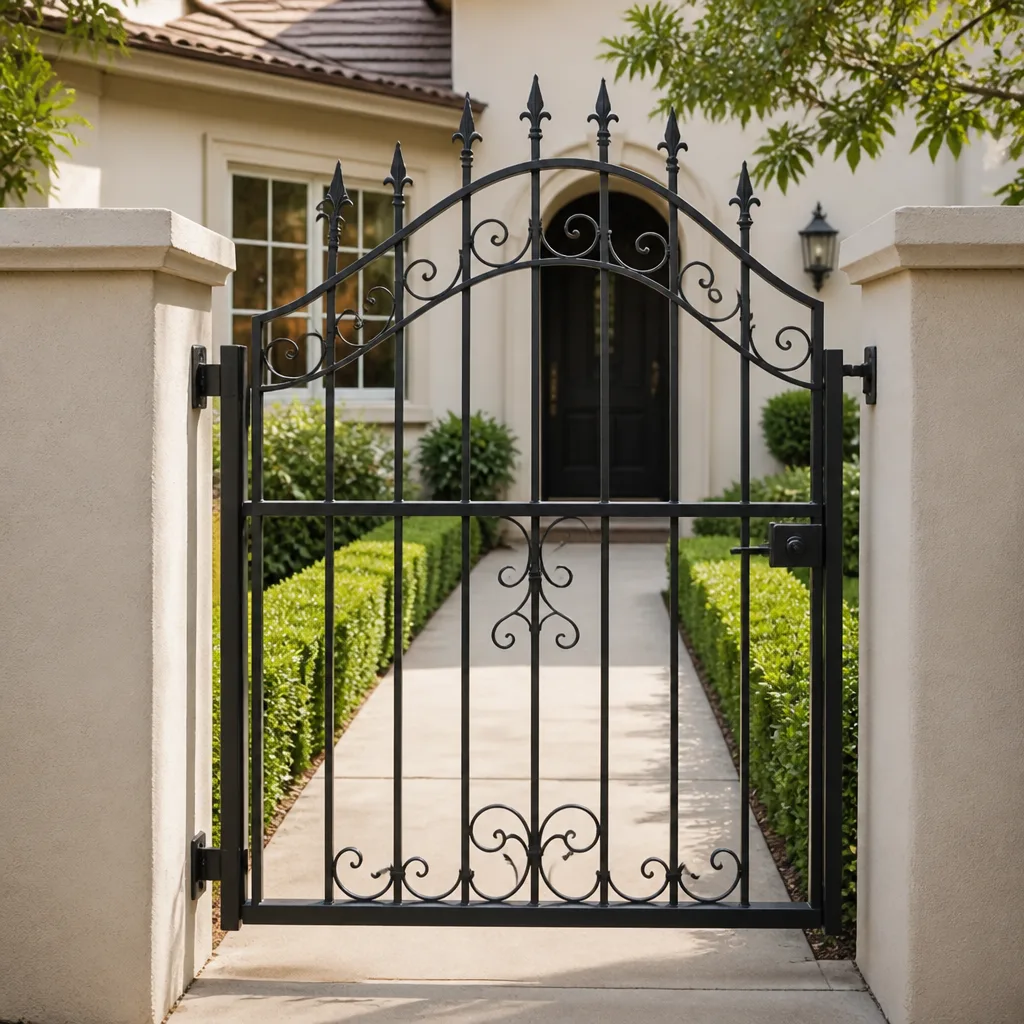
 Wrought iron
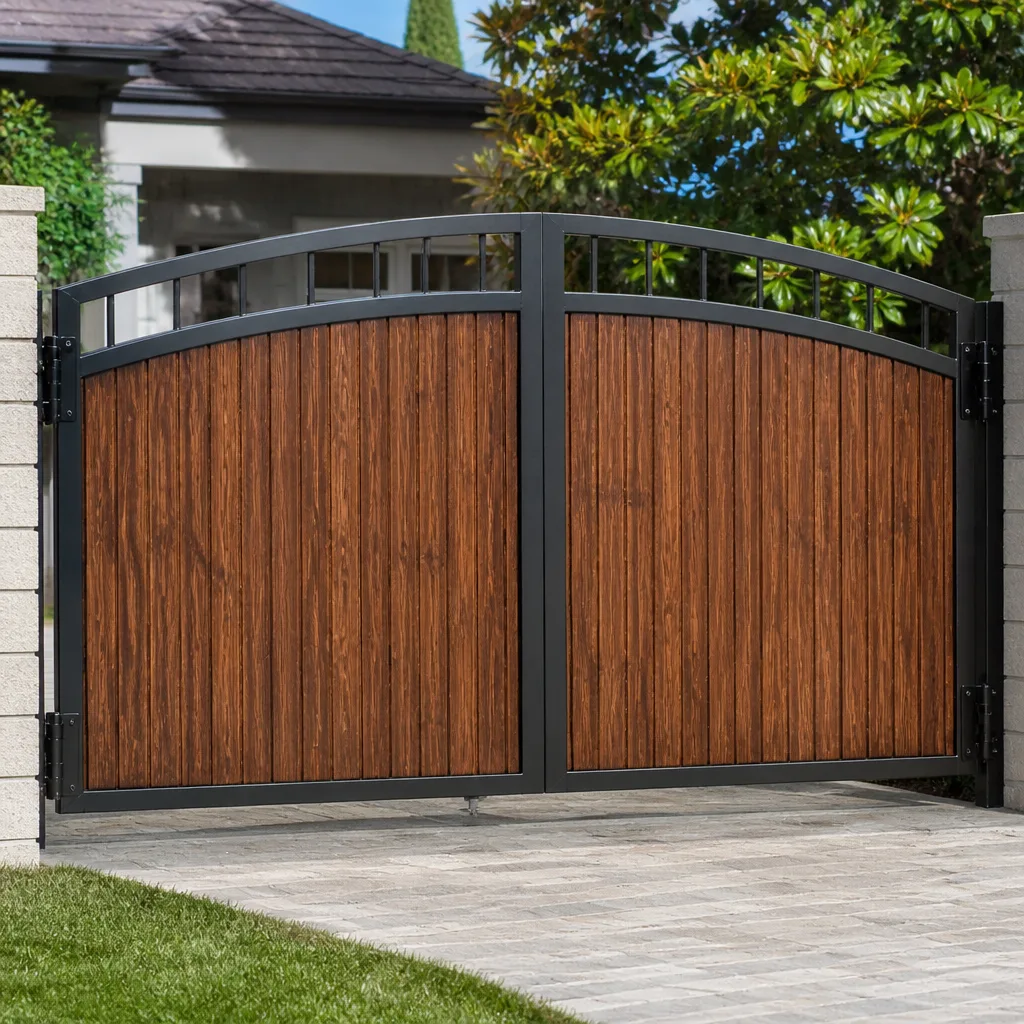 Wood & steel frame
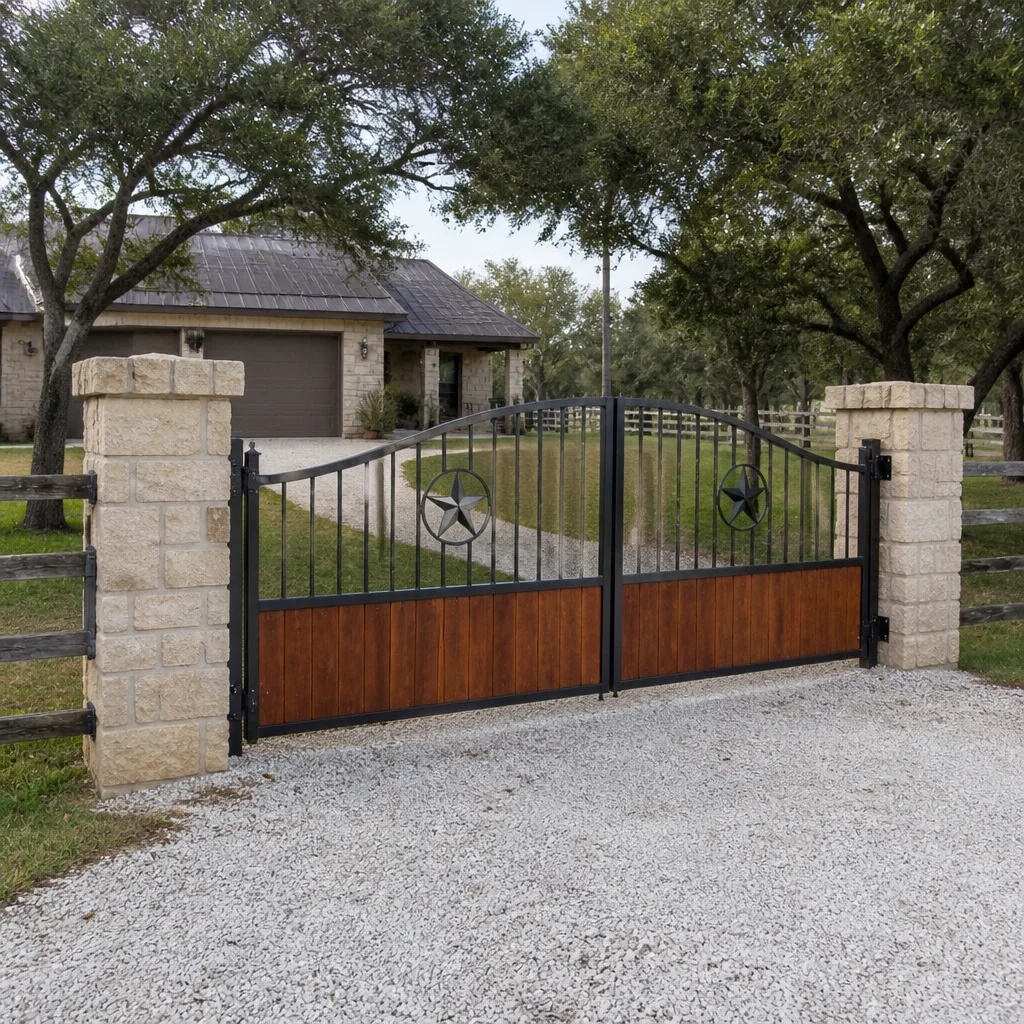 Farm & ranch
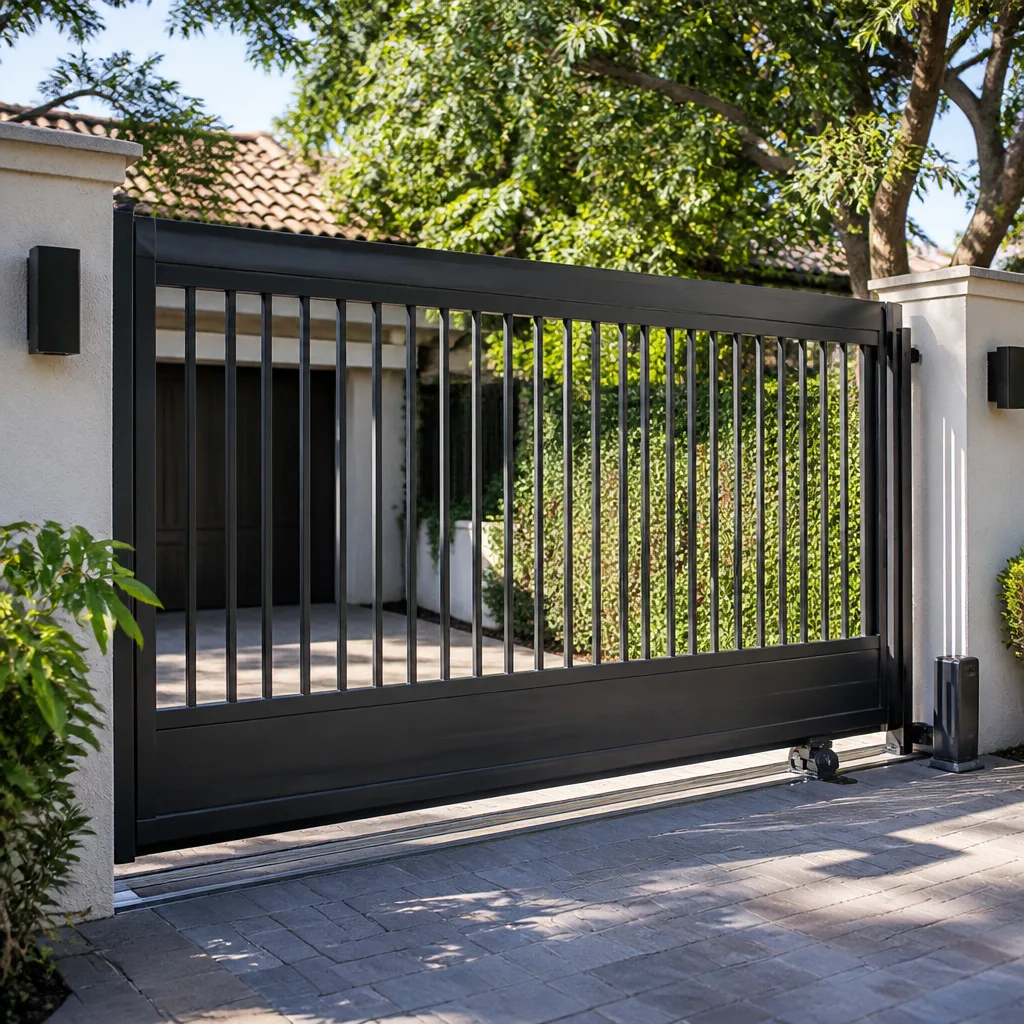 Sliding driveway gates
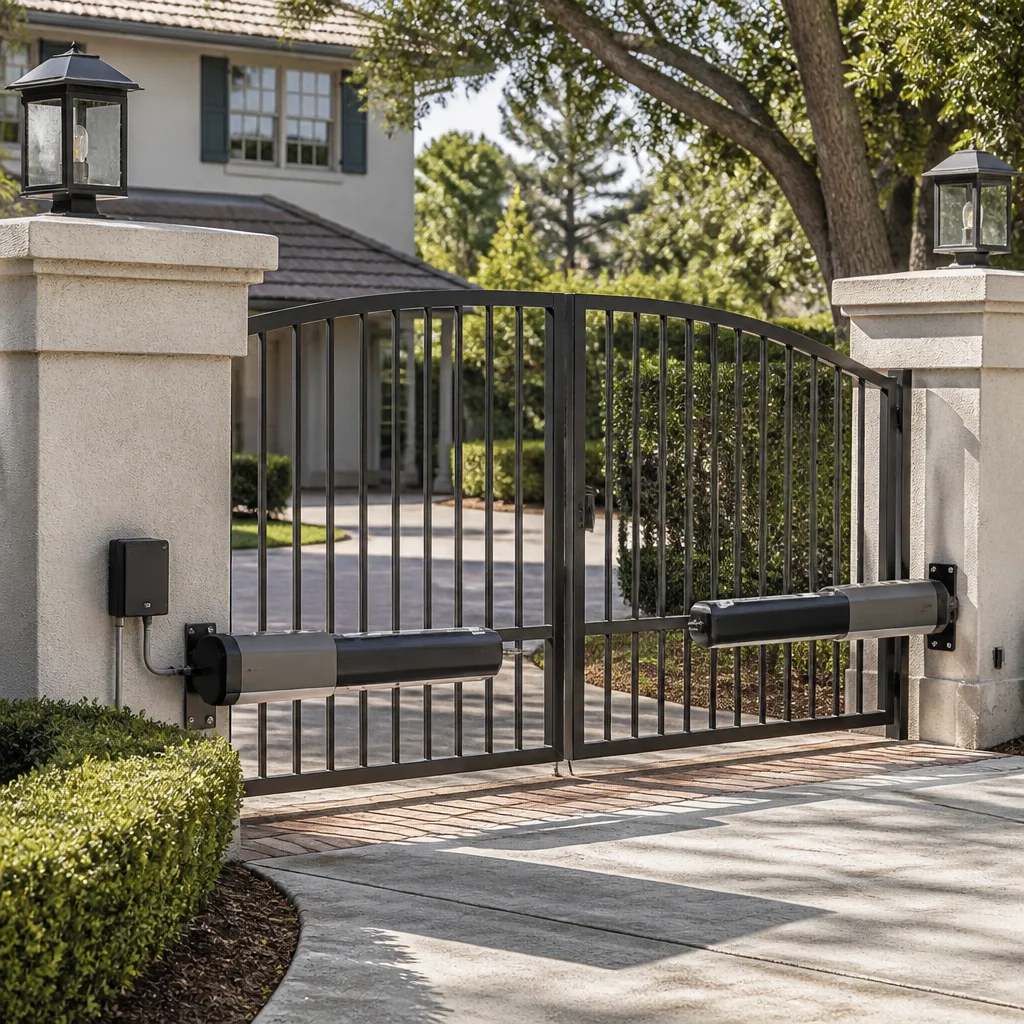 LiftMaster operators
Free on-site gate assessment - hinges, posts, and your LiftMaster or Nice gate operator checked before anything is quoted
The assessment is free and the quote is the invoice.
Get your free estimateStyles & brands we work with
- Wrought iron
- Wood & steel frame
- Farm & ranch
- Sliding driveway gates
- LiftMaster operators
See the difference
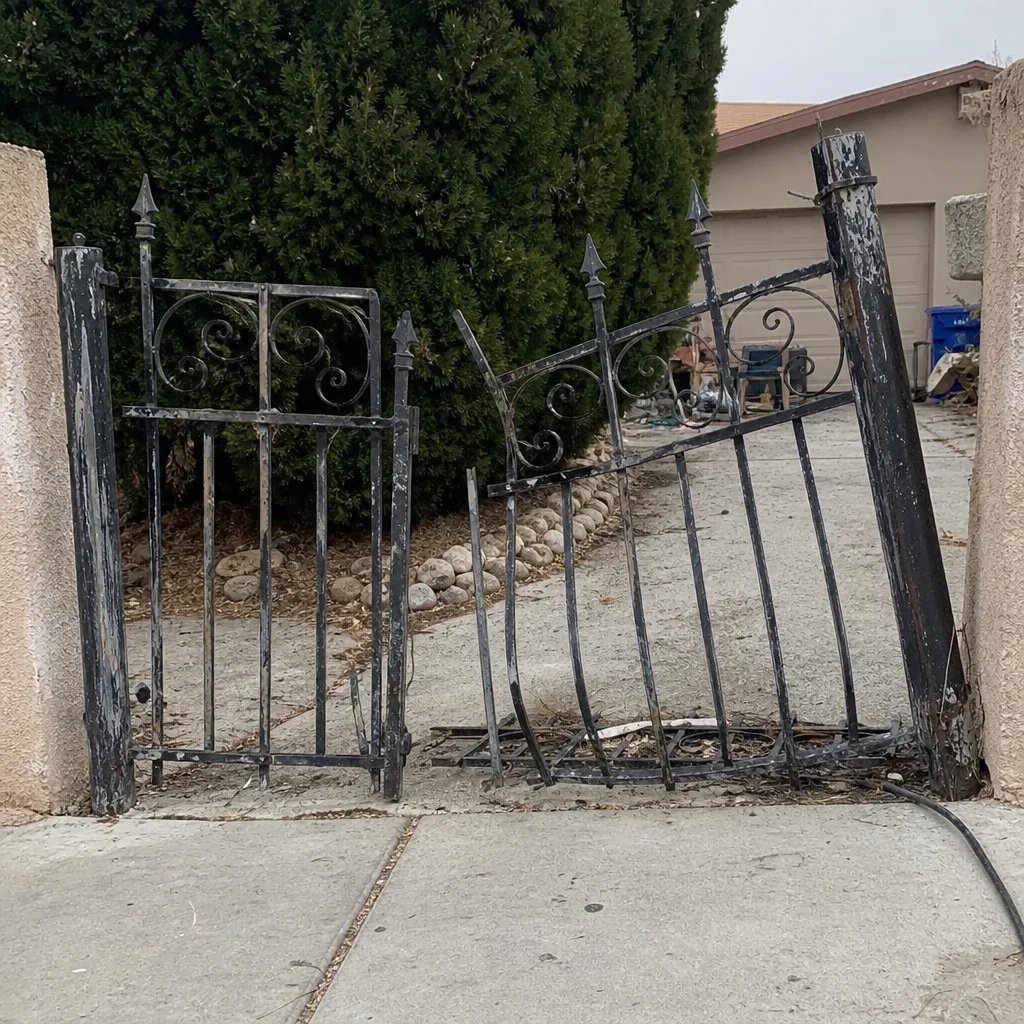 Before
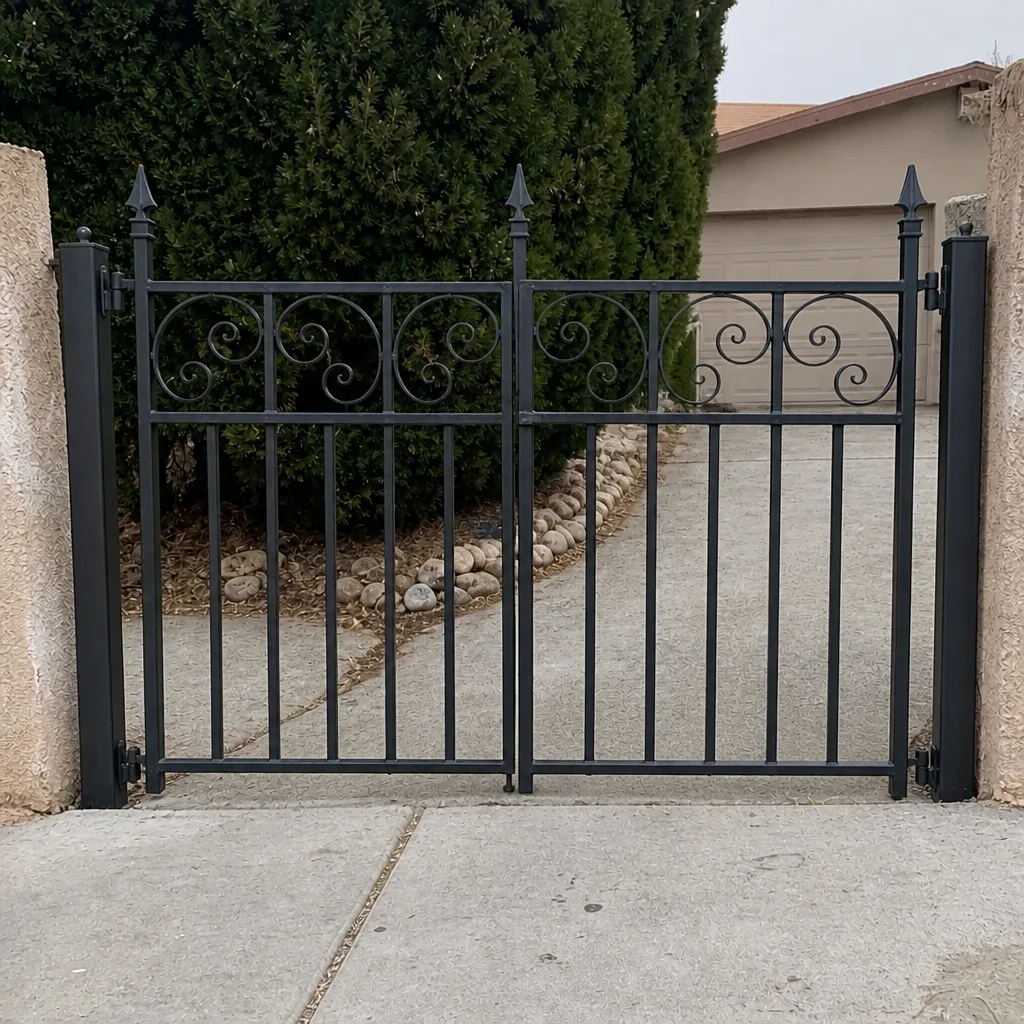 After
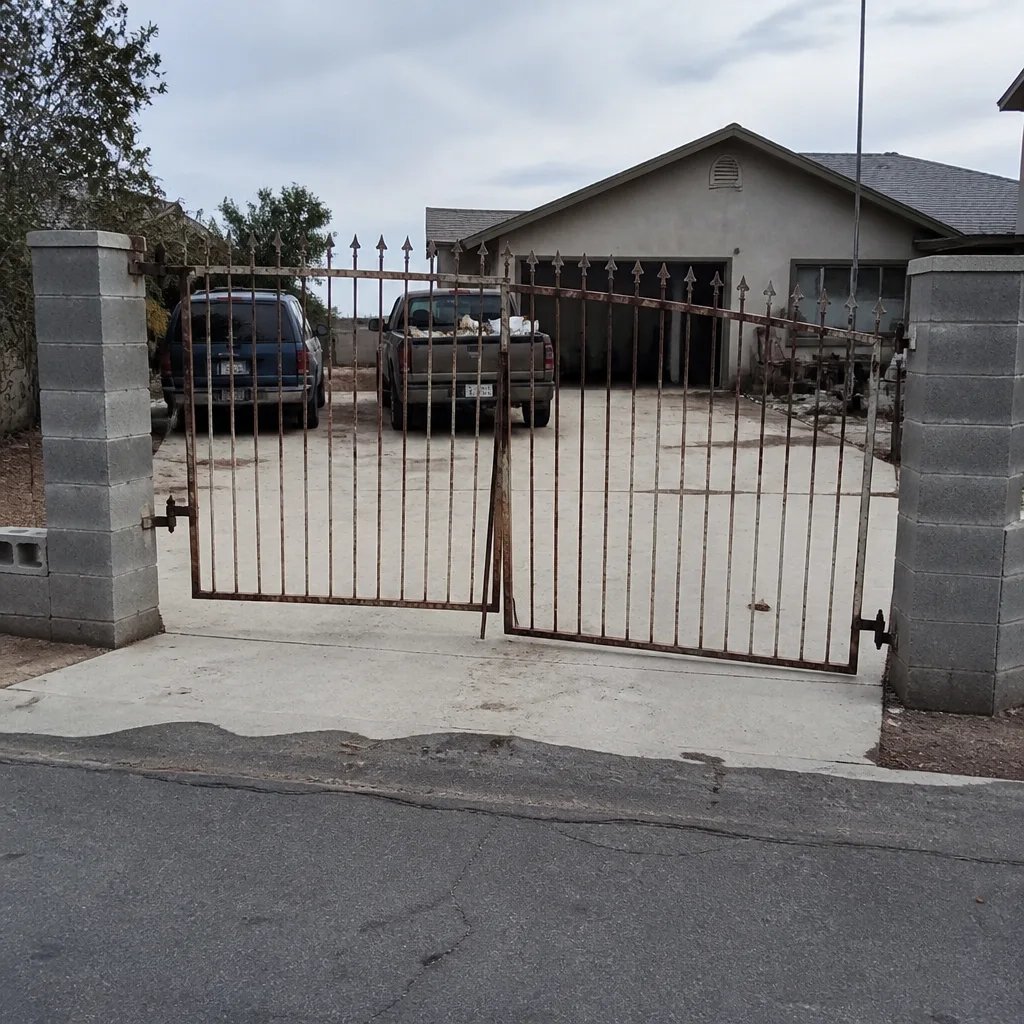 Before
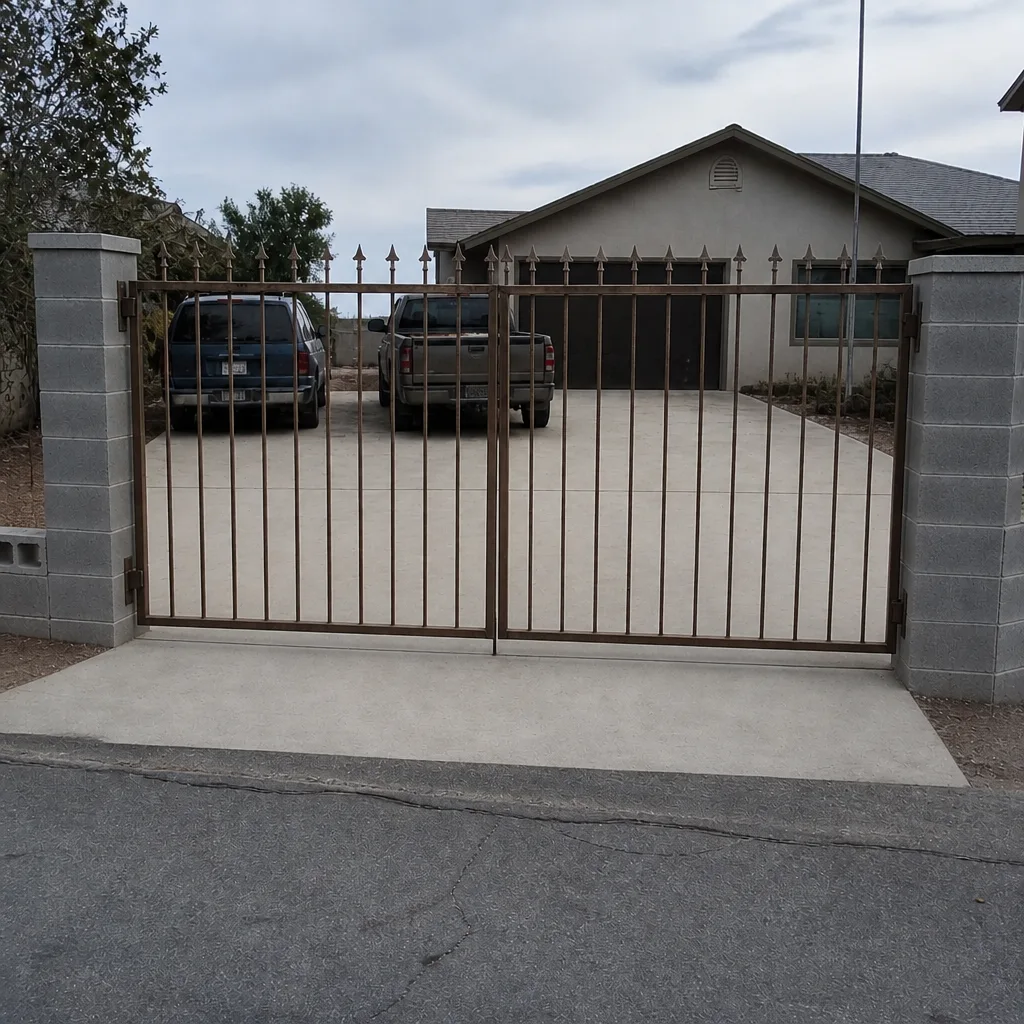 After
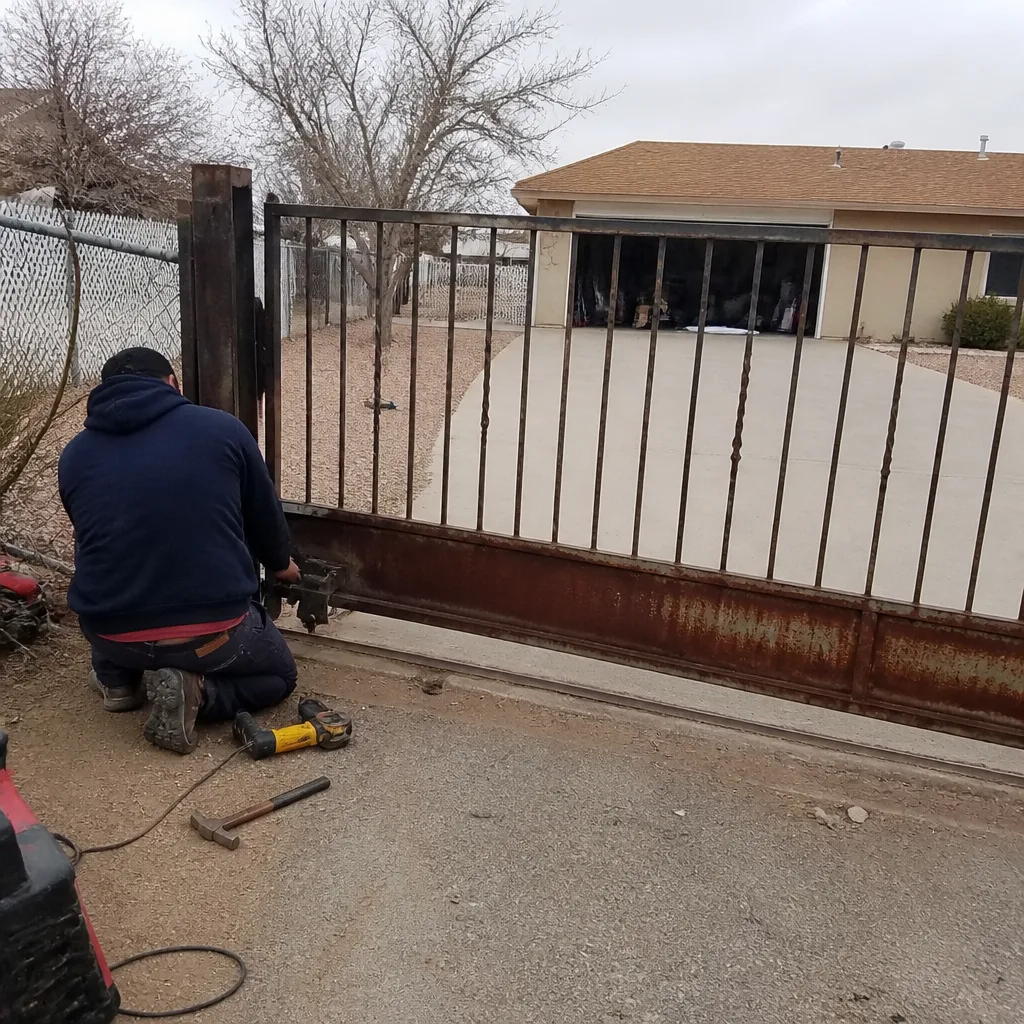 Before
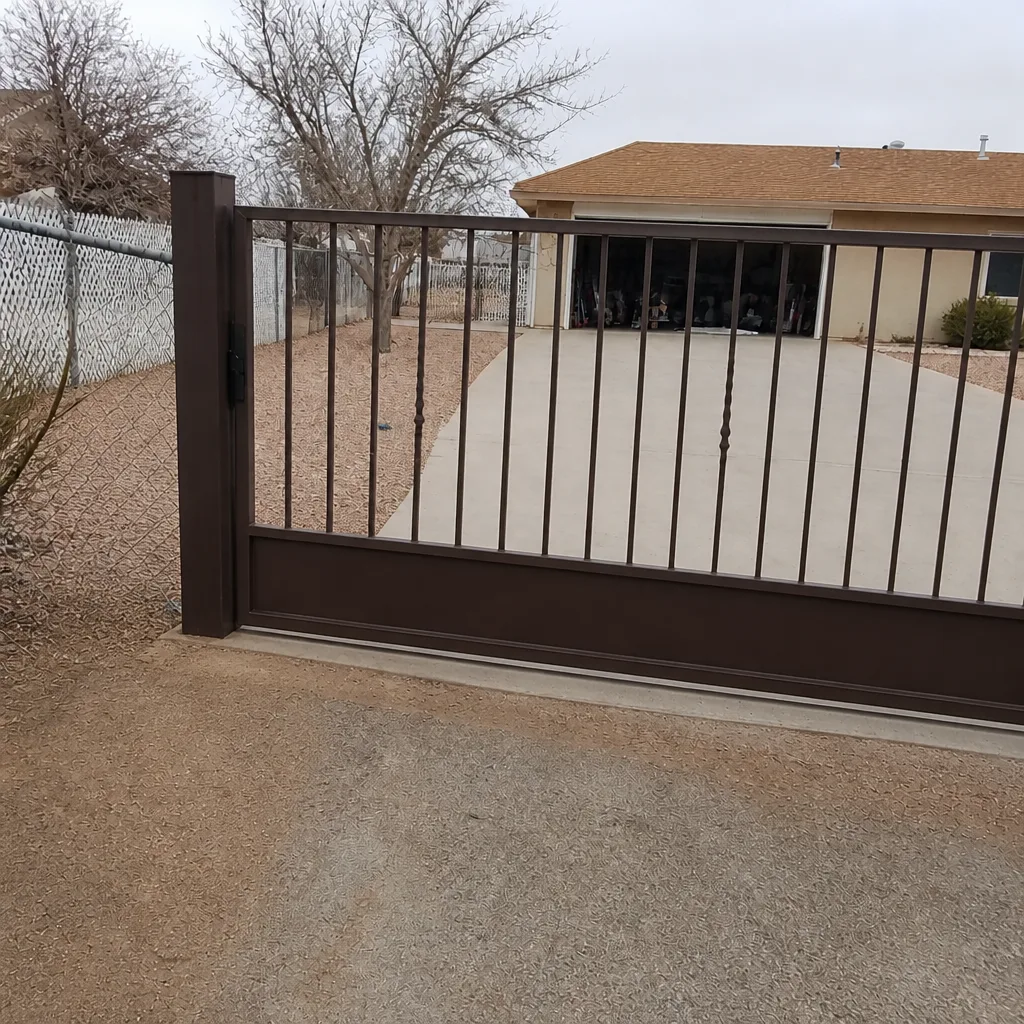 After
Why Won’t My Automatic Gate Open in Boulder City, NV? Start With Heat, Not the Motor
If your gate quit on a day over 100°F, the most likely cause is a thermal cutout trip or a limit switch that drifted under heat load, not a dead motor or a failed control board. On days when Boulder City tops 105°F, we take more “dead gate” calls than we do for every mechanical failure combined. Before you price a new operator, run three checks in order: the thermal reset button, the breaker at the control board, then the photo-eye. That sequence resolves most no-open calls we see in Boulder City. If it doesn’t, call (844) 320-7587 and a live person answers, day or night.
The Three-Step Test That Solves Most Boulder City Gate Failures
Work through these in order. Each one eliminates a cause before you move to the next, and none of them requires opening the motor housing or touching high-voltage wiring. If a step puts your hands near exposed conductors, stop and call us.
Step 1: Find the thermal reset button
Most operators have a small button or recessed switch on the motor housing, sometimes under a rubber cap. When the motor’s internal temperature sensor trips in extreme heat, the gate stops mid-travel and refuses to respond to the remote until the unit cools and resets. Press it once, wait a few minutes, and try the remote again. If the gate moves and then stalls in the same spot twenty minutes later, you have a heat-related cutout, not a failed motor.
Step 2: Check the breaker at the control board
A tripped breaker at the control board looks identical to a dead operator from the driveway. Open the control enclosure (low voltage on most residential units, but treat it as live until you’ve confirmed otherwise) and look for a tripped breaker or a blown fuse on the board. Reset it once. If it trips again immediately, stop. A breaker that won’t hold points to a wiring fault, and that’s a job for a technician, not a homeowner with a flashlight.
Step 3: Check the photo-eye for obstruction
The photo-eye is the infrared beam that stops the gate if something crosses its path. Desert grit, a shifted mount, or a spider web across the lens will hold the gate open or refuse to let it close. Wipe both lenses, then check that they’re aimed at each other. We regularly find photo-eyes knocked roughly two inches out of alignment by wind-driven debris in Boulder City, and a two-inch shift is enough to trigger a permanent fault.
Why Limit Switches Drift When It’s 105°F Outside
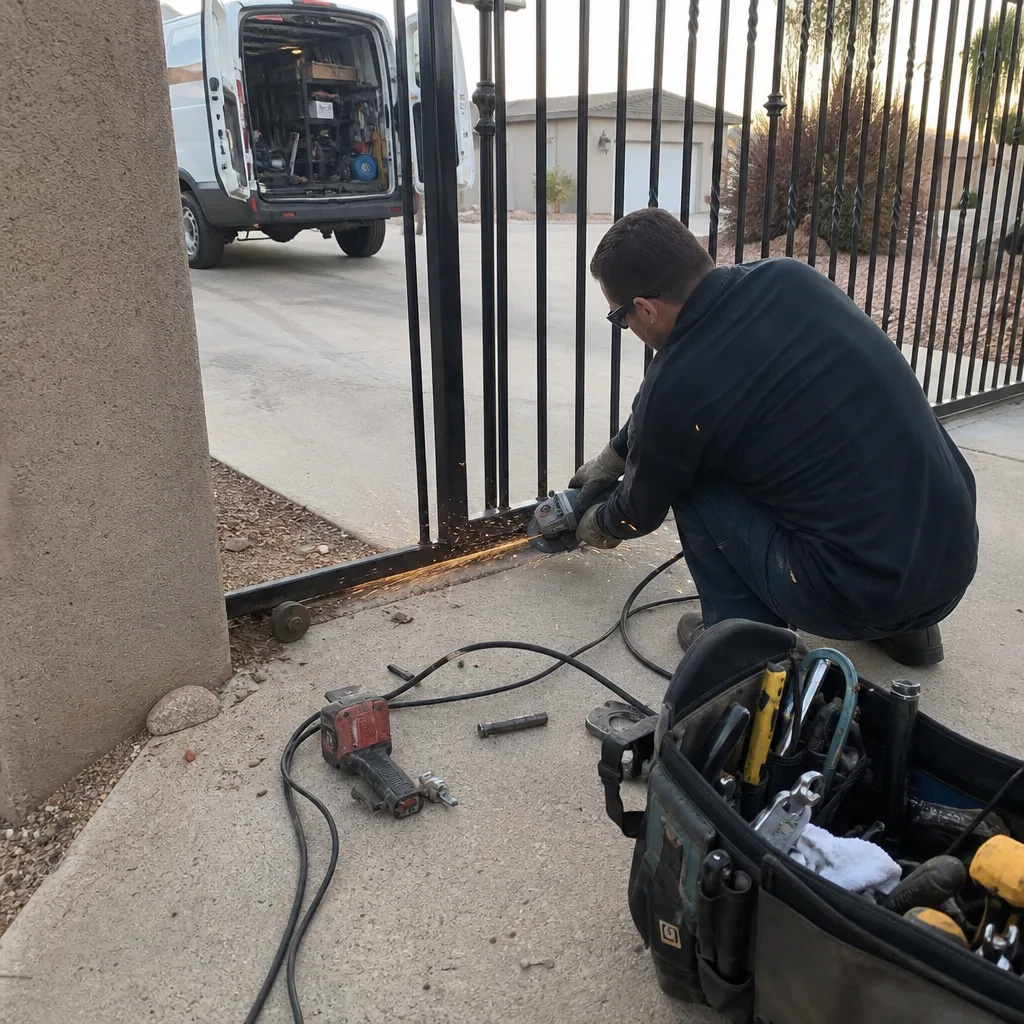
Here’s the failure mode most homeowners never hear about. Inside LiftMaster and similar operators, the limit switch uses a plastic cam that sets the gate’s stop position. In 105°F conditions, that cam expands. The motor’s stop point shifts by a few degrees of travel, the gate stalls mid-run, and the operator reads it as an obstruction. The gate looks stuck. The motor is fine.
We see this most in July and August, and it’s the single most common cause of “my gate opens halfway and stops” calls we take in Boulder City. Resetting the limit switch means measuring the new stop position, adjusting the cam, and running the gate through a full open-and-close cycle to confirm. Before we leave, you get a photo log of the adjustment and the new limit reading, so the next technician doesn’t have to rediscover it.
BeforeAfterWhen Wind, Not Heat, Is the Culprit
Boulder City sits at the mouth of the Eldorado Valley, where sustained 30-40 mph winds are routine in spring. A single gust can push a swing gate past its mechanical stop, overloading the motor’s torque limit and triggering a fault code that reads exactly like a dead operator. The reset is mechanical, not electrical: release the clutch, move the gate back inside its stop, re-engage, and try the remote. If the gate runs normally after that, the wind did the damage and the operator is fine.
If the same gate keeps getting pushed past its stop, the underlying problem is usually the stop itself. Older gates in the historic core, especially the original wrought-iron pedestrian gates still in service around Nevada Way and Avenue B, often have stops that were never sized for the wind loads this valley produces. That’s a fitting job, not an operator job.
How to Release the Gate Manually So You Can Get Out
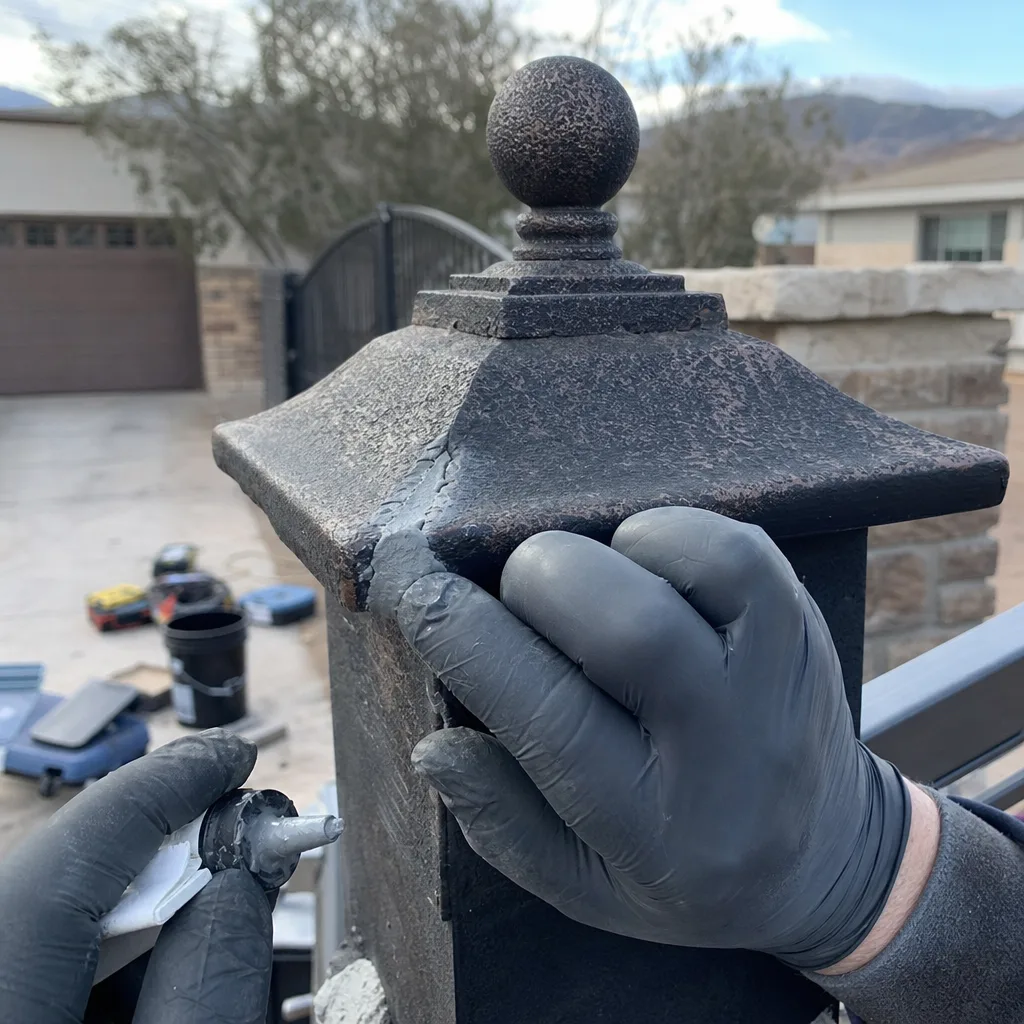
Every operator we service, from Mighty Mule to FAAC, uses the same principle for manual release, even though the lever or key location varies by brand. You disconnect the clutch to separate the gate from the motor, push the gate open by hand, and you’re out. Re-engage the clutch when you’re done. The manual release is a safety feature, not a fix. It gets your vehicle out while you wait for service. Do not leave the clutch disengaged for days at a time; the gate becomes a swinging panel in the wind, and the hinges take the load.
Common Local Scenarios (And What They Usually Mean)
After enough visits in Boulder City, patterns emerge. Here are the ones we see most:
- Gate stalls mid-travel on hot afternoons only. Limit-switch drift under heat load. The cam needs resetting, and in most cases the motor is healthy.
- Gate won’t respond at all after a windy night. Gate pushed past its mechanical stop or photo-eye knocked out of alignment. Manual release first, then check the beam.
- Gate fails intermittently, worse at peak heat. Usually a wiring fault in UV-degraded conduit. Sun-baked conduit cracks, moisture gets in, and the fault only shows when the wire expands. Clearing the code without photographing the wiring run means the problem returns.
- Latch won’t hold and the gate swings open on its own. Seized or worn hinge, common on the 1930s-40s ironwork still standing in the historic district. We keep vintage-style hinges on hand and use dry graphite instead of oil, which turns to gum in 110°F summers.
- Gate runs but the remote doesn’t work from the driveway. Usually a receiver or antenna issue, not the motor. Worth a diagnostic before you replace anything.
When It’s Not a DIY Problem
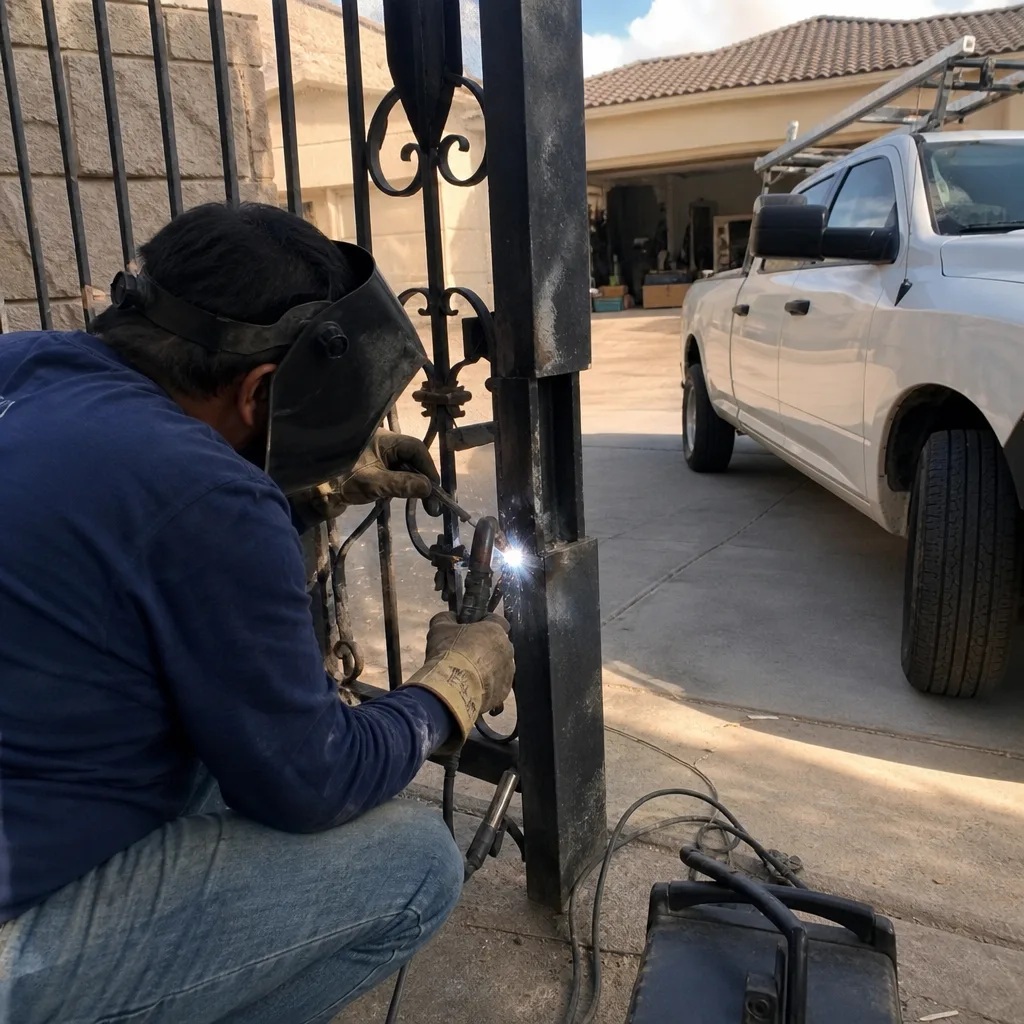
Some failures look like the three-step test solved them but haven’t. A gate that fails only at peak heat, then runs fine at 6 p.m., is telling you something the driveway can’t: the fault lives in the wiring, the conduit, or the control board, and it will return. Clearing a fault code without documenting the wiring run means the next technician starts from zero, and you pay twice to find the same problem. That’s the case for documented diagnosis. Under the Haven Standard, every Vance Gate Repair visit in Boulder City leaves you with photos of what we found, what we adjusted, and what we installed, plus a written price before any work starts.
We service nine major automation brands, including LiftMaster, FAAC, BFT, and Mighty Mule, so we work on the operator that’s already on your property rather than steering you toward a replacement. Every completed repair is covered by our 365-Day Done Right Promise: if it isn’t right, we make it right at no extra charge for a full year. And every job falls under Gate Repair scope, from a limit-switch reset to a full operator swap.
What Gate Repair in Boulder City Typically Costs
Pricing depends on the cause, and you’ll have a written number before any work starts. Here’s what our Boulder City calls run, in most cases:
| Service | Typical Range |
|---|---|
| Diagnostic visit with documented photo record | $95-$150 |
| Limit-switch reset and calibration | $120-$200 |
| Photo-eye realignment or replacement | $110-$185 |
| Thermal cutout / breaker reset with wiring inspection | $130-$220 |
| Manual release and stop adjustment | $100-$175 |
| Wiring repair in UV-degraded conduit | $180-$380 |
| Swing-gate motor replacement (arm bracket intact) | $650-$1,400 |
These ranges reflect what we see across Boulder City’s older housing stock and the custom-fabricated gates that don’t take drop-in parts. If another company has already quoted you, we’ll give a free second opinion on any written estimate. Bring the paperwork and we’ll review it at no cost.
FAQs
The most likely cause is a thermal cutout trip or a limit switch that drifted under heat load, not a dead motor. Press the reset button on the motor housing, check the breaker at the control board, and clear any obstruction from the photo-eye. If the gate stalls again in the same spot, the limit switch needs resetting. Call (844) 320-7587 for a same-day assessment.
Yes. Every residential operator has a manual release: you disconnect the clutch, push the gate open by hand, and re-engage when you’re done. The lever or key location varies by brand, but the principle is the same across LiftMaster, Mighty Mule, FAAC, BFT, and the rest. This gets your vehicle out. It doesn’t fix the fault. Call (844) 320-7587 once you’re clear.
Repair is almost always cheaper when the motor is healthy and the fault is in the limit switch, wiring, or photo-eye. A reset or realignment runs $100-$200; a motor replacement runs $650-$1,400. In our experience, most “dead gate” calls in Boulder City resolve without a replacement. Get a written price before any work starts. Call (844) 320-7587 for an estimate.
Yes. We answer the phone 24/7 with a live person, and most no-open calls we take in Boulder City get a same-day visit. Have your gate’s brand and approximate age ready when you call. Our technicians have up to 12 years of experience, work on nine major automation brands, and leave a documented photo record on every visit. Call (844) 320-7587.
If you’d rather have it looked at, Vance Gate Repair Boulder City offers a no-pressure assessment in Boulder City. Under the Haven Standard, you’ll have a written price in hand before anyone picks up a tool, and a photo record of the work when we leave. Call (844) 320-7587 anytime and a live person will pick up. You can also start with our Gate Repair in Boulder City page or head back to home to see what else we handle.
Written by the team at Vance Gate Repair Boulder City, serving Boulder City, NV.