
Last updated November 18, 2026
 Wrought iron
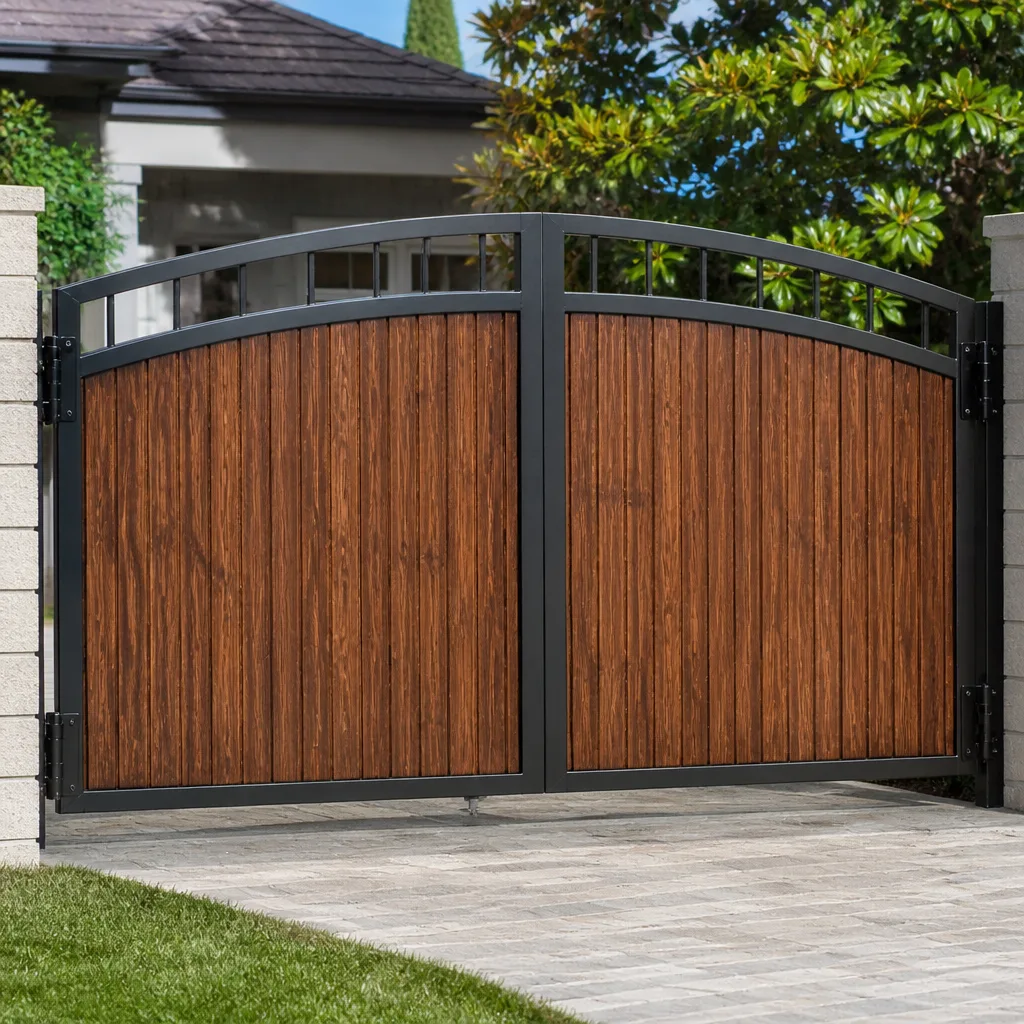 Wood & steel frame
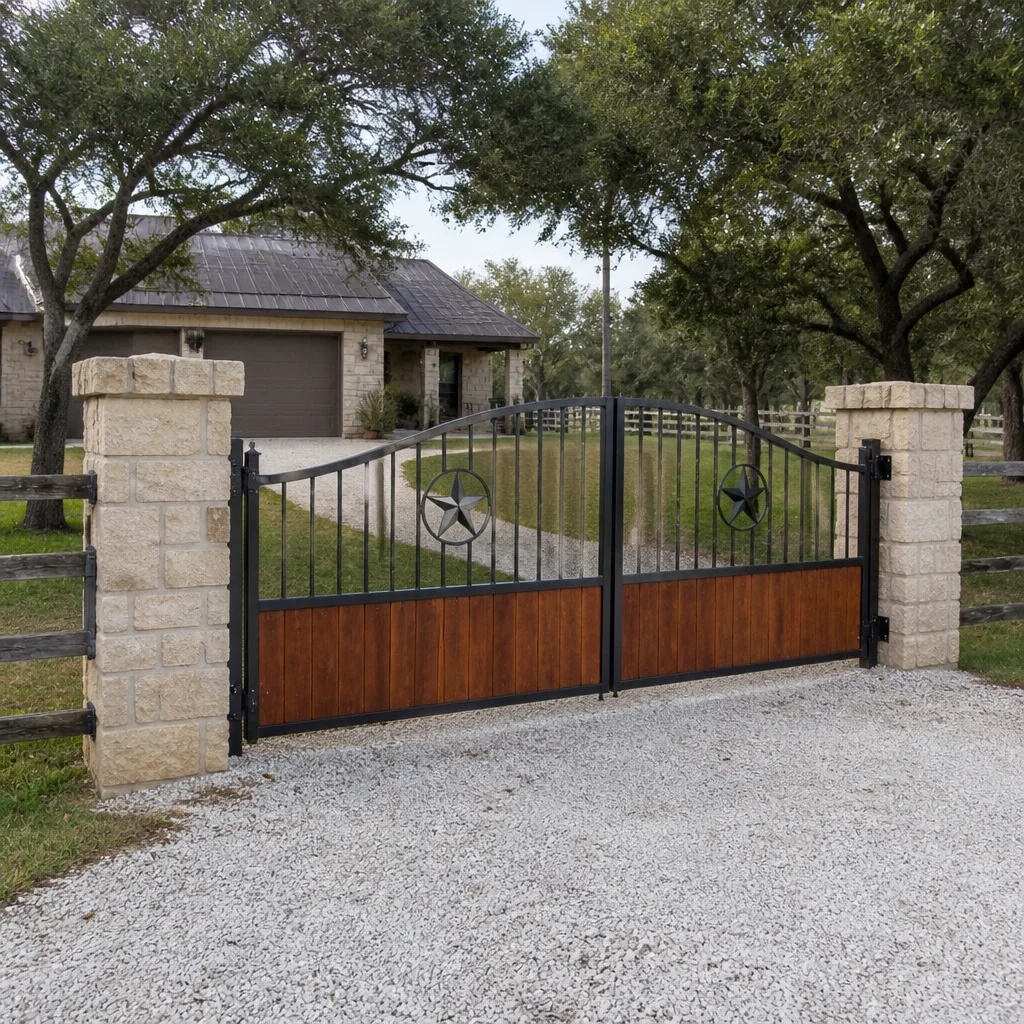 Farm & ranch
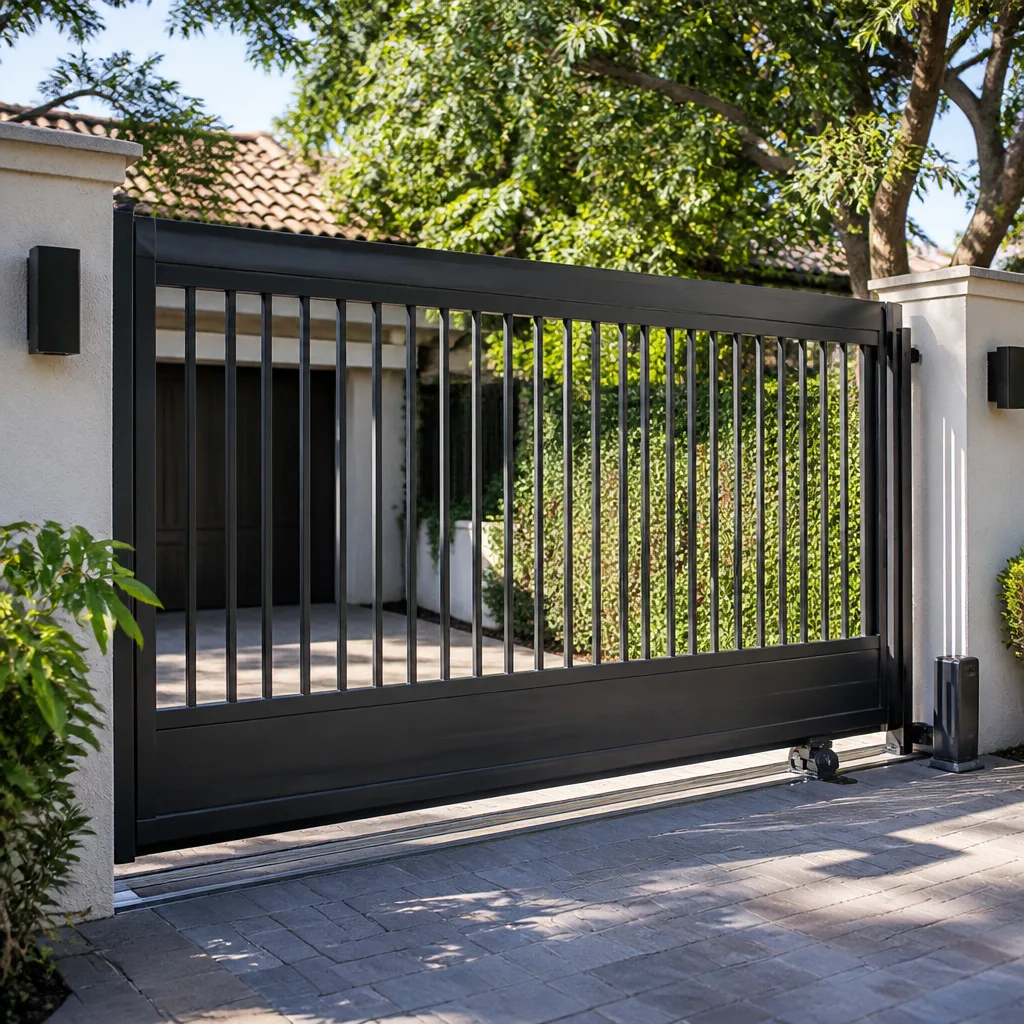 Sliding driveway gates
 LiftMaster operators
Free on-site gate assessment - hinges, posts, and your LiftMaster or Nice gate operator checked before anything is quoted
The assessment is free and the quote is the invoice.
Get your free estimateGate Motor & Opener Warning Signs Every Homeowner Should Know
An operator that hesitates for two seconds before moving has already told you something. A gate that reverses once and then opens normally has told you something different. Neither event is “the gate being weird” – both are specific diagnostic signals, if you know the vocabulary. Gate motors rarely fail without warning. They telegraph the failure weeks ahead through sound, timing, and heat. The catch is that you can only spot a deviation if you first know what normal looks like on your own system. This guide teaches you to build that baseline, then names the signals that mean a repair is coming – with the summer heat patterns we see across Boulder City folded in.
Quick Answer
The most reliable warning signs of a failing gate motor are a startup hesitation before the gate moves, a clicking or grinding sound that gets louder over a few weeks, a gate that reverses without anything in its path, and a remote that now needs to be held closer or pressed twice. In hot weather, thermal cutout trips and slow morning starts belong on that list too, not on the “normal in the heat” pile. Any one of these is worth a documented look before it becomes an emergency.
Styles & brands we work with
- Wrought iron
- Wood & steel frame
- Farm & ranch
- Sliding driveway gates
- LiftMaster operators
Table of Contents
- Establishing Your Baseline: What Normal Looks, Sounds, and Feels Like
- Mechanical Warning Signs: Slow Travel and Grinding
- Electrical Warning Signs: Hesitation and Random Stops
- Logic Warning Signs: Reversal and Remote Range Loss
- The Startup Grunt That Precedes Capacitor Failure
- Heat-Specific Signs in Boulder City Summers
- What to Document When You Notice a Warning Sign
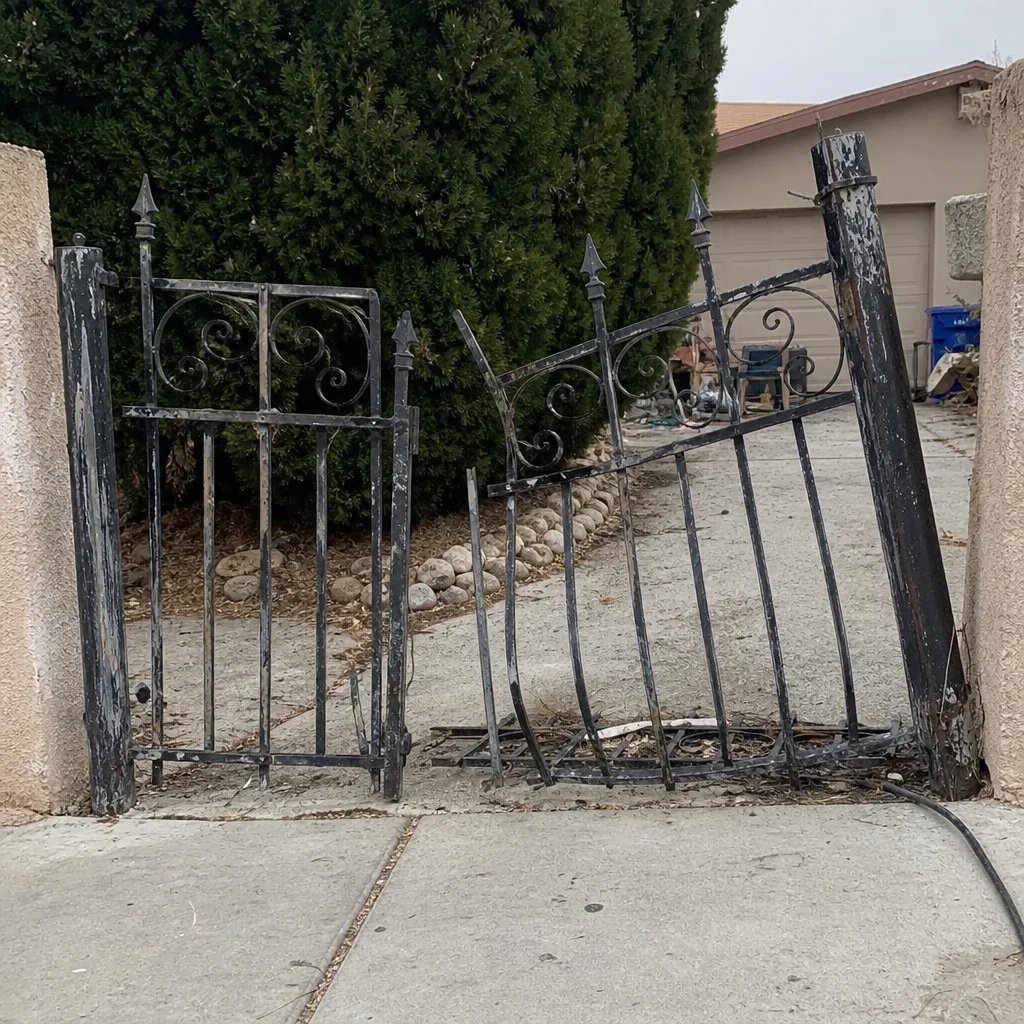 Before
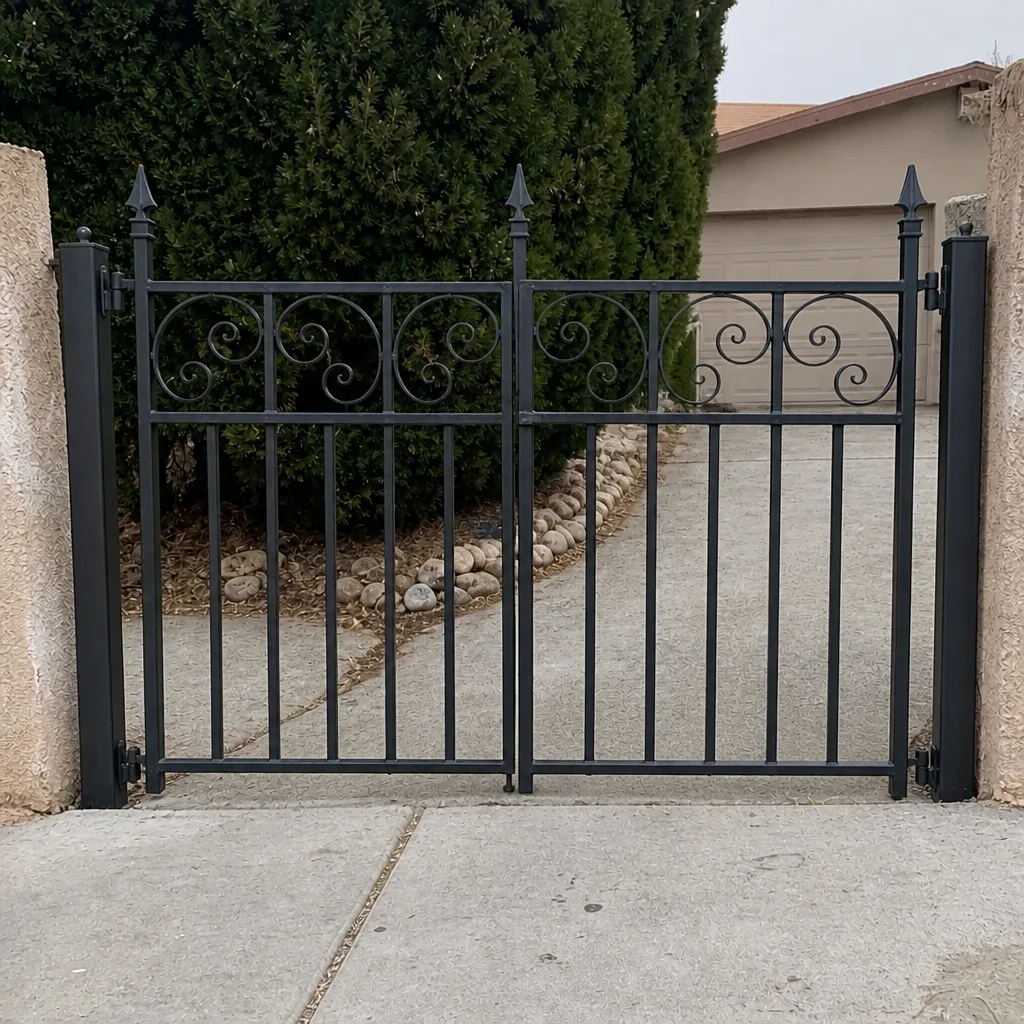 After
Establishing Your Baseline: What Normal Looks, Sounds, and Feels Like
Every diagnosis starts with a comparison. Before you can call something wrong, you need three measurements of “right” for your specific gate. Do this on a cool morning when the system is rested and the air is under 75°F – that removes heat as a variable and gives you a clean reference point you can return to all year.
The three baselines worth recording:
- Normal cycle time. Time the full open cycle with a stopwatch, from the first movement to the full stop. Do the same for closing. Write both numbers down. On most residential swing gates this lands somewhere between 12 and 20 seconds, but your number is the one that matters. A five-second drift over a month is a warning sign.
- Normal sound profile. Stand beside the operator while it runs. You’re listening for the steady hum of the motor, the soft mechanical travel of the arm or the track, and nothing else. No clicks at the start, no grind mid-travel, no rattle at the end. Record a 15-second video on your phone so you have an audio reference.
- Normal thermal behavior. After a full open-and-close, touch the operator housing (briefly, from the side – the metal can be hot). Warm is normal. Too hot to hold your hand on for a full second is not. That reading, taken in cool weather, tells you whether the motor is working harder than it should.
A gate that behaves identically to its baseline six months later is a healthy gate. A gate that has drifted in cycle time, sound, or heat is telling you something is wearing. In our experience, homeowners who establish this baseline catch failures two to four weeks earlier than the ones who call only after the gate stops moving entirely.
Mechanical Warning Signs: Slow Travel and Grinding
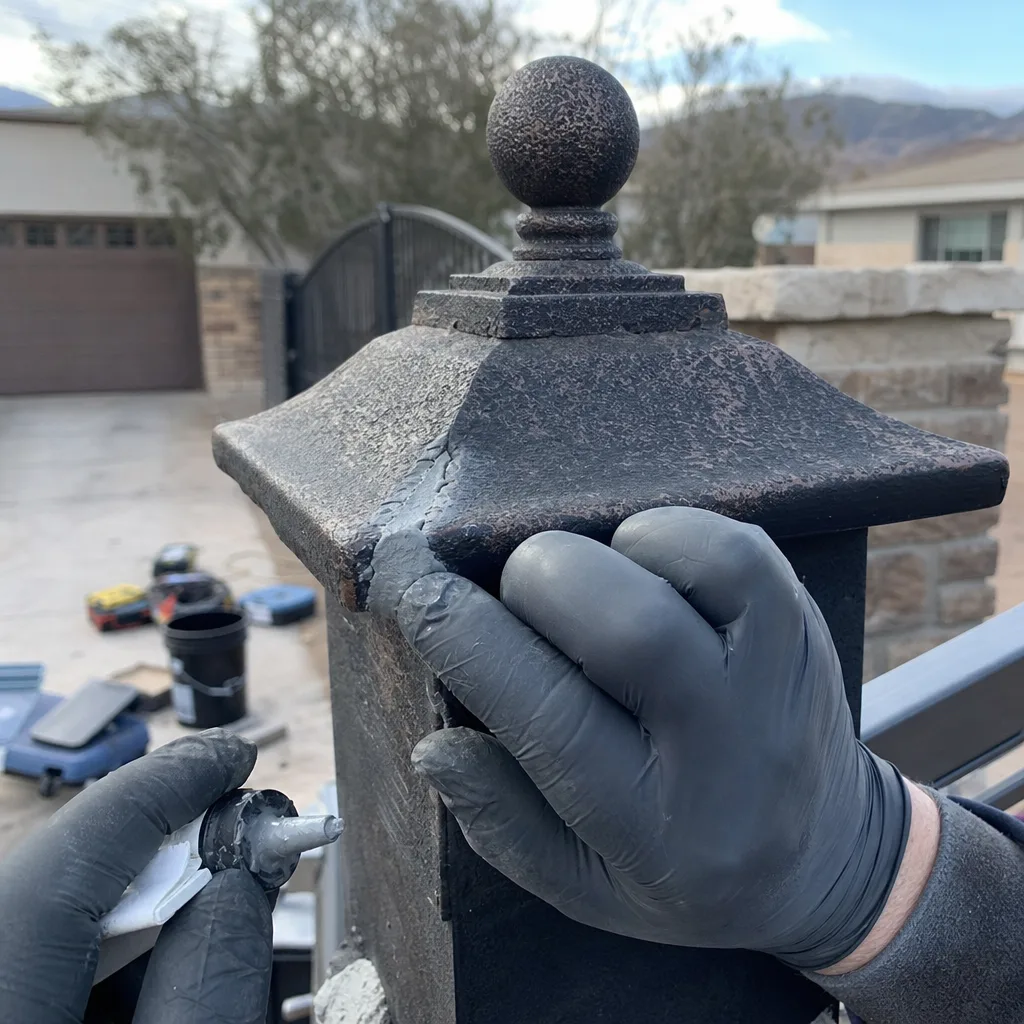
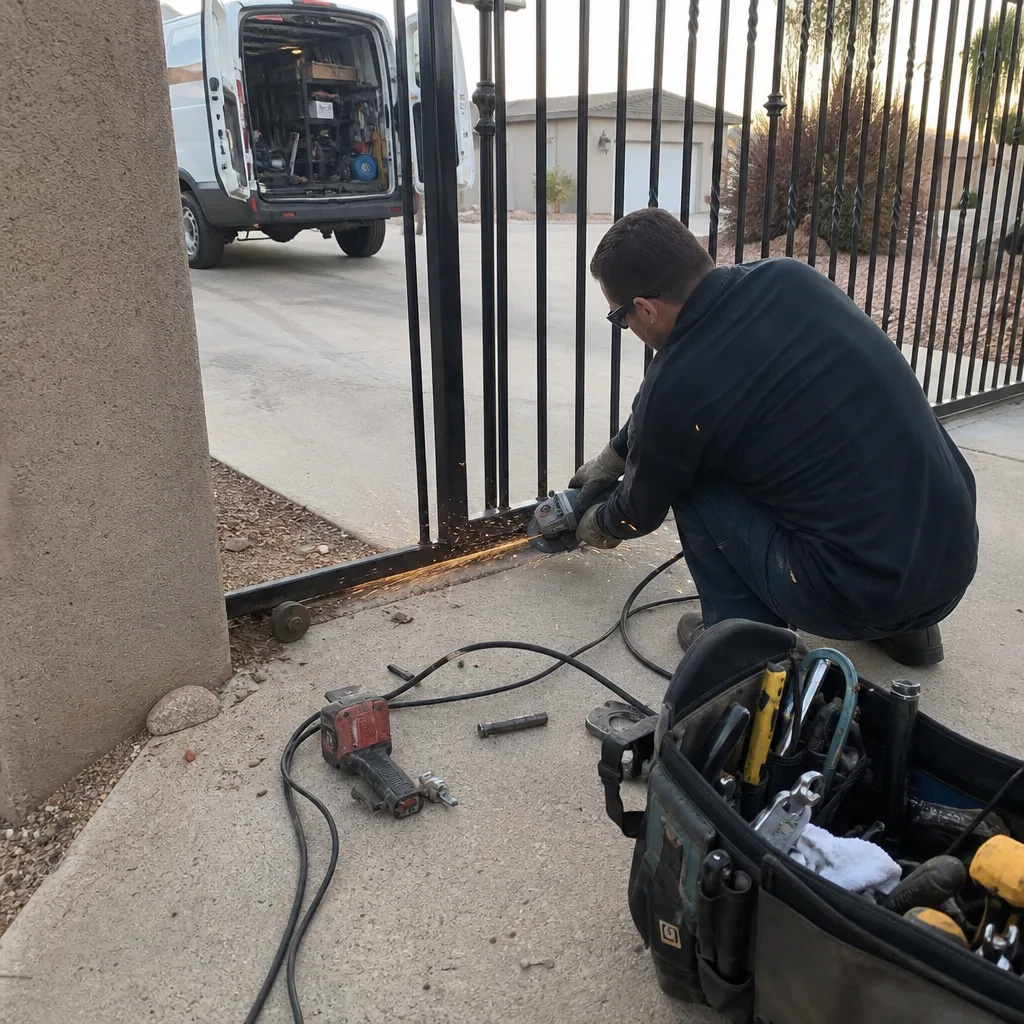
Mechanical failures come from metal and moving parts: the hinges, the arm bracket, the track, the rollers, or the gear inside the operator. They announce themselves through sound and speed, and they almost always get worse in a straight line. A gate that grinds today will grind louder in two weeks.
What to listen and look for:
- Grinding during travel. A rasping sound as the gate moves usually points to a worn gear inside the operator, a dry hinge, or a roller that has seized. Don’t lubricate the operator gear yourself – that’s inside the housing – but a light spray on the hinges and rollers will tell you within a day whether the noise was the gate hardware or the motor.
- Slow travel in one direction only. If your gate opens in 14 seconds but closes in 19, the closing direction is dragging. Check the track or the ground for debris, a settled hinge, or a gate that has dropped slightly on its post.
- A gate that sags or scrapes. Stand at the far end of the gate and look along the top edge. If it dips toward the ground on the latch side, the hinge post has shifted or the hinges have worn. The operator then has to fight that drag on every cycle, which shortens motor life.
- Rattling at the end of travel. The limit switch is the component that tells the operator when to stop. If the gate slams to a stop instead of easing into it, the limit is set wrong or the physical stop has moved.
Mechanical issues are the cheapest to fix early and the most expensive to ignore. A worn hinge replaced for a small sum becomes a burned-out motor when the operator spends six months pushing a gate that no longer swings freely. If your gate is dragging, gate repair in Boulder City starts with a physical check of the hardware before anyone touches the motor.
Electrical Warning Signs: Hesitation and Random Stops
Electrical problems live in the wiring and the power delivery – the supply to the operator, the battery backup, the control board, or the capacitor. They show up as hesitation, intermittent stops, and behavior that changes with temperature or time of day. These are the signals most homeowners mislabel as “the gate being temperamental.”
The electrical warning signs that matter:
- Startup hesitation. You press the remote and the gate pauses for one to three seconds before moving. That pause is the control board thinking about it – it may be a weak signal from the remote, a marginal capacitor, or a safety input that hasn’t fully cleared. Consistent hesitation is never normal on a healthy system.
- Random stops mid-travel. The gate moves halfway and stops without hitting anything. This is often a safety edge or photo-eye (the infrared beam that stops the gate if something crosses the path) triggering falsely – a spider web, a leaf, or a light source shining straight into the receiver. It can also be a loose connection at the control board.
- Stops only in one weather condition. A gate that fails only in the afternoon or only on hot days is telling you the fault is temperature-linked. That points to the capacitor, the control board, or a marginal battery – not the mechanical hardware.
- Battery backup failures. If your operator has a battery and the gate refuses to run during a power outage that it handled fine last year, the battery is at the end of its life. That’s a simple replacement, and it prevents the gate from being stuck open during an outage.
Keep in mind that any electrical work inside the operator housing is a job for someone trained on that specific brand. The control board and the 120-volt supply carry real shock risk, and a small miswire can destroy a board in an instant. Note the symptom, note when it happens, and let a technician trace it. If your gate stops responding entirely, that’s the moment to look at gate motor & opener service in Boulder City rather than pushing the gate by hand.
Logic Warning Signs: Reversal and Remote Range Loss
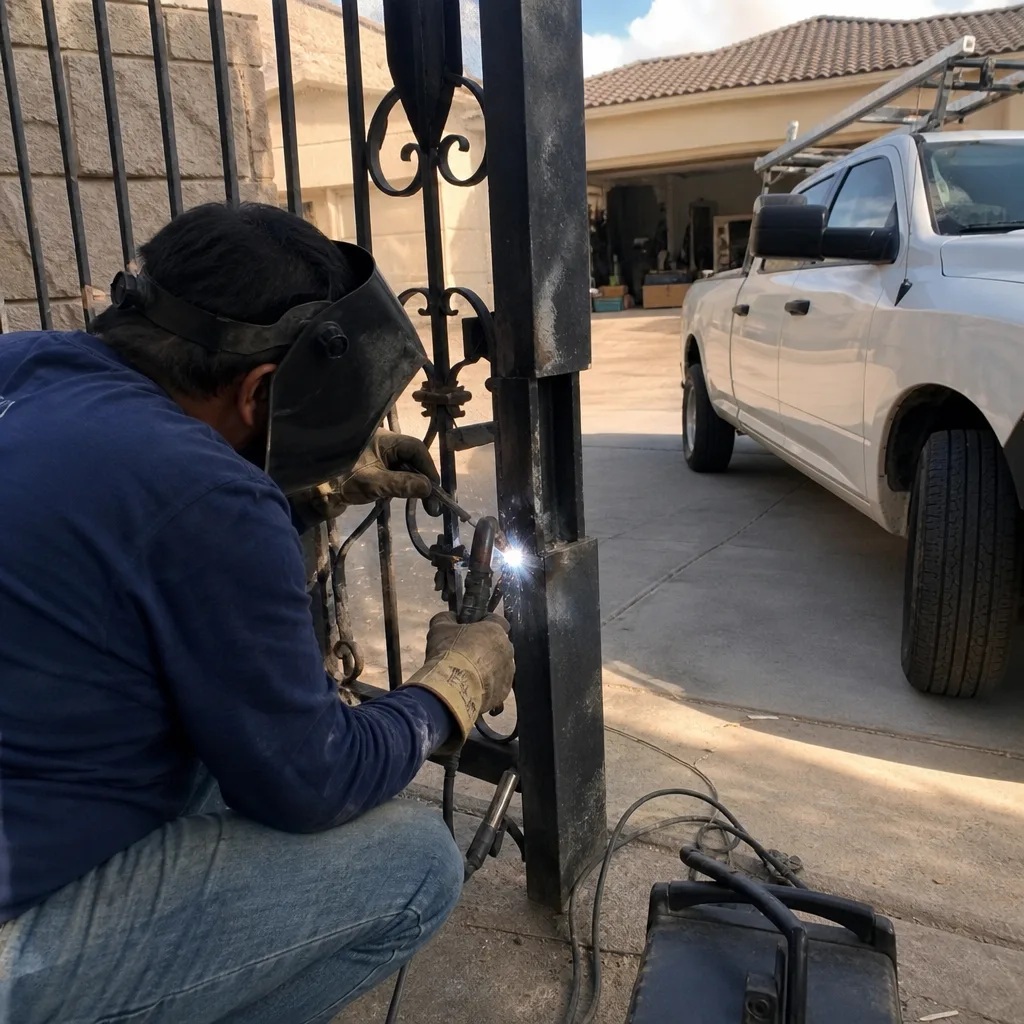
Logic problems are the hardest to spot because the gate physically works – it just does the wrong thing at the wrong time. These signals come from the control board, the safety sensors, and the remote receiver, and they tend to be intermittent at first. A gate that reverses once then opens normally has done something specific: a safety input triggered at the exact moment the operator expected a clear path.
The logic warning signs:
- Reversal without obstruction. The gate starts to close, then reverses to open with nothing in its path. In our experience the culprit is almost always the photo-eye or the safety edge – a misaligned beam, a dirty lens, or a sun reflection at a specific time of day. Note the time it happens; if it’s always around the same hour, sunlight is likely hitting the receiver.
- Remote range drop. The remote used to work from the end of the driveway and now works only from three feet away. That’s a weakened receiver, a dying remote battery, or new interference – metal fencing, a new appliance, or a nearby transmitter. Try a fresh battery in the remote first; it’s the cheapest test.
- The gate ignores a remote but responds to a keypad. That narrows the fault to the remote or the receiver, not the operator itself. It also tells you the fix is a small one.
- Multiple remotes fail at once. If every remote stops working on the same day, the receiver is the problem, not the remotes. On multichannel brands like DoorKing and LiftMaster, the receiver can be reset or reprogrammed, but it needs the right diagnostic reading first.
- The gate opens for no command. A phantom open is a serious safety issue. Note the time and whether anything nearby was transmitting – a neighbor’s remote on the same frequency, a garage door opener, or a wireless device. If it repeats, don’t leave the gate unattended.
Logic faults are where documentation pays off most. If you tell a technician “the gate reverses around 4 p.m.,” the diagnosis starts with the photo-eye and the sun angle – and the visit is shorter. If you say “the gate is acting weird,” the technician has to reproduce it first.
The Startup Grunt That Precedes Capacitor Failure
Capacitors are the small components that give an AC gate motor the burst of energy it needs to start turning. When a capacitor is failing, the motor still runs – but it has to work harder to start, and the sound changes first. That change is a low, grunting hum on startup, right before the gate begins to move.
What to listen for over three to six weeks:
- Week 1-2: A brief, soft grunt on the first cycle of the day. Easy to miss; the gate still moves normally after.
- Week 3-4: The grunt gets louder and lasts longer. The gate hesitates a beat before moving, more noticeably in cool morning air.
- Week 5-6: The grunt is now a heavy, labored hum. The gate may still open, but every cycle sounds like it’s straining. The motor is running hotter than usual.
- Then it stops: The motor refuses to turn at all, and you hear only the hum or nothing. That’s the capacitor (or the start winding) failing outright. The gate is now stuck.
That timeline – three to six weeks of a growing grunt – is the diagnostic window. A homeowner who notices the grunt at week two and calls gets the capacitor replaced before the gate ever fails. A homeowner who waits hears the hum, ignores it, and then comes home to a gate that won’t open. The replacement is the same part either way; the difference is whether it happens on a scheduled visit or in the middle of a driveway on a Friday evening.
The startup grunt is one of the most reliable signals in the trade, and it’s the one most often dismissed as “the motor getting old.” It isn’t age; it’s a part losing capacitance. If you want to understand the full repair picture, our page on gate motor & opener service covers the diagnostic steps we take.
Heat-Specific Signs in Boulder City Summers
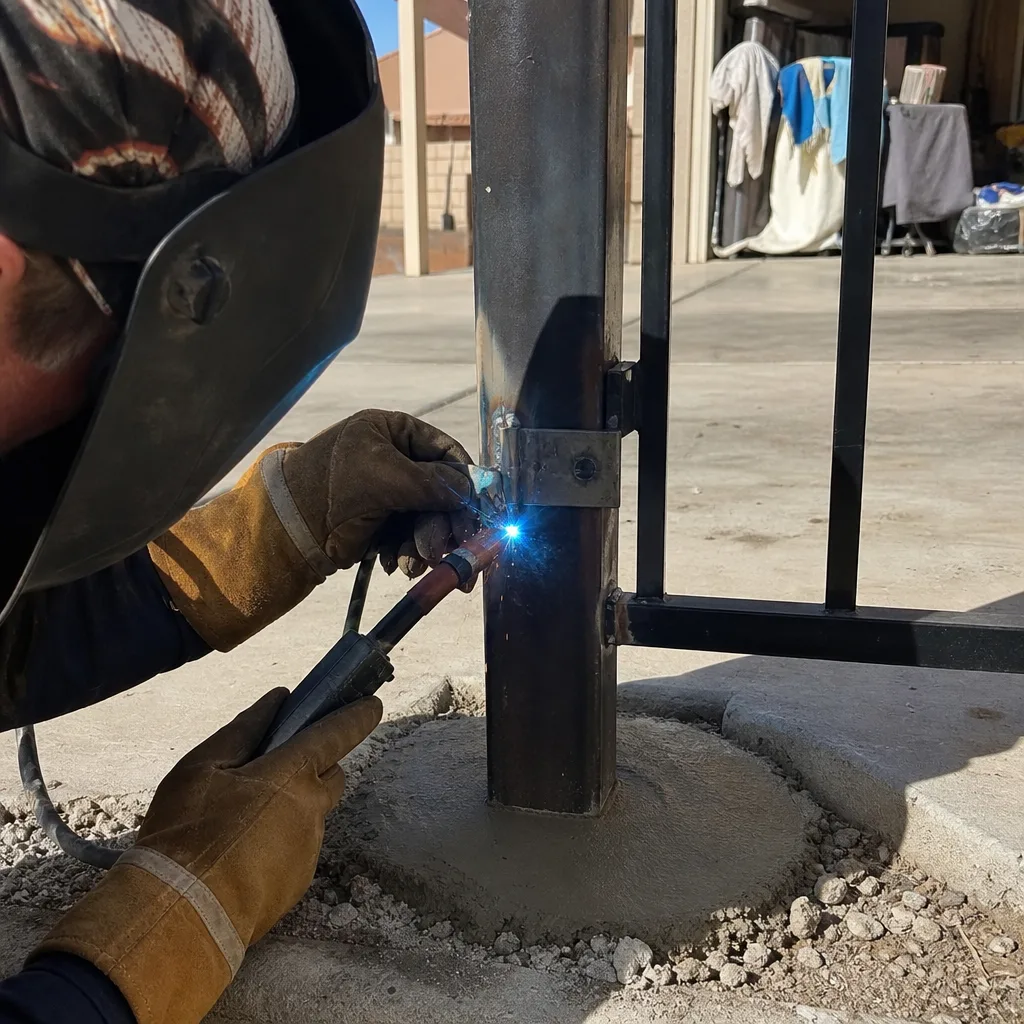
Boulder City summers put gate operators through thermal stress that most of the country never sees. Daytime highs regularly clear 100°F, and an operator mounted in full afternoon sun can see internal temperatures well above ambient. That heat isn’t just uncomfortable for the motor – it changes how the operator behaves, and several of those changes look like failures when they’re actually the system protecting itself, or the early stage of one it can’t protect against forever.
The heat-linked warning signs we see most:
- Thermal cutout trips. Many operators have a thermal switch that shuts the motor down when it gets too hot. If your gate stops mid-cycle on a hot afternoon and works again an hour later, that’s a protective trip. Occasional trips on the hottest days of the year are the system doing its job. Frequent trips, or trips on a day that isn’t unusually hot, mean the motor is working harder than it should – usually from a dragging gate or a failing capacitor.
- Slow morning starts. A gate that moves slowly on the first few cycles of a cool morning, then speeds up as the day warms, has a marginal component – often the capacitor or a battery. Cool air makes a weak component weaker. This is the opposite of the thermal-cutout pattern, and it’s a common Boulder City symptom in spring and fall.
- Erratic reversals in afternoon sun. A photo-eye receiver aimed toward the southwest can be blinded by afternoon sun in June and July, causing random reversals that vanish by evening. If your reversals follow the sun, the fix is repositioning or shielding the receiver, not replacing it.
- Shorter battery backup life. Batteries lose capacity faster in sustained heat. A backup that ran the gate for several cycles last summer and now barely manages one is a battery worth replacing before the next outage.
Homeowners often hear “it’s just the heat” from neighbors or online forums. Sometimes that’s true. But “normal in the heat” should mean a small, occasional, weather-linked change – not a gate that stops working every afternoon in July. If the gate is failing on the hottest days and working on the cooler ones, note the pattern and get it looked at. In Boulder City, the temperature pattern is one of the most useful diagnostic facts you can hand a technician.
What to Document When You Notice a Warning Sign
The difference between a fast diagnosis and a slow one is usually the information the homeowner gathered before calling. Three pieces of evidence do most of the work, and all three take under a minute to collect. Keep them on your phone and you’ll hand a technician a head start on the exact fault.
- A short video of the failure. Record a full open and a full close with the gate in frame and the operator audible. Fifteen to thirty seconds is enough. The sound of the grunt, the hesitation before movement, and the moment of reversal are all captured in a video and almost impossible to describe in words. If the failure is intermittent, record the successful cycles too – a baseline video is just as valuable.
- The ambient temperature at the time. Note the outdoor temperature, and if you can, whether the operator was in sun or shade. A symptom that only appears above 95°F points toward the capacitor, the control board, or a thermal trip. A symptom that appears in cool air points toward the battery or a marginal component. That single number narrows the diagnosis.
- The number of cycles that day. If the gate has already opened and closed a dozen times when it fails, that tells the technician the operator was warm. If it fails on the very first cycle of the morning, that tells a different story. Both are useful, and they point to opposite causes.
Add the brand and model if you can find it on the operator housing – LiftMaster, FAAC, BFT, Linear, Viking, Ghost Controls, DoorKing, Elite, and Mighty Mule are all brands we work on, so the model number lets us arrive with the right parts reference and a plan. Photograph the label while you’re out there. That photo, plus the video and the temperature, means the technician walks onto the property already knowing the likely cause, which is the difference between a fifteen-minute diagnostic and a return visit.
When you’re ready to hand the record over, our team picks up the phone around the clock, and we start from what you documented. If you’d like the wider picture of how we work, you can start at the Vance Gate Repair Boulder City home page, or if the gate has failed outright, the Boulder City gate repair page covers emergency calls and same-day scheduling.
Common Mistakes to Avoid
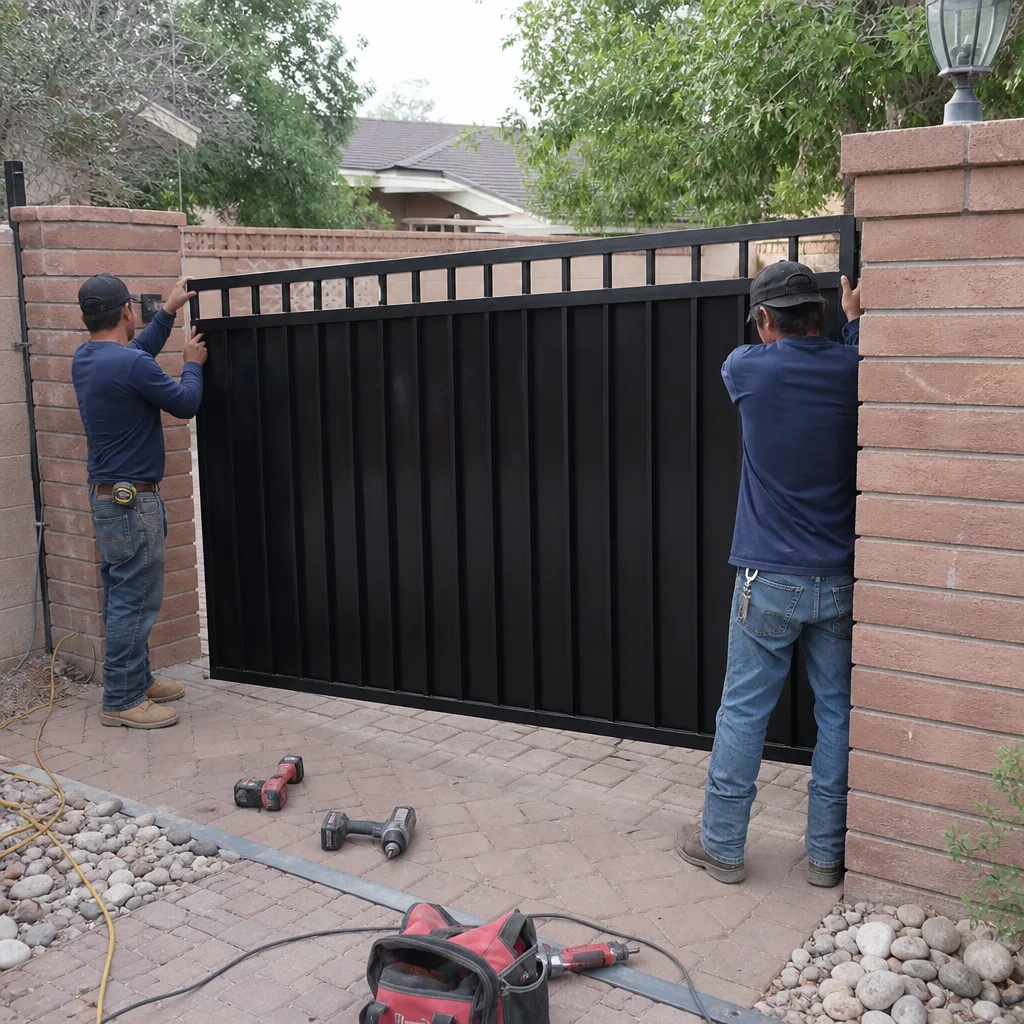
- Waiting for the gate to fail completely before calling. A hesitation or a grunt is the cheapest repair window you’ll ever get. Once the motor stops turning, the cost and the urgency both go up, and you’re ringing the emergency line instead of scheduling a visit.
- Greasing the operator housing. Lubricating the track or hinges is fine. Spraying oil into the operator housing itself can wreck the gear and attract grit. Leave the inside of the motor to someone trained on that brand.
- Blaming Boulder City heat for every afternoon failure. The heat is a real factor, and some thermal trips are normal. But a gate that fails every hot afternoon is telling you a component is marginal. “Normal in the heat” should cover occasional trips, not daily failure.
- Adjusting the limit switches without a reference. Turning the limit screw to fix a slamming stop often overshoots and sends the gate into the physical stop the other way. Photograph the original position before you touch anything, and honestly, don’t touch it – a photo of the current setting is what the technician needs.
- Ignoring a reversal without an obstruction. A reversal is a safety feature doing its job or a sensor misfiring. Either way, a gate that stutters or reverses unexpectedly is a gate to keep an eye on, not a gate to leave running unattended overnight in Boulder City.
- Replacing the remote before checking the battery. A fresh battery in the remote is the cheapest test you can run. If the new battery fixes the range, you’re done. If every remote fails at once, the receiver is the problem, not the remotes.
- Using a verbal estimate as if it were a plan. If a company won’t put the price on paper before the work starts, you have no way to compare quotes and no record if the invoice changes. Get it in writing, every time.
See the difference
BeforeAfter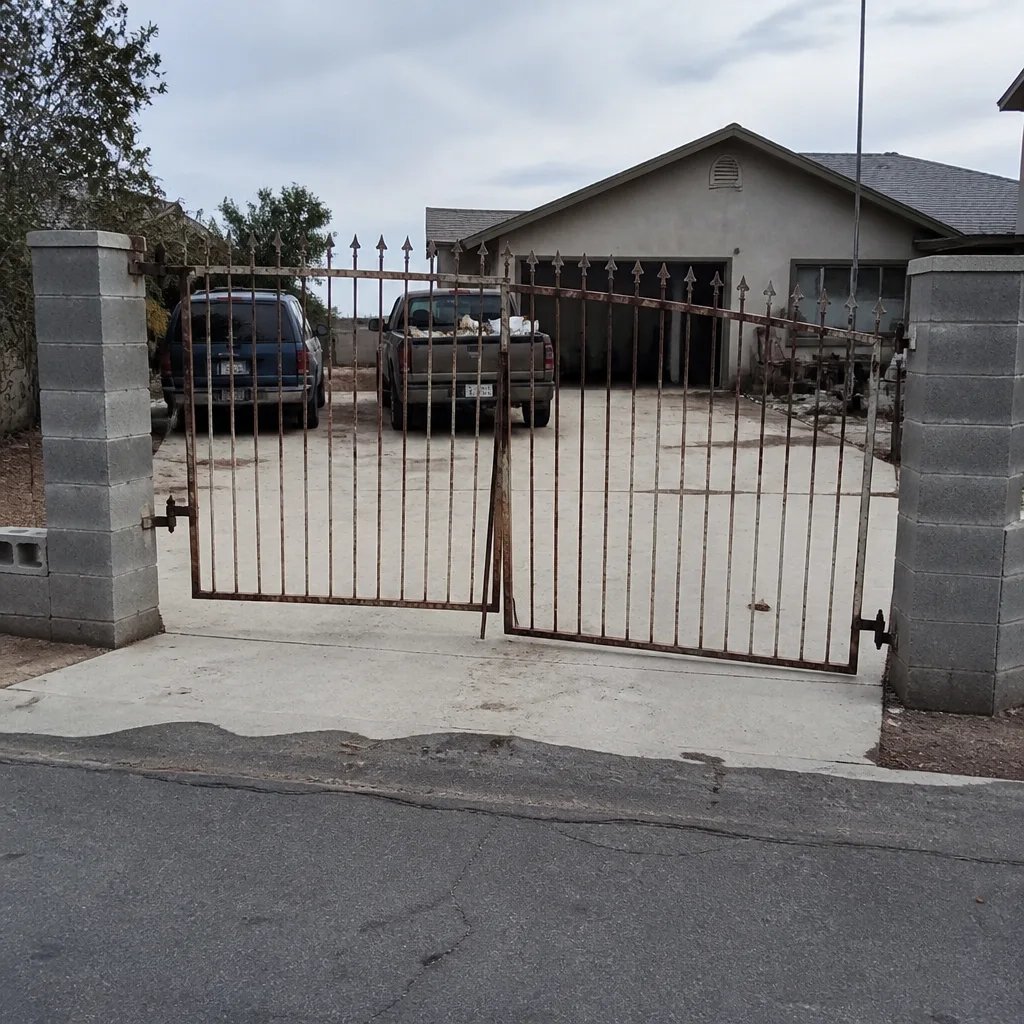 Before
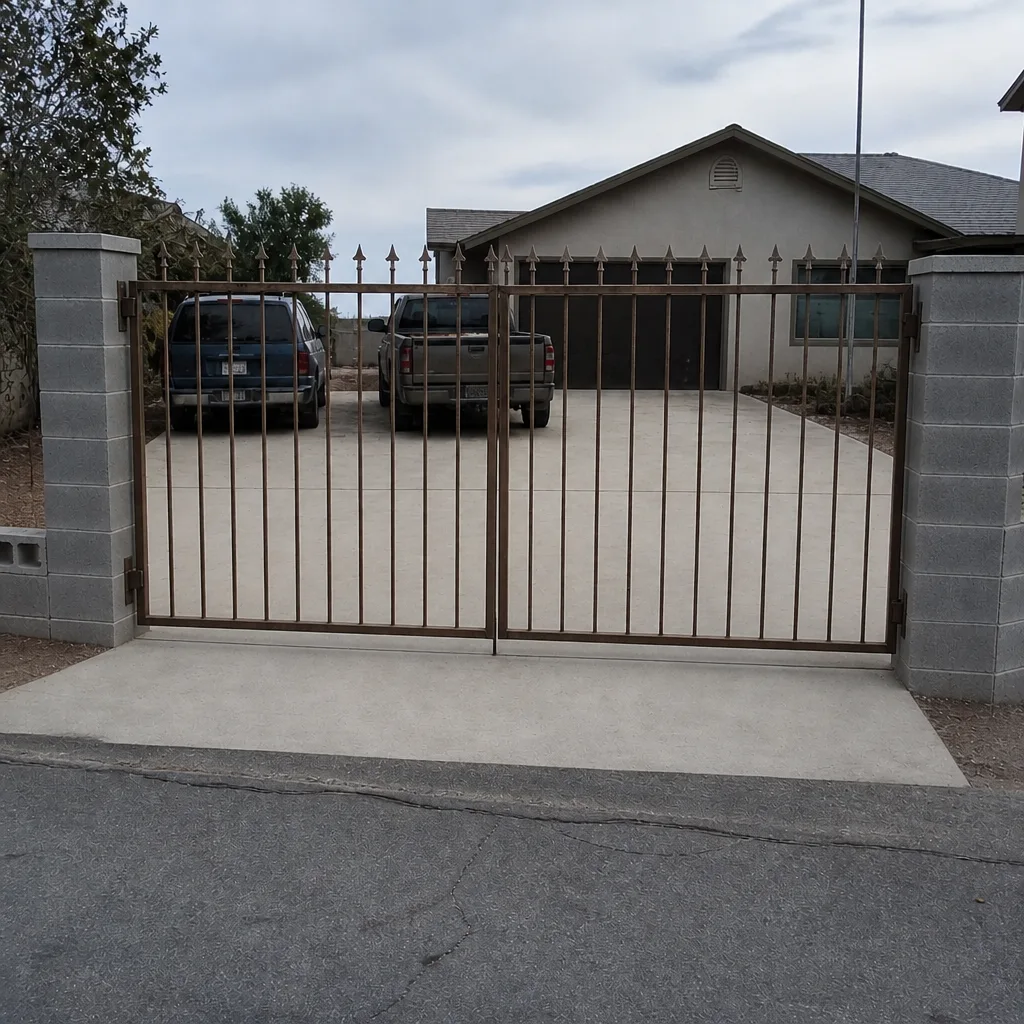 After
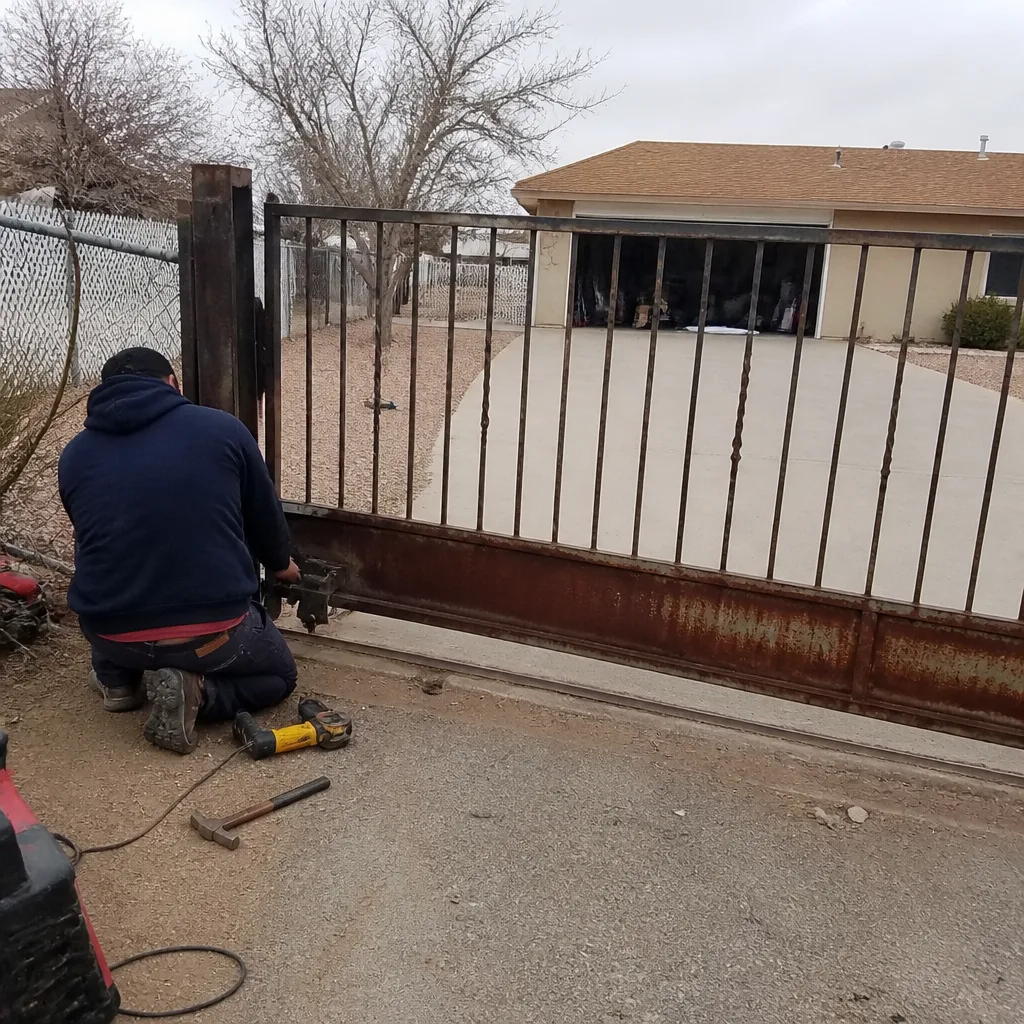 Before
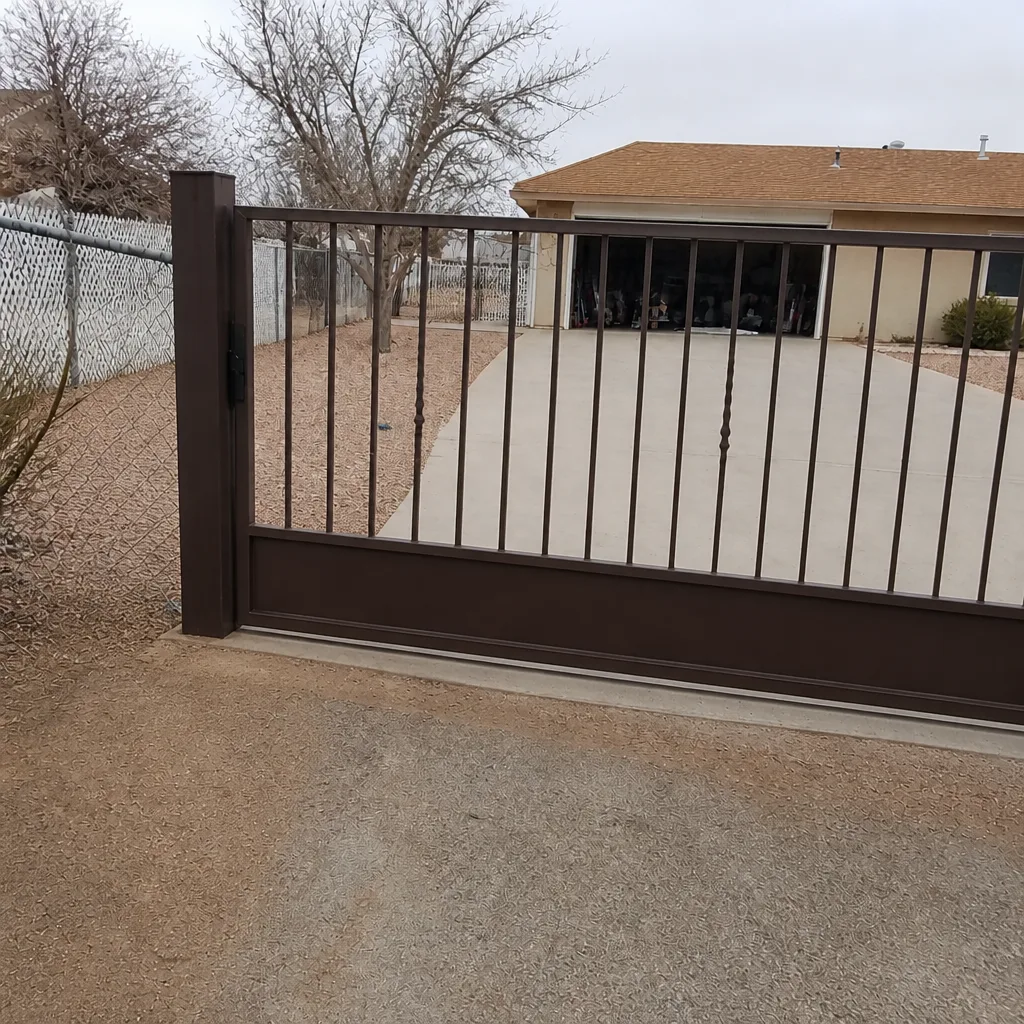 After
When to Call a Professional
Most warning signs can wait for a scheduled visit. Some can’t. Call a professional the same day if the gate reverses on its own with no obstruction and won’t stop doing it; if the operator hums but the gate won’t move; if you smell burning or see scorch marks near the control board; if the gate has dropped and is dragging on the ground; or if the operator trips its thermal cutout on a mild day. Any of those is a sign the system is actively failing, and continuing to run cycles on it makes the eventual repair larger.
For anything that involves opening the operator housing, the 120-volt supply, or the safety wiring, the risk is real – shock and fire both. Don’t chase it yourself. Note what you saw, take the video, and hand it to a trained technician. Vance Gate Repair Boulder City offers free estimates in Boulder City – call (844) 320-7587, and we’ll give you a written price before any work starts.
Frequently Asked Questions
The earliest reliable sign is a startup hesitation – a brief pause before the gate moves after you press the remote. It often follows a growing startup grunt and is usually the capacitor or the control board. Note when it happens and whether it’s worse in cool air, then get it checked before the motor stops entirely.
Hot weather thins the motor’s ability to deliver power and can trigger a thermal cutout if the operator has one. Occasional trips on the hottest Boulder City afternoons are the system protecting itself. A gate that slows or stops every hot afternoon, or fails on a day that isn’t unusually hot, points to a component that needs attention – call (844) 320-7587 for a free estimate.
A single reversal is usually a photo-eye or safety-edge fault – a misaligned beam, dirt on the lens, or sunlight hitting the receiver at a certain hour. Repeated reversals with nothing in the path are worth fixing right away because the gate may close on a person or a vehicle. Note the time of day; it’s often the fastest clue to the cause.
Listen for a low grunt on startup that gets louder over three to six weeks. The gate still moves at first, then hesitates, then the motor refuses to turn and you hear only a hum. That timeline is the classic capacitor failure pattern. A technician can confirm it during a single visit and replace the part.
Not safely, once you’re past the basics. Cleaning the photo-eye lens, replacing a remote battery, and freeing a leaf from the track are all reasonable. Anything inside the operator housing, the 120-volt supply, or the safety wiring is a job for a trained technician – the shock and fire risk is real. If you’re unsure which category your issue is in, call and describe it.
The price depends on what the diagnostic finds, and the range is wide – a photo-eye realignment and a capacitor replacement sit at very different price points. We don’t quote a number before the fault is confirmed, and we don’t begin work without a written price in your hands first. Call (844) 320-7587 for a free estimate and an honest range once we’ve seen the video.
The Bottom Line
Gate operators tell you they’re failing weeks before they stop working. The signals are a startup hesitation, a growing grunt, a grinding travel, a random reversal, and a heat-linked pattern that shows up on Boulder City afternoons. Your job is to know what normal looks and sounds like on your own system, and then note the deviations – with a short video, the temperature, and the cycle count. That record turns a slow diagnosis into a fast one. If you’ve spotted any of these signs, get it in front of someone trained before the gate fails on its own schedule. Call (844) 320-7587 for a free estimate, and we’ll put the price in writing before any work starts.
Written by the team at Vance Gate Repair Boulder City.